Monthly Archives: September 2016

Deutsche Bank Is Blood In The Water… And Sharks Smell It.

Is This Crisis Like Lehman Brothers on Steroids?

https://i0.wp.com/dweaay7e22a7h.cloudfront.net/dr-content_3/uploads/2016/09/deutsche-bank--650x360.jpg

Deutsche Bank is blood in the water… and the sharks smell it.

Yesterday, Bloomberg reported that major hedge funds were reducing their exposure to the German banking behemoth. The smart money is headed for the exits.

That caused the bank’s U.S.-listed shares to hit a new all-time low of $11.27 yesterday. The stock closed down nearly 7% for the day.

And that’s just the most recent bad news for Deutsche…

Earlier this week, Chancellor Angela Merkel said that Germany wasn’t going to bail it out.

That’s on top of $14 billion fine recently imposed by the U.S. Justice Department that the bank can’t afford to pay. Its current market capitalization is just $16.8 billion.

This torrent of negativity has the talking heads warning that Deutsche Bank is careening toward bankruptcy, bringing back memories of Lehman Bros. in 2008.

But it’s more than that…

Leveraged to the Hilt:

What investors are finally realizing is that Deutsche Bank is insolvent, something I told my Trend Following subscribers back in July.

Deutsche has astounding leverage of 40 times. Leverage is the proportion of debts that a bank has compared with its equity/capital. That means Deutsche has 40 times more debt than equity/ capital.

Remember, Lehman Bros. was only 31 times leveraged when it imploded in 2008.

The huge concern for investors right now is whether the bank can make enough profit to start overcoming its liabilities.

But it’s trapped in a low-growth economic environment. And it’s being choked to death by the European Central Bank’s negative interest rate policy (NIRP).

Because of NIRP, EU banks like Deutsche Bank effectively have to pay the central bank to hold cash on their balance sheets. At the same time, they can’t charge high rates on the loans they make. As a result, they’re getting squeezed on net interest margins, which decimates profits.

Plus, Deutsche has more than $72 trillion of risky derivatives exposure. Derivatives are the complex financial instruments that cratered the global economy in 2008.

By Michael Covel | Daily Reckoning

A Furious Rick Santelli Rages At Janet’s Jawboning: “Please, Don’t Help Anymore”


CNBC’s Rick Santelli turned it up to ’11’ today as The Fed’s Janet Yellen joined the world’s central planners in suggesting intervention directly in the stock markets would ‘help’ the average joe.

Santelli exclaims “don’t help anymore!!” How has any of their ‘help’ helped in the last 7 years?


“Central banks buying in the [stock] market… you really think that’s a good idea?”
Raging about picking winners, buying Deutsche Bank, and keeping stocks “steady” around elections, the veteran pit trader exploded, “is that the world we really want to live in?”

The Fed’s buying stocks “will completely and utterly and in every possible way destroy and value in the marketplace…”

3 minutes of brutal reality slapped into the face of a ridiculous rumor-driven day…

Source: ZeroHedge

LoanDepot’s P2P CDO Collapses Just 10 Months After It Was Issued

https://s15-us2.ixquick.com/cgi-bin/serveimage?url=http%3A%2F%2Fwww.zerohedge.com%2Fsites%2Fdefault%2Ffiles%2Fimages%2Fuser971%2Fimageroot%2Fwildebeestriver.jpg&sp=4a3d5915344aa388b5acc1f309c7f333

We first noted Wall Street’s misguided plan to feed its securitization machine with peer-to-peer (P2P) loans back in May 2015 (see “What Bubble? Wall Street To Turn P2P Loans Into CDOs“).  Obviously we warned then that the voracious demand for P2P loans was a direct product of central bank policies that had sent investors searching far and wide for yield leaving them so desperate they were willing to gamble on the payment streams generated by loans made on peer-to-peer platforms.

In addition to the pure lunacy of using unsecured, low/no-doc, micro-loans as collateral for a CDO, we pointed out that the very nature of P2P loans meant that borrower creditworthiness likely deteriorated as soon as loans were issued.  The credit deterioration stemmed from the fact that many borrowers were simply using P2P loan proceeds to repay higher-interest credit card debt.  That said, after paying off that credit card, many people simply proceeded to max it out again leaving them with twice the original amount of debt.

And, sure enough, it only took about a year before the first signs started to emerge that the P2P lending bubble was bursting.  The first such sign came in May 2016 when Lending Club’s stock collapsed 25% in a single day after reporting that their write-off rates were trending at 7%-8% or roughly double the forecasted rate (we wrote about it here “P2P Bubble Bursts? LendingClub Stock Plummets 25% After CEO Resigns On Internal Loan Review“). 

Now, signs are starting to emerge that Lending Club isn’t the only P2P lender with deteriorating credit metrics.  As Bloomberg points out, less than year after wall street launched the P2P CDO, one of the first such securities backed by loans from LoanDepot has already experienced such high default and delinquency rates that cash flow triggers have been tripped cutting off cash flow to the lowest-rating tranches. 

The $140mm private security, called MPLT 2014-LD1, was issued by Jefferies in November 2015 and, less than 1 year after it’s issuance, cumulative losses rose to 4.97% in September, breaching the 4.9% “trigger” for the structure.  And sure enough, the deal was sold to a group of investors that included life insurance company, Catholic Order of Foresters.

But, as Bloomberg noted, the LoanDepot deal wasn’t the only one to breach covenants in less than a year.  Two other Jefferies securitizations backed by loans made by the online startups CircleBack Lending and OnDeck Capital have also breached triggers.

For some reason the following clip from the “Big Short” comes to mind…“short everything that guy has touched.”

Source: ZeroHedge

Canadian Housing Bubble Debt Stiring Financial Crisis Fears

https://s15-us2.ixquick.com/cgi-bin/serveimage?url=http%3A%2F%2Fd3exkutavo4sli.cloudfront.net%2Fwp-content%2Fuploads%2F2015%2F06%2FToronto-condo-boom.jpg&sp=d7cedb4c66de62e9f5c87c31189a7e6f

Toronto Condo Boom.

Everyone is fretting about the Canadian house price bubble and the mountain of debt it generates – from the IMF on down to the regular Canadian. Now even the Bank for International Settlement (BIS) and the Organization for Economic Co-operation and Development (OECD) warn about the risks.

Every city has its own housing market, and some aren’t so hot. But in Vancouver and Toronto, all heck has broken loose in recent years.

In Vancouver, for example, even as sales volume plunged 45% in August from a year ago – under the impact of the new 15% transfer tax aimed at Chinese non-resident investors – the “benchmark” price of a detached house soared by 35.8%, of an apartment by 26.9%, and of an attached house by 31.1%. Ludicrous price increases!

In Toronto, a similar scenario has been playing out, but not quite as wildly. In both cities, the median detached house now sells for well over C$1 million. Even the Bank of Canada has warned about them, though it has lowered rates last year to inflate the housing market further – instead of raising rate sharply, which would wring some speculative heat out of the system. But no one wants to deflate a housing bubble.

During the Financial Crisis, when real estate prices in the US collapsed and returned, if only briefly, to something reflecting the old normal, Canadian home prices barely dipped before re-soaring. And this has been going on for years and years and years.

The OECD in its Interim Economic Outlook warned:

Over recent years, real house prices have been growing at a similar or higher pace than prior to the crisis in a number of countries, including Canada, the United Kingdom, and the United States. The rise in real estate prices has pushed up price-to-rent ratios to record highs in several advanced economies.

Canada stands out. Even on an inflation-adjusted basis, Canadian home prices have long ago shot through the roof. The OECD supplied this bone-chilling chart. The top line (orange) represents Canadian house price changes, adjusted for inflation:

https://i0.wp.com/wolfstreet.com/wp-content/uploads/2016/09/Canada-house-price-changes-v-US-UK-Germany-OECD.png

In the US, several national indices have now exceeded the crazy prices of the Housing Bubble that started blowing up in 2006. In some cities, the median price has shot way past the prior bubble highs – in San Francisco, by over 50%! But other cities have lagged behind, and the national averages paper over the local bubbles.

In Canada, real estate is more concentrated. The Canadian market is about one-tenth the size of the US market. But the two largest local markets, Toronto and Vancouver, together make up 54% of the Teranet National Bank House Price Index. So when these two local bubbles begin to deflate – or implode – they will create enormous havoc across Canada.

Real estate is highly leveraged. It’s funded with debt. Many folks cite down-payment requirements in rationalizing why the Canadian market cannot implode, and why, if it does implode, it won’t pose a problem for the banks. However, an entire industry has sprung up to help homebuyers get around the down-payment requirements.

So household debt has been piling up for years, driven by mortgage debt. Statistics Canada reported two weeks ago that the ratio of household debt to disposable income has jumped to another record in the second quarter, to a breath-taking 167.6%:

https://i0.wp.com/wolfstreet.com/wp-content/uploads/2016/09/Canada-household-debt-to-income-ratio-2016-Q2.png

The BIS now too, in its Quarterly Review, jumped on the bandwagon of issuing ineffectual warnings about this pile of debt, fingering particularly China – and in the same breath Canada:

According to the BIS early warning indicators, which are intended to capture financial overheating and potential financial distress over medium-term horizons, credit growth continues to be unusually high relative to GDP in several Asian economies as well as in Canada.

Estimated debt service ratios, which attempt to capture principal and interest payments relative to income, appear to be at manageable levels at current interest rates for most countries, although they point to potential concerns in Brazil, Canada, China, and Turkey.

The BIS developed a metric – the “credit-to-GDP gap” – that compares current credit levels to long-term trends and serves as an early warning indicator for financial crises.

Everyone wants to know when the next financial crisis happens. It will happen, but once again, it will surprise the economic establishment because, in the eloquent words of the BIS, debts always “appear to be at manageable levels” – until suddenly, they’re not.

The country with the highest credit-to-GDP gap is China (30.1), and the second highest is Canada (12.1). When it comes to debt creation, it’s not a good idea to be mentioned in the same breath with China. Turkey (9.6) is next in line. Then Mexico (8.8). And Brazil (4.6). Oh, and Australia (4.4)! So housing-bubble Canada is in excellent company!

The only saving grace is the permanently near-zero-interest-rate environment. Because that’s what it takes to keep this thing from deflating, according to the BIS, and even then there are “concerns.” But these countries, particularly Canada, are going to be in trouble when rates rise even a little.

So have central banks painted themselves and their entire bailiwicks into a corner with their ingenious emergency policies that have been dragging on for eight years? You bet. Is there a way out? Nope. Not a good one, at least. It’s just a question of when and how – and who gets to pay.

By Wolf Richter | Wolf Street


Crowdfunded House Flipper Raises $1 Million In 12 Hours

… and It Only Costs Him 14%

https://s17-us2.ixquick.com/cgi-bin/serveimage?url=http%3A%2F%2Fwww.bankingsense.com%2Fwp-content%2Fuploads%2F2015%2F02%2Fhouse-flipping.png&sp=3c2b8eebe342ca2e5dd773b56b9888fd

“It’s the greatest thing in the world,” exclaims Alex Sifakis – the 33 year old Florida ‘flipper’ – saying he has never raised this much money this fast (despite teh 14% cost of capital). As Bloomberg reports, house flippers and property developers are increasingly crowdfunding — tapping the virtual wallets of anonymous internet backers on various platforms – because “the amount of money you can raise isn’t limited by anything but their investor base.” As one of the ‘investors’ in this crowdfunded flipfest notes “if something goes bad, you have the asset to fall back on,” but, as Bloomberg rebukes, speed and property loans may not mix — remember 2008?

Bloomberg points out that the house flipper from Jacksonville, Florida, crowdfunded nine deals totaling more than $9 million through RealtyShares over the last two and a half years. A July deal for $1 million took him just 12 hours.

“Generally, raising money takes so much time,’’ said Sifakis, 33. “This offers so much flexibility and time savings. It’s so much better than going to family offices, banks or Wall Street firms.’’

House flippers and property developers are increasingly crowdfunding — tapping the virtual wallets of anonymous internet backers on platforms such as RealtyShares, LendingHome, PeerStreet and Patch of Land. For riskier ventures, such as building new homes and buying, renovating and selling existing ones, they’re finding quick financing can be easier to get online than from banks.

That’s contributed to an increase in home flipping. In the second quarter, 39,775 investors bought and sold at least one house, the most since 2007, according to ATTOM Data Solutions.

https://i0.wp.com/www.zerohedge.com/sites/default/files/images/user3303/imageroot/2016/09/20/20160921_flip1_0.jpg

The ease of fundraising through these nontraditional lenders could be a warning sign, according to Erik Gordon, a law professor at the University of Michigan in Ann Arbor.

 “Whenever you see a big difference between the terms on which you can raise money in one market versus another market, something is wrong in at least one of those markets,” Gordon said.

“It usually is the market with the least-experienced players, and they usually end up wishing they hadn’t played.”

Sifakis said he’s borrowing money at an annual rate of 14 percent over two and a half years. He keeps all the profit he makes from selling homes, he said.

So far, Bloomberg notes that there have been few defaults in real estate crowdfunding deals. When they happen, the platforms say they’ll pay investors the proceeds from property sales.

The business has other potential pitfalls.

When it comes to real estate, faster isn’t always better. Wall Street’s home-mortgage machine of the mid-2000s valued speed over accuracy, with disastrous results, though most crowdfunding sites cater to investors and not homebuyers. Also, clicking for capital can be exploited by fraudsters who may not be who they say they are, according to Sara Hanks, co-founder and CEO of CrowdCheck, which provides due-diligence services for online investors.

“We’ve seen some things where the entity that’s supposed to own the property doesn’t actually own it,’’ she said.

What could go wrong?

Jeff Bullian, a Boston-based consultant, has invested in about 30 deals on RealtyShares and in a handful of others on websites such as Patch of Land. So far, only one deal has gone bad, he said. In that instance, the platform, which Bullian declined to identify, went to bat for investors so everyone could get their money back along with a small return.

Bullian said he contributes an average of $10,000 in each deal for returns of about 10 percent to 20 percent, similar to what he was getting from a marketplace lender.

“I really like the risk profile of real estate deals compared with some other investments because they’re secured,” Bullian said. “If something goes bad, you have the asset to fall back on.”

Sifakis, the Florida flipper, said he typically gets a $3 million line of credit from an investment firm for about every $1 million he raises on RealtyShares, giving him added buying power.

“It’s the greatest thing in the world,’’ Sifakis said. “The amount of money you can raise isn’t limited by anything but their investor base. And the investor base is growing and growing.”

The Fed has fostered this idiocy by manipulating everything and memories are short in housing markets. This will not end well…speed and property loans may not mix — remember 2008?

Source: Zero Hedge

Did North Dakota Boom Towns Overbuild?

https://s16-us2.ixquick.com/cgi-bin/serveimage?url=http%3A%2F%2Ffinance-commerce.com%2Ffiles%2F2015%2F02%2FND-Boomtown.jpg&sp=46f43e8995fbd0ac676c2e5d97838f92

The oil boom caused a housing shortage in North Dakota’s Bakken oilfield. And towns rushed to build more homes and apartments. Now the price of oil is low, and the thousands who rushed to North Dakota for work are leaving. But new houses are still going up. Inside Energy’s Emily Guerin asks: Are these towns overbuilding?

Profile of a stretch of North Dakota highway witnesses oil’s boom and bust


Chinese Home Prices Jump Most On Record

“The Numbers Are Hard To Believe”

https://s17-us2.ixquick.com/cgi-bin/serveimage?url=http:%2F%2Fwww.zerohedge.com%2Fsites%2Fdefault%2Ffiles%2Fimages%2Fuser5%2Fimageroot%2Fchina%2520bubble.jpg&sp=dfef30aec4e98aedf220ce3e8b22b6d0

Even before the latest Chinese home price data was released overnight, it was a pure bubble-buying frenzy.

As Chris Watling, the CEO of Longview Economics, told CNBC Thursday, “I think what’s going on in China is troubling … some of the valuations there are really quite extraordinary… We’ve double checked these numbers about seven times, because I found them quite hard to believe.

https://s15-us2.ixquick.com/cgi-bin/serveimage?url=http%3A%2F%2Fwww.zerohedge.com%2Fsites%2Fdefault%2Ffiles%2Fimages%2Fuser5%2Fimageroot%2F2016%2F03%2F13%2F20160318_china.jpg&sp=8e10a1097d7c1e02b685a77ce2d24cf5

What Watling found is that housing in major cities in China has seen price hikes over the last year that resemble the famous Dutch “Tulip Fever” bubble of 1637, according
to new research by economic consultancy firm Longview Economics: the firm found that only San Jose in the Silicon Valley is more expensive than Shenzhen. The Chinese city has seen prices rise 76% since the start of 2015, with the acceleration beginning in April 2015 as the country’s stock market was nearing its peak. The situation in Beijing and Shanghai is similar, albeit less extreme, the company states.

According to Watling, the typical home in Shenzhen costs approximately $800,000. Watling said that the house-income ratio in Shenzhen is now running at 70 times, compared to around 16 times in somewhere like London.

https://i0.wp.com/www.zerohedge.com/sites/default/files/images/user5/imageroot/2016/09/05/shenzhen%20san%20jose_0.jpg

https://i0.wp.com/www.zerohedge.com/sites/default/files/images/user5/imageroot/2016/09/05/shenzhen%202_0.jpg

“Housing in some of the tier 1 cities is more expensive than it is in London, which I think itself is on a bubble, Watling added. “The (stock) market exploded to the upside and then crashed dramatically. That money had to go somewhere, so it washed around the system … so a lot of it has gone into housing.”

China, the biggest economic story of the last 30 years, has soured in the eyes of many analysts. A stock market crash that began in the country last summer has highlighted the vast difficulties Chinese lawmakers are now facing. Watling said Chinese housing was a story built on credit, lots of liquidity and lots of debt. He added that all bubbles, though, once established, will eventually burst and deflate.

It will, but not yet.

According to the latest Chinese housing data released overnight, Chinese home prices rose the most in more than six years last month, suggesting local government efforts to avert a housing bubble are having only a limited effect according to Bloomberg. Average new-home prices in the 70 cities rose 1.2% in August from July, the biggest increase since Bloomberg started tracking records in January 2010. The value of home sales jumped 33 percent last month from a year earlier, the fastest pace in four months.

https://i0.wp.com/www.zerohedge.com/sites/default/files/images/user5/imageroot/2016/09/05/20160919_Chinahome_0.jpg

“Price growth accelerated in cities all of tiers,” the statistics bureau said in a statement released with the data. Almost half of the cities where prices increased had larger gains than in July, it added.

New-home prices, excluding government-subsidized housing, in August gained in 64 of the 70 cities the government tracks, compared with 51 in July, the National Bureau of Statistics said Monday. Prices fell in four cities, compared with 16 a month earlier, and were unchanged in two.

As Bloomberg notes, the jump in home prices comes in spite of lending curbs which have spread from major cities such as Shanghai and Shenzhen to regional hubs. That may may lead to further restrictions as policymakers become increasingly concerned about averting an asset bubble, said Xia Dan, a Shanghai-based analyst at Bank of Communications Co.

More importantly, Standard Chartered head of Greater China economic research Ding Shuang the latest surge in Chinese property prices in August suggests further broad-base easing by the PBOC is unlikely this year.  He added that the home prices divergence continues with tier 1 and tier 2 cities overheating, whereas smaller cities are struggling to reduce inventory. As a result, Shuang expects PBOC to keep monetary policy prudent; and sees no further interest rate cut for the rest of the year. He also believes the Chinese government will introduce more curbs in major cities, such as a higher down-payment as mortgage loans are growing quickly

Hangzhou, Zhejiang’s provincial capital, on Sunday halted home sales to some non-local residents, adding to similar restrictions introduced last month in Suzhou and Xiamen. China’s top leaders, after a Politburo meeting led by President Xi Jinping, in July pledged to curb asset bubbles amid a renewed focus on financial stability.

However, for most Tier 1 cities, the curvs are having zero impact: prices climbed a record 4.4 percent and 3.6 percent in Shanghai and Beijing respectively, taking the year-on-year gains to 31 percent and 24 percent. Values rose 2.1 percent in Shenzhen and 2.4 percent in Guangzhou, both faster than a month earlier. Home prices climbed the fastest in regional hubs where local authorities haven’t introduced curbs. Zhengzhou, the provincial capital of central Henan province, led gains with a 5.5 percent increase, up from a 2 percent gain in July. Prices in Wuxi, a manufacturing base in southern Jiangsu province, followed with a 4.9 percent gain, compared with 2.7 percent a month earlier.

Some more details from Goldman:

Housing prices in the primary market increased 1.6% month-over-month after seasonal adjustment (weighted by population) in August, higher than the growth rate in July. Almost all cities saw price increases in August from July: Out of 70 cities monitored by China’s National Bureau of Statistics (NBS), 66 saw housing prices increase in August from the previous month (58 in July, on a seasonally-adjusted basis).

On a year-over-year, population-weighted basis, housing prices in the 70 cities were up 9.7% (vs. 8.3% yoy in July).

House price inflation accelerated across all tiers in August. In tier-1 cities, August price growth showed a spike to 3.5% month-over-month after seasonal adjustment, the largest price increase since the series started in Jan 2011. (Total property sales in tier-1 cities accounted for around 5% of nationwide property sales in volume terms.) August housing price growth was also at record high levels in tier-2 and 3 cities, with prices increasing at 1.8% mom sa and 1.1% mom sa respectively. The fast extension of mortgages likely contributed to the housing price rally – in August mortgage loans continued to be strong: medium- to long-term new loans to the household sector were Rmb 529bn, vs. Rmb 477bn in July. (see China: August money and credit data above expectations, reflecting supportive policy, Sep 14, 2016) In response to the fast growth of housing prices, many cities (such as Hangzhou, Suzhou, Xiamen, Zhengzhou) have announced tightening policies to curb the rapid price growth.

https://i0.wp.com/www.zerohedge.com/sites/default/files/images/user5/imageroot/2016/09/05/tier%201%20housing%20gs_0.png

Finally, the main reason why tightening measures by local governments are unlikely to rein in prices is that credit remains easily attainable, said Jeffrey Gao, a Hong Kong-based property analyst at Nomura Holdings Inc. “The local curbs have limited impact as home inventory has already fallen to a low level,” Gao said. “Prices will not fall unless the government moves to tighten credit and add more land supply.”

Chinese authorities are facing a monetary policy dilemma amid “rapid” home-price growth, Zhou Hao, an economist at Commerzbank AG in Singapore, wrote in a note Monday. “The overall monetary policy should remain accommodative as inflation remains subdued and growth is still trending down. However, concern about an asset bubble will limit room for further easing.”

And, as we showed two weeks ago, the Chinese housing situation is likely to get even more bubbly in the coming weeks as mortgage loans as a % of total loans, the primary culprit behind the ongoing price surge, continues to rise to all time highs.

https://i0.wp.com/www.zerohedge.com/sites/default/files/images/user5/imageroot/2016/09/05/china%20mortgage%20loans_0.jpg

Source: ZeroHedge

Palo Alto Says Zuckerberg Can’t Build Compound Intended For His Family’s Privacy

Social media mogul Mark Zuckerberg’s life seems to always revolve around houses in Palo Alto.

A house in Palo Alto is where he grew Facebook from a seed harvested at Harvard into one of the defining companies of 21st century Silicon Valley. A house in Palo Alto is where Zuckerberg and his family presently call home. And four houses in Palo Alto adjacent to his own are now a perhaps rare check on the authority of the sixth richest man in the world.

https://cdn0.vox-cdn.com/thumbor/fU25TnvHEeIfFQhwq-4tFeI6olg=/1000x0/filters:no_upscale()/cdn0.vox-cdn.com/uploads/chorus_asset/file/7115411/palo%20alto1.jpg

The contentious parcels. City of Palo Alto

In 2013, Zuckerberg bought the houses bordering his property, eventually revealing plans to demolish them. He was worried about his privacy. (You can all insert your own ironic “Facebook data mining privacy” joke here.)

Unfortunately, the city isn’t proving keen on his idea. We can’t imagine why they’d be a tiny bit sensitive about sacrificing perfectly good housing stock for the sake of its wealthiest resident’s desire not to live next to anyone.

To be fair, Zuckerberg also planned to build new homes on the four parcels—smaller ones that wouldn’t be able to peer into his own house. But Palo Alto’s Architectural Review Board didn’t like the looks of his proposed new homes and bounced the plan at Thursday’s meeting.

https://cdn1.vox-cdn.com/uploads/chorus_asset/file/7115415/palo%20alto2.jpg

The board is an advisory committee, and Palo Alto’s director of planning Hillary Gitelman can override their decision and approve the proposals if she wants to. But architects who work in Palo Alto tell Curbed SF that this rarely happens. Railroading unpopular projects through wouldn’t be smart politics, after all.

Zuckerberg will probably have to come up with some new designs, resign himself to keeping the houses the way they are, or just start spending most of his time crashing in one of those sleep pods at the office.

https://cdn0.vox-cdn.com/thumbor/o9DMC1ttM-8O1mQ5yM1tlOZIzVk=/1000x0/filters:no_upscale()/cdn0.vox-cdn.com/uploads/chorus_asset/file/7115423/palo%20alto3.jpg

By Adam Brinklow | Curbed San Francisco


Palo Alto Mayor Wants to ‘Meter’ ‘Reckless Job Growth’

https://i0.wp.com/media.breitbart.com/media/2016/09/35799714_49fd1950a5_z-640x480.jpg

Palo Alto mayor Patrick Burt says: “Palo Alto’s greatest problem right now is the Bay Area’s massive job growth.” And he wants to “meter” businesses to control “reckless job growth” in the Silicon Valley suburb.

Palo Alto has long been the center of Silicon Valley’s tech start-ups, and features 14 of the world’s top 25 venture capital firms within a 10-mile radius. But in an interview with the real estate blog Curbed.com, Mayor Burt talked about how “Our community will not accept deterioration in our mobility.”

As a tech CEO that sold out for big bucks, Burt seems to want to keep out the riff-raff:

“First, we’re in a region that’s had extremely high job growth at a rate that is just not sustainable if we’re going to keep [Palo Alto] similar to what it’s been historically. Of course we know that the community is going to evolve. But we don’t want it to be a radical departure. We don’t want to turn into Manhattan.”

Burt claims it is the role of local government to avoid “reckless job growth”:

“We want metered job growth and metered housing growth, in places where it will have the least impact on things like our transit infrastructure. We look at the rates and we balance things.”

To “meter” housing growth, 97 percent of the non-commercial portion of Palo Alto is zoned R1 single family residence, while only 3 percent is zoned for multi-family apartments. The least expensive “starter home” in Palo Alto is listed at $995,000.

But according to the Planning Department, 45 percent of Palo Alto workers live in multi-unit housing, which means almost half of Palo Alto workers must commute in every day.

Mark Zuckerberg is believed to be the wealthiest resident of Palo Alto. He is a well known liberal, and made his fortune as the CEO of Facebook. The company data-mines the deepest secrets of 1.7 billion users, then sells those secrets to the highest bidder. Zuckerberg contributes heavily to liberal causes, advocates for unlimited immigration, and says he hates the wall Republican presidential nominee Donald Trump wants to build along the U.S./Mexican border.

But after Mr. Zuckerberg bought the three houses bordering surrounding his own Palo Alto home, he recently built an 8-foot high privacy wall around the compound for himself, his wife and young daughter.

Zuckerberg quietly submitted architectural drawings to the Palo Alto Planning Department this summer that were expected to be favored for approval, because the plan reduced density by demolishing four houses to build a mansion and three casitas.

However, they were rejected amidst a local controversy over gentrification that erupted when Palo Alto Planning and Transportation Commissioner Kate Vershov Downing announced in early September that her family is leaving Palo Alto for Santa Cruz, because they, like many other residents, can no longer afford the area.

Downing’s resignation letter bemoaned that despite splitting a house with another couple, her rent is still $6200 a month. She estimates that to buy the house and share it with children would cost $2.7 million. The monthly cost of a home mortgage, tax and insurance payment would be $12,177, or $146,127 per year. Downing laments that sum is too much for her as an attorney and her husband as a software engineer.

Downing’s resignation put unwelcome pressure on the Palo Alto’s Architectural Review Board to start being more family friendly. On September 15, the Board rejected Mr. Zuckerberg’s plans because they would seriously undermine the city’s housing stock.

The Architectural Board is only an advisory committee, and Palo Alto’s Director of Planning Hillary Gitelman can override their decision and approve the proposals. But local architects familiar with Palo Alto told the Curbed.com this rarely happens, because “railroading unpopular projects through wouldn’t be smart politics.”

It is unclear how widespread Mayor Burt’s feelings are, but there is at least some backlash.

By Chriss W. Street | Brietbart


“Well, That’s Never Happened Before”

In the history of data from The Fed, this has never happened before…

https://i0.wp.com/www.zerohedge.com/sites/default/files/images/user3303/imageroot/2016/09/15/20160917_auto1_0.jpghttps://i0.wp.com/www.zpub.com/un/bloodbar.gifAggregate Auto Loan volume actually fell last week… And less loans means one simple thing… less sales (because prices have never been higher and no one is paying cash)

https://i0.wp.com/www.zerohedge.com/sites/default/files/images/user3303/imageroot/2016/09/15/20160917_auto2.jpg

https://i0.wp.com/www.zpub.com/un/bloodbar.gif

Which is a major problem since motor vehicle production continues to rise as management is blindly belieiving the Hillbama narrative that everything is (and will be) awesome.

The problem is… inventories are already at near record highs relative to sales (which are anything but plateauing)…

https://i0.wp.com/www.zerohedge.com/sites/default/files/images/user3303/imageroot/2016/09/15/20160917_auto.jpg

https://i0.wp.com/www.zpub.com/un/bloodbar.gif

In fact, the last time inventories were this high relative to sales, GM went bankrupt and was bailed out by Obama.

The big picture here is simple… US Automakers face a plunge in auto loans for the first time in this ‘recovery’, and with sales plunging and inventories near record highs, production (i.e. labor) will have to take a hit… and that plays right into Trump’s wheelhouse and crushes Hillbama’s narrative just weeks before the election.

Source: ZeroHedge


Why Are So Many Conservatives, Preppers And Christians Moving To The Great Northwest?

https://i0.wp.com/endoftheamericandream.com/wp-content/uploads/2016/09/Montana-Landscape-Public-Domain-400x267.jpg

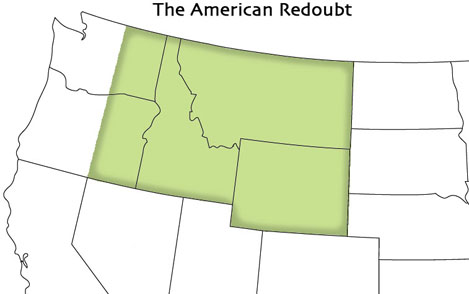
Thousands of Americans are flocking to “Big Sky” country, and this movement has become so prominent that it has even caught the attention of the mainstream media. Within the last several weeks, both The Chicago Tribune and The Economist have done major articles on this phenomenon. From all over the country, conservatives, preppers and Bible-believing Christians are moving to Montana, Wyoming, Idaho and the eastern portions of Oregon and Washington. As you will see below, this region has become known as the “American Redoubt”, and for a variety of reasons it is considered by many survivalists to be one of the top “safe zones” for when things really start falling apart in this nation.

Many of you that are reading this article may think that it is quite strange that families are quitting their jobs, packing up everything they own and moving to the middle of nowhere, but for those that are doing it this actually make perfect sense. A recent Chicago Tribune article on this phenomenon began by profiling an ex-California couple that decided to flee the state for the friendly confines of north Idaho…

Don and Jonna Bradway recently cashed out of the stock market and invested in gold and silver. They have stockpiled food and ammunition in the event of a total economic collapse or some other calamity commonly known around here as “The End of the World As We Know It” or “SHTF” – the day something hits the fan.

The Bradways fled California, a state they said is run by “leftists and non-Constitutionalists and anti-freedom people,” and settled on several wooded acres of north Idaho five years ago. They live among like-minded conservative neighbors, host Monday night Bible study around their fire pit, hike in the mountains and fish from their boat. They melt lead to make their own bullets for sport shooting and hunting – or to defend themselves against marauders in a world-ending cataclysm.

The original article that the Chicago Tribune picked up came from the Washington Post.  It was authored by Kevin Sullivan and photos were done by Matt McClain.  If you would like to read the entire article you can find it right here.

And of course the Bradways are far from alone. Over the past 10 years, approximately five million people have fled the state of California. If I was living there, I would want to move out too. Once upon a time, countless numbers of young people were “California Dreaming”, but those days are long gone. At this point, the California Dream has become a California Nightmare.

Only a very small percentage of those leaving California have come up to the Great Northwest, but it is a sizable enough number to make a huge impact. Unfortunately, many of those that have come from California want to turn their new areas into another version of what they just left, and that is often firmly resisted by the locals.

https://s-media-cache-ak0.pinimg.com/564x/4e/84/af/4e84af5ae14b35dba910a0b3fac0b318.jpg

But it isn’t just California – there are people streaming into the “American Redoubt” from all over the nation, and many of them are some of the finest people that you could ever hope to meet.

An article in The Economist points to a 2011 manifesto posted by James Wesley Rawles as the beginning of the “American Redoubt” movement…

In a widely read manifesto posted in 2011 on his survivalblog.com, Mr Rawles, a former army intelligence officer, urged libertarian-leaning Christians and Jews to move to Idaho, Montana, Wyoming and a strip of eastern Oregon and Washington states, a haven he called the “American Redoubt”.

Thousands of families have answered the call, moving to what Mr Rawles calls America’s last big frontier and most easily defendable terrain. Were hordes of thirsty, hungry, panicked Americans to stream out of cities after, say, the collapse of the national grid, few looters would reach the mostly mountainous, forested and, in winter, bitterly cold Redoubt. Big cities are too far away. But the movement is driven by more than doomsday “redoubters”, eager to homestead on land with lots of water, fish, and big game nearby. The idea is also to bring in enough strongly conservative voters to keep out the regulatory creep smothering liberty in places like California, a state many redoubters disdainfully refer to as “the C-word”.

Who wouldn’t want to live where the air is clear, the water is clean and the sky is actually brilliantly blue and not the washed out grayish blue that you get in most major cities?

And just having some breathing space is reason enough for some people to move to the Great Northwest. If you can get at least a few acres, you will quickly discover the joy of not having neighbors crammed in around you on every side.

Others wish to move to an area with a low population density for more practical reasons. As the New York Times recently reported, crime is rising in large cities all over America…

Murder rates rose significantly in 25 of the nation’s 100 largest cities last year, according to an analysis by The New York Times of new data compiled from individual police departments.

The findings confirm a trend that was tracked recently in a study published by the National Institute of Justice. “The homicide increase in the nation’s large cities was real and nearly unprecedented,” wrote the study’s author, Richard Rosenfeld, a criminology professor at the University of Missouri-St. Louis who explored homicide data in 56 large American cities.

Sadly, this is just the beginning. The chaos that we have seen in Dallas, Baton Rouge, Milwaukee, Ferguson, Baltimore, Chicago and elsewhere is going to get much worse. As the economy continues to unravel, we are going to see civil unrest on a scale that none of us have ever seen before. When that time comes, those that have moved to the middle of nowhere will be very thankful that they got out while the getting was good.

Over the last several years, my wife and I have met countless numbers of people that have moved up to the Great Northwest. All of their stories are different, but there is one common theme that we have noticed.

In the vast majority of cases, families tell us that they moved to the Great Northwest because they felt that God was calling them to do so. Individuals from many different churches and denominations have all felt the same call, and that creates a sort of kinship that is quite unusual these days.

Something big is happening in the Great Northwest. If you have never been up here, you might want to check it out some time.

By Michael Snyder | End Of The American Dream


American Redoubt — Move to the Mountain States

Updated: June 2, 2016

Recognizing both the fact that “all politics are local”, and the international readership of SurvivalBlog, I naturally de-emphasize politics in my blog. However, an article got my blood boiling: Motorists illegally detained at Florida tolls – for using large bills! So, not only are Federal Reserve Notes not redeemable “on demand” for specie, but effectively they are now no longer “…legal tender for all debts public and private.” It is often hard to pinpoint a breaking point–the proverbial “straw that broke the camel’s back”–as impetus for a paradigm shift, but reading that news article was that last straw for me. Consider my paradigm fully shifted. I’m now urging that folks Get Out of Dodge for political reasons–not just for the family preparedness issues that I’ve previously documented. There comes a time, after a chain of abuses when good men must take action. We’ve reached that point, folks!

Voting With Our Feet

I concur that Pastor Chuck Baldwin was right when he “voted with his feet” and moved his family from Florida to Montana. Like Chuck Baldwin I believe that is time for freedom-loving Christians to relocate to something analogous to “Galt’s Gulch” on a grand scale.

In March 2011, Ol’ Remus of The Woodpile Report quoted an essay by economist Giordano Bruno, titled The Return Of Precious Metals And Sound Money. In it, Bruno stated: “If there is anything good to come out of our present predicament, it is that Americans, from average citizens to elected officials, are beginning to understand the reality of coming collapse and are preempting it with measures designed to insulate their communities from the inevitable firestorm. Eventually, as this movement escalates, certain states will come out ahead of the pack, gaining a kind of “safe haven” status, and attracting liberty minded people from around the country to the protective shelter of their borders.”

Sociologist Albert O. Hirschman in his book Exit, Voice, and Loyalty, identifies the growing libertarian trend of “Exit” strategies, all the way from the individual level up to the level of nation states.

Giordano Bruno identified a trend that has been developing informally for many years: A conscious retrenchment into safe haven states. I strongly recommend this amalgamation, and that it be formalized. I suggest calling it The American Redoubt. I further recommend Idaho, Montana, Wyoming, eastern Oregon, and eastern Washington for the réduit. Some might call it a conglomeration, but I like to call it an amalgamation, since that evokes silver. And it will be a Biblically-sound and Constitutionally-sound silver local currency that will give it unity.

Update: It has been reported that 10 politically conservative counties in northern Colorado are planning on a peaceful partition, to form the new state of North Colorado. Needless to say, if they succeed I will expand the definition of the Redoubt!
redoubt

(For re-use of this image, see the copyright notice, below.)

I anticipate that this nascent movement, and the gulch itself will be a lot bigger than most other pundits anticipate. It could very well be a multi-state amalgamation like The American Redoubt, that I’ve advocated.

Why Not Some Adjoining States?

I’m sure that I’ll get e-mail from folks, suggesting expanding the Redoubt concept to include Utah, the Dakotas, and Colorado. Let me preemptively state the following: Utah is a conservative state, but its desert climate makes it unsuitable to feed its current population, much less one swelled by in-migration. North and South Dakota have some promise, but I have my doubts about how defendable they would be if ever came down to fight. Plains and steppes are tanker country. It is no coincidence that the armies of the world usually choose plains for their maneuver areas, for large scale war games. Some might argue that I shouldn’t have included eastern Oregon and eastern Washington. The population densities are suitably low, and the populace is overwhelmingly conservative, but the folks there are still at mercy of the more populous regions west of the Cascades, that dictate their state politics. But who is to say that their eastern counties won’t someday partition to form new states, like West Virginia? This same factor is just as pronounced in rural Colorado. Just a few large cities call the political shots, and they have been assimilated by ex-Californians. For this reason I reluctantly took Colorado off the list.

Take a few minutes to look at a map that shows unpopulated regions in the United States. As you can see, a lot of that is in The American Redoubt.

To Clarify: Religious, Not Racial Lines

I’m sure that this brief essay will generate plenty of hate mail, and people will brand me as a religious separatist. So be it. I am a separatist, but on religious lines, not racial ones. I have made it abundantly clear throughout the course of my writings that I am an anti-racist. Christians of all races are welcome to be my neighbors. I also welcome Orthodox Jews and Messianic Jews, because we share the same moral framework. In calamitous times, with a few exceptions, it will only be the God fearing that will continue to be law abiding. Choose your locale wisely. I can also forthrightly state that I have more in common with Orthodox Jews and Messianic Jews than I do with atheist Libertarians. I’m a white guy, but I have much more in common with black Baptists or Chinese Lutherans than I do with white Buddhists or white New Age crystal channelers.

I also expect that my use of the term Redoubt will inspire someone to accuse me of some sort of neo-Nazism. Sorry, but I use the term in honor of Switzerland. When I chose the name I was thinking of the Schweizer Alpenfestung (aka Réduit Suisse), rather than any reference to the Nazi’s “National Redoubt” scheme at the end of World War II. I am strongly anti-totalitarian, and that includes all of its forms, including Nazism and Communism.

I’m inviting people with the same outlook to move to the Redoubt States, to effect a demographic solidification. We’re already a majority here. I’d just like to see an even stronger majority.

One important point: I do not, nor have I ever advocated asking anyone already living here to leave, nor would I deny anyone’s right to move here, regardless of their faith, (or lack thereof).

Closing ranks with people of the same faith has been done for centuries. It is often called cloistering. While imperfect, cloistering got some Catholics in Ireland through the Dark Ages with their skins intact and some precious manuscripts intact. (It is noteworthy that other copies of the same manuscripts were burned, elsewhere in Europe.) Designating some States as a Redoubt is nothing more than a logical defensive reaction to an approaching threat.

Are You With Us?

Read my Precepts page. If you aren’t in agreement with most of those precepts, then I don’t recommend that you relocate to the Redoubt–you probably won’t fit in.

Your Checklist

I suggest that you follow these guidelines, as you prepare and then move to the American Redoubt:

  • Research geography, climate, and micro-climates very carefully.
  • Develop a home-based business.
  • Lighten the load. Keep the practical items but sell your junk and impractical items at a garage sale.
  • Bring your guns.
  • Sell your television.
  • Sell your jewelry and fancy wristwatch. Buy a Stihl chainsaw instead.
  • Choose your church home wisely, seeking sound doctrine, not “programs”
  • Leave your Big City expectations behind. There probably won’t be cell phone coverage, high speed Internet, or Pilates.
  • Expect a long driving distances for work and shopping.
  • Sell your bric-a-brac and collectibles. What is more important? A large collection of Hummel figurines, or having a lot of good hand tools and Mason jars?
  • Switch to a practical wardrobe and “sensible shoes”.
  • After your buy your land, convert the rest of your Dollar-denominated wealth into practical tangibles.
  • Begin homeschooling your children.
  • Sell your sports car and buy a reliable crew cab pickup.
  • Expect persecution and hardship. You will be despised for being true to your faith. (Just read 2 Timothy 3:1-12. and Matthew 5:10-14, and John 15:18-19.)
  • Encourage your kids to XBox and Wii less and read more.
  • Make a clean break by selling your house and any rental properties. You aren’t coming back.
  • If you buy an existing house, get one with an extra bedroom or two. Some relatives may be joining you, unexpectedly.
  • Donate any older bulky furniture to the local charity store before you move.

After you move:

  • Don’t try to change things to be like the suburb that you left behind. You are escaping all that!
  • Pitch in by joining the local Volunteer Fire Department (VFD), Ski Patrol, Sheriff’s Posse, or EMT team.
  • Be a good neighbor.
  • Patronize the local farmer’s market and craft shows.
  • Respect the property rights and the traditions of your neighbors.
  • Be active, politically, but use a pseudonym in letters to the editor an internet posts.
  • Use VPN tunneling, RSA encryption, firewalls, and anonymous remailers.
  • Support local businesses, and companies that are headquartered inside the Redoubt, not Wal-Mart.
  • Encourage like-minded family and friends to join you.
  • Stock up heavily on storage foods for lengthy power failures, or worse.
  • Do your banking locally, preferably with a credit union and/or a farm credit union.
  • Be active in local home school co-ops and service organizations.
  • Find and visit your local second-hand stores. Watch for useful, practical items that don’t need electricity.
  • Conduct as much business as possible via barter or with precious metals.
  • Gradually acquire a home library that includes self-sufficiency books and classic books–history, biographies, and novels.
  • Join the local ham radio club. (Affiliated with the ARRL.)
  • Expect to be the subject of gossip. Live a righteous life so there won’t be much to gossip about.
  • Loyally support your local church with tithes and support your local food bank.
  • Get used to eating venison, elk, moose, antelope, trout, and salmon.
  • Attend some farm auctions in your region to gather a good collection of useful hand tools and a treadle sewing machine.
  • Attend gun shows in your state. (This keeps money circulating in the state and keeps you legal, for private gun purchases.)
  • Choose your fights wisely. Don’t tilt at windmills, but when you feel convicted, don’t back down.

I am hopeful that it is in God’s providential will to extend his covenantal blessings to the American Redoubt. And even if God has withdrawn his blessings from our nation as a whole, he will continue to provide for and to protect His remnant. Pray and meditate on Psalm 91, daily!

Addenda (April, 2011): 33 Ways to Encourage Atlas to Shrug

Ayn Rand’s 1957 novel “Atlas Shrugged” is enjoying renewed popularity following the release of the new Atlas Shrugged movie. Rand’s story describes a group of American industrialists that lose patience with onerous regulation and taxation, and “shrug”–disappearing from their normal lives to relocate to a hidden valley called Galt’s Gulch. While this tale is fictional, it has some strong parallels to modern-day America. And despite the fact that Ayn Rand was an atheist and favored legalized abortion, she was a good judge of both character and the inevitable tendencies of elected governments. When I consider the regulatory and tax burdens that have been implemented in my lifetime–I was born in 1960–I believe that Rand had amazing prescience. Let’s face it: We no longer live in a free market capitalist nation. At best, it could called a “mixed” economy with statist tendencies, and verging on socialism.

Reading the news headlines in recent months has led me to believe that the Galt’s Gulch concept has a lot of merit. If The Powers That Be wanted to encourage the Atlases of the world to shrug, they couldn’t have done a better job. What is the best way to get the most productive Citizens of our nation to go on strike, and retreat to “gulches”? Consider the following “to do” list for those whom Ayn Rand called “The Destroyers”:

  1. Remove the homeowner’s mortgage interest tax deduction. Yes, they’re pushing for it.
  2. Reinstate the Federal estate tax and pre-Bush Administration income tax levels. They want to impose the old tax rates on anyone with an income of $250,000. Oh, and the CBO’s budget predictions are all using the assumption that the 2001 tax cuts are reverted. Is this wishful thinking (to make the increases in the Federal debt not look quite so bad), or a fait accompli?
  3. Nationalize IRAs and 401(k)s. Yes, its under discussion.
  4. Increase taxes for unemployment-insurance funds. This is already in progress.
  5. Drag out approval of new mining operations with endless Environmental Impact studies. They’re already doing it.
  6. Inflate the currency to rob those who save money–a hidden form of taxation. Standard practice for 40 years.
  7. Drag out approval of newly-developed medicines. Now the status quo.
  8. Push up the rates for “sin” taxes on tobacco, alcohol, and other items. Already implemented in 2010.
  9. Increase the Minimum Wage. Several states have done so, but even worse yet, some unions are pushing for more socialist “Living Wage” laws
  10. Raise import tariffs. Each new tariff causes problems. Didn’t they ever hear Ben Stein’s high school Economics lecture on the Hawley-Smoot Tariff Act? (OBTW, Ben Stein is now warning about an economic collapse.)
  11. Increase the tax paperwork burden by requiring “1099-MISC” reporting of all cash transactions over $600. (Attempted, but thankfully set aside for the time being.)
  12. Increase the cost of doing business through mandatory insurance. (The “labor burden” for an employee with a nominal salary of $17 per hour ($35,360 gross, annually) is an additional $20,029 per year.) Workman’s compensation, in particular, is getting painfully expensive.
  13. Increase sales taxes. Several states have increased sales taxes, since 2009.
  14. Increase property taxes, as home values decline. Many counties have hiked their tax rates.
  15. Continue to increase the size of the government (and its debts). The Federal debt increases are looking inexorable.
  16. Push for increased mandatory employer-paid benefits for company employees like mandatory health insurance for part-time employees and European-style long term parental leave. Also, push toward excluding companies from government contracts unless they have expanded health care coverage.
  17. Mandate payment of state sales taxes on out-of-state purchases for Internet and mail orders. Yes, they’re still pushing for these taxes, and for regulation of the entire Internet.
  18. Create a pervasive Nanny State mentality. For example: penalize companies and consumers for high trans-fat foods, and alcoholic beverages that taste too good.
  19. Sue the makers of guns that actually work just as they were designed. (At least a partial law shield law was enacted, in 2005.)
  20. Use taxpayer funds to destroy classic cars that are in running condition, while subsidizing hybrid cars that use batteries that will pollute landfills for centuries.
  21. Over-regulate small firms out of business. Dry cleaners are a prime example.
  22. Fine farmers and ranchers for using traditional practices.
  23. Create a European-style Value Added Tax (VAT). Yes, they’re still pushing for it.
  24. Legislate expansion of company-paid health insurance to cover everything from same sex “domestic partners” and autism to sex change operations.
  25. Lobby for mandating that companies pay for three weeks of paid vacation per year for all employees.
  26. Institute dozens of unfunded mandates from the Federal level, that must be compensated for with higher state, county, and local taxes.
  27. Increase license, permit, and vehicle registration fees. In progress. Meanwhile, institute “temporary” tax increases. These surtaxes on income, sales, or real property are described as “temporary.” (But don’t be surprised if they are not repealed.)
  28. Providing free education to illegal immigrants while levying taxes on home schooling families for services that they don’t use.
  29. Make it illegal for owners to protect their livestock from predators.
  30. Remove the salary cap on Social Security tax “contributions”. The liberal think tanks are pushing for it.
  31. Encourage a litigious society where huge lawsuits are filed over trifles, and where the makers of products can be sued even if product buyers intentionally misuse products.
  32. Implement carbon taxes and credits. Still in early stages of implementation.
  33. And lastly, the big one: Implement socialized medicine. Despite a strong public outcry, it is now Federal law. But thankfully there is a push to rescind part or all of it.

The shrugging and gulching has already begun…

Many folks are now ready to vote with their feet. Atlas is starting to shrug.

Addenda (May, 2011, with several updates in 2012 and 2013):

Finding a Prepper-Friendly Church

Many readers of SurvivalBlog are Christians. For us, the search for a desirable “vote with your feet” relocation locale includes a very important criteria: finding a good church home. I am of the opinion that finding a good church home is our Christian duty, and that it honors God. It is also an important factor in finding acceptance in a new community. By joining a church congregation that shares your world view, you can very quickly become part of a community, rather than being perceived as just “that new guy”. In many locales, this shortens the time required for a high level of acceptance and inclusion as a part of “the we”, by years.

In my experience in the western United States, Reformed churches tend to have a very high percentage of families that are both preppers and home schoolers.

When I put forth my American Redoubt plan, a key aspect was that it would be primarily geared toward fellow Christians, Messianic Jews, and conservative Jews.

Here is a list of my own criteria, for you to consider, perhaps as your baseline. (Note: I come from a Reformed Baptist background, so your criteria may differ):

  1. Reliance upon and belief in the literal truth of the 66 books of the Old and New Testament as the Inspired Word of God.
  2. Sound doctrine, with Christ as the cornerstone, and preferably in accord with the Five Solas and the Five Points of Calvinism. (Or at least four of them.)
  3. A strong emphasis on the Gospel of Christ.
  4. Some interest in family preparedness. (Not a necessity, but a nice plus.)
  5. A commitment to Christian Charity.
  6. An “…in the World but not of the World” outlook.
  7. Biblical evangelism–the pastor, elders, and congregation all take The Great Commission literally. (Avoid churches with any racism or anti-Semitism.)
  8. Expository preaching. (Systematic exposition of scripture.)
  9. An emphasis on teaching and memorizing God’s word with exhortation rather than “programs”.
  10. A congregation where a substantial portion of the body home schools their children. (Not a necessity, but a nice plus.)
  11. Congregants with a conservative outlook, modest dress, humble attitudes, and avoidance of worldly trappings.
  12. An edifying church that gives glory to God.

Reformed Churches in The American Redoubt States:

My initial list has about 25 Reformed churches that I’ve either attended or that have been recommended to me.

Note: The pastors of these churches will undoubtedly soon hear about the mention of their churches. I’d appreciate them sending me an e-mail mentioning whether or not they agree with the Redoubt concept, and with their recommendations for similar churches inside the five Redoubt States. Thanks!

Idaho

Montana

Eastern Oregon

Eastern Washington

Wyoming

Orthodox Jewish Synagogues and Congregations in The American Redoubt States:

Try to find a truly conservative congregation. The word “conservative” (shamrani) has different meanings to different Jewish people! (Political conservatism is not always synonymous with religious conservatism and a traditional moral code.)

SurvivalBlog reader Yorrie in Pennsyvania mentioned in a recent e-mail that conservative Jewish preppers should seek out congregations that are: “…Torah knowledgeable and observant = Orthodox religiously or similar. Which usually overlaps with conservative politically. The more traditional end of the Conservative Jewish movement did not accept the liberal swing [that began in the 1950s] and is called Traditional, Conservadox (Halfway between Conservative and Orthodox), or sometimes Masorti (Hebrew for Traditional). There are Orthodox and Traditional Jews in Flathead County, Montana, and more formal congregations of the Chabad movement (a Torah Judaism movement with roots over 300 or more appropriately over 3,000 years).

Chabad congregations in the Redoubt area are in Bozeman, Montana [The Shul of Bozeman], Jackson, Wyoming, [Chabad-Lubavitch] and elsewhere in most major cities around the world.”

Messianic Jewish Congregations in The American Redoubt States:

Many of these congregations tend to be small “home churches”. Make inquiries, locally.

Here is just one example of what you will find, in eastern Washington:

Kehilat HaMashiach
13506 E. Broadway Ave
Spokane Valley , Washington 99216
509-465-9523 (Phone) / 509-465-0451 (FAX)
Rabbi David D’Auria

Conclusion:

I’m sure that the foregoing will inspire a lot of correspondence. I don’t have plans to create a nationwide directory of prepper-friendly churches and congregations. (That would go beyond the scope of my project.) But I would appreciate your feedback on any of the churches and congregations listed.

I would also appreciate recommendations on specific Jewish and Messianic Jewish congregations inside of the Redoubt region.

Addenda (June, 2011):

The Yellowstone “Super Volcano”

I’m often asked about the Yellowstone supervolcano caldera. There have been plenty of sensationalistic news reports that have exaggerated the risk. More realistically, volcanologists tell us: “It could still be tens of thousands of years before the next eruption”. And, the “rapid uplift” that was widely reported in 2004 in 2005 has slowed, significantly.

Because of the prevailing winds, the anticipated volcanic ash fall is actually more of threat to eastern Montana, eastern Wyoming, the Dakotas and the Plains states than it its to anywhere west of Yellowstone. If you consider it a threat in the next few generations, then simply buy property that is at least 100 miles UPWIND of Yellowstone. If there ever is an eruption, anyone in northern Idaho or Northwestern Montana will only get ash fall that first circles the globe. It it will be people the Plains states that would get buried by several feet of ash.

As a bonus, locating UPWIND of Yellowstone will also put you upwind of Montana’s missile fields. It is noteworthy that Malmstrom AFB (which BTW is a locale in the second sequel to my novel “Patriots“) has dozens of strategic nuclear targets. If we are ever engaged in “nuclear combat toe to toe with the Rooskies”, each silo could be targeted for a nuclear ground burst. (It is ground bursts rather than air bursts that create significant fallout.) Again, I wouldn’t want to live downwind.

And as a further bonus, the climate is also much more livable west of the Great Divide. East of the Great Divide, the winters can be bitterly cold, but west of the Great Divide it is more mild.

But also consider: U.S. Game Changing Renewable – Geothermal Power. Note that the preponderance of the nation’s geothermal potential is in the Rocky Mountain States and the Intermountain West. The Redoubt just keeps looking better….

James Wesley, Rawles

About the Author:
James Wesley, Rawles is a former U.S. Army Intelligence officer and a noted author and lecturer on survival and preparedness topics. He is the author of the best-selling nonfiction book “How to Survive the End of the World as We Know It” and the novel “Patriots: A Novel of Survival in the Coming Collapse” He is also the editor of SurvivalBlog.com–the popular daily web journal for prepared individuals living in uncertain times.


Copyright 2011-2014. All Rights Reserved by James Wesley, Rawles – http://www.SurvivalBlog.com Permission to reprint, repost or forward this article in full is granted, but only if it is not edited or excerpted.

Note: The map image on this web page is my own creation and I personally hold the copyright. This image with resolution no greater than 36 DPI and a width no greater than 250 pixels is licensed under the Creative Commons Attribution-ShareAlike 3.0 License, with intended use on Wikipedia and similar reference web sites, for use in newspaper and magazine articles, in book reviews, and in book catalogs. The rights to any larger or higher resolution image is reserved and are granted only upon request.

By James Wesley, Rawles | SurvivalBlog

Appraisals Are A Hot Topic Impacting Consumers Right Now

 : Consumers and lenders are upset with the current residential appraisal situation. This came from Southern California. “Why isn’t anyone publicizing the appraisal gouging going on in select markets? Due to a lack of appraisers since the financial reform acts (must be college educated and possess certificates) there is a ‘rush’ fee on top of an inflated appraisal fee for purchases topping $2,000. All of this is costing the borrower in fees and in rates since some appraisals are taking 6 weeks thus requiring a longer rate lock period and higher rate.  It seems like the financial and consumer protections are working in reverse order for the borrower. And speaking of appraisers, they are all older folks as the younger generation does not want to pursue a career in a dying industry (full automation).”

And this from one of the Rocky Mountain states. “Just this month, I have more than 4-week turnaround times quoted by most appraisers through the AMCs and appraisals as high as $2,620 for a non-rural basic FHA appraisal. Taking years to fix the problem is not good: we have major problems now. My first time homebuyers can barely afford the $500 appraisals let alone the $2,620 appraisals (most don’t even have credit cards with a limit that high). I even had an appraiser tell me (and it’s someone I know to be an honest hardworking appraiser) that if he can do 3 appraisals a week for $1000 each or 6 appraisals a week for $500 each, which do you think he will pick? Somebody asked me the other day if we did ‘cost plus’ for the AMC appraisals. We can’t do that as appraisals are one of the items we can’t redisclose if it comes in higher unless we can prove we didn’t know something about the property and that is extremely hard to prove. Something must be done.”

From Kentucky Dora Ann Griffin contributed, “The answer is with Collateral Underwriters (CU) – there is no reason we cannot go back to allowing brokers and lenders order appraisals from professional quality appraisers. It would allow small appraisal businesses to thrive and compete. The end result would be a much better pricing and quality. The question is how do we make that happen? I know it would be moving a mountain but is there a way associations, brokers, etc. can affect a movement back to common sense.

“I just closed a loan where the property failed CU. A desk review was done. Then a field review. The whole appraisal process spanned six weeks due to appraisers taking 4 days to accept and missing the delivery by four days. I was told repeatedly the AMC could not push because the appraiser would then not do it at all. That appraiser would be still on the roster if that happened!  Meanwhile my buyer is living in a motel for weeks with two dogs, three kids and her husband spending thousands of dollars to get by.

“In the end the original appraiser had the wrong property ID and even had an address wrong on a comp along with nine other serious or minor corrections. As a consumer that appraisal was faulty but there is no remedy. I suffer the loss of repeat business and referrals for something totally out of my control.

“I dream of the day I can engage a qualified appraiser directly. If that does not happen we are looking at even higher costs and increasingly inferior quality.  All the good appraisers in my market work directly with banks. I get the worst of the worst thru AMCs as a broker – an unfair playing field.”

From Washington Theresa Springer mailed, “In the PDX MSA (including Clark County, WA) it is a travesty with an average 4-6 week turn time with high rush fees to get us to this insane return point. Appraisers are cherry picking jobs based on amount given to receive appraisal back at a somewhat ‘normal’ time frame of 3+ weeks and where it is located, i.e. in town vs. ‘rural’ as in Camas and Ridgefield, like those two are rural (not). I spoke with an appraiser buddy of mine a week ago and he said, ‘I just scroll through my email in the AM to see what is being offered and I take the best fee and locale and go from there.’ He said he is getting offered $1,500- $2,000 to do an in-town appraisal with a 3 week turn time. Appraisers are now quoting mid-October to early November for an appraisal that is being ordered this week. We have a lack of appraisers, and here’s a video about why they’re taking so long. They are over loaded and it is the fault of the feds as they have made the bar to entry for an appraiser so high.

“This is getting so ridiculous and is causing a large uptick in costs to the borrowers and the sellers are so angry as they cannot close in any timely manner.  Most agents now are writing PSA’s for 8 weeks or 6 weeks knowing that they will need an extension(s). VA loans are upwards of 8+ weeks in town and the VA seems to be doing very little to fix this issue on their end.  Just closed a Brigadier General’s VA loan and he called the VA raised a riot and he was able to get his appraisal turned in 3 business days after an 8-week acceptance time lag. But it is taking the borrowers to call the VA to get anything done. The VA is only assigning out appraisals on Monday’s now and is no longer letting you know where you are in line. This is also hurting the Veterans as many sellers will no longer accept VA loans on their homes, which is their right.

“Due to the rules in place where a new appraiser needs a 4-year degree (this was the MOST insipid part of the appraisal license change, then comes the 2 +/- year apprenticeship where the certified appraiser has to personally review EVERY home and its comps in its entirety before approving the report, like they have time) we are not getting any new folks into the business. So much for saving the consumer money as all this is doing is creating more costs for the borrower and a longer wait time for the seller to close. Many sellers are only entertaining cash offers if they have this option due to these issues.”

Mike VanDerWeerd sent, “As a former (still licensed) appraiser, this appraisal discussion is quite interesting. In a nutshell, they took the business out of the profession and made appraisers lapdogs to AMCs. There is no incentive to perform quality work on a client basis. All you get is spoon fed assignments with no way of growing the business. My opinion is once the GSEs figure out an automated valuation method with a home inspection, appraisers will be VCR repairmen!”

And Bill King opined, “I would proffer that a good appraiser cannot do 2 to 3 appraisals per day and do them well. Unfortunately, that very expectation does more to drive down appraisal quality than almost all other things combined. Unless one has two or three of the same floor plan, in the same plat (rare) on the same day a good, competent appraisal isn’t going to happen with just 3 to 4 hours’ work. Without the ‘assembly line’ operation 2 or 3 appraisals per day is just not possible. The elephant in the living room is appraisal process itself. The single point value and single approach appraisal is fundamentally flawed and antiquated. Small data valuations in a big data world is silly.”

From Florida came, “As we all know, according to TRID, a consumer must receive Loan Estimate disclosures within 3 days of submitting all 6 items that comprise a loan application. First, the in-house stall was holding the property address out so more information could be gathered before mandatory disclosures. That worked for a while, except that when we have a purchase contract, we automatically have an address. So that stall doesn’t work anymore though offices do try to bury the contract for a while. Now, local offices are stalling disclosures until the appraisal comes back saying that is the basis for an estimate of property value. The obvious point being ignored by this argument is that if there’s a contract, there’s an estimation of property value. Two people have decided that the property is worth the agreed price and since a copy of the MLS listing is part of the loan file, processors and underwriters can see listed and contract values. The ‘wait for appraisal’ stall is a very thin one, and continues to make consumers wait longer for decisions and closing. As I have said before, every time CFPB tweaks a regulation a new cottage industry opens up in the lending community to try and circumvent the intended benefit to the public.” Thank you to Chris Carter for this note!

Chris Nielsen forecast, “I think in 10 years (maybe less) the Certified Appraiser will be little needed. With The UCDP and EAD portals, drone technology and other new intelligent systems, the routine property appraisal by a Human Being will be unnecessary.”

But those in the appraisal business deserve to be heard.

Mike Ousley, President & CEO of Direct Valuation Solutions, sends, “Being a company that provides solutions for lenders and appraisers to work directly with one another and one that also provides AMC services (DVS-AMC) gives me a unique perspective. On the AMC side we have first-hand knowledge of appraisers purposely and actively trying to damage the AMC by accepting orders, holding them for a week or two or three, then rejecting the order saying, ‘we never accepted the order.’ Recently, we had an appraiser in a well populated area quote a 4 month turn time!!!!  Really? He had 80+ orders in his queue?

“The blogs are full of Appraiser v. AMC drama, and for sure there are good and bad AMCs, just like there are good and bad appraisers and yes, it would seem that some appraisers view the AMC as their shield from the relationships with the lender so they don’t have to ‘face the music’ when due dates are missed, report quality is substandard or errors are made and the lender is left holding the AMC responsible for their ‘inability to manage the independent appraiser.’

“The real rub is that in some cases the same appraiser who intentionally damages the AMC relationship is the same one professing to want the direct relationship with the lender through our software! Having started as a professional appraiser way back in 1979 and hopefully establishing myself as a ‘professional appraiser’ over the decades since, I am entirely flummoxed by the disconnect between saying as an appraiser you are a professional, acting professional and adhering to the Uniform Standards of PROFESSIONAL Appraisal Practice (USPAP) when the purpose of USPAP is ‘to promote and maintain a high level of public trust in appraisal practice by establishing requirements for appraisers.’ I think it is safe to say ‘public’ here includes the consumer who the lender is attempting to assist in securing a home loan for purchase or refinance purposes, and yet aren’t they the ones being damaged by the unprofessional conduct of the intentional actions of appraisers trying to damage the AMC hired by the lender and almost always paid for by the borrower?  All too often, it seems, the word ‘Professional’ has gotten lost and the very public (read consumer) trust lost with it.

Mike wraps up with, “I think everyone, appraisers, lenders & AMCs, need to keep in mind the public we serve and not only maintain their trust but take a big step towards consistent and professional actions. While there is most certainly an issue with the number of appraisers dwindling, the number and frequency of underwriting or lender/investor stipulations and overall volume impacting the appraisal process, keeping professional conduct by ALL parties must be non-negotiable. On a closing note, I hope to drive a conversation with our national representation, the Mortgage Bankers Association, at our upcoming National Convention and bring not only more awareness to these growing issues but discuss forward thinking solutions and inclusion of appraisers & AMCs in the MBA agenda.”

Last Saturday in the commentary I quoted a reader who noted, among other things, “AMCs are keeping 1/3 to 1/2 of the appraisal fee.” Paul Dorman, President of Accurate Group, writes, “I did want to respond to this to dispel a myth. Good AMCs who want to promote partnerships with appraisers and expand their appraisal panels are not taking anywhere close to 1/3 to 1/2 of the appraisal fee. Good AMCs are actually sharing more of the appraisal fee with the appraiser and, when necessary, sharing the entire appraisal fee with the appraiser or taking losses on some orders to ensure service levels are met for both consumers and lenders.

“Yes, there is an appraiser shortage and good AMCs are working on solutions to that shortage – helping appraisers stay in the business, paying appraisers timely, limiting revision requests, looking for ways to educate and train new appraisers and developing products that make appraisers more efficient so they can complete more than 2 or 3 assignments a day. We’re doing all we can to ensure appraisers understand that the right AMCs can add a ton of value for them. We are expecting to see these efforts differentiate us in the market and expect that overtime more appraisers will see that not all AMCs are created equal.”

by Rob Chrisman