Category Archives: Mortgage

The Bubble No One Is Talking About

 https://theconservativetreehouse.files.wordpress.com/2012/06/red_hair.gif?w=604&h=256

Summary

  • There has been an inexplicable divergence between the performance of the stock market and market fundamentals.
  • I believe that it is the growth in the monetary base, through excess bank reserves, that has created this divergence.
  • The correlation between the performance of the stock market and the ebb and flow of the monetary base continues to strengthen.
  • This correlation creates a conundrum for Fed policy.
  • It is the bubble that no one is talking about.

The Inexplicable Divergence

After the closing bell last Thursday, four heavyweights in the S&P 500 index (NYSEARCA:SPY) reported results that disappointed investors. The following morning, Alphabet (NASDAQ:GOOG) (NASDAQ:GOOGL), Microsoft (NASDAQ:MSFT), Starbucks (NASDAQ:SBUX) and Visa (NYSE:V) were all down 4% or more in pre-market trading, yet the headlines read “futures flat even as some big names tumble post-earnings.” This was stunning, as I can remember in the not too distant past when a horrible day for just one of these goliaths would have sent the broad market reeling due to the implications they had for their respective sector and the market as a whole. Today, this is no longer the case, as the vast majority of stocks were higher at the opening of trade on Friday, while the S&P 500 managed to close unchanged and the Russell 2000 (NYSEARCA:IWM) rallied nearly 1%.

This is but one example of the inexplicable divergence between the performance of the stock market and the fundamentals that it is ultimately supposed to reflect – a phenomenon that has happened with such frequency that it is becoming the norm. It is as though an indiscriminate buyer with very deep pockets has been supporting the share price of every stock, other than the handful in which the selling is overwhelming due to company-specific criteria. Then again, there have been rare occasions when this buyer seems to disappear.

Why did the stock market cascade during the first six weeks of the year? I initially thought that the market was finally discounting fundamentals that had been deteriorating for months, but the swift recovery we have seen to date, absent any improvement in the fundamentals, invalidates that theory. I then surmised, along with the consensus, that the drop in the broad market was a reaction to the increase in short-term interest rates, but this event had been telegraphed repeatedly well in advance. Lastly, I concluded that the steep slide in stocks was the result of the temporary suspension of corporate stock buybacks that occur during every earnings season, but this loss of demand has had only a negligible effect during the month of April.

The bottom line is that the fundamentals don’t seem to matter, and they haven’t mattered for a very long time. Instead, I think that there is a more powerful force at work, which is dictating the short- to intermediate-term moves in the broad market, and bringing new meaning to the phrase, “don’t fight the Fed.” I was under the impression that the central bank’s influence over the stock market had waned significantly when it concluded its bond-buying programs, otherwise known as quantitative easing, or QE. Now I realize that I was wrong.

The Monetary Base

In my view, the most influential force in our financial markets continues to be the ebb and flow of the monetary base, which is controlled by the Federal Reserve. In layman’s terms, the monetary base includes the total amount of currency in public circulation in addition to the currency held by banks, like Goldman Sachs (NYSE:GS) and JPMorgan (NYSE:JPM), as reserves.

Bank reserves are deposits that are not being lent out to a bank’s customers. Instead, they are either held with the central bank to meet minimum reserve requirements or held as excess reserves over and above these requirements. Excess reserves in the banking system have increased from what was a mere $1.9 billion in August 2008 to approximately $2.4 trillion today. This accounts for the majority of the unprecedented increase in the monetary base, which now totals a staggering $3.9 trillion, over the past seven years.
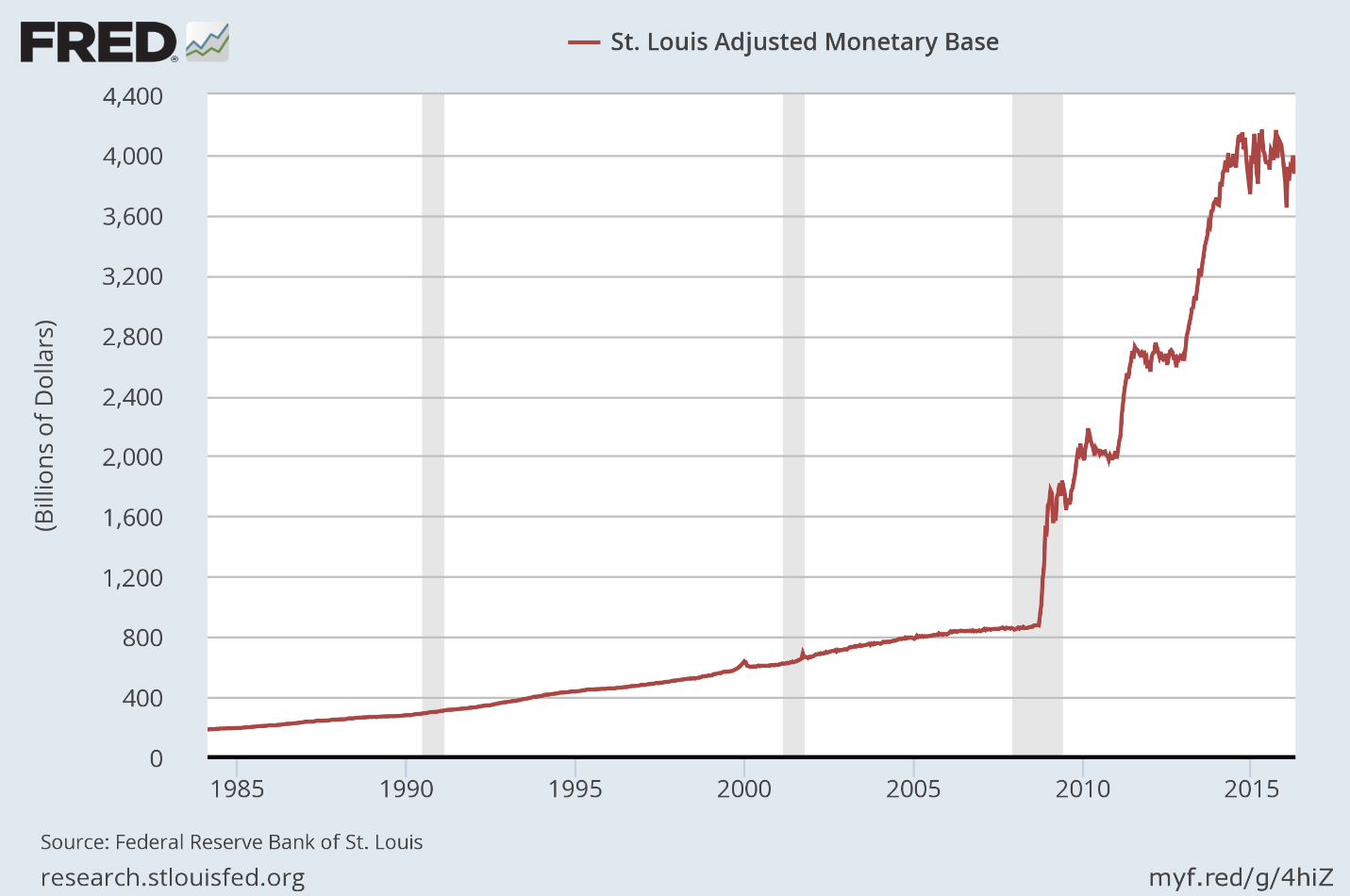
The Federal Reserve can increase or decrease the size of the monetary base by buying or selling government bonds through a select list of the largest banks that serve as primary dealers. When the Fed was conducting its QE programs, which ended in October 2014, it was purchasing US Treasuries and mortgage-backed securities, and then crediting the accounts of the primary dealers with the equivalent value in currency, which would show up as excess reserves in the banking system.

A Correlation Emerges

Prior to the financial crisis, the monetary base grew at a very steady rate consistent with the rate of growth in the US economy, as one might expect. There was no change in the growth rate during the booms and busts in the stock market that occurred in 2000 and 2008, as can be seen below. It wasn’t until the Federal Reserve’s unprecedented monetary policy intervention that began during the financial crisis that the monetary base soared, but something else also happened. A very close correlation emerged between the rising value of the overall stock market and the growth in the monetary base.
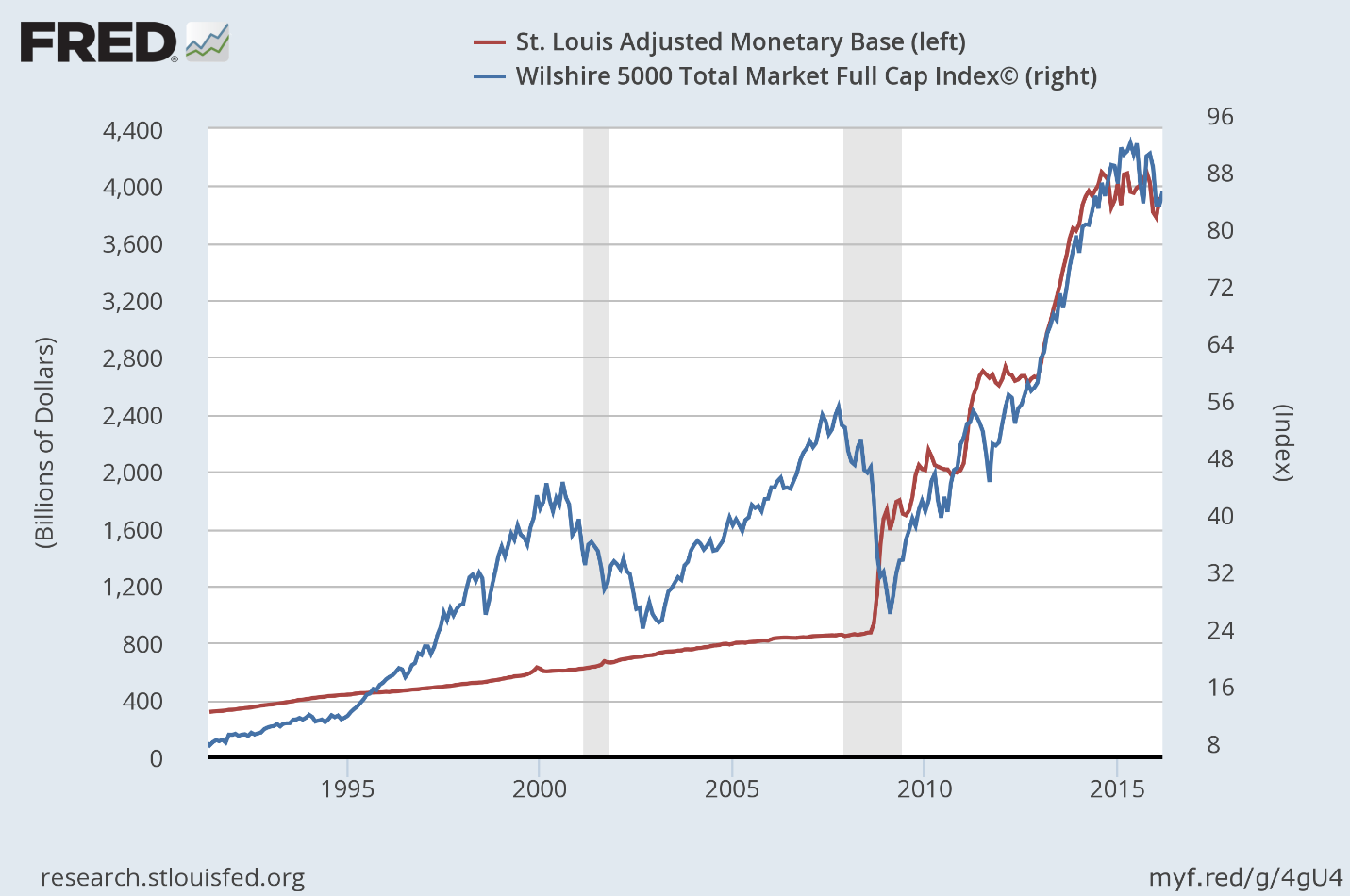
It is well understood that the Fed’s QE programs fueled demand for higher risk assets, including common stocks. The consensus view has been that the Fed spurred investor demand for stocks by lowering the interest rate on the more conservative investments it was buying, making them less attractive, which encouraged investors to take more risk.

Still, this does not explain the very strong correlation between the rising value of the stock market and the increase in the monetary base. This is where conspiracy theories arise, and the relevance of this data is lost. It would be a lot easier to measure the significance of this correlation if I had proof that the investment banks that serve as primary dealers had been piling excess reserves into the stock market month after month over the past seven years. I cannot. What is important for investors to recognize is that an undeniable correlation exists, and it strengthens as we shorten the timeline to approach present day.

The Correlation Cuts Both Ways
Notice that the monetary base (red line) peaked in October 2014, when the Fed stopped buying bonds. From that point moving forward, the monetary base has oscillated up and down in what is a very modest downtrend, similar to that of the overall stock market, which peaked a few months later.
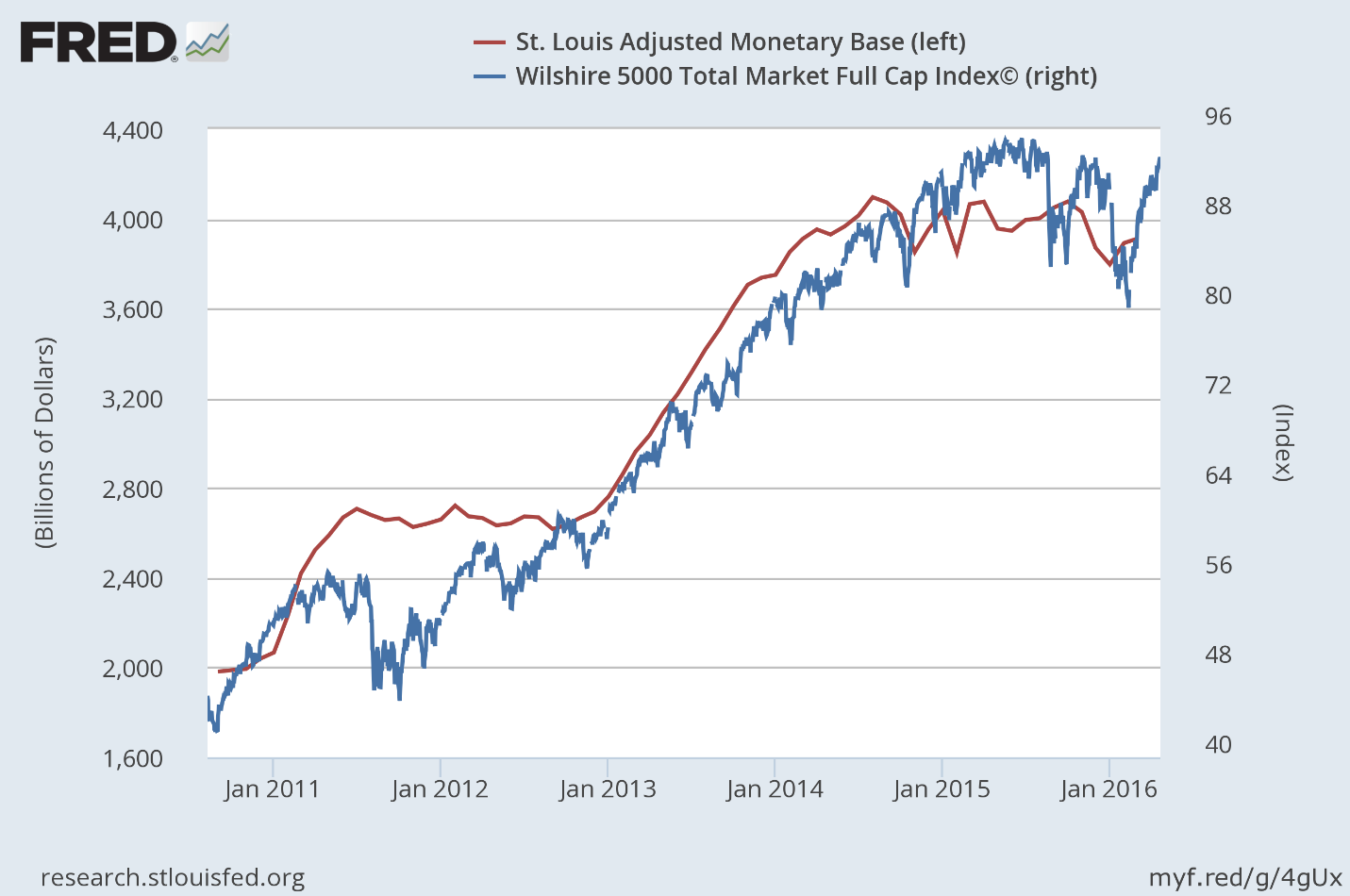
 

What I have come to realize is that these ebbs and flows continue to have a measurable impact on the value of the overall stock market, but in both directions! This is important for investors to understand if the Fed continues to tighten monetary policy later this year, which would require reducing the monetary base.

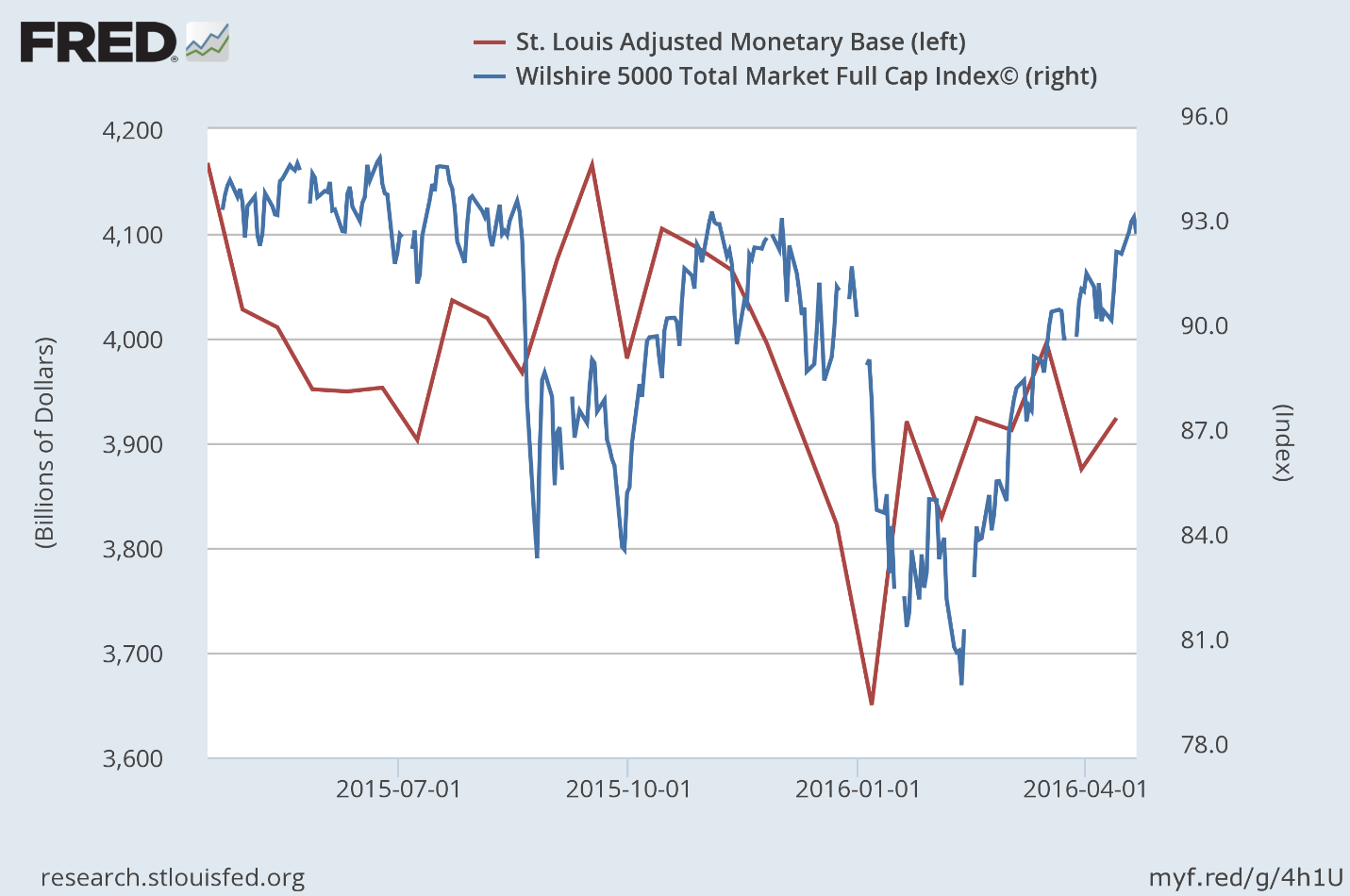
If we look at the fluctuations in the monetary base over just the past year, in relation to the performance of the stock market, a pattern emerges, as can be seen below. A decline in the monetary base leads a decline in the stock market, and an increase in the monetary base leads a rally in the stock market. The monetary base is serving as a leading indicator of sorts. The one exception, given the severity of the decline in the stock market, would be last August. At that time, investors were anticipating the first rate increase by the Federal Reserve, which didn’t happen, and the stock market recovered along with the rise in the monetary base.
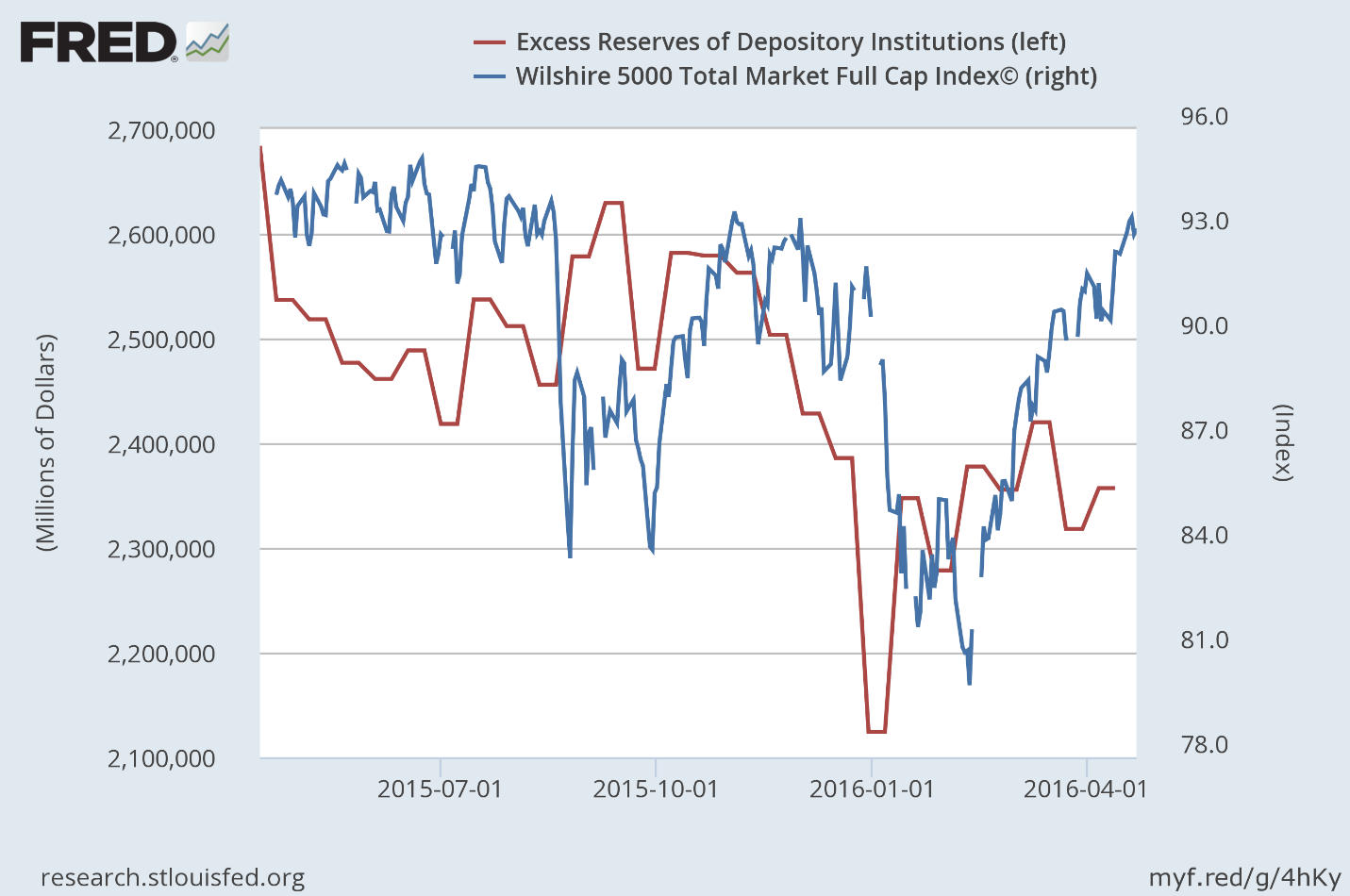
If we replace the fluctuations in the monetary base with the fluctuations in excess bank reserves, the same correlation exists with stock prices, as can be seen below. The image that comes to mind is that of a bathtub filled with water, or liquidity, in the form of excess bank reserves. This liquidity is supporting the stock market. When the Fed pulls the drain plug, withdrawing liquidity, the water level falls and so does the stock market. The Fed then plugs the drain, turns on the faucet and allows the tub to fill back up with water, injecting liquidity back into the banking system, and the stock market recovers. Could this be the indiscriminate buyer that I mentioned previously at work in the market? I don’t know.
What I can’t do is draw a road map that shows exactly how an increase or decrease in excess reserves leads to the buying or selling of stocks, especially over the last 12 months. The deadline for banks to comply with the Volcker Rule, which bans proprietary trading, was only nine months ago. Who knows what the largest domestic banks that hold the vast majority of the $2.4 trillion in excess reserves were doing on the investment front in the years prior. As recently as January 2015, traders at JPMorgan made a whopping $300 million in one day trading Swiss francs on what was speculated to be a $1 billion bet. Was that a risky trade?

Despite the ban on proprietary trading imposed by the Volcker Rule, there are countless loopholes that weaken the statute. For example, banks can continue to trade physical commodities, just not commodity derivatives. Excluded from the ban are repos, reverse repos and securities lending, through which a lot of speculation takes place. There is also an exclusion for what is called “liquidity management,” which allows a bank to put all of its relatively safe holdings in an account and manage them with no restrictions on trading, so long as there is a written plan. The bank can hold anything it wants in the account so long as it is a liquid security.

My favorite loophole is the one that allows a bank to facilitate client transactions. This means that if a bank has clients that its traders think might want to own certain stocks or stock-related securities, it can trade in those securities, regardless of whether or not the clients buy them. Banks can also engage in high-frequency trading through dark pools, which mask their trading activity altogether.

As a friend of mine who is a trader for one of the largest US banks told me last week, he can buy whatever he wants within his area of expertise, with the intent to make a market and a profit, so long as he sells the security within six months. If he doesn’t sell it within six months, he is hit with a Volcker Rule violation. I asked him what the consequences of that would be, to which he replied, “a slap on the wrist.”

Regardless of the investment activities of the largest banks, it is clear that a change in the total amount of excess reserves in the banking system has a significant impact on the value of the overall stock market. The only conclusion that I can definitively come to is that as excess reserves increase, liquidity is created, leading to an increase in demand for financial assets, including stocks, and prices rise. When that liquidity is withdrawn, prices fall. The demand for higher risk financial assets that this liquidity is creating is overriding any supply, or selling, that results from a deterioration in market fundamentals.

There is one aspect of excess reserves that is important to understand. If a bank uses excess reserves to buy a security, that transaction does not reduce the total amount of reserves in the banking system. It simply transfers the reserves from the buyer to the seller, or to the bank account in which the seller deposits the proceeds from the sale, if that seller is not another bank. It does change the composition of the reserves, as 10% of the new deposit becomes required reserves and the remaining 90% remains as excess reserves. The Fed is the only institution that can change the total amount of excess reserves in the banking system, and as it has begun to do so over the past year, I think it is finally realizing that it must reap what it has sown.

The Conundrum

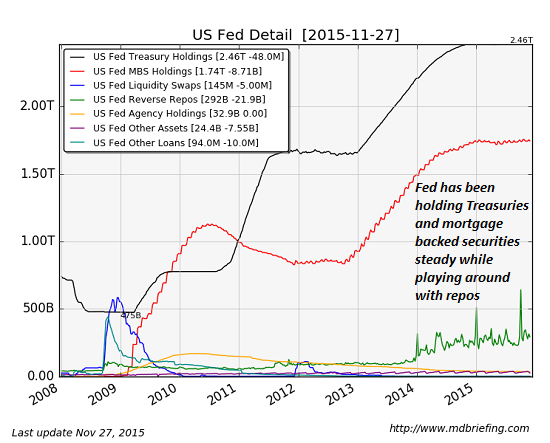
In order to tighten monetary policy, the Federal Reserve must drain the banking system of the excess reserves it has created, but it doesn’t want to sell any of the bonds that it has purchased. It continues to reinvest the proceeds of maturing securities. As can be seen below, it holds approximately $4.5 trillion in assets, a number which has remained constant over the past 18 months.

Therefore, in order to drain reserves, thereby reducing the size of the monetary base, the Fed has been lending out its bonds on a temporary basis in exchange for the reserves that the bond purchases created. These transactions are called reverse repurchase agreements. This is how the Fed has been reducing the monetary base, while still holding all of its assets, as can be seen below.
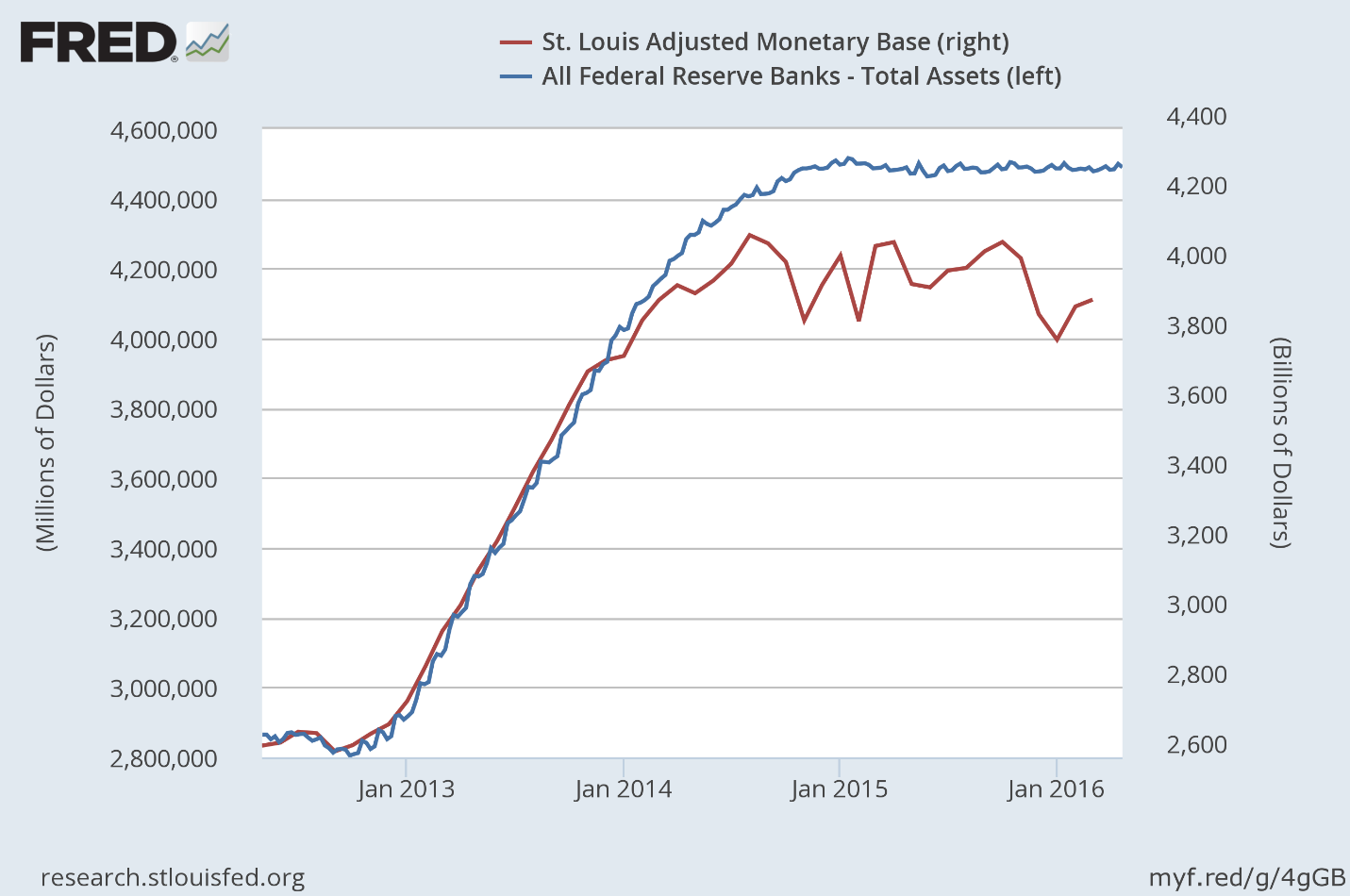
There has been a gradual increase in the volume of repurchase agreements outstanding over the past two years, which has resulted in a gradual decline in the monetary base and excess reserves, as can be seen below.
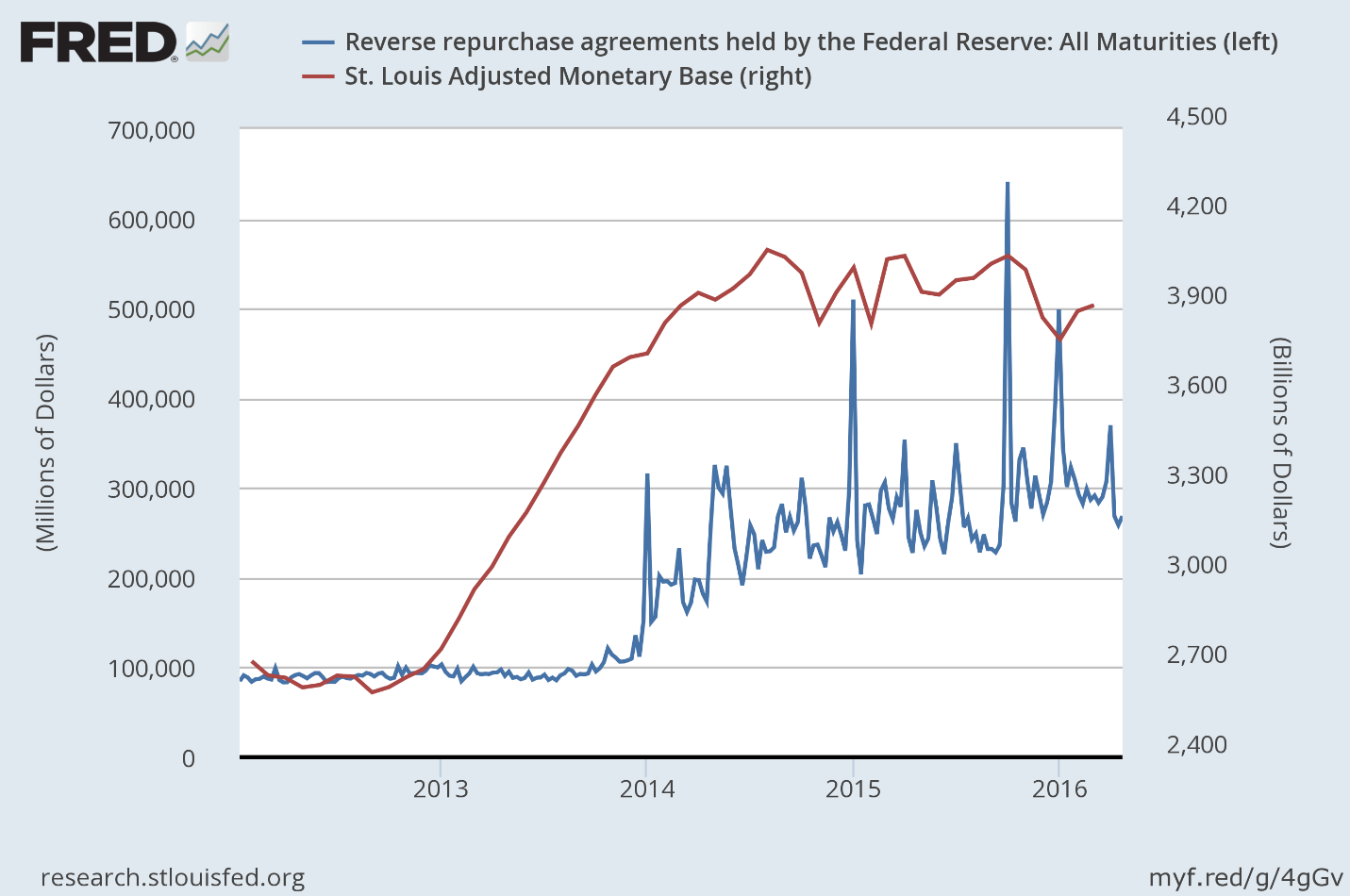
I am certain that the Fed recognizes the correlation between the rise and fall in excess reserves, and the rise and fall in the stock market. This is why it has been so reluctant to tighten monetary policy further. In lieu of being transparent, it continues to come up with excuses for why it must hold off on further tightening, which have very little to do with the domestic economy. The Fed rightfully fears that a significant market decline will thwart the progress it has made so far in meeting its mandate of full employment and a rate of inflation that approaches 2% (stable prices).

The conundrum the Fed faces is that if the rate of inflation rises above its target of 2%, forcing it to further drain excess bank reserves and increase short-term interest rates, it is likely to significantly deflate the value of financial assets, based on the correlation that I have shown. This will have dire consequences both for consumer spending and sentiment, and for what is already a stall-speed rate of economic growth. Slower rates of economic growth feed into a further deterioration in market fundamentals, which leads to even lower stock prices, and a negative-feedback loop develops. This reminds me of the deflationary spiral that took place during the financial crisis.

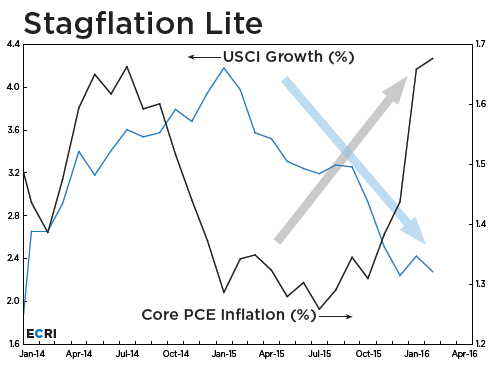
The Fed’s preferred measurement of inflation is the core Personal Consumption Expenditures, or PCE, price index, which excludes food and energy. The latest year-over-year increase of 1.7% is the highest since February 2013, and it is rapidly closing in on the Fed’s 2% target even though the rate of economic growth is moving in the opposite direction, as can be seen below.
The Bubble

If you have been wondering, as I have, why the stock market has been able to thumb its nose at an ongoing recession in corporate profits and revenues that started more than a year ago, I think you will find the answer in $2.4 trillion of excess reserves in the banking system. It is this abundance of liquidity, for which the real economy has no use, that is decoupling the stock market from economic fundamentals. The Fed has distorted the natural pricing mechanism of a free market, and at some point in the future, we will all learn that this distortion has a great cost.

Alan Greenspan once said, “how do we know when irrational exuberance has unduly escalated asset values?” Open your eyes.

What you see in the chart below is a bubble. It is much different than the asset bubbles we experienced in technology stocks and home prices, which is why it has gone largely unnoticed. It is similar from the standpoint that it has been built on exaggerated expectations of future growth. It is a bubble of the Fed’s own making, built on the expectation that an unprecedented increase in the monetary base and excess bank reserves would lead to faster rates of economic growth. It has clearly not. Instead, this mountain of money has either directly, or indirectly, flooded into financial assets, manipulating prices to levels well above what economic fundamentals would otherwise dictate.

The great irony of this bubble is that it is the achievement of the Fed’s objectives, for which the bubble was created, that will ultimately lead it to its bursting. It was an unprecedented amount of credit available at historically low interest rates that fueled the rise in home prices, and it has also been an unprecedented amount of credit at historically low interest rates that has fueled the rise in financial asset prices, including the stock market. How and when this bubble will be pricked remains a question mark, but what is certain is that the current level of excess reserves in the banking system that appear to be supporting financial markets cannot exist in perpetuity.

Article by Lawrence Fuller | Seeking Alpha

Sales of New Homes Fall on Slump in West

https://s16-us2.ixquick.com/cgi-bin/serveimage?url=http%3A%2F%2Fassets.site-static.com%2FuserFiles%2F309%2Fimage%2FHousing_Market.JPG&sp=7c4a15640519e1a0f951ca3407211459Purchases of new homes unexpectedly declined in March for a third month, reflecting the weakest pace of demand in the West since July 2014.

Total sales decreased 1.5% to a 511,000 annualized pace, a Commerce Department report showed Monday. The median forecast in a Bloomberg survey was for a gain to 520,000. In Western states, demand slumped 23.6%.

Purchases rose in two regions last month, indicating uneven demand at the start of the busiest time of the year for builders and real estate agents. While new construction has been showing limited upside, cheap borrowing costs and solid hiring will help ensure residential real estate continues to expand.

“Housing is certainly not booming,” Jim O’Sullivan, chief U.S. economist at High Frequency Economics Ltd. in Valhalla, N.Y., said before the report. “Some people may be shut out of the market because lending standards are still tight. There may still be some reluctance to buy versus rent.”

Even so, “through the volatility, the trend is still more up than down, and we expect modest growth in sales,” he said.

Economists’ estimates for new-home sales ranged from 488,000 to 540,000. February purchases were revised to 519,000 from 512,000. The monthly data are generally volatile, one reason economists prefer to look at longer term trends.

The report said there was 90% confidence the change in sales last month ranged from a 13.5% drop to a 16.5% increase.

Sales in the West declined to a 107,000 annualized rate in March after surging 21.7% the previous month to 140,000. In the South, purchases climbed 5% to a 314,000 pace in March, the strongest in 13 months. Sales in the Midwest advanced 18.5%, the first gain in three months, and were unchanged in the Northeast.

The median sales price decreased 1.8% from March 2015 to $288,000.

There were 246,000 new houses on the market at the end of March, the most since September 2009. The supply of homes at the current sales rate rose to 5.8 months, the highest since September, from 5.6 months in the prior period.

From a year earlier, purchases increased 5.8% on an unadjusted basis.

New-home sales, which account for less than 10% of the residential market, are tabulated when contracts get signed. They are generally considered a timelier barometer of the residential market than purchases of previously owned dwellings, which are calculated when a contract closes, typically a month or two later.

Borrowing costs are hovering close to a three-year low, helping to bring house purchases within the reach of more Americans. The average rate for a 30-year fixed mortgage was 3.59% last week, down from 3.97% at the start of the year, according to data from Freddie Mac.

The job market is another source of support. Monthly payrolls growth averaged 234,000 in the past year, and the unemployment rate of 5% is near an eight-year low. Still, year-over-year wage gains have been stuck in a 2% to 2.5% range since the economic expansion began in mid-2009.

The market for previously owned homes improved last month, climbing 5.1% to a 5.33 million annualized rate, the National Association of Realtors reported April 20. Prices rose as inventories remained tight.

Even so, the market is getting little boost from first-time buyers, who accounted for 30% of all existing-home purchases, a historically low share, according to the group.

Recent data on home building has been less encouraging, although those figures are volatile month to month. New-home construction slumped in March, reflecting a broad-based retreat, a Commerce Department report showed last week. Home starts fell 8.8% to the weakest annual pace since October. Permits, a proxy for future construction, also unexpectedly dropped.

Source: National Mortgage News

Is This The End Of The U.S Dollar? Geopolitical Moves “Obliterate U.S Petrodollar Hegemony “

https://i0.wp.com/shtfplan.com/wp-content/uploads/2014/09/king-dollar.jpgIt seems the end really is nigh for the U.S. dollar.

And the mudfight for global dominance and currency war couldn’t be more ugly or dramatic.

The Saudis are now openly threatening to take down the U.S. economy in the ongoing fallout over collapsing oil prices and tense geopolitical events involving the 9/11 cover-up. The New York Times reports:

Saudi Arabia has told the Obama administration and members of Congress that it will sell off hundreds of billions of dollars’ worth of American assets held by the kingdom if Congress passes a bill that would allow the Saudi government to be held responsible in American courts for any role in the Sept. 11, 2001, attacks.

China has been working for years to establish global currency status, and will strengthen the yuan by backing it with gold in moves clearly designed to cripple the role of the dollar. Zero Hedge reports:

China’s shift to an official local-currency-based gold fixing is “the culmination of a two-year plan to move away from a US-centric monetary system,” according to Bocom strategist Hao Hong. In an insightfully honest Bloomberg TV interview, Hong admits that “by trading physical gold in renminbi, China is slowly chipping away at the dominance of US dollars.”

Putin also waits in the shadows, making similar moves and creating alliances to out-balance the United States with a growing Asian economy on the global stage.

Luke Rudkowski of WeAreChange asks “Is This The End of the U.S. Dollar?” in the video below.

He writes:

In this video Luke Rudkowski reports on the breaking news of both China and Saudi Arabia making geopolitical moves that could cause a U.S economic collapse and obliteration of the U.S hegemony petrodollar. We go over China’s new gold backed yuan that cannot be traded in U.S dollars and rising tension with Saudi Arabia threatening economic blackmail if their role in 911 is exposed.

Visit WeAreChange.org where this video report was first published.

The Federal Reserve, Henry Kissinger, the Rockefellers and their allies created the petrodollar and insisted upon the world using the U.S. dollar to buy oil, placing debt in American currency and entire countries under the yoke of the West.

But that paradigm has been crumbling as world order shifts away from U.S. hegemony.

It is a matter of when – not if – these events will change the U.S. financial landscape forever.

As SHTF has warned, major events are taking place, and no one can say if stability will be here tomorrow.

Stay vigilant, and prepare yourself and your family as best as you can.

Read more:

Pay Attention To The Economy Right Now, Because A Disturbing Series Of Events Seems To Be In Motion

Here’s How We Got Here: A Short Primer On The History Of The Petrodollar

Shock Report: China Dumps Half a Trillion Dollars: “Something Is Very, Very Wrong”

Dollar Moves Shake the World: “Federal Reserve Could Start a Currency War”

by Mac Salvo | SHTF Plan

Negative Interest Rates Are Destroying the World Economy

https://i0.wp.com/armstrongeconomics-wp.s3.amazonaws.com/2015/11/Negative-Rates.jpgQUESTION: Mr. Armstrong, I think I am starting to see the light you have been shining. Negative interest rates really are “completely insane”. I also now see that months after you wrote about central banks were trapped, others are now just starting to entertain the idea. Is this distinct difference in your views that eventually become adopted with time because you were a hedge fund manager?

ANSWER: I believe the answer is rather simple. How can anyone pretend to be analysts if they have never traded? It would be like a man writing a book explaining how it feels to give birth. You cannot analyze what you have never done. It is just impossible. Those who cannot teach and those who can just do. Negative interest rates are fueling deflation. People have less income to spend so how is this beneficial? The Fed always needed 2% inflation. The father of negative interest rates is Larry Summers. He teaches or has been in government. He is not a trader and is clueless about how markets function. I warned that this idea of negative interest rates was very dangerous.

Yes, I have warned that the central banks are trapped. Their QE policies have totally failed. There were numerous “analysts” without experience calling for hyperinflation, collapse of the dollar, yelling the Fed is increasing the money supply so buy gold. The inflation never appeared and gold declined. Their reasoning was so far off the mark exactly as people like Larry Summers. These people become trapped in their own logic it becomes irrational gibberish. They only see one side of the coin and ignore the rest.

Central banks have lost all ability to manage the economy even in theory thanks to this failed reasoning. They have bought-in the bonds and are unable to ever resell them again. If they reverse their policy of QE and negative interest rates, government debt explodes with insufficient buyers. If the central banks refuse to reverse this crazy policy of QE and negative interest rates they will see a massive capital flight from government to the private sector once the MAJORITY realize the central banks are incapable of any control.

alarm_clock

The central banks have played a very dangerous game and lost. It appears we are facing the collapse of Social Security which began August 14th, 1935 (1935.619) because they stuffed with government debt and robbed the money for other things. Anyone else would go to prison for what politicians have done and prosecutors would never defend the people because they want to become famous politicians. We will probably see the end of this Social Security program by 2021.772 (October 9th, 2021), or about 89 weeks into the next business cycle. These people are completely incompetent to manage the economy and we are delusional to think people with no experience as a trader can run things. If you have never traded, you have no busy trying to “manipulate” society with you half-baked theories. So yes. The central banks are trapped. They have lost ALL power. It becomes just a matter of time as the clock ticks and everyone wakes up and say: OMG!

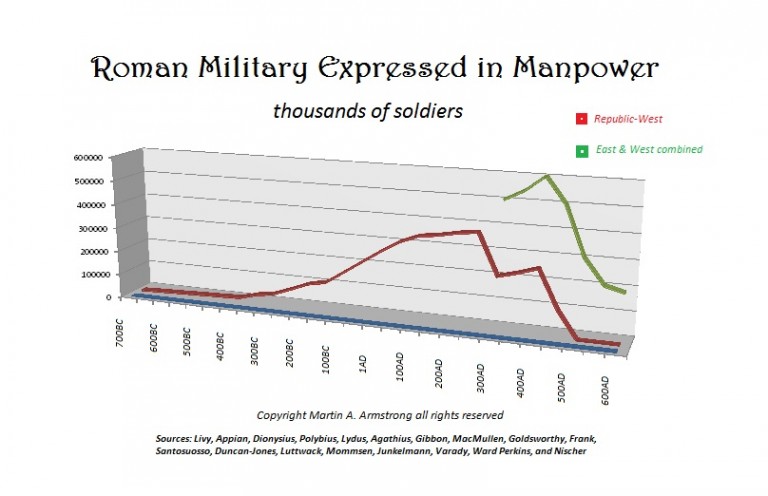
https://www.armstrongeconomics.com/wp-content/uploads/2016/04/Roman-Army-768x496.jpg

We have government addicted to borrowing and if rates rise, then everything will explode in their face. Western Civilization is finished as we know it just as Communism collapsed because we too subscribe to the theory of Marx that government is capable of managing the economy. Just listen to the candidates running for President. They are all preaching Marx. Vote for me and I will force the economy to do this. IMPOSSIBLE! We have debt which is unsustainable the further you move away from the United States which is the core economy such as emerging markets. Unfunded pensions destroyed the Roman Empire. We are collapsing in the very same manner and for the very same reason. We are finishing a very very very important report on the whole pension crisis issue worldwide.

Source: Armstrong Economics

Forget Houses — These Retail Investors Are Flipping Mortgages

It’s 9:30 a.m. on a recent sunny Friday, and 60 people have crammed into an airport hotel conference room in Northern Virginia to hear Kevin Shortle, a veteran real estate professional with a million-watt smile, talk about “architecting a deal.”

Some have worked in real estate before, flipping houses or managing rentals. But the deals Shortle, lead national instructor for a company called Note School, is describing are different: He teaches people how to buy home notes, the building blocks of housing finance.

While titles and deeds establish property ownership, notes — the financial agreements between lenders and home buyers — set the terms by which a borrower will pay for the home. Financial institutions have long passed them back and forth as they re-balance their portfolios.

But the trade in delinquent notes has exploded in the post-financial-crisis world. As government entities like Fannie Mae and Freddie Mac have struggled with the legacies of the housing bust, they’ve sold billions of dollars’ of delinquent notes to big institutional investors, who resell them in turn.

A sign outside a foreclosed home for sale in Princeton, Ill, in January 2014.

And people like the ones in the Sheraton now pay good money to learn how to pursue what Note School calls “rich rewards.” The result: a marketplace where thousands of notes are bought and sold for a fraction of the value of the homes they secure.

A buyer can renegotiate with the homeowner, collecting steady cash. Or she might offer a “cash for keys” payout and seek a tenant or new owner. If all else fails, she can foreclose.

For some housing market observers, the churn in notes is a sign that the financial crisis hasn’t fully healed — and a fresh source of potential abuses. But the people listening to Shortle saw opportunity as he explained how they can “be the bank” for people with mortgage-payment problems.

“You can make a lot of money in the problem-solving business,” Shortle said.

How home notes move through a healing housing market

Since most people buy homes using mortgage financing, notes can be thought of as another name for mortgage agreements. After the home purchase closes, banks and other lenders usually sell them to government entities like Fannie Mae, Freddie Mac, and the Federal Housing Administration.

The housing market has improved since the bust, but hasn’t healed fully. There were 1.4 million foreclosures in 2015, according to real estate data firm RealtyTrac, and more than 17% of all transactions last year were deemed “distressed” — more than double pre-bust levels — in some way.

As the dust has settled, government agencies have begun selling delinquent notes to big institutional investors like Lone Star Funds, Goldman Sachs GS, +2.76% and Fortress Investments FIG, +3.96% as well as some community nonprofits, in bulk. The agencies have sold more than $28 billion in distressed loans since 2012, according to government data.

https://i0.wp.com/ei.marketwatch.com//Multimedia/2016/04/06/Photos/NS/MW-EJ704_mortga_20160406142703_NS.jpg

The big investors then sell some to buyers such as Colonial Capital Management, which is run by the same people who run Note School. Colonial, which buys about 2,000 notes a year, sells most of them one by one to people like the ones who gathered in the Virginia Sheraton.

It’s difficult to know how much this happens and what it has meant for homeowners.

Anyone who buys notes from the government must follow reporting requirements that include information on how the loans perform. Those requirements stay with the notes if they’re resold; they expire four years after the government’s initial sale. But nobody tracks note sales that weren’t made by the government, and even the government’s records don’t link outcomes and note owners.

March data from the Federal Housing Administration only hint at a broad view of how post-sale loans perform. The FHA has sold roughly 89,000 loans since 2012; less than 11% of those homeowners now pay their mortgages on time. Many are simply classified as “unresolved.” More than 34% had been foreclosed upon.

Fannie Mae and Freddie Mac, which began selling notes in 2014, were supposed to report similar data by the end of March. A spokeswoman for the agencies’ regulator said she did not know when that report, still incomplete, would be submitted.

And not all notes are initially sold by the government, making comprehensive oversight of the marketplace even harder. Banks and other lenders often sell notes directly; Colonial doesn’t buy notes from the government, according to Eddie Speed, founder of both Note School and Colonial.

For investors, a cleaner deal than the world of ‘tenants and toilets’

Note buying has attractions for both investors and the communities where the homeowners live.

Delinquent notes can be bought cheaply, often for about a third of a home’s market value. Note buyers get an investment that’s more like a financial asset — and less dirty than the landlord’s world of “tenants and toilets.”

Meanwhile, investors can often afford to cut homeowners a significant break, avoiding foreclosure while still making a profit.

And there’s government money for the taking in the name of helping homeowners. Since the housing crisis, the federal government has allocated nearly $10 billion to states deemed hardest-hit by the bust. Those states funnel the money to borrowers, often to help them reach new agreements with their lenders.

That can help municipalities that lose out on property taxes when homeowners don’t make payments, and which benefit from having more involved owners, Speed says.

Eddie Speed

When Tj Osterman, 38, and Rick Allen, 36, who have worked together as real-estate investors for about 10 years in the Orlando area, first explored note buying, they thought it little different than flipping abandoned houses.

But when they realized homeowners were often still in the picture, they changed their approach to try to work with them. Some of their motivation came from personal experience: Allen went through foreclosure in 2007. “It was a tough time,” he said. “I wish there was someone like me who said, let’s help you keep your house.”

They can buy notes cheaply enough that they can reduce the principal owed by homeowners “as much as 50%, and still turn a nice profit, pay back taxes, [and] get these people feeling good about themselves again,” said Osterman.

They now have a goal of helping save 10,000 homeowners from foreclosure. “I’m so addicted to the socially responsible side of stuff,” Osterman said. “We talk with borrowers like human beings and underwrite to real-world standards.”

‘There’s a system out there that’s broken’

Some housing observers have concerns about drawing nonprofessionals into an often-opaque market. A recent example Shortle used as a case study during the Virginia seminar helps explain why.

A note on an Atlanta-area home was being sold for $24,360; according to estimates from Zillow and local agents, its market value was between $50,000 and $70,000.

Some back taxes were owed, and a payment history showed that while the homeowner was making erratic or partial payments on her $500 monthly mortgage, she hadn’t quit. She had some equity built up in the house, another sign of commitment.

Real-estate investment firm Stonecrest sold her the home in 2012; she had used Stonecrest’s own financing at 9%. Her payment record was spotless until 2014. Stonecrest sold the note to Colonial in 2015 and Colonial offered it for resale in early 2016.

Most notes underpin mortgages. But this one was linked to a land contract, a financial agreement more typical when the seller is offering financing. Land contracts are sometimes criticized for being almost predatory: If a buyer skips a payment, the house and all the money he’s put toward it can be taken away.

And buyers don’t hold the deeds to the home, so the homes can be taken more quickly if they’re delinquent. Note School often steers students to scenarios where government programs like Hardest Hit can be tapped, but those programs don’t apply to land contracts.

Shortle walked his class through different strategies. The new note owner could foreclose; they could also induce the home buyer to walk. “It may be time to give this person a little cash for keys to move on,” he told the class. “They can’t afford it.”

Other data indicated that the house would rent for roughly $750. It might make sense, Shortle suggested, to remove the homeowner, fix up the house, rent it out, then sell the entire arrangement to a cash investor.

If a new note owner took that tack, the note would change hands four times in about as many years—even as the homeowner changed just once. The homeowner might never notice.

https://i0.wp.com/ei.marketwatch.com//Multimedia/2016/04/07/Photos/NS/MW-EJ800_note_o_20160407143303_NS.jpg

Some analysts see evidence of a still-hurting housing market behind all that activity.

By diffusing distressed loans out into a broader marketplace, lenders avoid the negative publicity that comes with foreclosing on delinquent homeowners. That masks “a layer of distress in the housing market that’s being overlooked,” said Daren Blomquist, vice president at RealtyTrac.

“This has been a way to push aside the crisis and sweep it under the rug,” Blomquist told MarketWatch.

Some analysts see evidence of a still-hurting housing market behind all that activity.

By diffusing distressed loans out into a broader marketplace, lenders avoid the negative publicity that comes with foreclosing on delinquent homeowners. That masks “a layer of distress in the housing market that’s being overlooked,” said Daren Blomquist, vice president at RealtyTrac.

“This has been a way to push aside the crisis and sweep it under the rug,” Blomquist told MarketWatch.

Osterman, left, and Allen

Note investors say they can offer a service others can’t or won’t. “There’s a real issue with how we’re treating hardships,” said Osterman. “There’s a system out there that’s broken and needs to be disrupted in a good way.”

Note School’s founder says the goal is a ‘win-win’

While newer investors like Osterman and Allen have a sense of mission forged during the recent housing crisis, Speed has been in the note business for more than 30 years. He is adamant that it’s in Note School’s best interest to teach students to observe regulation and treat homeowners respectfully. There’s no reason it can’t be a “win-win,” he said.

‘”We’re not teaching people to go and do ‘Wild West investing.’

Eddie Speed”

Colonial Funding doesn’t make buyers of its notes go through Note School, but it does require them to work with licensed mortgage servicers. Note School offers connections to armies of vendors offering services for every step of the process: people who will assess the property’s real market value, “door-knockers” who will hand-deliver letters to homeowners, title research companies, insurers, and more.

“We’ve been in the note buying business for 30 years,” said Speed. “We’re not teaching people to go and do ‘Wild West investing.’”

Speed believes buying distressed notes is a process tailor-made for people with an entrepreneurial approach to doing well by solving problems — and maintains that he is mindful of the postcrisis environment in which they work.

“I’m walking into where the disaster has already happened,” he said. “If I walk into a loan where the customer has vacated, they probably want out. Common sense tells us if the borrower can deed it over to the lender and walk away with dignity, that seems like a good deal for him. We’re trying to do everything we can to reach resolution.”

by Andrea Riquier | Marketwatch

Why Real Estate Is Not Immune to Inflation Threat

https://s17-us2.ixquick.com/cgi-bin/serveimage?url=http%3A%2F%2Fpreparednessadvice.com%2Fwp-content%2Fuploads%2F2013%2F02%2Finflation1.jpg&sp=ee9d649254fe741a935ee7b25e444e41The pessimists are already talking about 3% inflation later this year if energy prices don’t retreat. Most likely, Federal Reserve monetary experimentation will inflict a new great inflation on the U.S., although this is much more likely to occur in the next business cycle rather than the current one. Before that, we’ll get the shock of an economic slowdown — or even recession — which will exert some pause. So many households are right to ask whether their main asset will insulate them from this shock whenever it occurs. The answer from economic science is no.

House prices perform best during the asset-price inflation phase of the monetary cycle. During that period, low or zero rates stimulate investors to search for yield, which many do, shedding their normal skepticism. The growth in irrationality across many marketplaces is why some economists describe set price inflation as a “disease.” Usually, the housing and commercial real estate markets become infected by this disease at some stage.

Real estate markets are certainly not shielded from irrational forces. “Speculative stories” about real estate flourish and quickly gain popularity — whether it’s the ever-growing housing shortage in metropolitan centers; illicit money pouring into the top end from all over the world and high prices rippling down to lower layers of the market; or bricks and mortar (and land), the ultimate safe haven when goods and services inflation ultimately accelerates.

That last story defies much economic experience to the contrary. By the time inflation shock emerges, home prices have already increased so much in real terms under asset-price inflation that they cannot keep up with goods and services inflation, and may even fall in nominal terms. One thinks of the tale of the gold price in the Paris black market during World War II: prices hit their peak just before the Germans entered the city in May 1940 and never returned.

Real estate is only a hedge against high inflation if it is bought early on in the preceding asset-price inflation period. We can generalize this lesson. The arrival of high inflation is an antidote to asset-price inflation. That is, if it has not already reached its late terminal stage when speculative temperatures are falling across an array of markets.

To understand how home prices in real terms behave under inflation shock we must realize how, in real terms, they are driven by expectations of future rents (actual, or as given to homeowners); the cost of capital; and the profit from carry trade. All of these drivers have been operating in the powerful asset-price inflation phase the U.S. and many foreign countries have been experiencing during recent years.

Together they have pushed up the S&P Case Shiller national home price index to almost 20% above its long-run trend (0.6% each year since 1998), having fallen slightly below at its trough in 2011, and having reached a peak 85% above in 2006.

Let’s take the drivers in turn.

Rents are rising in many metropolitan centers.

The cost of equity is low, judging by high underlying price earnings ratios in the stock markets. Investors suffering from interest income famine are willing to put a higher price on future earnings, whether in the form of house rents or corporate profits, than they would do under monetary stability.


Leveraged owners of real estate can earn a handsome profit between rental income and interest paid, especially taking account of steady erosion of loan principal by inflation and tax deductions.

The arrival of high inflation would change all these calculations.

Cost of equity would rise as markets feared the denouement of recession, and reckoned with the new burden on economic prosperity. Long-term interest rates would climb starkly in nominal terms. Their equivalent in real terms would be highly volatile and unpredictable, albeit at first low in real terms (inflation-adjusted), meaning that carry trade income for leveraged owners would become elusive.

None of this is to suggest that a high inflation shock is likely in the second quarter. A sustained period of much stronger demand growth across an array of goods, services and labor markets would most likely have to occur first, and could be seen as early as the next cyclical upturn.

An economic miracle could bring a reprieve from inflation. But much more likely, the infernal inflation machine of expanding budget deficits and Fed experimentation will ultimately mow down any resistance in its way.

by Brendan Brown | National Mortgage News

Brendan Brown is an executive director and the chief economist of Mitsubishi UFJ Securities International.

What Shrinking Mortgage Debt Says About The US Housing Market

Fewer homes bought, more refinances, and older mortgages lead to principal balance declines

https://i0.wp.com/ei.marketwatch.com//Multimedia/2014/03/21/Photos/MG/MW-BX309_Mortga_20140321121135_MG.jpg

Shadows from the financial crisis and Great Recession still linger in Americans’ personal finances, researchers at the New York Fed found.

Mortgage debt outstanding nearly doubled in the period from 2000 and 2006, but has risen only about 1% since 2012, according to data compiled in the regional bank’s quarterly report on household debt and crisis.

Put another way, in 2008 just as the subprime crisis was coming to a head, Americans had $12.68 trillion in debt outstanding, of which housing debt made up $10 trillion, or 79% of the total. In the fourth quarter of 2015, there was $12.12 trillion in total debt, and housing’s share had dwindled to 72%, or $8.74 trillion.

One of the biggest contributors to the decline in mortgage debt is that Americans aren’t taking equity out of their homes at nearly the same rate as in the prior decade. Cash-out refinances and home equity lines of credit rose at a rate of more than $300 billion every year from 2003-2007. In 2015, such debt grew only by $30 billion.

“In fact,” the researchers note on their blog, “the small amount of cash-out refi going on is almost completely offset by people repaying second mortgages and HELOCs.”

But it’s not just a newfound frugality that’s keeping a lid on mortgage debt. The pace of home buying has slowed even as Americans are paying down their home loans.

The total amount paid against mortgage debt in 2015 was $288 billion, or 3.5% of the total outstanding. The last time the total amount of mortgage debt outstanding was $8.25 trillion was 2006, the height of the boom, the researchers noted. That year, consumers paid down only $170 billion, or 2.1% of the balance.

In recent years, much of the pay down has come thanks to lower interest rates. New mortgages are being lent with lower rates, and existing homeowners have been refinancing. The researchers also note that as credit standards have remained tight, most new mortgages are going to people with excellent credit, enabling them to pay lower rates.

Those factors have taken the weighed average interest rate on the outstanding mortgage debt balance from 7.65% in 2000 to 3.85% in 2015.

There’s another factor contributing to the higher pace of pay downs. The existing inventory of mortgage debt outstanding has aged significantly over the past decade as the pace of buying and selling slowed. That means mortgage payments are further along in their amortization process and principal, rather than interest, is being paid down.

Since 2008, the researchers note, aggregate mortgage payments have fallen 8% but principal payments have risen 41%.

The shrinking mortgage debt is a good thing, the New York Fed researchers conclude. Principal pay-down is a form of saving for borrowers, so in the face of rising home prices this means strengthening balance sheets for mortgagors. This is important, of course, as we learned in 2008 just how crucial household debts can be.

But some analysts worry that Americans’ equity is too concentrated in real estate assets. Another lesson from the 2008 crisis is that it can be very dangerous when the price of those assets plummets.

by Andrea Riquier for MarketWatch

Final Obama Budget Banks On Siphoning Millions Off Fannie Mae And Freddie Mac For Years to Come

It is audacious that President Obama’s fiscal 2017 budget proposal released Tuesday counts income from Fannie Mae and Freddie Mac as just another revenue stream – not only for the coming year but for the next ten years.

The Administration has long shown it has a hearty appetite for the mortgage giants’ revenues. The two companies have already sent a combined $241.3 billion to the government since being placed in conservatorship 2008 – over $50 billion more than the $187.5 billion in taxpayer funds they received at that time. Should the “temporary” conservatorship and Third Amendment Sweep remain in force for at least another ten years the White House estimates the GSEs will send another $151.5 billion to the U.S. Treasury.  That could mean these privately-owned mortgage giants will have sent nearly an astounding $400 billion to Treasury while needed reforms were put on hold.

The revenue projections in the budget proposal justify assumptions about why the Administration has had much less of an appetite for recommending ways to reform and recapitalize Fannie and Freddie and ensure they could provide liquidity and stability in the mortgage market for years to come.  Why sell a cash cow? The Administration effectively yielded its statutory authority – and obligation – to end the conservatorship with the enactment of a massive spending bill late last year that included provisions of the so-called “Jumpstart GSE Reform.” Despite the bill’s name, it put Congress in the driver’s seat and all but guaranteed no additional action will be taken to end the conservatorship this year or perhaps not until well in 2017.

The proposed fiscal 2017 budget, like all blueprints before it, makes no room for the inevitable recession and market correction. Should a downturn occur in the next year or so, taxpayers will be obligated to provide additional bailout funding because Fannie Mae and Freddie Mac have been prohibited from building up adequate capital levels.

In a nod to the persistent problem of access to affordable housing, the budget proposal estimates Fannie and Freddie will provide another $136 million to the Affordable Housing Trust Fund in 2017. This money is provided to states to finance affordable housing options for the poor. The Administration reports this would be added to the $170 million set to be distributed this year. But here’s the catch: those funds derive from a small fee on loans Fannie Mae and Freddie Mac help finance but only as so long as they don’t require another infusion of public money.

In essence, President Obama’s final budget proposal counts money to which it was never entitled; it flaunts a disregard for the Housing and Economic Recovery Act’s requirement that Fannie Mae and Freddie Mac be made sound and solvent; and it takes a cavalier stance to the fact that under capitalized GSEs could have negative consequences for taxpayers and working Americans striving for home ownership. After eight years, the Administration’s parting message is that needed reforms in housing finance policy will simply have to wait for another president and another Congress.   There is not urgency of now, just the audacity of nope.

Source: ValueWalk

California Renter Apocalypse

The rise in rents and home prices is adding additional pressure to the bottom line of most California families.  Home prices have been rising steadily for a few years largely driven by low inventory, little construction thanks to NIMBYism, and foreign money flowing into certain markets.  But even areas that don’t have foreign demand are seeing prices jump all the while household incomes are stagnant.  Yet that growth has hit a wall in 2016, largely because of financial turmoil.  We’ve seen a big jump in the financial markets from 2009.  Those big investor bets on real estate are paying off as rents continue to move up.  For a place like California where net home ownership has fallen in the last decade, a growing list of new renter households is a good thing so long as you own a rental.

The problem of course is that household incomes are not moving up and more money is being siphoned off into an unproductive asset class, a house.  Let us look at the changing dynamics in California households.

More renters

Many people would like to buy but simply cannot because their wages do not justify current prices for glorious crap shacks.  In San Francisco even high paid tech workers can’t afford to pay $1.2 million for your typical Barbie house in a rundown neighborhood.  So with little inventory investors and foreign money shift the price momentum.  With the stock market moving up nonstop from 2009 there was plenty of wealth injected back into real estate.  The last few months are showing cracks in that foundation.

It is still easy to get a mortgage if you have the income to back it up.  You now see the resurrection of no money down mortgages.  In the end however the number of renter households is up in a big way in California and home ownership is down:

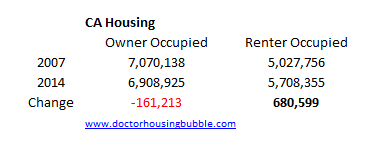
owner vs renters

Source:  Census

So what we see is that since 2007 we’ve added more than 680,000 renter households but have lost 161,000 owner occupied households.  At the same time the population is increasing.  When it comes to raw numbers, people are opting to rent for whatever reason.  Also, just because the population increases doesn’t mean people are adding new renter households.  You have 2.3 million grown adults living at home with mom and dad enjoying Taco Tuesdays in their old room filled with Nirvana and Dr. Dre posters.

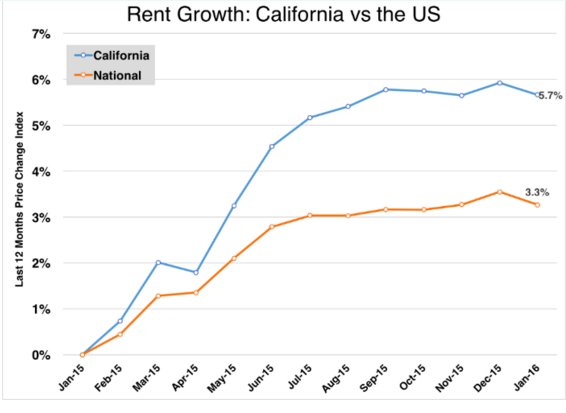
And yes, with little construction and unable to buy, many are renting and rents have jumped up in a big way in 2015:

california rents

Source:  Apartmentlist.com

This has slowed down dramatically in 2016.  It is hard to envision this pace going on if a reversal in the economy hits (which it always does as the business cycle does its usual thing).

Home ownership rate in a steep decline

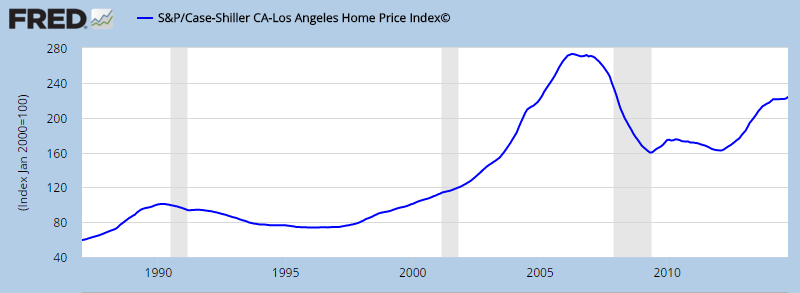
In the LA/OC area home prices are up 37 percent in the last three years:

california home prices

Of course there are no accompanying income gains.  If you look at the stock market, the unemployment rate, and real estate values you would expect the public to be happy this 2016 election year.  To the contrary, outlier momentum is massive because people realize the system is rigged and are trying to fight back.  Watch the Big Short for a trip down memory lane and you’ll realize nothing has really changed since then.  The house humping pundits think they found some new secret here.  It is timing like buying Apple or Amazon stock at the right time.  What I’ve seen is that many that bought no longer can afford their property in a matter of 3 years!  Some shop at the dollar store while the new buyers are either foreign money or dual income DINKs (which will take a big hit to their income once those kids start popping out).  $2,000 a month per kid daycare in the Bay Area is common.

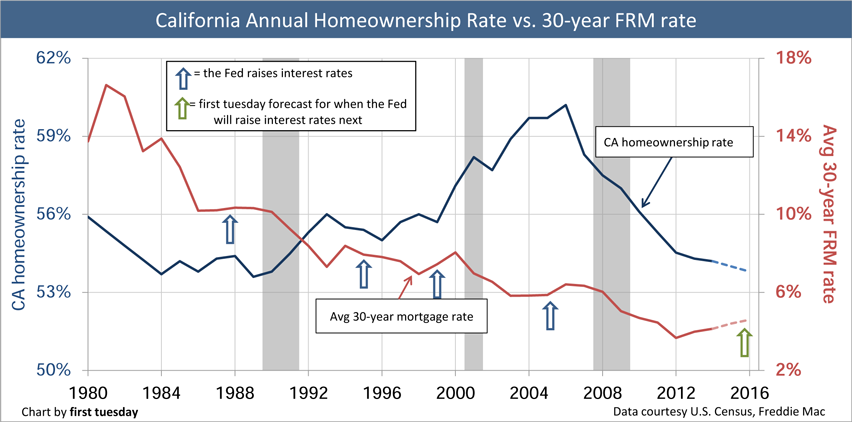
If this was such a simple decision then the home ownership rate would be soaring.  Yet the home ownership rate is doing this:

HomeownershipRate-Annual

In the end a $700,000 crap shack is still a crap shack.  That $1.2 million piece of junk in San Francisco is still junk.  And you better make sure you can carry that housing nut for 30 years.  For tech workers, mobility is key so renting serves more as an option on housing versus renting the place from the bank for 30 years.  Make no mistake, in most of the US buying a home makes total sense.  In California, the massive drop in the home ownership rate shows a different story.  And that story is the middle class is disappearing.

Lacy Hunt – “Inflation and 10-Year Treasury Yield Headed Lower”

No one has called long-duration treasury yields better than Lacy Hunt at Hoisington Management. He says they are going lower. If the US is in or headed for recession then I believe he is correct.

Gordon Long, founder of the Financial Repression website interviewed Lacy Hunt last week and Hunt stated “Inflation and 10-Year Treasury Yield Headed Lower“.

Fed Tactics

Debt only works if it generates an income to repay principle and interest.

Research indicates that when public and private debt rises above 250% of GDP it has very serious effects on economic growth. There is no bit of evidence that indicates an indebtedness problem can be solved by taking on further debt.

One of the objectives of QE was to boost the stock market, on theory that an improved stock market will increase wealth and ultimately consumer spending. The other mechanism was that somehow by buying Government securities the Fed was in a position to cause the stock market to rise. But when the Fed buys government securities the process ends there. They can buy government securities and cause the banks to surrender one type of government asset for another government asset. There was no mechanism to explain why QE should boost the stock market, yet we saw that it did. The Fed gave a signal to decision makers that they were going to protect financial assets, in other words they incentivized decision makers to view financial assets as more valuable than real assets. So effectively these decision makers transferred funds that would have gone into the real economy into the financial economy, as a result the rate of growth was considerably smaller than expected.

In essence the way in which it worked was by signaling that real assets were inferior to financial assets. The Fed, by going into an untested program of QE effectively ended up making things worse off.”

Flattening of the Yield Curve

Monetary policies currently are asymmetric. If the Fed tried to do another round of QE and/or negative interest rates, the evidence is overwhelming that will not make things better. However if the Fed wishes to constrain economic activity, to tighten monetary conditions as they did in December; those mechanisms are still in place.

They are more effective because the domestic and global economy is more heavily indebted than normal. The fact we are carrying abnormally high debt levels is the reason why small increases in interest rate channels through the economy more quickly.

If the Fed wishes to tighten which they did in December then sticking to the old traditional and tested methods is best. They contracted the monetary base which ultimately puts downward pressure on money and credit growth. As the Fed was telegraphing that they were going to raise the federal funds rate it had the effect of raising the intermediate yield but not the long term yields which caused the yield curve to flatten. It is a signal from the market place that the market believes the outlook is lower growth and lower inflation. When the Fed tightens it has a quick impact and when the Fed eases it has a negative impact.

The critical factor for the long bond is the inflationary environment. Last year was a disappointing year for the economy, moreover the economy ended on a very low note. There are outward manifestations of the weakening in economy activity.  One impartial measure is what happened to commodity prices, which are of course influenced by supply and demand factors. But when there are broad declines in all the major indices it is an indication of a lack of demand. The Fed tightened monetary conditions into a weakening domestic global economy, in other words they hit it when it was already receding, which tends to further weaken the almost non-existent inflationary forces and for an investor increases the value.

Failure of Quantitative Easing

If you do not have pricing power, it is an indication of rough times which is exactly what we have.”

The fact that the Fed made an ill-conceived move in December should not be surprising to economists. A detailed study was done of the Fed’s 4 yearly forecasts which they have been making since 2007. They have missed every single year.

That was another in a series of excellent interviews by Gordon Long. There’s much more in the interview. Give it a play.

Finally, lest anyone scream to high heavens, Lacy is obviously referring to price inflation, not monetary inflation which has been rampent.

From my standpoint, consumer price deflation may be again at hand. Asset deflation in equities, and junk bonds is a near given.

The Fed did not save the world as Ben Bernanke proclaimed. Instead, the Fed fostered a series of asset bubble boom-bust cycles with increasing amplitude over time.

The bottom is a long, long ways down in terms of time, or price, or both.

by Mike “Mish” Shedlock

Fannie Mae’s HomeReady Could Crash Housing

Movie sequels are rarely as good as the original films on which they’re based. The same dictum, it appears, holds for finance.

The 2008 housing market collapse was bad enough, but it appears now that we’re on the verge of experiencing it all again. And the financial sequel, working from a similar script as its original version, could prove to be just as devastating to the American taxpayer.

The Federal National Mortgage Association (commonly referred to as Fannie Mae) plans a mortgage loan reboot, which could produce the same insane and predictable results as when the mortgage agency loaned so much money to people who had neither the income, nor credit history, to qualify for a traditional loan.

The Obama administration proposes the HomeReady program, a new mortgage program largely targeting high-risk immigrants, which, writes Investors.com, “for the first time lets lenders qualify borrowers by counting income from non-borrowers living in the household. What could go wrong?”

The question should answer itself.

The administration apparently believes that by changing the dirty words “subprime” to “alternative” mortgages, the process will be more palatable to the public. But, as Investor’s notes, instead of the name HomeReady, which will offer the mortgages, “It might as well be called DefaultReady, because it is just as risky as the subprime junk Fannie was peddling on the eve of the crisis.”

Before the 2008 housing bubble burst, one’s mortgage fitness was supposed to be based on the income of the borrower, the person whose name would be on the deed and who was responsible for making timely monthly payments. Under this new scheme — and scheme is what it is — the combined income of everyone living in the house will be considered for a conventional home loan backed by Fannie. One may even claim income from people not living in the home, such as the borrower’s parents.

If, or as recent history proves, when the approved borrower defaults, who will pay? Taxpayers, of course, not the politicians and certainly not those associated with Fannie Mae and Freddie Mac, whose leaders made out like the bandits they were during the last mortgage go-round. As CNN Money reported in 2011, “Mortgage finance giants Fannie Mae and Freddie Mac received the biggest federal bailout of the financial crisis. And nearly $100 million of those tax dollars went to lucrative pay packages for top executives, filings show.”

In case further reminders are needed of the outrageous behavior of financial institutions that contributed to the housing market collapse and a recession whose pain is still being felt by many, Goldman Sachs has agreed to a civil settlement of up to $5 billion for its role associated with the marketing and selling of faulty mortgage securities to investors.

Go see the film “The Big Short” to be reminded of the cynicism of many in the financial industry. It follows on the heels of the HBO film “Too Big to Fail,” which revealed how politicians and banks were part of the scam that harmed just about everyone but themselves. According to The New York Times, only one top banker, Kareem Serageldin, went to prison for concealing hundreds of millions in losses in Credit Suisse’s mortgage-backed securities portfolio. Many more should have joined him.

Under the latest mortgage proposal, it’s no credit, no problem. An immigrant can qualify with a credit score as low as 620. That’s subprime. And the borrower has only to put 3 percent down.

Investor’s reports, “Fannie says that 1 in 4 Hispanic households share dwellings — and finances — with extended families. It says this is a large ‘under served’ market.”

Is this another cynical attempt by Democrats, along with protecting illegal immigrants, to win Hispanic votes without regard to the potential cost to taxpayers? Wasn’t that the problem during the last housing market collapse? Could it happen again? Sure it could. Do politicians care? It doesn’t appear so.


Supreme Court Outlaws Chapter 7 ‘Stripping Off’ of Second Mortgages

by DS News

The U.S. Supreme Court ruled on Monday that an underwater second mortgage cannot be extinguished, or “stripped off,” as unsecured debt for a debtor in bankruptcy, according to the Supreme Court‘s website.

In the cases of Bank of America v. Caulket and Bank of America v. Toledo-Cardona, Florida homeowners David Caulkett and Edelmiro Toldeo-Cardona had filed for Chapter 7 bankruptcy and had second mortgages with Bank of America extinguished by a bankruptcy judge following the housing crisis of 2008 based on the fact that they were completely underwater. On Monday, just more than two months after hearing arguments for the case, the Supreme Court ruled in favor of the bank.

When the Supreme Court heard arguments for two cases on March 24, attorneys representing Bank of America contended that the high court should uphold a 1992 decision in the case of Dewsnup v. Timm, which barred debtors in Chapter 7 bankruptcy from “stripping off” an underwater second mortgage down to its market value, thus voiding the junior lien holder’s claim against the debtor. Attorneys for the debtors argued that the Dewsnup decision was irrelevant for the two cases.

Bank of America appealed the bankruptcy judge’s ruling for the two cases, but the 11th Circuit U.S. Court of Appeals upheld the bankruptcy court’s decision in May 2014, going against the Dewsnup ruling by saying that decision did not apply when the collateral on a junior lien (second mortgage) did not have sufficient enough value. The bank subsequently appealed the 11th Circuit Court’s ruling.

The Supreme Court ruled on Monday that the second mortgages should not be treated as unsecured debt, hence upholding the Dewsnup decision. Justice Clarence Thomas, in delivering the opinion of the court, wrote that, “Section 506(d) of the Bankruptcy Code allows a debtor to void a lien on his property ‘[t]o the extent that [the] lien secures a claim against the debtor that is not an allowed secured claim.’ 11 U. S. C. §506(d). These consolidated cases present the question whether a debtor in a Chapter 7 bankruptcy proceeding may void a junior mortgage under §506(d) when the debt owed on a senior mortgage exceeds the present value of the property. We hold that a debtor may not, and we therefore reverse the judgments of the Court of Appeals.”

https://i0.wp.com/i1.mirror.co.uk/incoming/article4797897.ece/alternates/s615/Zombie-businesses-and-interest-rates.jpg

“The Court has spoken, and we respect its ruling,” said Stephanos Bibas, an attorney for defendant David Caulkett, in an email to DS News. “But we are disappointed that the Court extended its earlier precedent in Dewsnup v Timm, even though it acknowledged that the plain words of the statute favor giving relief to homeowners such as Messrs. Caulkett and Toledo-Cardona. We hope that in the near future, the Administration’s home-mortgage-modification programs will offer more relief to homeowners in this situation struggling to save their homes.”

A Bank of America spokesman declined to comment on Monday’s Supreme Court’s ruling.

Click here to read the complete text of the Court’s ruling.

From Real Estate To Stocks To Commodities, Is Deflation The New Reality?

https://s17-us2.ixquick.com/cgi-bin/serveimage?url=http%3A%2F%2Finflationdeflationreport.com%2Fimg%2Finflation-deflation.png&sp=75efb5cfc5c7f9e2c62158e85cd7e535

  • Rising interest rates are a negative for real estate.
  • Gold and oil are still dropping.
  • Company earnings are not beating expectations.
 

So, where do we begin?

The economy has been firing on all eight cylinders for several years now. So long, in fact, that many do not or cannot accept the fact that all good things must come to an end. Since the 2008 recession, the only negative that has remained constant is the continuing dilemma of the “underemployed”.

Let me digress for a while and delve into the real issues I see as storm clouds on the horizon. Below are the top five storms I see brewing:

  1. Real estate
  2. Subprime auto loans
  3. Falling commodity prices
  4. Stalling equity markets and corporate earnings
  5. Unpaid student loan debt

1. Real Estate

Just this past week there was an article detailing data from the National Association of Realtors (NAR), disclosing that existing home sales dropped 10.5% on an annual basis to 3.76 million units. This was the sharpest decline in over five years. The blame for the drop was tied to new required regulations for home buyers. What is perplexing about this excuse is NAR economist Lawrence Yun’s comments. The article cited Yun as saying that:

“most of November’s decline was likely due to regulations that came into effect in October aimed at simplifying paperwork for home purchasing. Yun said it appeared lenders and closing companies were being cautious about using the new mandated paperwork.”

Here is what I do not understand. How can simplifying paperwork make lenders “more cautious about using… the new mandated paperwork”?

Also noted was the fact that median home prices increased 6.3% in November to $220,300. This comes as interest rates are on the cusp of finally rising, thus putting pressure (albeit minor) on monthly mortgage rate payments. This has the very real possibility of pricing out investors whose eligibility for financing was borderline to begin with.

2. Subprime auto loans

Casey Research has a terrific article that sums up the problems in the subprime auto market. I strongly suggest that you read the article. Just a few of the highlights of the article are the following points:

  • The value of U.S. car loans now tops $1 trillion for the first time ever. This means the car loan market is 47% larger than all U.S. credit card debt combined.
  • According to the Federal Reserve Bank of New York, lenders have approved 96.7% of car loan applicants this year. In 2013, they only approved 89.7% of loan applicants.
  • It’s also never been cheaper to borrow. In 2007, the average rate for an auto loan was 7.8%. Today, it’s only 4.1%.
  • For combined Q2 2015 and Q3 2015, 64% of all new auto loans were classified as subprime.
  • The average loan term for a new car loan is 67 months. For a used car, the average loan term is 62 months. Both are records.

The only logical conclusion that can be derived is that the finances of the average American are still so weak that they will do anything/everything to get a car. Regardless of the rate, or risks associated with it.

3. Falling commodity prices

Remember $100 crude oil prices? Or $1,700 gold prices? Or $100 ton iron ore prices? They are all distant faded memories. Currently, oil is $36 a barrel, gold is $1,070 an ounce, and iron ore is $42 a ton. Commodity stocks from Cliffs Natural Resources (NYSE:CLF) to Peabody Energy (NYSE:BTU) (both of which I have written articles about) are struggling to pay off debt and keep their operations running due to the declines in commodity prices. Just this past week, Cliffs announced that it sold its coal operations to streamline its business and strengthen its balance sheet while waiting for the iron ore business to stabilize and or strengthen. Similarly, oil producers and metals mining/exploration companies are either going out of business or curtailing their operations at an ever increasing pace.

For 2016, Citi’s predictions commodity by commodity can be found here. Its outlook calls for 30% plus returns from natural gas and oil. Where are these predictions coming from? The backdrop of huge 2015 losses obviously produced a low base from which to begin 2016, but the overwhelming consensus is for oil and natural gas to be stable during 2016. This is clearly a case of Citi sticking its neck out with a prediction that will garnish plenty of attention. Give it credit for not sticking with the herd mentality on this one.

4. Stalling equity markets and corporate earnings

Historically, the equities markets have produced stellar returns. According to an article from geeksonfinace.com, the average return in equities markets from 1926 to 2010 was 9.8%. For 2015, the markets are struggling to erase negative returns. Interestingly, the Barron’s round table consensus group predicted a nearly 10% rise in equity prices in 2015 (which obviously did not materialize) and also repeated that bullish prediction for 2016 by anticipating an 8% return in the S&P. So what happened in 2015? Corporate earnings were not as robust as expected. Commodity prices put pressure on margins of commodity producing companies. Furthermore, there are headwinds from external market forces that are also weighing on the equities markets. As referenced by this article which appeared on Business Insider, equities markets are on the precipice of doing something they have not done since 1939: see negative returns during a pre-election year. Per the article, on average, the DJIA gains 10.4% during pre-election years. With less than one week to go in 2015, the DJIA is currently negative by 1.5%

5. Unpaid student loan debt

Once again, we have stumbled upon an excellent Bloomberg article discussing unpaid student loan debt. The main takeaway from the article is the fact that “about 3 million parents have $71 billion in loans, contributing to more than $1.2 trillion in federal education debt. As of May 2014, half of the balance was in deferment, racking up interest at annual rates as high as 7.9 percent.” The rate was as low as 1.8 percent just four years ago. It is key to note that this is debt that parents have taken out for the education of their children and does not include loans for their own college education.

The Institute for College Access & Success released a detailed 36 page analysis of what the class of 2014 faces regarding student debt. Some highlights:

  • 69% of college seniors who graduated from public and private non-profit colleges in 2014 had student loan debt.
  • Average debt at graduation rose 56 percent, from $18,550 to $28,950, more than double the rate of inflation (25%) over this 10-year period.

Conclusion

So, what does this all mean?

To look at any one or two of the above categories and see their potential to stymie the economy, one would be smart to be cautious. To look at all five, one needs to contemplate the very real possibility of these creating the beginnings of another downturn in the economy. I strongly suggest a cautious and conservative investment outlook for 2016. While the risk one takes should always be based on your own risk tolerance levels, they should also be balanced by the very real possibility of a slowing economy which may also include deflation. Best of health and trading to all in 2016!

by anonymous in Seeking Alpha


David Collum: The Next Recession Will Be A Barn-Burner

Is the CFPB Out of Control?

So a couple of weeks ago, we did a show about how the CFPB used a site to use names, to determine the race of a borrower.  If you recall, 2 out of 3 of our test subjects came out with the wrong race.  I, Brian Stevens, was the only correct conclusion.  

We use our show, The National Real Estate Post, to point out the absurdity of the lending ecosystem.  The problem is, because we use humor as our conduit, we’re not often taken seriously.  However, when you consider the point that the CFPB uses a site, with an algorithm, to determine a consumer’s race; it’s not funny.  Further, when you consider that the CFPB, a government agency, then uses that information to slander and sue lenders, it becomes less funny. Finally when you consider the fact that a government agency, who uses flawed racially bias information to slander and sue lenders, then tries to hide that information, we’ve got problems that make Donald Trump’s bullshit look like a playground prank.  Yet here we are.  

So the problem is, the CFPB operates as “judge, jury, and executioner” over those they regulate.  For example; did you know the CFPB operates outside of congress, unaccountable to the judicial system, and off the books of taxpayers.  Honestly, the CFPB is not part of the annual budget determined by congress.  They are funded by the Federal Reserve, which means they can receive as little or as much money as they choose.  That must be nice.  

Did you know when the CFPB chooses to seemingly and ambiguously sue a lender, they use predetermined administrative law judges?  In the past, they use judges from the SEC. So in the past, the CFPB gets to pick the judge on the cases they bring against lenders.   How is a government agency allowed to operate under these rules?  Short answer is “you’re not accountable to anyone.” This should infuriate you.  

Good news is, the CFPB is no longer using SEC admin judges.  The bad news is, they have white page job postings looking for their own judges.  In an article by Ballard Spahr, who are probably the best CFPB law minds in the country, posted an article on July 20, that goes as follows:

The CFPB recently posted a job opening for an administrative law judge (ALJ).  According to the government jobs website, the position is closed which suggests that it has been filled.  A recent Politico article indicated that the CFPB posted the opening because it has ended its arrangement with the SEC to borrow ALJs.

OK so it’s time to insert outrage here.  In case you missed it, the CFPB has a posting, on a government site, looking for judges to hire.  To hire to work as the unbiased voice of reason to settle cases the CFPB has brought and will continue to bring against lenders.  How can this happen?  

Fast forward.  It has now been proven that the CFPB has been using an algorithm to determine someone’s race based exclusively on their name.  I proved this absurdity a month ago on my show “The National Real Estate Post,” and I’ll prove it again.  I’m going to ask the first person I see their name, race, and identity.  Here it goes.  

That’s Andrew Strah, he’s a 20 something “tech support” at listing booster.  After our short video clip he went back to his computer and “googled” his name.  After all he was a little perplexed about the nature of my questions and wanted to find the answer to a question he never really considered.  It turns out his name is Greek/Italian.  His last name is Slavonian, which makes this Black/White kid Russian; according to him.  How is it fair for the CFPB to use any system to determine anyone’s race when such issues are personal and complicated.  

Yet this is the system the CFPB is using to pigeon hole guys like Andrew, and then bring lawsuits against lenders for being racist.  If ever there was a system that made no sense this is it.  Again, insert outrage here.  

An agency with an unlimited budget, off the books, and unaccountable to the taxpayer.  The very people they are protecting, while buying judges to bring lawsuits against people, with a protocol that makes no sense.  Yet this is the system that allows the CFPB to force companies like Hudson City Savings and loan to pay 27 Million for Redlining for which they were not guilty.  Insert outrage here.  

Now the best part of the story.  The CFPB knew that their information was bullshit.  In an article from Right Side News.  

Much like using a “ready-fire-aim” approach to shooting at targets, the Consumer Financial Protection Bureau (CFPB) appears to have conducted in racial discrimination witch hunt against auto lenders in this same manner. The CFPB investigated and sought racial discrimination charges against auto lenders, as it turns out, on the basis of guessing the race and ethnicity of borrowers based on their last names, and using this “evidence” to prove their allegations. Only 54 percent of those identified as African-American by this “proxy methodology,” the Wall Street Journal reported, were actually African-Americans. The CFPB drafted rules to solve a problem they only believed existed, racial discrimination in auto lending.

Further.  

The Republican staff of the House Financial Services Committee has released a trove of documents showing that bureau officials knew their information was flawed and even deliberated on ways to prevent people outside the bureau from learning how flawed it was.

The bureau has been guessing the race and ethnicity of car-loan borrowers based on their last names and addresses—and then suing banks whenever it looks like the people the government guesses are white seem to be getting a better deal than the people it guesses are minorities. This largely fact-free prosecutorial method is the reason a bipartisan House super majority recently voted to roll back the bureau’s auto-loan rules.

And we wonder why lenders don’t trust and will not approach the CFPB.  They are crooked and untouchable and now we know that they know it.  

Strangely, I think the solution is not as severe as my opinion in this article would suggest.   I believe lending needs an agency.  I think the CFPB is the answer.  Further, I think every lender in the country agrees.  The problem is that we have the wrong CFPB.  It cannot be built on lies.  It cannot view lenders as the problem. It cannot be unaccountable to congress. It cannot be off the books of the taxpayers. 

The CFPB needs to view lenders as its partners.  It needs to enforce rules and violations where they truly exist.  It need to have more than one voice in rule making.  It needs to make its direction clearly stated and understandable.  Finally, it needs to work toward consumer protection.

Source: National Real Estate Post

GUNDLACH: US Fed Will Raise Rates Next Week For ‘Philosophical’ Reasons

Jeffrey Gundlach of DoubleLine Capital just wrapped up his latest webcast updating investors on his Total Return Fund and outlining his views on the markets and the economy. 

The first slide gave us the title of his presentation: “Tick, Tick, Tick …”

Overall, Gundlach had a pretty downbeat view on how the Fed’s seemingly dead set path on raising interest rates would play out. 

Gundlach expects the Fed will raise rates next week (probably!) but said that once interest rates start going up, everything changes for the market. 

Time and again, Gundlach emphasized that sooner than most people expect, once the Fed raises rates for the first time we’ll quickly move to talking about the next rate hike. 

As for specific assets, Gundlach was pretty downbeat on the junk bond markets and commodities, and thinks that if the Fed believe it has anything like an “all clear” signal to raise rates, it is mistaken. 

Here’s our full rundown and live notes taken during the call:

Gundlach said that the title, as you’d expect, is a reference to the markets waiting for the Federal Reserve’s next meeting, set for December 15-16. 

Right now, markets are basically expecting the Fed to raise rates for the first time in nine years. 

Here’s Gundlach’s first section, with the board game “Kaboom” on it:

Screen Shot 2015 12 08 at 4.20.09 PMDoubleLine

Gundlach says that the Fed “philosophically” wants to raise interest rates and will use “selectively back-tested evidence” to justify an increase in rates. 

Gundlach said that 100% of economists believe the Fed will raise rates and with the Bloomberg WIRP reading — which measures market expectations for interest rates — building in around an 80% chance of rates things look quite good for the Fed to move next week. 

Screen Shot 2015 12 08 at 4.22.34 PMDoubleLine

Gundlach said that while US markets look okay, there are plenty of markets that are “falling apart.” He adds that what the Fed does from here is entirely dependent on what markets do. 

The increase in 3-month LIBOR is noted by Gundlach as a clear signal that markets are expecting the Fed to raise interest rates. Gundlach adds that he will be on CNBC about an hour before the Fed rate decision next Wednesday. 

Gundlach notes that cumulative GDP since the last rate hike is about the same as past rate cycles but the pace of growth has been considerably slower than ahead of prior cycles because of how long we’ve had interest rates at 0%. 

Gundlach next cites the Atlanta Fed’s GDPNow, says that DoubleLine watches this measure:

Screen Shot 2015 12 08 at 4.26.53 PMDoubleLine

The ISM survey is a “disaster” Gundlach says. 

Gundlach can’t understand why there is such a divide between central bank plans in the US and Europe, given that markets were hugely disappointed by a lack of a major increase in European QE last week while the markets expect the Fed will raise rates next week. 

Screen Shot 2015 12 08 at 4.31.15 PMDoubleLine

If the Fed hikes in December follow the patterns elsewhere, Gundlach thinks the Fed could looks like the Swedish Riksbank. 

Screen Shot 2015 12 08 at 4.35.51 PMDoubleLine

And the infamous chart of all central banks that haven’t made it far off the lower bound. 

Screen Shot 2015 12 08 at 4.37.03 PMDoubleLine

Gundlach again cites the decline in profit margins as a recession indicator, says it is still his favorite chart and one to look at if you want to stay up at night worrying. 

Gundlach said that while there are a number of excuses for why the drop in profit margins this time is because of, say, energy, he doesn’t like analysis that leaves out the bad things. “I’d love to do a client review where the only thing I talk about is the stuff that went up,” Gundlach said. 

Screen Shot 2015 12 08 at 4.41.13 PMDoubleLine

On the junk bond front, Gundlach cites the performance of the “JNK” ETF which is down 6% this year, including the coupon. 

Gundlach said that looking at high-yield spreads, it would be “unthinkable” to raise interest rates in this environment. 

Looking at leveraged loans, which are floating rates, Gundlach notes these assets are down about 13% in just a few months. The S&P 100 leveraged loan index is down 10% over that period. 

“This is a little bit disconcerting, that we’re talking about raising interest rates with corporate credit tanking,” Gundlach said. 

Screen Shot 2015 12 08 at 4.45.08 PMDoubleLine

Gundlach now wants to talk about the “debt bomb,” something he says he hasn’t talked about it a long time. 

“The trap door falls out from underneath us in the years to come,” Gundlach said. 

In Gundlach’s view, this “greatly underestimates” the extent of the problem. 

Screen Shot 2015 12 08 at 4.47.54 PMDoubleLine

“I have a sneaking suspicion that defense spending could explode higher when a new administration takes office in about a year,” Gundlach said. 

“I think the 2020 presidential election will be about what’s going on with the federal deficit,” Gundlach said. 

Screen Shot 2015 12 08 at 4.48.37 PMDoubleLine

Gundlach now shifting gears to look at the rest of the world. 

“I think the only word for this is ‘depression.'”

Screen Shot 2015 12 08 at 4.55.23 PMDoubleLine

Gundlach calls commodities, “The widow-maker.”

Down 43% in a little over a year. Cites massive declines in copper and lumber, among other things. 

Screen Shot 2015 12 08 at 4.56.37 PMDoubleLine

“It’s real simple: oil production is too high,” Gundlach said. 

Gundlach calls this the “chart of the day” and wonders how you’ll get balance in the oil market with inventories up at these levels. 

Screen Shot 2015 12 08 at 4.58.43 PMDoubleLine

Gundlach talking about buying oil and junk bonds and says now, as he did a few months ago, “I don’t like to buy things that go down everyday.”

by Mlyes Udland in Business Insider


GUNDLACH: ‘It’s a different world when the Fed is raising interest rates’

jeff gundlach

Jeffrey Gundlach, CEO and CIO of DoubleLine Capital

Jeffrey Gundlach, CEO and CIO of DoubleLine Funds, has a simple warning for the young money managers who haven’t yet been through a rate-hike cycle from the Federal Reserve: It’s a new world.

In his latest webcast updating investors on his DoubleLine Total Return bond fund on Tuesday night, Gundlach, the so-called Bond King, said that he’s seen surveys indicating two-thirds of money managers now haven’t been through a rate-hiking cycle.

And these folks are in for a surprise.

“I’m sure many people on the call have never seen the Fed raise rates,” Gundlach said. “And I’ve got a simple message for you: It’s a different world when the Fed is raising interest rates. Everybody needs to unwind trades at the same time, and it is a completely different environment for the market.”

Currently, markets widely expect the Fed will raise rates when it announces its latest policy decision on Wednesday. The Fed has had rates pegged near 0% since December 2008, and hasn’t actually raised rates since June 2006.

According to data from Bloomberg cited by Gundlach on Tuesday, markets are pricing in about an 80% chance the Fed raises rates on Wednesday. Gundlach added that at least one survey he saw recently had 100% of economists calling for a Fed rate hike.

The overall tone of Gundlach’s call indicated that while he believes it’s likely the Fed does pull the trigger, the “all clear” the Fed seems to think it has from markets and the economy to begin tightening financial conditions is not, in fact, in place.

In his presentation, Gundlach cited two financial readings that were particularly troubling: junk bonds and leveraged loans.

Junk bonds, as measured by the “JNK” exchange-traded fund which tracks that asset class, is down about 6% this year, including the coupon — or regular interest payment paid to the fund by the bonds in the portfolio.

Overall, Gundlach thinks it is “unthinkable” that the Fed would want to raise rates with junk bonds behaving this way.Screen Shot 2015 12 08 at 4.54.12 PMDoubleline Capital

Meanwhile, leveraged loan indexes — which tracks debt taken on by the lowest-quality corporate borrowers — have collapsed in the last few months, indicating real stress in corporate credit markets.

“This is a little bit disconcerting,” Gundlach said, “that we’re talking about raising interest rates with corporate credit tanking.”

Screen Shot 2015 12 08 at 4.54.30 PMDoubleline Capital

Gundlach was also asked in the Q&A that followed his presentation about comments from this same call a year ago that indicated his view that if crude oil fell to $40 a barrel, then there would be a major problem in the world.

On Tuesday, West Texas Intermediate crude oil, the US benchmark, fell below $37 a barrel for the first time in over six years.

The implication with Gundlach’s December 2014 call is that not only would there be financial stress with oil at $40 a barrel, but geopolitical tensions as well.

Gundlach noted that while junk bonds and leveraged loans are a reflection of the stress in oil and commodity markets, this doesn’t mean these impacts can just be netted out, as some seem quick to do. These are the factors markets are taking their lead from.

It doesn’t seem like much of a reach to say that when compared to this time a year ago, the global geopolitical situation is more uncertain. Or as Gundlach said simply on Tuesday: “Oil’s below $40 and we’ve got problems.”

by Myles Udland for Business Insider

Why The Fed Has To Raise Rates

Summary

• No empire has ever prospered or endured by weakening its currency.

• Those who argue the Fed can’t possibly raise rates in a weakening domestic economy have forgotten the one absolutely critical mission of the Fed in the Imperial Project is maintaining U.S. dollar hegemony.

• In essence, the Fed must raise rates to strengthen the U.S. dollar ((USD)) and keep commodities such as oil cheap for American consumers.

• Another critical element of U.S. hegemony is to be the dumping ground for exports of our trading partners.

• If stocks are the tail of the bond dog, the foreign exchange market is the dog’s owner.


• No empire has ever prospered or endured by weakening its currency.

Now that the Fed isn’t feeding the baby QE, it’s throwing a tantrum. A great many insightful commentators have made the case for why the Fed shouldn’t raise rates this month – or indeed, any other month. The basic idea is that the Fed blew it by waiting until the economy is weakening to raise rates. More specifically, former Fed Chair Ben Bernanke – self-hailed as a “hero that saved the global economy” – blew it by keeping rates at zero and overfeeding the stock market bubble baby with quantitative easing (QE).

On the other side of the ledger, is the argument that the Fed must raise rates to maintain its rapidly thinning credibility. I have made both of these arguments: that the Bernanke Fed blew it big time, and that the Fed has to raise rates lest its credibility as the caretaker not just of the stock market but of the real economy implodes.

But there is another even more persuasive reason why the Fed must raise rates. It may appear to fall into the devil’s advocate camp at first, but if we consider the Fed’s action through the lens of Triffin’s Paradox, which I have covered numerous times, then it makes sense.

The Federal Reserve, Interest Rates and Triffin’s Paradox

Understanding the “Exorbitant Privilege” of the U.S. Dollar (November 19, 2012)

The core of Triffin’s Paradox is that the issuer of a reserve currency must serve two quite different sets of users: the domestic economy, and the international economy.

Those who argue the Fed can’t possibly raise rates in a weakening domestic economy have forgotten the one absolutely critical mission of the Fed in the Imperial Project is maintaining U.S. dollar hegemony.

No nation ever achieved global hegemony by weakening its currency. Hegemony requires a strong currency, for the ultimate arbitrage is trading fiat currency that has been created out of thin air for real commodities and goods.

Generating currency out of thin air and trading it for tangible goods is the definition of hegemony. Is there any greater magic power than that?

In essence, the Fed must raise rates to strengthen the U.S. dollar (USD) and keep commodities such as oil cheap for American consumers. The most direct way to keep commodities cheap is to strengthen one’s currency, which makes commodities extracted in other nations cheaper by raising the purchasing power of the domestic economy on the global stage.

Another critical element of U.S. hegemony is to be the dumping ground for exports of our trading partners. By strengthening the dollar, the Fed increases the purchasing power of everyone who holds USD. This lowers the cost of goods imported from nations with weakening currencies, who are more than willing to trade their commodities and goods for fiat USD.

The Fed may not actually be able to raise rates in the domestic economy, as explained here: “But It’s Just A 0.25% Rate Hike, What’s The Big Deal?” – Here Is The Stunning Answer.

But in this case, perception and signaling are more important than the actual rates: By signaling a sea change in U.S. rates, the Fed will make the USD even more attractive as a reserve currency and U.S.-denominated assets more attractive to those holding weakening currencies.

What better way to keep bond yields low and stock valuations high than insuring a flow of capital into U.S.-denominated assets?

If stocks are the tail of the bond dog, the foreign exchange market is the dog’s owner. Despite its recent thumping (due to being the most over loved, crowded trade out there), the USD is trading in a range defined by multi-year highs.

The Fed’s balance sheet reveals its basic strategy going forward: maintain its holdings of Treasury bonds and mortgage-backed securities (MBS) while playing around in the repo market in an attempt to manipulate rates higher.

Whether or not the Fed actually manages to raise rates in the real world is less important than maintaining USD hegemony. No empire has ever prospered or endured by weakening its currency.

by Charles Hugh Smith in Seeking Alpha

Subprime “Alt”-Mortgages from Nonbanks, Run by former Countrywide Execs, Backed by PE Firms Are Hot Again

Housing Bubble 2 Comes Full Circle

Mortgage delinquency rates are low as long as home prices are soaring since you can always sell the home and pay off the mortgage, or most of it, and losses for lenders are minimal. Nonbank lenders with complicated corporate structures backed by a mix of PE firms, hedge funds, debt, and IPO monies revel in it. Regulators close their eyes because no one loses money when home prices are soaring. The Fed talks about having “healed” the housing market. And the whole industry is happy.

The show is run by some experienced hands: former executives from Countrywide Financial, which exploded during the Financial Crisis and left behind one of the biggest craters related to mortgages and mortgage backed securities ever. Only this time, they’re even bigger.

PennyMac is the nation’s sixth largest mortgage lender and largest nonbank mortgage lender. Others in that elite club include AmeriHome Mortgage, Stearns Lending, and Impac Mortgage. The LA Times:

All are headquartered in Southern California, the epicenter of the last decade’s subprime lending industry. And all are run by former executives of Countrywide Financial, the once-giant mortgage lender that made tens of billions of dollars in risky loans that contributed to the 2008 financial crisis.

During their heyday in 2005, non-bank lenders, often targeting subprime borrowers, originated 31% of all home mortgages. Then it blew up. From 2009 through 2011, non-bank lenders originated about 10% of all mortgages. But then PE firms stormed into the housing market. In 2012, non-bank lenders originated over 20% of all mortgages, in 2013 nearly 30%, in 2014 about 42%. And it will likely be even higher this year.

That share surpasses the peak prior to the Financial Crisis.

As before the Financial Crisis, they dominate the riskiest end of the housing market, according to the LA Times: “this time, loans insured by the Federal Housing Administration, aimed at first-time and bad-credit buyers. Such lenders now control 64% of the market for FHA and similar Veterans Affairs loans, compared with 18% in 2010.”

Low down payments increase the risks for lenders. Low credit scores also increase risks for lenders. And they coagulate into a toxic mix with high home prices during housing bubbles, such as Housing Bubble 2, which is in full swing.

The FHA allows down payments to be as low as 3.5%, and credit scores to be as low as 580, hence “subprime” borrowers. And these borrowers in many parts of the country, particularly in California, are now paying sky-high prices for very basic homes.

When home prices drop and mortgage payments become a challenge for whatever reason, such as a layoff or a miscalculation from get-go, nothing stops that underwater subprime borrower from not making any more payments and instead living in the home for free until kicked out.

“Those are the loans that are going to default, and those are the defaults we are going to be arguing about 10 years from now,” predicted Wells Fargo CFO John Shrewsberry at a conference in September. “We are not going to do that again,” he said, in reference to Wells Fargo’s decision to stay out of this end of the business.

But when home prices are soaring, as in California, delinquencies are low and don’t matter. They only matter after the bubble bursts. Then prices are deflating and delinquencies are soaring. Last time this happened, it triggered the most majestic bailouts the world has ever seen.

The LA Times:

For now, regulators aren’t worried. Sandra Thompson, a deputy director of the Federal Housing Finance Agency, which oversees government-sponsored mortgage buyers Fannie Mae and Freddie Mac, said non-bank lenders play an important role.

“We want to make sure there is broad liquidity in the mortgage market,” she said. “It gives borrowers options.”

But another regulator isn’t so sanguine about the breakneck growth of these new non-bank lenders: Ginnie Mae, which guarantees FHA and VA loans that are packaged into structured mortgage backed securities, has requested funding for 33 additional regulators. It’s fretting that these non-bank lenders won’t have the reserves to cover any losses.

“Where’s the money going to come from?” wondered Ginnie Mae’s president, Ted Tozer. “We want to make sure everyone’s going to be there when the next downturn comes.”

But the money, like last time, may not be there.

PennyMac was founded in 2008 by former Countrywide executives, including Stanford Kurland, as the LA Times put it, “the second-in-command to Angelo Mozilo, the Countrywide founder who came to symbolize the excesses of the subprime mortgage boom.” Kurland is PennyMac’s Chairman and CEO. The company is backed by BlackRock and hedge fund Highfields Capital Management.

In September 2013, PennyMac went public at $18 a share. Shares closed on Monday at $16.23. It also consists of PennyMac Mortgage Investment Trust, a REIT that invests primarily in residential mortgages and mortgage-backed securities. It went public in 2009 with an IPO price of $20 a share. It closed at $16.64 a share. There are other intricacies.

According to the company, “PennyMac manages private investment funds,” while PennyMac Mortgage Investment Trust is “a tax-efficient vehicle for investing in mortgage-related assets and has a successful track record of raising and deploying cost-effective capital in mortgage-related investments.”

The LA Times describes it this way:

It has a corporate structure that might be difficult for regulators to grasp. The business is two separate-but-related publicly traded companies, one that originates and services mortgages, the other a real estate investment trust that buys mortgages.

And they’re big: PennyMac originated $37 billion in mortgages during the first nine months this year.

Then there’s AmeriHome. Founded in 1988, it was acquired by Aris Mortgage Holding in 2014 from Impac Mortgage Holdings, a lender that almost toppled under its Alt-A mortgages during the Financial Crisis. Aris then started doing business as AmeriHome. James Furash, head of Countrywide’s banking operation until 2007, is CEO of AmeriHome. Clustered under him are other Countrywide executives.

It gets more complicated, with a private equity angle. In 2014, Bermuda-based insurer Athene Holding, home to other Countrywide executives and majority-owned by PE firm Apollo Global Management, acquired a large stake in AmeriHome and announced that it would buy some of its structured mortgage backed securities, in order to chase yield in the Fed-designed zero-yield environment.

Among the hottest products the nonbank lenders now offer are, to use AmeriHomes’ words, “a wider array of non-Agency programs,” including adjustable rate mortgages (ARM), “Non-Agency 5/1 Hybrid ARMs with Interest Only options,” and “Alt-QM” mortgages.

“Alt-QM” stands for Alternative to Qualified Mortgages. They’re the new Alt-A mortgages that blew up so spectacularly, after having been considered low-risk. They might exceed debt guidelines. They might come with higher rates, adjustable rates, and interest-only payment periods. And these lenders chase after subprime borrowers who’ve been rejected by banks and think they have no other options.

Even Impac Mortgage, which had cleaned up its ways after the Financial Crisis, is now offering, among other goodies, these “Alt-QM” mortgages.

Yet as long as home prices continue to rise, nothing matters, not the volume of these mortgages originated by non-bank lenders, not the risks involved, not the share of subprime borrowers, and not the often ludicrously high prices of even basic homes. As in 2006, the mantra reigns that you can’t lose money in real estate – as long as prices rise.

by Wolf Richter for Wolf Street

The Number Of Real Estate Appraisers Is Falling. Here’s why you should care

11/18/15 08:14 AM EST By Amy Hoak, MarketWatch


The ranks of real estate appraisers stand to shrink substantially over the next five years, which could mean longer waits, higher fees and even lower-quality appraisals as more appraisers cross state lines to value properties.

There were 78,500 real estate appraisers working in the U.S. earlier this year, according to the Appraisal Institute, an industry organization, down 20% from 2007. That could fall another 3% each year for the next decade, according to the group. Much of the drop has been among residential, rather than commercial, appraisers.

Some say Americans are unlikely to feel the effects right now, as it’s mostly confined to rural areas and the number of appraisal certifications — many appraisers are licensed to work in multiple states — has held relatively steady. Others say it’s already happening, and rural areas are simply the start.

Since most residential mortgages require an appraiser to value a property before a sale closes, they say, a shortage of appraisers is potentially problematic — and expensive — for both home buyers, who rely on accurate valuations to ensure that they aren’t overpaying, and sellers, who can see deals fall through if appraisals come in low.

“As an appraiser, I should be quiet about this shortage because it’s great for current business,” said Craig Steinley, who runs Steinley Real Estate Appraisals in Rapid City, S.D. But “what will undoubtedly happen, since the market can’t solve this problem by adding new appraisers, [is] it will solve the problem by doing fewer appraisals.”

A shrinking and aging pool

As appraiser numbers are falling, the pool is aging: Sixty-two percent of appraisers are 51 and older, according to the Appraisal Institute (http://www.appraisalinstitute.org/), while 24% are between 36 and 50. Only 13% are 35 or younger.

Industry experts blame an increasingly inhospitable career outlook. Financial institutions used to hire and train entry-level appraisers, but few do anymore, according to John Brenan, modirector of appraisal issues for the Appraisal Foundation (http://www.appraisalfoundation.org/), which sets national standards for real estate appraisers.

That has created a marketplace where current appraisers, mostly small businesses, are fearful of losing business or shrinking their own revenue as they approach retirement. Many have opted not to hire and train replacements.

The requirements to become a certified residential appraiser have also increased over the past couple of decades. Before the early 1990s, a real estate license was often all that was needed. Today, classes and years of apprenticeship are required for certification.

And this year marked the first in which a four-year college degree was required for work as a certified residential appraiser. (It takes only two years of college to become licensed, but that limits the properties on which an appraiser can work. Some states, meanwhile, only offer full certification, not licensing.)

“If you come out of college with a finance degree, you can work for a bank for $70,000 [or] $80,000 a year with benefits,” said Appraisal Institute President Lance Coyle. “As a trainee, you might make $30,000 and get no benefits.” For some, especially those with student loans to pay, the choice may be easy.

“There were definitely easier options of career paths I could have chosen,” said Brooke Newstrom, 34, who became an apprentice for Steinley Real Estate Appraisals earlier this year. She networked for a year and a half, cold calling appraiser offices and attending professional conferences, before getting the job.

For residential appraisers, business isn’t as lucrative as it once was. Federal regulations in 2009 led to the rise of appraisal management companies, which act as a firewall between appraisers and lenders so appraisers can give an unbiased opinion of a home’s value.

But those companies take a chunk of the fee, cutting appraiser compensation. Some community lenders don’t use appraisal management companies, according to Coyle, but they are often used by mortgage brokers and large banks.

Appraiser numbers appear poised to continue shrinking, and as appraisers continue to get multiple state certifications they may be stretched more thinly, industry experts say.

For now, any shortages are likely regional, Brenan said. “There are certainly some parts of the country — and primarily some rural areas — where there aren’t as many appraisers available to perform certain assignments that there were in the past,” he said.

Elsewhere, however, the decrease in appraisers isn’t felt as acutely. In Chicago, according to appraiser John Tsiaousis, it may be difficult for young appraisers to break in but customers in search of one shouldn’t have a problem.

“I don’t believe they will allow us to run out of appraisers,” Tsiaousis said. “Some changes will be made [to the certification process]. When they will be made, I don’t know.”

Longer waits, more expensive appraisals, and quality questions

The effects of an appraiser shortage could be substantial for individuals on both sides of a real estate transaction, experts say.

Fewer appraisers means longer waits, which could hold up a closing. That delay means that borrowers might have to pay for longer mortgage rate locks, according to Sandra O’Connor, regional vice president for the National Association of Realtors (http://www.realtor.org/). (Rate locks hold interest rates firm for set periods of time and are generally purchased after a buyer with initial approval for a loan finds a home she wants.)

Longer waits also affect sellers who need the equity from one sale to purchase their next home. When they can’t close on the home they’re selling, they can’t close on the one they’re buying.

A shortage also means appraisals will likely cost more, which some say is already happening in rural areas. Appraisal fees are generally paid by borrowers.

“Appraisal fees in areas where there aren’t enough appraisers are higher than those areas where there are plenty of people to take up the cause,” said Steinley, who holds leadership roles in the Appraisal Institute and the Association of Appraiser Regulatory Officials (http://www.aaro.net/).

There is a quality issue, too: In some areas, appraisers come in from other states to value homes. While there are guidelines for these appraisers to become geographically competent, they could miss subtleties in the market, Coyle said.

And if the shortage isn’t addressed, and lenders are unable to get appraisers to value homes, lenders might ask federal regulators to relax the rules governing when traditional appraisals are needed, allowing more computer-generated analyses in their place, according to Steinley.

Automated valuation models, which are less expensive and quicker, are rarely used for mortgage originations today, Coyle said. They’re sometimes used for portfolio analysis, or when a borrower needs to demonstrate 20% equity in order to stop paying for private mortgage insurance, he added. They might be used for low-risk home-equity loans, Brenan said.

Currently, appraisers are required for mortgages backed by the Federal Housing Administration, Fannie Mae and Freddie Mac. Those mortgages make up about 70% of the market by loan volume and 90% of the market by loan count, according to the Mortgage Bankers Association (https://www.mba.org/).

And computer-generated appraisals can’t match the precision of one conducted by someone who has seen the property, and knows the area, many in the industry say.

The industry is beginning to address the issue. Last month, the Appraisal Foundation’s qualifications board held a hearing to gather comments and suggestions, Brenan said.

One of the options being discussed: Creating a set of competency-based exams that could shorten the time people spend as trainees. That way, someone with a background in real estate finance could become certified more quickly, Steinley said. The board is also looking to further develop courses that would allow college students to gain practical experience before graduation, Brenan said.

Proper education is important “because real estate valuation is hard to do, and you need to get it right,” Coyle said. But the unintended consequences of the current qualifications are just too much, he added. “It’s almost as if you have some regulators trying to keep people out.”

-Amy Hoak; 415-439-6400; AskNewswires@dowjones.co
Copyright (c) 2015 Dow Jones & Company, Inc.

FHLB Members Signing Up for Jumbo Loan Program

Four Federal Home Loan Banks have recruited 74 members to participate in their new Mortgage Partnership Finance jumbo loan program.

The program, under which jumbo loans are packaged together and sold to Redwood Trust, a mortgage real estate investment trust, recently launched at the Atlanta, Boston, Chicago and Des Moines banks, with another two FHLBs also approved to offer it to their members.

The four banks “began ramping up their marketing efforts to their members in the third quarter,” according to a Redwood Trust letter to shareholders.

Redwood will purchase jumbo loans with balances as high as $1.5 million.

As of Sept. 30, “the MPF Direct program has purchased loans from only Chicago participating financial institutions, but we have active loan locks from members in other districts,” a Chicago FHLB spokeswoman said in a written response to questions.

Under MPF Direct, members can sell their jumbo loans to the Chicago FHLB, which in turn sells them to Redwood Trust. The Mill Valley, Calif., mortgage REIT prefers to package jumbos into private-label securities for sale to investors.

But that is not the best execution in the current market, according to Redwood president Brett Nicholas.

As a result, Redwood has shifted to bulk and whole loan sales to maintain its margins on jumbo loans.

“In short, a strong portfolio bid for whole loans from banks currently results in a more favorable loan sale execution for us versus securitization,” Nicholas said during a Nov. 5 conference call to investors and equity analysts.

“As a leader in private-label securitization,” Nicholas said, Redwood remains committed to issuing PLS under its Sequoia brand “to the extent the economics make sense.”

Source: National Mortgage News

Mortgage Loan Officer Hits $8M Jackpot ― Casino claims ‘malfunction’

‘They shut off the machine, took it away, printed out a ticket and gave me $80’

https://i0.wp.com/www.farrahgray.com/wp-content/uploads/2015/11/Veronica-Castillo.jpg

An Oregon woman landed on the $8 million jackpot while playing the slot machine at a Lucky Eagle Casino, but walked away empty-handed when the casino told her the machine malfunctioned.

Veronica Castillo, a mortgage loan officer from Beaverton, Oregon, took her mother to the casino in Rochester, Washington, last weekend. She was elated when she put $100 in one of the slot machines and hit the jackpot – or so she thought.

“I was very excited, happy,” she told a local CBS News affiliate. “Then I couldn’t believe it.”

The casino staff told Ms. Castillo that she hadn’t won the $8 million because the machine malfunctioned.

“They shut off the machine, took it away, printed out a ticket and gave me $80,” she said.

The casino machines all have a sticker on them informing players that a machine malfunction voids all pays and plays, CBS reported.

“To me, it’s cheating, may even be fraudulent,” Ms. Castillo said. “My first thought was, how many people has this happened to? They think they won, then going away empty-handed.”

She is working to get an attorney to claim her winnings.

Casino CEO John Setterstrom, who has been with the casino since before it opened in 1995, told CBS this has never happened there before. He said he is working to get answers from the manufacturer and wants to keep Ms. Castillo as a customer.

“She won, give her the money!”

by Kellan Howell in WMD

FHA 203(k) Home Improvement Loan

Planning to buy a fixer-upper, or make improvements to your existing home? The FHA 203k loan may be your perfect home improvement loan.

In combining your construction loan and your mortgage into a single home loan, the 203k loan program limits your loan closing costs and simplifies the home renovation process.

FHA 203k mortgages are available in California in loan amounts of up to $625,500.

About FHA Mortgages

The Federal Housing Administration (FHA) is a federal agency which is more than 80 years old. It was formed as part of the National Housing Act of 1934 with the stated mission of making homes affordable.

Prior to the FHA, home buyers were typically required to make down payments of fifty percent or more; and were required to repay loans in full within five years of closing.
The FHA and its loan programs changed all that.

The agency launched a mortgage insurance program through which it would protect the nation’s lenders against “bad loans”.

In order to receive such insurance, lenders were required to confirm that loans met FHA minimum standards which included verifications of employment; credit history reviews; and, satisfactory home appraisals.

These minimum standards came to be known as the FHA mortgage guidelines and, for loans which met guidelines, banks were granted permission to offer loan terms which put home ownership within reach for U.S. buyers.

Today, the FHA loan remains among the most forgiving and favorable of today’s home loan programs.

FHA mortgages require down payments of just 3.5 percent; make concessions for borrowers with low credit scores; and provide access to low mortgage rates.

The FHA has insured more than 34 million mortgages since its inception.

What Is The FHA 203k Construction Loan?

The FHA 203k loan is the agency’s specialized home construction loan.

Available to both buyers and refinancing households, the 203k loan combines the traditional “home improvement” loan with a standard FHA mortgage, allowing mortgage borrowers to borrow their costs of construction.

The FHA 203k Loan Comes In Two Varieties.

The first type of 203k loan is the Streamlined 203k. The Streamlined 203k loan is for less extensive projects and cost are limited to $35,000. The other 203k loan type is the “standard” 203k.

The standard 203k loan is meant for projects requiring structural changes to home including moving walls, replacing plumbing, or anything else which may prohibit you from living in the home while construction is underway.

There are no loan size limits with the standard 203k but there is a $5,000 minimum loan size.

The FHA says there are three ways you can use the program.

1. You can use the FHA 203k loan to purchase a home on a plot of land, then repair it
2. You can use the FHA 203k loan to purchase a home on another plot of land, move it to a new plot of land, then repair it
3. You can use the FHA 203k loan to refinance an existing home, then repair it

All proceeds from the mortgage must be spent on home improvement. You may not use the 203k loan for “cash out” or any other purpose. Furthermore, the 203k mortgage may only be used on single-family homes; or homes of fewer than 4 units.

You may use the FHA 203k to convert a building of more than four units to a home of 4 units or fewer. The program is available for homes which will be owner-occupied only.

203k Loan Eligibility Standards

The 203k loan is an FHA-backed home loan, and follows the eligibility standards of a standard FHA mortgage.

For example, borrowers are expected to document their annual income via federal tax returns and to show a debt-to-income ratio within program limits. Borrowers must also be U.S. citizens or legal residents of the United States.

And, while there is no specific credit score required in order to qualify for the 203k rehab loan, most mortgage lenders will enforce a minimum 580 FICO.

Like all FHA loans, the minimum down payment requirement on a 203k rehab loan is 3.5 percent and FHA 203k homeowners can borrow up to their local FHA loan size limit, which reaches $625,500 in higher-cost areas including Los Angeles, New York City, New York; and, San Francisco.

Furthermore, 203k loans are available as fixed-rate or adjustable-rate loans; and loan sizes may exceed a home’s after-improvement value by as much as 10%. for borrowers with a recent bankruptcy, short sale or foreclosure; and the FHA’s Energy Efficiency Mortgage program.

What Repairs Does The 203k Loan Allow?

The FHA is broad with the types of repairs permitted with a 203k loan. However, depending on the nature of the repairs, borrowers may be required to use the “standard” 203k home loan as compared to the simpler, faster Streamlined 203k.

The FHA lists several repair types which require the standard 203k:

• Relocation of loan-bearing walls
• Adding new rooms to a home
• Landscaping of a property
• Repairing structural damage to a home
• Total repairs exceeding $35,000

For most other home improvement projects, borrowers should look to the FHA Streamlined 203k . The FHA Streamlined 203k requires less paperwork as compared to a standard 203k and can be a simpler loan to manage.

A partial list of projects well-suited for the Streamlined 203k program include :

• HVAC repair or replacement
• Roof repair or replacement
• Home accessibility improvements for disabled persons
• Minor remodeling, which does not require structural repair
• Basement finishing, which does not require structural repair
• Exterior patio or porch addition, repair or replacement

Borrowers can also use the Streamlined 203k loan for window and siding replacement; interior and exterior painting; and, home weatherization.

For today’s home buyers, the FHA 203k loan can be a terrific way to finance home construction and repairs.

Buying A Home With A Boyfriend, Girlfriend, Partner, Or Friend

by Dan Green

According to the National Association of REALTORS®, 25% of primary home buyers are single. Some of these non-married buyers, statistics show, buy homes jointly with other non-married buyers such as boyfriends, girlfriends or partners.

If you’re a non-married, joint home buyer, though, before signing at your closing, you’ll want to protect your interests.

Different from married home buyers, non-married buyers get almost no estate-planning protection on the state or federal level which can be, at minimum, an inconvenience and, at worst, result in foreclosure.

Non-Married Buyers Should Seek Professional Advice

The video clip referenced above is from 2007 but remains relevant today. It’s a four-minute breakdown which covers the risks of buying a home with a partner, and the various ways by which joint, non-married buyers can seek protection.

The process starts with an experienced real estate attorney.

The reason you’re seeking an attorney is because, at minimum, the following two documents should be drafted for signatures. They are :

  1. Cohabitation Agreement
  2. Property Agreement

The Cohabitation Agreement is a document which describes each person’s financial obligation to the home. It should include details on which party is responsible for payment of the mortgage, real estate taxes and insurance; the down payment made on the mortgage; and necessary repairs.

It will also describe the disposition of the home in the event of a break-up or death of one party which, unfortunately, can happen.

The second document, the Property Agreement, describes the physical property which you may accumulate while living together, and its disposition if one or both parties decide to move out.

A well-drafted Property Agreement will address furniture, appliances, plus other items brought into the joint household, and any items accumulated during the period of co-habitation.

It’s permissible to have a single real estate attorney represent both parties but, for maximum protection, it’s advised that both buyers hire counsel separately. This will add additional costs but will be worth the money paid in the event of catastrophe or break-up.

Also, remember that search engines cannot substitute for a real, live attorney. There are plenty of “cheap legal documents” available online but do-it-yourself lawyering won’t always hold up in court — especially in places where egregious errors or omissions have been made.

It’s preferable to spend a few hundred dollars on adequate legal protection as compared to the costs of fighting a courtroom battle or foreclosure.

Furthermore, a proper agreement will help keep the home out of probate in the event of a death of one or both parties.

Mortgages For First-Time Home Buyers

Many non-married, joint home buyers are also first-time home buyers and, for first-time home buyers, there are a number of low- and no-down payment mortgage options to put home ownership more within reach.

Among the most popular programs are the FHA mortgage and the USDA home loan.

The FHA mortgage is offered by the majority of U.S. lenders and allows for a minimum down payment of just 3.5 percent. Mortgage rates are often as low (or lower) than comparable loans from Fannie Mae or Freddie Mac; and underwriting requirements are among the loosest of all of today’s loan types.

FHA loans can be helpful in other ways, too.

As one example, the FHA offers a construction loan program known as the 203k which allows home buyers to finance construction costs into the purchase of their home. FHA home buyers have financed new garages, new windows, new siding and new floors via the 203k program.

FHA loans are also made with an “assumable” clause. This means that when you sell a home with FHA financing attached to it, the buyer of the home can “assume” the existing mortgage at its existing interest rate.

If mortgage rates move to 8 percent in 2020, you could sell your home to a buyer with an assumable FHA mortgage attached at 4.50%.

USDA loans are also popular among first-time home buyers.

Backed by the U.S. Department of Agriculture, USDA loans are available in many suburban and rural areas nationwide, and can be made as a no-money-down mortgage.

USDA mortgage rates are often lower than even FHA mortgage rates.

Domestic and business partnerships sometimes end unhappily. Engagements end and partnerships sour. Nobody intends for it to happen, but it does. It’s best to expect the best, but prepare for the worst.

All parties should seek equal legal protection in the event of a break-up.

Buying a Home? 5 Things to Know About the New Mortgage Documents

The mortgage application process just became simpler

by Crissinda Ponder

As part of its mission to reform the mortgage industry in favor of home buyers, the Consumer Financial Protection Bureau replaced the industry’s existing lending forms with more simplified documents. These documents took effect in early October, as part of the CFPB’s “Know Before You Owe” initiative.

Here are five things to learn about these new disclosure forms.

Four forms become two.

When applying for a mortgage, you used to receive the Good Faith Estimate and Truth-in-Lending Act statements. Before closing, you were given the HUD-1 settlement and final TILA statements.


These days, you only have to worry about two mortgage documents instead of four: the Loan Estimate, which is given to you within three days of applying for a home loan, and the Closing Disclosure, which is sent to you three days before your scheduled closing.

The CFPB says the new forms, which were a few years in the making, are easier to understand and use.

The Loan Estimate helps you better compare loans …

One of the most important aspects of home buying, aside from finding the right house for you and your family, is choosing a mortgage that best suits your circumstances.

The Loan Estimate makes it easier for you to compare loan offers from multiple mortgage lenders by giving you a thorough idea of the many expenses related to a loan, including:

  • Your interest rate and whether it’s fixed or adjustable.
  • Your monthly payment amount.
  • What the loan may cost you over the first five years.

You get this three-page form with every mortgage application, which helps you make an apples-to-apples comparison among different loans.

… and lenders, too.

Each lender has its own set of origination charges, which include an application fee, underwriting fee and points. These charges are outlined on the second page of the Loan Estimate.

Lender fees are among the few costs over which you actually have control, meaning you can shop around for the source of your home loan. As a rule of thumb, apply for mortgages with at least two or three lenders.
‘Cash to close’ isn’t a mystery.

The first page of the Loan Estimate lists information about the approximate amount of money you should bring to the closing table to seal the deal on your home purchase.

The “Estimated Cash to Close,” as it’s called on the form, includes the closing costs attached to the loan transaction. If any of the closing costs are added to your loan amount that would also be noted on the Loan Estimate.

The cash to close amount also includes your down payment, minus any deposit you made or seller credits you’re given, and also any additional adjustments or credits.

Your closing costs can’t vary by much.

The fees listed on the Closing Disclosure – the form you receive three days before your closing – may not look identical to your Loan Estimate, but the two documents should be similar.

There are three categories of closing costs: those that cannot increase, those that can increase by up to 10 percent and those that can increase by any amount, according to the CFPB.

Lender fees and the services you aren’t allowed to shop for can’t increase, while fees for services you can shop for, such as homeowners or title insurance, can increase by any amount. Fees for certain lender-required third-party services and also recording fees can increase by up to 10 percent.

However, if your circumstances have changed significantly since you applied for a mortgage, you will probably be given a new Loan Estimate, which would restart this part of the home buying process.


For more on the Loan Estimate and Closing Disclosure, check the CFPB website. Happy home buying!

Read original in USNews

U.S. Purchase Mortgage Originations Predicted to Hit $905 Billion in 2016

U.S. Purchase Mortgage Originations Predicted to Hit $905 Billion in 2016

by Michael Gerrity for World Property Journal

The Mortgage Bankers Association announced this week at their annual national conference in San Diego that they expect to see $905 billion in purchase mortgage originations during 2016, a ten percent increase from 2015. 

In contrast, MBA anticipates refinance originations will decrease by one-third, resulting in refinance mortgage originations of $415 billion.  On net, mortgage originations will decrease to $1.32 trillion in 2016 from $1.45 trillion in 2015. 

For 2017, MBA is forecasting purchase originations of $978 billion and refinance originations of $331 billion for a total of $1.31 trillion.

“We are projecting that home purchase originations will increase in 2016 as the US housing market continues on its path towards more typical levels of turnover based on steadily rising demand and improvements in the supply of homes for sale and under construction.  Despite bumps in the road from energy and export sectors, the job market is near full employment, with other measures of employment under-utilization continuing to improve,” said Michael Fratantoni, MBA’s Chief Economist and Senior Vice President for Research and Industry Technology.  “We are forecasting that strong household formation, improving wages and a more liquid housing market will drive home sales and purchase originations in the coming years.

“Our projection for overall economic growth is 2.3 percent in 2016 and 2017 and 2 percent over the longer term, which will be driven mainly by consumer spending as households continue to buy durable goods, such as cars and appliances.  The housing sector will contribute more to the economy than it has in recent years.  We are forecasting a 17 percent increase in single family starts in 2016 and a further increase of 15 percent in 2017.  Weaker growth abroad will mean fewer US exports, which will be a drag on growth over the next couple of years.  Recurring flights to quality, a demand for safe assets from investors abroad, will keep longer-term rates lower than the domestic growth environment would warrant.

“Coincident with a strengthening economy, we expect the Federal Reserve will begin to slowly raise short-term rates at the end of 2015.  At some point after liftoff, the Fed will begin to allow their holdings of MBS and Treasury securities to run off, likely beginning in late 2016.  Even with these actions, we expect that the 10-Year Treasury rate will stay below three percent through the end of 2016, and 30-year mortgage rates will stay below 5 percent.

“We forecast that monthly job growth will average 150,000 per month in 2016, down from about 200,000 per month in 2015, and that the unemployment rate will decrease to 4.8 percent by the end of 2016, returning to 5.0 percent in 2017 and 2018. The slight rebound will be driven by an increase in labor force participation rates to more typical levels.

“Refinance activity will continue to decline as there are few remaining households that can benefit from an interest rate reduction and because rates will gradually begin to rise from historic lows in the coming years.  Home equity products may see an increase in demand as home prices continue to increase at a decelerating rate,” Fratantoni said.

WPJ News | Mortgage Originations from 2000 to 2018

It’s Time For Negative Rates, Fed’s Kocherlakota Hints

Fed chief Narayana Kocherlakota

If you’re a fan of dovish policymakers who are committed to Keynesian insanity, you can always count on Minneapolis Fed chief Narayana Kocherlakota who, as we’ve detailed extensively, is keen on the idea that if the US wants to help itself out, it will simply issue more monetizable debt, because that way, the Fed will have more room to ease in the event its current easing efforts continue to prove entirely ineffective (and yes, the irony inherent in that assessment is completely intentional).

On Thursday, Kocherlakota is out with some fresh nonsense he’d like you to blindly consider and what you’ll no doubt notice from the following Bloomberg bullet summary is that, as the latest dot plot made abundantly clear, NIRP is in now definitively in the playbook. 

  • KOCHERLAKOTA SAYS FED SHOULD CONSIDER NEGATIVE RATES
  • KOCHERLAKOTA: TAPERING ASSET PURCHASES LED TO SLOWER JOB GAINS
  • KOCHERLAKOTA SAYS JOBS SLOWDOWN ‘NOT SURPRISING’ GIVEN POLICY
  • KOCHERLAKOTA: TAPERING ASSET PURCHASES LED TO SLOWER JOB GAINS

So not only should the Fed take rates into the Keynesian NIRP twilight zone, but in fact, the subpar September NFP print was the direct result of not printing enough money which is particularly amusing because Citi just got done telling the market that the Fed should hike (i.e. tighten policy) because jobs data at this time of the year is prone to being biased to the downside. 

Read the rest by Tyler Durden on Zero Hedge

“Can’t Princeton turn out a half decent person these days instead of the constant stream of “pinky and the brain” economists they have created lately?!”

HSBC Forecasting 1.50% US 10-year Bond Yield In 2016

https://i0.wp.com/static6.businessinsider.com/image/56165a99bd86eff45b8b5244-1122-841/screen%20shot%202015-01-12%20at%2010.22.20%20am.png

Steven Major

HSBC’s Steven Major is out with a bold new forecast.

In a client note on Thursday titled “Yanking down the yields,” the interest-rates strategist projected that bond yields would be much lower than the markets expected because central banks including the Federal Reserve were reluctant to raise interest rates.

Major sees the benchmark US 10-year yield, now at 2.05%, averaging 2.10% in the fourth quarter, but then tumbling to 1.5% by the third quarter of 2016. He also lowered projections for European bond yields.

According to Bloomberg, the median strategist’s forecast is for the 10-year yield to rally to 2.9% by Q3 2016 and 3.0% by Q4 2016. Of 65 published forecasts, Major’s 1.5% call is the only one below 1.65%.

He wrote:

Much of the shift lower in our yield forecasts derives from the view that the ECB [European Central Bank] will continue to buy bonds in its QE [Quantitative Easing] program. The forecast for a ‘bowing-in’ of curves reflects our opinion that a long period of unconventional policy will create an unconventional outcome. Central banks did not forecast the persistently weak growth or recent decline in inflation. So data dependency does not easily justify lifting rates from the zero-bound — it might suggest the opposite.

In September, the Federal Reserve passed on what would have been its first interest-rate hike in nine years, as concerns about the labor market and global weakness weighed on voting members’ minds. Also last month, European Central Bank president Mario Draghi said the ECB would expand its stimulus program if needed.

For years, pros across Wall Street have argued that interest rates have nowhere to go but up. Major was one of the few forecasters to correctly predict that in 2014 bond yields would fall and end the year lower. Others had predicted that yields would rise as the Fed wound down its massive bond-buying program known as quantitative easing.

10 year treasury 10 8 15St. Louis Fed, Business Insider

“The conventional view has been that a normalization of monetary policy would be led by the Federal Reserve, involve a rise in short rates and a flatter curve,” Major wrote. “This has already been proven completely wrong.”

Once again, Major is going against the grain to say yields will fall even further, though the Fed has maintained that it could raise short-term interest rates this year.

Major is in the small minority, with others including Komal Sri-Kumar, president of Sri-Kumar Global Strategies, who wrote on Business Insider earlier this week that the 10-year yield would slide below 2% to 1.5%.

Also, DoubleLine Capital’s Jeff Gundlach forecast in June that bond yields would end 2015 near where they started the year. Gundlach also noted in his presentation that yields had risen in previous periods in which the Fed raised rates.

The 10-year yield was at 2.17% at the beginning of January. On Thursday, it was near 2.05%.

Typically, higher interest rates make existing bonds less attractive to buyers, since they can get new notes at loftier yields. And as demand for these bonds falls, their prices also fall, and yields rise.

This chart shows Major’s forecasts versus the consensus:

Screen Shot 2015 10 08 at 7.51.39 AM

Read more here on Business Insider by Akin Oyedele

U.S. Housing Sector Shifts to Buyers Markets in September

U.S. Housing Sector Shifts to Buyers Markets in September

by Miho Favela in The World Property Journal

According to Realtor.com’s ‘Advance Read of September Trends‘, with month-over-month declining prices and increased time on market, the September 2015 housing market has transitioned into a buyer’s market. This means that it is now easier for buyers to purchase a home than it has been any time so far this year.

“The spring and summer home-buying seasons were especially tough on potential buyers this year with increasing prices and limited supply,” said Jonathan Smoke, chief economist for Realtor.com. “Buyers who are open to a fall or winter purchase should find some relief with lower prices and less competition from other buyers. However, year-over-year comparisons show that fall buyers will have it tougher than last year as the housing market continues to show improvement.”

Housing demand is in its seasonally weaker period and as a result, median list prices are continuing to decline from July’s peak. Likewise, inventory has also peaked for 2015, so buyers will see fewer choices through the end of the year. Top line findings of the monthly report that draws on residential inventory and demand trends over the first three weeks of the month include:

  • National median list price is $230,000 down decreased 1 percent over August and up 6 percent year-over-year.
  • Median age of inventory is now 80 days, up 6.7 percent from August, but down 5 percent year-over-year, reflecting the seasonal trend for fall listings to stay longer on the market as the day becomes shorter.
  • Listings inventory will likely end the month down 0.5 percent from August.

Realtor.com September 2015 Market Hotness Data

The 20 hottest markets in the country, ranked by number of views per listing on Realtor.com and the median age of inventory in each market, in September 2015 are:

WPJ News | Top 20 hottest real estate markets in the U.S.
Key takeaway from Realtor.com September Hotness Index:

  • California maintains 11 cities on the Hotness Index due to continued tight supply and turbo charged economy. Markets in the state have been characterized as having extremely tight supply all year, so frustrated buyers who have not been able to find a home so far remain active, supporting continued strength in sales across much of Northern and Southern California.
  • Texas and Michigan also continue to feature multiple markets also driven by job growth, but compared especially to the California markets have more affordable inventory attracting a broader base of potential buyers.
  • Fort Wayne, Ind., and Modesto, Calif., both entered the top 20 list in September having just missed in August. Both markets benefit from strong housing affordability for their regions.

“The hottest markets are little changed in September as supply remains tight and demand remains strong,” Smoke commented. “Sellers across all these markets continue to see listings move much more quickly than the rest of the country in September, and the seasonal slow-down is not as strong in these markets.”

ACKMAN: The US government is perpetrating ‘the most illegal act of scale’ with Fannie and Freddie

Bill Ackman

Bill Ackman, the founder of Pershing Square Capital

by Julia La Roche.

Hedge fund titan Bill Ackman, the founder of $19 billion Pershing Square Capital Management, slammed the US government on Tuesday night for keeping all of the profits from mortgage guarantors Fannie Mae and Freddie Mac.

Ackman called it “the most illegal act of scale” he has ever seen the US government do.

Ackman spoke on Tuesday evening during a panel at Columbia University for the launch of Bethany McLean’s new book “Shaky Ground.” McLean and former Fannie Mae CEO Frank Raines were also panelists. Ackman, however, did most of the talking.

During the financial crisis, Fannie and Freddie needed massive bailouts and were taken over by the government. It’s been seven years since the financial crisis and the companies are still in a state of conservatorship. Today, the government-sponsored enterprises (GSEs) make billions in profits, all of which goes directly to the Treasury.

Ackman, the largest shareholder of Fannie and Freddie, and other investors are suing the US government for taking property for public use without just compensation.

“And there is no way they will not be allowed to stand, from a legal point of view. And the reason for that is if the US government can step in and take 100% of profits of a corporation forever, then we are in a Stalinist state and no private property is safe — and take your money out of every financial institution, put it into gold or bitcoin and just get the hell out because we’re done, maybe the clothes on your back, but other than that nothing is safe,” he said.

A stands outside Fannie Mae headquarters in Washington February 21, 2014. REUTERS/Kevin Lamarque

            A man stands outside Fannie Mae in Washington

In Ackman’s view, Fannie and Freddie are vital to the US economy. Right now, he said, the biggest threat to the US middle class is rising rental rates.

“If you don’t own a home, and you’re a member of the middle class, you have a problem,” he said. “This is the biggest threat to the middle class livelihood is that your cost of living, the roof over your head is not fixed, it’s floating.”

Ackman said that Fannie and Freddie were set up to make middle class housing more accessible. Together, they have enabled widespread availability and affordability with the 30-year, fixed-rate, pre-payable mortgage—a system that’s been in place for 45 years.

Ackman said he’s optimistic about the future of Fannie and Freddie. He has said before that with the right reforms they could be worth a lot more. He has given the GSEs a price target ranging between $23 and $47, which is well above the current $2 range.

Watch the full panel below:

Read more in Business Insider

Department Of Justice Admits: We got it wrong

Summary:

  • The Bush and Obama administrations have not convicted a single senior bank officer for leading the fraud epidemics that triggered the crisis.
  • The banksters have learned to optimize “accounting control fraud” schemes and learned that they can grow immensely wealthy by leading those fraud epidemics with complete impunity.
  • We have known for decades that repealing the rule of law for elite white-collar criminals and relying on corporate fines always produces abject failure and massive corporate fraud.

by Barry Ritholtz in The Big Picture

By issuing its new memorandum the Justice Department is tacitly admitting that its experiment in refusing to prosecute the senior bankers that led the fraud epidemics that caused our economic crisis failed. The result was the death of accountability, of justice, and of deterrence. The result was a wave of recidivism in which elite bankers continued to defraud the public after promising to cease their crimes. The new Justice Department policy, correctly, restores the Department’s publicly stated policy in Spring 2009. Attorney General Holder and then U.S. Attorney Loretta Lynch ignored that policy emphasizing the need to prosecute elite white-collar criminals and refused to prosecute the senior bankers who led the fraud epidemics.

It is now seven years after Lehman’s senior officers’ frauds destroyed it and triggered the financial crisis. The Bush and Obama administrations have not convicted a single senior bank officer for leading the fraud epidemics that triggered the crisis. The Department’s announced restoration of the rule of law for elite white-collar criminals, even if it becomes real, will come too late to prosecute the senior bankers for leading the fraud epidemics. The Justice Department has, effectively, let the statute of limitations run and allowed the most destructive white-collar criminal bankers in history to become wealthy through fraud with absolute impunity. This will go down as the Justice Department’s greatest strategic failure against elite white-collar crime.

The Obama administration and the Department have failed to take the most basic steps essential to prosecute elite bankers. They have not restored the “criminal referral coordinators” at the banking regulatory agencies and they have virtually ignored the whistle blowers who gave them cases against the top bankers on a platinum platter. The Department has not even trained its attorneys and the FBI to understand, detect, investigate, and prosecute the “accounting control frauds” that caused the financial crisis. The restoration of the rule of law that the new policy promises will not happen in more than a token number of cases against senior bankers until these basic steps are taken.

The Justice Department, through Chris Swecker, the FBI official in charge of the response to mortgage fraud, issued two public warnings in September 2004 — eleven years ago. First, there was an “epidemic” of mortgage fraud. Second it would cause a financial “crisis” if it were not stopped. The Department’s public position, for decades, was that the only way to stop serious white-collar crime was by prosecuting the elite officials who led those crimes. For eleven years, however, the Department failed to prosecute the senior bankers who led the fraud epidemic. The Department’s stated “new” position is its historic position that it has refused to implement. Words are cheap. The Department is 4,000 days late and $24.3 trillion short. Economists’ best estimate is that the financial crisis will cause that massive a loss in U.S. GDP — plus roughly 15 million jobs lost or not created.

Americans need to come together to demand that the Department act, not just talk, to restore the rule of law and prosecute the bankers that led the fraud epidemics that drove the financial crisis. There is very little time left to prosecute, so the effort must be vigorous and urgent and a top priority.

Here is an example, in the cartel context, of the Department’s long-standing position that deterrence of elite white-collar crimes requires the prosecution and incarceration of the businessmen that lead the crimes. It contains the classic quotation that the Department has long used to explain its position. Note that the public statement of this position was early in the Obama administration (April 3, 2009), but plainly was already long-standing. The Department’s official made these passages her first two paragraphs in order to emphasize the points – and the fact that deterrence through the criminal prosecution of elite white-collar criminals works.

“It is well known that the Antitrust Division has long ranked anti-cartel enforcement as its top priority. It is also well known that the Division has long advocated that the most effective deterrent for hard core cartel activity, such as price fixing, bid rigging, and allocation agreements, is stiff prison sentences. It is obvious why prison sentences are important in anti-cartel enforcement. Companies only commit cartel offenses through individual employees, and prison is a penalty that cannot be reimbursed by the corporate employer. As a corporate executive once told a former Assistant Attorney General of ours: “[A]s long as you are only talking about money, the company can at the end of the day take care of me . . . but once you begin talking about taking away my liberty, there is nothing that the company can do for me.”(1) Executives often offer to pay higher fines to get a break on their jail time, but they never offer to spend more time in prison in order to get a discount on their fine.

We know that prison sentences are a deterrent to executives who would otherwise extend their cartel activity to the United States. In many cases, the Division has discovered cartelists who were colluding on products sold in other parts of the world and who sold product in the United States, but who did not extend their cartel activity to U.S. sales. In some of these cases, although the U.S. market was the cartelists’ largest market and potentially the most profitable, the collusion stopped at the border because of the risk of going to prison in the United States.”

As prosecutors, (real) financial regulators, and criminologists, we have known for decades that the only effective means to deter elite white-collar crimes is to imprison the elite officers that grew wealthy by leading those crimes (which include the largest “hard core cartels” in history – by three orders of magnitude). In the words of a Deutsche Bank senior officer, the bank’s participation in the Libor cartel produced a “mountain of money” for the bank (and the officers). Holder’s bank fines were useless – and the Department’s real prosecutors told him why they were useless from the beginning. No one, of course, thinks Holder went rogue in refusing to prosecute fraudulent bank officers. President Obama would have requested his resignation six years ago if he were upset at Holder’s grant of de facto immunity to our most destructive elite white-collar criminals.

Our saying during the savings and loan debacle was that in our response we must not be the ones “chasing mice while lions roam the campsite.” Holder, and his predecessors under President Bush, chased mice – and fed them to the lions. They overwhelmingly prosecuted working class homeowners who had supposedly deceived the most fraudulent bankers in world history – acting like a collection agency for the worst bank frauds.

As a U.S. attorney, Loretta. Lynch failed to prosecute any of the officers of HSBC that laundered a billion dollars for Mexico’s Sinaloa drug cartel and violated international and U.S. anti-terrorism sanctions. The HSBC officers committed tens of thousands of felonies and were caught red-handed, but now Attorney General Lynch refused to prosecute any of them – even the low-level fraud “mice.” Dishonest corporate leaders are delighted to trade off larger fines – which are paid for by the shareholders – to prevent the prosecution of even low-level officers who might “flip” and blow the whistle on the senior banksters that led the fraud schemes. To its shame, the Department’s senior leadership, including Holder and Lynch, have pretended for at least 11 years that the useless bank fines were a brilliant success. Those bank fines are paid by the shareholders. The Department’s cynical sweetheart deals with the elite criminals allowed them to keep their jobs and massive bonuses that they received because of the frauds they led. The Department compounded its shame by bragging that it was working with Obama’s (non) regulators to create guilty plea “lite” in which banks that admitted they committed tens of thousands of felonies involving hundreds of trillions of dollars of fraud were relieved of the normal restrictions that a fraud “mouse” is invariably subjected to for committing a single act of fraud involving $100.

The Department’s top criminal prosecutor, Lanny Breuer, publicly stated his paramount concern about the fraud epidemics that devastated our nation – he was “losing sleep at night over worrying about what a lawsuit might result in at a large financial institution.” That’s right – he was petrified of even bringing a civil “lawsuit” – much less a criminal prosecution – against “too big to prosecute” banks and banksters. I lose sleep over what fraud epidemics the banksters will lead against our Nation. The banksters have learned to optimize “accounting control fraud” schemes and learned that they can grow immensely wealthy by leading those fraud epidemics with complete impunity. None of them has a criminal record and even those that lost their jobs are overwhelmingly back in financial leadership positions. In the aftermath of the savings and loan debacle, because of the prosecutions and criminal records of the elites that led those frauds, no senior S&L fraudster who was prosecuted was able to become a leader of the fraud epidemics that caused our most recent financial crisis.

We have known for decades that repealing the rule of law for elite white-collar criminals and relying on corporate fines always produces abject failure and massive corporate fraud. We have known for millennia that allowing elites to commit crimes with impunity leads to endemic fraud and corruption. If the Department wants to restore the rule of law I am happy to help it do so. We have known for over 30 years the steps we need to take to succeed against elite white-collar criminals through vigorous regulators and prosecutors. We must not simply prosecute the current banksters, but also prevent and limit future fraud epidemics through regulatory and supervisory changes. I renew my long-standing offers to the administration to, pro bono, (1) provide the anti-fraud training and regulatory policies, (2) help restore the agency criminal referral process, and (3) embrace the whistle blowers and the scores of superb criminal cases against elite bankers that they have handed the Department on a platinum platter. We can make the “new” Justice Department policy a reality within months if that is truly Obama and Lynch’s goal.

America’s Home Buyers Being Targeted as Washington’s ‘Pay-For’ Piggy Bank

Would-be home buyers recently averted a major price hike by the narrowest of margins. No, this potential hike had little to do with the wholesale cost of building materials, the cost of borrowing capital, a scarcity of inventory, or the transaction costs of builders, Realtors or lenders. Rather, the latest proposed tax on new homeowners was designed to cover the cost of maintaining our nation’s bridges and roads.

Wait a second — what, if anything, does highway spending have to do with the cost of a residential mortgage? If you guessed “absolutely nothing at all” you’d be correct. Unless, of course, you happen to be a member of the 114th Congress. In that case, America’s newest class of would-be homeowners represents something similar to years past when homeowners were taxed to cover things like the payroll tax reduction extension.

In the Washington of today — similar to past occasions, the American homeowner is all-too-often referred to as a “pay for.”

In this case, various members of Congress sought an offset for a proposed $47 billion federal highway spending bill.

As crazy as it sounds, the latest unsuccessful home ownership “pay-for” proposal isn’t the first time such a plan has been considered. In fact, if you bought a home after December 2011 with a mortgage purchased by Fannie Mae and Freddie Mac, you’re already paying for much more than the cost of a place to live.

The Temporary Payroll Tax Cut Continuation Act of 2011 — H.R. 3765 of the 112th Congress charged new homeowners an additional 10 basis points in guarantee fee costs over the life of a 30-year mortgage. The proceeds were intended to help cover an increase in a two-month extension of the payroll tax credit and also unemployment compensation payments to long-term unemployed workers for roughly two months, from mid-December 2011 until February 29, 2012.

The law states that loan guarantee fees at Fannie and Freddie will rise “by not less than an average increase of 10 basis points for each origination year or book year above the average fees imposed in 2011 for such guarantees.” This means that an estimated $36 billion in additional fees collected over 10 years will be used to offset $33 billion in up-front costs tallied by a mere eight weeks of payroll tax deductions and unemployment insurance.

Kap / Spain, Cagle Cartoons

Of course none of this has anything to do with the financial health of Fannie Mae and Freddie Mac or the creditworthiness of the individual borrower, but it directly impacts the cost of a new home purchase or refinance. It happened because there’s value in home ownership — value that some congressional leaders think can be taxed for almost anything.

The recent flurry of loan guarantee fee increases at Fannie Mae and Freddie Mac (three times in just over four years) has nothing to do with the risk expected within the overall portfolios of loan business purchased by either of the two mortgage guarantor giants Fannie Mae or Freddie Mac during this time frame. The overall creditworthiness of loan portfolios purchased by both Fannie Mae and Freddie Mac has risen significantly over the last six years. In fact, both GSEs carry loan portfolios with aggregate average FICO scores well in excess of the average American. Yet, loan guarantee fees at Fannie Mae and Freddie Mac have skyrocketed by more than 160 percent over the exact same time period.

One reason for the recent rise in “g-fee” expenses has to do with congressional spending packages brokered by both parties for all sorts of concerns. Add to this equation the simple fact that the GSEs themselves are essentially a government-controlled duopoly, and one can understand exactly how the last six years of guarantee fee hikes came to pass.

Fannie Mae and Freddie Mac both currently operate under federal conservatorship administered by the Federal Housing Finance Agency (FHFA). Now in its 84th consecutive month, this “temporary” conservatorship has continued for almost seven years with no proposed plan for a future model. Freddie Mac declared over $8 billion in profits in 2014 alone. Fannie Mae recently declared profits of $4.6 billion in the brief April-through-June time period of 2Q 2015 by itself. Meanwhile, home buyers, cities, communities and the lenders and real estate agents that support the home ownership market have continued to struggle to recover from the housing financial crisis.

Keep in mind, the true cost of capital for Fannie Mae and Freddie Mac alike, is essentially zero — they are “conservatees” of the federal government. The notion of passing the cost of capital to the consumer, much like a private sector bank would, simply does not apply in the same sense.

The damage that a deliberate yet unwarranted campaign of GSE guarantee fee has done to American home ownership is clear. With wrongheaded policies such as these, it is easy to understand how the U.S. home ownership rate has dropped to the lowest level in almost 50 years.

It bears mentioning that not everyone on Capitol Hill is interested in using your nest egg as their fiscal piggy bank. Various members of Congress from both political parties have stood in unison to say “enough.” Republican Senator Bob Corker of Tennessee recently joined Democratic Senator Mark Warner of Virginia in authoring an open letter to Senate Majority Leader Mitch McConnell (R) and Senate Minority Leader Harry Reid (D) in opposition to the “homes for highways” pay-for gambit.

“Each time guarantee fees are extended, increased or diverted for unrelated spending, homeowners are charged more for their mortgages and taxpayers are exposed to additional risk,” said Senators Corker and Warner. Exactly.

It took a (rare) bipartisan effort led by Senators Corker and Warner to publicly shame Congress into upholding the same measure prohibiting such g-fee “pay-for” deals that they themselves passed only months ago.

It has happened before, and it will undoubtedly happen again. It’s just too easy, and it makes almost everyone happy. Everyone except the unsuspecting homeowner, that is. Various constituent groups get whatever spending item they’re after today, fiscal watchdogs get the satisfaction of knowing that at least someone, somewhere, is on the hook to pay the added cost. The problem is, if you’re in the market to buy a home in the foreseeable future or planning to refinance your existing home loan, that “someone” will most likely be you.

Prospective new homeowners have all sorts of pressing concerns to consider. Strapping the cost of a federal highway spending bill onto their backs by way of artificially inflated loan guarantee fees paid over the life of a 30-year mortgage shouldn’t be one of them.

Read more by Garrick T. Davis in The Huffington Post

New Cars Could Limit Mortgage Options

Could that shiny new car you just financed with a big dealer loan or lease put a damper on your ability to refinance your mortgage or move to a different house? Could your growing debt — for autos, student loans and credit cards — make it tougher to come up with all the monthly payments you owe? Absolutely.

And some mortgage and credit analysts are beginning to cast a wary eye on the prodigious amounts of debt American homeowners are piling up. New research from Black Knight Financial Services, an analytics and technology company focused on the mortgage industry, reveals that homeowners’ non-mortgage debt has hit its highest level in 10 years.

New debt taken on to finance autos accounted for 81 percent of the increase — a direct consequence of booming car sales and attractive loan deals. The average transaction price of a new car or pickup truck in April was $33,560, according to Kelley Blue Book researchers.

Student-loan debt is also contributing to strains on owners’ budgets. Balances are up more than 55 percent since 2006.Credit-card debt is another factor, but it has not mushroomed like auto and student loans have. Nonetheless, homeowners carrying balances on their cards owe an average $8,684, according to Black Knight data.The jump in non-mortgage debt is especially noteworthy among owners with Federal Housing Administration and Veterans Affairs home loans. These borrowers — who typically have lower credit scores and make minimal down payments (as little as 3.5 percent for FHA, zero for VA) — now carry non-mortgage debt loads that average $29,415. By contrast, borrowers using conventional Fannie Mae and Freddie Mac financing have significantly lower debt loads — an average $22,414 — but typically have much higher credit scores and have made larger down payments.

Is there reason for concern? Bruce McClary, vice president at the National Foundation for Credit Counseling, thinks there could be if the pattern continues.

Some people have lost sight of the ground rules for responsible credit and are “pushing the boundaries,” he said.

Auto costs — monthly loan payments plus fuel and maintenance — shouldn’t exceed

15 to 20 percent of household income, he said. Yet some people who already have debt-strained budgets are buying new cars with easy-to-obtain dealer financing that knocks them well beyond prudent guidelines.

According to a recent study by credit bureau Equifax, total outstanding balances for auto loans and leases surged by

10.5 percent during the past 12 months. Of all auto loans originated through April, 23.5 percent were made to consumers with subprime credit scores.

Ben Graboske, senior vice president for data and analytics at Black Knight Financial Services, cautions that although rising debt loads might look ominous, there is no evidence that more borrowers are missing mortgage payments or heading for default. Thanks to rising home-equity holdings and improvements in employment, 30-day delinquencies on mortgages are just 2.3 percent, he said, the same level as they were in 2005, before the housing crisis. Even FHA delinquencies are relatively low at 4.53 percent.

But Graboske agrees that other consequences of high debt totals could limit homeowners’ financial options: They “are going to have less wiggle room” in refinancing their current mortgages or obtaining a new mortgage to buy another house.

Why?

Because debt-to-income ratios are a crucial part of mortgage underwriting and are stricter and less flexible than they were a decade ago. The more auto, student-loan and credit-card debt you have along with other recurring expenses such as alimony and child support, the tougher it will be to refinance or get a new home loan.

If your total monthly debt for mortgage and other obligations exceeds 45 percent of your monthly income, lenders who sell their mortgages to giant investors Fannie Mae and Freddie Mac could reject your application for a refinancing or new mortgage, absent strong compensating factors such as exceptional credit scores and substantial cash or investments in reserve. FHA is more flexible but generally doesn’t want to see debt levels above 50 percent.

Bottom line: Before signing up for a hefty loan on a new car, take a hard, sober look at the effect it will have on your debt-to-income ratio. When it comes to what Graboske calls your mortgage wiggle room, less debt, not more, might be the way to go.

Read more in The Columbus Dispatch where author Kenneth R. Harney covers housing issues on Capitol Hill for the Washington Post Writers Group. kenharney@earthlink.net

Gov Jumbo vs. Private Jumbo Loans Today

Government-backed jumbo loans can be cheaper and easier to get than jumbos that exceed the $625,500 federal limit

https://i0.wp.com/si.wsj.net/public/resources/images/BN-JS449_JCONFO_M_20150805104039.jpgSave Money With Smaller Jumbos by Anya Martin in The Wall Street Journal

Home buyers trying to purchase a pricey property will probably need a jumbo loan—a mortgage that exceeds government limits. But there are different types of jumbos, and some are a little easier and cheaper to get than others.

But first, a handy breakdown for those befuddled by the confounding terminology of the mortgage business:

Conforming mortgages are capped at $417,000 and backed by government agencies, such as Fannie Mae, Freddie Mac, the Federal Housing Administration (FHA) and the Veterans Administration (VA).

Conforming jumbo mortgages exceed $417,000 and can go up to $625,500—the exact limit depends on housing costs in your area. The loans are sometimes called “super conforming loans” or “agency jumbos” because they’re still guaranteed by government agencies.

Jumbo mortgages exceed government limits and, thus, are typically held by the lender as part of its portfolio or bundled and sold to investors as mortgage-backed securities.

Borrowers typically pay lower interest rates on conforming loans than on non-conforming jumbo mortgages. (Rates and qualification requirements vary by lender.)

Escalating home-sales prices are pushing more buyers into both conforming and non-conforming jumbos, says Tim Owens, who heads Bank of America’s retail sales group.

Jumbo mortgage volume totaled about $93 billion in the second quarter of 2015, up 33% over the first quarter, according to Inside Mortgage Finance, an industry publication.

The volume of government-backed conforming jumbos also saw brisk growth, increasing 32% between the first and second quarters to $34.2 billion—more than double since a year ago, Inside Mortgage Finance data show.

“The agency jumbo market is firing on all cylinders—purchase, refinance and every loan program,” says Guy Cecala, publisher of Inside Mortgage Finance. The biggest jump was in FHA jumbo mortgages, with volume up 136% between the first and second quarters, he adds.

The spike in FHA mortgages, in particular, comes after the agency on Jan. 26 reduced its required mortgage insurance premiums, Mr. Cecala says. Premiums dropped from 1.35% to 0.85% of the balance on fixed-rate FHA loans with terms above 15 years.

More lenient credit requirements spur borrowers to prefer agency jumbo mortgages over non-conforming loans, says Mathew Carson, a broker with San Francisco-based First Capital Group. He is working with a professional couple borrowing $511,000 for a home in Petaluma, Calif., where the government’s loan limit is $520,950. The couple, both first-time home buyers, could opt for a conforming or a non-conforming jumbo loan but chose a conforming jumbo backed by the FHA. Why? The FHA mortgage required a 3.5% down payment, whereas lenders for a non-conforming loan could require the standard 20% down payment.

Fannie Mae and Freddie Mac also reduced their minimum down payments to 3.5% of the loan amount in December.

Another benefit to conforming loans is lower credit-score requirements, with minimums in the 600s for Fannie Mae and Freddie Mac mortgages and in the 500s for FHA loans, says Tom Wind, executive vice president of home lending at Jacksonville, Fla.-based EverBank. Most lenders prefer to see 700 and above for their privately held jumbos, he adds.

An increase in the volume of VA mortgages is most likely due to more awareness of the benefit among active military and veterans, says Tony Dias, Honolulu branch manager of Veterans United, which specializes in VA loans. In Hawaii alone, Veterans United’s loan volume for 2015 is projected to reach $320 million, he adds.

Here are a few more considerations when choosing between a conforming and a non-agency jumbo mortgage:

• Mortgage insurance. Fannie Mae and Freddie Mac mortgages with less than a 20% down payment require mortgage insurance, but borrowers can drop the insurance once their loan-to-value (LTV) ratio dips below 80%, meaning the loan amount can’t exceed 80% of the value of the home. FHA borrowers must pay the insurance for the duration of the loan, adding to the lifetime cost of the loan, unless they refinance.

• Bonus for veterans. VA jumbos require no mortgage insurance and no down payment unless the amount borrowed exceeds the area’s conforming-loan limit. Even then, the 25% down payment only applies to the amount above the loan limit, so, for example, a borrower would only have to put down $25,000 on an $821,000 loan in Honolulu where the limit is $721,050, Mr. Dias says.

• Additional lender restrictions. Fannie Mae mortgages can have a debt-to-income ratio (DTI) as high as 50%, meaning the borrower’s monthly expenses can be as high as 50% of her gross monthly income. Most lenders typically stick to 43% DTI (prescribed by federal rules for privately held qualified mortgages) for their conforming jumbos as well, Mr. Carson says.

Should You Buy A House Today?

By Ramsey Su

Examining the reasons to buy a house today may give us some idea where the housing market is heading in the future.

There are three reasons to buy a house:

Reason 1 – Utility

A house (any dwelling) is a shelter.  It provides enjoyment, a home to raise one’s family, or just a place to watch that big screen TV.  Utility is not quantifiable and it differs from household to household.

Reason 2 – Savings

If financed, a mortgage is a way of saving something every month until the mortgage is paid in full.  If paid for, the savings come in the form of “owners’ equivalent rent”, which is what the census bureau uses to measure inflation in housing.

Reason 3 – Asset appreciation

At 5% appreciation per year, a $100k house today will be worth $412k in 30 years. Even a more modest 3% appreciation would result in better than a double.

 house, modern
Why Not to Buy a House Today

Based on the reasons above, it appears to be a slam dunk decision.  Why would anyone not want to buy a house?  There are three obstacles:

Obstacle 1 – Affordability

Housing, as a percentage of household income, is too expensive.  A decade of ill-conceived government intervention and Federal Reserve accommodations prevented natural economic forces from driving house prices to equilibrium.  As a result, not only is entry difficult, but many are struggling and are stuck in dire housing traps.  Corelogic estimated that as of the 1st quarter of 2015, 10.2% of mortgages are still under water while 9.7 million households have less than 20% equity.

Obstacle 2 – High Risk

Say you are young couple that purchased a home two years ago, using minimal down financing.  The wife is now pregnant and the husband has an excellent career opportunity in another city.  The couple has insufficient savings and the house has not appreciated enough to facilitate a sale, which results in negative equity after selling expenses.  The house can become a trap that diminishes a life time of income stream.

Obstacle 3 – “Dead zones”

Say you live in the middle of the country, in Kane County Illinois.  For the privilege of living there, you pay 3% in property taxes.  That is like adding 3% to a mortgage that never gets paid down.  Your property would have to appreciate 3% per year just to break even. By the way, “appreciation” is unheard of in Kane County, good times or bad.  There are many Kane Counties in the US.  Real estate in these counties should be named something else and should not be co-mingled with other housing statistics.  Employment is continuing to trend away from these areas.  What is going to happen to real estate in these markets?

 courthouseLGThe Kane County court house: where real estate goes to vegetate

The factors listed above are nothing new.  They provide some perspective as to where are are heading.  Looking at each of the reasons and obstacles, they are all trending negatively.

The country is spending too much on housing, a luxury that is made possible by irresponsible Fed policies.  50% debt to income ratios are just insane and Ms. Yellen has the gall to call mortgage lending restrictive.  Can we not see what is happening to Greece?

Fed MBS holdingsMortgage backed securities held by the Federal Reserve System, a non-market central economic planning institution that is the chief instigator of house price inflation. Still growing, in spite of QE having officially ended – via Saint Louis Federal Reserve Research, click to enlarge.

Real estate is an investment that matures over time.  The first few years are the toughest, until equity can be built up.  With appreciation slowing, not to mention the possibility of depreciation, it is taking much longer to reach financial safety.  The current base is weak, with too high a percentage of low equity and no equity ownership.  The stress of a recession, or just a few years of a flat market, can impact the economy beyond expectations.  The risks that might have been negligible once upon a time are much higher today.  Many who purchased ten years ago are still living with the consequences of that ill-timed decision today.

By stepping back and looking at the big picture, we can see that real estate should be correcting and trending down.  The reasons why our grandparents bought their homes have changed.  Government intervention cannot last forever.  It will change from accommodation to devastation, when they finally run out of ideas.

Conclusion

In summary, my working life had its origins in real estate and I am not trying to bite the hand that fed me.  However, the reality is that the circumstances that prevailed when I entered the market are non-existent today.  I seriously doubt that I would chose real estate as a career, or as an investment avenue, if I were starting over.  As for buying a house, I would consider it more of a luxury as opposed to an investment, and one has to be prepared for the possibility of it being a depreciating asset, especially if one decides to move.

Bank Stock Prices Fall When Interest Rates Rise: Lessons from Bank Of America 1974

by Donald Van Deventer

Summary

  • Wm. Mack Terry explained the basics of how rates impact bank stocks at Bank of America in 1974. Net income goes up, margins go up, and stock price goes down.
  • We value a bank by replication, assembling a series of Treasury securities with the same financial characteristics as a bank. All of Mr. Terry’s conclusions are correct.
  • A more technical analysis and references are provided. Correlations with 11 different Treasury yields are added in Appendix A. Finally, a worked example is given in Appendix B.
 

We want to thank our readers for the very strong response to our June 17, 2015, note “Bank Stock Prices and Higher Interest Rates: Lessons from History.” For those readers who asked “is the correlation between Treasury yields and bank stock prices negative at other maturities besides the 10 year maturity?” – we include Appendix A. Appendix A shows that for all nine bank holding companies studied, there is negative correlation between the bank’s stock price and Treasuries for all maturities but two. One exception is the 1-month Treasury bill yield, which is the shortest time series reported by the U.S. Department of the Treasury. The 1-month Treasury bill yield has only been reported since July 31, 2001. The correlation between the longer 3-month Treasury bill yield series and the stock prices of all nine bank holding companies is negative. The other series that occasionally has positive correlations is the 20 year U.S. Treasury yield, which is the second shortest yield series provided by the U.S. Department of the Treasury.

In this note, we use modern “no arbitrage” finance and a story from 1974 to explain why there is and there should be a negative correlation between bank stock prices and interest rates. We finish with recommendations for further reading for readers with a very strong math background.

Wm. Mack Terry and Lessons from the Bank of America, 1974

In the summer of 1974 I began the first of two internships with the Financial Analysis and Planning group at Bank of America (NYSE:BAC) in San Francisco. My boss was Wm. Mack Terry, an eccentric genius from MIT and one of the smartest people ever to work at the Bank of America. One day he came to me and made a prediction. This is roughly what he said:

“Interest rates are going to go up, and two things are going to happen. Our net income and our net interest margins are going to go up, and our senior management is going to claim credit for this. But they’ll be wrong when they do so. Our income will only go up because we don’t pay interest on our capital. Shareholders are smart and recognize this. When they discount our free cash flow at higher interest rates, even with the increase on capital, our stock price is going to go down.”

Put another way, higher rates never increase the value of investments of capital funds, and the hedged interest rate spread is a long term fixed rate security that drops in value when rates rise. That is unless the leading researchers are completely wrong in their finding that credit spreads narrow when rates rise.

Everything Mack predicted came true. The 1-year U.S. Treasury yield was in the 8 percent range in the summer of 1974. It ultimately peaked at 17.31% on September 3, 1981. The short run impact of the rate rise was positive at Bank of America, but the long run impact was devastating. By the mid-1980s, the bank was in such distress that my then employer First Interstate Bancorp launched a hostile tender to buy Bank of America.

Their biggest problem was an interest rate mismatch, funding 30 year fixed rate mortgages with newly deregulated consumer deposits when rates went up.

The point of the story is not the anecdote about Bank of America per se. Why was Mack’s prediction correct? We give the formal academic references below, but we can use modern “no arbitrage” financial logic to understand what happened. We model a bank that’s assumed to have no credit risk by replication, assembling the bank piece by piece from traded securities. This was the approach taken by Black and Scholes in their famous options model, and it’s a common one in modern “no arbitrage” finance. We take a more complex approach in the “Technical Notes” section. For now, let’s make these assumptions to get at the heart of the issue:

  1. We assume the bank has no assets that are at risk of default.
  2. All of its profits come from investing at rates higher than U.S. Treasuries and by taking money from depositors at rates lower than U.S. Treasury yields
  3. We assume that the bank borrows money in such a way that all assets financed with borrowed money have no interest rate risk: the credit spread is locked in. We assume the net interest margin is locked in at a constant dollar amount that works out to $3 per share per quarter.
  4. We assume this constant dollar amount lasts for 30 years.
  5. With the bank’s capital, we assume the bank either buys 3-month Treasury bills or 30-year fixed rate Treasury bonds. We analyze both cases.
  6. We assume taxes are zero and that 100% of the credit spread cash flow is paid out as dividends to keep things simple.
  7. We assume the earnings on capital are retained and grow like the proceeds of a money market fund.

We use the U.S. Treasury curve of June 18 to analyze our simple bank. The present value of a dollar received in 3 months, 6 months, 9 months, etc. out to 30 years can be calculated using U.S. Treasury strips (zero coupon bonds) whose yields are shown here:

(click to enlarge)

We write the present value of a dollar received at time tj as P(tj). The first quarter is when j is 1. The last quarter is when j is 120. The cash flow thrown off to shareholders from the hedged borrowing and lending is the sum of $3 per quarter times the correct discount factors out to 30 years.

The sum of the discount factors is 81.02. When we say “the sum of the discount factors,” note that means that the entire 30 year Treasury yield curve is used in valuing the bank’s franchise, even if the bank makes that $3 per quarter rolling over short term assets and liabilities. When we multiply the sum of the discount factors by $3 per quarter, the value of the hedged lending business contributes $3 x 81.02 = $243.06 to the share price. This calculation is given in Appendix B.

How about the value of earnings on capital? And how much capital is there? The short answer is that it doesn’t matter – we’re just trying to illustrate valuation principals here. But let’s assume the $3 in quarterly “spread” income, $12 a year, is 1% of assets. That makes assets $1200 (per share). With 5% capital, we’ll use $60 as the bank’s capital. We analyze two investment strategies for capital: Strategy A is to invest in 3-month Treasury bills. They are yielding 0.01% on June 18. Strategy B is to invest in the current 30 year Treasury bond, yielding 3.14% on June 18. Let’s evaluate the stock price right now under both strategies. If rates don’t move, the current outlook is this if the bank invests its capital in Treasury bills using Strategy A:

Net income will be $12.006 per year. The value of capital at time zero is $60 because we’ve invested $60 in T-bills worth $60. The value of the hedged “spread lending” franchise, discounted over its 30-year life, is $243.060. That means the stock price must be the sum of these two pieces or there’s a chance for risk-less arbitrage. The stock price must be $303.060.

What happens to the stock price if, one second after we buy the stock, zero coupon bond yields across the full yield curve rise by 1%, 2%, or 3%? This is a mini-version of the Federal Reserve’s Comprehensive Capital Analysis and Review stress tests. The stock price changes like this:

Higher rates are “good for the bank” in the sense that net income will rise because earnings on the 3-month Treasury bills will be 1%, 2% or 3% higher. This is exactly what Mack Terry explained to me in 1974. This has no impact on stock price, however, because the investment in T-bills is like an investment in a money market fund. Since the discount factor rises when the income rises, the value is stable. So the value of the invested capital is steady at $60. See the “Technical Notes” references for background on this. What happens to the value of the spread lending franchise? It gets valued just like a constant payment mortgage that won’t default or prepay. The value drops from $243.06 to either $215.04, $191.55 or $171.72. The calculations also are given in Appendix B. The result is a stock price that’s lower in every scenario, dropping 9.25%, 17.00% or 23.54%.

But wait, one might ask. Won’t the amount of lending increase and credit spreads widen at higher rates? Before we answer that question, we can calculate our breakeven expansion requirements. For the value of the lending franchise to just remain stable, we need to restore the value from 215.04, 191.55 or 171.72 to 243.06. This requires that the cash flow expand by 243.06/215.04-1 in the “up 1%” scenario. That means our cash flow has to expand by 13.03% from $12 a year to $13.56 per year. For the up 2% and up 3% scenarios, the increases have to be by 26.89% or 41.54%.

Just from a common sense point of view, this expansion of lending volume seems highly unlikely at best. A horde of academic studies discussed in Chapter 17 of van Deventer, Imai and Mesler also have found that when rates rise, credit spreads shrink rather than expand. Selected references are given in the “Technical Notes.”

Is Strategy B a better alternative? Sadly, no, because the income on invested capital stays the same (3.14% times $60) and the present value of the 30-year bond investment falls. Here are the results:

Good News and Conclusions

There is some good news in this analysis. Given the assumptions we have made, this bank will never go bankrupt. Because the assets funded with borrowed money are perfectly hedged from a rate risk point of view, the bank is in the “safety zone” that Dr. Dennis Uyemura and I described in our 1992 introduction to interest rate management, Financial Risk Management in Banking. The other good news is that Mack Terry’s example shows that the entire spectrum of Treasury yields is used to value bank stocks because the cash flow stream from the banking franchise spans a 30-year time horizon.

This example shows that, under simple but relatively realistic assumptions, the value of a bank can be replicated as a portfolio of Treasury-related securities. This portfolio falls in value when rates rise. The negative correlation between Treasury yields that 30 years of history shows is not spurious correlation – it’s consistent with the fundamental economics of banking when interest rate risk is hedged.

Wm. Mack Terry knew this in 1974, and legions of interest rate risk managers of banks have replicated this simple example in their regular interest rate risk simulations that are required by bank regulators around the world. What surprises me is that people are surprised to learn that higher interest rates lower bank stock prices.


Technical Notes

When writing for a general audience, some readers become concerned that the author only knows the level of analysis reflected in that article. We want to correct that impression in this section. We start with some general observations and close with references for technically oriented readers:

  1. For more than 50 years, beginning with the capital asset pricing model of Sharp, Mossin and Lintner, securities returns have been analyzed on an excess return basis relative to the risk free rate as a function of one or more factors. It is well known that the capital asset pricing model itself is not a very accurate description of security returns as a function of the risk factors.
  2. Arbitrage pricing theory expanded explanatory power by adding factors. Merton’s inter-temporal capital asset pricing model (1974) added interest rates driven by one factor with constant volatility.
  3. Best practice in modeling traded asset returns is defined by Amin and Jarrow (1992), who build on the multi-factor Heath, Jarrow and Morton interest rate model which allows for time varying and rate varying interest rate volatility. Amin and Jarrow also allow for time varying volatility as a function of interest rate and other risk factors.
  4. This is the procedure my colleagues and I use to decompose security returns. An important part of that process is an analysis of credit risk, as explained by Campbell, Hilscher and Szilagyi (2008, 2011). Jarrow (2013) explains how credit risk is incorporated in the Amin and Jarrow framework. This is the procedure we would explain in a more technical forum, like our discussion with clients.
  5. Asset return analysis is built on the Heath Jarrow and Morton interest rate simulation. The most recent 100,000 scenario simulation for U.S. Treasury yields (“The 3 Month T-bill Yield: Average of 100,000 Scenarios Up to 3.23% in 2025“) was posted on Seeking Alpha on June 16, 2015.

References for random interest rate modeling are given here:

Heath, David, Robert A. Jarrow and Andrew Morton, “Bond Pricing and the Term Structure of Interest Rates: A Discrete Time Approach,” Journal of Financial and Quantitative Analysis, 1990, pp. 419-440.

Heath, David, Robert A. Jarrow and Andrew Morton, “Contingent Claims Valuation with a Random Evolution of Interest Rates,” The Review of Futures Markets, 9 (1), 1990, pp.54 -76.

Heath, David, Robert A. Jarrow and Andrew Morton,”Bond Pricing and the Term Structure of Interest Rates: A New Methodology for Contingent Claim Valuation,” Econometrica, 60(1), 1992, pp. 77-105.

Heath, David, Robert A. Jarrow and Andrew Morton, “Easier Done than Said”, RISK Magazine, October, 1992.

References for modeling traded securities (like bank stocks) in a random interest rate framework are given here:

Amin, Kaushik and Robert A. Jarrow, “Pricing American Options on Risky Assets in a Stochastic Interest Rate Economy,” Mathematical Finance, October 1992, pp. 217-237.

Jarrow, Robert A. “Amin and Jarrow with Defaults,” Kamakura Corporation and Cornell University Working Paper, March 18, 2013.

The impact of credit risk on securities returns is discussed in these papers:

Campbell, John Y., Jens Hilscher and Jan Szilagyi, “In Search of Distress Risk,” Journal of Finance, December 2008, pp. 2899-2939.

Campbell, John Y., Jens Hilscher and Jan Szilagyi, “Predicting Financial Distress and the Performance of Distressed Stocks,” Journal of Investment Management, 2011, pp. 1-21.

The behavior of credit spreads when interest rates vary is discussed in these papers:

Campbell, John Y. & Glen B. Taksler, “Equity Volatility and Corporate Bond Yields,” Journal of Finance, vol. 58(6), December 2003, pages 2321-2350.

Elton, Edwin J., Martin J. Gruber, Deepak Agrawal, and Christopher Mann, “Explaining the Rate Spread on Corporate Bonds,” Journal of Finance, February 2001, pp. 247-277.

The valuation of bank deposits is explained in these papers:

Jarrow, Robert, Tibor Janosi and Ferdinando Zullo. “An Empirical Analysis of the Jarrow-van Deventer Model for Valuing Non-Maturity Deposits,” The Journal of Derivatives, Fall 1999, pp. 8-31.

Jarrow, Robert and Donald R. van Deventer, “Power Swaps: Disease or Cure?” RISK magazine, February 1996.

Jarrow, Robert and Donald R. van Deventer, “The Arbitrage-Free Valuation and Hedging of Demand Deposits and Credit Card Loans,” Journal of Banking and Finance, March 1998, pp. 249-272.

The use of the balance of the money market fund for risk neutral valuation of fixed income securities and other risky assets is discussed in technical terms by Heath, Jarrow and Morton and in a less technical way:

Jarrow, Robert A. Modeling Fixed Income Securities and Interest Rate Options, second edition, Stanford Economics and Finance, Stanford, 2002.

Jarrow, Robert A. and Stuart Turnbull, Derivative Securities, second edition, South-Western College Publishing, 2000.

Appendix A: Expanded Correlations

The expanded correlations in this appendix use data from the U.S. Department of the Treasury as distributed by the Board of Governors of the Federal Reserve in its H15 statistical release.

It is important to note that the 1-month Treasury bill rate has only been reported since July 31, 2001, and that is the reason that the correlations between bank stock prices and that maturity are so different from all of the other maturities. The history of reported data series is taken from van Deventer, Imai and Mesler, Advanced Financial Risk Management, 2nd edition, 2013, chapter 3.

(click to enlarge)

Bank of America Corporation Correlations

(click to enlarge)

(click to enlarge)

Bank of New York Mellon Correlations

(click to enlarge)

(click to enlarge)

BB&T Correlations

(click to enlarge)

(click to enlarge)

Citigroup Inc. Correlations

(click to enlarge)

(click to enlarge)

JP Morgan Chase & Co. Correlations

(click to enlarge)

(click to enlarge)

State Street Correlations

(click to enlarge)

(click to enlarge)

Sun Trust Correlations

(click to enlarge)

(click to enlarge)

U.S. Bancorp Correlations

(click to enlarge)

(click to enlarge)

Wells Fargo & Company Correlations

(click to enlarge)

(click to enlarge)

Appendix B

Valuing the Banking Franchise: Worked Example

The background calculations for today’s analysis are given here. The extraction of zero coupon bond prices from the Treasury yield curve is discussed in van Deventer, Imai and Mesler (2013), chapters 5 and 17.

(click to enlarge)

(click to enlarge)

(click to enlarge)

Consumers Can’t Void Second Mortgage In Bankruptcy, SCOTUS Rules

By Ashlee Kieler

Consumers taking out a second mortgage will now have to consider the fact that if they encounter financial difficulties and file for bankruptcy, they won’t be able to strip off the additional loan obligation.

The Wall Street Journal reports that the Supreme Court ruled in favor of banks when it came to determining that struggling homeowners can’t get rid of a second mortgage using Chapter 7 bankruptcy protection, even if the home’s value is less than the amount owed on the first mortgage.

Monday’s unanimous ruling involved two cases in which Florida homeowners sought to cancel their second mortgages – issued by Bank of America – under the argument that when both primary and subsequent loans are underwater, the second is worthless.

The homeowners in the cases were previously allowed by lower courts to nullify the second mortgages. Back in 2013, those rulings were affirmed by the Atlanta-based 11th U.S. Circuit Court, the Associated Press reports.

However, Bank of America maintained that the rulings conflicted with Supreme Court precedent, arguing that even if the primary mortgage is underwater, it shouldn’t affect the lien securing the second loan.

According to the bank, there remains a possibility that the second loan would be repaid if the property’s value rose in the future.

https://i0.wp.com/i1.mirror.co.uk/incoming/article4797897.ece/alternates/s615/Zombie-businesses-and-interest-rates.jpgThe company also claimed that after the Circuit Court ruling, hundreds – if not thousands – of struggling homeowners had moved to nullify their second loans, the AP reports.

Justice Clarence Thomas said on Monday that the SCOTUS decision took into consideration the shifting nature of property, the WSJ reports.

“Sometimes a dollar’s difference will have a significant impact on bankruptcy proceedings,” he wrote in the decision.

Supreme Court: ‘Underwater’ Homeowners Can’t Void Second Mortgages in Bankruptcy [The Wall Street Journal]
Supreme Court says homeowners underwater on loans can’t void second mortgage in bankruptcy [The Associated Press]