Despite an improving job market and low interest rates, the share of first-time homebuyers fell to its lowest point in nearly three decades and is preventing a healthier housing market from reaching its full potential, according to an annual survey released by the National Association of Realtors (NAR). The survey additionally found that an overwhelming majority of buyers search for homes online and then purchase their home through a real estate agent.
The 2014 NAR Profile of Home Buyers and Sellers continues a long-running series of large national NAR surveys evaluating the demographics, preferences, motivations, plans and experiences of recent home buyers and sellers; the series dates back to 1981. Results are representative of owner-occupants and do not include investors or vacation homes.
The long-term average in this survey, dating back to 1981, shows that four out of 10 purchases are from first-time home buyers. In this year’s survey, the share of first-time home buyers dropped five percentage points from a year ago to 33 percent, representing the lowest share since 1987 (30 percent).
“Rising rents and repaying student loan debt makes saving for a down payment more difficult, especially for young adults who’ve experienced limited job prospects and flat wage growth since entering the workforce,” said Lawrence Yun, NAR chief economist. “Adding more bumps in the road, is that those finally in a position to buy have had to overcome low inventory levels in their price range, competition from investors, tight credit conditions and high mortgage insurance premiums.”
Yun added, “Stronger job growth should eventually support higher wages, but nearly half (47 percent) of first-time buyers in this year’s survey (43 percent in 2013) said the mortgage application and approval process was much more or somewhat more difficult than expected. Less stringent credit standards and mortgage insurance premiums commensurate with current buyer risk profiles are needed to boost first-time buyer participation, especially with interest rates likely rising in upcoming years.”
The household composition of buyers responding to the survey was mostly unchanged from a year ago. Sixty-five percent of buyers were married couples, 16 percent single women, nine percent single men and eight percent unmarried couples.
In 2009, 60 percent of buyers were married, 21 percent were single women, 10 percent single men and 8 percent unmarried couples. Thirteen percent of survey respondents were multi-generational households, including adult children, parents and/or grandparents.
The median age of first-time buyers was 31, unchanged from the last two years, and the median income was $68,300 ($67,400 in 2013). The typical first-time buyer purchased a 1,570 square-foot home costing $169,000, while the typical repeat buyer was 53 years old and earned $95,000. Repeat buyers purchased a median 2,030-square foot home costing $240,000.
When asked about the primary reason for purchasing, 53 percent of first-time buyers cited a desire to own a home of their own. For repeat buyers, 12 percent had a job-related move, 11 percent wanted a home in a better area, and another 10 percent said they wanted a larger home. Responses for other reasons were in the single digits.
According to the survey, 79 percent of recent buyers said their home is a good investment, and 40 percent believe it’s better than stocks.
Financing the purchase Nearly nine out of 10 buyers (88 percent) financed their purchase. Younger buyers were more likely to finance (97 percent) compared to buyers aged 65 years and older (64 percent). The median down payment ranged from six percent for first-time buyers to 13 percent for repeat buyers. Among 23 percent of first-time buyers who said saving for a down payment was difficult, more than half (57 percent) said student loans delayed saving, up from 54 percent a year ago.
In addition to tapping into their own savings (81 percent), first-time homebuyers used a variety of outside resources for their loan downpayment. Twenty-six percent received a gift from a friend or relative—most likely their parents—and six percent received a loan from a relative or friend. Ten percent of buyers sold stocks or bonds and tapped into a 401(k) fund.
Ninety-three percent of entry-level buyers chose a fixed-rate mortgage, with 35 percent financing their purchase with a low-down payment Federal Housing Administration-backed mortgage (39 percent in 2013), and nine percent using the Veterans Affairs loan program with no downpayment requirements.
“FHA premiums are too high in relation to default rates and have likely dissuaded some prospective first-time buyers from entering the market,” said Yun. “To put it in perspective, 56 percent of first-time buyers used a FHA loan in 2010. The current high mortgage insurance added to their monthly payment is likely causing some young adults to forgo taking out a loan.”
Buyers used a wide variety of resources in searching for a home, with the Internet (92 percent) and real estate agents (87 percent) leading the way. Other noteworthy results included mobile or tablet applications (50 percent), mobile or tablet search engines (48 percent), yard signs (48 percent) and open houses (44 percent).
According to NAR President Steve Brown, co-owner of Irongate, Inc., Realtors® in Dayton, Ohio, although more buyers used the Internet as the first step of their search than any other option (43 percent), the Internet hasn’t replaced the real estate agent’s role in a transaction.
“Ninety percent of home buyers who searched for homes online ended up purchasing their home through an agent,” Brown said. “In fact, buyers who used the Internet were more likely to purchase their home through an agent than those who didn’t (67 percent). Realtors are not only the source of online real estate data, they also use their unparalleled local market knowledge and resources to close the deal for buyers and sellers.”
When buyers were asked where they first learned about the home they purchased, 43 percent said the Internet (unchanged from last year, but up from 36 percent in 2009); 33 percent from a real estate agent; 9 percent a yard sign or open house; six percent from a friend, neighbor or relative; five percent from home builders; three percent directly from the seller; and one percent a print or newspaper ad.
Likely highlighting the low inventory levels seen earlier in 2014, buyers visited 10 homes and typically found the one they eventually purchased two weeks quicker than last year (10 weeks compared to 12 in 2013). Overall, 89 percent were satisfied with the buying process.
First-time home buyers plan to stay in their home for 10 years and repeat buyers plan to hold their property for 15 years; sellers in this year’s survey had been in their previous home for a median of 10 years.
The biggest factors influencing neighborhood choice were quality of the neighborhood (69 percent), convenience to jobs (52 percent), overall affordability of homes (47 percent), and convenience to family and friends (43 percent). Other factors with relatively high responses included convenience to shopping (31 percent), quality of the school district (30 percent), neighborhood design (28 percent) and convenience to entertainment or leisure activities (25 percent).
This year’s survey also highlighted the significant role transportation costs and “green” features have in the purchase decision process. Seventy percent of buyers said transportation costs were important, while 86 percent said heating and cooling costs were important. Over two-thirds said energy efficient appliances and lighting were important (68 and 66 percent, respectively).
Seventy-nine percent of respondents purchased a detached single-family home, eight percent a townhouse or row house, 8 percent a condo and six percent some other kind of housing. First-time home buyers were slightly more likely (10 percent) to purchase a townhouse or a condo than repeat buyers (seven percent). The typical home had three bedrooms and two bathrooms.
The majority of buyers surveyed purchased in a suburb or subdivision (50 percent). The remaining bought in a small town (20 percent), urban area (16 percent), rural area (11 percent) or resort/recreation area (three percent). Buyers’ median distance from their previous residence was 12 miles.
Characteristics of sellers The typical seller over the past year was 54 years old (53 in 2013; 46 in 2009), was married (74 percent), had a household income of $96,700, and was in their home for 10 years before selling—a new high for tenure in home. Seventeen percent of sellers wanted to sell earlier but were stalled because their home had been worth less than their mortgage (13 percent in 2013).
“Faster price appreciation this past year finally allowed more previously stuck homeowners with little or no equity the ability to sell after waiting the last few years,” Yun said.
Sellers realized a median equity gain of $30,100 ($25,000 in 2013)—a 17 percent increase (13 percent last year) over the original purchase price. Sellers who owned a home for one year to five years typically reported higher gains than those who owned a home for six to 10 years, underlining the price swings since the recession.
The median time on the market for recently sold homes dropped to four weeks in this year’s report compared to five weeks last year, indicating tight inventory in many local markets. Sellers moved a median distance of 20 miles and approximately 71 percent moved to a larger or comparably sized home.
A combined 60 percent of responding sellers found a real estate agent through a referral by a friend, neighbor or relative, or used their agent from a previous transaction. Eighty-three percent are likely to use the agent again or recommend to others.
For the past three years, 88 percent of sellers have sold with the assistance of an agent and only nine percent of sales have been for-sale-by-owner, or FSBO sales.
For-sale-by-owner transactions accounted for 9 percent of sales, unchanged from a year ago and matching the record lows set in 2010 and 2012; the record high was 20 percent in 1987. The share of homes sold without professional representation has trended lower since reaching a cyclical peak of 18 percent in 1997.
Factoring out private sales between parties who knew each other in advance, the actual number of homes sold on the open market without professional assistance was 5 percent. The most difficult tasks reported by FSBOs are getting the right price, selling within the length of time planned, preparing or fixing up the home for sale, and understanding and completing paperwork.
NAR mailed a 127-question survey in July 2014 using a random sample weighted to be representative of sales on a geographic basis. A total of 6,572 responses were received from primary residence buyers. After accounting for undeliverable questionnaires, the survey had an adjusted response rate of 9.4 percent. The recent home buyers had to have purchased a home between July of 2013 and June of 2014. Because of rounding and omissions for space, percentage distributions for some findings may not add up to 100 percent. All information is characteristic of the 12-month period ending in June 2014 with the exception of income data, which are for 2013.
According to a Reuters report, the FBI has opened a criminal probe of American Realty Capital Properties.
This follows the disclosure of accounting errors by the company.
This investigation is in addition to a SEC inquiry.
American Realty Capital Properties (NASDAQ:ARCP) just cannot catch a break. Reuters reported that the Federal Bureau of Investigation has opened a criminal investigation into ARCP, according to their sources. The FBI is conducting the investigation along with prosecutors from U.S. Attorney Preet Bharara’s office in New York, according to the Reuters report.
This news comes just days after the company announced a series of accounting errors which had been intentionally not corrected and thus concealed from the public. The amount of money involved, roughly $9.24 million GAAP and $13.60 million AFFO, was relatively small. However, these accounting errors resulted in the resignation of two senior executives, chief financial officer, Brian Block, and chief accounting officer, Lisa McAlister.
Shares of ARCP were trading for as low as $7.85 each on Wednesday, before recovering to $10 per share after CEO David Kay held fairly well received conference call explaining what happened. In the call, Mr. Kay stressed that ARCP’s key metrics were sound. He reaffirmed that the dividend policy will not change, noting that the operating metrics were not impacted and that the NAV is unchanged at $13.25. Nevertheless, the stock continued to fall, closing the week at below $9 per share. In total, ARCP’s stock has fallen 30% since news of the accounting errors first arose, wiping out $4 billion in market value.
Conclusion:
This is quite the shocking development. Not only is the FBI looking into ARCP, but also the Securities and Exchange Commission, which announced its own investigation of the accounting errors late last week. Furthermore, the company was placed on CreditWatch with negative implications by S&P, which risks putting the credit rating into junk territory.
As I noted in my earlier article, accounting issues equal an automatic sell in my book. I sold most of my ARCP holdings on Wednesday, though I still kept some shares, opting instead to sell calls on the remaining position. I now lament that choice as I fear the stock can fall further. An FBI criminal probe is no small matter and represents a clear material risk. What an absolute disaster.
Update: American Realty Capital Properties: The Turmoil Is Only Getting Worse
ARCP sent shock waves through the analyst community last week after the REIT said its financials should no longer be relied upon and said goodbye to the CFO and CAO.
ARCP is now also attracting heat from the FBI.
In addition, RCS Capital Corporation cancels Cole Capital transaction.
Investors in American Realty Capital Properties (NASDAQ:ARCP) need to demonstrate that they have nerves of steel at the moment. After the company reported that it overstated its AFFO last week, and that its Chief Financial Officer and Chief Accounting Officer departed as a result of the accounting scandal, more bad news are seeing the light of day.
First of all, as various news outlets reported, the Federal Bureau of Investigation is putting up some additional heat on ARCP. As Reuters reported:
(Reuters) – U.S. authorities have opened a criminal probe of American Realty Capital Properties in the wake of the real estate investment trust’s disclosure that it had uncovered accounting errors, two sources familiar with the matter said on Friday.
The Federal Bureau of Investigation is conducting the investigation along with prosecutors from U.S. Attorney Preet Bharara’s office in New York, the sources said. Further details of the probe could not be learned.
The involvement of the New York U.S. Attorney’s office is particularly bad news as Preet Bharara takes a tough stance with companies that break the law or push its limits too far. While the criminal probe certainly is bad news and comes in addition to the involvement of the SEC, something else caused massive irritation among ARCP shareholders today: The Cole Capital deal with RCS Capital Corporation (NYSE: RCAP) is in real danger.
According to ARCP’s latest (and angry) press release:
In the middle of the night, we received a letter from RCS Capital Corporation purporting to terminate the equity purchase agreement, dated September 30, 2014, between RCS and an affiliate of ARCP. As we informed RCS orally and in writing over the weekend, RCS has no right and there is absolutely no basis for RCS to terminate the agreement. Therefore, RCS’s attempt to terminate the agreement constitutes a breach of the agreement. In addition, we believe that RCS’s unilateral public announcement is a violation of its agreement with ARCP. The independent members of the ARCP Board of Directors and ARCP management are evaluating all alternatives under the agreement and with respect to the Cole Capital® business, generally. ARCP management and the independent members of the ARCP Board of Directors are committed to doing what is in the best interests of ARCP stockholders and its business, including Cole Capital.
That’s right. Since the FBI now has its fingers in the pie, and the SEC, management at RCS Capital has informed ARCP that it is terminating the deal. Whatever side you are one, you’ve got to admit: American Realty Capital Properties is just falling apart.
The once mighty real estate investment trust has lost a staggering 36% of its market capitalization since shares closed at $12.38 on October 28, 2014, which is a tough pill to swallow for those investors who pledged allegiance to American Realty Capital Properties, despite the turbulence that erupted a week ago.
Technical picture Shares of American Realty Capital Properties are trading extremely weakly today in light of the new information, and I continue to see further downside potential for this REIT in the near term.
It seems as if all the forces of the universe are conspiring to bring American Realty Capital Properties down to its knees, and an investment in this REIT is not recommendable at the moment.
Source: StockCharts.com
Bottom Line: The American Realty Capital Properties’ story has gotten significantly worse today: In addition to two of the most important executives abruptly leaving the company amid an accounting scandal, the SEC and the FBI are investigating the company, lawyers are very likely going to hit ARCP with litigation, and the latest transaction is in the process of collapsing.
Bulls must either have nerves of steel or clinging to hope. In any case, ARCP’s prospects have gotten much worse today, and I continue to expect further downside potential driven by litigation concerns, potential fines and extremely negative investor sentiment.
American Realty Capital Comes Clean, And I Feel Dirty
American Realty Capital’s restatement has created rampant volatility in a stock already under the gun.
Why I decided to sell half of my position in the company.
Important portfolio takeaways for investors of all kinds.
This is one of the tougher articles I’ve written for Seeking Alpha. Asset allocation and portfolio strategy for income investors has been my focal point of writing over the past three years. I’ve always been of the opinion that talking about how to fish trumps simply giving someone fish to chew on.
Still, I mention equity-income stocks all the time in articles, but it’s rare that I write focus articles. On October third, I wrote, “American Realty Capital Properties: 30% Total Return Next Year“. Less than a month later, I find that post in an inverse position, with American Realty Capital (NASDAQ:ARCP) having dropped around 30% in market value.
First, I will tell readers that I sold a bit more than half of my position as a result of ARCP’s restatement, and still retain shares. However, it is now one of my smallest income portfolio positions and one that I have lost a majority of my conviction in. ARCP, in my mind, has transitioned from being a higher-risk investment into now becoming day-trader fodder, and at least for the near term, highly speculative. I would have been all over this thing during my trading days, but having become more conservative today with less portfolio churn, it has little room in my portfolio.
I considered all options here. I thought about increasing my position, extinguishing it altogether, selling put options at attractive premiums, or potentially doing nothing. Being so supportive of this story over the past year, I was mostly disappointed that I had to put any thought into the matter at all. For a variety of reasons, I came to the conclusion that halving the position — taking a loss, which I needed to do anyway for taxes — was a prudent near-term choice. I will revisit the decision in a month, and could conceivably buy back those shares once wash sale rules have passed.
Though selling during a period of fear and volatility is not typically in my playbook, following this restatement, I have lost confidence in this story. If you follow me, you know that I certainly identified the elevated risk that ARCP brought to real estate investors. Over the past six months, here are some comments that I made in regard to ARCP in several articles:
If you invest in ARCP today, you should expect the unexpected.
Given all the deals and potential for a misstep, there is heightened risk in owning ARCP.
But with the baggage it continues to drag along with it…..it may not necessarily be appropriate for more conservative investors
I do not consider the stock a table pounding buy.
I even compared Nick Schorsch to Monty Hall from “Let’s Make A Deal,” following the Red Lobster purchase and flip-flop on the strip mall IPO-then-sale.
As the year wore on, however, my convictions rose, since the company did not materially change its guidance to investors, despite all the acquisition activity. I figured if there were a stumble, it would have been disclosed earlier this year as the various acquisitions had time to be absorbed into operations.
While there was much criticism over the Cole quasi-divestiture to RCS and lowered guidance, I remained resolute, thinking there wasn’t another buyer, and this at least got Cole out from under the ARCP umbrella.
Of course as we now know, some financial disclosures were not to be relied upon and guidance should have been changed. If there were not so much other controversy with regard to this company, I doubt the stock would have tanked as much as it has. When you have a managerial crisis of confidence already in place and make a restatement announcement, you create panic. If we take this on face value, it does not appear to be a huge restatement, but taken in totality, this is a monumental, perhaps insurmountable, credibility problem. It’s now all aboard for the ambulance-chasing lawyers.
At this point I have decided that it is in my best interest to rip the towel in half and throw it in. I see it as a hedge against further deterioration in this story that I would not necessarily rule out given the loose management style that I and every ARCP investor knew existed.
We’re not talking about some low level accounting bean counter or paper pusher that seems to have perpetrated this; we’re talking about CFO Brian Block, assumedly someone that David Kay and Nick Schorsch had drinks with regularly. So when Kay defended the culture at ARCP on the conference call by uttering, “We don’t have bad people, we had some bad judgment there,” forgive me if I now wonder if he really has a clue how good, sweet, and honest his executives and rank-and-file workers really are. Although the restatements appear isolated to this year’s AFFO, we’ll have to see if anything turns up in 2013. While I’d like to give this company the benefit of the doubt once again, I’m finding myself staring at a slippery slope of hope that another shoe will not drop.
Still, I did not jettison the entire position because these are emotional times, and the glass-is-half-full part of me says the market is overreacting. We are, keep in mind, still talking about a high-quality portfolio of real estate, not a biotech company whose sole drug was deemed inefficacious by the FDA. In the end, however, I had to make a decision for my own portfolio that I deemed appropriate. This was it.
Meanwhile, I would not criticize nor blame someone for selling out here and moving on to more stable pastures. Fellow REIT writer Brad Thomas apparently has. On the flip side, I could see the more adventurous or those with continued conviction buying in now or upping exposure. The “right” thing to do for many investors may be to simply hold through the volatility. As I opined in a past article on ARCP:
But with the considerable sentiment overhang and “show me” attitude of the market, it could take some time and a strong stomach to see it through.
The sentiment “overhang” has basically become something much worse. And at this point I wouldn’t even want to predict how much time it could take for a rebound. Your stomach constitution will need to be stronger than I first suspected.
Portfolio Takeaways
I’ve had more than one reader tell me that the various risks I identified made them conclude that ARCP was not a stock they should own. And given what has happened here, at least for the near-term, that was obviously a prudent decision. We must all come to personal conclusions as to how much risk we are willing to take to attain income and capital growth goals.
For investors of all types, the most important thing to take away from this near-term “disaster” is that diversification and limiting position size is critical. If ARCP amounted to a couple of percent, or less, of a portfolio, the stock’s tank may not be all that impacting. If it was a more concentrated portion of the overall pie, it becomes a more painful near-term event and makes various portfolio maneuver decisions more challenging to come to.
In the end, portfolio management is a personal endeavor that amounts to an inexact science. Whether you think what I’ve done with my ARCP position is right or not is not really all important. The more important thing is whether you are comfortable with the personal portfolio decisions you make or not, why you make them, and whether they are right for your situation.
I’ve used the word “I” more than I normally would in an article. This one was indeed about me and owning up to putting wholesale trust in a management team that apparently I shouldn’t have. And it was a about a decision I really didn’t want to make as a result. Unfortunately, we have to take the bad with the good in the investment world, brush ourselves off, move on, and continue to make personal decisions that are right for our portfolios.
The excesses of 1980s New York investment banking as captured best (and with just a dose of hyperbole) by Bret Easton Ellis’s American Psycho may be long gone in the US, but they certainly are alive and well in other banking meccas, such as the one place where every financier wants to work these days (thanks to the Chinese government making it rain credit): Hong Kong. It is here that yesterday a 29-year-old British banker, Rurik Jutting, a Cambridge University grad and current Bank of America Merrill Lynch, former Barclays employee, was arrested in connection with the grisly murder of two prostitutes. One of the two victims had been hidden in a suitcase on a balcony, while the other, a foreign woman of between 25 and 30, was found lying inside the apartment with wounds to her neck and buttocks, the police said in a statement. | A spokesman for Bank of America Merrill Lynch told Reuters on Sunday that the U.S. bank had, until recently, an employee bearing the same name as a man Hong Kong media have described as the chief suspect in the double murder case. Bank of America Merrill Lynch would not give more details nor clarify when the person had left the bank.
Britain’s Foreign Office in London said on Saturday a British national had been arrested in Hong Kong, without specifying the nature of any suspected crime.
The details of the crime are straight out of American Psycho 2: the Hong Kong Sequel. One of the murdered women was aged between 25 and 30 and had cut wounds to her neck and buttock, according to a police statement. The second woman’s body, also with neck injuries, was discovered in a suitcase on the apartment’s balcony, the police said. A knife was seized at the scene.
According to the WSJ, the arrested suspect, who called police to the apartment in the early hours of Nov. 1, was until recently a Hong Kong-based employee of Bank of America Merrill Lynch.
Filings with Hong Kong’s securities regulator show that the suspect was an employee with the bank as recently as Oct. 31.The man had called police in the early hours of Saturday and asked them to investigate the case, police said.
Hong Kong’s Apple Daily newspaper said the suspect had taken about 2,000 photographs and some video footage of the victims after the killings including close-ups of their wounds. Local media said the two women were prostitutes.
The apartment where the bodies were found is on the 31st floor in a building popular with financial professionals, where average rents are about HK$30,000 (nearly $4,000) a month.
According to the Telegraph the suspect, who had previously worked at Barclays from 2008 until 2010 before moving to BofA, and specifically its Hong Kong office in July last year, had apparently vanished from his workplace a week ago. It has also been reported that he resigned from his post days before news of the murders emerged.
And as usual in situations like these, the UK’s Daily Mail has the granular details. It reports that the British banker arrested on suspicion of a double murder in Hong Kong has been identified as 29-year-old Rurik Jutting.
Mr Jutting, who attended Cambridge University, is being held by police after the bodies of two prostitutes were discovered in his up-market apartment in the early hours of yesterday morning.
Officers found the women, thought to be a 25-year-old from Indonesia and a 30-year-old from the Philippines, after Mr Jutting allegedly called police to the address, which is located near the city’s red light district. The naked body of the Filipina victim, who had suffered a series of knife wounds, was found inside the 31st-floor apartment in J Residence – a development of exclusive properties in the city’s Wan Chai district that are popular with young expatriate executives.
The second woman was reportedly discovered naked and partially decapitated in a suitcase on the balcony of the apartment. She is believed to have been tied up and to have been left there for around a week.
Sex toys and cocaine were also reportedly found, along with a knife which was seized by officers.
Mr Jutting’s phone is today being examined by police in a bid to identify possible further victims, according to the South China Morning Post.
It is understood that photos of the woman who was found in the suitcase, apparently taken after she died, were among roughly 2,000 that officers found on the device.
Mr Jutting attended Winchester College, an independent boys school in Hampshire, before continuing his studies in history and law at Pembroke College, Cambridge, where he became secretary of the history society.
He appears to have worked at Barclays in London between 2008 and 2010, when he took a job with Bank of America Merrill Lynch. He was moved to the bank’s Hong Kong office in July last year.
A spokesman for Bank of America Merrill Lynch confirmed that it had previously employed a man by the same name but would not give more details nor clarify when the person had left the bank.
CCTV footage from the apartment block, located near Hong Kong’s red light district, showed the banker and the Filipina woman returning to the 31st floor shortly after midnight local time yesterday.
He allegedly called police to his home at 3.42am, shortly after the woman he was seen with is believed to have been killed.
She was found with two wounds to her neck and her throat had been slashed. She was pronounced dead at the scene.
The body on the balcony, wrapped in a carpet and inside a black suitcase, which measured about three feet by 18 inches, was not found by police until eight hours later.
A police source quoted by the South China Morning Post said: ‘She was nearly decapitated and her hands and legs were bound with ropes. ‘She was naked and wrapped in a towel before being stuffed into the suitcase. Her passport was found at the scene.’
Wan Chai, the district where the apartment is located, is known for its bustling nightclub scene of ‘girly bars,’ popular with expatriate men and staffed by sex workers from South East Asia. Police have today been contacting nearby bars in an attempt to find out more about the background of the two murdered women.
One resident in the 40-storey block, where most of the residents are expatriates, said he had noticed an unusual smell in recent days. He told the South China Morning Post that there had been ‘a stink in the building like a dead animal’.
And just like that, the worst excesses of the “peak banking” days from 1980, when sad scenes like these were a frequent occurrence, are back.
Government workers remove the body of a woman who was found dead at a flat in Hong Kong’s Wan chai district in the early hours of this morning. A British man was been arrested in connection with the murders.
A second victim was found stuffed inside a suitcase on the balcony of the residential flat in Hong Kong
The 40-storey J Residence is reportedly a high-end development favored by junior expatriate bankers
Bank Of America Psycho Killer Was Busy Helping Hedge Funds Avoid Taxes During His Business Hours
The most bizarre story of the weekend was that of Bank of America’s 29-year-old banker Rurik Jutting, who shortly after allegedly killing two prostitutes (and stuffing one in a suitcase), called the cops on himself and effectively admitted to the crime having left a quite clear autoreply email message, namely “For urgent inquiries, or indeed any inquiries, please contact someone who is not an insane psychopath. For escalation please contact God, though suspect the devil will have custody. [Last line only really worked if I had followed through..]”
But while his attempt to imitate Patrick Bateman did not go unnoticed, even if it will be promptly forgotten until the next grotesquely insane banker shocks the world for another 15 minutes, the question that has remained unanswered is what did young Master Jutting do when not chopping women up.
The answer, as the WSJ has revealed, is just as unsavory: “he had been part of a Bank of America team that specialized in tax-minimization trades that are under scrutiny from prosecutors, regulators, tax collectors and the bank’s own compliance department, according to people familiar with the matter and documents reviewed by The Wall Street Journal.”
Basically, when not acting as a homicidal psychopath, Jutting was facilitating full-blown tax evasion, just the activity that every developed, and thus broke, government around the globe is desperately cracking down on, and why every single Swiss bank is non-grata in the US and may be arrested immediately upon arrival on US soil.
Mr. Jutting, a U.K. native and a competitive poker player, worked in Bank of America Merrill Lynch’s Structured Equity Finance and Trading group, first in London and then in Hong Kong, according to these people and regulatory filings. Mr. Jutting resigned from the bank sometime before Oct. 27, which police say was the date of the first murder, according to a person familiar with the matter.
The trading group, known as SEFT, employs about three dozen people globally, one of these people said. It helps hedge funds and other clients manage their stock portfolios, often through the use of derivatives, according to the people and internal bank documents.
Mr. Jutting joined Bank of America in 2010 and worked three years in its London office, the bank’s hub for dividend-arbitrage trades, the people familiar with the matter say. He moved to Bank of America’s Hong Kong office in July 2013.
Ironic, because it was just this summer that a Congressional panel headed by Carl Levin was tearing foreign banks Deutsche Bank and Barclays a new one for providing structures such as MAPS and COLT, which did precisely this: give clients a derivative-based means of avoiding taxation (as described in “How Rentec Made More Than 34 Billion In Profits Since 1998 “Fictional Derivatives“).
As it turns out not only did a US-based bank – Bank of America – have an entire group dedicated to precisely the same type of hedge fund, and other Ultra High Net Worth, clients tax evasion advice, but it also housed a homicidal psychopath.
Perhaps if instead Levin had been grandstanding and seeking to punish foreign banks, he had cracked down on everyone who was providing this service, Jutting’s group would have been disbanded long ago, and two innocent lives could have been saved, instead allowing the alleged cocaine-snorting murderer to engage in far more wholesome, banker-approrpriate activities:
During his time in Asia, Mr. Jutting’s pastimes apparently included gambling. In a Sept. 14 Facebook post, he boasted of winning thousands of dollars playing poker at a tournament in the Philippines. He signed off the post: “God I love Manila.” The comment drew eight “likes.”
Alas one will never know “what if.”
But we are certain that with none other than America’s most prominent bank, the one carrying its name, has now been busted for aiding and abetting hedge fund tax evasion around the globe, it will get the same treatment as evil foreign banks Barclays and Deutsche Bank, right Carl Levin?
When it comes to Internet speeds, the U.S. lags behind much of the developed world.
That’s one of the conclusions from a new report by the Open Technology Institute at the New America Foundation, which looked at the cost and speed of Internet access in two dozen cities around the world.
Clocking in at the top of the list was Seoul, South Korea, where Internet users can get ultra-fast connections of roughly 1000 megabits per second for just $30 a month. The same speeds can be found in Hong Kong and Tokyo for $37 and $39 per month, respectively.
For comparison’s sake, the average U.S. connection speed stood at 9.8 megabits per second as of late last year, according to Akamai Technologies.
Residents of New York, Los Angeles and Washington, D.C. can get 500-megabit connections thanks to Verizon, though they come at a cost of $300 a month.
There are a few cities in the U.S. where you can find 1000-megabit connections. Chattanooga, Tenn., and Lafayette, La. have community-owned fiber networks, and Google has deployed a fiber network in Kansas City. High-speed Internet users in Chattanooga and Kansas City pay $70, while in Lafayette, it’s $110.
The problem with fiber networks is that they’re hugely expensive to install and maintain, requiring operators to lay new wiring underground and link it to individual homes. Many smaller countries with higher population density have faster average speeds than the United States.
“Especially in the U.S., many of the improved plans are at the higher speed tiers, which generally are the most expensive plans available,” the report says. “The lower speed packages—which are often more affordable for the average consumer—have not seen as much of an improvement.”
Google is exploring plans to bring high-speed fiber networks to a handful of other cities, and AT&T has also built them out in a few places, but it will be a long time before 1000-megabit speeds are an option for most Americans.
For the second straight month, Midland posted the third lowest unemployment rate in the nation, according to figures released Wednesday by the Bureau of Labor Statistics.
Bismarck, North Dakota, topped the list for the fourth straight month with a jobless rate of 2.1 percent. Fargo, North Dakota, was second at 2.3. Midland and Logan, Utah, tied for third at 2.6.
A total of 10 metropolitan statistical areas around the nation posted unemployment rates of 3.0 percent or lower. Midland was the lone MSA in Texas at or below 3.0.
Midland again ranked near the top of the list of MSAs in the nation when it came to percentage gain in employment. Midland’s 6.4 percent growth ranked second to Muncie, Indiana (8.9 percent). In September, Midland showed a work force 100,100, an increase of nearly 5,000 from September 2013.
The following are the lowest unemployment rates in the nation during the month of September, according to the Bureau of Labor Statistics.
Bismarck, North Dakota 2.1
Fargo, North Dakota 2.3
Midland 2.6
Logan, Utah 2.6
Sioux Falls, South Dakota 2.7
Grand Forks, North Dakota 2.8
Lincoln, Nebraska 2.8
Mankato, Minnesota 2.9
Rapid City, South Dakota 2.9
Billings, Montana 3.0
Lowest rates from August
Bismarck, North Dakota 2.2, Fargo North Dakota 2.4; Midland 2.8. Also: Odessa 3.4
July
Bismarck, North Dakota, 2.4; Sioux Falls, South Dakota, 2.7; Fargo, North Dakota, 2.8; Midland 2.9. Also: Odessa 3.6
June
Bismarck, North Dakota, 2.6, Midland 2.9, Fargo, North Dakota, 3.0. Also: Odessa 3.6
May
Bismarck, North Dakota, 2.2, Fargo, North Dakota, 2.5, Logan, Utah, 2.5, Midland 2.6. Also: Odessa 3.2
If you really would rather own the property than the note, take a few lessons in fraud from Owen Financial Corp. According to allegations from New York’s financial regulator, Benjamin Lawsky, the lender sent “thousands” of foreclosure “warnings” to borrowers months after the window of time had lapsed during which they could have saved their homes[1]. Lawskey alleges that many of the letters were even back-dated to give the impression that they had been sent in a timely fashion. “In many cases, borrowers received a letter denying a mortgage loan modification, and the letter was dated more than 30 days prior to the date that Ocwen mailed the letter.”
The correspondence gave borrowers 30 days from the date of the denial letter to appeal, but the borrowers received the letters after more than 30 days had passed. The issue is not a small one, either. Lawskey says that a mortgage servicing review at Ocwen revealed “more than 7,000” back-dated letters.”
In addition to the letters, Ocwen only sent correspondence concerning default cures after the cure date for delinquent borrowers had passed and ignored employee concerns that “letter-dating processes were inaccurate and misrepresented the severity of the problem.” While Lawskey accused Ocwen of cultivating a “culture that disregards the needs of struggling borrowers,” Ocwen itself blamed “software errors” for the improperly-dated letters[2]. This is just the latest in a series of troubles for the Atlanta-based mortgage servicer; The company was also part the foreclosure fraud settlement with 49 of 50 state attorneys general and recently agreed to reduce many borrowers’ loan balances by $2 billion total.
Most people do not realize that Ocwen, although the fourth-largest mortgage servicer in the country, is not actually a bank. The company specializes specifically in servicing high-risk mortgages, such as subprime mortgages. At the start of 2014, it managed $106 billion in subprime loans. Ocwen has only acknowledged that 283 New York borrowers actually received improperly dated letters, but did announce publicly in response to Lawskey’s letter that it is “investigating two other cases” and cooperating with the New York financial regulator.
WHAT WE THINK: While it’s tempting to think that this is part of an overarching conspiracy to steal homes in a state (and, when possible, a certain enormous city) where real estate is scarce, in reality the truth of the matter could be even more disturbing: Ocwen and its employees just plain didn’t care. There was a huge, problematic error that could have prevented homeowners from keeping their homes, but the loan servicer had already written off the homeowners as losers in the mortgage game. A company that services high-risk loans likely has a jaded view of borrowers, but that does not mean that the entire culture of the company should be based on ignoring borrowers’ rights and the vast majority of borrowers who want to keep their homes and pay their loans. Sure, if you took out a mortgage then you have the obligation to pay even if you don’t like the terms anymore. On the other side of the coin, however, your mortgage servicer has the obligation to treat you like someone who will fulfill their obligations rather than rigging the process so that you are doomed to fail.
Do you think Lawskey is right about Ocwen’s “culture?” What should be done to remedy this situation so that note investors and homeowners come out of it okay?
Thank you for reading the Bryan Ellis Investing Letter!
— Ocwen posts open letter and apology to borrowers Pledges independent investigation and rectification October 27, 2014 10:37AM
Ocwen Financial (OCN) has taken a beating after the New York Department of Financial Services sent a letter to the company on Oct. 21 alleging that the company had been backdating letters to borrowers, and now Ocwen is posting an open letter to homeowners.
Ocwen CEO Ron Faris writes to its clients explaining what happened and what steps the company is taking to investigate the issue, identify any problems, and rectify the situation.
Click here to read the full text of the letter.
“At Ocwen, we take our mission of helping struggling borrowers very seriously, and if you received one of these incorrectly-dated letters, we apologize. I am writing to clarify what happened, to explain the actions we have taken to address it, and to commit to ensuring that no borrower suffers as a result of our mistakes,” he writes.
“Historically letters were dated when the decision was made to create the letter versus when the letter was actually created. In most instances, the gap between these dates was three days or less,” Faris writes. “In certain instances, however, there was a significant gap between the date on the face of the letter and the date it was actually generated.”
Faris says that Ocwen is investigating all correspondence to determine whether any of it has been inadvertently misdated; how this happened in the first place; and why it took so long to fix it. He notes that Ocwen is hiring an independent firm to conduct the investigation, and that it will use its advisory council comprised of 15 nationally recognized community advocates and housing counselors.
“We apologize to all borrowers who received misdated letters. We believe that our backup checks and controls have prevented any borrowers from experiencing a foreclosure as a result of letter-dating errors. We will confirm this with rigorous testing and the verification of the independent firm,” Faris writes. “It is worth noting that under our current process, no borrower goes through a foreclosure without a thorough review of his or her loan file by a second set of eyes. We accept appeals for modification denials whenever we receive them and will not begin foreclosure proceedings or complete a foreclosure that is underway without first addressing the appeal.”
Faris ends by saying that Ocwen is committed to keeping borrowers in their homes.
“Having potentially caused inadvertent harm to struggling borrowers is particularly painful to us because we work so hard to help them keep their homes and improve their financial situations. We recognize our mistake. We are doing everything in our power to make things right for any borrowers who were harmed as a result of misdated letters and to ensure that this does not happen again,” he writes.
Last week the fallout from the “Lawsky event” – so called because of NYDFS Superintendent Benjamin Lawsky – came hard and fast.
Compass Point downgraded Ocwen affiliate Home Loan Servicing Solutions (HLSS) from Buy to Neutral with a price target of $18.
Meanwhile, Moody’s Investors Service downgraded Ocwen Loan Servicing LLC’s servicer quality assessments as a primary servicer of subprime residential mortgage loans to SQ3 from SQ3+ and as a special servicer of residential mortgage loans to SQ3 from SQ3+.
Standard & Poor’s Ratings Services lowered its long-term issuer credit rating to ‘B’ from ‘B+’ on Ocwen on Wednesday and the outlook is negative.
—- Ocwen Writes Open Letter to Homeowners Concerning Letter Dating Issues October 24, 2014
Dear Homeowners,
In recent days you may have heard about an investigation by the New York Department of Financial Services’ (DFS) into letters Ocwen sent to borrowers which were inadvertently misdated. At Ocwen, we take our mission of helping struggling borrowers very seriously, and if you received one of these incorrectly-dated letters, we apologize. I am writing to clarify what happened, to explain the actions we have taken to address it, and to commit to ensuring that no borrower suffers as a result of our mistakes.
What Happened Historically letters were dated when the decision was made to create the letter versus when the letter was actually created. In most instances, the gap between these dates was three days or less. In certain instances, however, there was a significant gap between the date on the face of the letter and the date it was actually generated.
What We Are Doing We are continuing to investigate all correspondence to determine whether any of it has been inadvertently misdated; how this happened in the first place; and why it took us so long to fix it. At the end of this exhaustive investigation, we want to be absolutely certain that we have fixed every problem with our letters. We are hiring an independent firm to investigate and to help us ensure that all necessary fixes have been made.
Ocwen has an advisory council made up of fifteen nationally recognized community advocates and housing counsellors. The council was created to improve our borrower outreach to keep more people in their homes. We will engage with council members to get additional guidance on making things right for any borrowers who may have been affected in any way by this error.
We apologize to all borrowers who received misdated letters. We believe that our backup checks and controls have prevented any borrowers from experiencing a foreclosure as a result of letter-dating errors. We will confirm this with rigorous testing and the verification of the independent firm. It is worth noting that under our current process, no borrower goes through a foreclosure without a thorough review of his or her loan file by a second set of eyes. We accept appeals for modification denials whenever we receive them and will not begin foreclosure proceedings or complete a foreclosure that is underway without first addressing the appeal.
In addition to these efforts we are committed to cooperating with DFS and all regulatory agencies.
We Are Committed to Keeping Borrowers in Their Homes Having potentially caused inadvertent harm to struggling borrowers is particularly painful to us because we work so hard to help them keep their homes and improve their financial situations. We recognize our mistake. We are doing everything in our power to make things right for any borrowers who were harmed as a result of misdated letters and to ensure that this does not happen again. We remain deeply committed to keeping borrowers in their homes because we believe it is the right thing to do and a win/win for all of our stakeholders.
We will be in further communication with you on this matter.
Sincerely, Ron Faris CEO
YOU DECIDE — Ocwen Downgrade Puts RMBS at Risk
Moody’s and S&P downgraded Ocwen’s servicer quality rating last week after the New York Department of Financial Services made “backdating” allegations. Barclays says the downgrades could put some RMBS at risk of a servicer-driven default.
The quintessential ingredient in the stew that makes up a thriving housing market has been evaporating in America. And a recent phenomenon has taken over: private equity firms, REITs, and other Wall-Street funded institutional investors have plowed the nearly free money the Fed has graciously made available to them since 2008 into tens of thousands of vacant single-family homes to rent them out. And an apartment building boom has offered alternatives too.
Since the Fed has done its handiwork, institutional investors have driven up home prices and pushed them out of reach for many first-time buyers, and these potential first-time buyers are now renting homes from investors instead. Given the high home prices, in many cases it may be a better deal. And apartments are often centrally located, rather than in some distant suburb, cutting transportation time and expenses, and allowing people to live where the urban excitement is. Millennials have figured it out too, as America is gradually converting to a country of renters.
So in its inexorable manner, home ownership has continued to slide in the third quarter, according to the Commerce Department. Seasonally adjusted, the rate dropped to 64.3% from 64.7 in the prior quarter. It was the lowest rate since Q4 1994 (not seasonally adjusted, the rate dropped to 64.4%, the lowest since Q1 1995).
This is what that relentless slide looks like:
Home ownership since 2008 dropped across all age groups. But the largest drops occurred in the youngest age groups. In the under-35 age group, where first-time buyers are typically concentrated, home ownership has plunged from 41.3% in 2008 to 36.0%; and in the 35-44 age group, from 66.7% to 59.1%, with a drop of over a full percentage point just in the last quarter – by far the steepest.
Home ownership, however, didn’t peak at the end of the last housing bubble just before the financial crisis, but in 2004 when it reached 69.2%. Already during the housing bubble, speculative buying drove prices beyond the reach of many potential buyers who were still clinging by their fingernails to the status of the American middle class … unless lenders pushed them into liar loans, a convenient solution many lenders perfected to an art.
It was during these early stages of the housing bubble that the concept of “home” transitioned from a place where people lived and thrived or fought with each other and dealt with onerous expenses and responsibilities to a highly leveraged asset for speculators inebriated with optimism, an asset to be flipped willy-nilly and laddered ad infinitum with endless amounts of cheaply borrowed money. And for some, including the Fed it seems, that has become the next American dream.
Despite low and skidding home ownership rates, home prices have been skyrocketing in recent years, and new home prices have reached ever more unaffordable all-time highs.
One of the most surprising developments in the aftermath of the housing crisis is the sharp rise in apartment building construction. Evidently post-recession Americans would rather rent apartments than buy new houses.
When I noticed this trend, I wanted to see what was behind the numbers.
Is it possible Americans are giving up on the idea of home ownership, the very staple of the American dream? Now that would be a good story.
What I found was less extreme but still interesting: The American dream appears merely to be on hold.
Economists told me that many potential home buyers can’t get a down payment together because the recession forced them to chip away at their savings. Others have credit stains from foreclosures that will keep them out of the mortgage market for several years.
More surprisingly, it turns out that the millennial generation is a driving force behind the rental boom. Young adults who would have been prime candidates for first-time home ownership are busy delaying everything that has to do with becoming a grown-up. Many even still live at home, but some data shows they are slowly beginning to branch out and find their own lodgings — in rental apartments.
A quick Internet search for new apartment complexes suggests that developers across the country are seizing on this trend and doing all they can to appeal to millennials. To get a better idea of what was happening, I arranged a tour of a new apartment complex in suburban Washington that is meant to cater to the generation.
What I found made me wish I was 25 again. Scented lobbies crammed with funky antiques that led to roof decks with outdoor theaters and fire pits. The complex I visited offered Zumba classes, wine tastings, virtual golf and celebrity chefs who stop by to offer cooking lessons.
“It’s like an assisted-living facility for young people,” the photographer accompanying me said.
Economists believe that the young people currently filling up high-amenity rental apartments will eventually buy homes, and every young person I spoke with confirmed that this, in fact, was the plan. So what happens to the modern complexes when the 20-somethings start to buy homes? It’s tempting to envision ghost towns of metal and pipe wood structures with tumbleweeds blowing through the lobbies. But I’m sure developers will rehabilitate them for a new demographic looking for a renter’s lifestyle.
We have a very serious problem with Hillary. I was asked years ago to review Hillary’sCommodity Tradingto explain what went on. Effectively, they did trades and simply put winners in her account and the losers in her lawyer’s. This way she gets money that is laundered through the markets – something that would get her 25 years today.People forget, but Hillary was really President – not Bill. Just 4 days after taking office, Hillary was given the authority to start a task force for healthcare reform. The problem was, her vision was unbelievable. The costs upon business were oppressive so much so that not even the Democrats could support her. When asked how was a small business mom and pop going to pay for healthcare she said “if they could not afford it they should not be in business.” From that moment on, my respect for her collapsed. She revealed herself as a real Marxist.Now, that she can taste the power of Washington, and I dare say she will not be a yes person as Obama and Bush seem to be, therein lies the real danger. Giving her the power of dictator, which is the power of executive orders, I think I have to leave the USA just to be safe.Hillaryhas stated when she ran the White Housebefore regarding her idea of healthcare, “We can’t afford to have that money go to the private sector. The money has to go to the federal government because the federal government will spend that money better than the private sector will spend it.” When has that ever happened?
Hillary believes in government at the expense of the people. I do not say this lightly, because here she goes again. She just appeared at aBoston rallyfor Democrat gubernatorial candidate Martha Coakley on Friday. She was off the hook and amazingly told the crowd gathered at the Park Plaza Hotel not to listen to anybody who says that “businesses create jobs.”“Don’t let anybody tell you it’s corporations and businesses that create jobs,” Clinton said.“You know that old theory, ‘trickle-down economics,’” she continued. “That has been tried, that has failed. It has failed rather spectacularly.”“You know, one of the things my husband says when people say ‘Well, what did you bring to Washington,’ he said, ‘Well, I brought arithmetic,” Hillary said.
I wrote anOp-Ed for the Wall Street Journalon Clinton’s Balanced Budget. It was smoke and mirrors. Long-term interest rates were sharply higher than short-term. Clinton shifted the national debt to save interest expenditures. He also inherited a up-cycle in the economy that always produces more taxes.Yet she sees no problem with the math of perpetually borrowing. Perhaps she would get to the point of being unable to sell debt and just confiscate all wealth since government knows better.
Here’s a shocker or is it? Take the quiz and then check your answers at the bottom. Then take action!!!
And, no, the answers to these questions aren’t all “Barack Obama”!
1) “We’re going to take things away from you on behalf of the common good.” A. Karl Marx
B. Adolph Hitler
C. Joseph Stalin D. Barack Obama
E. None of the above
2) “It’s time for a new beginning, for an end to government of the few, by the few, and for the few…… And to replace it with shared responsibility, for shared prosperity.” A. Lenin
B. Mussolini
C. Idi Amin
D. Barack Obama E. None of the above
3) “(We)…..can’t just let business as usual go on, and that means something has to be taken away from some people.” A. Nikita Khrushchev
B. Joseph Goebbels
C. Boris Yeltsin D. Barack Obama
E. None of the above
4) “We have to build a political consensus and that requires people to give up a little bit of their own … in order to create this common ground.” A. Mao Tse Tung
B. Hugo Chavez
C. Kim Jong II D. Barack Obama
E. None of the above
5) “I certainly think the free-market has failed.” A. Karl Marx
B. Lenin
C. Molotov
D. Barack Obama E. None of the above
6) “I think it’s time to send a clear message to what has become the most profitable sector in (the) entire economy that they are being watched.” A. Pinochet
B. Milosevic
C. Saddam Hussein D. Barack Obama
E. None of the above
and the answers are ~~~~~~~~~~~~~
(1) E. None of the above. Statement was made by Hillary Clinton 6/29/2004 (2) E. None of the above. Statement was made by Hillary Clinton 5/29/2007 (3) E. None of the above. Statement was made by Hillary Clinton 6/4/2007 (4) E. None of the above. Statement was made by Hillary Clinton 6/4/2007 (5) E. None of the above. Statement was made by Hillary Clinton 6/4/2007 (6) E. None of the above. Statement was made by Hillary Clinton 9/2/2005
Want to know something scary? She may be the next POTUS.
House flippers buy run-down properties, fix them up and resell them quickly at a higher price. Above, a home under renovation in Amsterdam, N.Y. (Mike Groll / Associated Press)
Can you still do a short-term house flip using federally insured, low-down payment mortgage money? That’s an important question for buyers, sellers, investors and realty agents who’ve taken part in a nationwide wave of renovations and quick resales using Federal Housing Administration-backed loans during the last four years.
The answer is yes: You can still flip and finance short term. But get your rehabs done soon. The federal agency whose policy change in 2010 made tens of thousands of quick flips possible — and helped large numbers of first-time and minority buyers with moderate incomes acquire a home — is about to shut down the program, FHA officials confirmed to me.
In an effort to stimulate repairs and sales in neighborhoods hard hit by the mortgage crisis and recession, the FHA waived its standard prohibition against financing short-term house flips. Before the policy change, if you were an investor or property rehab specialist, you had to own a house for at least 90 days before reselling — flipping it — to a new buyer at a higher price using FHA financing. Under the waiver of the rule, you could buy a house, fix it up and resell it as quickly as possible to a buyer using an FHA mortgage — provided that you followed guidelines designed to protect consumers from being ripped off with hyper-inflated prices and shoddy construction.
Since then, according to FHA estimates, about 102,000 homes have been renovated and resold using the waiver. The reason for the upcoming termination: The program has done its job, stimulated billions of dollars of investments, stabilized prices and provided homes for families who were often newcomers to ownership.
However, even though the waiver program has functioned well, officials say, inherent dangers exist when there are no minimum ownership periods for flippers. In the 1990s, the FHA witnessed this firsthand when teams of con artists began buying run-down houses, slapped a little paint on the exterior and resold them within days — using fraudulent appraisals — for hyper-inflated prices and profits. Their buyers, who obtained FHA-backed mortgages, often couldn’t afford the payments and defaulted. Sometimes the buyers were themselves part of the scam and never made any payments on their loans — leaving the FHA, a government-owned insurer, with steep losses.
For these reasons, officials say, it’s time to revert to the more restrictive anti-quick-flip rules that prevailed before the waiver: The 90-day standard will come back into effect after Dec. 31.
But not everybody thinks that’s a great idea. Clem Ziroli Jr., president of First Mortgage Corp., an FHA lender in Ontario, says reversion to the 90-day rule will hurt moderate-income buyers who found the program helpful in opening the door to home ownership.
“The sad part,” Ziroli said in an email, “is the majority of these properties were improved and [located] in underserved areas. Having a rehabilitated house available to these borrowers” helped them acquire houses that had been in poor physical shape but now were repaired, inspected and safe to occupy.
Paul Skeens, president of Colonial Mortgage in Waldorf, Md., and an active rehab investor in the suburbs outside Washington, D.C., said the upcoming policy change will cost him money and inevitably raise the prices of the homes he sells after completing repairs and improvements. Efficient renovators, Skeens told me in an interview, can substantially improve a house within 45 days, at which point the property is ready to list and resell. By extending the mandatory ownership period to 90 days, the FHA will increase Skeens’ holding costs — financing expenses, taxes, maintenance and utilities — all of which will need to be added onto the price to a new buyer.
Paul Wylie, a member of an investor group in the Los Angeles area, says he sees “more harm than good by not extending the waiver. There are protections built into the program that have served [the FHA] well,” he said in an email. If the government reimposes the 90-day requirement, “it will harm those [buyers] that FHA intends to help” with its 3.5% minimum-down-payment loans. “Investors will adapt and sell to non-FHA-financed buyers. Entry-level consumers will be harmed unnecessarily.”
Bottom line: Whether fix-up investors like it or not, the FHA seems dead set on reverting to its pre-bust flipping restrictions. Financing will still be available, but selling prices of the end product — rehabbed houses for moderate-income buyers — are almost certain to be more expensive.
The slump in the oil price is primarily a result of extreme short positioning, a headline-driven anxiety and overblown fears about the global economy.
This is a temporary dip and the oil markets will recover significantly by H1 2015.
Now is the time to pick the gold nuggets out of the ashes and wait to see them shine again.
Nevertheless, the sky is not blue for several energy companies and the drop of the oil price will spell serious trouble for the heavily indebted oil producers.
Introduction:
It has been a very tough market out there over the last weeks. And the energy stocks have been hit the hardest over the last five months, given that most of them have returned back to their H2 2013 levels while many have dropped even lower down to their H1 2013 levels.
But one of my favorite quotes is Napoleon’s definition of a military genius: “The man who can do the average thing when all those around him are going crazy.” To me, you don’t have to be a genius to do well in investing. You just have to not go crazy when everyone else is.
In my view, this slump of the energy stocks is a deja-vu situation, that reminded me of the natural gas frenzy back in early 2014, when some fellow newsletter editors and opinion makers with appearances on the media (i.e. CNBC, Bloomberg) were calling for $8 and $10 per MMbtu, trapping many investors on the wrong side of the trade. In contrast, I wrote a heavily bearish article on natural gas in February 2014, when it was at $6.2/MMbtu, presenting twelve reasons why that sky high price was a temporary anomaly and would plunge very soon. I also put my money where my mouth was and bought both bearish ETFs (NYSEARCA:DGAZ) and (NYSEARCA:KOLD), as shown in the disclosure of that bearish article. Thanks to these ETFs, my profits from shorting the natural gas were quick and significant.
This slump of the energy stocks also reminded me of those analysts and investors who were calling for $120/bbl and $150/bbl in H1 2014. Even T. Boone Pickens, founder of BP Capital Management, told CNBC in June 2014 that if Iraq’s oil supply goes offline, crude prices could hit $150-$200 a barrel.
But people often go to the extremes because this is the human nature. But shrewd investors must exploit this inherent weakness of human nature to make easy money, because factory work has never been easy.
Let The Charts And The Facts Speak For Themselves
The chart for the bullish ETF (NYSEARCA:BNO) that tracks Brent is illustrated below:
And the charts for the bullish ETFs (NYSEARCA:USO), (NYSEARCA:DBO) and (NYSEARCA:OIL) that track WTI are below:
and below:
and below:
For the risky investors, there is the leveraged bullish ETF (NYSEARCA:UCO), as illustrated below:
It is clear that these ETFs have returned back to their early 2011 levels amid fears for oversupply and global economy worries. Nevertheless, the recent growth data from the major global economies do not look bad at all.
In China, things look really good. The Chinese economy grew 7.3% in Q3 2014, which is way far from a hard-landing scenario that some analysts had predicted, and more importantly the Chinese authorities seem to be ready to step in with major stimulus measures such as interest rate cuts, if needed. Let’s see some more details about the Chinese economy:
1) Exports rose 15.3% in September from a year earlier, beating a median forecast in a Reuters poll for a rise of 11.8% and quickening from August’s 9.4% rise.
2) Imports rose 7% in terms of value, compared with a Reuters estimate for a 2.7% fall.
3) Iron ore imports rebounded to the second highest this year and monthly crude oil imports rose to the second highest on record.
4) China posted a trade surplus of $31.0 billion in September, down from $49.8 billion in August.
Beyond the encouraging growth data coming from China (the second largest oil consumer worldwide), the US economy grew at a surprising 4.6% rate in Q2 2014, which is the fastest pace in more than two years.
Meanwhile, the Indian economy picked up steam and rebounded to a 5.7% rate in Q2 2014 from 4.6% in Q1, led by a sharp recovery in industrial growth and gradual improvement in services. And after overtaking Japan as the world’s third-biggest crude oil importer in 2013, India will also become the world’s largest oil importer by 2020, according to the US Energy Information Administration (EIA).
The weakness in Europe remains, but this is nothing new over the last years. And there is a good chance Europe will announce new economic policies to boost the economy over the next months. For instance and based on the latest news, the European Central Bank is considering buying corporate bonds, which is seen as helping banks free up more of their balance sheets for lending.
All in all, and considering the recent growth data from the three biggest oil consumers worldwide, I get the impression that the global economy is in a better shape than it was in early 2011. On top of that, EIA forecasts that WTI and Brent will average $94.58 and $101.67 respectively in 2015, and obviously I do not have any substantial reasons to disagree with this estimate.
The Reasons To Be Bullish On Oil Now
When it comes to investing, timing matters. In other words, a lucrative investment results from a great entry price. And based on the current price, I am bullish on oil for the following reasons:
1) Expiration of the oil contracts: They expired last Thursday and the shorts closed their bearish positions and locked their profits.
2) Restrictions on US oil exports: Over the past three years, the average price of WTI oil has been $13 per barrel cheaper than the international benchmark, Brent crude. That gives large consumers of oil such as refiners and chemical companies a big cost advantage over foreign rivals and has helped the U.S. become the world’s top exporter of refined oil products.
Given that the restrictions on US oil exports do not seem to be lifted anytime soon, the shale oil produced in the US will not be exported to impact the international supply/demand and lower Brent price in the short-to-medium term.
3)The weakening of the U.S. dollar: The U.S. dollar rose significantly against the Euro over the last months because of a potential interest rate hike.
However, U.S. retail sales declined in September 2014 and prices paid by businesses also fell. Another report showed that both ISM indices weakened in September 2014, although the overall economic growth remained very strong in Q3 2014.
The ISM manufacturing survey showed that the reading fell back from 59.0 in August 2014 to 56.6 in September 2014. The composite non-manufacturing index dropped back as well, moving down from 59.6 in August 2014 to 58.6 in September 2014.
(click to enlarge)
Source: Pictet Bank website
These reports coupled with a weak growth in Europe and a potential slowdown in China could hurt U.S. exports, which could in turn put some pressure on the U.S. economy.
These are reasons for caution and will most likely deepen concerns at the U.S. Federal Reserve. A rate hike too soon could cause problems to the fragile U.S. economy which is gradually recovering. “If foreign growth is weaker than anticipated, the consequences for the U.S. economy could lead the Fed to remove accommodation more slowly than otherwise,” the U.S. central bank’s vice chairman, Stanley Fischer, said.
That being said, the US Federal Reserve will most likely defer to hike the interest rate planned to begin in H1 2015. A delay in expected interest rate hikes will soften the dollar over the next months, which will lift pressure off the oil price and will push Brent higher.
4)OPEC’s decision to cut supply in November 2014: Many OPEC members need the price of oil to rise significantly from the current levels to keep their house in fiscal order. If Brent remains at $85-$90, these countries will either be forced to borrow more to cover the shortfall in oil tax revenues or cut their promises to their citizens. However, tapping bond markets for financing is very expensive for the vast majority of the OPEC members, given their high geopolitical risk. As such, a cut on promises and social welfare programs is not out of the question, which will likely result in protests, social unrest and a new “Arab Spring-like” revolution in some of these countries.
This is why both Iran and Venezuela are calling for an urgent OPEC meeting, given that Venezuela needs a price of $121/bbl, according to Deutsche Bank, making it one of the highest break-even prices in OPEC. Venezuela is suffering rampant inflation which is currently around 50%, and the government currency controls have created a booming black currency market, leading to severe shortages in the shops.
Bahrain, Oman and Nigeria have not called for an urgent OPEC meeting yet, although they need between $100/bbl and $136/bbl to meet their budgeted levels. Qatar and UAE also belong to this group, although hydrocarbon revenues in Qatar and UAE account for close to 60% of the total revenues of the countries, while in Kuwait, the figure is close to 93%.
The Gulf producers such as the UAE, Qatar and Kuwait are more resilient than Venezuela or Iran to the drop of the oil price because they have amassed considerable foreign currency reserves, which means that they could run deficits for a few years, if necessary. However, other OPEC members such as Iran, Iraq and Nigeria, with greater domestic budgetary demands because of their large population sizes in relation to their oil revenues, have less room to maneuver to fund their budgets.
And now let’s see what is going on with Saudi Arabia. Saudi Arabia is too reliant on oil, with oil accounting for 80% of export revenue and 90% of the country’s budget revenue. Obviously, Saudi Arabia is not a well-diversified economy to withstand low Brent prices for many months, although the country’s existing sovereign wealth fund, SAMA Foreign Holdings, run by the country’s central bank, consisting mainly of oil surpluses, is the world’s third-largest, with assets totaling 737.6 billion US dollars.
This is why Prince Alwaleed bin Talal, billionaire investor and chairman of Kingdom Holding, said back in 2013: “It’s dangerous that our income is 92% dependent on oil revenue alone. If the price of oil decline was to decline to $78 a barrel there will be a gap in our budget and we will either have to borrow or tap our reserves. Saudi Arabia has SAR2.5 trillion in external reserves and unfortunately the return on this is 1 to 1.5%. We are still a nation that depends on the oil and this is wrong and dangerous. Saudi Arabia’s economic dependence on oil and lack of a diverse revenue stream makes the country vulnerable to oil shocks.”
And here are some additional key factors that the oil investors need to know about Saudi Arabia to place their bets accordingly:
a) Saudi Arabia’s most high-profile billionaire and foreign investor, Prince Alwaleed bin Talal, has launched an extraordinary attack on the country’s oil minister for allowing prices to fall. In a recent letter in Arabic addressed to ministers and posted on his website, Prince Alwaleed described the idea of the kingdom tolerating lower prices below $100 per barrel as potentially “catastrophic” for the economy of the desert kingdom. The letter is a significant attack on Saudi’s highly respected 79-year-old oil minister Ali bin Ibrahim Al-Naimi who has the most powerful voice within the OPEC.
b) Back in June 2014, Saudi Arabia was preparing to launch its first sovereign wealth fund to manage budget surpluses from a rise in crude prices estimated at hundreds of billions of dollars. The fund would be tasked with investing state reserves to “assure the kingdom’s financial stability,” Shura Council financial affairs committee Saad Mareq told Saudi daily Asharq Al-Awsat back then. The newspaper said the fund would start with capital representing 30% of budgetary surpluses accumulated over the years in the kingdom. The thing is that Saudi Arabia is not going to have any surpluses if Brent remains below $90/bbl for months.
c) Saudi Arabia took immediate action in late 2011 and early 2012, under the fear of contagion and the destabilisation of Gulf monarchies. Saudi Arabia funded those emergency measures, thanks to Brent which was much higher than $100/bbl back then. It would be difficult for Saudi Arabia to fund these billion dollar initiatives if Brent remained at $85-$90 for long.
d) Saudi Arabia and the US currently have a common enemy which is called ISIS. Moreover, the American presence in the kingdom’s oil production has been dominant for decades, given that U.S. petroleum engineers and geologists developed the kingdom’s oil industry throughout the 1940s, 1950s and 1960s.
From a political perspective, the U.S. has had a discreet military presence since 1950s and the two countries were close allies throughout the Cold War in order to prevent the communists from expanding to the Middle East. The two countries were also allies throughout the Iran-Iraq war and the Gulf War.
5)Geopolitical Risk: Right now, Brent price carries a zero risk premium. Nevertheless, the geopolitical risk in the major OPEC exporters (i.e. Nigeria, Algeria, Libya, South Sudan, Iraq, Iran) is highly volatile, and several things can change overnight, leading to an elevated level of geopolitical risk anytime.
For instance, the Levant has a new bogeyman. ISIS, the Islamic State of Iraq, emerged from the chaos of the Syrian civil war and has swept across Iraq, making huge territorial gains. Abu Bakr al-Baghdadi, the group’s figurehead, has claimed that its goal is to establish a Caliphate across the whole of the Levant and that Jordan is next in line.
At least 435 people have been killed in Iraq in car and suicide bombings since the beginning of the month, with an uptick in the number of these attacks since the beginning of September 2014, according to Iraq Body Count, a monitoring group tracking civilian deaths. Most of those attacks occurred in Baghdad and are the work of Islamic State militants. According to the latest news, ISIS fighters are now encamped on the outskirts of Baghdad, and appear to be able to target important installations with relative ease.
Furthermore, Libya is on the brink of a new civil war and finding a peaceful solution to the ongoing Libyan crisis will not be easy. According to the latest news, Sudan and Egypt agreed to coordinate efforts to achieve stability in Libya through supporting state institutions, primarily the military who is fighting against Islamic militants. It remains to be see how effective these actions will be.
On top of that, the social unrest in Nigeria is going on. Nigeria’s army and Boko Haram militants have engaged in a fierce gun battle in the north-eastern Borno state, reportedly leaving scores dead on either side. Several thousand people have been killed since Boko Haram launched its insurgency in 2009, seeking to create an Islamic state in the mainly Muslim north of Nigeria.
6)Seasonality And Production Disruptions: Given that winter is coming in the Northern Hemisphere, the global oil demand will most likely rise effective November 2014.
Also, U.S. refineries enter planned seasonal maintenance from September to October every year as the federal government requires different mixtures in the summer and winter to minimize environmental damage. They transition to winter-grade fuel from summer-grade fuels. U.S. crude oil refinery inputs averaged 15.2 million bopd during the week ending October 17. Input levels were 113,000 bopd less than the previous week’s average. Actually, the week ending October 17 was the eighth week in a row of declines in crude oil runs, and these rates were the lowest since March 2014. After all and given that the refineries demand less crude during this period of the year, the price of WTI remains depressed.
On top of that, the production disruptions primarily in the North Sea and the Gulf of Mexico are not out of the question during the winter months. Even Saudi Arabia currently faces production disruptions. For instance, production was halted just a few days ago for environmental reasons at the Saudi-Kuwait Khafji oilfield, which has output of 280,000 to 300,000 bopd.
7)Sentiment: To me, the recent sell off in BNO is overdone and mostly speculative. To me, the recent sell-off is primarily a result of a headline-fueled anxiety and bearish sentiment.
8)Jobs versus Russia:According to Olga Kryshtanovskaya, a sociologist studying the country’s elite at the Russian Academy of Sciences in Moscow, top Kremlin officials said after the annexation of Crimea that they expected the U.S. to artificially push oil prices down in collaboration with Saudi Arabia in order to damage Russia.
And Russia is stuck with being a resource-based economy and the cheap oil chokes the Russian economy, putting pressure on Vladimir Putin’s regime, which is overwhelmingly reliant on energy, with oil and gas accounting for 70% of its revenues. This is an indisputable fact.
The current oil price is less than the $104/bbl on average written into the 2014 Russian budget. As linked above, the Russian budget will fall into deficit next year if Brent is less than $104/bbl, according to the Russian investment bank Sberbank CIB. At $90/bbl, Russia will have a shortfall of 1.2% of gross domestic product. Against a backdrop of falling revenue, finance minister Anton Siluanov warned last week that the country’s ambitious plans to raise defense spending had become unaffordable.
Meanwhile, a low oil price is also helping U.S. consumers in the short term. However, WTI has always been priced in relation to Brent, so the current low price of WTI is actually putting pressure on the US consumers in the midterm, given that the number one Job Creating industry in the US (shale oil) will collapse and many companies will lay off thousands of people over the next few months. The producers will cut back their growth plans significantly, and the explorers cannot fund the development of their discoveries. This is another indisputable fact too.
For instance, sliding global oil prices put projects under heavy pressure, executives at Chevron (NYSE:CVX) and Statoil (NYSE:STO) told an oil industry conference in Venezuela. Statoil Venezuela official Luisa Cipollitti said at the conference that mega-projects globally are under threat, and estimates that more than half the world’s biggest 163 oil projects require a $120 Brent price for crude.
Actually, even before the recent fall of the oil price, the oil companies had been cutting back on significant spending, in a move towards capital discipline. And they had been making changes that improve the economies of shale, like drilling multiple wells from a single pad and drilling longer horizontal wells, because the “fracking party” was very expensive. Therefore, the drop of the oil price just made things much worse, because:
a)Shale Oil: Back in July 2014, Goldman Sachs estimated that U.S. shale producers needed $85/bbl to break even.
b) Offshore Oil Discoveries: Aside Petr’s (NYSE: PBR) pre-salt discoveries in Brazil, Kosmos Energy’s (NYSE: KOS) Jubilee oilfield in Ghana and Jonas Sverdrup oilfield in Norway, there have not been any oil discoveries offshore that move the needle over the last decade, while depleting North Sea fields have resulted in rising costs and falling production.
The pre-salt hype offshore Namibia and offshore Angola has faded after multiple dry or sub-commercial wells in the area, while several major players have failed to unlock new big oil resources in the Arctic Ocean. For instance, Shell abandoned its plans in the offshore Alaskan Arctic, and Statoil is preparing to drill a final exploration well in the Barents Sea this year after disappointing results in its efforts to unlock Arctic resources.
Meanwhile, the average breakeven cost for the Top 400 offshore projects currently is approximately $80/bbl (Brent), as illustrated below:
(click to enlarge)
Source: Kosmos Energy website
c) Oil sands: The Canadian oil sands have an average breakeven cost that ranges between $65/bbl (old projects) and $100/bbl (new projects).
In fact, the Canadian Energy Research Institute forecasts that new mined bitumen projects requires US$100 per barrel to breakeven, whereas new SAGD projects need US$85 per barrel. And only one in four new Canadian oil projects could be vulnerable if oil prices fall below US$80 per barrel for an extended period of time, according to the International Energy Agency.
“Given that the low-bearing fruit have already been developed, the next wave of oil sands project are coming from areas where geology might not be as uniform,” said Dinara Millington, senior vice president at the Canadian Energy Research Institute.
So it is not surprising that Suncor Energy (NYSE:SU) announced a billion-dollar cut for the rest of the year even though the company raised its oil price forecast. Also, Suncor took a $718-million charge related to a decision to shelve the Joslyn oilsands mine, which would have been operated by the Canadian unit of France’s Total (NYSE:TOT). The partners decided the project would not be economically feasible in today’s environment.
As linked above, others such as Athabasca Oil (OTCPK: ATHOF), PennWest Exploration (NYSE: PWE), Talisman Energy (NYSE: TLM) and Sunshine Oil Sands (OTC: SUNYF) are also cutting back due to a mix of internal corporate issues and project uncertainty. Cenovus Energy (NYSE:CVE) is also facing cost pressures at its Foster Creek oil sands facility.
And as linked above: “Oil sands are economically challenging in terms of returns,” said Jeff Lyons, a partner at Deloitte Canada. “Cost escalation is causing oil sands participants to rethink the economics of projects. That’s why you’re not seeing a lot of new capital flowing into oil sands.”
After all, helping the US consumer spend more on cute clothes today does not make any sense, when he does not have a job tomorrow. Helping the US consumer drive down the street and spend more at a fancy restaurant today does not make any sense, if he is unemployed tomorrow.
Moreover, Putin managed to avoid mass unemployment during the 2008 financial crisis, when the price of oil dropped further and faster than currently. If Russia faces an extended slump now, Putin’s handling of the last crisis could serve as a template.
In short, I believe that the U.S. will not let everything collapse that easily just because the Saudis woke up one day and do not want to pump less. I believe that the U.S. economy has more things to lose (i.e. jobs) than to win (i.e. hurt Russia or help the US consumer in the short term), in case the current low WTI price remains for months.
My Takeaway
I am not saying that an investor can take the plunge lightly, given that the weaker oil prices squeeze profitability. Also, I am not saying that Brent will return back to $110/bbl overnight. I am just saying that the slump of the oil price is primarily a result from extreme short positioning and overblown fears about the global economy.
To me, this is a temporary dip and I believe that oil markets will recover significantly by the first half of 2015. This is why, I bought BNO at an average price of $33.15 last Thursday, and I will add if BNO drops down to $30. My investment horizon is 6-8 months.
Nevertheless, all fingers are not the same. All energy companies are not the same either. The rising tide lifted many of the leveraged duds over the last two years. Some will regain quickly their lost ground, some will keep falling and some will cover only half of the lost ground.
I am saying this because the drop of the oil price will spell serious trouble for a lot of oil producers, many of whom are laden with debt. I do believe that too much credit has been extended too fast amid America’s shale boom, and a wave of bankruptcy that spreads across the oil patch will not surprise me. On the debt front, here is some indicative data according to Bloomberg:
1) Speculative-grade bond deals from energy companies have made up at least 16% of total junk issuance in the U.S. the past two years as the firms piled on debt to fund exploration projects. Typically the average since 2002 has been 11%.
2) Junk bonds issued by energy companies, which have made up a record 17% of the $294 billion of high-yield debt sold in the U.S. this year, have on average lost more than 4% of their market value since issuance.
3) Hercules Offshore’s (NASDAQ:HERO) $300 million of 6.75% notes due in 2022 plunged to 57 cents a few days ago after being issued at par, with the yield climbing to 17.2%.
4) In July 2014, Aubrey McClendon’s American Energy Partners LP tapped the market for unsecured debt to fund exploration projects in the Permian Basin. Moody’s Investors Service graded the bonds Caa1, which is a level seven steps below investment-grade and indicative of “very high credit risk.” The yield on the company’s $650 million of 7.125% notes maturing in November 2020 reached 11.4% a couple of days ago, as the price plunged to 81.5 cents on the dollar, according to Trace, the Financial Industry Regulatory Authority’s bond-price reporting system.
Due to this debt pile, I have been very bearish on several energy companies like Halcon Resources (NYSE:HK), Goodrich Petroleum (NYSE:GDP), Vantage Drilling (NYSEMKT: VTG), Midstates Petroleum (NYSE: MPO), SandRidge Energy (NYSE:SD), Quicksilver Resources (NYSE: KWK) and Magnum Hunter Resources (NYSE:MHR). All these companies have returned back to their H1 2013 levels or even lower, as shown at their charts.
But thanks also to this correction of the market, a shrewd investor can separate the wheat from the chaff and pick only the winners. The shrewd investor currently has the unique opportunity to back up the truck on the best energy stocks in town. This is the time to pick the gold nuggets out of the ashes and wait to see them shine again. On that front, I recommended Petroamerica Oil (OTCPK: PTAXF) which currently is the cheapest oil-weighted producer worldwide with a pristine balance sheet.
Last but not least, I am watching closely the situation in Russia. With economic growth slipping close to zero, Russia is reeling from sanctions by the U.S. and the European Union. The sanctions are having an across-the-board impact, resulting in a worsening investment climate, rising capital flight and a slide in the ruble which is at a record low. And things in Russia have deteriorated lately due to the slump of the oil price.
Obviously, this is the perfect storm and the current situation in Russia reminds me of the situation in Egypt back in 2013. Those investors who bought the bullish ETF (NYSEARCA: EGPT) at approximately $40 in late 2013, have been rewarded handsomely over the last twelve months because EGPT currently lies at $66. Therefore, I will be watching closely both the fluctuations of the oil price and several other moving parts that I am not going to disclose now, in order to find the best entry price for the Russian ETFs (NYSEARCA: RSX) and (NYSEARCA:RUSL) over the next months.
Now, as during World War II and up to 1951, the US Federal Reserve practiced what is now called quantitative easing (QE). Then, as now, nominal interest rates were low and the real ones negative: The Fed’s policy did not so much induce investments as it allowed the government to accumulate debts, and prevent default.
Marriner Eccles, the Fed chairman during the 1940s, stated explicitly that “we agreed with the Treasury at the time of the war [that the low rates were] the basis upon which the Federal Reserve would assure the Government financing” – the Fed thus carrying out fiscal policy. Real wages stagnated then as now, and global savings poured into the US.
With the centrally controlled war economy, there was no sacrifice buying Treasuries. Extensive price controls, whose administration was gradually dismantled after 1948 only, did not induce investments. Citizens backed this war, and consumer oriented production was not a priority. Black markets thrived, and the real inflation was significantly higher than the official one computed from the controlled prices.
Still, even the official cumulative rate of inflation was 70% between 1940-7. Yet interest rates during those years hovered around 0.5% for three-months Treasuries and 2.5% for the 30-year ones – similar to today’s.
When the Allies won the War, there were many unknowns, among them the future of Europe, Russia, Asia, and there was much uncertainty about domestic policies in the US too: how fast the US’s centralized “war economy” would be dismantled being one of them. As noted, the dismantling started in 1948, but the Fed gained independence and ceased carrying out fiscal policy in 1951 only.
Mark Twain said history rhymes but does not repeat itself. Though now the West is not fighting wars on the scale of World War II, there is uncertainty again in Southeast Asia and the Middle East, in Europe, in Russia and in Latin America. Savings continue to pour in the US, into Treasuries in particular, much criticism of US fiscal and monetary policies notwithstanding.
In the land of the blind, the one-eyed person – the US – committing fewer mistakes and expected to correct them faster than other countries, can still do reasonably. And although domestically, the US is not as much subject to wage and price controls as it was during and after World War II, large sectors, such as education and health, among others, are subject to direct and indirect controls by an ever more complex bureaucracy, the regulatory and fiscal environment, both domestic and international is uncertain, whether linked to climate, corporate taxes, what differential tax rates would be labeled “state aid”, and others.
Many societies are in the midst of unprecedented experiments, with no model of society being perceived as clearly worth emulation.
In such uncertain worlds, the best thing investors can do is be prepared for mobility – be nimble and able to become “liquid” on moments’ notice. This means investing in deeper bond and stock markets, but even in them for shorter periods of time – “renting” them, rather than buying into the businesses underlying them, and less so in immobile assets. Among the consequence of such actions are low velocity of money (with less confidence, money flows more slowly) and less capital spending, in “immobile assets” in particular.
As to in- and outflows to gold, its price fluctuations post-crisis suggest that its main feature is being a global reserve currency, a substitute to the dollar. As the euro’s and the yen’s credibility to be reserve currencies first weakened since 2008, and the yuan, a communist party-ruled country’s currency is not fit to play such role, by 2011 the dollar’s dominant status as reserve currency even strengthened.
First the price of gold rose steadily from US$600 per ounce in 2005 to $1,900 in 2011, dropping to $1,200 these days. And much sound and fury notwithstanding, the exchange rate between the dollar, euro and yen are now exactly where they were in 2005, with the price of an ounce of gold doubling since.
The stagnant real wages in Main Street’s immobile sectors are consistent with the rising stock prices and low interest rates. Not only are investors less willing to deploy capital in relatively illiquid assets, but also that critical mass of talented people, I often call the “vital few”, has been moving toward the occupations of the “mobile” sector, such as technology, finance and media.
Such moves put caps on wages within the immobile sectors. Just as “stars” quitting a talented team in sports lower the compensation of teammates left behind, so is the case when “stars” in business or technology make their moves away from the “immobile” sectors. Add to these the impact due to heightened competition of tens of millions of “ordinary talents” from around the world, and the stagnant wages in the US’s immobile sectors are not surprising.
This is one respect in which our world differs from the one of post-World War II, when talent poured into the US’s “immobile” sectors, freed from the constraints of the war economy. It differs too in terms of rising inequality of wealth. The Western populations were young then, hungry to restore normalcy, and able to do that in the dozen Western countries only, the rest of the world having closed behind dictatorial curtains.
This is not the case now: the West’s aging boomers and its poorer segments saw the evaporation of equities in homes and increased uncertainty about their pensions in 2008. They went into capital preservation mode with Treasuries, not stocks. At the age of 50-55 and above, people cannot risk their capital, as they do not have time and opportunities to recoup.
However, those for whom losing more would not significantly alter their standards of living did put the money back in stock markets after the crisis. As markets recovered after 2008, wealth disparities increased. This did not happen after World War II; even though stock markets did well, they were in their infancy then. Even in 1952, only 6.5 million Americans owned common stock (about 4% of the US population then). The hoarding during the war did not find its outlet after its end in stock markets, as happened since 2008 for the relatively well to do.
The parallels in terms of monetary and fiscal policies between World War II and today, and the non-parallels in terms of demography and global trade, shed light on the major trends since the crisis: there are no “conundrums.” This does not mean that solutions are straightforward or can be done unilaterally. The post -World War II world needed Bretton-Woods, and today agreement to stabilize currencies is needed too.
This has not been done. Instead central banks have improvised, though there is no proof that central banks can do well much more than keep an eye on stable prices. The recent improvised venturing into undefined “financial stability”, undefined “cooperation” and “coordination”, and the Fed carrying out, as during World War II, fiscal rather than monetary policy, add to fiscal, regulatory and foreign policy uncertainties, all punish long-term investments and drive money into liquid ones, and society becoming a “rental”, one, with shortened horizons.
Jumps in stock prices with each announcement that the Fed will continue with its present policies and favor devaluation (as Stan Fisher, vice chairman of the Fed just advocated) – does not suggest that things are on the right track, but quite the opposite, that the Fed has not solved any problem, and neither has Washington dealt with fundamentals. Instead, with devaluations, they have avoided domestic fiscal and regulatory adjustments – and hope for the resulting increased exports, that is, relying on other countries making policy adjustments.
Reuven Brenner holds the Repap Chair at McGill University’s Desautels Faculty of Management. The article draws on his Force of Finance (2002).
Melvin Watt, director of the Federal Housing Finance Agency, outlined ways in which his agency would clarify actions it takes against bankers on loans that go bad. (Jacquelyn Martin / Associated Press).
Hoping to boost mortgage approvals for more borrowers, the federal regulator of Fannie Mae and Freddie Mac told lenders that the home financing giants would ease up on demands that banks buy back loans that go delinquent.
Addressing a lending conference here Monday, Melvin Watt, director of the Federal Housing Finance Agency, outlined ways in which his agency would clarify actions it takes against bankers on loans that go bad after being sold to Freddie and Fannie.
The agency’s idea is to foster an environment in which lenders would fund mortgages to a wider group of borrowers, particularly first-time home buyers and those without conventional pay records.
To date, though, the agency’s demands that lenders repurchase bad loans made with shoddy underwriting standards have resulted in bankers imposing tougher criteria on borrowers than Fannie and Freddie require.
A lot of good loans don’t get done because of silly regulations that are not necessary. – Jeff Lazerson, a mortgage broker from Orange County
Those so-called overlays in lending standards, in turn, have contributed to sluggish home sales, a drag on the economic recovery and lower profits on mortgages as banks reduced sales to Fannie and Freddie and focused mainly on borrowers with excellent credit.
Watt acknowledged to the Mortgage Bankers Assn. audience that his agency in the past “did not provide enough clarity to enable lenders to understand when Fannie Mae or Freddie Mac would exercise their remedy to require repurchase of a loan.”
Going forward, Watt said, Fannie and Freddie would not force repurchases of mortgages found to have minor flaws if the borrowers have near-perfect payment histories for 36 months.
He also said flaws in reporting borrowers’ finances, debt loads and down payments would not trigger buy-back demands so long as the borrowers would have qualified for loans had the information been reported accurately. And he said that the agency would release guidelines “in the coming weeks” to allow increased lending to borrowers with down payments as low as 3% by considering “compensating factors.”
The mortgage trade group’s chief executive, David Stevens, said Watt’s remarks “represent significant progress in the ongoing dialogue” among the industry, regulators and Fannie and Freddie. Several banks released positive statements that echoed his remarks.
Others at the convention, however, said Watt’s speech lacked specifics and did little to reassure mortgage lenders that the nation’s housing market would soon be back on track.
“The speech was horribly disappointing,” said Jeff Lazerson, a mortgage broker from Orange County, calling Watt’s delivery and message “robotic.”
“They’ve been teasing us, hinting that things were going to get better, but nothing new came out,” Lazerson said. “A lot of good loans don’t get done because of silly regulations that are not necessary.”
Philip Stein, a lawyer from Miami who represents regional banks and mortgage companies in loan repurchase cases, said the situation was far from returning to a “responsible state of normalcy,” as Watt described it.
“When the government talked of modifications in the process, I thought, ‘Oh, this could be good,'” Stein said. “But I don’t feel good about what I heard today.”
Despite overall improvements in the economy and interest rates still near historic lows, the number of home sales is on pace to fall this year for the first time since 2010 as would-be buyers struggle with higher prices and tight lending conditions
Loose underwriting standards–scratch that, non-existent underwriting standards–caused the mortgage meltdown. If borrowers are willing to put down just 3% for their down payment, their note rate should be 0.50% higher and 1 buy-down point. The best rates should go to 20% down payments.
Once-torrid price gains have cooled, too, as demand has subsided. The nation’s home ownership rate is at a 19-year low.
First-time buyers, in particular, have stayed on the sidelines. Surveys by the National Assn. of Realtors have found first-time owners making up a significantly smaller share of the housing market than the 40% they typically do.
There are reasons for this, economists said, including record-high student debt levels, young adults delaying marriage, and the still-soft job market. But many experts agree that higher down-payment requirements and tougher lending restrictions are playing a role.
Stuart Gabriel, director of the Ziman Center for Real Estate at UCLA, said he’s of a “mixed mind” about the changes.
On one hand, Gabriel said, tight underwriting rules are clearly making it harder for many would-be buyers to get a loan, perhaps harder than it should be.
“If they loosen the rules a bit, they’ll see more qualified applicants and more applicants getting into mortgages,” he said. “That would be a good thing.”
But, he said, a down payment of just 3% doesn’t leave borrowers with much of a cushion. If prices fall, he said, it risks a repeat of what happened before the downturn.
“We saw that down payments at that level were inadequate to withstand even a minor storm in the housing market,” he said. “It lets borrowers have very little skin in the game, and it becomes easy for those borrowers to walk away.”
Selma Hepp, senior economist at the California Assn. of Realtors, said lenders will welcome clarification of the rules over repurchase demands.
But in a market in which many buyers struggle to afford a house even if they can get a mortgage, she wasn’t sure the changes would have much effect on sales.
“We’re still unclear if we’re having a demand issue or a supply issue here,” said Hepp, whose group recently said it expects home sales to fall in California this year. “It may not have an immediate effect. But in the long term, I think it’s very positive news.”
Watt’s agency has recovered billions of dollars from banks that misrepresented borrowers’ finances and home values when they sold loans during the housing boom. The settlements have helped stabilize Fannie and Freddie, which were taken over by the government in 2008, and led many bankers to clamp down on new loans.
Fannie and Freddie buy bundles of home loans from lenders and sell securities backed by the mortgages, guaranteeing payment to investors if the borrowers default.
Three months ago, the CEO of Total, Christophe de Margerie, dared utter the phrase heard around the petrodollar world, “There is no reason to pay for oil in dollars,” as we noted here. Today, RT reports the dreadful news that he was killed in a business jet crash at Vnukovo Airport in Moscow after the aircraft hit a snow-plough on take-off on 10/20/2014
The airport issued a statement confirming “a criminal investigation has been opened into the violation of safety regulations,” adding that along with 3 crew members on the plane, the snowplow driver wasalso killed.
Christophe de Margerie was responding to questions about calls by French policymakers to find ways at EU level to bolster the use of the euro in international business following a record U.S. fine for BNP.
”Doing without the (U.S.) dollar, that wouldn’t be realistic, but it would be good if the euro was used more,” he told reporters.
“There is no reason to pay for oil in dollars,” he said. He said the fact that oil prices are quoted in dollars per barrel did not mean that payments actually had to be made in that currency.
“Oh, hey! How ya’ doin’?” Raleigh Ornelas hollers, leaning out the window of his spotless white pickup truck. He’s recognized the man across the street, a developer standing in front of a Tuscan-style mansion under construction. “Where have you been hiding at? I call you, you don’t call me.”
Ornelas is an informal broker in Arcadia, Calif., a Los Angeles suburb at the foot of the San Gabriel mountains. He’s been keeping an eye out for the builder, an Asian man with a slight comb-over who goes by Mark. Ornelas has found two older homeowners who’ve finally agreed to sell their properties, and he knows that Mark, like all developers here, needs land on which to build mansions for an influx of rich clients from mainland China.
Ornelas rattles off addresses on a nearby street. “Three-eleven, that guy, he’s wack,” he says, shaking his head. “He wants 2.8.” He means million dollars. “And then 354, they want $2 million.”
The lot is 17,000 square feet. “Seventeen for 2 mil?” Mark asks, incredulous.
“I know,” Ornelas says. “They’re going crazy.”
A year ago the property would have gone for $1.3 million, but Arcadia is booming. Residents have become used to postcards offering immediate, all-cash deals for their property and watching as 8,000-square-foot homes go up next door to their modest split levels. For buyers from mainland China, Arcadia offers excellent schools, large lots with lenient building codes, and a place to park their money beyond the reach of the Chinese government.
The city, population 57,600, projects that about 150 older homes—53 percent more than normal—will be torn down this year and replaced with mansions. The deals happen fast and are rarely listed publicly. Often, the first indication that a megahouse is coming next door is when the lawn turns brown. That means the neighbor has stopped watering and green construction netting is about to go up.
Damon Casarez for Bloomberg Businessweek. Ornelas matches sellers with developers. Deals happen fast; many aren’t listed publicly.
This flood of money, arriving from China despite strict currency controls, has helped the city build a $20 million high school performing arts center and the local Mercedes dealership expand. “Thank God for them coming over here,” says Peggy Fong Chen, a broker in Arcadia for many years. “They saved our recession.” The new residents are from China’s rising millionaire class—entrepreneurs who’ve made fortunes building railroads in Tibet, converting bioenergy in Beijing, and developing real estate in Chongqing. One co-owner of a $6.5 million house is a 19-year-old college student, the daughter of the chief executive of a company the state controls.
Arcadia is a concentrated version of what’s happening across the U.S. The Hurun Report, a magazine in Shanghai about China’s wealthy elite, estimates that almost two-thirds of the country’s millionaires have already emigrated or plan to do so. They’re scooping up homes from Seattle to New York, buying luxury goods on Fifth Avenue, and paying full freight to send their kids to U.S. colleges. Chinese nationals hold roughly $660 billion in personal wealth offshore, according to Boston Consulting Group, and the National Association of Realtors says $22 billion of that was spent in the past year acquiring U.S. homes. Arcadia has become a hotbed of the buying binge in the past several years, and long-standing residents are torn—giddy at the rising property values but worried about how they’re transforming their town. And they’re increasingly nervous about what would happen to the local economy if the deluge of Chinese cash were to end.
Back on the street corner, Ornelas and Mark agree to meet for coffee to discuss other deals. Before he drives away, Ornelas asks if the developer wants to speak with a reporter. Mark declines, saying he tries to keep a low profile. “See?” Ornelas says as he pulls away, leaning toward the passenger seat and raising his eyebrows. “Everything’s hush-hush here in Arcadia.”
For almost a century after its founding in 1903, Arcadia was white and conservative. In the late 1930s more than 90 percent of the city’s property owners signed agreements, circulated by the Chamber of Commerce, to sell only to white buyers. Its Santa Anita racetrack held about 19,000 Japanese Americans as they were relocated to internment camps during World War II. In the early 1980s an influx of immigrants from Taiwan arrived, drawn in large part to the great public schools. A second wave came from Hong Kong after the 1989 Tiananmen Square protests. The city’s Asian population grew from 4 percent in 1980 to 59 percent in 2010. There were tensions at first—a letter in a local newspaper praised a proposed ban on non-English storefronts, writing, “Please leave your Asian signs in the old country and get Americanized.” Over time, the new residents got involved in civic life, joining the Rotary Club, entering local government, and opening businesses such as Din Tai Fung Dumpling House, a Taiwanese restaurant tucked in the corner of a strip mall.
Arcadia has no real downtown, only low-rise commercial stretches lined with real estate offices and boba tea shops; Din Tai Fung is the closest thing there is to a central hub. Hostesses with walkie-talkies manage the hourlong wait of people clamoring for plump soup dumplings and pork buns. It was here, a decade ago, that Ornelas broke into Chinese real estate. Leaving lunch one day, he spotted a Ferrari parked outside. “Boy, that’s a beautiful car,” he said. The owner was Chinese and asked Ornelas if he wanted to take it for a drive. Ornelas squeezed in and took a quick spin. As he returned, a white man walked by and made a racial slur about the owner.
“I said, ‘Leave the guy alone,’ ” Ornelas recalls. The talk escalated into a fistfight, which ended badly for the heckler. Ornelas is a Vietnam veteran who spent years bare-knuckle boxing for cash while working as a longshoreman. “The Chinese guy goes, ‘I’m a stranger. Why did you stick up for me?’ I said, ‘We’re all equal in this world, man.’ ” After that, Ornelas says, “I just met people from him, and then I got into different developers.”
“Obviously if your house isn’t feng shui-friendly, it’s like we’re not even going to have a conversation”
Ornelas matches them up with sellers. He swings by garage sales to chat up owners, and as he drives Arcadia’s streets, he looks for signs a homeowner may need money. On a blistering hot day in July, he goes scouting through the city’s foothills. “The roof is popping in that one there,” he says, pointing to an older ranch house. “This one, they put a new roof on, but the house is in bad shape.” Ornelas stops at a corner lot, where a property is under construction. “Look at how big that house is,” he says. “Ooof. Gigantic.”
As Ornelas tells it, last year the real estate website Zillow (Z) had estimated the property’s value at $1.2 million when he, on behalf of a developer, offered the owner $1.5 million. The owner’s brother, who worked in law enforcement, called Ornelas to ask if he was laundering money. “I told him, ‘That’s what the house is worth to me,’ you know? And he kind of investigated to see if it was dirty money. Everything was on the uppity-up, so he sold it to us.” Where Ornelas’s tales can be checked against public records, they stand up—Zillow did make the lower estimate, the house did sell for $1.5 million, and the owner’s brother is a sergeant with the county sheriff’s department. (The lawman didn’t respond to a request for comment.)
Next, Ornelas drives over to one in a string of construction sites in the city’s Upper Rancho neighborhood, where large lots line curving streets shaded by gracious oak trees. At the site, buzz saws blare, and stacks of plywood lie on a concrete foundation. Richard Smith, the sun-tanned owner of a construction company working on seven homes in Arcadia, walks over to talk shop. Smith is building the 11,000-square-foot home for a developer who expects to sell it, he says, for $8 million to $9 million. Smith grew up in Arcadia, and his company has only Asian clients. They have certain preferences. “Obviously, if your house isn’t feng shui-friendly, it’s like we’re not even going to have a conversation,” he says. That means minding the number of stairs, the directions rooms face, and how materials line up. “And understanding the value of water, that’s probably one of my key strengths,” he says. “If you go to any successful businessman in China, or even here, they generally will have a picture of water behind their desk.” He whips out his phone and swipes to photos of a project with a waterfall cascading off the top of a gazebo and into a backyard pool.
Photograph by Damon Casarez for Bloomberg BusinessweekA teardown that sold for $2.75 million in July 2013
Smith says many of the newest buyers in Arcadia don’t speak English. “They’ve just come here,” he says. “They’re on that EB—what’s it called?” He means the EB-5 visas that the U.S. grants to foreigners who plow at least $500,000 into American development projects. Congress created the program in 1990 to spur investment, and demand for the visas has grown recently. This year, for the first time, the government gave away the annual allocation of 10,000 visas before the year was over, with Chinese nationals snapping up 85 percent. Brokers in the area say it’s the most common way buyers are coming to town. “Once they obtain residency, they want to bring their family over and get the United States education,” says real estate agent Ricky Seow. “They can start a new life in California.” Taillights whiz by as 19-year-old Cheng Qianrong heads east along the freeway that runs from Los Angeles International Airport toward Arcadia, in a video she posts in June to her 22,000 Instagram followers. Later that night she stands in a marble kitchen, points a gold iPhone at a mirror, and, with a hip to the side, snaps a picture of her reflection, writing, “I’m finally home.
A sophomore studying business at the University of Oregon, Cheng, who goes by Heli in the U.S., is a minor social media celebrity in China. In selfies, her long, straight hair and wide-eyed gaze make her look younger than she is. Her followers express awe for her style and gush at photos of her enjoying a smoothie; posing with stuffed animals; and smiling with a birthday cake made to look like a stack of Tiffany boxes.
In late 2013, Cheng and her mother, Wang Jun, bought a 9,000-square-foot house with a pool and spa in Arcadia for $6.5 million. According to an L.A. property filing, Wang’s husband is Cheng Qingtao. He’s CEO of China Huayang Economic & Trade Group, one of the first state-owned companies set up by the central government, which still owns a majority stake. Heli’s two-story chateau-style home is only a few miles from one owned by her aunt, who’s married to Cheng’s older brother, Cheng Qingbo. Qingbo was the first private owner of railroads in China and, by 2013, was the country’s 257th-richest person, worth an estimated $1.06 billion, Hurun says. In June, Shanghai police arrested Qingbo for allegedly duping people into investments, including a project that, China Business News says, didn’t exist.
For most Arcadians, it would be hard to know if Heli owned the house next door. A member of one homeowners association estimates that about 20 percent of the new purchases sit empty, and for those who don’t speak Mandarin, language barriers have made it hard to share more than a wave with neighbors. For many sales, public records provide no way to understand who the new owners are. A recorded deed may show just an English transliteration of a buyer’s name, with no signature. Some public documents provide small clues: a second address in a luxury condo near Tiananmen Square; a seal if a document has been notarized at the U.S. Embassy in Guangzhou; a husband who relinquishes rights to the land to his wife; or a signature in Chinese characters.
Chinese nationals hold $660 billion in personal wealth offshore; they spent $22 billion on U.S. homes in the past year
Some of those clues match up with public documents in China. A mile north of the Chengs, Fu Youhong and Zhang Jian, a couple who founded a pharmaceutical distributor in China before starting a business converting agricultural waste into energy, bought a $3.5 million home advertised as a “spectacular brand-new French Normandy Estate.” Pesticide manufacturer Huifeng International USA got into the boom early, in 2012, and for $3.4 million bought a house with a grand circular staircase and Swedish sauna. The company says the property is used as an office for its trading business and not as a personal home. And a $3.2 million property in one of Arcadia’s rare gated communities was sold to a woman from Guangzhou named Zeng Fang, who runs a network of immigration sites, one of which, baby-usa.net, tells Chinese mothers they can deliver babies at Arcadia Methodist Hospital.
A few miles south, another new house, this one with Tuscan styling and Moorish window treatments, sold last year to a woman named Jin Liping. Her husband, Du Jianming, is the owner of one of China’s largest private builders of steel structures. His company has built bridges in Shanghai and connecting railways on the Tibetan Plateau. His wife bought the 8,000-square-foot house in Arcadia for $4.8 million in September 2013, around the same time the couple faced financial pressures at home. They lost three lawsuits in China related to unpaid loans, but their home in California looks in peak condition, with little red ribbons tied around the topiary by the front door.
A goldenrod-yellow house on South 6th Avenue belongs to Tao Weisheng and Du Xiaojuan, who develop homes and run hotels in Chongqing. Tao is known in China for collecting calligraphy and paintings—and for reportedly paying bribes to bureaucrats. According to state-run media, in 2004, Tao and a business partner paid a local official’s gambling debt at a Macau casino. The official had given them a land certificate they needed for a loan. In 2010 the court found the official guilty of taking a bribe and gave him a suspended death sentence. The prosecutor didn’t charge Tao and his partner. The homeowners or their representatives declined to comment or did not respond to interview requests.
Lately, groups of Chinese investors have pooled their money to buy Arcadian homes, which often aren’t occupied. More than 400 residents showed up at a community meeting with the police department this spring, in part concerned about a spate of burglaries targeting empty mansions. When there are leaks or other problems with a property, even the city struggles to identify who’s responsible. “Who do we contact? Where do we contact them?” says Jim Kasama, the community development administrator for the city’s building department. “Sometimes it’s not that easy.” Arcadia is on track to bring in record revenue this year. In the fiscal year ended in June, fees from building permits and development reached $7.9 million, a 72 percent increase from the previous year. Its quiet streets are busy with gardeners blowing leaves and laborers laying roofs. This summer, the high school updated its gym and cafeteria. For a generation of older homeowners, the boom has created one hell of a nest egg. The Great Recession hit many retirees hard, but now they’ve sold and moved to cheaper places a few miles away. As Smith, the contractor, says, “They still live close, but they’ve got 2 million bucks in their bank account.”
With so many homes vacant and language barriers prevalent, distrust is building. There are strange rumors—local officials on the take; bridal studios as fronts for massage parlors—and stranger truths. Just steps from the Arcadia police station, a local TV news reporter uncovered a hotel being used for birth tourism. A member of one homeowners association says a developer told the local board at various meetings that three separate homes he was building were all for his own family. When the board called him on it, he said his wife couldn’t decide which one she wanted.
“The growth we’re experiencing isn’t typical,” Kasama says. “It’s not like we have new subdivisions. It’s the houses that are growing.” The city’s homeowners associations can do only so much—three years ago, the city changed a regulation that limits their ability to cap the size of houses.
Neighborhood disputes are getting intense. Dong Chang, a local dermatologist who told the Rotary Club that he left Taiwan in the early 1970s with “two bags of rice and a frying pan,” is suing the developer building a mansion next door for cutting down an old oak tree on his property. He’s seeking about $280,000, saying the harm was “intentional, fraudulent, oppressive, malicious, and despicably done.”
Courtesy City of ArcadiaA red sign reading “Cannon against dogs” hangs from one of two replica cannons a developer installed pointing to his neighbor across the street
Then there’s the cannon incident. That battle went down on West Las Flores Avenue, on a block with a mix of older homes and newer construction, including a house owned by David Tran, the Huy Fong sriracha magnate. A family moved into a new home in 2008 and flanked the front walkway with two waist-high lion statues, the “fu dogs” that guard imperial Chinese palaces. A few years later, a developer named Ricky Tang began building his own home across the street. Tang didn’t care for the lions, but their owners refused to remove them. In January 2011, according to city records, Tang mounted two replica cannons on top of a construction trailer in the front of his lot, aiming back at the lions. A red sign reading “Cannon against dogs” in Chinese hung from each cannon. “The neighbor across the street took offense,” Kasama says. “He felt they looked threatening.” Soon a city-owned Prius pulled up, lights flashing, with an official entreating Tang to take down the weaponry. He acquiesced after a month of haggling. Tang didn’t respond to a request for comment.
Mary Garzio, a widow who’s Tang’s neighbor, calls him “a very nice man.” She says he’s been wooing her to sell her 73-year-old house for $3 million in cash. He brings over fruit and says she can live rent-free until she gets settled elsewhere. “He says, ‘You’re a good neighbor, Mary. I don’t want you to leave, but I want your home.’ ” Arcadia’s Chinese buyers may have made their wealth in different ways, but they face a common problem: getting their cash to America. China controls the flow of its currency, restricting residents from converting more than $50,000 in yuan into foreign denominations each year. At that pace it would take half a lifetime for a couple to buy a $4 million home.
Jeff Needham, a senior vice president at HSBC (HSBC), says it’s most common for buyers to transfer money from personal or business accounts they already have in Hong Kong, which doesn’t impose caps. “In most of our buyer situations, they have funds outside China already that they have accumulated over years,” he says, adding that the bank verifies the source of the funds.
It’s trickier for those without accounts in Hong Kong. Chen Ping, a local broker, says there’s a common workaround. “We call it ‘head-count wiring,’ ” she says. Buyers line up other people—friends, family, or, if need be, paid strangers—to each transfer a share. “I once had a customer who bought a $1.9 million house in Arcadia who said, ‘Not a problem. I have more than enough head counts,’ ” Chen says. Many buyers have legitimate ways to wire the funds, says broker Imy Dulake, but “there is no way we can have this much cash coming in legally.”
When they can’t get enough money through, property records show many get mortgages to buy the homes, often putting at least 40 percent down. Others buy with all cash and later take out home-equity loans, freeing up funds for other investments in the U.S. without going through the rigmarole of getting money across the Pacific again. Dozens of Chinese homeowners in Arcadia have loans from HSBC and East West Bancorp (EWBC), both of which have branches in China. HSBC’s Needham says the bank gives “premier” clients a discounted rate, and it can underwrite loans in the U.S. based on international credit scores and assets overseas. East West didn’t respond to requests for comment.
Even as they fret about their town, longtime Arcadians worry about a sudden end to the money. What happens if the U.S. limits visas, the Chinese government clamps down, or the émigrés pick another place to park their cash? “How high we go, we can’t foresee, because we never know the policy changes,” real estate agent Seow says. This summer, after an exposé on China Central Television, the Bank of China ended a government program that quietly let some customers convert an unlimited amount of yuan into dollars and transfer it overseas. And President Xi Jinping’s anticorruption campaign has raised the specter of a larger slowdown. “I was in escrow on a property before this crackdown, and oh my God, they could not get their money out” of China, broker Dulake says. The sale fell through.
Stig Hedlund lives on the block with the cannons, in a house built in 1937 by his grandfather, a civil engineer who laid out many of the city’s roads when everything was still alfalfa fields. Now Hedlund is wondering if he should leave. He’s received nice offers for his house, like when a broker and a couple drove up his driveway unannounced in a black Mercedes one Sunday morning; the broker knocked on the front door, saying the couple wanted to buy his home. He’d like to wait until his last son graduates from college, but he fears his “five-year plan” will make him miss the boom. When he reads news about recent protests in Hong Kong, he wonders how China’s response will ripple across the mainland. “If a communist government starts putting the kibosh, isn’t it more incentive to get money out of the country?” he asks. Or would a crackdown mean he blows his chance to sell? It’s a question central to Arcadia’s gardeners and construction workers, the car salesmen and the boba tea makers, who all rely on the money surging out of China. For now, Hedlund figures he can wait a little longer. He hears Ornelas just brokered a sale down the street for $2.8 million.
According to CoreLogic, cash sales made up 32.9 percent of total U.S. home sales in July 2014, the lowest share since August 2008, and down from 35.9 percent in July 2013.
Month over month, the cash sales share was mostly flat, falling only one tenth of a percentage point from June 2014, however, cash sales share comparisons should be made on a year-over-year basis due to the seasonal nature of the housing market. The year-over-year share has fallen each month since January 2013. Prior to the housing crisis, the cash sales share of total home sales averaged approximately 25 percent. The peak occurred in January 2011, when cash transactions made up 46.3 percent of total home sales.
Real estate owned (REO) sales had the largest cash sales share in July 2014 at 56.3 percent, followed by re-sales (32.4 percent), short sales (31.1 percent) and newly constructed homes (16 percent). While the percentage of REO sales that were cash transactions remained high, REO transactions made up only 7.1 percent of total sales in July and, therefore, did not have a large influence on the overall cash sales share. In January 2011, when the cash sales share was at its peak, REO sales made up 23.9 percent of total sales. A trend to watch is the cash share of re-sales, which has fallen almost 15 percentage points from its peak cash share of 47.1 percent in February 2011. This category will determine the direction of cash sales going forward, since re-sales make up the largest share at 81 percent of all sales.
Florida had the largest share of any state at 49.7 percent, followed by Alabama (47.6 percent), New York (44.5 percent), West Virginia (42 percent) and Idaho (39.9 percent). Of the nation’s largest 100 Core Based Statistical Areas (CBSAs) measured by population, West Palm Beach-Boca Raton-Delray Beach, Fla. had the highest share of cash sales at 57.9 percent, followed by Cape Coral-Fort Myers, Fla. (57.3 percent), Miami-Miami Beach-Kendall, Fla. (56.5 percent), North Port-Sarasota-Bradenton, Fla. (55.8 percent) and Detroit-Dearborn-Livonia, Mich. (55.8 percent). Washington-Arlington-Alexandria, D.C.-Va.-Md had the lowest cash sales share at 15.4 percent.
It’s now called a “collapse”: The US benchmark light sweet crude plunged 4.6% to settle at $81.84 a barrel on Tuesday, the lowest since June 2012. In London, Brent made a similar journey to $85.04, its lowest level since November 2010. Explanations abound why this is suddenly happening, after years of deceptive calm.
Is it some harebrained plot to punish Russia by destroying its economy? Signs of success are everywhere. The ruble is in free fall despite the central bank’s efforts to prop it up. Yield on Russia’s 10-year note is nearly 10%. The government’s budget, heavily dependent on oil revenues, is in trouble. And every unit of foreign currency that isn’t nailed down is fleeing the country.
Or is it a plot by Saudi Arabia to squash the US shale oil boom? In November last year, the Saudi Gazette published an editorial on the “successful, wise, and balanced OPEC strategy” that led to “unprecedented” stability of oil prices for the past few years of around $106 a barrel. But couched in words such as “skeptics are demanding,” it uttered the threat to raise OPEC production until the price would drop “below $70 a barrel” to “remove the shale oil from the world oil production map….”
Or is it the combination of surging production in the US and sagging demand around the world, particularly in China and Europe?
Demand for oil would inch up this year at the slowest rate since the terrible year of 2009, the IEA predicted. OPEC might not be willing or able to lower production, it said. Why? Because of the US shale boom. And so, “Further oil price drops would likely be needed for supply to take a hit – or for demand growth to get a lift.”
Whatever the reasons for the market chaos, we already know what it has accomplished in the US: Investors who were long when they sleepwalked into this new era that started in late June have had their heads handed to them. WTI gave up 21% in less than four months. Over the same period, the SPDR Oil & Gas Equipment & Services Fund (XES), a basket of the largest oil- and gas-related stocks, plummeted 33%. Shares of smaller oil and gas companies have gotten demolished.
Reason for this mayhem: the toxic mix of high debt and plunging oil price.
The oil and gas sector is capital intensive. Drillers have borrowed phenomenal amounts of money, which was nearly free and grew on trees, to acquire leases and drill wells and install processing equipment and infrastructure. Even as debt was piling up, the terrific decline rates of fracked wells forced drillers to drill new wells just to keep up with dropping production from old wells, and drill even more wells to show some kind of growth. One heck of a treadmill. Funded in part by junk bonds [read… Where Money Goes to Die: How Fracking Blows Up Balance Sheets of Oil and Gas Companies].
Junk bond issuance has been soaring as the Fed repressed interest rates and caused yield hungry investors to close their eyes and take on risks, any risks, just to get a teeny-weeny bit of extra yield. Demand for junk debt soared and pushed down yields further. And even within this rip-roaring market for junk bonds, according to Bloomberg, the proportion issued by oil and gas companies jumped from 9.7% at the end of 2007 to 15% now, an all-time record.
While the overall high-yield market is down 2.3% since the end of August, oil and gas junk debt has dropped 4.6%. But it hides the bloodletting beneath the surface.
Samson Investment, an oil and gas explorer headquartered in Tulsa, OK, owned by private equity firm KKR, extracted $2.25 billion of new money from gullible investors in July. In early August, these junk bonds still traded at 103.5 cents on the dollar. Then reality sank in, and that formerly low-risk paper plunged to 77.5 cents on the dollar.
Not just in fracking la-la land. Paragon Offshore, an offshore driller, completed its spinoff from Noble in early August. Its stock started trading at $17.50 a share and immediately plunged and is now down a cool 68% in the first 10 weeks as an independently traded company. In July, it also sold $580 million in 10-year junk bonds to your conservative-sounding bond fund at 100 cents on the dollar. Now they trade for 77.3 cents on the dollar.
Hercules Offshore, a Houston-based drilling company with the appropriate ticker HERO, saw its shares plunge 81% since July last year to $1.47 on Tuesday. In March, it had the temerity to sell – or rather investors had the Fed-induced idiocy to buy – for 100 cents on the dollar $300 million in junk bonds that now trade at 66 cents.
This is what happens at the tail end of a credit bubble. Investors still lust for high-risk debt because it offers a little more yield in the era of ZIRP, but that yield did not compensate investors for the risks they were taking on. Companies and Wall Street did what the Fed had wanted them to do: issue junk and push it into retirement portfolios where it can quietly decompose. And bamboozled investors – thinking that the Fed was the greatest thing since sliced bread – took this debt with a desperate grin.
Now that the bottom is falling out, it is getting more expensive for these companies to borrow. Newly awakened investors are demanding to be compensated at least a little for the risk, and that risk has now been exacerbated by the collapse of the price of oil. That’s the toxic mix.
If the money stops growing on trees, the jig is up for many of these over-indebted companies, and the American fracking boom may well do what other oil booms have done before, and what OPEC would like it to do: grind to a halt. And investors who’ve done what the Fed had wanted them to do – take on risks with their eyes closed – would lose their oil-stained shirts.
(Reuters) – Saudi Arabia is quietly telling oil market participants that Riyadh is comfortable with markedly lower oil prices for an extended period, a sharp shift in policy that may be aimed at slowing the expansion of rival producers including those in the U.S. shale patch.
Some OPEC members including Venezuela are clamoring for urgent production cuts to push global oil prices back up above $100 a barrel. But Saudi officials have telegraphed a different message in private meetings with oil market investors and analysts recently: the kingdom, OPEC’s largest producer, is ready to accept oil prices below $90 per barrel, and perhaps down to $80, for as long as a year or two, according to people who have been briefed on the recent conversations.
The discussions, some of which took place in New York over the past week, offer the clearest sign yet that the kingdom is setting aside its longstanding de facto strategy of holding prices at around $100 a barrel for Brent crude in favor of retaining market share in years to come.
The Saudis now appear to be betting that a period of lower prices – which could strain the finances of some members of the Organization of the Petroleum Exporting Countries – will be necessary to pave the way for higher revenue in the medium term, by curbing new investment and further increases in supply from places like the U.S. shale patch or ultra-deepwater, according to the sources, who declined to be identified due to the private nature of the discussions.
The conversations with Saudi officials did not offer any specific guidance on whether – or by how much – the kingdom might agree to cut output, a move many analysts are expecting in order to shore up a global market that is producing substantially more crude than it can consume. Saudi pumps around a third of OPEC’s oil, or some 9.7 million barrels a day.
Asked about coming Saudi output curbs, one Saudi official responded “What cuts?”, according to one of the sources.
Also uncertain is whether the Saudi briefings to oil market observers represent a new tack it is committed to, or a talking point meant to cajole other OPEC members to join Riyadh in eventually tightening the taps on supply.
One source not directly involved in the discussions said the kingdom does not necessarily want prices to slide further, but is unwilling to shoulder production cuts unilaterally and is prepared
OPEC ANGST
With most other members of the cartel unable or unwilling to reduce their own output, the group’s next meeting on Nov. 27 is set to be its most difficult in years. OPEC has agreed to cut production only a handful of times in the past decade, most recently in the aftermath of the 2008 financial crisis.
On Friday, Venezuela – one of the cartel’s most price-sensitive members – became the first to call openly for emergency action even earlier. Foreign Minister Rafael Ramirez said “it doesn’t suit anyone to have a price war, for the price to fall below $100 a barrel.”
On Sunday, Ali al-Omair, oil minister of Saudi Arabia’s core Gulf ally Kuwait, appeared to be the first to articulate the emerging view of OPEC’s most influential member, saying output cuts would do little to prop up prices in the face of rising production from Russia and the United States.
“I don’t think today there is a chance that (OPEC) countries would reduce their production,” state news agency KUNA quoted him as saying.
Omair said that prices should stop falling at around $76 to $77 a barrel, citing production costs in places like the United States, where a shale oil boom has unexpectedly reversed dwindling output and pushed production to its highest level since the 1980s.
Saudi oil officials have made no public comments on the deepening swoon in markets. Senior officials did not reply to questions from Reuters about recent briefings.
to tolerate lower prices until others in OPEC commit to action.
DON’T BE SURPRISED BELOW $90
Global benchmark Brent crude oil futures have fallen steadily for almost four months, dropping 23 percent from a June high of over $115 a barrel as fears of a Mideast supply disruption ebbed, U.S. shale production boomed and demand from Europe and China showed signs of flagging. [O/R]
Until recently, Gulf OPEC members have been saying that the price dip was a temporary phenomenon, betting on seasonal demand in winter to prop up prices. But a growing number of oil analysts now see the latest slide as something more than a seasonal downswing; some say it is the start of a pivotal shift to a prolonged period of relative abundance.
Rather than fight the decline in prices and cede market share in the face of growing competition, Saudi Arabia appears to be preparing traders for a sea change in prices.
The Saudis want the world to know that “nobody should be surprised” with oil under $90 a barrel, according to one of the people. Another source suggested that $80 a barrel may now be an acceptable floor for the kingdom, although several other analysts said that figure seemed too low. Brent has averaged around $103 since 2010, trading mostly between $100 and $120.
While the latest discussions are the bluntest efforts yet to signal the shift in Saudi strategy, early signs had already begun sending shivers through the oil market. In early October the kingdom cut its official selling prices more sharply than expected in a bid to maintain customers in Asia, widely seen as the opening shots in a price war for Asian customers.
“Riyadh’s political floor on oil prices is weakening,” Robert McNally, a White House adviser to former President George W. Bush and president of the Rapidan Group energy consultancy, wrote in a note to clients following a trip to Saudi last month.
McNally said he is not aware of any specific Saudi price or timing strategy, but told Reuters that Saudi Arabia “will accept a price decline necessary to sweat whatever supply cuts are needed to balance the market out of the U.S. shale oil sector.”
As that message began to dawn last week, the price rout quickened, with Brent lurching to its lowest level since 2010.
“Until about three days ago the absolute and total consensus in the market was the Saudis would cut,” said McNally. That is no longer a foregone conclusion, he said. “The market suddenly realizes it is operating without a net.”
The numerous outfits that attempt to measure home price levels and movements in the US all come up with different numbers, and often frustratingly so, in part because they measure different things. Some measure actual cities, others measure the often multi-county area of the entire metroplex. So the absolute price levels differ, and timing may differ as well, but the movements are roughly the same.
The chart by the Atlanta Fed overlays three of the major real estate data series – the Federal Housing Finance Agency’s House Price Index, the CoreLogic National House Price Index, and the S&P/Case Shiller Home Price Index (20-city). And one thing is now abundantly clear:
Year over year, home-price increases are fading from crazy double digit gains last year toward….?
Note the great housing bubble that the Greenspan Fed instigated with its cheap-money policies that then led to the financial crisis. It was followed by a hangover.
And the show repeats itself:
The ephemeral bump in home prices in 2010 and 2011 was a result of federal and state stimulus money (via tax credits) for home buyers. It was followed by a hangover.
The hefty home price increases of 2012 and 2013 were nourished by investors, including large Wall Street firms with access to nearly free money that QE and ZIRP made available to them. They plowed billions every month into the buy-to-rent scheme. When prices soared past where it made sense for them, they pulled back. And now the hangover has set in.
There is no instance in recent history when home prices soared like this beyond the reach of actual home buyers, then landed softly on a plateau to somehow let incomes catch up with them. Despite the well-honed assurances by the industry, there is no plateau when home prices are inflated by outside forces. When these forces peter out, the hangover sets in.
How long the current hangover will last and how far prices have to drop before demand re-materializes even as interest rates are likely to be nudged up remains a guessing game. So far, prices are still up on a national basis year over year. But in some areas, price changes have started to go negative on a monthly basis. And the trend has been relentless.
Someday perhaps, governments and central banks will figure out that every stimulus and money-printing binge is followed by a hangover. And when that hangover gets painful, suddenly there are new screams for more stimulus and another money-printing binge, regardless of what will come as a result of it, or after it fades.
Petroamerica was a fantastic buying opportunity at C$0.39 in August 2014.
The stock trades less than 1 times its 2014 EBITDA at the current price of C$0.25.
An once-in-a-lifetime buying opportunity is an understatement, and I do pound the table on the value this stock currently represents.
Introduction
This article was sent to 620 people who get email alerts on PTAXF.
Petroamerica Oil (OTCPK:PTAXF) was an exploration company a few years ago that managed to become a well-established oil producer in Colombia. Petroamerica is the definition of a cash cow with a rock solid balance sheet and working capital surplus of US$74 million (see Q2 2014 report) that can withstand any short-term and mid-term volatility of the oil price, as mentioned in my “Top Idea” article in late August 2014.
Aside the consistent production growth on a YOY basis, the company also managed to diversify its asset base while increasing significantly its RLI (reserves life index) pro forma the recent transformative acquisition of Suroco Energy. But this deal coincided with the overall correction of the energy sector and the market did not pay attention to it. So Petroamerica remained a grossly undervalued company at C$0.39 per share in late August 2014.
But Albert Einstein has said: “Two things are infinite: the universe and human stupidity. But I’m not sure about the former”. Einstein could not describe better the reason why Petroamerica has dropped over the last weeks, despite the fact it was already a fantastic buying opportunity at C$0.39. The stock was beaten out primarily by the herd mentality, and the fools abandoned the ship, creating an once-in-a-lifetime buying opportunity.
And believe it or not, the phrase “once-in-a-lifetime buying opportunity” is a vast understatement, because Petroamerica trades below 1 times its 2014 EBITDA at the current price of C$0.25 per share.
As such, I decided to pound the table on the value this company currently represents. Given that I compared Petroamerica primarily to its Colombian, Peruvian, Chilean and Brazilian peers in my “Top Idea” article, this time I will compare Petroamerica to other junior oil-weighted competitors (production up to 10,000 boepd) with onshore production and properties in Argentina, Africa and Middle East.
In Part 1, the peers are from Argentina, Nigeria and Kurdistan. In Part 2, the peers will be from other countries which are equally high risk jurisdictions. All these regions carry much higher geopolitical risk than Colombia’s, while the energy companies there receive Brent pricing.
The Irrational Valuation Is Beyond Any Comprehension
As mentioned above, Argentina, Kurdistan and Nigeria carry much higher geopolitical risk than Colombia’s. And there is no question about this, given the continued headwinds all the energy companies have been facing in these three countries on a permanent basis.
The nationalization fears always linger over Argentina during the last years primarily due to YPF’s (NYSE:YPF) nationalization by the Argentinean Government. These fears coupled with a non-business friendly environment have made several big energy companies dump their Argentinean assets to the local producers and exit Argentina. For instance, both Apache (NYSE:APA) and Gran Tierra Energy (NYSEMKT:GTE) sold their Argentinean assets recently and decided to focus their resources to safer areas. The deal will allow Gran Tierra to further focus on Colombia, Peru and Brazil, Gran Tierra’s CEO Dana Coffield said.
Kurdistan has been in the center of violence in the Middle East over the last ten years, let alone now due to the existence of ISIS (Islamic State of Iraq).
Meanwhile, the piracy and the illegal bunkering coupled with the frequent shutdowns, field pipeline and export facility losses have been hampering for years the smooth execution of the business plans of the Nigerian oil producers. This is why, several major players have sold their assets and have left Nigeria during the last years. They went to greener pastures because they were not able to handle all these headwinds anymore.
In contrast, a huge land rush is happening in the energy sector in Colombia, which is undergoing an evolution over the last years. The number of majors coming in Colombia has been increasing, thanks to several reasons that were analyzed in my latest “Top Idea” article (i.e. improved political and security climate with the funding help of the US).
After all, let’s see now Petroamerica’s peers from Argentina, Nigeria and Kurdistan:
I am a strong believer that many investors have never heard about most of these companies. And I am also absolutely sure that Petroamerica’s sellers over the last days are definitely among the investors who see most of these companies for the first time in their life.
Well, this does not surprise me and the ignorance has always been one of the primary factors leading to market inefficiency. As such, some more information about Petroamerica’s competitors is more than necessary:
1) Oryx Petroleum’s single producing asset is in Kurdistan, as shown below:
(click to enlarge)
“Source: Oryx website”
Oryx also has non-producing assets in Nigeria, Senegal and Congo, as shown below:
“Source: Oryx website”
“Source: Oryx website”
“Source: Oryx website”
2) Mart’s single-producing asset is the Umusadege field situated in Nigeria, as shown below:
“Source: Mart website”
3) Eland’s producing properties are in Nigeria, as illustrated below:
4) Apco’s producing properties are in Argentina (Neuquen Basin, Northwest Basin, San Jorge Basin, Austral Basin) and Colombia, as illustrated below:
(click to enlarge)
“Source: Apco website”
5) Americas Petrogas’ producing properties are in Argentina, as illustrated below:
“Source: Americas Petrogas website”
6) Andes’ producing properties are in Argentina while the company also has non-producing assets in Colombia, Brazil and Paraguay, as illustrated below:
(click to enlarge)
“Source: Andes website:
7) President’s main producing properties are in Argentina, where the company gets most of its production, as illustrated below:
“Source: President website”
President has also a small producing asset in the US and non-producing assets in Paraguay, as illustrated below:
“Source: President website”
and below:
“Source: President website”
I must also point out that:
1) I took into account the working capital surplus or deficiency to calculate the Net Debt and thereby the Enterprise Value accurately ($1 = C$1.11, 1GBP=$1.61).
2) I excluded the EV/2P Reserves key ratio. I did this because this is a backward-looking ratio referring to the companies’ reserves as of December 2013, while we are already in Q4 2014 and the companies have completed a significant part of their drilling programs.
3) The EBITDA estimates are based on a $90/bbl (Brent) scenario by year end.
That being said, I will proceed with the calculations on these two key metrics:
1) Per EV/Production: Here is the table with the first key metric:
Company
EV($ million)
Q4 2014Production
(boepd)(*)
EV———
Q4 2014
Production (*)
($/boepd)
AndesEnergia
350
1,600(100% light oil)
218,750
PresidentEnergy
90
600(~80% light oil & NGLs)
150,000
OryxPetroleum
880 (**)
10,000(100% light oil)
88,000
AmericasPetrogas
95
1,100(100% light oil)
86,364
MartResources
460
5,500(100% light oil)
83,636
Eland Oiland Gas
210
3,000(100% light oil)
70,000
Apco Oiland Gas
420
7,300(56% light oil & NGLs)
57,534
PetroamericaOil
125
7,400+(97% light/medium oil & NGLs)
16,892
(*): Estimate, based on the latest corporate guidance.
(**): Pro forma the offering of July 2014.
2) Per EV/EBITDA: Let’s check out now the table below with the second key metric:
Company
EV($ million)
2014 EBITDA($ million) (*)
EV———
2014 EBITDA
AndesEnergia
350
10
35
OryxPetroleum
880 (**)
35
25.14
Eland Oiland Gas
210
10
21
PresidentEnergy
90
10
9
AmericasPetrogas
95
15
6.33
Apco Oiland Gas
420
75
5.6
MartResources
460
140
3.29
PetroamericaOil
125
130
0.96
(*): Estimate, based on the latest production guidance.
(**): Pro forma the offering of July 2014.
My Takeaway
Hamsters and gerbills have short-term memories lasting a few hours. I think that the average investor’s memory is better than hamster’s. Reptiles and amphibians have memories lasting few months. And I believe that often the average investor’s memory is hardly better than reptiles’. As such, he forgets quickly without learning from his previous mistakes, and is always ready to throw again and again the baby out with the bath water. This is the case with Petroamerica, since I recommended it at C$0.39 per share in late August 2014.
Since late August 2014, the stock has dropped due to a combination of these reasons:
1) A temporary production disruption in the Putumayo Basin, where Suroco Energy has its producing property (Suroriente Block). As a result of this temporary production restriction, the updated guidance of 7,460 boepd in Q4 2014 was below original 2014 expectations. Nevertheless, it must be pointed out:
a) This temporary disruption did not take place in the Llanos Basin, where Petroamerica has its core producing properties.
b) Suroco’s properties were producing less than 30% of the total Petroamerica’s production.
c) Petroamerica has clearly stated that the production has resumed and normal production operations along with oil evacuation were restored in the Putumayo properties as of October 1, 2014.
d) The YOY production growth is still here, given that Petroamerica was producing 4,390 boepd in Q1 2013 and 6,400 boepd in Q1 2014. Based on the updated guidance of 7,460 boepd, the YOY production growth between Q1 2014 and Q4 2014 is almost 20%.
2) The correction of the oil price and the energy stocks.
3) A dwindling amount of 20 cent warrants holders sold. According to the presentation of September 2013 (slide 29), there were 32.85 million warrants as of August 2013, and according to the latest presentation (slide 23), there were only 9.15 million warrants left as of August 2014.
These warrants were issued as a sweetener for the 2015 note offering, when Petroamerica was a start-up business a few years ago. Those warrant holders have been exercising and cashing out over the last years.
4) The weak hands, the ignorant investors and the short-term traders sold too, running for the hills, so the drop accelerated. Most of them bought on the “Top Idea” article about Petroamerica and were getting shaken out.
The thing is that none of the sellers has realized why he is selling Petroamerica and whether there is a better value out there. None of the sellers has realized the big picture associated with Petroamerica’s peers in Colombia, as described in my “Top Idea” article. None of the sellers has realized the big picture associated with Petroamerica’s peers in Argentina, Africa, and Kurdistan, as described above.
And I am determined to present again the big picture with the help of another article (Part 2) over the next days, because Petroamerica currently is the cheapest oil-weighted producer among all the publicly-traded energy companies in the international markets.
There is not another oil producer that currently trades below 1 times its 2014 EBITDA, while having a pristine balance sheet. And given that my database includes all the publicly-traded energy companies in the US, Canada, Europe, Asia and Australia, I challenge all to write an article about a cheaper energy company with a better balance sheet than Petroamerica’s.
Last but not least:
1) My articles about Petroamerica (Top Idea, Part 1) are based on a relative valuation analysis. In other words, if Brent drops and remains at $90/bbl for many months, it will affect all Petroamerica’s peers that receive Brent pricing. If Brent drops and remains below $90/bbl for many months, it will not affect only Petroamerica’s top and bottom lines.
Based on this easy to understand fact, the current mind-blowing valuation gap between Petroamerica and its peers (Latin American, African, Middle East) is completely unjustifiable, no matter what the Brent pricing is. It does not play one single role whether Brent is at $100/bbl or at $90/bbl.
Petroamerica’s peers currently trade between 4 and 35 times their 2014 EBITDA, while Petroamerica currently trades below 1 times its EBITDA, at the current price of C$0.25 per share. And to be fair, Petroamerica deserves a premium compared to many of its peers, given that many of its peers are leveraged with worse balance sheets and operations in highly risky juridictions, as shown in both my Petroamerica-related articles.
To say it differently, while Petroamerica’s peers have been dropping over the last couple of weeks, Petroamerica should have risen all these days to catch up with its peers’ valuation, closing the tremendous valuation gap.
2) All my previous five energy picks from Colombia (C&C Energia, Petrominerales, Parex, Canacol, Suroco Energy) have risen between 70% and 160% since I recommended them. And Petroamerica Oil at C$0.39 per share was fundamentally better and cheaper than these five companies, let alone now at C$0.25 per share.
3) Three of my previous Colombian picks (C&C Energia, Petrominerales, Suroco Energy) were acquired between 4 and 6 times their EBITDA.
4) Just a few days ago, privately held Pluspetrol Resources agreed to buy Apco Oil and Gas for $427 million, which is 5.6 times its 2014 EBITDA. Apco operates primarily in Argentina and also has some producing Blocks in Colombia, as shown in the previous paragraph.
Apparently, the blindingly obvious is not blindingly obvious for the average investor, and this is why he is always doomed to lose in the stock market. Thanks to the average investor, the smart money makes easy money.
Disclaimer:This article covers a stock trading at less than $1 per share and/or with less than a $100 million market cap. Please be aware of the risks associated with these stocks.
WASHINGTON (Reuters) – Federal Reserve officials on Saturday took stock of a slowdown in the global economy and said it could delay an increase in U.S. interest rates if serious enough.
Most notably, Fed Vice Chairman Stanley Fischer said the effort to finally normalize U.S. monetary policy after years of extraordinary stimulus may be hampered by the global outlook.
“If foreign growth is weaker than anticipated, the consequences for the U.S. economy could lead the Fed to remove accommodation more slowly than otherwise,” he said at an event sponsored by International Monetary Fund.
Nevertheless, he said betting in financial markets on the timing of a U.S. rate hike appeared “roughly” on the mark given the Fed’s current expectations on how the economy’s recovery would unfold.
The IMF trimmed its global growth forecast ahead of its fall meetings this weekend, where discussions focused on ways to stimulate global demand and prevent the euro zone from slipping back into recession.
“I am worried about growth around the world, there are more downside risks than upside risks,” Fed Governor Daniel Tarullo said at a conference the Institute of International Finance sponsored on the sidelines. “This is obviously something we have to think about in our own policies.”
Chicago Federal Reserve Bank President Charles Evans said a strengthening of the dollar and weak growth abroad could mean slower inflation in the United States, and less justification for the U.S. central bank to raise rates.
The renewed concerns about Europe could represent a serious complication for the Fed, which had been expected to begin bumping up benchmark borrowing costs in the middle of next year.
Fischer spoke in part to calm concerns among developing nations about a potential tightening in U.S. monetary policy, saying the Fed would only move rates higher if the U.S. economy was ready for it. Overall, he said, rising borrowing costs in the United States were unlikely to disrupt flows of capital and investment around the world.
“The normalization of our policy should prove manageable,” Fischer said. “We have done everything we can, within the limits of forecast uncertainty, to prepare market participants for what lies ahead.”
“In determining the pace at which our monetary accommodation is removed, we will, as always, be paying close attention to the path of the rest of the global economy and its significant consequences for U.S. economic prospects.”
Large developing nations like India and Brazil have been concerned a rise in U.S. rates could suck investment away from their economies, just as they earlier criticized the Fed’s bond-buying stimulus as a “currency war” that caused a fast increase in their currency values.
Fischer said in the keynote IMF address that the Fed’s crisis programs, which pumped trillions of dollars into global markets, have on the whole benefited the rest of the world.
“The net effect on foreign economies appears to be both modest in magnitude and most likely positive, on net, for most countries,” he said.
In addition, he said U.S. central bank officials have given national governments and investors plenty of time and clear signals to prepare for a shift in policy.
The Fed is “going to great lengths to communicate policy intentions,” Fisher said. “Markets should not be greatly surprised by either the timing or the pace of normalization.”
(Reporting by Howard Schneider; Additional reporting by Jason Lange and Douwe Miedema; Editing by Andrea Ricci)
Many owners of mineral rights in Texas have become the recipients of hundreds of thousands—or even millions—of dollars as a result of the oil boom that has struck the state. With areas such as the Permian Basin and Eagle Ford Shale in Texas producing more oil than ever before, those who own mineral rights have often times been fortunate when it comes to cashing in on their rights.
However, those without mineral rights have benefited from the oil boom in numerous ways as well. Thousands of people within the state who simply own land have made huge profits through other means connected to oil and natural gas. One such way that landowners have become rich quick has been through profiting by the means of payouts for pipeline development in Texas.
Pipelines Companies Paying More than Ever Before
Pipelines In Texas – How Landowners Without Minerals are Profiting from the Boom In order to retrieve and transport oil and natural gas, pipeline, and lots of it, is needed in the Eagle Ford Shale and Permian Basin areas. As such, pipeline companies have been paying landowners for years for the rights to lay pipeline across the landowners’ property. As the oil boom continues to surge, though, pipeline companies are paying landowners more than ever before.
Take, for example, the 2014 case set in Johnson County in Texas, where Peregrine Pipeline Co. offered $80,000 to a landowner for the rights to lay pipeline across one mile of vacant land. When the landowner stated that he believed the price to be much too low, the case went to court. The outcome? The Johnson County jury agreed with the landowner—the price was too low. As a result, the landowner was awarded a higher offer, a much higher offer: $1.6 million, plus interest, to be exact.
But the example of Peregrine isn’t the only one in the state; juries awarded $650,000 in 2010 to a family in McMullen County, and nearly $800,000 to a family in Denton County in the same year.
Why the High Payouts?
Like any basic case of supply and demand, both landowners and pipeline companies in Texas have realized that the demand for land is worth more than it has ever been before. As the production of oil and natural gas continues to increase to almost unheard of rates, the oil and gas industry is struggling to lay pipelines quickly enough to keep up with the surge. As such, in order to operate as quickly and efficiently as possible, they’re offering big payouts to landowners. And if they don’t, the landowners are countering with higher offers, when understanding the value of their property. Plus, because of the high costs of going to court—both financially and in relation to time—pipeline companies are more and more willing to pay higher amounts to landowners to avoid a courtroom debacle.
Home builder KB Homes, when it reported earnings for the quarter ended August 31, revealed that the average price of the homes it sold rose 9% to $327,000. In the West, prices jumped by 20% to $579,700. With these juicy price increases, sales in dollars were up 7% from a year ago. But the number of homes it sold actually declined by 2%. That’s how the housing market in America operates these days – even at the high end that KB Homes serves.
At the same moment, the Commerce Department reported that new home sales suddenly jumped by 18% in August from July, and a breath-taking 33% from August last year, after having been in the doldrums or declining for months (PDF). But the margin of errors are elephantine (±16.3% and ±21.7% respectively), so a grain of salt comes in handy.
With such an enormous jump in sales, if it doesn’t get revised back down next month, you’d think that inventories of homes for sale would have been drawn down during the month. On the surface, that happened: supply dropped from 6 months to 4.8 months. But…
The actual inventory of new homes still for sale at the end of August, despite the burst in sales, rose 2% to 206,000, from July’s 202,000 – and was up 16% from August a year ago. August and July were the only two months in the 12-month period when inventory was over 200,000 new homes. Among these homes, the inventory of “completed” homes – rather than “not started” and “under construction” – jumped 23%. These homes, despite the presumed spurt in sales, are stacking up!
Now RealtyTrac found that sales of all residential properties – single family homes, condominiums, and town homes – in August dropped 0.5% from the already dismally low level of July to an estimated annual pace of just over 4.5 million. Year over year, a 16% plunge!
Until mid-2013, the annual rate had been rising toward 5.5 million homes. Investors had been scouring the hottest markets, buying up homes by the thousands, and driving up prices in the process. But they succeeded so well in driving up prices that their equation wasn’t working anymore. And they walked. What was left was a toxic mix [read…. After Mucking up the Housing Market, Investors Flee].
Mid-2013, everyone thought the housing market was once again entering the paradise of eternally rising prices and sales. But in the fall, the hot air started hissing out of it. Sales spiraled down, amidst a slew of now ludicrous industry excuses.
This chart shows the change of the annual rate of sales every month, starting January last year (fat line, left scale). Note how beautifully it rose toward 5.5 million homes in mid-2013. Then investors began to bail out. The light blue bars (right scale) indicate the year-over-year percentage changes in the annual rate of sales, which has plummeted relentlessly over the last 12 months:
But here is the miracle: Despite plunging sales, the median price rose 3% from July to $195,000 – the highest since August 2008 – and was up 15% from a year ago. These soaring prices are hurtling along on the same time-honored collision course with plunging sales. In the past, that type of race ended in a crash.
And there is a Fed-induced twist to just about everything in this economic “recovery”: the higher end, where the beneficiaries of the Fed’s “wealth effect” operate, is doing well, while the bottom is falling out at the lower half: The share of sales in the price range below $200,000 dropped 9% year over year. With the median sale price at $195,000, over half of the homes sold were in this miserable category.
But the categories above $200,000 gained in share. Homes over $1 million saw their share explode by 38% year over year – even as the total home sales pie shrank by 16%!
This chart shows how the overall sales pie is split up, with the lower half of the housing market in terrible shape, while at the expensive end, the Fed’s “wealth effect” has kicked in nicely. The problem? The number of people who can afford a $1 million home is minuscule.
The housing market has become Exhibit A of what happens when the Fed is trying to engineer a “recovery” by dousing Wall Street with free money that then needs a place to go. It went everywhere, and in late 2011, it found fertile grounds in the American Dream. The middle class had no chance against the hundreds of billions of dollars that suddenly poured in. Now it’s largely priced out of the market.
Sellers are feeling it too. They’re still clinging to their dreams of big gains even if they can’t sell the home because potential buyers can’t afford it. Then something gives. This is precisely where the last housing crash began.
The Fed has liberally taken credit for this “recovery” of the housing market, but it is doubtful that it will liberally take credit for the main-street consequences of its actions.
It was always considered a childhood fantasy for most growing up to discover untouched parts of the world. Whether in the hopes of finding gold or other discoveries, this dream seemed only futile. There are hundreds of places in the world that are relatively left uninhabited, but still come with a lot of history, myths, or interesting stories. Most are known tourist sites, others receive relatively small numbers of visitors a year. Today, we will take a look at 10 of these locations available all around the world.
1. Teotihuacán
The civilization of Teotihuacán was established with the building of the step pyramid pictured above. Teotihuacán lived and prospered, but the climate of the hot region made it uninhabitable. Now, after being visited and even sanctified by various groups, ending with the Aztecs, it has become a tourist attraction for those coming to Mexico.
2. Ctesiphon
The lost city of Ctesiphon’s past, now located in Iraq, was one of the largest civilizations in the world. Now, mainly known for the building pictured above, it has been uninhabited since the year 639. Mesopotamia was an important region that included various important figures in history and religion. Now, despite being a tourist site, some have found difficulty visiting the site due to it’s nearby volatile location.
3. Ani
Churches and medieval architecture graced this 10th century former capital of the modern-day country of Armenia/Turkey. For three centuries the city was famous, but Mother Nature was the downfall of Ani. A destructive earthquake all but leveled the area. This not only leveled buildings, it toppled the economic health of Ani, and this ultimately caused those who survived to leave for other trade routes. The vast landscape is now peppered with ruins, rocks, and rubble, but there are still various buildings that still stand and await your visit.
4. Persepolis
Persepolis was the capital city of the Persian Empire. It was a city filled with art that didn’t survive its downfall. The disheartening truth about this lost city, compared to the others listed, is that Persepolis failed from the destruction of another group of individuals behind Alexander the Great. While this didn’t prevent Persepolis from surviving, it did make it difficult to thrive and Persepolis eventually became uninhabited.
5. Machu Pichu
Machu Pichu is somewhat of a poster child for lost cities. It is the most visited, the most pictured, and some have contested it’s the most picturesque. The rocks and former terraces, combined with the high elevations of Peru that make it jaw-dropping on a partly clouded day make it a must see for anyone visiting Peru. Despite it’s notoriety, Machu Pichu has only been in the world scope for a little over a century. It certainly makes you wonder what other parts of the world go undiscovered.
6. Chan Chan
Machu Pichu isn’t the only lost city in modern-day Peru. Chan Chan is quite stunning and the intricate art work that still stands in the adobe brick common of the region is very unique. This beauty is overshadowed by the reasoning behind its demise, occurring after the Incan conquest of the city in the late 1400s. Since then, the thousands of previous residents of the now lost city are replaced by tourists visiting Peru.
7. Timgad
Founded by Emperor Trajan in 100 AD, Timgad was what we would now call an overcrowded city. While the population wasn’t extravagantly grand in the beginning, the city in modern-day Algeria simply wasn’t large enough to hold that population growth. While conquest by the Berber community that still is situated to this day in much of North Africa was the cause of Timgad’s demise, overpopulation could have also contributed to the inability to protect all of its citizens.
8. Sukhothai
This modern-day Thai lost city is unique not only in the beautiful art and statues left behind, but also in its claim to fame as one of the oldest cities of traceable history. It was vibrant, large, and had a huge population to match. However, the establishment of the city of Ayutthaya proved that Sukhothai was unable to survive, with the population leaving for better opportunities in the newly established city. Once Sukhothai was conquered, there was no question the city would ultimately see its demise.
9. Mohenjo-daro
Mohenjo-daro is one of the first instances of the modern city centres that we know of today. From Mohenjo-daro, we see characteristics of a modern route, including streets and homes. After almost a millennium of existence, what is most haunting about the transition to becoming a lost city is that it is unknown how it became such. Accounts and historical evidence, along with the well-advanced construction and climate in this modern-day Pakistani locale, don’t point to a cause of demise.
10. Petra
Petra has come to symbolize Jordan. This lost city, located in the south of the country, was once the Nabataean capital city. Now, one of the most famous tourist attractions in the Middle East is getting the respect and reverence that was lost before its discovery in the early 1800s. Prior to that, Petra fell to becoming a lost city after natural disasters severed any further development and trade routes, one of the most important on the Silk Road. If you are visiting Jordan, being able to see this once vibrant lost city is a must.
Midland’s real estate prices have risen again after a one-month drop, according to data released by the Real Estate Center at Texas A&M University.
Median home prices rose $2,400 year-over-year for August, from $246,800 in 2013 to $249,200 in 2014. The number of homes sold also rose by 29, and the overall dollar value of sold homes rose by over $6 million, an almost 13 percent increase from August of last year, according to the data.
While median home sale prices have continued to rise, the range of home prices has also changed dramatically in the last 10 years. In 2006, homes priced below $100,000 made up 33.1 percent of the real estate market. In 2013, the last full year that data is available, homes worth less than $100,000 made up only 5.4 percent of Midland’s real estate market, an 83.6 percent decrease in market availability over nine years for homes priced under $100,000, according to the data.
The decrease in the number of cheaper homes on the market has been coupled with a massive increase in homes on the market worth more than $200,000. Since 2004, property priced more than $200,000 has grown from 21.6 percent of the market to 59.6 percent in 2013. Homes between $100,000 and $199,000 saw their share drop 10.7 percent to just over one-third of the real estate market, according to the data.
The rapid growth in prices has been attributed to the booming oil industry, which has brought to Midland and the Permian Basin thousands of jobs and a skyrocketing demand for homes. The growth has led to a severe housing shortage in Midland and also has driven construction of housing and apartment developments throughout Midland, especially in the north and west parts of the city.
More than 1,300 residential lots have been platted, and more than 2,300 apartment units built since January 2013, according to the city.
On the heels of……………
Home Values Up, Rank First In State: Sales volume tops record-high 200 in June
Home values in Midland grew by more than 23 percent year-over-year in June, pushing the Tall City’s median price back to the No. 1 slot statewide for the second time this year.
The volume of homes sold is traditionally strongest during summer months, but the number of transactions in June surged beyond the average and to the highest level in Midland’s documented history.
More than $70.8 million was either financed or spent on real estate purchases last month, about 55 percent more than June 2013, according to the latest data from the Real Estate Center at Texas A&M University.
The median home price last month was $283,100, as 208 single-family homes, townhouses and condominiums were sold. The sales volume grew about 14.3 percent year-over-year, up from 182 transactions in June last year.
Previously, the highest number of homes sold in one particular month was 202, recorded in August 2011.
No other Texas city recorded a higher June median home price than Midland, which hasn’t happened since January. The Tall City also broke its own record for highest median home price.
The new record tops the previous milestone, $251,500, by $31,600.
Midland’s growth mirrors the statewide trend. There were 29,412 home sales completed in Texas last month, the most since June 2006 when 31,431 transactions took place, the data show.
Additionally, the median home value statewide increased by about 7.1 percent year-over-year, up to a new Texas record: $193,700. The total value of home sales throughout the Lone Star State topped $7.4 billion last month, setting yet another record.
It’s less common to see a West Texas city boast such high home values, the Real Estate Center’s data indicate. Counties surrounding Austin, Houston and Dallas typically record the highest median home prices.
Collin County, near Dallas, ranked No. 1 in May for its relatively steep home prices. The area was still strong in June, boasting the third-most expensive homes in Texas.
Home values in Odessa are also among the highest in West Texas, yet still fall well below the median price in Midland. Last month, the median value of an Odessa home was $176,500.
The paper examines the impact of student debt on purchase activity for households under age 40. Those households account for around two-thirds of student debt holders. It concludes that sales of new and existing home will total 5.26 million this year, with some 414,000 “lost” households as a result of rising student debt burdens.
Higher debt burdens will defer home purchases for many borrowers while requiring others to buy a less expensive home in order to qualify for a loan or save for a down payment.
The paper estimates that every $250 per month in student loan debt reduces borrowers’ purchasing power by $44,000, and since 2005, some 3.8 million additional households have at least $250 per month in student debt.
Put differently, around 35% of households under age 40 have monthly student debt payments exceeding $250, up from 22% of households in 2005.
The typical first-time buyer can qualify for a $234,080 mortgage without any student debt, but that figure falls as the monthly debt burden rises. (The analysis assumes that the traditional first-time buyer has income of $61,000.) Mortgage lenders generally won’t extend credit to borrowers whose total debt payments exceed 43% of their gross incomes.
The analysis assumes that most borrowers with $750 or more in monthly student debt payments will be priced out of the market unless they’re making much more money than the traditional first-time buyer. For the typical entry-level buyer with $750 in monthly student debt payments, they can qualify for a $103,280 mortgage.
But the analysis finds that many borrowers with modest monthly student debt payments are also lost transactions this year. It concludes that around 57,000 households with student debt payments of less than $100 won’t be buying homes this year, and that around 127,000 borrowers with payments between $100 and $250 are lost.
When Tom Greco bought his four-bedroom home three decades ago, he assumed he’d pay off the mortgage before retirement — just as his parents did.
Things didn’t work out that way.
Instead, his $4,500 monthly mortgage payments — a consequence of several equity withdraws over the years — became a financial drag.
“It’s pretty hard to retire with that,” the Irvine attorney, 66, said.
More and more older homeowners are carrying mortgage debt, a burden that threatens to delay their retirement and curtail spending among the massive baby boomer population.
Nearly a third of homeowners 65 and older had a mortgage in 2011, up from 22% in 2001, according to an analysis from the Consumer Financial Protection Bureau, using the latest available data.
Tom Greco and his wife are downsizing from an Irvine house to a Lake Forest condo. To retire, Greco needs to reduce his mortgage payment. (Allen J. Schaben / Los Angeles Times)
The debt burden also grew — with older homeowners owing a median of $79,000 in 2011, compared with an inflation-adjusted $43,400 a decade earlier.
For decades, Americans strove hard to pay off their mortgages before retirement, an aspiration that when achieved was celebrated with mortgage-burning parties.
But for the latest retirees, reaching that goal, if they ever had it, is increasingly less likely.
Baby boomers bought homes later in life, and with smaller down payments, than previous generations, said Stacy Canan, deputy assistant director of the consumer bureau’s Office for Older Americans. Many also refinanced during the housing bubble and used cash from their equity withdraws to pay off other debt, take vacations or put children through college. Surging home prices and low interest rates made that possible.
Then the recession hit. Job losses delayed attempts to pay off mortgages. And many baby boomers took in their adult children after the collapse, refinancing to help their kids weather a brutal job market, said James Wells, a housing counselor with ClearPoint Credit Counseling Solutions.
“Before, the children could take care of themselves,” he said. “Now, not so much.”
The number of mortgage-holding households headed by someone 65 or older rose from 3.8 million in 2001 to 6.1 million a decade later, the consumer bureau said.
Rising debt levels also reflect a psychological shift among Americans, financial advisers and economists say.
“People who lived through the Great Depression came out of that period with a great aversion to debt,” said Lori Trawinski, director of banking and finance with AARP’s Public Policy Institute. “As a culture we have loosened our opinion of debt.”
As baby boomers enter retirement age — 10,000 per day, according to one estimate — the decisions that once supported an easier lifestyle could make later years tougher. Some may have to keep working to pay their mortgage, and others will have to cut back on other expenses to retire, the bureau’s Canan said.
“People will indeed have to do some juggling of their budgets,” she said.
Jacqueline Murphy is doing just that. The former clerical worker for the New York City Police Department retired in March, thinking her pension and Social Security, coupled with a part-time job, would allow her to live comfortably and cover mortgage payments on the Bronx town home she bought for $375,000 during the housing bubble.
But the 63-year-old hasn’t yet found a part-time gig, and a large chunk of her income is going to the $2,200-a-month mortgage.
So she’s cutting back. She keeps the lights off as much as possible, has cut back on gardening to reduce the water bill, and sometimes gets help from family to buy groceries.
“I thought retirement was going to be wonderful,” she said. “Now that I am retired, I am sorry that I did. I am focused on how I am going to make it to next week, how am I going to make it to the next mortgage payment, and I am constantly worried.”
Wells, the housing counselor, said those he counsels often didn’t budget for reduced retirement income when they refinanced to help their children, fix a car or take a vacation. They were working then, so the payments seemed reasonable.
“They are not really thinking long term at that point,” he said.
Greco, the Orange County attorney, said he took a “shortsighted view.” Enticed by dropping interest rates, he refinanced his Irvine home four times.
He then used the money from the cash-out refinancings to pay down credit card debt and finance home renovations, including a pool he himself designed.
“A foolish move,” he said of the refinancing, but one that many others, including friends, did as well.
A recent study from Harvard University’s Joint Center for Housing Studies showed that of mortgage holders ages 65 to 79, nearly half spent 30% or more of their income on housing costs. Of mortgage holders 80 or older, 61% pay that amount on housing.
And the debt carries further risks.
Sudden changes in expenses, such as those stemming from health problems, can expose seniors with mortgages to greater financial peril, the consumer bureau’s study said. And if another downturn comes, retirement savings and investments are likely to take a hit, raising the chance of foreclosure.
One option is to downsize.
That’s the choice Greco made. In August, he and his wife sold their Irvine house. Next month they plan to move into a Lake Forest condo, knocking down their mortgage payment by thousands of dollars. Even after downsizing, Greco said, he simply can’t retire as he wishes. There’s the condo mortgage and other debt he must pay.
So instead, he plans to gradually work less and less. He started this month, a day after his 66th birthday, by working half-days on Fridays.
In five years, he hopes to have paid down the condo loan enough to get a reverse mortgage that will allow him to only take on cases that interest him.
Reverse mortgages allow people at least 62 years old to receive payments based on the equity in their homes. But unlike a traditional home equity loan, a reverse mortgage does not require monthly payments. The loan, which is easier to qualify for than a home equity line of credit, doesn’t come due until the home is sold or the borrower moves out or dies.
Having to still work is not the ideal situation, Greco said, but retirement will be far easier without the Irvine house as an anchor.
Australian prefab architecture specialists Modscape Concept have designed an exciting five story home that clings to a cliff’s edge. Aptly called Cliff House, the design was created in response to a growing number of clients exploring design options for living on extreme coastal plots in Australia. The modular home was inspired by the shape of barnacles clinging to a hull of a ship, and it extends off the side of a cliff, rather than sitting upon it.
Rather than being a disruption built along the skyline, Cliff House almost propels off of it, acting as an extension to the natural topography. The unique positioning also gives the home’s residents an incredible connection to the ocean below, while alleviating construction problems associated with building on uneven rock.
The prefab modules are arranged in a vertical floor plan, the rooms stacked atop each other and held securely in place with engineered steel pins. Residents would enter at the floor level with the cliff top, which includes an outdoor patio adjacent to their parking space. An elevator or stairs connects each floor, with the bedroom, living area and kitchen each having separate space on the various floors. The interior features minimal furniture throughout, in order to emphasize the connection to the ocean and the horizon. At the lowest floor, the home opens up to another outdoor space, which seems to float above the water. Patio furniture, an outdoor kitchen and a jacuzzi tub extend the luxurious feeling of being perched above the ocean.
Although still a concept, Cliff House could provide efficient and innovative housing in rocky areas deemed unlivable.
The city of Midland’s Planning and Zoning Commission approved three new phases of projects that will add more than 250 new homes to Midland’s burgeoning housing market within the next year, according to the developers.
D.R. Horton gained approval for a final plat of its Adobe Meadows Addition in the north and a zone change for their Legacy Addition development in the west. Combined, the two developments had more than 200 homes approved by the planning and zoning session.
The homes are being built at a time when Midlanders are experiencing skyrocketing rents and home prices. The median home price in Midland for July was $247,900, a 7.1 percent increase year-over-year from July 2013. Since July 2009, when home prices slumped due to the Great Recession, home prices for July have increased by 48.2 percent.
“D.R. Horton wouldn’t be doing two developments at the same time if they didn’t think that this was a market they could be in and do well in,” said Eric West, a civil engineer for Parkhill, Smith & Cooper working with D.R. Horton. “Certainly, we think that both of these neighborhoods are going to be neighborhoods that will serve the community well.”
According to West, the Adobe Addition is already moving into the second stage of building, while the Legacy Addition broke ground on its infrastructure in the spring. West said house construction will begin in the next few months. He said he expects Legacy to be completed sometime in the next two years.
The other development approved Monday was a zone change for the second phase of Daybreak Estates. The zone change of a 24-acre plot of land to the east of phase one of Daybreak Estates will make way for a second phase of 60-70 homes, according to Andrew Mellen of Midland’s Maverick Engineering.
Mellen said that phase one laid out 167 lots, four of which have been built and more than 40 have been sold. In all the project has four stages and when it is completed will have more than 500 homes.
Mellen did not want to guess when the development would be completed, but he said the first phase broke ground in the summer of 2013 and that phase two won’t start until December or January.
For all the talk of expanding the credit box and opening up credit to previously underserved borrowers, there have been no significant fluctuations or improvements to mortgage credit availability since 2009, according to a new report from Bank of America Merrill Lynch (BAC).
In this week’s Securitization Weekly Overview, BofAML’s Chris Flanagan, Gregory Fitter and Mao Ding said that there has been little improvement there has been to mortgage credit availability in the last five years.
And the analysts write that the lack of available mortgage credit is holding down the economic recovery.
“We think tight mortgage credit and weak demand for mortgage credit are key driving forces behind the slow growth recovery story and the positive technical story for securitized products,” the analysts said.
“In turn, we think this mortgage production weakness will keep long-term interest rates biased lower and help drive the yield curve flattening process that started at the beginning of 2014 and should persist until the end of 2016.”
The analysts also predict that the “historically depressed” levels of mortgage production aren’t going to improve for the next several years.
Just how bad has it been, click on the chart below, which shows the Mortgage Bankers Association’s Mortgage Credit Availability Index over the last ten years.
There have been moderate increases in mortgage credit availability in the last several years, as evidenced by the chart below from the MBA, but it still isn’t even scratching the surface of where things were in 2008, when the MCAI peaked at 868.71.
Additionally, tight credit and other repercussions of the housing crash are driving down homeownership without any signs that the trend will reverse.
Click the chart below to see the declining rate of homeownership since 2004.
Former Goldman Sachs executive Joshua Pollard sent a sobering 18-page report to the White House on September 17 warning of a potential downturn in home prices that could put the country back into a recession before the ripples of the previous one settle.
According to Pollard, the former head of the Goldman’s housing research team, home price appreciation is outpacing income, and the United States is on the brink of a 15 percent decline in home prices over the next three years. Rising interest rates and values will cause already overvalued homes (Pollard says values are 12 percent higher than they should be) to be even further out of sync with reality and generate an unnatural surplus that will itself lead to a slowdown in investor purchases.
Flipped homes have declined 50 percent in the last year, and home flippers are losing money outright in New York City, San Francisco, and Las Vegas according to the report.
If Pollard is correct, the impact on the U.S. economy would be seismic. Overvalued homes, according to his report to President Obama, make up $23 trillion of consumer asset value and “serve as the psychological linchpin” for $17 trillion of invested capital.
Put together, that 15 percent decline translates to a $3.4 trillion cut to consumers’ net worth.
“As an economist, statistician and housing expert, I am lamentably confident that home prices will fall,” he wrote. “Home price devaluation will expose a major financial imbalance that could lower an entire generation’s esteem for the American dream.”
Student debt and a 45 percent underemployment rate for recent college grads has handicapped millennial buyers already, Pollard wrote.
Pollard outlined three distinct stages of the decline—the first of which, the “hot-to-cool” stage, is already underway. This is where home price growth slows and turns negative in large markets across the country. Investors slow their purchases, home builders lose pricing power as absorption rates decline, and press outlets shift their market pieces from positive to mixed.
In Stage II, the “demand-to-supply” phase, new negative shocks cause investors to shift from raising prices in an effort to outbid competition to reducing prices to beat future declines. In Stage III, the “deflation and response” phase, consumers come to the decision that now is a bad time to buy a home. Fewer people seek mortgages and banks become less willing to lend. Consequently, deflation hits, taking jobs with it and triggering calls for new policy.
In other words, Pollard fears the recent past will be prologue. His report squarely targets public finance and housing officials and calls upon the White House to devise “forward-looking monetary policy that balances the risk of raising interest rates,” create a skilled trade externship program for laborers whose jobs are most at risk whenever housing investments drop, and “forcefully re-balance number of homes to the number of households” by reducing the number of new builds as well as the number homes that can force prices down—particularly those that are already vacant, unsafe, and expensive to rehabilitate, the report states.
“The shift from a good market to a bad market occurs quickly, exaggerated by the circular currents of confidence from consumers, investors and lenders in Unison,” Pollard wrote. “When unnatural levels of demand or supply impact the market, prices are pushed in lockstep.”
History may repeat itself, but in few places are its cycles so maddeningly short as on Wall Street, where the recent advent of rent-backed securities has whipped financiers into another feeding frenzy. The innovators of this hot new financial product have found a way to slice, dice and repackage debt tied to thousands of real-estate-owned (REO) homes — a process that may sound awfully familiar.
That’s because it is: Rent-backed securities are the direct descendants of the mortgage-backed securities that crashed the economy in 2008. This time, however, investors’ income streams are coming not from monthly payments on frequently predatory mortgages but from the rent checks of thousands of ordinary tenants in single-family homes.
When rent-backed securities premiered on the market in October 2013, the $479 million offering from the private equity giant Blackstone Group generated more demand from investors than the private equity firm could accommodate. Since then, Blackstone and several other firms specializing in the rental of single-family homes have sold more than $3 billion of these bonds. REO-to-rental securitization has been hailed as an exciting new asset class, with financial analysts at Keefe, Bruyette & Woods estimating that it could swell into a nearly $1 trillion industry over the next six years.
The market reached a fever pitch this summer. In July and August alone, three firms have introduced three new REO-to-rental securitization deals, ranging from $310 million to $720 million in value. The companies issuing bonds backed by their single-family home rentals have assured investors that this strategy is a perfectly safe way to return some liquidity to the recovering housing market while providing a boost to the economy at large.
A new rental empire
Why is Wall Street playing landlord in the first place? Over the past two years, investors have acquired more than 200,000 homes — mostly foreclosures being sold off at bargain-basement prices — and refashioned them into a new single-family home rental empire servicing those struggling to find affordable housing. For Wall Street, rental securitization is the next logical step. The financial leverage it provides allows REO-to-rental firms to continue apace with purchases of new properties; meanwhile, bondholders are entitled to the cash flow from rental incomes, plus any gains that result from selling properties that have appreciated in value.
This scheme has helped halt the free fall of property prices, stabilizing the housing market and earning praise from some analysts. But is this really what a housing recovery looks like? New renters in single-family homes are frequently foreclosure victims, in some cases even renting back homes they previously owned. Would-be homebuyers, meanwhile, are squeezed out of the market by large institutional investors and have little choice but to continue renting. Hundreds of thousands of tenants have thereby found themselves the prostrate subjects of this new rental empire, leaving Wall Street landlords poised to benefit from rising rents catalyzed by historic levels of demand.
Lewis Ranieri, the man credited with pioneering rental-backed securities, has assured investors that while the last scheme may not have worked out so well, new rental-backed bonds carry no risk because renters provide a steady cash flow and rental homes can always be sold to compensate for any disruption to investors’ income stream. Others, however, aren’t so sure. In a letter (PDF) sent to federal housing and finance regulators in March, a coalition of 75 housing and consumer advocacy groups demanded more robust intervention, warning, “We are poised to experience another crisis if federal regulators fail to recognize and take corrective action to address red flags that are all too familiar.”
Among those red flags is the fact that REO-to-rental securitization deals have relied on projected occupancy rates that real estate professionals have called unrealistic at best — particularly given the wide geographic distribution of properties and firms’ inexperience in managing them. Blackstone’s first offering, for example, assumed a 94 percent occupancy rate and claimed that 100 percent of properties were occupied when the deal was launched. But within a few months, 8.3 percent of these properties were vacant or occupied by delinquent renters, causing rental income to fall by 7.6 percent. Reported vacancies have also been on the rise this summer after Blackstone offered a second, $1 billion bond in May and Colony Capital launched a $514 million deal in March.
“We need a larger conversation about whether we should cut Wall Street out of the housing recovery altogether“.
In short, REO-to-rental securitization completes a cycle in which Wall Street firms and the banks backing them (the institutional owners of Blackstone include Morgan Stanley, Citibank and Bank of America) have reaped profits from the crisis they helped sow and in doing so planted the seeds for the next crash.
Costs to tenants
The transformation of rental homes into an asset class has tangible costs for tenants. Since investors-turned-landlords must meet obligations to bondholders, they’re likely to shake down their renters to make up for any shortfalls resulting from high vacancy or turnover rates.
The evidence so far suggests that this is creating a bevy of problems. Earlier this year, two colleagues and I broke the story at In These Times that Invitation Homes, the Blackstone Group subsidiary created to purchase and manage properties nationwide, may be using leases that violate local housing laws in order to maximize revenue. A lease we obtained from a Chicago tenant contained several provisions that housing attorneys say may be illegal. Among them, the lease attempts to shift responsibility for maintenance onto tenants by stipulating that they must rent the property “as is.”
A report (PDF) released in July by the Right to the City Alliance and Strategic Actions for a Just Economy concluded that such problems are widespread. Interviews with hundreds of Invitation Homes tenants in Atlanta, Los Angeles and Riverside, California, revealed unresolved plumbing and electrical problems when tenants moved in, exorbitant rent increases of 37 to 53 percent for lease renewals and aggressive rent collection techniques that have included delivery of eviction notices the same day rent was due. One Los Angeles couple is suing Invitation Homes, alleging that they were sickened and their belongings damaged by mold and persistent water leaks in their rental home and that the company demanded they continue to pay rent even after they were forced to move out of the property and stay with relatives.
Worst of all, housing advocates fear renters could face mass evictions even if they have never missed a payment, in the event that a bond blows up or Wall Street landlords decide to sell their homes to meet obligations to bondholders.
Cut Wall Street out?
Rep. Mark Takano, D-Calif., has joined the chorus of housing advocates calling on Congress to hold hearings on rental-backed securities. Groups such as the Right to the City Alliance, meanwhile, are advocating policy solutions such as a financial transaction fee on rental bonds and just-cause eviction laws that better protect tenants from being thrown out at the whim of the market. Such measures could help stem the tide of risky securitization and hold investor-landlords more accountable to tenants and communities.
But the shifts underway require a larger conversation about whether we should cut Wall Street out of the housing recovery altogether, thereby preventing investors from continuing to extract profit by betting on the fates of entire communities.
To this end, some communities are attempting to preserve affordable housing by taking it off the market entirely, managing it instead through nonprofit community land and housing trusts. While that is an important alternative strategy for rehabilitating vacant and foreclosed homes, such trusts are limited in number and are hard pressed to contend with investors ostensibly pursuing the same goals.
Without the enormous injection of capital that these investors continue to provide, the logic goes, the housing market would remain stagnant. But as fewer and fewer Americans are able to own homes, it’s time to rethink the idea that a housing recovery is synonymous with a rise in home prices and view it instead from the perspective of the growing numbers struggling to find affordable housing. From that vantage point, a real recovery could not be farther off.
WASHINGTON — For more than 20 years, Mark Vinciguerra’s small bank specialized in making home loans to first-time buyers in the Toledo, Ohio, suburbs. Then the recession hit, and auditors at Fannie Mae and Freddie Mac came knocking.
The mortgage giants demanded he buy back more than 200 loans he’d sold them that were teetering into foreclosure, claiming the bank had failed to meet their quality standards. Vinciguerra ultimately repurchased only five loans, but endless hassles over the others shattered his willingness to take a chance on some moderate- and low-income borrowers.
‘‘Like so many lenders, we thought: ‘Heck, we’re just going to raise the bar,’’’ said Vinciguerra, who insisted the loans went bad because of skyrocketing unemployment. ‘‘We’d like to be serving those people again, but there’s no trust in the system right now.’’
Just as the housing recovery should be taking off, lenders are turning away potential buyers by demanding unusually high credit scores for government-backed loans — exceeding the government’s own criteria in a bid to insulate themselves from penalties and lawsuits. The reluctance to lend has alarmed policy makers and heightened tensions between them and lenders.
The White House has summoned banking executives for a meeting Sept. 17, frustrated that its many pleas to ease lending criteria have not been heeded.
But lenders say the mixed messages they’re getting from Washington give them no incentive to widen access to credit. The government, determined to prevent a repeat of the irresponsible lending practices that sparked the housing bust, has forced lenders to buy back billions of dollars in loans and continues to trumpet massive legal settlements with the industry. The largest came two weeks ago when Bank of America agreed to pay $17 billion to resolve claims that it sold the government defective mortgages.
‘‘The mortgage industry is basically ticked off,’’ said Guy Cecala, publisher of the trade journal Inside Mortgage Finance.
The situation is untenable for lenders, said David Stevens, president of the Mortgage Bankers Association. It’s also creating a homeownership opportunity gap.
‘‘It’s very clear that the proverbial 1 percent, the wealthy American who wants to buy a home, is going to get credit,’’ Stevens said. ‘‘It’s some of the average entry-level or move-up buyers who are getting boxed out.’’
Fannie, Freddie, and the Federal Housing Administration collectively own or back nearly half of all US mortgages, Inside Mortgage Finance says. None of them makes loans, though they are critical to making mortgages widely available.
Fannie and Freddie buy loans from lenders, package them into securities, and sell them to investors. For a fee, they guarantee the mortgages and then pay investors if the loans default. The FHA insures the lenders it works with against losses if loans go bad.
But housing experts say the government’s push to hold the industry accountable for loose lending in the past is unintentionally steering lenders toward the highest-quality borrowers, undermining the institutions’ mission to serve the broader population, including moderate- and low-income families.
‘‘What we have now is a system, because of tight lending standards, that is excluding far more borrowers who are going to succeed than fail,’’ said Barry Zigas, at the Consumer Federation of America.
Industry insiders say the administration could help by encouraging regulators to ease up. Lenders should be held accountable for the type of fraudulent activity that took place before the housing crisis, such as falsifying documents or faking tax returns, they say. But they argue the government should not be scouring loan files for minor errors.
Industry insiders also argue for clearer rules governing when Fannie, Freddie, and the FHA can take action against a lender. Many lenders said they had been asked to buy back loans or reimburse the government for losses even when their lending practices had nothing to do with the loans’ default.
Bill McCue, president of McCue Mortgage Co. in Connecticut, said investors routinely refuse to buy FHA-insured mortgages if the borrowers have credit scores below 640, even though the FHA typically permits scores as low as 580.
There are 13 million potential borrowers with scores between 580 and 640, yet FHA-backed loans to people below the 640 threshold were basically nonexistent last year, according to an analysis by the Urban Institute.
‘‘Are the lower-credit-score borrowers a little more risky than someone with an 800 credit score? Certainly,’’ said FHA Commissioner Carol Galante. ‘‘But this is how families get into the middle class and succeed.’’
By now, everyone’s heard the stories, or knows someone who is involved.
Hotel rooms in the Midland-Odessa area going for $400, or more, per night. Trailer parks, even in neighboring towns like Snyder, Andrews and Seminole with no vacancies. People leaving careers they’ve trained or earned degrees for, or both, for the high-paying oil field jobs. Fast-food workers earning close to $20 per hour.
Those are just some of the examples of how the recent boom in the oil and gas business has impacted economically not only the Permian Basin but all of West Texas. But the impact goes well beyond that.
Bradley Ewing, a professor of energy economics in the Texas Tech University Rawls College of Business, recently co-authored a report, “Economic Impact of the Permian Basin’s Oil and Gas Industry” which shows the region is now one of the biggest oil and gas producers in the world with an economic impact felt across the country.
“We’re delighted that Professor Ewing, with his exceptional professional background in this field, has been able to provide this important document which we hope will serve the Permian Basin well,” said Robert V. Duncan, vice president for research at Texas Tech. “We look forward to being of service to society in this regard in the future.”
Click to enlarge.
For the report, the Permian Basin was defined as the area stretching from Hale County north of Lubbock to the Rio Grande Valley and into parts of southeastern New Mexico. It includes the Delaware and Midland basins as well as several known resource plays such as Wolfberry, Spraberry, Bone Springs, San Andres, Clearfork, Cline Shale and Wolfcamp.
Ewing and his team found that the Permian Basin has the greatest rig count of any basin or region in the world and represents 27 percent of the total rig count in the United States and 56 percent of the total rig count in Texas.
According to the report, which estimates the economic impact for 2013, the Permian Basin’s oil and gas industry creates and sustains more than 546,000 jobs, with an economic output of $137.8 billion, and creates more than $71.1 billion to the gross state products of both Texas and New Mexico.
“The industry’s activities generate and sustain jobs, income, output and provide substantially to the gross state products of both Texas and New Mexico,” the report stated. “In addition, through various measures of taxation, the industry provides many localized benefits to the citizens of both Texas and New Mexico.”
In Texas alone, the Permian Basin is estimated to produce and sustain more than 444,000 jobs with $113.6 billion in economic output, and contribute more than $60.2 billion in gross state product for the state. For New Mexico, the Permian Basin is estimated to produce and sustain more than 94,000 jobs with $22.7 billion in economic output and more than $10.2 billion contributed to the gross state product.
Click to enlarge.
Much of the growth of the rig count can be attributed to wells that are being drilled horizontally, which includes the increasingly popular multi-state hydraulic fracturing. According to the report, since Dec. 27, 2013, the number of horizontal, oil-directed rigs in the Permian Basin rose by 63 percent, which accounts for half of the total increase in those types of rigs in the United States.
The economic impact, however, is not felt just in drilling and exploration, but also in all the other industries that provide support.
“Ultimately, economic impacts derive from the exploration, drilling and production of oil and gas, which require a multitude of support activities for oil and gas operations,” the report said. “These core activities, in turn, lead to a number of non-core but very critical midstream supply chain activities, such as pipeline, transportation, refining and equipment manufacturing.”
The “secondary effects” of oil and gas drilling and exploration impact not only suppliers to the industry but also wholesale, retail, real estate and housing and financial services.
“Having studied the industry for a number of years, we were not surprised at the magnitude of the impacts from our researchers’ point of view,” Ewing said. “However, what stands out to us is the greater importance the oil and gas industry plays in the overall stability of the Permian Basin’s economy.”
Because of the way the industry functions in the area, Ewing and his team concluded the region’s economy is becoming more stable and the growth sustainable.
The economic impact is felt in all industries that provide support, from drilling to housing and retail.
“The more recent performance of the industry is linked to greater economic stability,” Ewing said. “Moreover, the research indicates the economics of the industry and region are sustainable. However, that is dependent on infrastructure and capital formation keeping pace.”
This report marks the second one this summer Ewing has helped produce for the petroleum industry. In July, he was commissioned for a report on the economic impact the Texas oil and gas pipeline industry has on the state.
“This research solidifies Texas Tech as the leader in the area of energy economics and petroleum engineering research,” Ewing said.
In addition to Ewing, others who helped research and write the report included Marshall C. Watson, department chair for Texas Tech’s Bob. L. Herd Department of Petroleum Engineering, Terry McInturff, professor and chair of the Rawls College of Business Area of Energy, Economics and Law, Russell McInturff, a professor in the Area of Energy, economic and law, as well as petroleum engineering doctoral students Tariq Ali, Roland O. Ezewu and Ibegbuna Ezisi.
Editor’s Note: This is the first in a series looking at the “Economic Impact of the Permian Basin Oil and Gas Industry,” a study released Thursday by Texas Tech University and the Permian Basin Petroleum Association.
LUBBOCK — It’s not a secret that the oil and gas industry has an impact on Midland County and the Permian Basin. But on Thursday, Texas Tech University released a study which attached figures to that impact.
— A $42 billion economic impact in Midland County.
— $137 billion in economic output generated in the 46 counties of the Permian Basin in 2012.
— More than 546,000 jobs sustained in the Permian Basin.
— The largest rig count of any region in the world (469 as of Dec. 27, 2013)
In a report full of “off-the-chart” statistics on the 2013 impact of oil and gas inside the oil patch, Texas Tech professors, researchers and contributors noted not only the oil and gas industry’s dominance, but the opportunity for sustainable growth for the region and a more stable economy than has been experienced in the past, as well.
“This (report) will open a lot of eyes to the actual impact,” said Ben Shepperd, president of the Permian Basin Petroleum Association. “It is off the charts and growing.”
Texas Tech University prepared the report for the PBPA. Shepperd said that, while people in the industry hear the “continual drumbeat of national and statewide totals,” he was not familiar with any study that focused on the “Permian” — the oil-producing region he called the “granddaddy.” This report, he said, will help tell what the Permian Basin means to Texas and the nation.
Just in Texas alone, the regional oil and gas industry contributed more than $60.2 billion to the gross state product. The Permian Basin also was home to 56 percent of the rigs in Texas — 27 percent of the total rigs in the U.S., according to the report.
“Part of our challenge is telling our story, the jobs out here,” Shepperd said. “Most members of the Texas Legislature don’t live in West Texas. It is up to us to tell the positive oil and gas story that exists.”
Bradley Ewing, a professor of Energy Economics at Tech’s Rawls College of Business, said the report solidified the Permian Basin’s importance in the global economy. The report said the Permian Basin was home to 14 percent of the world’s rigs.
“Going forward, we have the idea that this is big,” Ewing said. “The other parts of the world, they will learn what is driving the growth and sustainability.”
The report states that crude oil production in the Basin is around 1.4 million barrels a day, an increase from 2005 when 253 million total barrels were produced. The report also says technology and other factors are in place to make this surge in productivity different than those in previous decades. Ewing said the potential for sustainability exists for a couple of decades, at least.
Shepperd cited the Energy Information Agency when he said it appears that the production and revenue growth in 2014 will be “25 percent higher” than 2013.
“Those are huge numbers,” he said.
Some Midlanders might think a study wasn’t needed to illustrate the impact. Sales tax numbers, home prices and workforce populations are at an all-time high, while unemployment rates are among the lowest in the nation. The report showed no county felt the impact of the oil and gas industry more than Midland. Almost $11 billion in total labor income and more than $42.8 billion in total impact put Midland in a league of its own. Ector County was second in impact ($17.6 billion), Lea County, New Mexico, was third ($11.1 billion). Midland, Ector and Lea were also the top three when it came to employment.
“This economic impact has legs to it,” Shepperd said. “Because of technological advances, we can expect the level of activity to continue. I think there is truth to it lasting for decades to come.”
As the Labor Day weekend marked the unofficial end to summer, the latest mortgage application data reaffirmed a continuing sense of stagnation. But while many mortgage professionals view the fall months as a prime season for new housing activity, one key concern arises on whether first-time home buyers will be able to participate in the market. In a recent survey, it seemed that Texas and Colorado have taken the lead as the nation’s top states for attracting first-time home buyers.
First, let’s consider how summer wrapped in housing. According to data from the Mortgage Bankers Association’s (MBA) Weekly Mortgage Application Survey for the week ending Aug. 29, the Market Composite Index increased 0.2 percent on a seasonally adjusted basis, but decreased one percent on an unadjusted basis from one week earlier. The seasonally adjusted Purchase Index decreased two percent from one week earlier, while the unadjusted Purchase Index decreased four percent compared with the previous week and was 12 percent lower than the same week one year ago.
In comparison, the Refinance Index increased one percent from the previous week and the refinance share of mortgage activity increased to 57 percent of total applications, the highest level since March 2014, from 56 percent the previous week.
The challenge of attracting first-time home buyers to the market has perplexed many across the industry, especially in view of the macroeconomic challenges that impact the U.S. population. However, there are certain slices of the national picture that appear to be enjoying much more first-time home buyer activity than others.
In a survey recently released by WalletHub, 11 of the top 20 markets considered to be the best for first-time homebuyers are located in Texas, while six of the top 20 markets can be found in Colorado. Oklahoma ranked at number one (with Broken Arrow) and number three (with Norman).
On the flip side, the 20 markets considered to be the least-friendly for first-time homebuyers were divided primarily between California, New Jersey, Connecticut and Massachusetts. The city of Richmond, Calif., ranked dead last on WalletHub’s list, which covered 300 local markets, while California cities monopolized the bottom-five rungs for both lowest housing affordability and highest price to rent ratio (Santa Barbara came in dead last in both categories). The one area where California outpaced the rest of the nation came in lowest property crime rate per capita, with Mission Viejo taking the first spot; Miami Beach had the highest property crime rate per capita.
Richie Bernardo, a WalletHub financial writer who presented the data, noted that the determination for these finds were based on a variety of factors, ranging from housing-related factors (including affordability, price to rent ratios, real estate taxes and home price appreciation) and standard of living considerations (including median annual income rates, property crime statistics and home energy costs).
“Those markets at the top of the list tend to have the highest incomes and lowest costs of living,” said Bernardo, adding that the inclusion of non-housing data was included to provide “a well-rounded perspective” on the national picture.
For Texas-focused mortgage professionals, the Lone Star State’s dominance came as no surprise.
“Texas has a thriving economy,” said Mark Greco, president of Austin-based 360 Mortgage Group LLC. “Gov. Rick Perry did an incredible job in getting the word out about how great Texas is. In terms of land mass, the state has a tremendous amount of potential for builders. There is also no state income tax–and we have a huge amount of people moving into Texas from California. Compared to California, Texas is a bargain.”
Greco added that he has been a witness to the bold expansion of the Texas residential markets. “I’ve been here pretty much all of my life,” Greco continued. “I’ve seen Austin grow from 350,000 to just under two million people. A lot of corporations have moved here, and a lot of young talent that commerce has attracted to Austin and central Texas.”
Greco noted, with a laugh, that there was one downside to this boom.
“From an economic perspective, there has been great growth–but from a personal perspective, I wish everyone would get off the road so we would have less traffic,” noted Greco.
Todd Potter, senior vice president and national sales manager for Houston-based Envoy Mortgage, observed that the ethnic and racial demographics in Texas are also helping to encourage first-time home buyers.
“In looking at statistics from the MBA, the minority home ownership percentage has been growing at a much faster pace than other segments of the marketplace,” said Potter. “The MBA projects that about 40 percent of the mortgage market by the end of 2020. Texas, of course, is north of Mexico, and the pride of home ownership for the Hispanic population is very strong. I wouldn’t think that New England or the Northeast or the upper-Northwest would see that sort of growth.”
As for the Colorado market, Erick Strobel, owner and operator of Johnstown, Colo.-based Strobel Financial LLC, was not the least bit surprised by its strong showing in the WalletHub top 20.
“Colorado cities have scored well as the best places to live and best markets for first-time homebuyers as a result of job opportunities, family safety, beauty, space to build and moderate weather,” Strobel said. “As a resident for 30 years, I can say it has been an ideal place to raise a family and own a home. Opportunity continues to be available through the many universities, biotech companies, Denver International Airport and military bases. Families here take refuge in healthy lifestyles, organic foods and beautiful places to visit. The big secret is the weather–moderate winters, and mild, mostly sunny, days convince people to stay.”
However, the WalletHub list had a couple of anomalies: Detroit ranked first for lowest price to rent ratio and second for highest housing affordability, but last for lowest median home price appreciation. Honolulu ranked first for lowest real estate tax rate, but came in last for highest total home energy costs.
Did you notice that Midland’s civilian labor force has topped 100,000? Oil Editor Mella McEwen reported this most recently in Tuesday’s edition, and all we have to say is: wow.
Most people who keep up with this type of information expected this day to come, but we still believe topping six figures this summer is significant because it happened so quickly.
One decade ago, according to city of Midland numbers, the city’s total population was around 100,000. Oh, how things have changed. McEwen reports that since July 2004 the Midland metropolitan statistical area’s labor force gained an estimated 35,214 people, according to the Texas Workforce Commission. Evidence of a turbo-charged economy can be seen as the MSA gained more than 24,000 workers since July of 2009.
We wish we could tell you how many people are in Midland and its MSA at this time. We don’t know. Estimates range from 125,000 to 140,000. Anything, it seems, is possible. What we do know are the facts.
The MSA gained more than 1,600 workers from June to July and more than 4,500 workers from July 2013 to July 2014. The city expects nearly 8,000 single-family lots or apartment units were or will be developed between 2013 and 2014. In 2015, that number should be around 3,667, according to the city. A growth rate of 4.5 percent to 5 percent — not in population but available workers — will offer challenges in terms of housing.
It’s likely that some of these workers have families, causing the number of students at MISD to increase. On Wednesday, MISD reported an enrollment of 24,072 — which is more than 1,000 greater than the figure reported to the Texas Education Agency at the end of October 2013.
However, we also think a bright spot will emerge. We need more workers to come to this area. We need workers to man the jails, build housing and develop other infrastructure, work in the restaurants, drive the buses and offer help in our stores, schools, etc. We need to replace those who have made their way into the oilfield. This newspaper is not going to be down on the oil industry’s ability to attract workers. We want a strong industry for the long term. We want our community’s leaders to keep a sense of urgency to get us through the short term and plan for the long term.
We have confidence Midlanders will get this right.
Home flippers are hardy folks who dive head-first into housing markets to buy homes at a discount from estimated market value, rehab them if they have to, trim the trees and cut the weeds out front, and flip the unit in less than a year, hopefully at a premium over estimated market value. If all works out, they’re rewarded with fat returns on investment.
It involves leverage, so some of the risks get shuffled off to the lender. It involves skills, connections, knowledge, and a good dose of luck. Above all, it requires the ability to buy low and sell high. To take home some serious dough, flippers need to purchase at double-digit discounts below “estimated market value” (based on AVM) and add enough value to sell at a premium over estimated market value. In the intervening months, home prices must also jump. So double-digit home price increases over the last two years have made flipping a lot more profitable. And easier.
This is the magic mix. If the conditions are met, the equation works out. If not, it’s a leveraged bet that can go to heck in a hand basket.
But flipping has started to run out of air in much of the country. And in the multi-county metro area of San Francisco, flipping collapsed in the second quarter, and flippers for the first time in years, started wading into red ink.
Home sales in the US have been declining since last fall, with mortgage applications plummeting at double-digit rates year over year. All sorts of excuses were dragged out of the closet, from tight inventories to bad weather, until inventories started to balloon and the weather was gorgeous, and sales were still dropping. Now it’s perfectly clear even to the most recalcitrant economists why: soaring prices have moved homes out of reach for many potential buyers. At first, the swoon in unit sales didn’t seem to have any impact on prices. But now the inevitable is happening: over the last few months, price increases have shriveled before our very eyes, and in some markets, on a monthly basis, outright price declines have started to crop up.
On Friday, in a section ominously titled, “Price Drops: ‘There’s Blood in the Water,’” Redfin reported on the growing prevalence in July of sellers having to lower listing prices as homes, rather than stirring up bidding wars, sit around for weeks or months. Redfin expects this trend to continue, with prices “potentially” declining month over month in September and October. “If that happens, it will be the first three-month price decline since the fall 2012,” it explained.
And our hardy home flippers, who dive head-first into these markets? They’re the first to notice when the water has been drained out of the pool. And flipping as a business model is suddenly no longer so appealing. Home sales overall are dropping, and flipping as a percent of total sales has swooned, and profits have come under pressure, and the time it takes to flip a home has soared, and year over year the volume of flips has plunged 61%. Money no longer grows on trimmed trees, freshly painted walls, and rehabbed bathrooms [read… The Home-Flipping Bubble Implodes].
But real estate is local, and some flipping markets have been getting hit particularly hard while others still manage to hang in there.
In a new report, RealtyTrac listed the ten best and the ten worst markets for flipping in the second quarter. Across all markets, according to the report, flippers on average were able to buy properties 8% below their “estimate market value” (AVM) and sell them at 6% above their estimated market value. The worst market for flipping?
The multi-county metro area of San Francisco!
Flipping as a percent of total sales plunged by over one-third year over year to 5.6% of total home sales. As home prices soared to levels that made otherwise rational people giddy and incoherent, flippers ran out of an ingredient in the magic mix, namely being able to buy low. Or perhaps the paint wasn’t right, or the granite in the kitchen was the wrong color, and steep losses suddenly ruined the fun.
Last year in Q2, flippers in the San Francisco metro area still earned an ROI of a breathtaking 45%, on homes that were already high-dollar deals by national averages. But this year in Q2, it became apparent that, instead of buying low, they’d been buying high recently: at an average premium of 34% over estimated market value, according to RealtyTrac. But potential home buyers revolted against these prices. And flippers were forced to sell low, that is they could only sell at a 10% premium. And the average ROI dropped into the negative, to -9%.
Red ink also washed over the Las Vegas/Paradise metro area, a former can’t-lose-money-here flipper’s casino, where flipping in Q2 dropped to 8% of total sales, and the average ROI was -4%.
There were still plenty of markets in Q2 where flipping homes produced excellent returns for flippers who knew what they were doing, where buying low was still possible, and where subsequent home-price increases still played along. But Housing Bubble 2 is displaying more and more aspects of having run its course. And that includes trouble in new single-family homes: dropping sales, swooning prices, and ballooning inventories. Read… Drowning in Unsold New Homes?
The Tall City still boasts third most expensive homes in Texas Source: MRT.com
Midland home values failed to live up to record growth during the early summer months, falling 12 percent move-over-month in July.
Still, the Tall City’s median home price of $247,900 grew more than 7 percent from last year as 214 single-family homes, townhouses and condominiums were sold, according to recent data from the Real Estate Center at Texas A&M University.
In all, about $58.7 million was either financed or spent on real estate purchases last month — a 17 percent drop from June but 21 percent more than July of last year — the data show.
June’s record price of $283,100 topped the previous milestone of $251,500, set in January of this year, according to the data. But last month’s price fell 12 percent — about $35,200 — from June.
Midland’s declining month-over-month home values mirrors the statewide trend. While the number of home sales completed in Texas last month remained steady, July’s record median price of $191,500 dropped 12.6 percent from the previous month.
Counties around Austin, Houston and Dallas typically report the highest median home prices, according to the Real Estate Center’s data.
Collin County, near Dallas, bumped the Tall City out of the No. 1 slot with its $270,500 home values in July, while Fort Bend’s median home price of $266,400 came in second.
While still below Midland, the data shows Odessa’s home values are among the highest in the region at $178,000, a slight growth over June.
Median home prices: TOP 5
Collin County: $270, 500
Fort Bend: $266, 400
Midland: $247,900
Austin: $247,000
Montgomery County: $246,700
REGION
Midland: $247,900
Odessa: $178,000
San Angelo: $162,900
Abilene: $146,300
Lubbock: $137,300
Source: Real Estate Center at Texas A&M University
Pro Teck Valuation Services’ July Home Value Forecast (HVF) reports this month that many of the West Coast metro areas are toward the top of the market ranking while the East Coast is toward the bottom. The authors look at the top and bottom 10 rankings from 2011 to see if there are any major similarities or differences in the markets today. New top and bottom 10 market rankings are also updated for the month.
In July’s Home Value Forecast update, interestingly, the authors found that Seattle moved from the bottom 10 in 2011 to the top 10 in 2014. Seattle had its highest percentage of REO properties between the first quarter of 2011 and first quarter of 2012, and hit the bottom in average price per living area in third quarter of 2011, according to the HVF. The higher numbers of REOs were quickly worked through the system (non-judicial foreclosure process), leading to a sustained recovery today.
This authors also saw this trend by comparing REO to Regular sold price per square foot of living area. July’s HVF says that the “REO discount” (REO price/Regular sale price) was largest in Seattle from the second to fourth quarter of 2011, averaging 40 percent. Today that number is 24 percent and trending toward historical norms.
“Looking back, we see a very different picture,” said Tom O’Grady, CEO of Pro Teck Valuation Services. “The top markets in the East had significant price declines from their peak levels, which had been moving sideways or slightly downwards for more than two years. On the West Coast, in 2011, the bottom market home prices, including Seattle, held up quite well since the peak in the market and they were able to more quickly work through their REO inventory.”
This month’s Home Value Forecast update also includes a listing of the 10 best and 10 worst performing metros as ranked by its market condition ranking model. The rankings are run for the single – family home markets in the top 200 CBSAs on a monthly basis. They highlight the best and worst metros with regard to a number of leading real estate market indicators, including: sales/listing activity and prices, months of remaining inventory (MRI), days on market (DOM), sold-to-list price ratio and foreclosure and REO activity.
“All of our top 10 markets are from the western United States and all are exhibiting traits of very tight market – low inventory (active listings down), low Months of Remaining Inventory (MRI), lower days on market and high sale price to list price ratio,” said O’Grady. “These hot markets are leading to very competitive prices for sellers.”
“We believe that higher foreclosure numbers and more than six months inventory in all of the markets are the reasons the metros in the bottom ten continue to see a slower recovery,” added O’Grady. “However, many of the indicators are trending positive.”
The bottom CBSAs for July were:
►Akron, Ohio
►Gary, Ind.
►Hagerstown-Martinsburg, Md.-W.Va.
►Jacksonville, N.C.
►Lakeland-Winter Haven, Fla.
►Mobile, Ala.
►Orlando-Kissimmee-Sanford, Fla.
►Racine, Wis.
►Tampa-St. Petersburg-Clearwater, Fla.
►Youngstown-Warren-Boardman, Ohio-Pa.
The world is awash in inaccurate sound bites related to mortgage credit. We spoke with numerous industry executives and identified three truths that need to be clarified:
1. Low income buyers actually have it easy. Buyers with poor credit and low income are finding it quite easy to buy a home below the FHA limit.
2. Many affluent buyers find it very difficult. Automated underwriting prevents many highly qualified borrowers, especially affluent retirees, self-employed, or commissioned salespeople from getting a mortgage because their income situation does not fit squarely in the credit box.
3. Industry executives are unintentionally preventing a recovery. Mortgage industry executives lobbying for the good old days where FHA limits were higher, fees were lower, and documentation was easier need to stop whining because they look very unreasonable to regulators and politicians who are not sympathetic.
Our purpose here is to shed some light on what is actually happening—- because if there were clarity around this, we would have:
1. More entry-level home buyers. Many qualified people are not even shopping for a home because they presume they cannot get a mortgage. We provide several examples of easy qualification below.
2. More affluent home buyers. More good loans to very qualified buyers would be made if underwriters were allowed to use good business sense rather than fill in automated forms. As we did our research, we heard many stories of buyers reluctantly paying cash or deciding not to move at all and telling their friends who then also elect not to move. These include business owners, retirees, and commissioned salespeople.
3. More relocating home buyers. Many relocating employees are renting simply because they cannot provide historical pay stubs at their new employer. Given their track record of steady employment and desirability to multiple employers, does that make any sense?
In the aftermath of the housing crisis, the reality is that we are lending aggressively to the poor and conservatively to the rich. While the Dodd-Frank rules were written with good intent, let the truth be known, so more first-time buyers can take advantage of current programs to buy homes. Let the bankers use good judgment again, so more affluent buyers can get a mortgage.
Easy Money through FHA
FHA federally insures 95%+ loan-to-value (LTV) mortgage loans made to people with poor credit and low incomes.
Here are three recently approved loans, all through FHA or VA:
1. Recent foreclosure. 96.5% loan on a $170,000 house, coupled with $36,000 in income, a foreclosure three years ago contributing to their 620 FICO score, and debt service equal to 55% of their gross income
2. 57% of income needed to pay debts. 96.5% loan on a $165,000 home, coupled with $38,000 in income, a 642 FICO score, and debt service equal to 57% of their gross income
3. Fixed income and disabled. 100% loan on a $160,000 home to someone permanently disabled with a 601 FICO score and a $34,000 fixed income
Tight Money above FHA Limits
Affluent commissioned salespeople, self-employed, newly employed, and retirees who don’t have steady paychecks have tremendous difficulty getting a mortgage because they either:
1. Report inconsistent income to the IRS
2. Cannot provide extended income history from a new employer, or
3. Do not have sufficient current income to qualify but are trying to keep some cash in the bank or delay paying taxes on an IRA distribution.
Here are six borrowers who were denied a mortgage:
1. 27% LTV. A couple with a 780 FICO score who wanted a $300K loan on a $1.1 million house and would have $300K in reserves after closing, but whose verifiable income was only 30% above the proposed mortgage payment.
2. 801 credit score. Newly retired couple with fantastic 801 credit score, $1 million in retirement accounts, and $400,000 in savings after they were going to put down $350,000 on a $550,000 home purchase, but whose Social Security income was less than double the proposed mortgage payment.
3. Affluent business owner. Owners of a small retail business who were turning the business over to their children to manage, with the intent of collecting dividend income; who had $500K in cash savings and wanted a 50% LTV.
4. Relocating borrower. A US citizen who has been working overseas takes a job in the US, has a 700 FICO, 20% down payment, and plenty of reserves, but cannot produce a W-2 because he do not exist in the country in which he was working and hasn’t started his new job yet.
5. New employee. A prospective borrower qualified in every way except she had only been in her current job for five months and had worked in the family business previously where she did not get a W-2.
6. Loan = 15% of applicant’s assets. A retiree who wanted a 50% LTV and had assets six times the proposed loan amount was turned down and eventually paid cash.
Mortgage Industry Vets Tell It Like It Is
We expect the borrowers and outcomes profiled above will be surprising to many. We also want to share the following sound bites from mortgage industry veterans to offer surprising clarity on other areas of debate:
1. Loans today are easier than the 1990s. “For the average borrower, I believe it was more difficult to qualify for a mortgage in the 1990s.”
2. Huge improvements are being made in conforming loans. “For a while, if you didn’t have a credit score over 720 and you wanted a loan with less than 20% down, you were pretty much looking at an FHA loan. During this period, it’s fair to say that sales were being seriously impacted by 20%+. Slowly at first, and now more rapidly, things are changing. Credit requirements for 95% conventional financing are as low as 620, and MI companies have lowered premiums and relaxed guidelines. Banks have been peeling back overlays. You aren’t likely to get a conventional loan with a ratio above 45% anymore, but nor could you really get that back in the 90s either.”
3. Disposable income is more important than gross income. “Our industry needs to focus more on disposable income versus debt-to-income ratios, meaning a borrower who makes $2,200 a month with a 40% debt-to-income ratio is more risky than someone who makes $12,000 a month with a 50% debt to income ratio. The first borrower has very little cushion after income taxes, utilities, car insurance, food, etc. for emergencies. But the person making $12,000 a month would have much more left over after all of these other debts.”
4. Stated income should have its place. “There is a time and a place for Stated Income, not “No Doc” loans, but Stated Income loans. They were a great tool back in the 2000s that rarely went bad if they were used properly because the borrower had a lot of their own capital invested in the home.”
5. Income is the problem. “The challenge is not credit based, it’s income based. Home valuations have increased at a steeper trajectory than income. Also, the new buyer pool is saddled with student loans and other debt, which has really created the (disposable) income issue. I believe credit is much more accessible than the media/public portrays (in terms of credit scores, LTV’s, etc.) My opinion will remain our immediate challenge is income/debt/DTI.”
When Lobbying Hurts the Industry More than It Helps
This analysis would not be complete without addressing the many frustrations we heard from people wishing the good old days would come back. We believe those who share these complaints are hurting the mortgage recovery because they provide ammunition for the interest groups that do not want to see large levels of default ever again. Here are a few common complaints that we believe need to stop, at least until we fix the major problems. In reality, most regulators and decision makers do not agree that federally insured institutions should:
1. Help tax cheats. Affluent people who report low incomes to the IRS are not going to get a lot of sympathy in today’s regulatory or political environment. They will need to make large down payments.
2. Lower FHA limits. FHA dramatically increased their loan limits in 2008 to help stem the housing crisis and then dropped them to more normal limits this year. While that has hit a few home builders in a few markets particularly hard (and it has slowed economic growth in those markets), FHA is now back to historical normal limits. Given all the assistance FHA is already providing and the housing recovery that is taking place, it is unlikely Congress will decide to revert to another loan limit increase.
3. Stop or reverse FHA fee increases. FHA has increased their insurance costs, particularly on high LTV / low FICO loans. All in, a borrower with poor credit and low savings is still paying the equivalent of less than a 5.5% interest rate, so there is little sympathy here as well. If fees were 75 basis points lower, and rates were 75 basis points higher, the borrower would be in the same place. While underwriters may not like it, many folks in DC believe that now is the time in the recovery for the FHA to shore up their reserves.
4. Bring back seller-funded down payment assistance and closing costs. The government determined these programs resulted in risky loans that may have even been above 100% LTV on day one. Now is not the time to lobby for these programs.
5. Loosen documentation. Several industry veterans said that today’s documentation is not too much more difficult than it was in the 1980s before automated underwriting took place. While costly and perhaps a bit overboard for many, less than full documentation is not going to garner a lot of sympathy today either.
6. Have sympathy for those who sold short. Short sellers include very honorable people who did everything they could to help the bank recover as much as possible, as well as less honorable people who strategically forced the banks to take huge losses even though they could have kept their mortgage current. At this point in the recovery, asking short sellers to wait four years to get a federally insured or guaranteed mortgage is not viewed as unreasonable.
7. Offer FHA terms on homes above the FHA limit. There are borrowers who cannot qualify for a FHA loan but want to buy a home above the FHA limit and do not qualify for a conforming loan. They are not going to get a lot of sympathy right now either, as homes above the FHA limit are more expensive than half of the homes being sold in the market.
To the extent that any of these scenarios above can produce good loans, banks or non-banks will start making them and charging the appropriate risk-based return.
We could go on and on with respect to loans that industry executives think banks should be making, but instead we hope to focus people’s attention on the paradox in today’s lending environment and the current reality that could help buoy sales.
Summary
In conclusion, let’s:
1. Get the word out that loans below the FHA limit are readily accessible, with monthly payments that are a great historical value in comparison to gross incomes.
2. Let the bankers use manual underwriting in instances where they can document that the loan has a very low likelihood of losses.
City’s labor force passes 100,000 for first time. By Mella McEwen
Stability continues to dominate Midland’s labor market as summer progresses.
Midland’s unemployment rate inched up to 2.9 percent in July from 2.8 percent in June but is well below the 3.6 percent reported last July, the Texas Workforce Commission said Friday. Midland continues to report the state’s lowest unemployment, followed by Odessa at 3.6 percent.
For the first time, Midland’s civilian labor force crossed the 100,000 mark, with the commission putting the labor force at 100,121, up from 98,462 in June.
Midland Mayor Jerry Morales said Midlanders need to understand the city’s population is growing at a 3.5 percent to 4 percent annual rate. Normal growth rate for communities Midland’s size is 1 percent to 1.5 percent, he said.
With more than 100,000 residents at work, “we really need to work on housing, road infrastructure and annexing more land,” he said.
He said he is excited to see so many people working in the community and pleased that Midland has plentiful jobs.
“All industries are looking for all kinds of workers,” he said.
Willie Taylor, chief executive officer of Workforce Solutions Permian Basin, said there is a demand for a wide variety of jobs, from teachers to medical workers to truck drivers. The Permian Basin is “definitely” a job-seeker’s market, he said.
He said he is amazed at the continued growth, given the intense competition for workers.
“Look at the pipeline of potential workforce and work with our schools, our colleges, retired residents returning to the workforce, those recruited from the military,” Taylor said. “There’s a lot of competition and for us to grow as we have is amazing.
“Our biggest concern is making sure we have an adequate workforce.”
Job creation in Midland grew significantly, with 900 jobs being added from June to July for a 1 percent growth rate. Midland’s dominant industrial sector — mining, logging and transportation — continued to dominate job growth, adding 600 jobs from June to July for a 2.2 percent growth rate. Trade, transportation and utilities, financial activities, professional and business services and other services added 100 jobs each. The only loss was 100 jobs in leisure and hospitality. The remaining industrial sectors were unchanged.
For the 12 months between July 2013 and July 2014, Midland added 5,300 new jobs for a growth rate of 6.2 percent. Mining, logging and construction added 3,400 new jobs for a 13.9 percent growth rate. Trade, transportation and utilities added 700 new jobs during that time, followed by leisure and hospitality with 500 new jobs. The only job losses were in education and health services, down 300 jobs, and information, down 100 jobs.
Statewide, the unemployment rate was 5.1 percent, unchanged for the third consecutive month. The state added 46,600 seasonally adjusted non-farm jobs, the commission reported.
“Texas employers continue to propel the Texas economy’s expansion by adding 396,200 jobs over the last year, a 3.5 percent annual growth rate,” said Andres Alcantar, TWC chairman. “The Texas economic engine is strong, with every major industry posting positive annual growth in July.”
All major industries in Texas expanded last month, with professional and business services leading the way by adding 10,600 jobs in July.
“The professional and business services industry is thriving, with opportunities that range from legal advice and representation to security guards to landscaping,” said Commissioner Ronny Congleton. “Industries across the board are hiring, and that is good news for job seekers in Texas.”
Private employers added 42,400 jobs in July, said Commissioner Hope Andrade.
“Mining and logging posted an annual growth rate of 7.8 percent in July, which marked the 51st consecutive month of positive annual growth and underscored the industry’s role in the state’s overall economic success,” Andrade said.
While Midland had the state’s lowest unemployment, the highest was in McAllen-Edinburg-Mission at 9.9 percent.
Just The Facts:
Preliminary local jobless rates for July with June numbers in parentheses:
The Midland Central Appraisal District released certified valuations for 2014 earlier this week, and as expected, Midland’s market value and taxable value have both increased by the billions.
In Midland County, the total market value for 2014 came out to $23.3 billion, a 15 percent increase from 2013. But the county’s taxable value came out to $21.1 billion, $2.2 billion less than the market value.
“That’s a hefty increase from one year to the next in market value,” said Karr Ingham, an Amarillo-based economist.
The increases in billions held true for other taxing entities. The market value within the city of Midland’s boundaries reached $11.1 billion, a $1.6 billion increase. The city’s taxable amount, $10.1 billion, increased by $2.4 billion.
And within the Midland Independent School District, the market value jumped from $18.9 billion to $21.8 billion and the taxable value’s increased from $16.9 billion to $18.9 billion.
The distinction between the market value and the taxable value is caused by property tax exemptions. Some exemptions include a residence homestead, veterans’ exemptions and charitable organization exemptions.
The increase in valuations is reflective of the housing conditions, Ingham said, adding that it is no surprise.
The year-to-date average home sale price increased 14.2 percent to $246,259, and the year-to-date sales of existing homes increased 3.7 percent to 1,579 sales, according to Ingham’s June Midland-Odessa Regional Economic Index that he prepares for the Midland Development Corp. and Security Bank.
“In the second quarter of 2014, the number of (home) sales is going up and the price is just skyrocketing in terms of the average price,” Ingham said. “So the condition of the housing market, which is being driven by what’s going on in the oil and gas business, really has everything to do with the appraised value of housing on which taxes are levied.”
MCAD’s role in the property tax system is to assess property values and collect the property taxes for the taxing entities, and hear the protests of property owners who dispute the assessed values. Bundick said the district heard 3,000 protests this year, but also noted it is not MCAD that controls property values.
“That’s our philosophy, to basically study and reflect the market value rather than play some active role in setting the values,” said Jerry Bundick, MCAD’s chief appraiser.
MCAD’s assessed valuations are close to the sale price of the home, but the district utilizes a mass appraisal method rather than individual appraisal. Bundick said MCAD does not typically go inside a person’s home and find unique qualities to assess valuations. Instead, the district uses market indicators such as condition and square footage to appraise.
“I’m sure there’s an effort on the part of the appraisal district to try to keep a lid on these appraised values, but housing there is worth more, each and every year, because of essentially the housing shortage that’s driving up prices.”
One Midland Realtor said there are many nuances to the relationship between property valuations and the price of homes.
“There’s a lot of new construction, then there are a lot of areas where there are old homes but new homes are being constructed around them,” said Susan Palmer, a Realtor with Legacy Real Estate. “Then there are areas where they are doing updates to existing properties. So, they (property valuations) are probably reflective of the true market, but you really can’t just put a blanket over it and say that’s what our value is.”
As for the market’s demand, Palmer said the market is still having to deal with the number of new people and families moving into Midland who are looking for a new home. She also discussed how some Midlanders, mostly those close to retiring or retired, are considering selling their homes and moving out of Midland.
“They’re thinking they’ll eventually move closer to their kids,” Palmer said. “Or, some people who thought that might not be a possibility down the road are making those decisions sooner than later, just because they know the values of their house are at a premium right now.”
And if the premium pricing trend continues, Palmer acknowledged how some residents, such as teachers or public servants may be priced out of the market, whether they’re trying to rent or buy.
“That’s what we’re seeing all across town,” Palmer said. “People are struggling to bring people in because they can’t find comparable housing like they were used to from the cities they’re from.”
District 2 Councilman John Love III, who works in an office in Midland’s Southside, said a lot next door to the office was once on sale at a county auction. He was interested in bidding for it, as the lot was valued at $700.
“Well, it sold for $4,700,” Love said. “There was a $4,000 premium on this property. So that plus the construction of the home made the property look extremely high. … That’s just another example of how speculation on land is causing the value of property to increase all over town.”
The home on the lot went on the market for $147,000, he said.
Clingstone, a cedar-shingled house built in 1905 and currently owned by retired Boston architect Henry Wood, stands on a rock in Rhode Island’s Narragansett Bay.
A panoramic view of Clingstone in Narragansett Bay. The Rhode Island house sits only 20 feet above sea level.
View from one of ten bedrooms.
A fireplace in the central hallway.
Henry Wood’s granddaughter, Roma Taitwood (in pink), dances with Betty Hasse in the main hallway.
Visitors grab a snack from the kitchen before heading to the beach.
The dining room seats fourteen.
An early sketch of the house.
Retired architect Henry Wood, 80, bought the 10,000 square foot home nearly 50 years ago. It had been unoccupied for 20 years and was in poor condition.
Clingstone is “green,” or sustainable, from the windmill on the roof to the composting toilets. The windmill provides electricity. Solar panels heat water for household use.
Visitors head to the boat dock for a trip to a beach.
The porch gives a view of Narragansett Bay — as does every other part of the house.
Desktop collectibles in a bedroom.
The dock where visitors to Clingstone arrive and depart.
From a bedroom window where sailboats and power boats glide by.
Queen Mary 2 dwarfed Clingstone as it sailed by years ago. The photo hangs above a doorway inside the house.
Clingstone is perched on a rock amid the larger islands of Narragansett Bay.
In wintertime, the House on a Rock stands out in the icy gray seascape.
Rodney Durham stopped working in 1991, declared bankruptcy and lives on Social Security. Nonetheless, Wells Fargo lent him $15,197 to buy a used Mitsubishi sedan.
“I am not sure how I got the loan,” Mr. Durham, age 60, said.
Mr. Durham’s application said that he made $35,000 as a technician at Lourdes Hospital in Binghamton, N.Y., according to a copy of the loan document. But he says he told the dealer he hadn’t worked at the hospital for more than three decades. Now, after months of Wells Fargo pressing him over missed payments, the bank has repossessed his car.
This is the face of the new subprime boom. Mr. Durham is one of millions of Americans with shoddy credit who are easily obtaining auto loans from used-car dealers, including some who fabricate or ignore borrowers’ abilities to repay. The loans often come with terms that take advantage of the most desperate, least financially sophisticated customers. The surge in lending and the lack of caution resemble the frenzied subprime mortgage market before its implosion set off the 2008 financial crisis.
Auto loans to people with tarnished credit have risen more than 130 percent in the five years since the immediate aftermath of the financial crisis, with roughly one in four new auto loans last year going to borrowers considered subprime — people with credit scores at or below 640.
The explosive growth is being driven by some of the same dynamics that were at work in subprime mortgages. A wave of money is pouring into subprime autos, as the high rates and steady profits of the loans attract investors. Just as Wall Street stoked the boom in mortgages, some of the nation’s biggest banks and private equity firms are feeding the growth in subprime auto loans by investing in lenders and making money available for loans.
And, like subprime mortgages before the financial crisis, many subprime auto loans are bundled into complex bonds and sold as securities by banks to insurance companies, mutual funds and public pension funds — a process that creates ever-greater demand for loans.
The New York Times examined more than 100 bankruptcy court cases, dozens of civil lawsuits against lenders and hundreds of loan documents and found that subprime auto loans can come with interest rates that can exceed 23 percent. The loans were typically at least twice the size of the value of the used cars purchased, including dozens of battered vehicles with mechanical defects hidden from borrowers. Such loans can thrust already vulnerable borrowers further into debt, even propelling some into bankruptcy, according to the court records, as well as interviews with borrowers and lawyers in 19 states.
In another echo of the mortgage boom, The Times investigation also found dozens of loans that included incorrect information about borrowers’ income and employment, leading people who had lost their jobs, were in bankruptcy or were living on Social Security to qualify for loans that they could never afford.
Photo
Credit
Many subprime auto lenders are loosening credit standards and focusing on the riskiest borrowers, according to the examination of documents and interviews with current and former executives from five large subprime auto lenders. The lending practices in the subprime auto market, recounted in interviews with the executives and in court records, demonstrate that Wall Street is again taking on very risky investments just six years after the financial crisis.
The size of the subprime auto loan market is a tiny fraction of what the subprime mortgage market was at its peak, and its implosion would not have the same far-reaching consequences. Yet some banking analysts and even credit ratings agencies that have blessed subprime auto securities have sounded warnings about potential risks to investors and to the financial system if borrowers fall behind on their bills.
Pointing to higher auto loan balances and longer repayment periods, the ratings agency Standard & Poor’s recently issued a report cautioning investors to expect “higher losses.” And a high-ranking official at the Office of the Comptroller of the Currency, which regulates some of the nation’s largest banks, has also privately expressed concerns that the banks are amassing too many risky auto loans, according to two people briefed on the matter. In a June report, the agency noted that “these early signs of easing terms and increasing risk are noteworthy.”
Despite such warnings, the volume of total subprime auto loans increased roughly 15 percent, to $145.6 billion, in the first three months of this year from a year earlier, according to Experian, a credit rating firm.
“It appears that investors have not learned the lessons of Lehman Brothers and continue to chase risky subprime-backed bonds,” said Mark T. Williams, a former bank examiner with the Federal Reserve.
In their defense, financial firms say subprime lending meets an important need: allowing borrowers with tarnished credits to buy cars vital to their livelihood.
Lenders contend that the risks are not great, saying that they have indeed heeded the lessons from the mortgage crisis. Losses on securities made up of auto loans, they add, have historically been low, even during the crisis.
Autos, of course, are very different than houses. While a foreclosure of a home can wend its way through the courts for years, a car can be quickly repossessed. And a growing number of lenders are using new technologies that can remotely disable the ignition of a car within minutes of the borrower missing a payment. Such technologies allow lenders to seize collateral and minimize losses without the cost of chasing down delinquent borrowers.
That ability to contain risk while charging fees and high interest rates has generated rich profits for the lenders and those who buy the debt. But it often comes at the expense of low-income Americans who are still trying to dig out from the depths of the recession, according to the interviews with legal aid lawyers and officials from the Federal Trade Commission and the Consumer Financial Protection Bureau, as well as state prosecutors.
While the pain from an imploding subprime auto loan market would be much less than what ensued from the housing crisis, the economy is still on relatively fragile footing, and losses could ultimately stall the broader recovery for millions of Americans.
Photo
Rodney Durham, 60, of Binghamton, N.Y., had his car repossessed.Credit Heather Ainsworth for The New York Times
The pain is far more immediate for borrowers like Mr. Durham, the unemployed car buyer from Binghamton, N.Y., who stopped making his loan payments in March, only five months after buying the 2010 Mitsubishi Galant. A spokeswoman for Wells Fargo, which declined to comment on Mr. Durham citing a confidentiality policy, emphasized that the bank’s underwriting is rigorous, adding that “we have controls in place to help identify potential fraud and take appropriate action.”
The Mitsubishi was repossessed last month, leaving Mr. Durham without a car. But his debt ordeal may not be over.
Some lenders go after borrowers like Mr. Durham for the debt that still remains after a repossessed car is sold, according to court filings. Few repossessed cars fetch enough when they are resold to cover the total loan, the court documents show. To get the remainder, some lenders pursue the borrowers, which can leave them shouldering debts for years after their cars are gone.
But for now, Mr. Durham, who is disabled, has a more immediate problem.
“I just can’t get around without my car,” he said.
The Brokers
Outside, the banner proclaimed: “No Credit. Bad Credit. All Credit. 100 percent approval.” Inside the used-car dealership in Queens, N.Y., Julio Estrada perfected his sales pitches for the borrowers, including some immigrants who spoke little English.
Sure, the double-digit interest rates might seem steep, Mr. Estrada told potential customers, but with regular payments, they would quickly fall. Mr. Estrada, who sometimes went by John, and sometimes by Jay, promised others cash rebates.
If the soft sell did not work, he played hardball, threatening to keep the down payments of buyers who backed out, according to court documents and interviews with customers.
The salesman was ultimately indicted by the Queens district attorney on grand larceny charges that he defrauded more than 23 car buyers with refinancing schemes.
Relatively few used-car dealers are charged with fraud. Yet the extreme example of Mr. Estrada comes as some used-car dealers — a business that has long had a reputation for aggressive pitches — are pushing sales tactics too far, according to state prosecutors and federal regulators.
And these are among the thousands of used-car dealers who are working hand-in-hand with Wall Street to sell cars. Court records show that Capital One and Santander Consumer USA all bought loans arranged by Mr. Estrada, who pleaded guilty last year. Since then, Mr. Estrada was indicted on separate fraud charges in March by Richard A. Brown, the Queens district attorney. That case is still pending.
To guard against fraud, the banks say, they vet their dealer partners and routinely investigate complaints. Capital One has “rigorous controls in place to identify any potential issues,” said Tatiana Stead, a bank spokeswoman, adding that last year “we terminated our relationship with the dealership” where Mr. Estrada worked. Dawn Martin Harp, head of Wells Fargo Dealer Services, said that “it’s important to note that not all claims of dealer fraud turn out to be fraud.”
James Kousouros, Mr. Estrada’s lawyer, said that “for those individuals for whom Mr. Estrada bore responsibility, he accepted this and is committed to the restitution agreed to.” Some civil lawsuits filed by borrowers were found to be without merit, he said.
For their part, car dealers note that like any industry they sometimes have rogue employees, but add that customers are overwhelmingly treated fairly.
“There is no place for fraud or any other nefarious activities in the industry, especially tactics that seek to take advantage of vulnerable consumers,” said Steve Jordan, executive vice president of the National Independent Automobile Dealers Association.
In their role as matchmaker between borrowers and lenders, used-car dealers wield tremendous power. They make the pitch to customers, including many troubled borrowers who often believe that their options are limited. And the dealers outline the terms and rates of the loans.
In interviews, more than 40 low-income borrowers described how they were worn down by used car dealers who kept them in suspense for hours before disclosing whether they even qualified for a loan. The seemingly interminable wait, the borrowers said, left them with the impression that the loan — no matter how onerous the terms — was their only chance.
The loans also came with other costs, according to interviews and an examination of the loan documents, including add-on products like unusual insurance policies. In many cases, the examination by The Times found, borrowers ended up shouldering loans that far exceeded the resale value of the car. A reason for that disparity is that some borrowers still owe money on cars that they are trading in when they purchase a new one. That debt is then rolled over into the new loan.
“By the end, they are paying $600 a month for a piece of junk,” said Charles Juntikka, a bankruptcy lawyer in Manhattan.
The dealers have an incentive to increase both the size and the interest rate of the loans.
The arithmetic is simple. The bigger size and rate of the loan, the bigger the dealers’ profit, or so-called markup — the difference between the rate charged by the lenders and the one ultimately offered to the borrowers. Under federal law, dealers do not have to disclose the size of the markup.
Photo
Dolores Blaylock, 51, of Austin, Tex., and her father, Fidencio Muñiz, 84. Like many buyers, she found she had unwittingly purchased an add-on — in her case, a life insurance policy.Credit Erich Schlegel for The New York Times
To buy her 2004 Mazda van, Dolores Blaylock, 51, a home health care aide in Austin, Tex., said she unwittingly paid for a life insurance policy that would cover her loan payments if she died.
Her loan totaled $13,778 — nearly three times the value of the van that she uses to shuttle her father, who uses a wheelchair, to his doctor’s appointments.
Now, Ms. Blaylock says she regrets ever buying the van, which frequently breaks down. “I am afraid to drive it out of town,” she said.
In some cases, though, the tactics veer toward outright fraud. The Times’s scrutiny of loan documents, including some produced in litigation, found that some used-car dealers submitted loan applications to lenders that contained incorrect income and employment information. As was the case in the subprime mortgage boom, it is unclear whether borrowers provided incorrect information to qualify for loans or whether the dealers falsified loan applications. Whatever the cause, the result is the same: Borrowers with scant income qualified for loans.
Mary Bridges, a retired grocery store employee in Syracuse, N.Y., said she repeatedly explained to a car salesman that her only monthly income was about $1,200 in Social Security. Still, Ms. Bridges said that the salesman falsely listed her monthly income as $2,500 on the application for a car loan submitted by a local dealer to Wells Fargo and reviewed by The Times.
As a result, she got a loan of $12,473 to buy a 2004 used Buick LeSabre, currently valued by Kelley Blue Book at around half that much. She tried to keep up with the payments — even going on food stamps for the first time in her life — but ultimately the car was repossessed in 2012, just two years after she bought it.
“I have always been told to do the responsible thing, but I said, ‘This is too much,’ ” the 76-year-old widow said.
The dealer agreed to pay Ms. Bridges $1,000 after Syracuse University law students threatened to file a lawsuit accusing the company of violating state and federal consumer protection laws.
But Wells Fargo, which resold the car for $4,500 last July, is still pursuing Ms. Bridges for $2,900 — a total that includes her remaining loan balance and an $835 fee for “cost of repossession and sale,” according to a copy of a letter that Wells Fargo sent to Ms. Bridges last August. (Wells Fargo declined to comment on Ms. Bridges.)
Photo
Shahadat Tuhin, 42, with his daughter Sadia Oishika, 10. He says his auto dealer used deceptive practices.Credit Hiroko Masuike/The New York Times
Even when authorities have cracked down on dealers, borrowers are still vulnerable to fraud. Last June, Shahadat Tuhin, a New York City taxi driver, bought a car from Mr. Estrada, the salesman in Queens who less than a year earlier had been indicted.
The charge by the Queens district attorney didn’t keep him out of the business. While his criminal case was pending, the salesman persuaded Mr. Tuhin to buy a used car for 90 percent more than the price he agreed upon. Needing the car to take his daughter, who has a heart condition, to the doctor, Mr. Tuhin said he unwittingly signed for a $26,209 loan with completely different terms than the ones he had reviewed.
Immediately after discovering the discrepancies, Mr. Tuhin, 42, said he tried to return the car to the dealership and called the lender, M&T Bank, to notify them of the fraud.
The bank told him to take up the issue with the dealer, Mr. Tuhin said.
M&T declined to comment on Mr. Tuhin, but said it no longer does business with that dealership.
The Money
Investors, seeking a higher return when interest rates are low, recently flocked to buy a bond issue from Prestige Financial Services of Utah. Orders to invest in the $390 million debt deal were four times greater than the amount of available securities.
What is backing many of these securities? Auto loans made to people who have been in bankruptcy.
An affiliate of the Larry H. Miller Group of Companies, Prestige specializes in making the loans to people in bankruptcy, packaging them into securities and then selling them to investors.
“It’s been a hot space,” Richard L. Hyde, the firm’s chief operating officer, said during an interview in March. Investors are betting on risky borrowers. The average interest rate on loans bundled into Prestige’s latest offering, for example, is 18.6 percent, up slightly from a similar offering rolled out a year earlier. Since 2009, total auto loan securitizations have surged 150 percent, to $17.6 billion last year, though some estimates have put the total volume even higher. To meet that rising demand, Wall Street snatches up more and more loans to package into the complex investments.
Much like mortgages, subprime auto loans go through Wall Street’s securitization machine: Once lenders make the loans, they pool thousands of them into bonds that are sold in slices to investors like mutual funds, pensions and hedge funds. The slices that include loans to the riskiest borrowers offer the highest returns.
Rating agencies, which assess the quality of the bonds, are helping fuel the boom. They are giving many of these securities top ratings, which clears the way for major investors, from pension funds to employee retirement accounts, to buy the bonds. In March, for example, Standard & Poor’s blessed most of Prestige’s bond with a triple-A rating. Slices of a similar bond that Prestige sold last year also fetched the highest rating from S.&P. A large slice of that bond is held in mutual funds managed by BlackRock, one of the world’s largest money managers.
Private equity firms have also seen the opportunity in auto subprime lending. A $1 billion investment by Kohlberg Kravis Roberts & Co., Centerbridge Partners and Warburg Pincus in a large subprime lender roughly doubled in about two years. Typically, it takes private equity firms three to five years to reap significant profit on their investments.
It is not just the private equity firms and large banks that are fanning the lending boom. Major insurance companies and mutual funds, which manage money on behalf of mom-and-pop investors, are also snapping up securities backed by subprime auto loans.
While there are no exact measures of how many of these loans end up on banks’ balance sheets, interviews with consumer lawyers and analysts suggest the problem is spreading, propelled by the very structure of the subprime auto market.
The vast majority of banks largely rely on dealers to screen potential borrowers. The arrangement, which means the banks rarely meet customers face to face, mirrors how banks relied on brokers to make mortgages.
In some cases, consumer lawyers say, the banks actually ignore complaints by borrowers who accuse dealers of fabricating their income or even forging their signatures.
“Even when they are presented with clear evidence of fraud, the banks ignore it,” said Peter T. Lane, a consumer lawyer in New York. “The typical refrain is, ‘It’s not our problem, take it up with the dealer.’ ”
It could quickly become the banks’ problem, analysts say, if questionable loans sour, causing losses to multiply.
For now, the banks are not pulling back. Many are barreling further into the auto loan market to help recoup the billions in revenue wiped out by regulations passed after the 2008 financial crisis.
Wells Fargo, for example, made $7.8 billion in auto loans in the second quarter, up 9 percent from a year earlier. At a presentation to investors in May, Wells Fargo said it had $52.6 billion in outstanding car loans. The majority of those loans are made through dealerships. The bank also said that as of the end of last year, 17 percent of the total auto loans went to borrowers with credit scores of 600 or less. The bank currently ranks as the nation’s second-largest subprime auto lender, behind Capital One, according to J. D. Power & Associates.
Wells Fargo executives say that despite the surge, the credit quality of its loans has not slipped. At the May presentation, Thomas A. Wolfe, the head of Wells Fargo Consumer Credit Solutions, emphasized that the overall quality of its auto loans was improving. And Tatiana Stead, the Capital One spokeswoman, said that Capital One worked “to ensure we do not follow the market to pursue growth for growth’s sake.”
Prestige says its loans experience relatively low losses because borrowers have discharged many of their other debts in bankruptcy, freeing up more cash for their car payments. Another advantage for the lender: No matter how tough things get for troubled borrowers, federal law prevents them from escaping their bills through bankruptcy for at least another seven years.
“The vast majority of our customers have been successful with their loans and leave us with a much higher credit score,” said Mr. Hyde, Prestige’s chief operating officer.
The Risks
All it took was three months.
Dolores Jackson, a teacher’s aide in Jersey City, says she thought she could handle the $540 a month on the 2012 Chevy Malibu she bought in January 2013.
But the payments on the $27,140 loan from Exeter Finance, which is owned by Blackstone, quickly overwhelmed her, and she prepared to declare bankruptcy in April.
“I was drowning,” she said.
Other borrowers have also found themselves quickly overwhelmed by car loan payments.
Even after getting a second job at Staples, Alicia Saffold, 24, a supply technician at the Fort Benning military base in Georgia, could not afford the monthly payments on her $14,288.75 loan from Exeter. The loan, according to a copy of her loan document reviewed by The Times, came with an interest rate of nearly 24 percent. Less than a year after she bought the gray Pontiac G6, it was repossessed.
Photo
Marcelina and Jonathan Mojica, and their dog, Lilly. “The car gets more money than what we put in our fridge,” Mr. Mojica said.Credit Damon Winter/The New York Times
In the case of Marcelina Mojica and her husband, Jonathan, they are keeping up with their payments on their $19,313.45 Wells Fargo auto loan — but just barely. They are currently living in a homeless shelter in the Bronx.
“The car gets more money than what we put in our fridge,” said Mr. Mojica, 28. Such examples of distress underscore the broader strains within the subprime auto loan market.
Exeter Finance declined to comment on Ms. Saffold or Ms. Jackson, but Blackstone, its parent company, emphasized that the credit quality of its lender’s loans was improving and that it worked hard to ensure its customers received the best rates. To ensure the accuracy of loan documents, Blackstone said, employees vet both dealers and borrowers.
“Exeter Finance believes it’s important to provide people with the option to finance transportation essential to their livelihood,” said Mark Floyd, the company’s chief executive.
Still, financial firms are beginning to see signs of strain. In the first three months of this year, banks had to write off as entirely uncollectable an average of $8,541 of each delinquent auto loan, up about 15 percent from a year earlier, according to Experian.
Some investors think the time is right to start selling their holdings. Earlier this year, for example, private equity firms, including K.K.R., sold most of their stake in the subprime auto lender, Santander Consumer USA, when the lender went public. Since the company’s initial public offering, the stock has fallen more than 16 percent.
While losses from soured car loans would be far less than those on subprime mortgages, the red ink could still deal a blow to the banks not long after they recovered from the housing bust. Losses from auto loans might also cause the banks to further retrench from making other loans vital to the economic recovery, like those to small business and would-be homeowners.
In another sign of trouble ahead, repossessions, while still relatively low, increased nearly 78 percent to an estimated 388,000 cars in the first three months of the year from the same period a year earlier, according to the latest data provided by Experian. The number of borrowers who are more than 60 days late on their car payments also jumped in 22 states during that period.
As a result, some rating agencies, even those that had blessed auto loan securitizations with high ratings, are starting to question the quality of the loans backing those securities, and warn of losses that investors could suffer if the bonds start to sour. Describing the potential trouble ahead, Kevin Cole, an analyst with Standard & Poor’s, said, “We believe these trends could lead to higher losses and weakened profitability in a few years.”
If those losses materialize, they could pummel a wide range of investors, from pension funds to insurance companies to mutual funds held by Americans preparing for retirement. For the huge baby-boomer generation, including many whose savings were sapped by the 2008 crisis and the ensuing recession, any losses from the auto loan securities could deal them another setback.
“Borrowers are haunted by this debt, and it can crater their credit scores, prevent them from getting other loans and thrust them even further onto the financial margins,” said Ahmad Keshavarz, a consumer lawyer in New York.
Some borrowers are stuck making payments on loans that were fraudulently made by dealers, according to an examination of dozens of lawsuits against dealers. There are no exact measures of just how many people whose cars have been repossessed end up in this predicament, but lawyers for borrowers say that it is a growing problem, and one that points to another element of subprime auto lending.
Thanks to an amendment to the Dodd-Frank financial overhaul, the vast majority of dealers are not overseen by the Consumer Financial Protection Bureau. Since its start in 2010, the agency has earned a reputation for aggressively penalizing lenders, but it has limited authority over dealers.
The Federal Trade Commission, the agency that does oversee the dealers, has cracked down on certain questionable practices. And although the agency has won a number of cases against dealers for failing to accurately disclose car costs and other abuses, it has not taken aim at them for falsifying borrowers’ incomes, for example.
Photo
Alicia Saffold, 24, received a loan with an interest rate of nearly 24 percent. Her car was soon repossessed.Credit Tami Chappell for The New York Times
And the help is not coming fast enough for borrowers like Mr. Durham, the retiree in Binghamton; Mr. Tuhin, the taxi driver in Queens; or Ms. Saffold, the technician in Georgia.
“Buying the car was the worst decision I have ever made,” Ms. Saffold said.
Bank earnings decreased in the first quarter (Q1) of 2014, down 7.6% from a year earlier. Lost revenue due to decreased mortgage activity was mostly to blame, according to the Federal Deposit Insurance Corporation (FDIC). Total reported net income for FDIC-insured banks and savings institutions was $37.2 billion in Q1 2014.
FDIC chairman Martin J. Gruenberg attributes the loss both to a decline in both purchase and refinance mortgages, as well as shrinking margins due to high interest rates. Indeed, the dollar amount of mortgage originations and refinances for one-to-four family residential homes was a whopping 71% lower than in Q1 2013.
Our message to lenders: get used to it. Lower profit margins are here to stay for the next 20-30 years as banks struggle to keep mortgage rates enticing to homebuyers while maintaining their margins. That’s because we’re entering the upswing of a 60-year rate cycle: roughly 30 years of falling interest rates, followed by 30 years of rising interest rates. We hit the bottom of the cycle at the end of 2012, followed by a premature rate spike in mid-2013, seen in this chart:
Together with outrageous home prices in the aftermath of 2013’s speculator free-for-all, today’s higher mortgage rates equal reduced buyer purchasing power.
The good news is that mortgage rates aren’t expected to increase for several more months. Mortgage rates will rise when members of the bond market push long-term rates higher in anticipation of the Federal Reserve (the Fed) raising rates in the latter half of 2015. The Fed’s hope is the U.S. economy will be fully recovered and picking up steam by the time they act to raise rates in 2015. Thus, more financially able home buyers will be better equipped to deal with higher rates and bank profits won’t feel the blow too much. However, once mortgage rates begin to increase, they will continue to rise for two-three decades.
The Australian government has voted to repeal its carbon tax, becoming the first major power to do so. For those (like us at IER) who believe carbon taxes harm consumers in exchange for no corresponding environmental benefits, the move signals benefit for the Australian people. Yet the episode also carries lessons for the U.S. debate: By showing the fragility of foreign participation in a carbon scheme, the Australians have also repealed the intellectual case for an American carbon tax.
Prime Minister Tony Abbott, who made a pre-election “pledge in blood” to voters and business to prioritize growth above climate shift, delivered on his promise after independent senators with deciding votes in the upper house sided with his conservatives, following a power shift this month that ended years of domination by the pro-environment Greens party.
“Today the tax that you voted to get rid of is finally gone, a useless destructive tax which damaged jobs, which hurt families’ cost of living and which didn’t actually help the environment is finally gone,” a jubilant Mr. Abbott told voters in a news conference after the Senate’s decision.
Indeed, in a lengthy study commissioned by IER (which I explain in this post), Australian economist Alex Robson explained last September that the introduction of Australia’s carbon tax went hand-in-hand with spiking electricity prices and a weakening labor market. Here is one key graph from Robson’s report:
Furthermore, beyond the macro statistics, Robson’s study included anecdotal evidence of specific firms that had laid off workers, where the owners themselves cited Australia’s carbon tax as a key factor.
Aussie Episode Repeals CASE for U.S. Carbon Tax
Yet the whole episode has implications on the American debate too. First of all, everyone acknowledges that unilateral U.S. action will do just about nothing. For example, the Obama Administration’s new proposed rules on power plants by themselves will reduce global warming by a whopping—drumroll please—0.02 degrees Celsius by the year 2100.
The progressives who clamor for a carbon tax know this, though they try not to draw attention to such an awkward fact. The response is to claim that the U.S. government must exercise “leadership” on climate change, and that if Americans don’t take bold steps to limit emissions—even though these steps by themselves will do virtually nothing—then we can’t possibly expect China or India to follow suit.
In this context, we can see the significance of the Australian repeal. If even a thoroughly developed country like Australia abandons its carbon tax soon after its introduction because of economic difficulties, then how can we possibly expect the people in China or India to consign themselves to slower economic growth, for decades on end, in order to placate Western environmentalists?
Finally, the Australian case also puts the nail in the coffin of a typical “conservative” argument for a carbon tax, which claims that it will provide “policy certainty” to businesses so that they can invest in “green technology” with confidence. No, a U.S. carbon tax would do no such thing. Even if a carbon tax were implemented, business owners would still have to wonder whether future voters would come to their senses and repeal it, as happened in Australia.
Conclusion
Australia’s repeal of its unpopular carbon tax shows that their citizens (by electing Abbott whose position was crystal clear) favor economic growth over symbolic gestures that don’t even achieve environmental objectives. Furthermore, the Australian repeal devastates the case for a U.S. carbon tax. Nobody can realistically argue at this point that foreign governments will faithfully implement strong limits on emissions, and the claim that a carbon tax would provide “policy certainty” also goes out the window. Let’s hope the “scientific empiricists” who favor a carbon tax adjust their views in light of this new evidence.
Source: U.S. Energy Information Administration calculations, based on data from Drillinginfo Note: Production through December 2013 is reported. Production from January 2014 through May 2014 is estimated. Glorieta and Yeso are separate formations combined for this article. Additional amounts of Permian production come from other formations not included in this graph.
The Permian Basin in Texas and New Mexico is the nation’s most prolific oil producing area. Six formations within the basin have provided the bulk of Permian’s 60% increase in oil output since 2007. Crude oil production in the Permian Basin has increased from a low point of 850,000 barrels per day (bbl/d) in 2007 to 1,350,000 bbl/d in 2013.
Largely as a result of this growth, crude oil production from Permian Basin counties has exceeded production from the federal offshore Gulf of Mexico region since March 2013, making the Permian the largest crude oil producing region in the United States. In 2013, the Permian Basin accounted for 18% of total U.S. crude oil production. The recent increase in Permian crude oil production is largely concentrated in six low-permeability formations that include the Spraberry, Wolfcamp, Bone Spring, Glorieta, Yeso, and Delaware formations. Production from these formations has helped drive the increase in Permian oil production—particularly since 2009—despite declining production from legacy wells.
Almost three-quarters of the increase in Permian crude oil production came from the Spraberry, Wolfcamp, and Bone Spring formations. Counties in these three formations have driven the increase in the Permian Basin’s horizontal, oil-directed rig activity in recent months. Production from these three formations collectively increased from about 140,000 bbl/d in 2007 to an estimated 600,000 bbl/d in 2013, increasing their share of total Permian oil production from 16% to 44%. Three other formations—the Delaware formation and the adjacent Glorieta and Yeso formations—also increased production from 2007 to 2013, but to a lesser extent. Production from these three formations rose from 61,000 bbl/d in 2007 to an estimated 112,000 bbl/d in 2013.
The Permian Basin region encompasses an area approximately 250 miles wide and 300 miles long, and it contains many potentially productive low-permeability oil formations. Although oil production has previously come from the more permeable portions of the Permian formations, the application of horizontal drilling and hydraulic fracturing has opened up large and less-permeable portions of these formations to commercial production. This is especially true for the Spraberry, Wolfcamp, and Bone Spring formations, which have initial well production rates comparable to those found in the Bakken and Eagle Ford shale formations.
Source: U.S. Energy Information Administration, U.S. Geological Survey, University of Texas Bureau of Economic Geology, and Drillinginfo Note: Wolfcamp is found throughout the entire Permian Basin area.
Odessa American Online – The Odessa metro area’s population growth should outpace the Midland metro by nearly 18,000 people during the next five years, according to a recent projection from Ray Perryman, the economist who runs the Perryman Group.
The metropolitan statistical areas of both cities stand out as among the fastest growing in the nation, with an influx population amid an oil boom that exceeds historical trends.
But why would the Odessa MSA’s population growth be greater?
Perryman said the main reason is that the Odessa MSA, which includes all of Ector County, sees additions to the west of the city and outside the city limits — in various communities of Gardendale, Penwell, Notrees and West Odessa.
“The growth does pose some capacity issues that will require careful planning,” Perryman said.
In 2013, Perryman calculated the Odessa MSA’s population at 170,746 people. The Midland MSA had slightly fewer people, about 168,108.
The economist projected the Odessa MSA will grow to 211,209 people in 2018 at an annual rate of about 4.35 percent. Meanwhile, the Midland MSA, will increase to about 190,747 people, a rate of about 2.56 percent.
Rapid population growth makes reliable figures difficult to come across, said Guy Andrews, economic development director for the Odessa Chamber of Commerce, who fields requests for such information from developers considering whether to expand into the area.
“It really is difficult, because you’ve got so many people living in temporary housing and that sort of thing, just to get a handle on that,” said Andrews, who planned to use the recent report to answer developers’ inquiries.
Perryman’s estimates relied on preliminary censuses for 2012 and 2013 that Perryman said he buttressed with other data. Census estimates extrapolate historical data, but a sudden boom muddles that outlook.
So Perryman’s projections prove useful in giving those interests a sense of what the market will look like in the three years it could take them to develop an apartment complex, for example, or a housing subdivision.
The challenges of such increases in population include the well-documented strains such as shortages in law enforcement officers and teachers, along with a rise in crime and living expenses. Then there are the logistics of just absorbing the people, developing enough housing and other infrastructure such as roads and utilities.
“That level of expansion kind of puts a strain on the organization, but we are keeping up,” said Randy Brinlee, the city’s director of planning and transportation. “We are trying to be prepared for it.”
In the meantime, higher-than expected crude prices so far this year meant a boost for the Odessa and Midland economies that may delay the long-expected relief on the housing and labor markets, according to another economist, Karr Ingham, who prepares monthly reports for Midland and Odessa development organizations.
Yes, the banks don’t want you to see what they’re doing–or not doing, as the case may be. Specifically, they don’t want you to see that they have separated your note from your deed of trust/mortgage. In my opinion (and I am not an attorney) there are two main, unstated reasons for the existence of MERS: 1) to separate the security document from the note and 2) to purport to rejoin them as if they’d never been separated at the time of foreclosure.
The purpose of point 1 above (the purpose of point 2 is self-explanatory): for banks/financiers to be able to pledge or “sell” the same note multiple times (see this, this, and this)–i.e., rehypothecate–without having to indicate that the note has been sold multiple times in the county land records (via assignments in said records that used to be required for each sale of the note). That’s MERS’ stated reason for existence:
“Through this role as mortgagee or beneficiary in the security instrument, our members no longer need to record assignments of the mortgage when ownership of the promissory note or servicing rights transfer between members because the security instrument—the mortgage or deed of trust—remains in the name of MERS. This reduces work and at least $30 in assignment recording fees.”
The new feudalism is here
What MERS doesn’t mention here is that MERS not only reduces work and assignment costs, it also reduces transparency and certainty in the land/title records. MERS reduces transparency and certainty in the land/title records to effectively a state of being completely opaque.
That is to say, the use of MERS subverts the entire purpose of property records–which is to accurately determine which entity owns which piece of real estate. I believe the reason for this subversion is to create exactly the situation we are now in–to have the courts rule that the banks own all real property regardless of mountains of evidence to the contrary in order to establish de facto feudalism as discussed in “Who Owns What: Banks And The New Feudalism.“ From that article:
“Durbin says, “[the banks] frankly own the place.” And that’s the name of the game, isn’t it–ownership? As we’re seeing, that’s how ownership is being resolved in the courts: the banks own everything, the people own nothing, despite the litany of well-known fraud and wrongdoing that Dayen points out above. The question of who owns what is being decided, right now, and the decision is almost unanimously in favor of the banks, not the people. And that’s not an accident. It’s the new feudalism, and it based on nothing more than paper…”
It is worth noting that today is Bastille Day, the annual commemoration of a seminal moment of the French Revolution: the storming of the Bastille. About three weeks later, French feudalism was abolished. How can it be that we are letting our own Bastille–i.e., the system of money as debt–fill up with debt peons without doing anything about it? How can it be possible that we could be less informed or less motivated than 18th-century peasants to get out from under this crushing tyranny of debt and the new feudalism it has established?
How to get QE money–have “bad mortgages” on your books
Not only does this rehypothecation/multiple-pledging allow more money to be made from one piece of collateral, it also allows for more QE/bailout money to be funneled to a given bank because it stands to reason that the more junk/toxic assets (i.e., rehypothecated/multiple-pledged notes) a bank can be shown to hold, the more QE/bailout money it will receive. QE was confirmed to be a massive Wall Street bailout by a former Federal Reserve official:
“I can only say: I’m sorry, America. As a former Federal Reserve official, I was responsible for executing the centerpiece program of the Fed’s first plunge into the bond-buying experiment known as quantitative easing. The central bank continues to spin QE as a tool for helping Main Street. But I’ve come to recognize the program for what it really is: the greatest backdoor Wall Street bailout of all time.
…Trading for the first round of QE ended on March 31, 2010. The final results confirmed that, while there had been only trivial relief for Main Street, the U.S. central bank’s bond purchases had been an absolute coup for Wall Street. The banks hadn’t just benefited from the lower cost of making loans. They’d also enjoyed huge capital gains on the rising values of their securities holdings and fat commissions from brokering most of the Fed’s QE transactions. Wall Street had experienced its most profitable year ever in 2009, and 2010 was starting off in much the same way.”
So if you’re a bank with more crap bonds–i.e., mortgage-backed securites a/k/a re-hypothecated, multiple-pledged notes–you not only were made whole by QE, but you were also pushed to new profit highs. See–the MERS system is a great tool for both stealing houses and for stealing cash from the taxpayers…I mean, reducing paperwork and costs.
Garfield on the MERS problem
Neil Garfield of Living Lies today points out the following regarding MERS:
“The principal point is that public records are intended to provide certainty in the marketplace. MERS does the opposite. If you see MERS in the title chain, it means automatically that the loan is subject to claims of securitization. And we now know that most such claims are false. Hence satisfactions of mortgage, the filings of lis pendens, notices of sale, notices of default, substitutions of trustees, and all those robo-signed, forged, fabricated assignments, allonges etc. are all clouds on title.”
No kidding.
Garfield then favorably posts a section from the case of Dow v. PHH Mortgage, a Wisconsin Supreme Court review of an appeals court decision, which states in part:
“The lack of disclosure may create substantial difficulty when a homeowner wishes to negotiate the terms of his or her mortgage or enforce a legal right against the mortgagee and is unable to learn the mortgagee’s identity.
Public records will no longer contain this information as . . . the MERS system will render the public record useless by masking beneficial ownership of mortgages and eliminating records of assignments altogether. Not only will this information deficit detract from the amount of public data accessible for research and monitoring of industry trends, but it may also function, perhaps unintentionally, to insulate a noteholder from liability, mask lender error and hide predatory lending practices.“
The justice gives MERS and the banksters too much credit (pun intended) here–a purported noteholder’s insulation from liability is not at all an unintentional function of MERS. As we have seen, it is the primary–though for good reason, unstated–function of MERS. In other words, MERS is the invisibility cloak of the banksters.
IMPORTANT NOTE/DISCLAIMER: The above article is not legal advice and was not written by an attorney. It is merely a collection of common-sense, rational observations written by a sane, rational layperson with common sense. It is recommended that you consult with an attorney for any and all legal advice and/or action.
Last week, Zero Hedge first reported on this side of the Pacific, some very troubling news: the biggest offshore buyer of luxury US real estate, that would be Chinese money laundering oligarchs and other member of the upper class, may be locked out of any future US housing purchases for a long, long time. The reason: an unexpected revelation by the power state CCTV channel revealed that contrary to popular disinformation, some of the largest Chinese banks – the PBOC included – were not only permitting but actively encouraging Chinese “money laundering” far above the $50,000/year statutory limit, the immediate result of which was soaring prices of the luxury segment of the US housing market.
We summarized the next steps last Thursday:
“So what happens next? Assuming there is the anticipated resulting backlash and crackdown on Chinese banks, which will finally enforce the $50K/year outflow limitation, this could well be the worst possible news not only for Chinese inflation, which suddenly – no longer having a convenient outlet for the unprecedented liquidity formed in the country every month – is set to soar, but also for the ultra-luxury housing in the US.
Because without the Chinese bid in a market in which the Chinese are the biggest marginal buyer scooping up real estate across the land, sight unseen, and paid for in laundered cash (which the NAR blissfully does not need to know about due to its AML exemptions), watch as suddenly the 4th dead cat bounce in US housing since the Lehman failure rediscovers just how painful gravity really is.”
We forgot to mention one other thing that would promptly happen: the rest of the US mainstream media would quickly catch to this critical story which is still woefully unreported.
First, the WSJ, from earlier today, which basically provides a recap of what we wrote before:
China’s major banks have halted an experimental program, sanctioned by the country’s central bank, that helped citizens transfer large sums overseas despite government capital controls, according to people with knowledge of the matter.
The halt, which the people said was likely to be temporary, comes after the program was criticized by China’s powerful state television broadcaster, underscoring the political sensitivity of the issue of wealthy Chinese moving money abroad. Experts said the criticism could set back China’s efforts to ease its grip on the country’s financial system.
* * *
The controversy comes at a politically sensitive time. China’s top leadership is deepening a nationwide effort to fight corruption, with a focus on officials suspected of trying to move abroad assets they might have gotten through bribes or other illegal means. Earlier this month, Liu Yunshan —a member of the Communist Party’s top decision-making body who is in charge of the country’s propaganda apparatus—called on the government to address the problem of what are known in the country as naked officials, or those whose families have moved overseas.
Analysts and economists have widely acknowledged that China’s closed capital-account system has become more porous and that the rules are routinely circumvented. A 2008 report by the PBOC said that up to 18,000 corrupt officials and employees of state-owned enterprises had fled abroad or gone into hiding since the mid-1990s, and that they were suspected of having taken $123 billion with them. A favored method, according to the PBOC report, involved squirreling cash away with the help of loved ones emigrating abroad.
The CCTV report brought to light a trial program the PBOC launched about two years ago that allowed a few approved banks, including Bank of China, ICBC and China Citic, to start offering cross-border yuan remittance services for Chinese individuals through their branches in the southern province of Guangdong. The PBOC never publicly announced the program because it intended to carry out the trial quietly, the people familiar with the matter said.
“The program itself is neither illegal nor improper as it’s been approved by the central bank, but the question is if any particular bank has gone too far by offering clients services they are not supposed to,” said a senior executive at a big state-owned bank in Beijing. “We all had to put a brake on it before the central bank draws a conclusion from its investigation.”
Of course the program was legal and proper: it served a key purpose – to keep Chinese hot money inflation under control, by which we mean, exporting it to the US housing market. This is what we said last week:
Why would the PBOC agree to quietly bless this activity which it has, at least openly, blasted vocally in the past?
Simple – to keep inflation in check.
Recall that China is a country which creates nearly $4 trillion in bank deposits every year. Also recall that back in 2011 China nearly chocked when inflation briefly soared out of control, leading to sporadic “Arab Spring” type riots in various cities. And since China simply can not reduce the pace of its loan creation at the macro level without crushing the economy, what it needs is to find outlets – legal or otherwise – that permit the outflow of funds.
Which is why it is not at all surprising that as SCMP reports, the scheme was launched in 2011, just as China’s scary encounter with soaring inflation was unfolding and Beijing needed a fast way to solve the overabundance of domestic liquidity. Basically at that point the central bank agreed to keep its eyes shut as wealthy oligarchs transferred funds to developed world nations, something the US government and NAR were delighted by as it kept real estate prices (if only at the very top) soaring, dragging the entire housing market higher with them. Furthermore recall: the one thing the Fed has wanted more than anything for the past several years is inflation. And since the US economy is nowhere near strong enough to create the kind of inflation needed, with the bulk of the Fed’s reserves ending up in the capital markets and the latest and greatest credit bubble, the Fed would be more than happy to import some of China’s inflation from it, even if that means a housing market which at the upper end is no longer accessible to anyone but the 0.0001%.
This explains the following qualifier from the WSJ:
Officials close to the PBOC said on Monday that it isn’t likely that the central bank will withdraw the trial program altogether, as it is in keeping with Beijing’s broader effort to make it easier for funds to move in and out of the mainland and to promote the yuan’s use overseas. In its latest announcements aimed at gradually freeing up the flow of money, China’s foreign-exchange regulator on Monday issued revised rules that would make it easier for Chinese companies to keep overseas profits and dividends earned in other countries.
Some analysts say the halting of the business amounts to a setback to the government’s reform efforts, at least for now. “This action highlights the tension between the benefits of easing restrictions on capital flows and the risks of allowing freer movement of capital in the absence of effective regulation of financial institutions,” said Eswar Prasad, a China scholar at Cornell University.
Worse, should the hot money flow into ultra luxury US real estate stop, watch as New York City double (and triple) digit million duplex and triplex condo plummet in value as the dumb, marginal money is locked out for good.
Which brings us to the next account of the same story: that of Bloomberg, and its specifics of just how it took place. According to Bloomberg the endorsed money laundering program was introduced in 2011 for overseas property purchases and emigration and, drumroll, doesn’t constitute money laundering, Bank of China said in a July 9 statement. The transfers were allowed by regulators and reported to them, the bank said.
“What it shows is the government has been trying to internationalize the renminbi for a lot longer than we thought,” Jim Antos, a Hong Kong-based analyst at Mizuho Securities Ltd., said by phone, using the official name for China’s currency and referring to policy makers’ long-stated goal of allowing the yuan to become freely convertible with other currencies. “I’m rather encouraged by this news because this is the way they need to go.”
China’s foreign-exchange rules cap the maximum amount of yuan that individuals are allowed to convert at $50,000 each year and ban them from transferring the currency abroad directly. Policy makers have taken steps in recent years, including allowing freer movements of capital in and out of China, as they seek to boost the global stature of the not-yet-fully convertible yuan.
“There’s a silver lining in this incident as it may force the regulators to address the issue in a more open and transparent way,” Zhou Hao, a Shanghai-based economist at Australia & New Zealand Banking Group Ltd., said by phone. “This is an irreversible trend.”
The issue came to light after CCTV said Bank of China helped customers transfer unlimited amounts of yuan abroad through a product called Youhuitong, which means “superior foreign-exchange channel.”
Of course, this being China, it is far more likely that the “incident” will force the regulators to step aside and keep this all too critical overflow valve of China’s epic hot money, amounting to over nearly $4 trillion in credit money created out of thin air every year, perfectly function for future needs. Especially considering the original report has now been permanently “suicided.” That’s right: any reference to this story in China no longer exists!
The Guangdong branch of China’s currency regulator, the State Administration of Foreign Exchange, picked Bank of China, China Citic Bank Corp. (998) and a foreign lender to let individuals transfer yuan abroad in a trial the banks were told not to promote, Time Weekly reported in April 2013. A Beijing-based Citic Bank press officer declined to comment on the program.
While Bank of China didn’t provide figures, the 21st Century Business Herald estimated the lender has moved about 20 billion yuan ($3.2 billion) abroad through Youhuitong, citing people with knowledge of the trial program. “Many commercial banks” in Guangdong offer a similar service, Bank of China said in its statement, without naming them.
On CCTV’s website, the report on Bank of China hasn’t been viewable since at least July 12. Today, the story link led only to a series of advertisements. A spokeswoman for CCTV’s international relations department, which handles foreign media inquiries, didn’t immediately respond to an e-mailed request for comment on why the story wasn’t available.
And the details:
Youhuitong customers would typically deposit yuan with Bank of China at least two weeks before the transfer, the person said. Once approved, the customer and the bank agree on an exchange rate before the funds are moved to an overseas account designated by the customer, he said. Money destined for real estate would go directly to the property seller’s account to ensure the cash won’t be misused, he said.
Remember: the program is endorsed not only by the PBOC but certainly by the Fed which is delighted in importing tens of billions in offshore money spurring inflation in the US, even if it is very localized, asset-price inflation:
A Beijing-based press officer for Bank of China declined to comment. Industrial & Commercial Bank of China Ltd. and China Construction Bank Corp. (939), the nation’s two largest banks, declined to comment on whether they offer similar products.
HSBC Holdings Plc (5), which runs the largest branch network among foreign banks in China, offers its Chinese clients another way to access offshore mortgages while avoiding the cap on foreign-exchange conversion, according to a person familiar with the mechanism, who asked not to be identified without having authorization to speak publicly.
Customers deposit yuan with HSBC’s mainland unit or purchase its wealth-management products, and the bank’s overseas branch then issues a foreign-currency denominated mortgage using the China deposits as collateral, the person said.
“We seek to abide by the rules and laws of the jurisdictions and geographies in which we operate,” said Gareth Hewett, a Hong Kong-based HSBC spokesman.
Translation: unlike money laundering originating at BNP or elsewhere in continental Europe, this particular instance of offshore funds parking in US real estate has been blessed by Janet Yellen. Why? “Clearly the property market wouldn’t nearly be so robust as it is today without mainland money,” Mizuho’s Antos said. “How did they do it? With Bank of China’s help. There has been a tremendous amount of mainland money flowing offshore and it couldn’t have happened without” official approval.”
And it’s not just the US:
Chinese have become the biggest investors in Australia’s commercial and residential property, with purchases surging 42 percent to A$5.9 billion ($5.6 billion) in the year to June 2013, according to the country’s Foreign Investment Review Board.
Vancouver’s real estate market has also seen the impact, having been “fueled tremendously in the last couple of years by high-end wealthy Chinese and Hong Kong buyers,” according to real estate agent Malcolm Hasman.
But it’s the US that would be crushed should Chinese money laundering into ultra luxury real estate – something we said is happening in 2012 – cease. From Bloomberg:
While Chinese buyers’ $22b in spending on U.S. homes in yr through March is “small fraction” of total existing-home sales, a halt in spending would “make a big impact” in cities with the most Chinese buyers, including Los Angeles, Las Vegas, NYC, San Francisco, Nela Richardson, Redfin chief economist, says in note to Bloomberg First Word. She notes Redfin agents have told her Chinese buyers will sometimes have several family, friends transfer $50k at closing, in keeping with yuan cap
Chinese parents also buy high-end properties where kids are going to college, use them as vacation homes or rentals after graduation
Raymond James also piggybacked on our conclusion adding that on the West Coast, Chinese, Taiwanese, Filipino buyers have been scouring parts of Orange County, and Las Vegas; and clearly it may hurt Lennar, SPF if travel/capital flows are suddenly restricted.
Because remember: there is good illegal money laundering, such as this one, and then there is bad illegal laundering, that which does not end up being invested in the massively overvalued luxury segment of the US housing market.
And that is all you need to know on a topic which will hardly receive much more coverage in any media outlets in the US, and certainly not China.
You have to love how the Federal Reserve downplays inflation when they are the primary source of it with other central bankers for this monetary phenomenon. They continue to play inflation down because it gives them the power to continue to use policies that seem to only aid their banking allies while making working Americans poorer by the day. Inflation has a slow eroding power that is not readily visible since it usually takes time to work through a system. Looking at a broader time frame however it becomes readily apparent that inflation is hitting our system hard and most working families don’t need an advanced degree in economics to understand this. According to the CPI, the overall rate of inflation since January of 2000 has been 39 percent. The Fed prefers to use the PCE Deflator measure and this only has inflation running at a 31 percent rate. But when we actually look at the cost of goods and services across the spending spectrum we realize that inflation is very much alive and well with us.
Examining the cost of goods and services since 2000
Americans eat, pay mortgages/rent, and tend to drive a lot. We also have the aspiration of sending our kids to college for a better and more educated life. When sick, we want to have access to healthcare. All of these services and goods are much more expensive since 2000. Inflation is very much alive when we look at the cost of goods and services.
Take a look at some major spending categories since January of 2000:
A gallon of gas is up 176 percent since 2000. Ground beef is up 96 percent. Your typical college tuition is up 68 percent. A new car will now cost you 55 percent more than it would have in 2000. Your average home is now up 50 percent even though we went through the biggest housing bubble our nation has faced (largely driven by cheap and dangerous banking policy). Yet the overall CPI is only registering a 39 percent increase. The Fed looks at the PCE Deflator and this is only up 31 percent. So it is no surprise why the Fed has aggressively ramped up monetary policy. Don’t think so? Look at the current monetary base:
The jump from $800 billion to over $4 trillion is largely driven by large commercial banks offloading debt instruments to the Fed. This has done very little in helping the balance sheet of Americans but has essentially been a shadow bailout for the beleaguered banking sector.
The primary reason Americans feel poorer is that wages are simply not keeping up:
The CPI is up 39 percent while nominal wages are up 30 percent. The blue line is the most important above. That is, wages are not keeping up with the increase in the cost of goods and services and this is by the more conservative CPI measure. If you look at the Case Shiller housing measure, you will see your typical house is now 50 percent more expensive and this is the biggest expense for Americas. Your new car is up 55 percent in cost since 2000. College tuition is up 68 percent or nearly twice the rate of wage growth. Healthcare spending per capita is up 104 percent so there is no way wage growth is keeping up with this.
That is the insidious problem with inflation. Some might think that with meager wage growth that somehow they are keeping up. But the Fed has flooded the system with access to debt and this debt has largely benefitted big banks. Big investors are now using cheap debt since they are the people creating access to debt instruments (i.e., mortgages, auto loans, credit card debt) and would rather use the money on buying up real assets instead of lending these out to Americans. For example, since the housing bubble burst a large part of single family home buying has come from investors. This has driven up prices for no other reason that investors have easy access to debt created by loose monetary policy. Little benefit is derived from the public outside of more money being spent on housing with weaker wages.
Those that lived through the 1970s will tell you that inflation without real growth is problematic for an economy. Yet we have a generation that has seemed to have forgotten history. What is more problematic this time is that wage inflation is simply not to be had. So Americans again are forced to go into massive debt to purchase homes, buy cars, or simply to send their kids to college. This is why we now have $1.2 trillion in student debt while many young graduates are unable to service their debt because wages are coming from the growing low wage service sector.
When you hear that inflation does not exist, simply look at the price of goods and services over the last decade and look at your paycheck. You might care to differ.
Back in December when the Fed started its “tapering” operation, with the goal of terminating it by the end of 2014, it was only natural to assume that the Fed’s retreat would result in higher yields this year, especially on long-maturity Treasuries and mortgage-backed securities (MBS).
After all, the Fed has been the largest buyer of Treasuries and MBS in the history of the world since it began its “quantitative easing” (QE) program in late 2008. At that time, the Fed had apprx. $750 billion worth of Treasuries and MBS on its balance sheet. Today, that number is north of $4 trillion! Of this amount, over half ($2.4 trillion) is in long-dated Treasuries. QE has been the largest central bank asset purchase program ever recorded by far.
By late 2012, the Fed’s purchases of long-dated Treasuries and MBS climbed to a staggering $85 billion per month – just over $1 trillionadded in 2013 alone. The Fed has been reducing these monthly asset purchases by $10 billion at each policy meeting since last December. Following the last policy meeting on June 17-18, the Fed’s QE purchases are now down to $35 billion per month. The plan is that these purchases will wind-down to zero before the end of this year.
Virtually every forecaster I read predicted that the Fed’s withdrawal from QE would result in higher interest rates for long-dated Treasuries and mortgage rates. Yet to the surprise of just about everyone, longer-term Treasury yields have plunged this year.
The Problem: A Shortage of Long-Dated Bonds
One reason that Treasury yields have fallen significantly this year is that there is a shortage of long-dated Treasuries. The Fed is partly to blame. Through its massive QE purchases of Treasuries and MBS, the Fed now owns about 20% of all Treasuries, or $2.4 trillion. Banks, on the other hand, hold only $547 billion of tradable Treasuries and government agency-related debt.
In addition, the Fed’s holdings have shifted in ways that leave fewer central-bank-owned Treasuries available to be borrowed. This shift was caused by “Operation Twist” during the November 2011 to December 2012 period when the Fed sold shorter-dated Treasuries and bought more longer-dated bonds, which reduced the available pool of long bonds even more.
Adding to the problem, major US banks have also increased their purchases of Treasury debt, in part due to the Dodd-Frank law that was supposedly designed to limit risk taking by large US banks. Demand for Treasuries from large pension funds and foreign investors has also increased this year. Also, some of the outsized gains from the stock market last year have made their way into Treasuries.
Finally, the government itself has been selling fewer Treasuries in recent years as the federal budget deficits have fallen significantly. During the Great Recession, budget deficits ran over $1 trillion a year. The budget deficit for FY2012 was $1.1 trillion. However, in FY2013 the deficit fell sharply to $680 billion, down 37%.
For FY2014, the Congressional Budget Office estimates that the deficit will fall even further to $492 billion, and many believe it will be closer to $400 billion, as the economy shows more signs of strength. For FY2015, the deficit is expected to be $462 billion or less.
The point is, with budget deficits less than half of the $1 trillion or so that they were in President Obama’s first term, the government is selling less than half the amount of Treasuries it was just a few years ago. This, too, adds to the shortage of Treasuries.
The bottom line: When Treasuries are in short supply and demand is strong
as it has been this year, buyers bid up the prices of these securities. When
bond prices go up, yields fall.
This helps explain why interest rates have come down this year at a time when almost everyone expected them to rise. It also explains why the Fed would like investors to sell their bonds to help alleviate the shortage. Of course, Fed Chair Janet Yellen would never say that!
It remains to be seen if this trend of lower interest rates will continue as the economy gathers momentum. While I didn’t mention it above, no one expected the economy to tank 2.9% in the 1Q and this, too, helped bring interest rates down more than expected.
As you can see in the chart above, the 30-year T-bond yield bottomed in late May at 3.30% and has been rising since then. If the first estimate of 2Q GDP comes in above 3% on July 30, I would expect that we’ve seen the bottom in long rates for this cycle.
Update: for a deeper look at this issue, click here for an Zero Hedge article on this topic.
No idea is more central to Americans’ outlook than the American dream — the belief that with hard work and the freedom to pursue your destiny, you can achieve success and provide better opportunities for your children.
But the financial crisis, housing bust and Great Recession have caused more of us to worry that the American dream is out of reach.
“For the vast majority of Americans, there is a sense that achieving the American dream is becoming more difficult,” wrote Mark Robert Rank, Thomas A. Hirschl and Kirk A. Foster in a new book, “Chasing the American Dream.”
In fact, three-quarters of Americans polled by the Brookings Institution in 2008 said the dream was harder to attain.
They’re right to worry. An analysis by USA Today shows that living the American dream would cost the average family of four about $130,000 a year. Only 16 million U.S. households — around 1 in 8 — earned that much in 2013, according to the U.S. Census Bureau.
In an interview, Hirschl, a professor at Cornell University, stressed that for the dozens of people researchers there surveyed and interviewed, the American dream was not about becoming one of the 1 percent.
“It’s not about getting rich and making a lot of money. It’s about security,” he said. It’s also as much about hope for the next generation as it is about the success of this one. “They want to feel that their children are going to have a better life than they do.”
In their book, the authors write that besides economic security, the American dream includes “finding and pursuing a rewarding career, leading a healthy and personally fulfilling life, and being able to retire in comfort.”
With that in mind, USA Today added up the estimated costs of living the American dream:
• Owning a home is central to the American dream. So, we took the median price of a new home ($275,000), subtracted a 10 percent down payment, then projected the annual cost of a 30-year mortgage at 4 percent interest. We also added annual maintenance costs of 1 percent of the purchase price. Total: $17,062 a year.
• We used the U.S. Department of Agriculture’s April 2014 figure of $12,659 for a moderate-cost grocery plan for a family of four.
• In May, AAA estimated it would cost $11,039 a year to own one four-wheel-drive sport utility vehicle.
• The Milliman Medical Index pegged annual health insurance premiums and out-of-pocket medical expenses at $9,144.
• We used various estimates for the costs of restaurants and entertainment; one family summer vacation; clothing; utilities; cable or satellite; Internet and cellphone; and miscellaneous expenses.
• Total federal, state, and local taxes were pegged at 30 percent for households at this income level, based on a model developed for Citizens for Tax Justice.
• USA Today calculated current educational expenses for two children at $4,000 a year and college savings — all of it pretax, we assumed — at $2,500 a year per child, based on various rules of thumb.
• Finally, the maximum annual pretax contribution to a retirement plan for people under 50 is $17,500. That’s slightly less than 15 percent of this American dream household’s annual earnings, in line with financial planners’ recommendations.
Total: $130,357.
It sounds like a lot — and it is, in a country where the median household income is about $51,000. Add one more child and another vehicle and you could easily reach $150,000
There are big regional variations, too. It costs a lot less to live the American dream in, say, Indianapolis or Tulsa than it does in metro areas like New York or San Francisco, where housing prices and taxes are sky high.
Nonetheless, it’s clear that though the American dream is still alive, fewer and fewer of us can afford to live it.
David Stevens, president and chief executive officer of the Mortgage Bankers Association, stands with his daughter Sara Stevens in the Senate Russell Building in Washington, D.C., on June 5, 2014.
David Stevens, chief executive officer of the Mortgage Bankers Association, has spent his career lauding the merits of home ownership. One person still isn’t buying it: his daughter.
Sara Stevens, 27, knows interest rates are low, rents are high and owning a home can build wealth. She also had a front-row seat to the worst real-estate slump since the Great Depression.
“The world has changed,” she said.
Six years since the collapse of Lehman Brothers triggered a financial meltdown, some young adults are more risk averse and view the potential upsides of status and wealth more skeptically than before the crisis, altering the home ownership calculation. It’s more than the weight of student loans, an iffy job market and tight credit — even those who can buy are hesitant.
The doubt is so pervasive that it’s eroded entry-level sales and hampered the recovery. In May, the share of first-time buyers fell for the third month, to 27 percent, according to the National Association of Realtors. Historically, it’s been closer to 40 percent of all buyers.
“We have a younger generation that has sat on the front lines of this housing recession,” said Stevens, 57. “They’re clearly being more thoughtful about it and they’re clearly deferring that decision.”
Dad’s sales pitches started when Sara was 4 years old, big sister to a fussy newborn. To calm the baby, he would load both girls into the family’s Ford Taurus.
Early Indoctrination
“We would drive around neighborhoods and he would point out houses,” chattering about curb appeal and prices, Sara said. “I’ve heard about this my whole life. In my head, I always figured at the age of 27 or 28 I’d buy.”
She can, but hasn’t. She’s a legislative aide to Senator Michael Bennet, a Colorado Democrat. Her fiancé, Dan Nee, is a software developer. Their jobs are steady and their combined income is $107,500. The car is paid for and dad is ready to help with a down payment.
They surf listings on Zillow Inc. from their 765-square-foot one-bedroom in Arlington, Virginia, which costs $2,195 a month, not including parking, utilities and a $35 fee for Max the cockapoo. They have about $25,000 in student debt.
The couple’s rent-or-own conundrum is complicated by the quality of their apartment, which is in the thick of urban nightlife and steps from a subway line to Sara’s job on Capitol Hill. More-affordable neighborhoods have higher crime and fewer amenities, or they’re farther from downtown and require a second car. A fixer-upper, while cheaper, means headaches.
Financially Insecure
“A house is a five- to 10-year commitment,” Sara said. “I’m hesitant about diving in and feeling like I’m not financially ready.”
She and other millennials — the generation born beginning in the early 1980s — started coming of age just as housing collapsed. Sara was just out of college in 2009 when President Barack Obama put her dad in charge of the Federal Housing Administration. Part of his job was to lobby Congress not to dismantle the financial architecture that had made it possible for generations of Americans — including himself — to buy homes. He also was juggling pleas from family and friends who couldn’t pay their adjustable-rate mortgages or sell their devalued houses.
“I watched cousins and other family members go through pretty tough situations in 2008 and 2009,” Sara said. “I can’t tell you how many of them he tried to help get out of bad mortgages.”
Generational Impact
As FHA commissioner, her dad would wonder aloud how the recession might affect Sara and her generation.
Most still aspire to own, though just 52 percent consider homeownership an “excellent long-term investment,” according to an April survey from the Chicago-based John D. and Catherine T. MacArthur Foundation. And almost three-fourths of adults 18 to 34 years old say the U.S. still is in the throes of a housing crisis, a bigger share than any other age group.
Without first-time buyers, current owners have a harder time selling and trading up, depressing the market and dragging down the economy. U.S. homeownership fell for the ninth straight year in 2013, to 65.1 percent, according to the Commerce Department. The MBA is projecting sales will decline for the first time in four years.
“We need more warm bodies buying homes and first-time buyers are the way to get it,” said Mark Fleming, the Vienna, Virginia-based chief economist of property-data firm CoreLogic Inc.
Taking Plunge
David Stevens took the plunge in 1984, when he was 27 and engaged, like Sara is now. The rate on a 30-year fixed mortgage averaged 13.9 percent as Paul Volcker, then chairman of the Federal Reserve, tried to tame inflation. Home prices were picking up again after back-to-back recessions had reined in double-digit increases seen during the late 1970s.
Stevens paid $73,400 for a three-bedroom, one-bath rambler near Denver. He assumed a 12.5 percent FHA mortgage, putting no money down. Colorado had been hammered by a plunge in oil prices and the seller owed more on the house than it was worth.
“It was similar to the environment we’re in now,” Stevens said, calling the house “an incredible deal.”
On paper, young adults are better positioned to buy now than they were 30 years ago. Affordability for entry-level buyers is more than twice as good, according to the National Association of Realtors. Mortgage payments as a share of income, at 14.2 percent, are half what they were, according to the Realtors. Unemployment among 25- to 34-year-olds, 6.9 percent in the first quarter of this year, was 7.9 percent at the start of 1984.
Greater Urgency
Back then, there was an urgency to get into the market, said John Buckley, managing director of the Harbour Group, a Washington public relations firm and consultant on the MacArthur Foundation’s report. It’s different now, said Buckley, who was a spokesman for President Ronald Reagan’s re-election bid in 1984.
“There was a sense that the window was closing to get a good deal and be able to participate in the American dream,” Buckley said. Today, there’s “tremendous uncertainty about whether the value of that investment is going to be worth the commitment and risk.”
Of course it’s more than negative psychology at work. Student loan debt has more than tripled in the past decade, to more than $1.1 trillion. And it’s harder to get a mortgage. While Fannie- and Freddie-backed borrowers have an average score of 740, most young adults have credit scores below 700, according to FICO, a credit-reporting company.
Channeling Grandma
“We’ve weathered the storm of the crash and Lehman going under better than they have,” said Fleming, 42, calling millennials jaded. “Like their grandparents who went through the depression, they’re apprehensive about overextending themselves.”
At the Stevens household, it’s not lost on Sara that a cheerleader-in-chief for housing can’t get a rah-rah out of his daughter, especially when she’s done everything right. She has an education, a job and dad’s support, financially and otherwise.
“I am incredibly lucky,” she said. “My parents have positioned me well and they’ve given me resources to take on a house if I really wanted to. I think that’s part of his worry. If we’re still having this conversation, what’s it like for a whole generation of other kids?”
Real estate is well back in bubble territory in some places, notably California. It won’t end any differently this time for the buyers, but at least banks will not be on the hook for all of the loans.
All cash buyers from China are bidding up the price of mansions, defined as anything with two stories.
Henry Nunez, a real estate agent in Arcadia, California, met with so many homebuyers from China that he bought a Mandarin-English translation app for his phone.
The $1.99 purchase paid off last month, when he sold a five-bedroom home with crystal chandeliers, marble floors and two kitchens, one designed for smoky wok cooking. The buyers were a Chinese couple who paid $3.5 million in cash.
Buyers from Greater China, including people from Hong Kong and Taiwan, spent $22 billion on U.S. homes in the year through March, up 72 percent from the same period in 2013 and more than any other nationality, the National Association of Realtors said yesterday in its annual report on foreign home purchases. That’s 24 cents of every dollar spent by international homebuyers, according to the survey of 3,547 real estate agents.
Chinese buyers paid a median of $523,148 per transaction, compared with a U.S. median price of $199,575 for existing-home sales. While Canadians bought more houses than the Chinese, they spent less — a median of $212,500 per residence, for a total of $13.8 billion.
Chinese bought 32 percent of homes sold to foreign buyers in the state, double the share sold to Canadians, according to an April survey by the California Association of Realtors. About 70 percent of international buyers pay cash, the survey showed.
Buyers from China are driving up prices and fueling new construction in Southern California areas such as Arcadia, a city of about 57,500 people with top-rated schools, a large Chinese immigrant community and an array of Chinese restaurants and markets.
The median home price in Arcadia’s 91006 ZIP code was $1.28 million in May, up 18.5 percent from a year earlier, according to research firm DataQuick.
“About 90 percent of my buyers are from China,” said Peggy Fong Chen, a broker with Re/Max Holdings Inc., who sold 80 homes in Arcadia last year. “They want new construction. They want two levels. In China, it is considered a mansion if it has two levels.”
Chinese investors are moving into development in Arcadia, Chen said. They are buying lots with homes built in the 1970s and ’80s, tearing them down and erecting sprawling houses like the one Nunez sold for $3.5 million, which has a double-height entry hall and wood-paneled library.
“Local people really cannot afford these most of the time,” Chen said.
Buyers from China and Asian-Americans purchased about 80 percent of the 47 houses sold at Tri Pointe Homes Inc.’s Arcadia at Stonegate community in Irvine, about 40 miles southeast of Los Angeles, according to Tom Mitchell, president of the Irvine-based builder.
Almost half of the buyers paid cash for houses in the development, at prices starting at $1.16 million, he said. The company has been surprised by how word travels among overseas buyers.
“A Chinese national bought one of our houses at Arcadia in Irvine after reading about it on a blog,” Tri Pointe CEO Doug Bauer said in a telephone interview. “It was a Chinese blog. We couldn’t even read it.”
The share of money arriving from China is likely to keep growing, according to Lawrence Yun, chief economist for the Realtors.
“It’s just the beginning of a tidal wave,” he said in a telephone interview.
Overseas buyers are changing Arcadia, according to Nunez, 55, who has lived in the city since he was 6 years old.
“You drive every street and there are three or four new houses being built,” he said. “It’s just incredible, the demand.”
“Beginning of Tidal Wave”
Lawrence Yun, is Chief Economist and Senior Vice President of Research for the National Association of Realtors.
As for the “beginning”, I seem to recall similar statements from the NAR made in 2005. Of course, when you are dealing with the NAR, no matter when or where, there’s “never been a better time to buy than now.”
Nonsensical statements marked the peak of housing insanity in 2005.
Today’s Raison d’être from the NAR is the “It’s just the beginning of a tidal wave.” Yeah, right. Beginning of the end of the echo bubble is more like it.
Institutionalizing the speculative excesses that inflated the previous housing bubble has fed magical thinking and fostered illusions of phantom wealth and security. The global housing market has been dominated by magical thinking for the past 15 years. The magical thinking can be boiled down to this: A person who buys a house for $50,000 will be able to sell the same house for $150,000 a few years later without adding any real-world value. The buyer will be able to sell the house for $300,000 a few years later without adding any real-world value. The buyer will be able to sell the house for $600,000 a few years later without adding any real-world value. And so on, decade after decade and generation after generation: a house should magically accumulate enormous capital (home equity) without the owner having to do anything but pay the mortgage for a few years. The capital isn’t created by magic, of course: it’s created by a greater fool paying a fortune for the house on the speculative confidence that an even greater fool will magically appear to pay an even greater fortune for the same house a few years hence. This is the result of housing transmogrifying from shelter purchased to slowly build equity over a lifetime of labor into a speculative bet that credit bubbles will never pop. This transmogrification is the final stage of the larger dynamic of financialization, which turns every asset into a speculative commodity that can leveraged via debt and derivatives and sold into global markets. The magic of something for nothing is especially compelling to a populace whose earnings have stagnated for decades. The housing bubble fed the fantasy that a household could set aside next to nothing for retirement and then cash out their “winnings” in the housing casino when they reached retirement age. What believers in the sustainability of the housing casino conveniently ignore is the enormous risk (and debt) being taken on by the last greater fool: if the buyer pays cash, they are gambling on rents continuing to skyrocket along with home valuations, though these two are not as correlated as many assume. Younger buyers have less disposable income than their elders due to deteriorating wages, higher student loan debt and higher taxes on earned income. As a result, the risk of their defaulting or being impoverished by the collapse of housing valuations is much higher than the risks faced by the buyers who rode the first bubble up to (ephemeral/phantom) riches. The only way a young household can buy a $150,000 house for $600,000 is if interest rates are low enough to enable a modest income to leverage a huge mortgage. This is the basis of the Federal Reserve’s campaign to buy Treasury bonds and mortgages: by driving interest rates to unprecedented lows, the Fed enables marginal buyers to become the last greater fool. The first housing bubble circa 2001-2008 inflated as a result of financialization. The second, current echo-bubble has inflated on the socialization of financialization: the FHA and other government agencies have essentially taken over the entire mortgage market, guaranteeing or backing 95% of all mortgages, while the Fed has pushed rates down to historic lows to enable marginal buyers to make bets in the housing casino. The current echo-bubble has another speculative source: cash buyers of homes to rent. About a third of all home sales in many markets are cash buyers, speculators hoping to cash in on the bubble by selling to a greater fool, or investors seeking the safe returns of rental housing. Unbeknownst to the majority of these investors, there is no guaranteed return in rental housing when you overpay for the property and a recession guts demand for rentals. This is another form of magical thinking: nothing ever goes down. The stock market goes higher forever, housing goes higher forever, and the Fed has banished recessions forever. If this isn’t magical thinking, then what is it? Faith in the New Normal? Based on what? Let’s quantify the magical thinking and the echo bubble with a few charts. Home prices are still 130% above pre-bubble valuations. Declining mortgage rates (courtesy of the Fed) fueled the first housing bubble and the current echo-bubble. Measured by houshold earned income, mortgage debt is more than double the historic average of wages-to-mortgage-debt. Take a look at the Fed’s purchases of mortgages: from zero to $1.2 trillion, and then another $800 billion for good measure. The Fed has intervened in the Treasury market to the tune of almost $2 trillion to suppress interest rates. The Fed’s pause in mortgage purchases caused the housing market “recovery” to nosedive. This should make us wonder what will happen when the Fed’s mortgage purchases finally end. Relying on greater fools and expecting the rental housing market to magically ignore the ravages of recession for the first time in history is not a formula for financial or speculative success. The current echo-bubble in housing will pop, just like every other leverage/credit-fueled speculative bubble in history. Institutionalizing the speculative excesses that inflated the previous housing bubble has fed magical thinking and fostered illusions of phantom wealth and security. The damage that will be unleashed by the echo-bubble deflating will be substantial, and in line with the The Smith Uncertainty Principle, not as predictable as many imagine: The Smith Uncertainty Principle: Every sustained action has more than one consequence. Some consequences will appear positive for a time before revealing their destructive nature. Some consequences will be intended, some will not. Some will be foreseeable, some will not. Some will be controllable, some will not. Those that are unforeseen and uncontrollable will trigger waves of other unforeseen and uncontrollable consequences.
In Part 1 of the WoR Report, I examined the “global political awakening” as articulated by arch-imperial strategist Zbigniew Brzezinski. In Part 2 published last week I took a more detailed look at the ways global inequality and injustice relate to the coming era of instability and social unrest. Here, in Part 3, I explore the warnings on inequality and revolt now coming from one of the premier institutions of the global oligarchy: the World Economic Forum.
As an annual gathering of thousands of leading financial, corporate, political and social oligarchs in Davos, Switzerland, the World Economic Forum (WEF) has taken a keen interest in recent years discussing the potential for social upheaval as a result of mass inequality and poverty. A WEF report released in November of 2013 warned that a “lost generation” of unemployed youth in Europe could potentially pull the Eurozone apart. One of the report’s authors, the CEO of Infosys, commented that “unless we address chronic joblessness we will see an escalation in social unrest,” noting that youth especially “need to be productively employed, or we will witness rising crime rates, stagnating economies and the deterioration of our social fabric.” The report added: “A generation that starts its career in complete hopelessness will be more prone to populist politics and will lack the fundamental skills that one develops early on in their career.”
In short, if the global ruling class – known affectionately as the Davos Class – doesn’t quickly find ways to accommodate the continent’s increasingly unemployed and “lost” youth, those people will potentially turn to “populist politics” of resistance that directly challenge the global political and economic order. For the individuals and interests represented at the World Social Forum, this poses a monumental and, increasingly, an existential threat.
The World Economic Forum’s Global Competitiveness Report for 2013-2014, entitled “Assessing the Sustainable Competitiveness of Nations,” noted that the global financial crisis and its aftermath “brought social tensions to light” as economic growth was not translated into positive benefits for much or most of the planet’s population. Citing the Arab Spring, growing unemployment in Western economies and increasing income inequality, there was growing recognition that dangerous upheaval could be on the way. The report noted: “Diminishing economic prospects, sometimes combined with demand for more political participation, have also sparked protests in several countries including, for example, the recent events in Brazil and Turkey.”
The WEF report wrote that “if economic benefits are perceived to be unevenly redistributed within a society,” this could frequently result in “riots or social discontent” such as the Arab Spring revolts, protests in Brazil, the Occupy Wall Street movement, and other recent examples. The report concluded that numerous nations were at especially high risk of social unrest, including China, Indonesia, Turkey, South Africa, Brazil, India, Peru and Russia, among others.
In early 2014, the World Economic Forum released the 9th edition of its Global Risks report, published to inform the debate, discussion and planning of attendees and guests at the annual WEF meeting in Davos. The report was produced with the active cooperation of major universities and financial corporations, including Marsh & McLennan Companies, Swiss Re, Zurich Insurance Group, National University of Singapore, University of Oxford, and the University of Pennsylvania’s Wharton Risk Management and Decision Processes Center. It included a large survey conducted in an effort to assess the major perceived risks to the global order atop which the Davos Class sits.
The report noted that the “most interconnected” risks were fiscal crises, structural unemployment and underemployment, all of which link to “rising income inequality and political and social instability.” The young generation now coming of age globally, noted the WEF, “faces high unemployment and precarious job situations, hampering their efforts to build a future and raising the risk of social unrest.” This “lost generation” faces not only high unemployment and underemployment, but also major educational challenges since “traditional higher education is ever more expensive and its payoff more doubtful.”
Perceiving the innovations and skills of today’s generation which are enabling the growing foment, the Forum noted:
“In general, the mentality of this generation is realistic, adaptive and versatile. Smart technology and social media provide new ways to quickly connect, build communities, voice opinion and exert political pressure… [youth are] full of ambition to make the world a better place, yet feel disconnected from traditional politics and government – a combination which presents both a challenge and an opportunity in addressing global risks.”
The Global Risks 2014 report cited a global opinion survey on the “awareness, priorities and values of global youth,” which the authors refer to as “generation lost.” This generation, noted the survey, “think independently of this basic fallback system of the older generation – governments providing a safety net,” which “points to a wider distrust of authorities and institutions.” The “mindset” of today’s youth has been additionally shaped by the repercussions and apparent failures to deal with the global financial crisis, as well as increasing revelations about U.S. intelligence agencies engaging in massive digital spying. For a generation largely mobilized through social media, online spying has held particular relevance, as “the digital revolution gave them unprecedented access to knowledge and information worldwide.”
Protests and anti-austerity movements were able to “give voice to an increasing distrust in current socio-economic and political systems,” with youth making up significant portions of “the general disappointment felt in many nations with regional and global governance bodies such as the EU and the International Monetary Fund.” The youth “place less importance on traditionally organized political parties and leadership,” which creates a major “challenge for those in positions of authority in existing institutions” as they try “to find ways to engage the young generation,” adds the report.
According to the World Bank, more than 25% of the world’s youth, or some 300 million people, “have no productive work.” On top of this, “an unprecedented demographic ‘youth bulge’ is bringing more than 120 million new young people on to the job market each year, mostly in the developing world.” This fact “threatens to halt economic progress, creating a vicious cycle of less economic activity and more unemployment,” which “raises the risk of social unrest by creating a disaffected ‘lost generation’ who are vulnerable to being sucked into criminal or extremist movements.”
Noting that more than 1 billion people currently live in slums – a number that has been steadily increasing as income inequality rises – the report stated that “this growing population of urban poor is vulnerable to rising food prices and economic crises, posing significant risks of chronic social instability.” Growing income inequality is now being termed a “systemic risk,” according to the WEF. And in a stark admission from that institution representing the world’s major profiteers of global capitalism, the report acknowledged that globalization “has been associated with rising inequality between and within countries” and that “these factors render poor people and poor countries vulnerable to systemic risks.”
The four major “emerging market” BRIC nations of Brazil, Russia, India and China “now rank among the 10 largest economies worldwide.” But slow political reforms within these countries, coupled with external economic shocks (like financial crises caused by Western nations and their corporate institutions) could aggravate the “existing undertones of social unrest.” Within the BRIC nations and other emerging market economies, “popular discontent with the status quo is already apparent among rising middle classes, digitally connected youths and marginalized groups,” the report went on. Collectively, these groups “want better services (such as healthcare), infrastructure, employment and working conditions,” as well as “greater accountability of public officials, better protected civil liberties and more equitable judicial systems.” Further, a “greater public awareness of widespread corruption have sharpened popular complaints.”
Both Brazil and Turkey have made universal healthcare systems a constitutional obligation, which was a stated ambition of other emerging market nations such as India, Indonesia and South Africa. The failure to create these healthcare systems “may arouse social unrest,” warned the WEF. The World Economic Forum’s chief economist, Jennifer Blanke, stated: “The message from the Arab Spring, and from countries such as Brazil and South Africa is that people are not going to stand for it any more.” David Cole, the group chief risk officer of Swiss Re (one of the contributing companies to the WEF report) commented: “The members of generation lost are not lost because they have tuned out. They are highly tuned in. They are lost because they are being left out or they are deciding to leave.” http://www.theguardian.com/business/2014/jan/16/income-gap-biggest-risk-global-community-world-economic-forum
The World Economic Forum’s Risk report for 2014 was primarily concerned with “the breakdown of social structures” and “the decline of trust in institutions.” It warned of risks of “ideological polarization, extremism – in particular those of a religious or political nature – and intra-state conflicts such as civil wars.” All of these issues relate directly “to the future of the youth.”
It’s an interesting paradox for an organization to see the greatest threat to its ideological and social power being “the future of the youth” when it has already written off the present generation as “lost.” However, this is a view shared not only by the World Economic Forum but, increasingly, by other powerful institutions creating something of an echo chamber through the mainstream media. The head of the IMF has warned that youth unemployment in poor nations was “a kind of time bomb,” and the head of the International Labor Organization (ILO) warned in 2011 that the “world economy” was unable “to secure a future for all youth,” thus undermining “families, social cohesion and the credibility of policies.” While there was “already revolution in the air in some countries,” as reported in the Globe and Mail, the dual crises of unemployment and poverty were “fuel for the fire.”
In April of 2014, the World Economic Forum on Latin America reported that the primary challenge for the region was “to reduce inequality,” noting that between 70 and 90 million people in Latin America had entered what were referred to as the “consuming classes,” or “middle classes,” over the previous decade. However, Marcelo Cortes Neri, Brazil’s Minister of Strategic Affairs, explained, “When we talk about middle class we think of the U.S. middle class, with two cars and two dogs and a swimming pool. That is not Latin American middle class or the world middle class.”
He added that the emerging so-called “middle class” in Latin America and elsewhere “could become a problem for governance,” commenting: “They are the ones that put pressure for better levels of education and healthcare; they are the ones that go to the streets to demand rights.” Neri then posed the question: “How prepared is Latin America to have a robust middle class?” In particular, youth between the ages of 15 and 29 raised specific concerns for Latin America’s elite, with Neri warning: “This is the group I am most worried about. They have very high expectations and so the probability they will get frustrated is enormous.”
When one of the world’s most influential organizations representing the collective interests of the global oligarchy openly acknowledges that globalization has increased inequality, and in turn, that inequality is fueling social unrest around the world manifesting the greatest potential threat to those oligarchic interests, we can safely say we’re entering a new era of global instability and resistance.
Andrew Gavin Marshall is a researcher and writer based in Montreal, Canada. He is project manager of The People’s Book Project, chair of the geopolitics division of The Hampton Institute, research director for Occupy.com’s Global Power Project and World of Resistance Report, and host of a weekly podcast show with BoilingFrogsPost.
Remember when in January 2010 Obama promised that he should double US exports in five years in a bid to collapse the US trade deficit? Not only that, but in his 2010 SOTU address, Obama doubled down by saying “It’s time to finally slash the tax breaks for companies that ship our jobs overseas and give those tax breaks to companies that create jobs in the United States of America.”
Back then, Jennifer R. Psaki who was still a simple White House spokesperson, said that the White House “had been working for several months on a policy to increase exports. She said the plans included the creation of an export promotion cabinet and steps to help small and medium-size businesses tap markets in other countries. ”
Well, it isn’t quite five years later (he still has six months), but we doubt that anyone would have expected what the outcome of Obama’s export boosting campaign would be. We show it below in the following chart which captures the US trade deficit, excluding oil.
What this chart shows is that when it comes to core manufacturing and service trade, that which excludes petroleum, the US trade deficit hit some $49 billion dollars in the month of May, the highest real trade deficit ever recorded!
In other words, far from doubling US exports, Obama is on pace to make the export segment of the US economy the weakest it has ever been, leading to millions of export-producing jobs gone for ever (but fear not, they will be promptly replaced by part-time jobs). It also means that the collapse in Q1 GDP, much of which was driven by tumbling net exports, will continue as America appear largely unable to pull itself out of its international trade funk, much less doubling its exports.
What’s perhaps just as bad, is that the chart above shows that global trade continues to collapse: just recall the near standstill in Chinese trade, both exports and imports, that took place earlier this year. We wonder: is the fact that the world is trading with each other at the slowest pace since the Lehman collapse also due to harsh winter weather?
Yet while core trade is the worst ever, overall US trade is not all that bad. Why? Because of the shale revolution of course, and the fact that net US petroleum imports have plunged.
Note, the above chart does not imply the US is a net exporter of petroleum, especially considering the recent news surrounding the easing of the oil export ban. That simply won’t happen as was explained previously. What it does show is that oil imports as a percentage of the total US trade deficit continue to decline, even if the US still remains a net oil importer. Which is curious because as Bloomberg reports, “the U.S. will remain the world’s biggest oil producer this year after overtaking Saudi Arabia and Russia as extraction of energy from shale rock spurs… U.S. production of crude oil, along with liquids separated from natural gas, surpassed all other countries this year with daily output exceeding 11 million barrels in the first quarter, the bank said in a report today. The country became the world’s largest natural gas producer in 2010. The International Energy Agency said in June that the U.S. was the biggest producer of oil and natural gas liquids.”
So even with the world’s biggest crude production, the US still needs to import nearly $9 billion in petroleum goods every month? That is hardly enough to offset the massive loss of jobs experienced in other non-energy sectors of the economy which unlike oil, have never seen a worse trade deficit.
Furthermore, even as the energy sector soaks up some $200 billion in capex or some 20% of the total private fixed-structure spending, the US shale renaissance will only persist for another 5 or so years before the output rates peak and resume their downward direction:
U.S. oil output will surge to 13.1 million barrels a day in 2019 and plateau thereafter, according to the IEA, a Paris-based adviser to 29 nations. The country will lose its top-producer ranking at the start of the 2030s, the agency said in its World Energy Outlook in November.
Or sooner. Or later. The funny thing about petroleum production is how dependant on extraction technology it is. Still, while the shale revolution has been a blessing since the Lehman collapse, it may be on the verge of some serious disappointments: recall back in March when the Monterey Shale, whose reserves were said to account for two-thirds of all recoverable US shale oil resources, saw the EIA cuts these estimates by a whopping 96% overnight!
Furthermore, as we also reported back in March, the US may well have hit the tipping ROI point, as shale costs have exploded in recent months. In fact, the one thing that may be masking the increasing unprofitability of shale production in the US is that old standby: debt. Some of the choice fragments from the indepth look at the shale industry, from Shale Boom Goes Bust As Costs Soar:
The U.S. shale patch is facing a shakeout as drillers struggle to keep pace with the relentless spending needed to get oil and gas out of the ground.
Shale debt has almost doubled over the last four years while revenue has gained just 5.6 percent, according to a Bloomberg News analysis of 61 shale drillers. A dozen of those wildcatters are spending at least 10 percent of their sales on interest compared with Exxon Mobil Corp.’s 0.1 percent.
“The list of companies that are financially stressed is considerable,” said Benjamin Dell, managing partner of Kimmeridge Energy, a New York-based alternative asset manager focused on energy. “Not everyone is going to survive. We’ve seen it before.”
In a measure of the shale industry’s financial burden, debt hit $163.6 billion in the first quarter… companies including Forest Oil Corp. , Goodrich Petroleum Corp. and Quicksilver Resources Inc. racked up interest expense of more than 20 percent.
Drillers are caught in a bind. They must keep borrowing to pay for exploration needed to offset the steep production declines typical of shale wells. At the same time, investors have been pushing companies to cut back. Spending tumbled at 26 of the 61 firms examined. For companies that can’t afford to keep drilling, less oil coming out means less money coming in, accelerating the financial tailspin.
But one doesn’t need to look at the shale driller’s balance sheets to know that something is afoot: a quick glimpse at recent Bakken shale dynamics, shows that the well efficiency has topped out and the only offset is the exponentially rising number of wells: an exponential line which as the excerpt above shows is only sustainable courtesy of ZIRP and ultra cheap debt. If and when the Fed’s generosity ends, watch out as the shale day of reckoning finally arrives .
In any event, the above shale discussion is tangential – perhaps the US will uncover new technologies to tap even more oil, at lower prices and higher efficiencies. But probably not, as even the E&P industry is increasingly more focused on buybacks and cashing out here and now, than on capex and R&D spending.
Ironically, it is precisely the oil industry in general, and shale in particular, that Obama blasted as recently as 2011. As the NRO helps us recall, it was back in 2007, Obama said he wanted to free America from “the tyranny of oil.” In 2011, he called oil “yesterday’s energy.” He also decried the profits being made by the oil and gas sector and declared that it was time to repeal the tax preferences given to it (which cost taxpayers about $4 billion per year), calling them “oil-company giveaways.” How ironic is it, then, that it is precisely the oil companies which prevent the soaring US trade gap in all other goods and services to disintegrate the US economy completely.
In any event, in a world in which trade increasingly does not matter (because central banks supposedly can and will merely print “prosperity” to offset the lost wealth that comes with international trade and comparative advantage, a concept that has been around since the late 1700s), it is becoming clear that America has certainly adhered to the Fed’s mission of forcing capital misallocation worse than ever, by focusing not on being competitive in an increasingly more technological and sophisticated world, but merely pretending that an economy can achieve escape velocity almost exclusively through stock buybacks.
And yet somehow there are those who still vouch for 3% GDP growth any minute now, a renaissance in capital spending also any minute now, just, well, never now, and who believe that some 285K jobs can be created at a time when the US economy is free falling and the M&A bubble is laying off tens of thousands every month left and right all in the name of the almighty EPS beat.
But then again, Obama still has 6 months to make good on his promise to “double US exports in 5 years.” We are confident that in retrospect, just like in all of his other public appearances, he will have spoken nothing but the truth…
These are just a few of the terms that mortgage lenders have coined to describe loans that do not meet the Consumer Financial Protection Bureau’s definition of an ultra-safe “qualified mortgage.”
Since the CFPB’s mortgage rules went into effect in January, some mortgage lenders and investors have been desperately trying to figure out how to originate loans that fall outside the definition.
Non-QM loans offer lenders the potential to earn the kind of profits last seen during the heady days of subprime lending. At a time when loan volumes have plummeted, lenders can charge consumers significantly higher mortgage rates for these products. The profit potential would be even greater if the loans eventually get pooled together, securitized and sold to investors.
“Mortgage bankers are looking to find other sources of business in order to remain profitable or to get back to profitability,” says Michele Perrin, a principal at Perrin & Associates, a warehouse lending advisory firm in Tustin, Calif. “Everybody is looking for financing for non-QM loans.”
Many lenders are wading into the non-QM space by initially offering loans to self-employed borrowers, foreign nationals and borrowers with blemished credit from a past short sale or foreclosure. Some lenders also are focusing on specific property types like condominiums that do not meet standards set by Fannie Mae or Freddie Mac.
“There will be 1,000 flavors of non-QM like 1,000 shades of gray,” says Brian Hale, the CEO of Stearns Lending, in Santa Ana, Calif. “I believe all lenders will have to do some portion of their volume in the non-QM space. It’s easy to race in and there’s no shortage of demand because there are an awful lot of customers that don’t fit the QM box.”
But non-QM loans come with significant legal risks. The “ability to repay,” rule, a crucial provision of the Dodd-Frank Act, requires that lenders consider eight specific underwriting factors to verify the borrower’s income.
Failure to do so can result in possible criminal liability, fines of $5,000 per day, enforcement actions by federal and state agencies, and civil and class action lawsuits by individual borrowers. Borrowers have three years to bring a legal action against a lender for potential violations of the ability to repay rule and also can raise a defense to a foreclosure years down the road.
Lenders are dividing the market into various niches that they deem safe enough to compensate for legal dangers. Most are identifying well-qualified borrowers with ample assets but income that might be difficult to document.
“I think you’ll find that non-QM loans are pristine loans otherwise that could be challenged on the ability to repay rule,” says Raymond Natter, a partner at the law firm of Barnett Sivon & Natter, who conceded that “nonbank lenders might be more comfortable with a riskier business model.”
Of course, the nation’s top banks originally claimed they would not make any non-QM loans, but they all have continued to make interest-only jumbo mortgages to wealthy borrowers. Such loans are held on bank balance sheets and tend to have very low default rates. Interest-only loans are excluded from being considered ultra-safe “qualified mortgages” because borrowers often face payment shock once they are required to start paying principal, typically after five to seven years of paying just interest.
Non-QM lenders are replicating the playbook of banks that naturally gravitated toward interest-only and jumbo loans to borrowers with lots of reserves and income.
“They’re not making an IO loan to a part-time Wal-Mart worker who lives paycheck to paycheck,” says Michael Kime, the chief operating officer at W.J. Bradley Mortgage, a Colorado lender. “Banks feel grounded to defend the non-predatory nature of the loan. How do we identify underserved markets, make responsible loans and have enough of them to get…deal flow?”
This month, W.J. Bradley will start originating nonagency condo loans. Many condominiums are tied up in litigation or have too many unoccupied units that make them ineligible for sale to Fannie Mae or Freddie Mac. Mortgages on certain mixed-use commercial and residential properties also can’t be sold to the government-sponsored enterprises and exemplify the types of niche non-QM loans W.J. Bradley will originate from now on, Kime says.
“We’re wringing our hands at the opportunity,” he says. “How do we parlay the same logic a bank is using into a nonbank securitization?…The real issue is ability-to-repay: Are you [the lender] behaving in a predatory manner or are you originating assets to reasonable borrowers?”
A handful of lenders and investors are lining up to originate nonagency, non-QM loans. They include Caliber Home Loans, an Irving, Texas, lender owned by private equity firm Loan Star Funds, and Legg Mason Inc.’s bond firm Western Asset Management, which plans to buy non-QM loans from lenders.
Perrin is working with non-QM lenders including some hard-money lenders that are offering short-term financing at rates ranging from 11% to 13% to individual investors who are buying and flipping properties. The biggest hurdle, she says, is trying to get warehouse lines of credit.
“Warehouse lenders do not want to be anywhere near the origination piece of the transaction,” says Perrin. “They do not want to be potentially sued and most of these firms believe attorneys will be lining up to sue non-QM lenders.”
Some warehouse lenders are considering creating special purpose entities that would serve as a buffer between them and the originating lender as a shield from being sued, Perrin says.
Non-QM lending is still in the very early stages and many lenders believe it will evolve as lenders become more comfortable with the litigation risk.
“You’re going to have non-QM, it’s just another asset to throw in there along with reperforming and nonperforming securitizations,” says Michele Patterson, a senior director at Kroll Bond Rating Agency.
Still, the lack of a secondary market take-out for lenders, the dearth of available capital and historically low interest rates, which make the risks harder to justify, are all headwinds for non-QM loans.
Finding a catchy moniker also would help.
“We started internally calling these nonprime loans but that has a connotation of subprime, and you can’t call them alt-A because of the stigma,” says Kime, referring to alternative-A, a boom-era subcategory of loans that had less than full documentation and lower credit scores but higher loan-to-value ratios.
Source: CNSNews.com – The number of Americans 16 and older who did not participate in the labor force climbed to a record high of 92,120,000 in June, according to data from the Bureau of Labor Statistics (BLS).
This means that there were 92,120,000 Americans 16 and older who not only did not have a job, but did not actively seek one in the last four weeks.
That is up 111,000 from the 92,009,000 Americans who were not participating in the labor force in April.
In June, according to BLS, the labor force participation rate for Americans was 62.8 percent, matching a 36-year low. The participation rate is the percentage of the population that either has a job or actively sought one in the last four weeks.
In December, April, May, and now June, the labor force participation rate has been 62.8 percent.
Before December, the last time the labor force participation rate sank as low as 62.8 percent was in February 1978, when it was also 62.8 percent. At that time, Jimmy Carter was president.
At no time during the presidencies of Ronald Reagan, George H.W. Bush, Bill Clinton or George W. Bush, did such a small percentage of the civilian non-institutional population either hold a job or at least actively seek one.
While the number of Americans not in the labor force increased, the unemployment rate dropped — from 6.3 percent in April to 6.1 percent in June.
The domestic energy boom is behind the expansion of Industrial Production.
Source: oftwominds.com In contrast to other measures of economic activity that are stagnant or declining, U.S. industrial production has been rising:Industrial Production and Capacity Utilization (Federal Reserve data) Is this evidence that manufacturing is on-shoring, i.e. returning from overseas? While there is anecdotal evidence for on-shoring, it appears that energy production (classified as part of mining in government statistics) is the big driver of rising industrial production. Longtime correspondent B.C. submitted these two charts breaking down industrial production into mining, manufacturing and total production. While manufacturing has recently returned to pre-recession levels of late 2007, energy production (included in mining) has soared as the energy industry has put fracking and new wells into production. B.C. Commented: “The remarkable untold story: Ex mining and oil and gas extraction, US Industrial Production has been in contraction for most of the period since Peak Oil in 2005-08.” The red line is the ratio of total production to mining/energy. Its decline reflects the dominance of mining/energy in the rise of industrial production as a whole. The second chart is percent change from a year ago. This shows the rate of manufacturing expansion has been declining since 2010 while mining/energy has been on a tear, spiking as high as 10% gains per year. Here is a chart of the U.S. oil/gas rig count: For context, here is a longer term look at the U.S. rig count. Note that the number of active rigs in the early 1980s was considerably higher than the present count. For context, here is total U.S. energy consumption. The takeaway here is the reliance on oil, gas and coal, i.e. the fossil fuels: One last bit of context: U.S. oil imports. While the increase of 3+ million barrels a day in domestic production is welcome on many fronts (more jobs, more money kept at home, reduced dependence on foreign suppliers, etc.), the U.S. still needs to import crude oil. U.S. Imports by Country of Origin (U.S. Energy Information Administration)
Mortgage rates play a key role in making houses affordable for would-be home buyers, as the lower mortgage rates are, the lower monthly payments will be on any loan amount. Yet as the Federal Reserve has continued along its yearlong path of winding down the amount of mortgage-backed securities it buys on the open market, financial analysts have been confounded regarding why mortgage rates haven’t risen in response. Moderation in mortgage rates has been beneficial to the Dow Jones industrials (DJINDICES: ^DJI) and to financial institutions, especially Dow component JPMorgan Chase (NYSE: JPM) and other major mortgage lenders.
Simple economics The fears of investors in JPMorgan and in other banks outside the Dow Jones Industrials are fairly easy to understand. Throughout 2013, the Federal Reserve spent $85 billion each month to buy bonds, including $40 billion specifically aimed at the mortgage-backed securities market. By focusing buying activity on mortgage-backed securities (unlike previous quantitative easing programs), the Fed believed that it could keep mortgage rates down more effectively than by counting on market mechanisms to restrain them.
As buying activity helped keep mortgage rates down, it was natural for investors to assume that taking away those purchases would allow mortgage rates to rise again. Indeed, about a year ago, just the hint that the Fed might taper its bond purchases in the future sent mortgage rates soaring, creating problems for financial stocks both inside and outside of the Dow as mortgage-lending activity dried up and bond prices started falling to earth.
Since the end of last year, the Fed has reduced that $40 billion monthly amount toward mortgage-backed securities purchases by $5 billion each meeting, with the latest pronouncement Wednesday cutting the total to just $15 billion per month. At this rate, the Fed will stop buying mortgage-backed bonds entirely by the end of 2014.
The other side of the equation But looking only at demand for mortgage-backed securities gives you only half of the story. Interestingly, the supply of mortgage-backed securities has also fallen lately. Data from the Securities Industry and Financial Markets Association show that Fannie Mae (NASDAQOTCBB: FNMA) and Freddie Mac (NASDAQOTCBB: FMCC) have both dramatically reduced the amount of mortgage-backed debt they have outstanding, likely as part of their ongoing process of winding down in conservatorship.
Source: SIFMA.
Even as Fannie Mae and Freddie Mac see their outstanding debt levels shrink, even the modest uptick in mortgage rates has already had a big impact on activity in the market. Most people had already refinanced their mortgages at the lowest rates possible, and so refinancing activity will be much lower going forward than seen in the past. That will reduce the turnover in existing mortgage-backed securities and eliminate the need for as many newly issued securities to come out.
Of course, the Federal Reserve has started signaling that short-term interest rates will also eventually start making their way back up. Once monetary policy starts tightening more aggressively, it would be much harder to see mortgage rates sustain their current levels. For now, though, mortgage rates have held their own, and that has been a boon for the big mortgage banks and for the Dow Jones industrials in general.
Last week the Consumer Financial Protection Bureau announced another enforcement action aimed at “kickbacks” prohibited by the Real Estate Settlement Procedures Act. This time, it was a title company that had received referrals of title business from independent sales agents. What is particularly interesting about the CFPB’s actions in this case, are that it recognized a distinction in terms of the treatment of persons working for a company based upon their classification as employees or contractors. Although it is clear that employees can receive referral payments under RESPA, there was a lack of clarity in the case of “independent contractors” who performed nearly the same services but were simply designated as stand-alone companies. Although some believed that this differentiated tax treatment would not necessarily matter as to kickbacks if the services were similar to those of employees, it appears from the CFPB’s actions, that the statute—which says “employees”—will be strictly construed.
Even more important, however, is that in the instant enforcement action, the CFPB set aside the tax designation of the parties, relying instead upon legal definitions, to determine the classification. In other words, although the parties designated the relationship as employment and issued W-2 tax forms (for employees), the CFPB applied a legal standard used to determine employment status and found that in reality these individuals did not meet the definition of employees and were in fact contractors. Specifically, because the CFPB found that the title company did not direct and control the means and manner of the work performed by the sales agents. This lack of control vitiated the employment classification turning the sales agents into contractors and thus evoking Section 8 of RESPA.
This action is not without precedent. The CFPB has shown a clear willingness to call it like it sees it, and disregard agreements and classifications between parties when it views the relationship as a sham. Moreover, courts have developed large bodies of law regarding employment misclassification. Lenders should pay careful attention to this case, however, as it could be used to impact not only RESPA, but also affiliated business disclosures and even QM status. Whereas the employment classification is beneficial for the purposes of RESPA, misclassified contractors who become reclassified as employees could potentially change the applicability of ABA disclosures and QM status. The bottom line is that lenders must pay attention to the designation of contractors (in both directions) and make sure they meet the legal definitions and standards for which they are classified. Otherwise, a potential misclassification could prove costly in a variety of ways.
From 2012 to 2013, 36 million people who are one year and older moved, but why? (source: HousingWire)
School. Work. Friends. Family. All of these are valid options, but the U.S. Census Bureau released a report putting real numbers and reasons behind the question.
The number one reason cited: housing.
Family, which made up 30.3%, employment, 19.4%, and other, 2.3%, closely followed behind housing, which made up 48%.
“We asked people to select the reason that contributed most to their decision to move. Picking one reason can be difficult as moves are often motivated by many different, and oftentimes competing, factors,” said the report’s author, David Ihrke, a demographer in the Census Bureau’s Journey to Work and Migration Statistics Branch.
“For instance, if one’s primary reason for moving is to be closer to work or having an easier commute, they may have to sacrifice other preferences. This could include forgoing cheaper housing options or settling for a different neighborhood. If they mainly want cheaper housing, they may have to deal with a longer commute.”
Key findings in the report include that males were more inclined to move for job-related reasons than females.
In addition, married respondents were the least likely to move for family-related reasons.
(source: Census Bureau. Click image for larger picture)
Judge Christopher A. Boyko of the Eastern Ohio United States District Court, seven years ago on October 31, 2007 dismissed 14 Deutsche Bank-filed foreclosures in a ruling based on lack of standing for not owning/holding the mortgage loan at the time the lawsuits were filed.
Judge Boyko issued an order requiring the Plaintiffs in a number of pending foreclosure cases to file a copy of the executed Assignment demonstrating the plaintiff (Deutsche Bank) was the holder and owner of the Note and Mortgage as of the date the complaint was filed, or the court would enter a dismissal.
The Court’s amended General Order No. 2006-16 requires the plaintiff (Deutsche Bank) to submit an affidavit along with the complaint, which identifies them as the original mortgage holder, or as an assignee, trustee or successor-interest.
Apparently Deutsche Bank submitted several affidavits that claim that they were in fact the owner of these mortgage notes, but none of these affidavits mention assignment or trust or successor interest.
Thus, the Judge ruled that in every instance, these submissions create a “conflict” and they “do not satisfy” the burden of demonstrating at the time of filing the complaint that Deutsche Bank was in fact the “legal” note holder.
While the decision is great for homeowners in distress (due to providing a new escape hatch out of foreclosure), it also represents a serious roadblock. If the toxic mortgage fiasco is to be cleaned up, there must be a simple means of identifying what banks own and what they do not own. This judgment is an example of the enormous task ahead in sorting out the mortgage mess.
Jacksonville Area Legal Aid Attorney, April Charney, had said this in regards to the Ohio Federal Court ruling (emphasis ours): “This court order is what I have been saying in my cases. This is rampant fraud on every court in America or non judicial foreclosure fraud where the securitized trusts are filing foreclosures when they never own/hold the mortgage loan at the commencement of the foreclosure.”
These loans are clearly in default at the time of any eventual transfer of the ownership of the mortgage loans to the trusts. This means that the loans are being held by the originating lenders after the alleged “sale” to the trust despite what it says per the pooling and servicing agreements and despite what the securities laws require. This means that many securitized trusts don’t really, legally own these bad loans. Regarding this mess Charney further explains:
“In my cases, many of the trusts try to argue equitable assignment that predates the filing of the foreclosure, but a securitized trust cannot take an equitable assignment of a mortgage loan. It also means that the securitized trusts own nothing.”
This decision confirms that investors in the mortgage debacle may very well own nothing—not even the bad loans they funded! It seems their right to the cash flow from the underlying properties does not extend to ownership of the properties themselves; thus, clouding the recovery picture considerably.
Summarizing the problem Charney concludes:
Photobucket “This opinion, once circulated and adopted by State and Federal Courts across the country, will stop the progress of foreclosures, at first in judicial foreclosure states, across America, dead in their tracks.”
We agree with the remarks Charney makes pointing out that this decision will have major adverse implications for the prospects of an amicable financial workout for the various investor contingents in mortgage-backed securities (MBSes). Doubt is cast on where the full write-downs will eventually land, and this uncertainty can only be expected to further harm the market value of MBS and MBS-based synthetic securities, already in shambles purely due to rising underlying delinquencies. Investors in these securities might have assumed—wrongly, it turns out—that they actually owned some “real estate” in these deals.
Giving your offspring a place to live eliminates the cost of rent. And if the condo is large enough — say, two or three bedrooms — the extra rooms can be rented to other students to help defray the cost of ownership.
Moreover, over the four-year span until your child graduates — and often a year or two longer these days — your investment is likely to appreciate. Although rising values are not guaranteed, housing near universities and colleges is usually scarce. If that’s the case where your child chooses to matriculate, the law of supply and demand is the rule, not the exception.
If there has been mismanagement or the building is in financial distress, you could wind up paying dollars to replace the dollars someone else squandered. – Dan S. Barnabic, author of ‘The Condo Bible for Americans’
Still, although buying a condo as an investment near a college is not terribly different from buying one elsewhere, more thorough diligence is often required.
Here’s one caution that probably never entered your mind: Is the campus likely to remain where it is and not move to another location?
Most likely it will stay put. But it’s not unheard of for a campus to close in one place and reopen somewhere else, says Dan S. Barnabic, author of “The Condo Bible for Americans” (Neon Publishing Corp., 2013).
It’s fairly simple to find out whether a move’s afoot. Simply call the registar’s office, or the school’s president, and ask.
But remember, the time frame that you hold the place might be somewhat longer than four years, and even longer if owning a rental apartment turns out to be a strong investment.
Toronto-based Barnabic, a former real estate agent, broker, manager and condo developer, also wants you to beware of buying into a financially troubled or poorly managed property.
“If there has been mismanagement or the building is in financial distress,” he says, “you could wind up paying dollars to replace the dollars someone else squandered.”
To prevent that, he suggests standing outside the building and asking residents as they walk in and out about their experiences. Are there any maintenance deficiencies? Is management responsive? Are battles raging among neighbors — or perhaps more important, among board members who are elected to run the complex and make sure the rules are followed?
Next, obtain an estoppel certificate, a document similar to a survey for a single-family property, that shows the unit, the maintenance fees, the amount of the building’s debt and any assessments that are either contemplated or set in stone.
It is most important to pay attention to the annual budget. If the budget or reserve is underfunded, you as the owner will be responsible for making up your share of the shortfall.
The author also advises potential condo buyers to obtain a status certificate on the unit they are thinking about buying and submit it to a knowledgeable attorney for a thorough investigation. Here, it is worth paying $100 or more to the board to cover your lawyer’s fees to determine whether there are any outstanding liens against the unit, and whether you will have to pay them.
If there are liens for unpaid monthly or quarterly dues, the board might be open to negotiations to wipe the slate clean. This would let them turn an otherwise non-paying apartment — a drag on the books — into one that pays its dues and assessments on time without a peep.
Similarly, Barnabic says you should gain approval from the board, if necessary, to check with the municipal zoning and planning department to ensure there are no pending work orders or infractions against the condo complex for violations of building codes.
While you’re at it, ask the zoning or permit department whether there are any new buildings planned in proximity to yours, either in this complex or adjoining ones. If there are, your unit’s value could be diminished not only by obstructed views, but also because newer units are more desirable.
Consider investing in any new properties as they go up. But remember, even budgets for brand-new buildings are underfunded, especially if the developer wants his place to look as good on paper as possible. If that’s the case, your share could double or even triple when the builder finally turns the property over to the condo board.
One more thing: People who buy larger units with the idea that their sons or daughters will act as their on-site property managers sometimes find out later that that kind of arrangement doesn’t work. That’s especially true, says Barnabic, when the people who lease the extra bedrooms are friends.
Kids, even those of college age, are not usually very good property managers, he says. “To do a proper job, they must be diligent in collecting rent, maintaining the apartment and refereeing inevitable disputes between roommates. In other words, they must be responsible, and that’s not always the case.”
The definition of death rattle is a sound often produced by someone who is near death when fluids such as saliva and bronchial secretions accumulate in the throat and upper chest. The person can’t swallow and emits a deepening wheezing sound as they gasp for breath. This can go on for two or three days before death relieves them of their misery. The American retail industry is emitting an unmistakable wheezing sound as a long slow painful death approaches.
It was exactly four months ago when I wroteTHE RETAIL DEATH RATTLE. Here are a few terse anecdotes from that article:
The absolute collapse in retail visitor counts is the warning siren that this country is about to collide with the reality Americans have run out of time, money, jobs, and illusions. The exponential growth model, built upon a never ending flow of consumer credit and an endless supply of cheap fuel, has reached its limit of growth. The titans of Wall Street and their puppets in Washington D.C. have wrung every drop of faux wealth from the dying middle class. There are nothing left but withering carcasses and bleached bones.
Once the Wall Street created fraud collapsed and the waves of delusion subsided, retailers have been revealed to be swimming naked. Their relentless expansion, based on exponential growth, cannibalized itself, new store construction ground to a halt, sales and profits have declined, and the inevitable closing of thousands of stores has begun.
The implications of this long and winding road to ruin are far reaching. Store closings so far have only been a ripple compared to the tsunami coming to right size the industry for a future of declining spending. Over the next five to ten years, tens of thousands of stores will be shuttered. Companies like JC Penney, Sears and Radio Shack will go bankrupt and become historical footnotes. Considering retail employment is lower today than it was in 2002 before the massive retail expansion, the future will see in excess of 1 million retail workers lose their jobs. Bernanke and the Feds have allowed real estate mall owners to roll over non-performing loans and pretend they are generating enough rental income to cover their loan obligations. As more stores go dark, this little game of extend and pretend will come to an end.
Retail store results for the 1st quarter of 2014 have been rolling in over the last week. It seems the hideous government reported retail sales results over the last six months are being confirmed by the dying bricks and mortar mega-chains. In case you missed the corporate mainstream media not reporting the facts and doing their usual positive spin, here are the absolutely dreadful headlines:
Wal-Mart Profit Plunges By $220 Million as US Store Traffic Declines by 1.4%
Target Profit Plunges by $80 Million, 16% Lower Than 2013, as Store Traffic Declines by 2.3%
Sears Loses $358 Million in First Quarter as Comparable Store Sales at Sears Plunge by 7.8% and Sales at Kmart Plunge by 5.1%
JC Penney Thrilled With Loss of Only $358 Million For the Quarter
Kohl’s Operating Income Plunges by 17% as Comparable Sales Decline by 3.4%
Costco Profit Declines by $84 Million as Comp Store Sales Only Increase by 2%
Staples Profit Plunges by 44% as Sales Collapse and Closing Hundreds of Stores
Gap Income Drops 22% as Same Store Sales Fall
American Eagle Profits Tumble 86%, Will Close 150 Stores
Aeropostale Losses $77 Million as Sales Collapse by 12%
Best Buy Sales Decline by $300 Million as Margins Decline and Comparable Store Sales Decline by 1.3%
Macy’s Profit Flat as Comparable Store Sales decline by 1.4%
Dollar General Profit Plummets by 40% as Comp Store Sales Decline by 3.8%
Urban Outfitters Earnings Collapse by 20% as Sales Stagnate
McDonalds Earnings Fall by $66 Million as US Comp Sales Fall by 1.7%
Darden Profit Collapses by 30% as Same Restaurant Sales Plunge by 5.6% and Company Selling Red Lobster
TJX Misses Earnings Expectations as Sales & Earnings Flat
Dick’s Misses Earnings Expectations as Golf Store Sales Plummet
Home Depot Misses Earnings Expectations as Customer Traffic Only Rises by 2.2%
Lowes Misses Earnings Expectations as Customer Traffic was Flat
Of course, those headlines were never reported. I went to each earnings report and gathered the info that should have been reported by the CNBC bimbos and hacks. Anything you heard surely had a Wall Street spin attached, like the standard BETTER THAN EXPECTED. I love that one. At the start of the quarter the Wall Street shysters post earnings expectations. As the quarter progresses, the company whispers the bad news to Wall Street and the earnings expectations are lowered. Then the company beats the lowered earnings expectation by a penny and the Wall Street scum hail it as a great achievement. The muppets must be sacrificed to sustain the Wall Street bonus pool. Wall Street investment bank geniuses rated JC Penney a buy from $85 per share in 2007 all the way down to $5 a share in 2013. No more needs to be said about Wall Street “analysis”.
It seems even the lowered expectation scam hasn’t worked this time. U.S. retailer profits have missed lowered expectations by the most in 13 years. They generally “beat” expectations by 3% when the game is being played properly. They’ve missed expectations in the 1st quarter by 3.2%, the worst miss since the fourth quarter of 2000. If my memory serves me right, I believe the economy entered recession shortly thereafter. The brilliant Ivy League trained Wall Street MBAs, earning high six digit salaries on Wall Street, predicted a 13% increase in retailer profits for the first quarter. A monkey with a magic 8 ball could do a better job than these Wall Street big swinging dicks.
The highly compensated flunkies who sit in the corner CEO office of the mega-retail chains trotted out the usual drivel about cold and snowy winter weather and looking forward to tremendous success over the remainder of the year. How do these excuse machine CEO’s explain the success of many high end retailers during the first quarter? Doesn’t weather impact stores that cater to the .01%? The continued unrelenting decline in profits of retailers, dependent upon the working class, couldn’t have anything to do with this chart? It seems only the oligarchs have made much progress over the last four decades.
Retail CEO gurus all think they have a master plan to revive sales. I’ll let you in on a secret. They don’t really have a plan. They have no idea why they experienced tremendous success from 2000 through 2007, and why their businesses have not revived since the 2008 financial collapse. Retail CEOs are not the sharpest tools in the shed. They were born on third base and thought they hit a triple. Now they are stranded there, with no hope of getting home. They should be figuring out how to position themselves for the multi-year contraction in sales, but their egos and hubris will keep them from taking the actions necessary to keep their companies afloat in the next decade. Bankruptcy awaits. The front line workers will be shit canned and the CEO will get a golden parachute. It’s the American way.
The secret to retail success before 2007 was: create or copy a successful concept; get Wall Street financing and go public ASAP; source all your inventory from Far East slave labor factories; hire thousands of minimum wage level workers to process transactions; build hundreds of new stores every year to cover up the fact the existing stores had deteriorating performance; convince millions of gullible dupes to buy cheap Chinese shit they didn’t need with money they didn’t have; and pretend this didn’t solely rely upon cheap easy debt pumped into the veins of American consumers by the Federal Reserve and their Wall Street bank owners. The financial crisis in 2008 revealed everyone was swimming naked, when the tide of easy credit subsided.
The pundits, politicians and delusional retail CEOs continue to await the revival of retail sales as if reality doesn’t exist. The 1 million retail stores, 109,000 shopping centers, and nearly 15 billion square feet of retail space for an aging, increasingly impoverished, and savings poor populace might be a tad too much and will require a slight downsizing – say 3 or 4 billion square feet. Considering the debt fueled frenzy from 2000 through 2008 added 2.7 billion square feet to our suburban sprawl concrete landscape, a divestiture of that foolish investment will be the floor. If you think there are a lot of SPACE AVAILABLE signs dotting the countryside, you ain’t seen nothing yet. The mega-chains have already halted all expansion. That was the first step. The weaker players like Radio Shack, Sears, Family Dollar, Coldwater Creek, Staples, Barnes & Noble, Blockbuster and dozens of others are already closing stores by the hundreds. Thousands more will follow.
This isn’t some doom and gloom prediction based on nothing but my opinion. This is the inevitable result of demographic certainties, unequivocal data, and the consequences of a retailer herd mentality and lemming like behavior of consumers. The open and shut case for further shuttering of 3 to 4 billion square feet of retail is as follows:
There is 47 square feet of retail space per person in America. This is 8 times as much as any other country on earth. This is up from 38 square feet in 2005; 30 square feet in 2000; 19 square feet in 1990; and 4 square feet in 1960. If we just revert to 2005 levels, 3 billion square feet would need to go dark. Does that sound outrageous?
Annual consumer expenditures by those over 65 years old drop by 40% from their highest spending years from 45 to 54 years old. The number of Americans turning 65 will increase by 10,000 per day for the next 16 years. There were 35 million Americans over 65 in 2000, accounting for 12% of the total population. By 2030 there will be 70 million Americans over 65, accounting for 20% of the total population. Do you think that bodes well for retailers?
Half of Americans between the ages of 50 and 64 have no retirement savings. The other half has accumulated $52,000 or less. It seems the debt financed consumer product orgy of the last two decades has left most people nearly penniless. More than 50% of workers aged 25 to 44 report they have less than $10,000 of total savings.
The lack of retirement and general savings is reflected in the historically low personal savings rate of a miniscule 3.8%. Before the materialistic frenzy of the last couple decades, rational Americans used to save 10% or more of their personal income. With virtually no savings as they approach their retirement years and an already extremely low savings rate, do retail CEOs really see a spending revival on the horizon?
If you thought the savings rate was so low because consumers are flush with cash and so optimistic about their job prospects they are unconcerned about the need to save for a rainy day, you would be wrong. It has been raining for the last 14 years. Real median household income is 7.5% lower today than it was in 2001. Retailers added 2.7 billion square feet of retail space as real household income fell. Sounds rational.
This decline in household income may have something to do with the labor participation rate plummeting to the lowest level since 1978. There are 247.4 million working age Americans and only 145.7 million of them employed (19 million part-time; 9 million self-employed; 20 million employed by the government). There are 92 million Americans, who according to the government have willingly left the workforce, up by 13.3 million since 2007 when over 146 million Americans were employed. You’d have to be a brainless twit to believe the unemployment rate is really 6.3% today. Retail sales would be booming if the unemployment rate was really that low.
With a 16.5% increase in working age Americans since 2000 and only a 6.5% increase in employed Americans, along with declining real household income, an inquisitive person might wonder how retail sales were able to grow from $3.3 trillion in 2000 to $5.1 trillion in 2013 – a 55% increase. You need to look no further than your friendly Too Big To Trust Wall Street banks for the answer. In the olden days of the 1970s and early 1980s Americans put 10% to 20% down to buy a house and then systematically built up equity by making their monthly payments. The Ivy League financial engineers created “exotic” (toxic) mortgage products requiring no money down, no principal payments, and no proof you could make a payment, in their control fraud scheme to fleece the American sheeple. Their propaganda machine convinced millions more to use their homes as an ATM, because home prices never drop. Just ask Ben Bernanke. Even after the Bernanke/Blackrock fake housing recovery (actual mortgage originations now at 1978 levels) household real estate percent equity is barely above 50%, well below the 70% levels before the Wall Street induced debt debacle. With the housing market about to head south again, the home equity ATM will have an Out of Order sign on it.
We hear the endless drivel from disingenuous Keynesian nitwits about government and consumer austerity being the cause of our stagnating economy. My definition of austerity would be an actual reduction in spending and debt accumulation. It seems during this time of austerity total credit market debt has RISEN from $53.5 trillion in 2009 to $59 trillion today. Not exactly austere, as the Federal government adds $2.2 billion PER DAY to the national debt, saddling future generations with the bill for our inability to confront reality. The American consumer has not retrenched, as the CNBC bimbos and bozos would have you believe. Consumer credit reached an all-time high of $3.14 trillion in March, up from $2.52 trillion in 2010. That doesn’t sound too austere to me. Of course, this increase is solely due to Obamanomics and Bernanke’s $3 trillion gift to his Wall Street owners. The doling out of $645 billion to subprime college “students” and subprime auto “buyers” since 2010 accounts for more than 100% of the increase. The losses on these asinine loans will be epic. Credit card debt has actually fallen as people realize it is their last lifeline. They are using credit cards to pay income taxes, real estate taxes, higher energy costs, higher food costs, and the other necessities of life.
The entire engineered “recovery” since 2009 has been nothing but a Federal Reserve/U.S. Treasury conceived, debt manufactured scam. These highly educated lackeys for the establishment have been tasked with keeping the U.S. Titanic afloat until the oligarchs can safely depart on the lifeboats with all the ship’s jewels safely stowed in their pockets. There has been no housing recovery. There has been no jobs recovery. There has been no auto sales recovery. Giving a vehicle to someone with a 580 credit score with a 0% seven year loan is not a sale. It’s a repossession in waiting. The government supplied student loans are going to functional illiterates who are majoring in texting, facebooking and twittering. Do you think these indebted University of Phoenix dropouts living in their parents’ basements are going to spur a housing and retail sales recovery? This Keynesian “solution” was designed to produce the appearance of recovery, convince the masses to resume their debt based consumption, and add more treasure into the vaults of the Wall Street banks.
The master plan has failed miserably in reviving the economy. Savings, capital investment, and debt reduction are the necessary ingredients for a sustained healthy economic system. Debt based personal consumption of cheap foreign produced baubles & gadgets, $1 trillion government deficits to sustain the warfare/welfare state, along with a corrupt political and rigged financial system are the explosive concoction which will blow our economic system sky high. Facts can be ignored. Media propaganda can convince the willfully ignorant to remain so. The Federal Reserve can buy every Treasury bond issued to fund an out of control government. But eventually reality will shatter the delusions of millions as the debt based Ponzi scheme will run out of dupes and collapse in a flaming heap.
The inevitable shuttering of at least 3 billion square feet of retail space is a certainty. The aging demographics of the U.S. population, dire economic situation of both young and old, and sheer lunacy of the retail expansion since 2000, guarantee a future of ghost malls, decaying weed infested empty parking lots, retailer bankruptcies, real estate developer bankruptcies, massive loan losses for the banking industry, and the loss of millions of retail jobs. Since I always look for a silver lining in a black cloud, I predict a bright future for the SPACE AVAILABLE and GOING OUT OF BUSINESS sign making companies.
Billy Gasparino and Jenna Dillon-Gasparino were savvy enough to wait out the housing boom of a decade ago as renters. Not until 2010, well into the bust, did they buy a house in the Venice neighborhood of Los Angeles, less than a mile from the beach, for $810,000.
Only four years later, the couple see new signs of excess in the housing market and have decided to go back to renting. They are close to a deal to sell their house – for $1.35 million, a cool 67 percent gain.
“It just seems like the housing market came back so strongly, so fast, that maybe there’s a little bit of a bubble there,” said Mr. Gasparino, 37, an executive with the San Diego Padres.
Their decision reflects a new reality in many of the nation’s largest metropolitan areas. An analysis by The New York Times finds that in the country’s most expensive places, including New York, the San Francisco Bay Area and Los Angeles, buying a home again looks like a perilous investment, based on the relationship between their prices and rents or incomes. And in a longer list of areas, including Boston, Miami and Washington, prices have risen enough that buying is no longer the bargain it looked to be a few years ago.
The Times also created an online calculator that enables prospective buyers and renters to analyze their own decision. For example, for a typical person considering the purchase of a $500,000 house who expects to live there seven years, it might make more sense to rent if a similar place is available for $1,956 a month or less.
“A lot of these coastal markets look overvalued compared to rents,” said Mark Zandi, the chief economist at Moody’s Analytics. “In these markets, it seems generally more attractive to rent than to buy, even as the national market is broadly well balanced.”
For example, Venice, where the Gasparinos are selling their house, has benefited from an influx of tech industry, including from the opening of Google’s Los Angeles office there in 2011. “You have engineers, visual effects artists, people making 2, 3, 400 thousand dollars a year coming in,” said Tami Pardee, principal of Pardee Properties real estate brokerage in Venice. “The problem I’m having is inventory. There isn’t enough of it.”
Thanks to low interest rates and home prices that remain 13 percent below their 2006 peak nationally, buying continues to look like a good deal in much of the country. In the once-frothy markets of Phoenix, Las Vegas and Orlando, Fla., for example, the typical home price is still 30 to 40 percent below 2006 levels, even more if one accounts for inflation.
But across much of California and the Northeast, prices are now high enough that the costs of owning a home – property taxes, repairs, fees to real-estate agents and mortgage interest – may outweigh the financial benefits, including the tax break.
It is the latest change in a yo-yo pattern over the past decade. From 2004 to 2006, the math overwhelmingly favored renting rather than buying across most of the country, even as many Americans mistakenly decided that home prices could never fall. From 2009 to 2011, buying was an extraordinary deal in most of the country. Even the markets that have experienced huge price increases are far from the clear-cut bubble conditions of the mid-2000s, but they’re inching closer with every bidding war.
Since the start of 2011, prices have risen 33 percent in the San Francisco area, 30 percent in Miami, 24 percent in Los Angeles — and even more in some of the most desirable neighborhoods within those areas.
In the San Francisco Bay Area, home of the sharpest recent price increases, the sale price of a home is about 20 times what it would cost to rent a home of the same size for a year. That ratio, based on an analysis of data from Zillow, is the same as in 2003, when the San Francisco real estate market had yet to become an out-of-control bubble but was well on its way there.
When low mortgage rates are taken into account, buying a home in San Francisco looks somewhat more attractive — but with a 10 percent down payment and prevailing interest rates, buying a home is 6 percent more expensive than renting a place of the same size, the same premium for buying as there was during the dot-com boom in 1999. Just two years ago, buying in the San Francisco area was 24 percent cheaper than renting an equivalent place.
The potentially overvalued markets are the result of three forces. They are taking place in local economies that suffered only minimally during the recession that began in 2008 and have experienced strong job growth since then.
They are fueled further by the low-interest rate policies that are aimed at bolstering the overall national economy but don’t discriminate based on geography. Even as San Francisco’s housing market is at risk of overheating, buyers there get the same ultralow mortgage rates engineered by the Federal Reserve as home buyers in depressed Detroit or Cleveland do.
And the new booms are taking place in markets where restrictions on building hinder developers from responding to rising demand by constructing more housing. That distinguishes the major California markets from the strong local economies in Texas and elsewhere. The Dallas area and the San Francisco area added similar numbers of jobs last year, but local governments in Dallas issued permits for nearly four times as many new housing units.
There are important caveats, of course. The wisdom of buying versus renting depends heavily on each person’s financial situation, plans and preferences. And the cliché about all real estate being local holds; each neighborhood can have its own unique dynamics in the for-sale and for-rent housing sectors that must be considered.
Home buyers in even the highest-price markets can take some solace in the fact that prices aren’t as outlandishly high relative to rents as they were in 2006. But they should also know that homes are also priced richly enough to leave no room for error.
It’s a bit like the current consensus opinion of economists on the value of the stock market: not in a bubble, necessarily, but certainly expensive enough to make a buyer wary. While home prices may stay high for months or years to come, buyers are leaving themselves vulnerable to a decline toward more normal historical valuations. Renters avoid that risk, even if they also don’t get some of the upside if the bull market for houses in places like Santa Monica, Nob Hill and TriBeCa has longer to run.
“If you thought home values in the Bay Area or Southern California were such that we might see another housing correction, that radically starts to advantage rental housing,” said Stan Humphries, Zillow’s chief economist, who argues that current prices are reasonably well justified, while acknowledging that prices are high enough to leave buyers exposed.
The real estate market in Venice, where the Gasparinos are selling their house to lock in the gains, shows the forces shaping the new boom markets. Besides the tech employment there on Silicon Beach, as the local boosters put it, the supply of housing can’t expand to meet that rising demand. The area is filled with block after block of low-slung houses and apartments, and density restrictions stand in the way of constructing tall buildings.
That combination has been enough to send the median price per square foot of homes that are sold up 49 percent since late 2010 in the 90291 ZIP code, according to Zillow, and the median rent per square foot up 23 percent in the same span.
“When we bought four years ago after the crash, the market was dead, and it felt like everybody learned their lesson,” Mr. Gasparino said. “It just went back so fast.”
I have a long-time reader by the name of Arthur Pritchard. He’s a really smart guy in his mid-70s, who lives in San Francisco. He purchased the lot in 1978, and then designed and built his home on Howth Street, right near San Francisco City College, in 1988, with the help of a carpenter and the like.
In 2005, at 66 years young, and getting ready to retire or at least re-tread, he wanted to take some cash out of his home’s equity and the nice people at World Savings were standing by ready willing and able to put him right into an Option ARM mortgage, which I think even the most predatory of the predatory lenders would agree would have been about the most inappropriate choice for him in his stage of life… but, no matter. We can always come back to that later if it makes sense.
Next, we all know what happened… the world blew up, as the housing market melted down, and the financial crisis ended the rich histories of every single investment bank on Wall Street. Like millions of others, soon Arthur couldn’t keep up with his mortgage payments and faster than you could say, “don’t worry, you can always refinance,” he found himself headed for foreclosure.
So far, there’s nothing that’s the least bit surprising or even unusual about Arthur’s story. I mean, other than the people at World Savings being predatory shitheads that should probably have gone to jail or something close, everything is as it should be, right? Of course, right.
Well, Arthur vacillated a bit on whether he should fight the loss of his home. He tried to get a modification, to no avail, which was also not a surprise in the least. He filed bankruptcy, tried again, and then seeing the writing on the walls he had built himself, he decided to move out and give up the fight.
The problem was that he didn’t have anywhere to go, and with his income a mere shadow of its former self, he ended up in one of the Bay Area’s finest shelters for the poor, the elderly, the people who at one time were abducted by aliens, and several drummers from bands who had hit singles during the 1960s.
Now, Arthur’s truly a stand up guy, and when I say he’s smarter than your average bear, I’m not just whistling Dixie. But, living in a shelter in San Francisco and later in San Jose, had to be a lousy way to look at living through his golden years, and after a while, since his home was still sitting there, he moved back in and decided to continue his fight to try to keep his home… or if not, then short sell it.
Either way, at least he wasn’t sleeping in a shelter anymore, so life was better than it would have been otherwise. And, as is commonly the case, Wells Fargo Bank didn’t seem to be in much of a rush to foreclose and send him packing, so why not keep trying until all avenues had been exhausted?
Besides, since it had been over a year since Wells had filed a Notice of Default, they would have to start the foreclosure process over again from the beginning, so he had some time to stall if nothing else. He rented the bottom floor of his home to a woman who had lost everything in a bankruptcy and foreclosure, in part because he wanted to help, and also to give him some walking around money and provide some protection against Wells Fargo being able to get him out in a hurry, if that’s what they decided to do.
In fairly short order, he found a lawyer who said that he could probably help him get Wells Fargo to approve a short sale, and sure enough, that’s what happened. Wells, at least in principal (pun intended) agreed to take $375,000 for the home, the short sale process began in earnest, and being in a desirable area of San Francisco, perhaps the country’s hottest housing market, several buyers appeared on the scene.
But wait… there’s more.
Quite predictably, another lawyer materialized saying that he could sue Wells Fargo, and get them to settle, which could mean Arthur would get to keep his home. Having heard similar claims every day for the last six years, I wasn’t totally paying attention… that is, until yesterday.
So, that’s where things stood, at least until last night when Arthur called me to tell me of the latest developments affecting his picture perfect retirement years.
Apparently, the lawyer would not take his case to court unless Arthur could come up with some serious coinage, yet another entirely unsurprising development to my way of thinking, so Arthur was back to the short sale path, and that meant he’d be back in a shelter at some point in his future. And, I’m sorry, but that just sucks and now my mind was connecting dots.
Okay, so maybe a lawsuit over the predatory use of the now illegal Option Arm loan would have been the best answer… maybe Wells could be pressured to settle with a guy in his mid-70s, who never should have been offered such a volatile solution. But, regardless… Wells was already approving a short sale at $375,000…
… and having recently done a lot of research into reverse mortgages, it occurred to me that I could help Arthur get a reverse mortgage for right around $375,000 too.
So, if Wells Fargo was now willing to allow Arthur to sell the home he’d built and lived in since 1988 for $375,000… why not sell the home to Arthur for $375,000, and Arthur would use a reverse mortgage for the purchase. That way, he’d be able to live in his home as long as he wanted to without having to make a mortgage payment… while Wells Fargo would still be getting the exact same amount for the property they already said they were fine with receiving.
Now, I’ve known for some time that both Fannie Mae and Freddie Mac have strict policies against such transactions. They approve short sales, but only if the current homeowner moves out… the new buyer or renter has to be a stranger to the property.
The first time I heard about Fannie and Freddie’s policy about post-short sale strangers, I thought it sounded stranger than fiction. Banks approve short sales because doing so makes more financial sense than foreclosing as re-selling the property at auction. Absent any fraudulent intent on the part of the borrower, why would anyone care who was renting or buying a home after it was short sold?
But, I remember clearly, the day I called Fannie’s spokesperson to inquire about the thought process behind the policy, and was told… sure enough, the current homeowner had to move out, or the short sale would not be approved. It seemed to me that the policy was intended to punish the borrower who could no longer afford his or her mortgage payments, and that punishment was to lose the home as either owner or renter.
I do understand, under more normal circumstances, why such a rule would be in place. I mean, you wouldn’t want borrowers capable of paying their payments to be able to simply decide to pay some lesser amount, while remaining in their homes. But, come on… these are not “normal” circumstances, by any stretch of the imagination. And again… Arthur’s is NOT a Fannie or Freddie loan anyway.
So again, the operative question would seem to be: Can we all agree that we want to keep people in their homes if possible… or aren’t we in true agreement about that?
Just consider once more the facts of Arthur’s situation:
He built his home in 1988.
He’s now in his mid-70s, and can’t keep up with the increasing payments on his Option ARM mortgage, courtesy of World Savings.
Wells Fargo has agreed to short sale the property for $375,000 and with an appraisal of roughly $600,000, at his age, Arthur could get a reverse mortgage for, let’s just say, $375,000 and that way, remain in his home for the rest of his life without having to make a mortgage payment.
After his death, the home would be sold and the $375,000 lien (plus interest) would be paid from the proceeds of that sale.
Anything left over after that, would go to Arthur’s heirs.
But, Wells won’t take the $375,000 from Arthur. They’ll only take the money… even though it’s the same amount… from a stranger. Wells is not protecting the investor with this policy, the investor would get the same amount either way.
All Wells Fargo’s refusal to accept the money from Arthur would accomplish is to force a 75 year-old man into a homeless shelter. Everything else would remain the same either way.
So… do we agree that we want to keep people in their homes if possible or don’t we?
Surely, there aren’t people at Wells that would prefer that Arthur have no home to live in for his remaining years. Surely, there aren’t investors that care where the $375,000 comes from, right? Doesn’t it seem obvious that there’s some way to make this situation have a much happier ending than it will if everything is left status quo?
Are we trying to keep people in their homes, if it’s possible to do so? Or are we more concerned with punishing borrowers who fall upon hard times, as in the worst “hard times” in 70 years, as is the situation today?
Surely, we can all see that desperate times call for desperate measures, or at least unusual times call for unusual measures… and no one benefits from putting a 75 year-old on the streets of San Francisco. Arthur is 75… is someone honestly concerned about “moral hazard,” here?
If so, that’s just stupid. This is a common sense solution to an obviously undesirable outcome that will occur without it. Do we want to keep people in their homes if possible? Or are we punishers first, who are more concerned with leaving a nickel on the table?
I’d like to say that I know the answer to that question. I used to think I knew… but now, I’m not at all sure.
Are butter, cheese and steak really bad for you? The dubious science behind the anti-fat crusade.
“Saturated fat does not cause heart disease”—or so concluded a big study published in March in the journal Annals of Internal Medicine. How could this be? The very cornerstone of dietary advice for generations has been that the saturated fats in butter, cheese and red meat should be avoided because they clog our arteries. For many diet-conscious Americans, it is simply second nature to opt for chicken over sirloin, canola oil over butter.
The new study’s conclusion shouldn’t surprise anyone familiar with modern nutritional science, however. The fact is, there has never been solid evidence for the idea that these fats cause disease. We only believe this to be the case because nutrition policy has been derailed over the past half-century by a mixture of personal ambition, bad science, politics and bias.
Chocolate has many health benefits but can it actually help you lose weight? Is there a right and wrong way to eat chocolate? Dr. Will Clower, author of “Eat Chocolate, Lose Weight,” joins Lunch Break. Photo: Getty.
People are nixing various foods from their diets, often without consulting a doctor. Is there actually any medical evidence behind it? Sarah Nassauer reports on Lunch Break. Photo: Getty.
Our distrust of saturated fat can be traced back to the 1950s, to a man named Ancel Benjamin Keys, a scientist at the University of Minnesota. Dr. Keys was formidably persuasive and, through sheer force of will, rose to the top of the nutrition world—even gracing the cover of Time magazine—for relentlessly championing the idea that saturated fats raise cholesterol and, as a result, cause heart attacks.
This idea fell on receptive ears because, at the time, Americans faced a fast-growing epidemic. Heart disease, a rarity only three decades earlier, had quickly become the nation’s No. 1 killer. Even President Dwight D. Eisenhower suffered a heart attack in 1955. Researchers were desperate for answers.
As the director of the largest nutrition study to date, Dr. Keys was in an excellent position to promote his idea. The “Seven Countries” study that he conducted on nearly 13,000 men in the U.S., Japan and Europe ostensibly demonstrated that heart disease wasn’t the inevitable result of aging but could be linked to poor nutrition.
Critics have pointed out that Dr. Keys violated several basic scientific norms in his study. For one, he didn’t choose countries randomly but instead selected only those likely to prove his beliefs, including Yugoslavia, Finland and Italy. Excluded were France, land of the famously healthy omelet eater, as well as other countries where people consumed a lot of fat yet didn’t suffer from high rates of heart disease, such as Switzerland, Sweden and West Germany. The study’s star subjects—upon whom much of our current understanding of the Mediterranean diet is based—were peasants from Crete, islanders who tilled their fields well into old age and who appeared to eat very little meat or cheese.
As it turns out, Dr. Keys visited Crete during an unrepresentative period of extreme hardship after World War II. Furthermore, he made the mistake of measuring the islanders’ diet partly during Lent, when they were forgoing meat and cheese. Dr. Keys therefore undercounted their consumption of saturated fat. Also, due to problems with the surveys, he ended up relying on data from just a few dozen men—far from the representative sample of 655 that he had initially selected. These flaws weren’t revealed until much later, in a 2002 paper by scientists investigating the work on Crete—but by then, the mis-impression left by his erroneous data had become international dogma.
In 1961, Dr. Keys sealed saturated fat’s fate by landing a position on the nutrition committee of the American Heart Association, whose dietary guidelines are considered the gold standard. Although the committee had originally been skeptical of his hypothesis, it issued, in that year, the country’s first-ever guidelines targeting saturated fats. The U.S. Department of Agriculture followed in 1980.
Other studies ensued. A half-dozen large, important trials pitted a diet high in vegetable oil—usually corn or soybean, but not olive oil—against one with more animal fats. But these trials, mainly from the 1970s, also had serious methodological problems. Some didn’t control for smoking, for instance, or allowed men to wander in and out of the research group over the course of the experiment. The results were unreliable at best.
But there was no turning back: Too much institutional energy and research money had already been spent trying to prove Dr. Keys’s hypothesis. A bias in its favor had grown so strong that the idea just started to seem like common sense. As Harvard nutrition professor Mark Hegsted said in 1977, after successfully persuading the U.S. Senate to recommend Dr. Keys’s diet for the entire nation, the question wasn’t whether Americans should change their diets, but why not? Important benefits could be expected, he argued. And the risks? “None can be identified,” he said.
In fact, even back then, other scientists were warning about the diet’s potential unintended consequences. Today, we are dealing with the reality that these have come to pass.
One consequence is that in cutting back on fats, we are now eating a lot more carbohydrates—at least 25% more since the early 1970s. Consumption of saturated fat, meanwhile, has dropped by 11%, according to the best available government data. Translation: Instead of meat, eggs and cheese, we’re eating more pasta, grains, fruit and starchy vegetables such as potatoes. Even seemingly healthy low-fat foods, such as yogurt, are stealth carb-delivery systems, since removing the fat often requires the addition of fillers to make up for lost texture—and these are usually carbohydrate-based.
The problem is that carbohydrates break down into glucose, which causes the body to release insulin—a hormone that is fantastically efficient at storing fat. Meanwhile, fructose, the main sugar in fruit, causes the liver to generate triglycerides and other lipids in the blood that are altogether bad news. Excessive carbohydrates lead not only to obesity but also, over time, to Type 2 diabetes and, very likely, heart disease.
The real surprise is that, according to the best science to date, people put themselves at higher risk for these conditions no matter what kind of carbohydrates they eat. Yes, even unrefined carbs. Too much whole-grain oatmeal for breakfast and whole-grain pasta for dinner, with fruit snacks in between, add up to a less healthy diet than one of eggs and bacon, followed by fish. The reality is that fat doesn’t make you fat or diabetic. Scientific investigations going back to the 1950s suggest that actually, carbs do.
The second big unintended consequence of our shift away from animal fats is that we’re now consuming more vegetable oils. Butter and lard had long been staples of the American pantry until Crisco, introduced in 1911, became the first vegetable-based fat to win wide acceptance in U.S. kitchens. Then came margarines made from vegetable oil and then just plain vegetable oil in bottles.
All of these got a boost from the American Heart Association—which Procter & Gamble, the maker of Crisco oil, coincidentally helped launch as a national organization. In 1948, P&G made the AHA the beneficiary of the popular “Walking Man” radio contest, which the company sponsored. The show raised $1.7 million for the group and transformed it (according to the AHA’s official history) from a small, underfunded professional society into the powerhouse that it remains today.
After the AHA advised the public to eat less saturated fat and switch to vegetable oils for a “healthy heart” in 1961, Americans changed their diets. Now these oils represent 7% to 8% of all calories in our diet, up from nearly zero in 1900, the biggest increase in consumption of any type of food over the past century.
This shift seemed like a good idea at the time, but it brought many potential health problems in its wake. In those early clinical trials, people on diets high in vegetable oil were found to suffer higher rates not only of cancer but also of gallstones. And, strikingly, they were more likely to die from violent accidents and suicides. Alarmed by these findings, the National Institutes of Health convened researchers several times in the early 1980s to try to explain these “side effects,” but they couldn’t. (Experts now speculate that certain psychological problems might be related to changes in brain chemistry caused by diet, such as fatty-acid imbalances or the depletion of cholesterol.)
We’ve also known since the 1940s that when heated, vegetable oils create oxidation products that, in experiments on animals, lead to cirrhosis of the liver and early death. For these reasons, some midcentury chemists warned against the consumption of these oils, but their concerns were allayed by a chemical fix: Oils could be rendered more stable through a process called hydrogenation, which used a catalyst to turn them from oils into solids.
From the 1950s on, these hardened oils became the backbone of the entire food industry, used in cakes, cookies, chips, breads, frostings, fillings, and frozen and fried food. Unfortunately, hydrogenation also produced trans fats, which since the 1970s have been suspected of interfering with basic cellular functioning and were recently condemned by the Food and Drug Administration for their ability to raise our levels of “bad” LDL cholesterol.
Yet paradoxically, the drive to get rid of trans fats has led some restaurants and food manufacturers to return to using regular liquid oils—with the same long-standing oxidation problems. These dangers are especially acute in restaurant fryers, where the oils are heated to high temperatures over long periods.
The past decade of research on these oxidation products has produced a sizable body of evidence showing their dramatic inflammatory and oxidative effects, which implicates them in heart disease and other illnesses such as Alzheimer’s. Other newly discovered potential toxins in vegetable oils, called monochloropropane diols and glycidol esters, are now causing concern among health authorities in Europe.
In short, the track record of vegetable oils is highly worrisome—and not remotely what Americans bargained for when they gave up butter and lard.
Cutting back on saturated fat has had especially harmful consequences for women, who, due to hormonal differences, contract heart disease later in life and in a way that is distinct from men. If anything, high total cholesterol levels in women over 50 were found early on to be associated with longer life. This counterintuitive result was first discovered by the famous Framingham study on heart-disease risk factors in 1971 and has since been confirmed by other research.
Since women under 50 rarely get heart disease, the implication is that women of all ages have been worrying about their cholesterol levels needlessly. Yet the Framingham study’s findings on women were omitted from the study’s conclusions. And less than a decade later, government health officials pushed their advice about fat and cholesterol on all Americans over age 2—based exclusively on data from middle-aged men.
Sticking to these guidelines has meant ignoring growing evidence that women on diets low in saturated fat actually increase their risk of having a heart attack. The “good” HDL cholesterol drops precipitously for women on this diet (it drops for men too, but less so). The sad irony is that women have been especially rigorous about ramping up on their fruits, vegetables and grains, but they now suffer from higher obesity rates than men, and their death rates from heart disease have reached parity.
Seeing the U.S. population grow sicker and fatter while adhering to official dietary guidelines has put nutrition authorities in an awkward position. Recently, the response of many researchers has been to blame “Big Food” for bombarding Americans with sugar-laden products. No doubt these are bad for us, but it is also fair to say that the food industry has simply been responding to the dietary guidelines issued by the AHA and USDA, which have encouraged high-carbohydrate diets and until quite recently said next to nothing about the need to limit sugar.
Indeed, up until 1999, the AHA was still advising Americans to reach for “soft drinks,” and in 2001, the group was still recommending snacks of “gum-drops” and “hard candies made primarily with sugar” to avoid fatty foods.
Our half-century effort to cut back on the consumption of meat, eggs and whole-fat dairy has a tragic quality. More than a billion dollars have been spent trying to prove Ancel Keys’s hypothesis, but evidence of its benefits has never been produced. It is time to put the saturated-fat hypothesis to bed and to move on to test other possible culprits for our nation’s health woes.
Ms. Teicholz has been researching dietary fat and disease for nearly a decade. Her book, “The Big Fat Surprise: Why Butter, Meat and Cheese Belong in a Healthy Diet,” will be published by Simon & Schuster on May 13.
Ever wondered why the rest of the world envied the US middle-class? There were many reasons once, a long time ago and one of them was their affluence, their wealth, their ability to be able to afford whatever they wanted. But, that was back in the days when there was a team spirit out there in the US. People were working together not against each other. Today, nobody envies or eyes the American middle-class; it’s poverty-stricken and has turned into the poor workers (if they even have a job). Middle America is so yesteryear. Today, it seems as if it’s fashionable to be poor; at least, we’re all doing it.
The fat cats are grabbing the cream at a faster pace than most other countries in the world, but Middle Americans are doing far from well in comparison with other middle-classes around the world today. For the first time in decades, the American middle class is in decline in comparison with other countries.
It’s the first time in forty years that the Canadian middle-class equivalent family has been better off than the American middle class. That can’t be said in less stark terms. The nineteenth century was characterized by the abolition of the ruling classes to the benefit of the middle classes, growth in wealth and better sharing out of what was in the coffers of our nations. Today, the decline of the middle class in the US is on and it will be mirrored by all other nations in the world in years to come. We have returned to feudal England, the ruling few and the poverty-stricken masses.
But it’s now the Canadians that are doing better than the middle class Americans. The mere fact that it’s Canada is even harder as a blow for the middle-class Americans that laugh at the late-night TV-show jokes that use the guys just over the boarder as the butt of their every joke. It’s middle-class Americans that will have the tables turned on them now. The idea that they still have more income than others in the middle classes around the world is now a thing of the past.
How can the US maintain its position of the superlative-laden economy where things are done best? It can’t in a world in which the Chinese have understood that they need to send their kids to school; Highly-skilled people are now just about everywhere and competing with that is impossible. The US has failed to redistribute the wealth of the nation in a fairer way and it’s the top layer that gets to keep more and more. The lower echelons just slumber in growing struggles to keep their heads above the water. Who gets favored by the tax system in the US? Certainly not the middle class.
Median income in Canada was already on a par with US median wages in 2010. Over the past decade countries in Europe such as the UK, Sweden and the Netherlands are slowly closing the gap in median incomes with the US. Once upon a time, it was the US that was way ahead, now the gap is closing fast.
Per Capita gross Domestic Product (PPP) shows that the USA is not doing so badly. It’s the 8th country in the world today in terms of GDP per capita (PPP):
The USA has the wealth, but it’s not being distributed in a fair-deal way. For the middle class to be suffering like this it means that the money is going somewhere else than to the middle class. Americans that are in the middle class are not managing to keep up pace with their counterparts around the world.
• Median income stood at $18,700 in the US in 2010.
• That’s $75,000 for a family of four after tax.
• This means a 20%-increase in comparison with 1980.
• But, it’s not moved at all since 2000 (after adjustments for inflation).
• In the UK there was a 20%-increase between 2000 and 2010.
• Median Income in Canada rose also by 20% over the same period.
Thankfully, the US is a country of gamblers, a place where there will hopefully be a big-game hunt for the idea that will renew the challenge of the economy. In the meantime, it’s the middle-class American that looks as if it is nearing extinction.
Analysis of data collected for the Realtors Confidence Index shows the market share of all-cash purchases is on the rise, despite declines in distressed sales and investor activity, according to the National Association of Realtors (NAR).
“Distressed home sales, most popular with investors who pay cash, have declined notably in the past two years, yet the share of all-cash purchases has risen,” said Lawrence Yun, NAR chief economist. “At the same time, investors have declined as a market share, indicating other changes have been underway in the marketplace.”
Distressed home sales declined from 26 percent of the national market in 2012 to 17 percent in 2013 and 15 percent in the first quarter of this year; NAR projects distressed homes to drop to a single-digit market share by the fourth quarter. All-cash purchases rose from 29 percent in 2012 to 31 percent in 2013 and 33 percent in the first quarter of 2014
In Florida more than half of all homes were purchased with cash. High levels of all-cash sales also were recorded in Nevada, Arizona and West Virginia, accounting for close to four out of 10 transactions.
The findings, derived from a survey of about 3,000 responses each month for NAR’s Realtors Confidence Index, also show investors edged down from 20 percent of buyers in 2012 to 19 percent in both 2013 and the first quarter of this year.
A separate annual study of consumers, NAR’s 2014 Investment and Vacation Home Buyers Survey, shows investors at a somewhat higher market share, but declining more sharply from 24 percent in 2012 to 20 percent in 2013.
“These findings beg the question as to why we’re seeing higher shares of cash purchases,” Yun said. “The restrictive mortgage lending standards are a factor, but the higher levels of cash sales may also come from the aging of the baby boom generation, with more trade-down and retirement buyers paying cash with decades of equity accumulation.”
Another study, the 2013 National Association of Realtors Profile of Home Buyers and Sellers, shows trade-down buyers rose to 29 percent of buyers last year from 25 percent in the 2012 study and 23 percent in 2011, suggesting a contribution to the trend in cash sales.
“A majority of foreign buyers pay cash as well, and the five-year bull run of the stock market has also provided financial wherewithal among higher wealth households,” Yun said.
In Florida, where more than half of buyers paid cash in 2012 and 2013, distressed home sales declined from nearly four in 10 purchases in 2012 to three in 10 during 2013, and investors edged down.
“Florida is the most popular state for international buyers, who generally pay cash, as well as vacation-home buyers who frequently pay cash. In addition, downsizing retirees are known to pay cash from the proceeds of their homes in the north. This helps to explain the disparity there, but that isn’t the case in most other states,” Yun said.
For example, in West Virginia cash sales rose from about one-third of buyers in 2012 to nearly four out of 10 buyers in 2013, but distressed sales declined from a quarter of the market to less than one in five, and investors were half of what they had been in 2012.
The nation’s home ownership rate slipped to its lowest level in 19 years in the first quarter as more households rented and home sales remained low.
That’s according to the Census Bureau, which said 64.8% of homes in the U.S. are owner-occupied, the lowest share since the second quarter of 1995. Home ownership rates topped 69% at various times in 2004 and 2005 before the foreclosure crisis and housing crash pushed millions of Americans back to renting.
Meanwhile, the census said the rental vacancy rate stayed near record lows at 8.3%, and the median rent for available units nationwide hit an all-time high of $766 per month.
Housing economists say there are a number of factors at work. Tight credit and higher-than-they-have-been home prices are keeping some would-be buyers out of the market. Others are sidelined by high student debt or concern about the soft job market. And there’s at least some evidence that young adults are postponing home ownership, either by choice or through economic necessity.
“I think a lot of households will be renting instead of buying for some time,” said Stan Humphries, chief economist at real estate website Zillow.
Just 36.2% of households headed by someone younger than 35 owned their home in the first quarter, down from 41.3% in 2008 — though the homeownership rate has fallen across every age group except for senior citizens.
The US unemployment rate plunged last month from 6.7 percent to 6.3 percent, the lowest it has been since September 2008 when it was 6.1 percent. Economists had generally expected the rate to only decline from 6.7 percent to 6.6 percent.
On its face, it appears this report is indicative of a booming US economy. But, as they say, the devil is in the details and, in this case, the details are simply bad news. The sharp drop occurred because the number of people working or seeking work fell. The Bureau of Labor Statistics does not count people not looking for a job as unemployed.
The U.S. labor-force participation rate sank to 62.8 percent in April from 63.2 percent in March to match a 35-year low. Some 806,000 people dropped out of the labor force.
Despite the unemployment rate plummeting, more than 92 million Americans remain out of the labor force. The amount of Americans (not seasonally adjusted) not in the labor force in April rose to 92,594,000, almost 1 million more than the previous month. In March, 91,630,000 Americans were not in the labor force.
Within that overall number, the number of women, 16 and older, not in the labor force climbed to a record high of 55,116,000 in April. This means there were 55,116,000 women, 16 and older, who were in the civilian, non-institutional population who not only did not have a job, they did not actively seek one in the last four weeks. That is up 428,000 from the 54,688,000 women who were not in the labor force in March.
A number of economists look past the “main” unemployment rate to a different figure the Bureau of Labor Statistics calls “U-6,” which it defines as “total unemployed, plus all marginally attached workers plus total employed part time for economic reasons, as a percent of all civilian labor force plus all marginally attached workers.”
In other words, the unemployed, the underemployed and the discouraged. The U-6 rate in April was 12.3 percent, a rate that remains high.
The jobs numbers weren’t the only statistic that fell short of expectations today. The Commerce Department reported this morning that new orders for manufactured goods increased 1.1 percent in March. A consensus of economists had forecast new orders received by factories advancing 1.4 percent. In other words, the actual numbers fell significantly short of expectations. Moreover, February’s orders were revised downward to show a 1.5 percent rise instead of the previously reported 1.6 percent gain.
“Homes in more than 1,000 cities and towns nationwide either already are, or soon will be, more expensive than ever,” Zillow reported gleefully the other day. “National home values have climbed year-over-year for 21 consecutive months, a steady march upward….”
Glorious recovery. Our phenomenal housing bubble that, when it blew up spectacularly, helped topple our financial system, threw the economy into the Great Recession, caused millions of jobs to evaporate, and made people swear up and down: never-ever again another housing bubble.
Steps in the Fed, and trillions of dollars get printed and handed to Wall Street, and asset prices become airborne, and Wall Street jumps into the housing market and buys up hundreds of thousands of vacant single-family homes, drives up prices, and armed with free money, shoves aside first-time buyers and others who would actually live in these homes, and turned them instead into rental units. Now in over 1,000 cities, prices are, or soon will be, as high as they were at the peak of the last housing bubble.
The difference? Last time, all that craziness was called a “bubble” with hindsight. This time, it’s called a “housing recovery.”
The result of this, as Zillow called it, “remarkable milestone”: real buyers who intend to live in these homes are falling by the wayside. Every week for months, mortgages to purchase homes have been between 10% and 15% below the same week in the prior year. In the latest week, they dropped 21%, the worst week I remember seeing. The number of refis has plunged even more, but that only ate into bank income statements and caused thousands of people to get laid off. Purchase mortgages, when they drop, decimate home sales.
Real Americans, rather than Wall Street, have been priced out of the housing market. Inflation has eaten into their wages. Many people can only find part-time work. Mortgage interest has risen from ridiculously low to just historically low [ Hot Air Hisses Out Of Housing Bubble 2.0: Even Two Middle-Class Incomes Aren’t Enough Anymore To Buy A Median Home].
So the rate of homeownership in the first quarter, after ticking up last year and triggering bouts of false hope, fell to 64.8%. The lowest level since 1995! It had peaked in Q2 2004 at 69.2%, a sign that even as the prior housing bubble was gaining steam, regular folks were already priced out of the market. This ugly trajectory is the face of the “housing recovery” sans Wall Street:
And now history has become a Fed-induced rerun. It started in six until recently white-hot housing markets in Arizona and California – Phoenix, Ventura, Riverside, L.A., Sacramento, and San Diego – where home prices have skyrocketed to the point where few people can afford them. Electronic real-estate broker Redfin, which covers 19 metro areas around the country, explained the impact of “the double whammy” – rising prices and mortgage rates – this way:
Someone who purchased a $350,000 home in Riverside in March 2013 with a 20 percent down payment and a 30-year fixed rate of 3.4% would have a monthly mortgage payment of $1,241. But with prices up 19.6%, the same home would now cost $418,600. At the current mortgage rate of 4.33%, the monthly mortgage payment on that home is now $1,663, a 34% jump from a year ago.
And even a year ago, a family with two median incomes had to stretch to buy that house. Now, in these six markets, sales are plunging and inventories of houses for sale are soaring. A deadly mix.
In Phoenix, inventories were up 42.7% in March from prior year, but sales were down 17.4%. So sellers slashed prices to get rid of these homes. In Phoenix, the hardest hit of the bunch, 45% of the sellers cut their prices. That’s how it starts. Haven’t we been there before? For instance, at the beginning of the prior housing-bubble implosion? This is what that debacle looks like:
It didn’t look quite this terrible in 11 of the other markets that Redfin tracks: Austin, Baltimore, Boston, Chicago, Long Island, Philadelphia, Portland, San Francisco, San Jose, Seattle, and Washington, D.C. (due to “data anomalies,” Denver and Las Vegas were not included). Sales were still down, but so were inventories. When the last housing bubble imploded, it didn’t happen all at once across the country. In some cities, home prices peaked in early 2006; in San Francisco, they peaked in November 2007.
And what happened to the Wall Street investors who whipped the market into frenzy by deploying the Fed’s free money? Soaring prices are “eroding investor profit potential,” Redfin points out, and many have pulled back. As of year-end 2013, the percentage of investor purchases in these six markets dropped to 10.6% from 15.6% a year earlier. And since then, they’ve dropped even more. Easy come, easy go.
“Housing affordability is really taking a bite out of the market,” is how the chief economist for the California Association of Realtors explained the March home sales fiasco. “We haven’t seen this issue since 2007.” And so, the benchmarks established during the terrible implosion of the prior housing bubble are suddenly reappearing.
Southern California home sales quickened last month compared with February, as they normally do, but remained far below average and at the lowest level for a March in six years. The median sale price rose to a more-than-six-year high, driven up by demand that continues to exceed supply in many areas, as well as a shift toward a greater share of sales in middle and high-end markets, according to San Diego-based DataQuick.
A total of 17,638 new and resale houses and condos sold in Los Angeles, Riverside, San Diego, Ventura, San Bernardino and Orange counties last month. That was up 25.7 percent from 14,027 sales in February, and down 14.3 percent from 20,581 sales in March last year.
For seasonal reasons sales shoot up between February and March, with that gain averaging 36.3 percent since 1988, when DataQuick’s statistics begin. Southland sales have fallen on a year-over-year basis for six consecutive months, and last month was the second in a row in which sales were at the lowest level for that particular month in six years.
Sales during the month of March have ranged from a low of 12,808 in 2008 to a high of 37,030 in 2004. Last month’s sales were 26.9 percent below the average number of sales—24,115—for March since 1988. Sales haven’t been above average for any month in more than seven years.
“Southland home buying got off to a very slow start this year, with last month’s sales coming in at the second-lowest level for a March in nearly two decades. We see multiple reasons for this: The inventory of homes for sale remains thin in many markets. Investor purchases have fallen,” said DataQuick Analyst Andrew LePage. “The jump in home prices and mortgage rates over the past year has priced some people out of the market, while other would-be buyers struggle with credit hurdles. Also, some potential move-up buyers are holding back while they weigh whether to abandon a phenomenally low interest rate on their current mortgage in order to buy a different home.”
The median price paid for all new and resale houses and condos sold in the six-county region last month was $400,000, up 4.4 percent from $383,000 in February and up 15.8 percent from $345,500 in March 2013. Last month’s median was the highest since it was $408,000 in February 2008.
The median has risen on a year-over-year basis for 24 consecutive months. Those gains have been double-digit—between 10.8 percent and 28.3 percent—over the past 20 months. The 15.8 percent year-over gain in the median last month marked the lowest increase for any month since September 2012, when the $315,000 median rose 12.5 percent from a year earlier.
The March median sale price stood 20.8 percent below the peak $505,000 median in spring/summer 2007.
DataQuick monitors real estate activity nationwide and provides information to consumers, educational institutions, public agencies, lending institutions, title companies and industry analysts. DataQuick was acquired last month by Irvine-based property information company CoreLogic.
Home prices continue to rise at different rates depending on price segment. In March, the lowest-cost third of the region’s housing stock saw a 21.0 percent year-over-year increase in the median price paid per square foot for resale houses. The annual gain was 15.9 percent for the middle third of the market and 14.3 percent for the top, most-expensive third.
Last month the number of homes that sold for $500,000 or more increased 2.9 percent from one year earlier, while $800,000-plus sales rose 5.4 percent. Sales below $500,000 fell 26.4 percent year-over year, while sales below $200,000 plunged 45.7 percent.
In March, 35.1 percent of all Southland home sales were for $500,000 or more, up from 33.5 percent the month before and up from 27.8 percent a year earlier.
The impact of distressed properties continued to wane.
Foreclosure resales—homes foreclosed on in the prior 12 months—accounted for 6.4 percent of the Southland resale market in March. That was down from a revised 6.7 percent the prior month and down from 13.8 percent a year earlier. In recent months the foreclosure resale rate has been the lowest since early 2007. In the current cycle, foreclosure resales hit a high of 56.7 percent in February 2009.
Short sales—transactions where the sale price fell short of what was owed on the property—made up an estimated 7.7 percent of Southland resales last month. That was down from a revised 9.3 percent the prior month and down from 18.7 percent a year earlier.
Absentee buyers—mostly investors and some second-home purchasers—bought 27.4 percent of the homes sold last month, down from 28.9 percent in February and down from 31.2 percent a year earlier. The monthly average since 2000, when the absentee data begin, is 18.7 percent. The number of homes purchased by absentee buyers in March fell nearly 30 percent from a year earlier and was at its lowest level for a March since 2010. Last month’s absentee buyers paid a median $337,500, up 22.7 percent year-over-year.
In March 5.3 percent of all Southland homes sold on the open market were flipped, meaning they had previously sold in the prior six months. That’s down from a flipping rate of 6.1 the prior month and it’s down from 6.3 percent a year earlier.
Buyers paying cash last month accounted for 29.1 percent of Southland home sales, down from 30.9 percent the month before and down from 35.1 percent in March last year. Since 1988 the monthly average for cash buyers is 16.5 percent of all sales. Cash buyers paid a median $365,000 last month, up 28.1 percent from a year earlier.
In March, Southern California home buyers forked over a total of $4.04 billion of their own money in the form of down payments or cash purchases. That was up from a revised $3.36 billion in February and down from $4.46 billion a year ago. The out-of-pocket total peaked last May at $5.41 billion.
Credit conditions appear to have eased in recent months, although they remain tight in an historical context.
Last month 13.3 percent of Southland home purchase loans were adjustable-rate mortgages (ARMs)—nearly double the ARM level of a year earlier. Last month’s figure was up from 12.9 percent in February and up from 7.4 percent in March 2013. Since 2000, a monthly average of about 31 percent of Southland purchase loans have been ARMs.
Jumbo loans, mortgages above the old conforming limit of $417,000, accounted for 29.5 percent of last month’s Southland purchase lending. That was the highest level for any month since the credit crunch struck in August 2007. Last month’s figure was up from 27.2 percent the prior month and up from 23.8 percent a year earlier. Prior to the August 2007 credit crunch jumbos accounted for around 40 percent of the home loan market.
All lenders combined provided a total of $4.96 billion in mortgage money to Southern California home buyers in March, up from a revised $3.91 billion in February and down from $5.29 billion in March last year.
The most active lenders to Southern California home buyers last month were Wells Fargo with 7.1 percent of the total home purchase loan market, Bank of America with 3.0 percent and IMortgage with 2.4 percent.
Government-insured FHA loans, a popular low-down-payment choice among first-time buyers, accounted for 18.4 percent of all purchase mortgages last month. That was down from 18.9 percent the month before and down from 22.5 percent a year earlier. In recent months the FHA share has been the lowest since early 2008, mainly because of tighter FHA qualifying standards and the difficulties first-time buyers have competing with investors and cash buyers.
The typical monthly mortgage payment Southland buyers committed themselves to paying last month was $1,591, up from $1,516 the month before and up from $1,252 a year earlier. Adjusted for inflation, last month’s typical payment was 33.9 percent below the typical payment in the spring of 1989, the peak of the prior real estate cycle. It was 45.9 percent below the current cycle’s peak in July 2007.
Indicators of market distress continue to decline. Foreclosure activity remains well below year-ago and far below peak levels. Financing with multiple mortgages is very low, and down payment sizes are stable, DataQuick reported.
Higher Premiums: An under-the-radar tax on low-to-moderate income consumers
A while back I cited our US Department of HUD (Housing and Urban Development), guided by Assistant Secretary for Housing / Federal Housing Commissioner Carol J. Galante, had determined that the best way to fix the financial woes of the FHA, was to have low-to-moderate income borrowers foot the bill. “How the Payroll Tax Cut Is Costing Low Income Borrowers” described how mandates from Commissioner Galante had increased already expensive MIP (Mortgage Insurance Premiums) as a means to fund an underfunded 2% reserve requirement in the MMI (Mutual Mortgage Insurance) Fund and offset lost revenues as a result of the payroll tax cut.
Now the Realtor lobby has taken up the cause and is sending in reinforcements with all of the mighty power and the big stick that they do yield.
Brian Collins reports in The National Mortgage News from April 8, 2014, that NAR (National Association of Realtors) president Steve Brown sent a letter to the FHA (Federal Housing Administration), claiming that “between 125,000 and 375,000 renters” were priced out of the homebuyers market in 2013 due to high priced FHA mortgage insurance.
FHA mortgage consumers are primarily low-to-moderate income borrowers and the financial burden for these initiatives is being forced on those who can least afford it.
Until 12/31/2012, FHA MIP was also funding (amazingly by law) the Temporary Payroll Tax Continuation Act of 2011. I had hoped that the end of the payroll tax cut would mean the need to siphon (what the Vegas mob called “skimming”), MIP funds for this lawful but awful initiative would no longer exist and exorbitant mortgage insurance increases would be rolled back. I was wrong.
Astonishingly, exactly one month later on 1/31/2013, HUD issued Mortgagee Letter 2013-04 actually INCREASING the MIP and closing loopholes to existing FHA mortgage borrowers to prevent them from eliminating MIP through equity growth.
MMI Fund management and unprecedented delinquencies had rendered HUD’s strategy to maintain the federally mandated 2% reserve requirement ineffective. At the time, HUD was reporting a “$16.3 billion deficit in its insurance fund for fiscal 2012, opening the door to a taxpayer bailout for the first time in its 79-year history.”
Clearly, HUD’s MMI Fund management strategies were absent real world analysis and had in fact failed to accomplish any meaningful results other than an unprecedented MMI Fund deficit. Squeezing more dollars from a shrinking pool of already stretched-to-the-limit FHA mortgage consumers was ill conceived and based on flawed analysis, the results speak for themselves. If MIP dollars were no longer needed to subsidize the payroll tax cut, and used solely to replenish the MMI Fund shortage, surely this additional inflow would significantly eliminate the need for additional MIP cost increases for low-to-moderate income borrowers. This of course was merely my common sense assumption and I was proven wrong, as Commissioner Galante’s Mortgagee Letter 2013-04 confirmed.
As I said previously, this is an under-the-radar tax on low-to-moderate income consumers, and it is absent implementation resistance because it is so well disguised as to be undetectable. This is not a headline grabbing tax increase and there is no mechanism for reporting it on a paystub or a tax return. It is a quiet, tacit, mandatory add-on for all FHA mortgage consumers, measured in basis points and virtually invisible to the naked eye. It is so well hidden as to eliminate any risk of push-back from those affected, it is an incremental cost incurred by those who have no other choice because they are part of a captive audience. The financial burden for HUD’s inability to manage the FHA marketplace is now shouldered by those mortgage consumers who can least afford it.
Since August, 2010, Public Law 111-229 has given HUD sweeping authority to arbitrarily raise FHA MIP premiums at the discretion of the Secretary, with no additional oversight or justification required to warrant these increases. This is more commonly known as a blank check.
In her written testimony for the House Financial Services Committee Hearing back on February 13, 2013, Assistant Secretary Galante lamented the “difficult choice” of having to increase mortgage insurance premiums for the fifth time in only three years, arguing that “the premium increases made since 2009 have, to date, yielded more than $10 billion in additional economic value for the Fund.” The unvarnished facts are that HUD has raised an incremental $10 billion over three years to replenish the MMI Fund, yet it reported a $16.3 billion deficit for that fund in 2012. I submit that more effective fund management strategies may exist.
HUD’s program of continually increasing FHA MIP is pricing low-to-moderate income borrowers out of the housing market and the NAR agrees. Historically low interest rates and low housing prices have increased the Housing Affordability Index (as reported by the National Association of Realtors) to record highs. But stir in increasingly costly mortgage insurance, and much of that affordability evaporates, turning homebuyers into wait-and-seers. FHA mortgage financing is the single biggest and in many cases, the only opportunity for “marginal” buyers to secure mortgage financing. HUD’s MIP pricing strategy is thwarting that opportunity and stalling the recovery in our housing markets.
The brain trust collecting HUD paychecks need more effective ideas and they need look no further than this post. The solution to subsidizing the 2% reserve requirement for the MMI fund is to reduce FHA MIP premiums across the board. Yes reduce, as in lower. By reducing or lowering the costs associated with FHA mortgage financing, affordability increases for low-to-moderate income buyers and loan volume actually accelerates. More people buy houses because more people can afford to buy houses! The premiums may be smaller but there will be lots more of them!
FHA loans today are so thoroughly vetted, that the documentation requirements alone, significantly reduce risk profiles, defaults and foreclosures. QM (Qualified Mortgage) incents lenders to lend responsibly resulting in fewer defaults and foreclosures which mean fewer dips into the MMI fund to make a lender whole when a loan goes bad. More MIP inflows, fewer MMI fund dips and presto; a fully funded MMI pool with a 2% reserve.
I am just a soldier at the front reporting back to command to redirect the offensive, lower MIP premiums to increase housing affordability and accelerate loan volume. The QM culture has already loaded logic and common sense into the credit policy breach and loan defaults are in retreat. Do this and the MMI Fund and reserves will be fortified and the housing market will be triumphant.
SAN FRANCISCO — Call them what you will — pocket listings, coming soon listings, whisper listings, off-market listings — but the Internet has made it easier than ever to engage in the long-standing practice of selling a home outside of the multiple listing service.
Inventory shortages in many markets also appear to be contributing to a surge in pocket listings. A study by MLSListings Inc. found that pocket listings as a percentage of total home sales in some Northern California markets increased from 15 percent in 2012 to 26 percent during the first quarter of 2013.
So it’s not surprising that hundreds of Realtors packed a cavernous room upstairs at the Moscone Center Friday to mull what MLSListings Chairman Robert Bailey called “the hole in the donut” — the erosion of the dominance of MLSs as a facilitator of residential real estate deals.
What’s unique about MLSs, Bailey said, is that they facilitate cooperation among brokers in a local market and put forth offers of compensation to agents who come together to close a deal. Typically, an agent must list a home for sale in the MLS within two days of securing a listing agreement.
However some sellers, especially in low-inventory markets with frothy buyer demand, prefer to keep their listings off an MLS for privacy and security reasons, and acknowledge in writing that they don’t want to list the property in the MLS.
In some cases, as Inman News columnist Teresa Boardman has pointed out, sellers can negotiate a lower commission from agents in deals that don’t go through the MLS.
Other sellers may not sign formal listing agreements with agents, but entertain offers from interested buyers an agent brings to the table.
“We’re standing at the cliff’s edge,” MLSListings’ Robert Bailey warned the audience.
Off-MLS deals can benefit agents, who have the opportunity to double-end a deal by securing a buyer through personal networks, or private networks established for such a purpose.
One of those private networks, PreMLS.com, founded by Virginia-based broker Frank LLosa, aims to connect buyers and sellers’ agents with listings before they’re in listed in an MLS in 13 markets using a network of regional, private Facebook groups.
The large Chicago brokerage @properties has developed an app that allows the firm’s agents to market new listings to each other before they hit the MLS.
MLSListings, which serves approximately 16,000 agents in eight San Francisco Bay Area counties, started analyzing what Bailey called “off-MLS” deals a few years ago.
Off-MLS deals represented 11.8 percent, about $2.5 billion in transaction volume, of those transactions in MLSListings’ market in 2011, Bailey told the crowd. In 2012, it was 14.5 percent, and through the first three quarters of 2013 it had risen to 21.1 percent, representing $3.8 billion in transactions, more than all of 2012 ($3.4 billion).
Based on the striking rise in those numbers, “I’m going to guess that this is an issue that’s going to come to an area near you,” Bailey told the Realtor crowd.
As deals migrate away from the MLS system, the MLS’s data and ability to generate accurate comparable values of homes weakens and an agent’s value erodes, he said.
With more than a fifth of all deals done in his MLS in the shadows, Bailey said he’s taking this as a serious indication that the MLS model is on precarious ground.
“We’re standing at the cliff’s edge,” Bailey warned the audience.
The California Association of Realtors, the U.S.’s largest Realtor association, has taken notice and has begun putting its hefty weight behind educating consumers and its 150,000-plus members about the importance of the marketing listings in the MLS.
CAR’s Senior Counsel Elizabeth Miller-Bougdanos told the crowd that CAR has responded to the perceived threat of the increasing prevalence of off-MLS deals by:
•Informing members of the practice and its hazards, including a Q-and-A it created for news media and for agents to distribute to their clients titled “The Pros and Cons of Off-MLS Listings: What Consumers and Real Estate Agents Should Know.”
•A consumer-facing advertising campaign, which included ads in places like the Los Angeles Times extolling the benefit to consumers of having their homes listed in an MLS.
•A revision of its Standard Listing Agreements form and Seller Exclusion Form to more clearly articulate the benefits of listing a home in the MLS to the consumer and to ensure that the agent’s broker is aware of the off-market status of any listing that goes that route.
•Revised its model MLS rules to ensure that all listings not listed in an MLS have a filed Seller Exclusion Form.
CAR revised its residential listing agreement form to include a detailed set of four benefits to listing the property in the MLS that the seller must acknowledge they want to forgo with their initials on each one, Miller-Bougdanos said. In addition to the seller, the broker or office sales manager must initial each item, making it harder for rogue agents to secure pocket listings without their broker’s knowledge.
While keeping a listing off the MLS is not illegal, Miller-Bougdanos told the audience, the practice puts agents in a precarious position, legally and ethically.
If an agent doesn’t fully disclose or is perceived as acting in his own financial best interest in keeping a listing out of the MLS, he could be found in breach of his fiduciary duty as an agent and in violation of the Realtor code of ethics that require an agent to “protect and protect the interests of clients” and cooperate with other agents.
Private agent clubs, she pointed out, also must face questions about their conformation to antitrust laws, something the MLSs are focused on ensuring.
Off-MLS deals are not always clear cut.
Retta Treanor, president of Trinity County (Calif.) Association of Realtors in Northern California, asked the panel, which also included real estate speaker and CEO of Philadelphia-based Century 21 Advantage Gold Bill Lublin, for clarification about a member who she suspects is illegitimately entering off-MLS listings into her association’s 40-member MLS.
Treanor, who is also a broker-owner in the Northern California market, says the agent entered 18 listings into the association’s MLS in 2012 as sold with a comment noted that the property was sold without a listing agreement but was “facilitated” by the agent.
Other agents in the market, Treanor said, felt like they had buyers that would have paid more for some of the properties that closed.
The panel suggested she look into the “facilitation” language in the broker comment and question the agent about acting as an agent without following the MLS’s agency rules.
Echoing Bailey’s closing point, Treanor said her primary concern is with maintaining consumers’ trust in the MLS as the best place to market and sell a property.
How long can America continue to burn up wealth? How long can this nation continue to consume far more wealth than it produces? The trade deficit is one of the biggest reasons for the steady decline of the U.S. economy, but many Americans don’t even understand what it is. Basically, we are buying far more stuff from the rest of the world than they are buying from us. That means that far more money is constantly leaving the country than is coming into the country. In order to keep the game going, we have to go to the people that we bought all of that stuff from and ask them to lend our money back to us. Or lately, we just have the Federal Reserve create new money out of thin air. This is called “quantitative easing”. Our current debt-fueled lifestyle is dependent on this cycle continuing. In order to live like we do, we must consume far more wealth than we produce. If someday we are forced to only live on the wealth that we create, it will require a massive adjustment in our standard of living. We have become great at consuming wealth but not so great at creating it. But as a result of running gigantic trade deficits year after year, we have lost tens of thousands of businesses, millions upon millions of jobs, and America is being deindustrialized at a staggering pace.
Click here to read the rest of this article in The Economic Collapse
Has the United States ever experienced a time when a foreign nation has attempted to buy up so much of our land all at once? As you will read about in this article, the Chinese are on a real estate buying spree all over America. In fact, in some cases large chunks of land are actually being given to them. Yes, you read that correctly. China is on the way to becoming the dominant land owner in the entire country, and that is starting to alarm a lot of people. Do we really want a foreign superpower to physically own so much of our territory?
There are some that are playing down this threat by making a distinction between the Chinese government and Chinese corporations, but things work differently over in China than they do here. In China, the government is involved in everything. In fact, 43 percent of all corporate profits in China are produced by companies that the Chinese government controls. And all of the rest of the companies are very careful to follow the lead and direction of the Chinese government.
That is why what is going on in places such as Thomasville, Alabama is so alarming. Small communities such as Thomasville are so starved for jobs that they are willing to give land away for free to Chinese companies in order to entice them to build factories…
Gov. Robert Bentley said Friday that he will announce an economic development project in Thomasville, Ala., Monday morning.
That project is likely a copper tube plant to be built by Golden Dragon Precise Copper Tube Group. A legal notice published Thursday indicates that the city of Thomasville and others intend to give land and other incentives to GD Copper USA, which state corporation records identify as a Florida-based subsidiary of Golden Dragon.
And in this particular case, we are not just talking about a small plot of land. We are talking about a 40 acre chunk of land worth 1.5 million dollars…
The legal notice indicated the city plans to give Golden Dragon a 40-acre site. Thomasville Mayor Sheldon Day has said that land is in a city industrial park south of Thomasville High School. It includes a $1.5 million, 50,000-square-foot building that the city constructed in 2009 to attract businesses.
But in most cases, the Chinese actually have to spend money to acquire our real estate. And they are starting to make some really high profile acquisitions in some of our most expensive cities…
China Vanke and Tishman Speyer signed a deal for a $620 million luxury condo project in San Francisco this winter. In April, another deal for a cool $1.5 billion was inked in Oakland between Zarsion and Signature Development Group. In June, several big deals in New York City went down. Zhang Xin, CEO of Soho China , joined forces with the wealthy Safra family (of Banco Safra fame) of Brazil to buy a stake in the General Motors Building in Midtown, The New York Times reported on June 25. Dalian Wanda Group, another Chinese developer, is planning to build a greenfield luxury hotel in Manhattan.
In other cases, the Chinese are gaining control over vast tracts of U.S. territory by buying up our large corporations.
For example, when the Chinese purchased Smithfield Foods, they suddenly owned 460 large farms and became the top employer in dozens of communities all over the United States…
Smithfield Foods is the largest pork producer and processor in the world. It has facilities in 26 U.S. states and it employs tens of thousands of Americans. It directly owns 460 farms and has contracts with approximately 2,100 others. But now a Chinese company has bought it for $4.7 billion, and that means that the Chinese will now be the most important employer in dozens of rural communities all over America.
And the Chinese seem to have a particular interest in economically-depressed areas of the country. Perhaps they feel that now is the time to gobble up companies and properties in such areas for bargain-basement prices. For instance, the following is from a CNBC article that detailed how the Chinese are aggressively “putting down roots in Detroit”…
Dozens of companies from China are putting down roots in Detroit, part of the country’s steady push into the American auto industry. Chinese-owned companies are investing in American businesses and new vehicle technology, selling everything from seat belts to shock absorbers in retail stores, and hiring experienced engineers and designers in an effort to soak up the talent and expertise of domestic automakers and their suppliers.
Speaking of Michigan, one company known as “Sino-Michigan Properties LLC” actually had plans to buy up 200 acres of land near the town of Milan, Michigan. The goal was to build an entire “China City” with artificial lakes, a Chinese cultural center and hundreds of housing units for Chinese citizens.
But that is nothing compared to the “China City” that was being planned for New York state. The following is a short excerpt from one of my previous articles…
The Chinese have made trillions of dollars flooding our shores with super cheap products, and now they are using some of that money to buy land and property all over America. For example, there is now a proposal to construct a multibillion dollar “China City” that would span approximately 600 acres in a remote area of New York state. This “China City” (that is actually what it would be called) would be located on Yankee Lake in Sullivan County, New York. The plans anticipate large numbers of Chinese businesses, plenty of homes for Chinese immigrants, a Chinese high school, a college, a casino and even a theme park. And the first 600 acres is only for “phase one” of the plan. Ultimately, the goal is for “China City” to cover more than 2,000 acres. Those promoting this plan say that it will be a great way for New Yorkers to learn to appreciate Chinese culture.
But of much greater concern is the huge wave of real estate purchases that are quietly happening all around us every single day.
The following is from a recent CNBC article entitled “Chinese buying up California housing“…
At a brand new housing development in Irvine, Calif., some of America’s largest home builders are back at work after a crippling housing crash. Lennar, Pulte, K Hovnanian, Ryland to name a few. It’s a rebirth for U.S. construction, but the customers are largely Chinese. “They see the market here still has room for appreciation,” said Irvine-area real estate agent Kinney Yong, of RE/MAX Premier Realty. “What’s driving them over here is that they have this cash, and they want to park it somewhere or invest somewhere.”
So what happens when we get to the point when the Chinese government and/or Chinese citizens own 10 percent of all the real estate in the entire country?
Will it be a problem then?
What about if we get to 20 percent or 30 percent?
At what point will we be forced to admit that we have a major problem on our hands?
Many of our leaders seem resigned to the fact that the future will be dominated by communist China.
For example, the President of the St. Louis Federal Reserve recently stated that “attitudes in the U.S. are going to have to change” because America “will not permanently be the global leader”…
That’s according to Federal Reserve Board of St. Louis President James Bullard, who spoke to the Wall Street Journal on the sidelines of a conference during a recent visit to Hong Kong. “Attitudes in the U.S. are going to have to change, because the U.S. will not permanently be the global leader,” Mr. Bullard said.
In fact, Bullard insists that it is inevitable that the U.S. will end up playing second fiddle to communist China…
In that case, “the U.S. would be playing a role to China similar to the role the U.K. plays to the U.S. today,” Mr. Bullard said. “People think it’s 50-75 years away but it’s probably only 25 or 20 years away, something like that.”
And this is one of the guys that is running the U.S. economy? There is more than one way to dominate your enemy, and the Chinese understand this. Sadly, most Americans have absolutely no idea what is happening.
No, it’s not the national real estate market. U.S. home values are still 9% lower than the last cyclical peak, according to the Mortgage Bankers Association. (Though that last peak deflated with a bang, so keep an eye out.) I’m talking about a niche market, though it is a sizeable one, with $3 trillion in assets and more than $300 billion in outstanding loans.
The farm mortgage market is a funny animal, dominated by a hybrid residential-commercial mortgage (though much more like commercial) along with a sizeable amount (about 40% now) of non-real estate production loans. Still, according to the U.S. Department of Agriculture, farm debt will reach $316 million this year, with $187 billion of that in real estate loans. And that $187 billion is an amount that has jumped 20% since 2010.
Farmers have been benefiting from steady increases in the prices of commodities in recent years, some of it driven by extreme weather. But the underpinnings of that growth seem to be on the wane now. The USDA is projecting a 22% drop in farm cash income for this year, to $102 billion from $130 billion. And crop receipts are projected to fall by 12%. “The average prices for corn, wheat, soybeans, cotton, vegetables and melons are expected to decline in 2014,” says the American Bankers Association.
That’s bad news for farm real estate, where the land becomes more valuable the higher the prices it yields on crops, and it bodes poorly for lending against such property. The USDA predicts such debt will grow by 3.2% this year, about a third less than it did last year.
Consultant Bert Ely, who writes about Farm Credit System issues for the ABA, agrees with me that the market is “getting a little frothy. But it’s not going to be as bad as it was in the early 1980s,” he says, referring to the last big farm disaster. “Whatever dropoff there is isn’t going to be as much.”
The ABA’s performance report on farm banks (it counts 2,152 of them) for 2013 agrees. “One area of concern for farm bankers and their regulators has been the rapid appreciation of farmland values in some areas of the country,” it says. “However, the run up in farmland values so far is not a credit driven event. Farm banks are actively managing risk associated with agricultural lending and underwriting standards on farm real estate loans are very conservative.”
Farm lenders commenting in a video discussion of ABA’s report see no immediate need to worry. “I’m pretty optimistic [on the outlook for 2014] even though prices are reduced from what they were,” says Kreg Denton, a senior vice president at First Community Bank in Fancy Farm, Ky. “Farmers in our area have gotten themselves in pretty good shape as far as finances are concerned.”
Nate Franzen, the ag division president at First Dakota National Bank in Yankton, S.D., says credit quality is “strong,” though he admits “there’s a little more stress than in the past.” Still, “It’s not any type of disaster at this point.” Is there potential turbulence ahead? “Ag is cyclical,” Franzen says. “We need to plan for tougher times. As long as we do that, everything will be fine.”
How big has the run up in prices been? The USDA says farm real estate values hit $2,900 an acre in 2013, up 9% from 2012. Cropland popped 13%, to $4,000 an acre. That seems pretty frothy, indeed.
Some areas of the country are also looking overheated for farm debt. The Northeast region saw farmland loans increase 30% last year, ABA finds. Of course, the Northeast isn’t the biggest farming sector in the country. But all other sectors saw healthy jumps, with the South up 5%, the Corn Belt up 8%, the West 9% and the Plains 10%.
Just as farm mortgages are quite a bit different than residential ones, the lenders in the area are a bit of a different cohort as well. The share leader is the Farm Credit System associations, specialized farm lenders funded by an arm of the country’s oldest government-sponsored enterprise, the Farm Credit Administration. The Farm Credit System lenders, which lend but do not take deposits, have a little less than half of the farm real estate loans outstanding. Commercial banks have about a third of the market, and are followed by life insurance companies and individuals, which together have more than $25 billion in farm real estate debt.
Commercial banks, however, are smarting over what they see as unfair advantages enjoyed by Farm Credit System lenders, including funding costs. “GSEs borrow very cheaply and at the long end of the yield curve,” Ely says, noting that spreads for farm debt recently came to 54 basis points over the 10-year Treasury and 33 basis points for seven years. And, Farm Credit System lenders’ profits from real estate lending are exempt from all taxation.
Taking a look at some typical FCS lenders, New Mexico has a total of two that seem to be doing well. Ag New Mexico of Clovis is fairly small, at $185 million in assets. Farm Credit of New Mexico, based in Albuquerque, is much larger, at $1.4 billion in assets. Both are well capitalized, Ag New Mexico at 17% capital-to-assets and Farm Credit at 22% at the end of last year, according to call reports they filed with FCA. Both saw profits increase in the last half of 2013, from $1.4 million at June 30 to $2.9 million at yearend for the smaller institution, and from $14 million to $26 million for the bigger one.
New York’s MetLife is an example of a life insurer with a big interest in agricultural mortgages (it says it has been in this field since 1917). It says it originated $3 billion in ag mortgages in 2012. Interestingly, $300 million of that volume went out of country, to Brazilian farmers. Its total ag portfolio was nearly $13 billion at yearend 2012.
As those Brazilian farmers doubtless know, froth is great for specialty coffee. But it’s not so good for specialty finance.
One of the primary drivers of the real estate bubble in the past several years, particularly in the ultra-luxury segment, were mega wealthy Chinese buyers, seeking to park their cash into the safety of offshore real estate where it was deemed inaccessible to mainland regulators and overseers, tracking just where the Chinese record credit bubble would end up. Some, such as us, called it “hot money laundering”, and together with foreclosure stuffing and institutional flipping (of rental units and otherwise), we said this was the third leg of the recent US housing bubble. However, while the impact of Chinese buying in the US has been tangible, it has paled in comparison with the epic Chinese buying frenzy in other offshore metropolitan centers like London and Hong Kong. This is understandable: after all as Chuck Prince famously said in 2007, just before the first US mega-bubble burst, “as long as the music is playing, you’ve got to get up and dance.” In China, the music just ended.
But more so than mere analyses which speculate on the true state of the Chinese record credit-fueled economy, such as the one we posted earlier today in which Morgan Stanley noted that China’s “Minsky Moment” has finally arrived, we now can judge them by their actions.
And sure enough, it didn’t take long before the debris from China’s sharp, sudden attempt to “realign” its runaway credit bubble, including the first ever corporate bond default earlier this month, floated right back to the surface.
Cash-strapped Chinese are scrambling to sell their luxury homes in Hong Kong, and some are knocking up to a fifth off the price for a quick sale, as a liquidity crunch looms on the mainland.
Said otherwise, what goes up is now rapidly coming down.
Wealthy Chinese were blamed for pushing up property prices in the former British territory, where they accounted for 43 percent of new luxury home sales in the third quarter of 2012, before a tax hike on foreign buyers was announced.
The rush to sell coincides with a forecast 10 percent drop in property prices this year as the tax increase and rising borrowing costs cool demand. At the same time, credit conditions in China have tightened. Earlier this week, the looming bankruptcy of a Chinese property developer owing 3.5 billion yuan ($565.25 million) heightened concerns that financial risk was spreading.
“Some of the mainland sellers have liquidity issues – say, their companies in China have some difficulties – so they sold the houses to get cash,” said Norton Ng, account manager at a Centaline Property real estate office close to the China border, where luxury houses costing up to HK$30 million ($3.9 million) have been popular with mainland buyers.
Alas, as the recent events in China, chronicled in minute detail here have revealed, the “liquidity issues” of the mainland sellers are about to go from bad to much worse. As for Hong Kong, it may have been last said so long ago nobody even remembers the origins of the word but, suddenly, it is now a seller’s market:
Property agents said mainland Chinese own close to a third of the existing homes that are now for sale in Hong Kong – up 20 percent from a year ago. Many are offering discounts of 5-10 percent below the market average – and in some cases as much as 20 percent – to make a quick sale, property agents and analysts said.
Also known as a liquidation. And like every game theoretical outcome, he who defects first, or in this case sells, first, sells best. In fact, since panicked selling will only beget more selling, watch as prices suddenly plunge in what was until recently one of the most overvalued property markets in the world. And with prices still at nosebleed levels, not even BlackRock would be able to be a large enough bid to absorb all the slamming offers as suddenly everyone rushes to cash out.
The biggest irony: after creating ghost towns at home, the Chinese “uber wealthy” army is doing so abroad.
In a Hong Kong housing development called Valais, about 10 minutes drive from the Chinese border, real estate agents said that between a quarter and a half of the 330 houses are now on sale. At the development’s frenzied debut in 2010, a third of the HK$30-HK$66 million units were sold on the first day, with nearly half going to mainland China buyers.
Dubbed a “ghost town” by local media, the development built by the city’s largest developer, Sun Hung Kai Properties Ltd (0016.HK), is one of many estates in Hong Kong where agents are seeing an increasing number of Chinese eager to sell.
“Many mainland buyers bought lots of properties in Hong Kong when the market was red-hot three years ago,” said Joseph Tsang, managing director at Jones Lang LaSalle. “But now they want to cash in as liquidity is quite tight in the mainland.”
In a nearby development called The Green – developed by China Overseas Land & Investment (0688.HK) – about one-fifth of the houses delivered at the start of this year are up for sale. More than half of the units, bought for between HK$18 million and HK$60 million, were snapped up by mainland Chinese in 2012.
Because so much changes in just over a year.
“Some banks were chasing them (Chinese landlords) for money, so they need to move some cash back to the mainland,” said Ricky Poon, executive director of residential sales at Colliers International. “They’re under greater pressure from banks, so they’re cutting prices.”
In West Kowloon district, an area where mainland Chinese bought up close to a quarter of the apartments in many newly-developed estates, some Chinese landlords are offering discounts on the higher-end, three- to four-bedroom apartments they bought just a few years ago.
This month, a Chinese landlord sold a 1,300 square foot (121 square meter) apartment at the Imperial Cullinan – a high-end estate developed by Sun Hung Kai in 2012 – for HK$19.3 million, 17 percent less than the original price. The landlord told agents to sell the flat “as soon as possible,” said Richard Chan, branch manager at Centaline Property in West Kowloon.
In the same area, a 645 square foot, 2-bedroom flat in the Central Park development was sold in just two days after the Chinese owner put it on the market at HK$6.5 million in what agents called the year’s best bargain – the cheapest price for a unit of its kind over the past year.
Don’t worry there will be many more bargains. Why? Because what was once a buying panic – as recently as months ago – has finally shifted to its logical conclusion. Selling.
“The most important thing for them is to sell as soon as possible,” Centaline’s Chan said. “In the past two weeks, those who were willing to cut prices were mainland Chinese. It is going to have some impact on the local property market, that’s for sure.”
Indeed. And once the Hong Kong liquidation frenzy is over, and leaves the city in a state of shock, watch as the great Chinese selling horde stampedes from Los Angeles, to New York, to London, Zurich and Geneva, and leave not a single 50% off sign in its wake.
The good news? All those inaccessibly priced houses that were solely the stratospheric domain of the ultra-high net worth oligarch and criminal jet set, will soon be available to the general public. Especially once the global housing bubble pops, which may have just happened.
Five of the nation’s top 10 sellers’ markets are located in California, while all of the top buyers’ markets are located in Midwest and Eastern metros as the housing market increasingly becomes localized.
San Jose, San Francisco, Los Angeles, Riverside, and Sacramento are among the top sellers’ markets according to the February Zillow Real Estate Market Reports, accompanied by San Antonio, Seattle, Denver, D.C., and Dallas-Forth Worth.
It’s more of a buyer’s market on the other side of the country, where there’s less competition and more room for bargaining on prices in metros such as Cleveland, Philadelphia, Tampa, Chicago, and Pittsburgh.
“The real estate data in markets on both coasts are telling markedly different stories. Relatively strong job markets in the West are helping spur robust demand, which is being met with limited supply, causing rapid home value appreciation and giving sellers an edge,” said Zillow Chief Economist Dr. Stan Humphries. ”In the East, housing markets are appreciating a bit more slowly, and homes are staying on the market longer, which helps give buyers the upper hand.”
Buyers in sellers’ markets can expect tight inventory, more competition, and a greater sense of urgency, he continued.
Home values rose to $169,200 in February, Zillow’s Home Value Index indicates, up 5.6% year-over-year, and are expected to rise another 3% through next February. However, national home values stayed almost flat from January to February, while monthly and annual home value appreciation slowed to their lowest paces in months.
“As we put the housing recession further in the rear-view mirror, the broad-based dynamics that applied during those days, when all markets were reacting similarly to nationwide economic conditions, are fading,” Humphries said. “Real estate has always been local, and as the spring market gains momentum, this old adage will only become more pronounced.”
Fast forward to last May, as much noise was swirling around the Fed’s tapering strategy: 30-year fixed rates ascended a full percentage point in less than 30 days, based only on the conversations of the small screen financial talking heads, and all before the Fed announced anything! Not long afterwards, borrowers started to ask me about hybrids. 3/1, 5/1, 7/1, 10/1, what is the spread between the 30-year fixed, what are the caps, what is the index, how do they work?
Let’s review the mechanics:
Hybrid ARMs as the name implies, have a fixed rate component on the front end of the mortgage term (3 years, 5, 7 or 10) and an adjustable rate component on the back end of the mortgage term, when the interest rate can change/adjust annually. For example; a 5/1 ARM in today’s market could have an interest rate that is fixed for the first 5 years at 3.00% compared to a 30-year fixed rate mortgage at 4.50%. For a $200,000 mortgage, that would save $170/month. After 5 years/60 months, the interest will adjust annually based on an index (1 year LIBOR or 1 year Treasury/CMT), plus a margin of somewhere between 2.25% and 2.75%.
Of course there are caps on the interest rate adjustments. Typically the initial adjustment cap is 2% above the start rate, unless the initial term is 5 years or longer, then the initial caps can be as high as 5%. The periodic or yearly caps are typically 2% above (or below) the existing rate and the lifetime cap is 5% or 6% above the initial fixed rate, depending on the term.
Since birth, hybrid ARMs have maintained space on the entrée side of the menu, for a time even expanding to include interest only variations, which have become scarce now that QM is sheriff. While fixed rates have enjoyed a prolonged period of historical lows, the demand for hybrid ARMs has fallen dramatically.
Enter the current generation of mortgage consumers with a seemingly much lower tolerance for rising interest rate pain than their counterparts of 20 years ago, and demand for hybrid ARMs is seeing traction. Technology has given buyers access to more information than ever before, comparing options for individual circumstances results in savvy mortgage consumer financing choices.
So just why are hybrid ARMs a good fit if 30-year fixed rates are still close to historical lows? Fact is that although most people opt for 30 year mortgages, very few actually stay in the property or the mortgage for that long. People move, families grow, personal economics rise and fall and for lots of other reasons, the lifespan of a mortgage tends to be far less than the 30 years it is amortizing.
The buyer with a five year planning horizon choosing the $200,000 5/1 ARM over the 30-year fixed mentioned earlier, would save $10,200 and enjoy the security of a fixed rate for those five years. If plans change as they so often do (when life shows up), the adjustment caps can protect those savings while plans are adjusted and new mortgage financing strategies are considered. This is the nature of today’s generation of mortgage consumer; they are sophisticated, they have access to more information for more informed consideration and they want what best fits their personal financial universe.
At some point in the future, mortgage interest rates will begin the inevitable climb to higher norms and Hybrid ARMs will have a louder voice in the mortgage financing conversation. As with virtually everything else, organic evolution has led to 3/3 ARMs and 5/5 ARMs and other variations that together offer consumers a menu of custom made mortgage financing options for just about every circumstance. Learning the mechanics of how these loans work and matching planning horizons with adjustment periods can be a useful tool in an overall financial planning portfolio.
Events in the Ukraine have been distracting the global financial markets, but for investors and financial institutions in the U.S., the deteriorating economic fundamentals in the housing sector are probably a more urgent concern.
While many parts of the U.S. economy are growing, the housing sector is increasingly a drag on consumption and job creation. The fault lies not with the market, however, but with ill-considered regulations and bank capital rules.
On the surface, things look o.k. Nationwide, house prices rose 1.2% in the fourth quarter of 2013 according to the Federal Housing Finance Agency’s index. This is the tenth consecutive quarterly price increase in the purchase-only, seasonally adjusted index.
But the FHFA’s principal economist, Andrew Leventis noted that the appreciation was “more modest than in recent periods,” and cautioned: “It is too early to know whether the lower quarterly growth rate represents the beginning of more normalized price appreciation patterns or a more significant slowdown.”
Most housing indicators suggest that the overall rate of home price appreciation is slowing considerably, with a few of the more attractive markets around the country. accounting for most of the upward momentum. Home prices probably peaked overall in the second quarter of 2013, but the time delay in most of the major data series on housing masks this reality.
For example, the National Association of Realtors reports that existing home sales and median home price information showed gains of 10.4% in prices in January compared to a year earlier, “a slight acceleration from the 9.7 percent year over year gains in December but notably slower than trends in early summer/fall 2013.”
The Realtors report the median price of all homes that have sold while FHFA and Case-Shiller report the results of a weighted repeat-sales index. Because home sales among higher priced properties have been growing more than among lower-price tiers, the Realtors’ median price had risen by more than the weighted repeat sales index, which computes price change based on repeat sales of the same property.
Only six cities – Dallas, Las Vegas, Miami, San Francisco, Tampa and Washington – posted gains for the month of December, according to the 20-city Case Shiller Index. While average home prices have returned to 2004 levels, 20% to 30% of American homeowners remain either underwater on their mortgages or have too little equity to sell their homes. A lack of supply of homes is actually driving appreciation in many of the hottest markets, but sales volumes remain well below pre-2007 levels.
Applications for home mortgages, including both new purchases and refinancings, are at the lowest levels in more than a decade. While many observers blame rising interest rates for the paucity of new loan applications, factors such as a poor job market, flat to down consumer income and excessive regulation are probably more important. Commercial banks are fleeing the mortgage lending and loan servicing businesses, in large part because of punitive regulations and new Basel III capital requirements which demonize private mortgage lending.
“Rules enacted last year appear to be steadily forcing banks to exit the mortgage servicing business, transferring such rights to nonbanks,” Victoria Finkle writes in American Banker. “The situation is stoking fears on Capitol Hill and elsewhere that regulators went too far.” Those fears are well founded.
The latest data from the Federal Deposit Insurance Corp. confirms that the loan portfolios of commercial banks devoted to housing are running off. For example, the total of 1-4 family loans securitized by all U.S. banks fell almost 5% in the fourth quarter of 2013 to a mere $610 billion. Real estate loans secured by 1-4 family properties held in bank portfolios as of the fourth quarter fell to $2.4 trillion in the last quarter, the lowest level since the fourth quarter of 2004. The FDIC reports that the amount of 1-4 family loans sold into securitizations exceeded originations by almost $30 billion.
As 2014 unfolds, look for lending volumes in 1-4 family mortgages to continue to fall as a lack of demand from consumers and draconian regulations force many lenders out of the market. While leaders such as Wells Fargo have indicated that they will write loans with credit scores in the low 600s range, there are not enough borrowers in the below prime category to make up for the dearth of consumers seeking a mortgage overall. When home prices measures generally start to fall later this year, maybe our beloved public servants in Washington will start to get the message.
Why are so many young adults in America living with their parents? According to a stunning Gallup survey that was recently released, nearly three out of every ten adults in the United States under the age of 35 are still living at home with Mom and Dad. This closely lines up with a Pew Research Center analysis of Census data that looked at a younger sample of Americans which found that 36 percent of Americans 18 to 31 years old were still living with their parents. That was the highest level that had ever been recorded. Overall, approximately 25 million U.S. adults are currently living at home with their parents according to Time Magazine. So what is causing all of this? Well, there are certainly a lot of factors. Overwhelming student loan debt, a depressing lack of jobs and the high cost of living are all definitely playing a role. But many would argue that what we are witnessing goes far beyond temporary economic conditions. There are many that believe that we have fundamentally failed our young people and have neglected to equip them with the skills and values that they need to be successful in the real world.
More Americans than ever before seem to be living in a state of “perpetual adolescence”. As Gallup noted, one of the keys to adulthood is to be able to establish independence from your parents…
An important milestone in adulthood is establishing independence from one’s parents, including finding a job, a place to live and, for most, a spouse or partner, and starting one’s own family. However, there are potential roadblocks on the path to independence that may force young adults to live with their parents longer, including a weak job market, the high cost of living, significant college debt, and helping care for an elderly or disabled parent.
Unfortunately, it is becoming increasingly difficult for young people to become financially independent. While they are in high school, we endlessly pound into their heads the need to go to college. Then we urge them to take out whatever loans that they will need to pay for it, ensuring them that they will be able to get “good jobs” which will enable them to pay off those loans when they graduate.
Of course a very large percentage of them find that there aren’t any “good jobs” waiting for them when they graduate. But because of the crippling loans that they have accumulated, they quickly realize that they have decades of debt slavery ahead of them.
Just consider the following numbers about the growth of student loan debt in the United States…
-The total amount of student loan debt in the United States has risen to a brand new all-time record of 1.08 trillion dollars.
-Student loan debt accounted for 3.1 percent of all consumer debt in 2003. Today, it accounts for 9.4 percent of all consumer debt.
-In the third quarter of 2007, the student loan delinquency rate was 7.6 percent. Today, it is up to 11.5 percent.
This is a student loan debt bubble unlike anything that we have ever seen before, and it seems to get worse with each passing year.
So when is the bubble going to finally burst?
Meanwhile, our young adults are still really struggling to find jobs.
For those in the 18 to 29-year-old age bracket, it is getting even harder to find full-time employment. In June 2012, 47 percent of those in that entire age group had a full-time job. One year later, in June 2013, only 43.6 percent of that entire age group had a full-time job.
And in many ways, things are far tougher for those that didn’t finish college than for those that did. In fact, the unemployment rate for 27-year-old college dropouts is nearly three times as high as the unemployment rate for those that finished college.
In addition, since Barack Obama has been president close to 40 percent of all 27-year-olds have spent at least some time unemployed.
So it should be no surprise that 27-year-olds are really struggling financially. Only about one out of every five 27-year-olds owns a home at this point, and an astounding 80 percent of all 27-year-olds are in debt.
Even if a young adult is able to find a job, that does not mean that it will be enough to survive on. The quality of jobs in America continues to go downhill and so do wages.
The ratio of what men in the 18 to 29-year-old age bracket are earning compared to what the general population is earning is at an all-time low, and American families that have a head of household that is under the age of 30 have a poverty rate of 37 percent.
No wonder so many young people are living at home. Trying to survive in the real world is not easy.
Many of those that are trying to make it on their own are really struggling to do so. Just consider the case of Kevin Burgos. He earns $10.50 an hour working as an assistant manager at a Dunkin Donuts location in Hartford, Connecticut. According to CNN, he can’t seem to make enough to support his family no matter how hard he works…
He works 35 hours each week to support his family of three young children. All told, Burgos makes about $1,800 each month.
But his bills for basic necessities, including rent for his two-bedroom apartment, gas for his car, diapers and visits to the doctor, add up to $2,400. To cover these expenses without falling short, Burgos would need to make at least $17 per hour.
“I am always worried about what I’m going to do for tomorrow,” Burgos said.
There are millions of young people out there that are pounding their heads against the wall month after month trying to work hard and do the right thing. Sometimes they get so frustrated that they snap. Just consider the following example…
Health officials have temporarily shut down a southern West Virginia pizza restaurant after a district manager was caught on surveillance video urinating into a sink.
Local media reported that the Mingo County health department ordered the Pizza Hut in Kermit, about 85 miles southwest of Charleston, to shut down.
But as I mentioned earlier, instead of blaming young people for their failures, perhaps we need to take a good, long look at how we have raised them.
The truth is that our public schools are a joke, SAT scores are at an all-time low, and we have pushed nearly all discussion of morality, values and faith out of the public square.
No wonder most of our young people are dumb as a rock and seem to have no moral compass.
Or could it be possible that I am being too hard on them?
Officials tapped by the Obama administration to lead the Trans-Pacific Partnership trade negotiations have received multimillion dollar bonuses from CitiGroup and Bank of America, financial disclosures obtained by Republic Report show.
Stefan Selig, a Bank of America investment banker nominated to become the Under Secretary for International Trade at the Department of Commerce, received more than $9 million in bonus pay as he was nominated to join the administration in November. The bonus pay came in addition to the $5.1 million in incentive pay awarded to Selig last year.
Michael Froman, the current U.S. Trade Representative, received over $4 million as part of multiple exit payments when he left CitiGroup to join the Obama administration. Froman told Senate Finance Committee members last summer that he donated approximately 75 percent of the $2.25 million bonus he received for his work in 2008 to charity. CitiGroup also gave Froman a $2 million payment in connection to his holdings in two investment funds, which was awarded “in recognition of [Froman’s] service to Citi in various capacities since 1999.”
Many large corporations with a strong incentive to influence public policy award bonuses and other incentive pay to executives if they take jobs within the government. CitiGroup, for instance, provides an executive contract that awards additional retirement pay upon leaving to take a “full time high level position with the U.S. government or regulatory body.” Goldman Sachs, Morgan Stanley, JPMorgan Chase, the Blackstone Group, Fannie Mae, Northern Trust, and Northrop Grumman are among the other firms that offer financial rewards upon retirement for government service.
Froman joined the administration in 2009. Selig is currently awaiting Senate confirmation before he can take his post, which collaborates with the trade officials to support the TPP.
The controversial TPP trade deal has rankled activists for containing provisions that would newly empower corporations to sue governments in ad hoc arbitration tribunals to demand compensation from governments for laws and regulations they claim undermine their business interests. Leaked TPP negotiation documents show the Obama administration is seeking to prevent foreign governments from issuing a broad variety of financial rules designed to stem another bank crisis.
A leaked text of the TPP’s investment chapter shows that the pact would include the controversial investor-state dispute resolution system. A fact-sheet provided by Public Citizen explains how multi-national corporations may use the TPP deal to skirt domestic courts and local laws. The arrangement would allows corporations to go after governments before foreign tribunals to demand compensations for tobacco, prescription drug and environment protections that they claim would undermine their expected future profits. Last year, Senator Elizabeth Warren warned that trade agreements such as the TPP provide “a chance for these banks to get something done quietly out of sight that they could not accomplish in a public place with the cameras rolling and the lights on.”
Others have raised similar alarm.
“Not only do US treaties mandate that all forms of finance move across borders freely and without delay, but deals such as the TPP would allow private investors to directly file claims against governments that regulate them, as opposed to a WTO-like system where nation states (ie the regulators) decide whether claims are brought,” notes Boston University associate professor Kevin Gallagher.
How long can economic growth continue in a finite world? This is the question the 1972 book The Limits to Growth by Donella Meadows and others sought to answer. The computer models that the team of researchers produced strongly suggested that the world economy would collapse sometime in the first half of the 21st century.
I have been researching what the real situation is with respect to resource limits since 2005. The conclusion I am reaching is that the team of 1972 researchers were indeed correct. In fact, the promised collapse is practically right around the corner, beginning in the next year or two. In fact, many aspects of the collapse appear already to be taking place, such as the 2008-2009 Great Recession and the collapse of the economies of smaller countries such as Greece and Spain. How could collapse be so close, with virtually no warning to the population?
I feel that this is one of the most important investigations I’ve ever done. If my findings are correct, each of us might soon experience a severe, if not crippling blow to our personal finances, the confiscation of any wealth some of us have been able to accumulate over our lifetimes, and the end of the financial world as we once knew it. The evidence to support my findings exists in the trail of dead bodies of financial executives across the globe and a missing Wall Street Journal Reporter who was working at the Dow Jones news room at the time of his disappearance.
If the bodies were dots on a piece of paper, connecting them results in a sinister picture being drawn that involves global criminal activity in the financial world the likes of which is almost without precedent. It should serve as a warning that we are at the precipice of something so big, it will shake the financial world as we know it to its core. It seems to illustrate the complicity of big banks and governments, the intelligence community, and the media.
Although the trail of mysterious and bizarre deaths detailed below begin in late January, 2014, there are others. Not only that, there will be more, according to sources within the financial world. Based on my findings, these are not mere random, tragic cases of suicide, but of the methodical silencing of individuals who had the ability to expose financial fraud at the highest levels, and the complicity of certain governmental agencies and individuals who are engaged in the greatest theft of wealth the world has ever seen.
It is often said that life imitates art. In the case of the dead financial executives, perhaps death imitates theater, or more specifically, the movie The International, which was coincidentally released in U.S. theaters exactly five years ago today.
We are told by the media that the untimely deaths of these young men and men in their prime are either suicides or tragic accidents. We are told what to believe by the captured and controlled media, regardless of how unusual or unlikely the circumstances, or how implausible the explanation. Such are the hallmarks of high level criminality and the involvement of a certain U.S. intelligence agency intent on keeping the lid on money laundering on a global scale.
Obviously, it is important that this topic is approached with the utmost respect for the families of those who died, that they be allowed to grieve for the loss of their loved ones in private. However, it is extremely important that the truth about what is happening in the global financial arena is not kept from us, as we will also be victims of a different nature.
The missing and the dead: a timeline
The following is provided as a chronological list of those who have gone missing or been found dead under mysterious circumstances. It is important to note that this list consists of names of the most recent incidents. There are more that extend back through 2012 and beyond.
January 11, 2014:
MISSING: David Bird, 55, long-time reporter for the Wall Street Journal working at the Dow Jones news room, went for a walk on Saturday, January 11, 2014, near his New Jersey home and disappeared without a trace. Mr. Bird was a reporter of the oil and commodity markets which happened to be under investigation by the U.S. Senate Permanent Subcommittee on Investigations for price manipulation.
January 26, 2014:
DECEASED: Tim Dickenson, a U.K.-based communications director at Swiss Re AG, was reportedly found dead under undisclosed circumstances.
DECEASED: William Broeksmit, 58, former senior manager for Deutsche Bank, was found hanging in his home from an apparent suicide. It is important to note that Deutsche Bank is under investigation for reportedly hiding $12 billion in losses during the financial crisis and for potentially rigging the foreign exchange markets. The allegations are similar to the claims the institution settled in 2013 over involvement in rigging the Libor interest rates.
January 27, 2014:
DECEASED: Karl Slym, 51, Managing director of Tata Motors was found dead on the fourth floor of the Shangri-La hotel in Bangkok. Police said he “could” have committed suicide. He was staying on the 22nd floor with his wife, and was attending a board meeting in the Thai capital.
January 28, 2014:
DECEASED: Gabriel Magee, 39, a JP Morgan employee, died after reportedly “falling” from the roof of its European headquarters in London in the Canary Wharf area. Magee was vice president at JPMorgan Chase & Co’s (JPM) London headquarters.
Gabriel Magee, a Vice President at JPMorgan in London, plunged to his death from the roof of the 33-story European headquarters of JPMorgan in Canary Wharf. Magee was involved in “Technical architecture oversight for planning, development, and operation of systems for fixed income securities and interest rate derivatives” based on his online Linkedin profile.
It’s important to note that JPMorgan, like Deutsche Bank, is under investigation for its potential involvement in rigging foreign exchange rates. JPMorgan is also reportedly under investigation by the same U.S. Senate Permanent Subcommittee on Investigations for its alleged involvement in rigging the physical commodities markets in the U.S. and London.
Regarding the initial reports of his death, journalist Pam Martens of Wall Street on Parade astutely exposed the controlled, scripted details of the media accounts surrounding Magee’s death in an article written on February 9, 2014. Ms. Martens writes:
“According to numerous sources close to the investigation of Gabriel Magee’s death, almost nothing thus far reported about his death has been accurate. This appears to stem from an initial poorly worded press release issued by the Metropolitan Police in London which may have been a result of bad communications between it and JPMorgan or something more deliberate on someone’s part.” [Emphasis added].
Ms. Martens also notes:
No solid evidence exists currently to suggest that the death was a suicide. In fact, there is a strong piece of evidence pointing in the opposite direction. Magee had emailed his girlfriend, Veronica, on the evening of January 27 to say that he was about to leave the office and would see her shortly. [Emphasis added].
Based on information she developed, it appears likely that Magee did not meet his fate on the morning his body was discovered, but hours earlier. Considering the possibility that Magee might now have died in the manner publicized, Ms. Martens offers speculation, and notes it as such:
If Magee became aware that incriminating emails, instant messages, or video teleconferences were not turned over in their entirety to Senate investigators or Justice Department prosecutors, that might be reason enough for his untimely death.
Looking at the death of Magee in the context of a larger conspiracy, it is difficult not to suspect foul play and media manipulation.
January 29, 2014:
DECEASED: Mike Dueker, 50, who had worked for Russell Investment for five years, was found dead close to the Tacoma Narrows Bridge in Washington State. Dueker was reported missing on January 29, 2014. Police stated that he “could have” jumped over a fence and fallen 15 meters to his death, and are treating the case as a suicide.
Before joining Russell Investments, Dueker was an assistant vice president and research economist at the Federal Reserve Bank of St. Louis from 1991 to 2008. There he served as an associate editor of the Journal of Business and Economic Statistics and was editor of Monetary Trends, a monthly publication of the St. Louis Federal Reserve.
In November 2013, the New York Times reported that Russell Investments was one of several investment companies that were under subpoena from New York State regulators investigating potential “pay-to-play” schemes involving New York pension funds.
February 3, 2014:
DECEASED: Ryan Henry Crane, 37, was the Executive Director in JPMorgan’s Global Equities Group. Of particular relevance is that Crane oversaw all of the trade platforms and had close working ties with the now deceased Gabriel Magee of JPMorgan’s London desk. The ties between Mr. Crane and Mr. Magee are undeniable and outright troublesome. The cause of death has not yet been determined, pending the results of a toxicology report.
February 6, 2014:
DECEASED: Richard Talley, 57, was the founder and CEO of American Title, a company he founded in 2001. Talley and his company were under investigation by state insurance regulators at the time of his death. He was found in the garage of his Colorado home by a family member who called authorities. Talley reportedly died from seven or eight “self-inflicted” wounds from a nail gun fired into his torso and head.
The enormity of the lie
One must look back far enough to understand the enormity of the lie and the criminality of bankers and governments alike. We must understand the legal restraints that were severed during the Clinton years and the congress that changed the rules regarding financial institutions. We must understand that the criminal acts were bold and bipartisan, and were designed to consolidate wealth through the destruction of the middle class. All of this is part of a much larger plan to establish a one world economy by “killing” the U.S. dollar and consequently, eradicating the middle class by a cabal of globalists that existed and continue to exist within all sectors of our government. The results will be crippling to not just the United States, but the entire Western world.
What began decades ago is now becoming more transparent under the Obama regime. Perhaps that’s the transparency Obama promised, for we’ve seen little else in terms of transparency with regard to the man known as Barack Hussein Obama. For those not locked into the captured corporate media, we’re starting to see the truth emerging. The truth is that we’ve been living under a giant Ponzi scheme and we, the American citizens, are the suckers. As illustrated by the list of dead bankers above, however, the power elite need a bit more time before the extent of their criminality is revealed. They need a bit more time to transfer the remaining wealth from middle-class America to their private coffers. Timing is everything, and a magic act only works when all props are in place before the illusion is performed. Only when their timing is right will the slumbering Americans realize the extent of the illusion by which they’ve been entranced, at which time they will be forced into submission to accept a financial reset that will ultimately subjugate them to a global economy. I contend that this is the reason for the recent spate of deaths, for those who met their tragic and untimely end had the ability to expose this nefarious agenda by what they knew or discovered, or what they would reveal under subpoena and the damage they could cause to the globalist financial agenda.
It is an insult to the public intellect that the media so readily pushes the official line that the deaths were all suicides given the unusual circumstances surrounding nearly all of those listed. This itself should be ringing alarm bells with anyone of reasonable sensibilities, or at last those who are paying the slightest bit of attention to the larger picture. The media is either complicit or completely inept. While incompetence is evident in many areas, even the most inept journalist or media company cannot possible deny what exists directly in front of them. They can only withhold the truth.
Connecting the dots
To understand what is taking place, I contacted a financial source who has accurately predicted many events that we are now seeing taking place, including the deaths of certain financial people for an explanation. In fact, he actually predicted that we would see a “clean-up” of individuals who posed a serious threat to certain too-big-to-fail-or-jail banks and “banksters” a full week before the events began to unfold. Truth be told, I initially greeted his prediction with some skepticism, for such things don’t really happen in the real world, or so the obedient and well-managed media tells me.
“V, The Guerrilla Economist” as he is known in the alternative media, has provided numerous insider alerts for Steve Quayle‘s website and has appeared as a regular guest on The Hagmann & Hagmann Report. He has an undeniable track record for accuracy, which has earned my respect. However, I thought that he had taken temporary leave of his senses when he twice suggested that there will be some house cleaning done of anyone posing a threat to the agenda of certain banks and the globalist agenda on our broadcasts of November 20, 2013, and again on January 10, 2014. In a separate venue, he described what was about to take place by using the analogy of the movie The International. Several dead bodies and a missing journalist later, that analogy has been proven accurate.
The fact is that we are seeing a clean-up where JPMorgan and Deutsche Bank seems to appear at the epicenter of it all. In January, JPMorgan admitted facilitating the Bernie Madoff Ponzi scheme by turning its head to his activities. Despite this admission, the U.S. Department of Justice under Eric Holder declined to send anyone to jail under a deferred prosecution agreement. Yet this is only the proverbial tip of the iceberg.
In March, 2013 the U.S. Senate Permanent Subcommittee on Investigations released a heavily redacted 307-page report detailing the financial irregularities surrounding the actions of JPMorgan and the deliberate withholding of critical financial information by JPMorgan. Prominent in the mix are the actions of Bruno Iksil, who earned the nickname the “London Whale,” for his “casino bets” of other’s money that caused billions of dollars in losses. Yet, no cooperation was provided by Dimon’s foot soldiers as they failed to testify or otherwise cooperate with Senate investigators.
Remember the damage control and the deliberate downplaying by Jamie Dimon, who maintained that there was nothing to see here with regard to the “London Whale” criminal activities? What was originally described as a loss of perhaps $2 billion ultimately turned into many more times that, yet the actual numbers are still hidden from the public. Such events occurred under the noses of numerous financial executives who had knowledge that went undisclosed.
As we fast forward to today and the current spate of mysterious deaths, we begin to see that many of those who died existed on the periphery of events in the criminal actions of the financial industry. Moreover, it is reasonable to conclude that they possessed knowledge that if disclosed, could have interrupted the magic act taking place for the awestruck audience, captivated by the carefully crafted words of Yellen, her predecessors and the operatives within government who’s duty it is to regulate whatever is left of our current financial system.
That regulation is now a thing of the past. What we have today is a system of facilitation and co-operation between the largest corporations and financial institutions and the U.S. and our intelligence agencies. We now have the “too-big-to-fails” operating with impunity as a result of an incestuous, if not outright unconstitutional relationship where the banks are acting as operational assets for the CIA, the NYPD, and other intelligence and police agencies.
The JPMorgan-CIA-NYPD connection
Perhaps one of the best kept secrets, at least from the majority of the American public, is the integration and overlap between the “too-big-to-fail-and-jail” banks and the most advanced system of surveillance in the U.S. Would it surprise you to learn that the very banks that brought the United States to the brink of financial collapse in 2008, who looted the American public and continue to engage in what most perceive as criminal behavior in the financial venue not only have ties to the CIA, but are actually partnered with the CIA and NYPD surveillance of all of lower Manhattan? That’s right, the big banks such as JPMorgan, Citigroup and others have their own desks and surveillance monitors at a facility known as the Lower Manhattan Security Coordination Center, located at 55 Broadway, deep in the center of New York’s financial district.
The big banks—the very banks that have been the focus of fraud and corruption investigations have their own system of cameras, more than 2,000 in number, and operate them in tandem with NYPD surveillance cameras at a center that was funded with taxpayer money. Every square inch of lower Manhattan is under surveillance 24/7, not just by NYPD, but by JP Morgan and other members of the so-called “one percent.” Carefully consider the implications of this pact.
JPMorgan Chase and others have had long and quite intimate ties with the CIA. Today, however, the line between the banks that control our financial present and future and police and intelligence agencies no longer exist. This relationship of mutual benefit permits the CIA to use the financial institutions to “handle the money” for their various global initiatives, while it provides the banks a stable of “professional assistants” to handle their “security,” whether such security issues arise in the U.S., London, or elsewhere. Highly trained and skilled CIA operatives now work within the system of interlocked financial institutions that have been at the epicenter of the most egregious crimes involving the theft from our bank accounts and retirement savings.
Please stop and consider this for a moment. The very banks and their top executives who have not only brought the U.S. to the brink of financial collapse and Martial Law, engaged or facilitated in various criminal actions that resulted in fines (but no jail time) for the perpetrators, are working hand-in-hand with the CIA. Not only that, they are working in tandem with the NYPD at their surveillance centers, watching and videotaping every move made by anyone—including potential whistleblowers within their vast purview. By the way, this is no ordinary surveillance or surveillance cameras. You won’t find these cameras on the shelves of your local spy shop. These cameras can focus on the footnotes of a book you might be reading, or the words written on a piece of paper being held by an unwitting person. They employ facial recognition and other advanced visual and data aggregation capabilities, and the extent of their technological abilities is increasing every day.
Additionally, the data is collected and maintained, and files are created of people and groups who are merely going about their daily lives. Equally important, files are created and maintained of problem children and groups, like the Occupy movement and others who lawfully exercise their constitutional rights to protest the actions of the one-percent. Consider this in the context of the Occupy Wall Street protests. where the protesters were not only under police surveillance, but surveillance by the banks and their corporate officers against whom they were protesting. And it was all done with the approval and assistance of the police, in this case the NYPD, and U.S. intelligence agencies.
Now consider the plight of a whistleblower who wants to expose criminality within the ranks of a too-big-to-fail. The institution who is engaged in purported criminality based on the findings of the whistleblower can observe the whistleblower’s every move. Where they go, who they meet and what they are carrying to such a meeting. They can be tracked to a residence, a business, or even to their psychiatrist’s office, place of ill repute, or the residence of some significant other outside of their marriage, all of which would be invaluable for blackmail.
Perhaps the potential whistleblower is clean and free from anything that might dissuade them from revealing what they know, their case could be turned over to the in-house security of former CIA agents for proper disposition. It makes the movie The Firm look like child’s play by comparison.
This is not some fanciful delusion. There is proof of this that exists. The New York Civil Liberties Union (NYCLU) has documented the increasingly extensive surveillance being conducted in lower Manhattan and throughout the city. They have verified that not only are our constitutional rights being violated every minute of every day, but the fruits of surveillance by police and corporate entities are shared between the police, the intelligence agencies and private financial institutions, without restraint on the distribution on such findings.
Are you engaged in a protesting against the criminality of the one-percent? Well, they one-percent are watching you, and they are literally seated right next to the police. Are you a journalist following up on possible “bankster” corruption by meeting a potential whistleblower? You better understand that the bankster target of your investigation is watching you, in real-time, with the complete approval and cooperation of the police. As documented by the NYCLU, you are likely now “on file,” and all data compiled is maintained and accessible not just to law enforcement, but to the very target of your investigation—in real time.
Such surveillance and integration between big banks, law enforcement and spy agencies is not just limited to lower Manhattan or even the United States. It is also most prevalent in London and other cities where international banking is conducted.
Real-time surveillance and the close working relationship between the “one-percenters,” police and the intelligence agencies gives the targets of criminal probes the ability to be pro-active when necessary. It’s all being done under the pretext of national security when it would appear that the real objective is to insulate the banksters from potential problems that exposure of their criminal actions might cause.
Oh, and don’t forget that it is us who are paying for this.
Perhaps we would be well advised to not only consider the capabilities of the surveillance apparatus that exists where the big banks and police are working at adjacent surveillance terminals at 55 Broadway and other locations, but the incestuous working relationship between the banks and the CIA when we read about banker suicides.
Do not expect to see any exclusive report on this in the corporate media, for they, as requested have dutifully maintained their code of silence by not showing pictures of the brass name plates that identify the bankster terminals situated adjacent to the police terminals during photo shoots of this super-secret surveillance complex a few years ago. As detailed by the tenacious and indefatigable Pam Martens, journalist for Wall Street on Parade in this article, the captured media took a pass on revealing the whole truth about what’s really going on at 55 Broadway.
What has been revealed here is merely the tip of the iceberg. The tentacles of the corporate elite, facilitated and empowered by the CIA, the NYPD top brass, and other agencies have now covertly and effectively succeeded in invading everything you do. The fruits of this operation are being used to advance their global financial agenda and silence the opposition.
Knowing this, is it possible that the dead bodies that are increasing in number are the results of this joint surveillance operation? You will not find any answers in the mainstream media. The big banks have chosen to remain silent, even in the face of subpoenas, and have yet to face any legal consequences for their contempt. It’s not, however, merely contempt of congress or pseudo-investigative bodies. It’s their contempt of humanity, of you and me, and the victims that lie dead, leaving their families broken and wanting for the truth.
Who says mergers and acquisitions can’t create value?
Despite critics of M&A activity, who complain that mergers are often risky, unproductive and destined to fail, Goldman Sachs argues in a recent research note to clients that the best M&A creates a near-oligopoly, and that should be the bank’s goal.
Goldman analysts argue that oligopolies—you know, the ones that foster price strangleholds by whittling down the competition—are “the good kind” of merger. Here are some snippets from the bank’s research note from earlier this week:
“M&A is often assailed as a risky or value-destroying endeavor—e.g., management teams’ empire building, joining incompatible cultures or overpaying for growthy bolt-ons, to name a few common objections.”
“M&A that drives an industry toward oligopoly is the good kind.”
“An oligopolistic market structure can turn a cut-throat commodity industry into a highly profitable one. Oligopolistic markets are powerful because they simultaneously satisfy multiple critical components of sustainable competitive advantage—a smaller set of relevant peers faces lower competitive intensity, greater stickiness and pricing power with customers due to reduced choice, scale cost benefits including stronger leverage over suppliers, and higher barriers to new entrants all at once.”
Goldman’s M&A analysis is mainly arguing for mergers and acquisitions in mature industries, those in which prices are already relatively stable and scale matters more. Remind you of those choice lines from capitalist icon Gordon Gekko in the 1987 film Wall Street?
“Greed, for lack of a better word, is good. Greed is right. Greed works. Greed clarifies, cuts through, and captures, the essence of the evolutionary spirit.”
Goldman’s note comes as the global merger machine, which stalled in the aftermath of the global financial crisis, vies to pick up more M&A business this year from cash-flush corporations. No wonder the bank is rationalizing the move; it’s already the global leader in mergers.
Martin’s conclusion: Despite the negative spin, I can’t imagine a better strategy for GS and their M&A clients.
Southern California home buyers continue to turn their backs on an expensive market with few houses for sale.
Home prices fell 3.8% in January compared with December, though the median price remained up sharply compared with January of last year, research firm DataQuick reported Wednesday. The price decline, coupled with falling sales, revealed a market that has lost momentum after an explosive price run-up in the first half of 2013.
“Buyers are not overpaying,” said Broker Derek Oie, owner of Century 21 the Oie Group in the Inland Empire. “They know the market has changed.”
January’s median home price, $380,000, is the lowest since May. The year-over-year gain — prices rose 18.4% since January 2013 — is the smallest increase since November 2012.
In the six-county Southland, 14,471 new and resale condos and houses changed hands last month, a three-year low for a January, signaling that high prices and tight inventory have handcuffed buyers. Sales were 9.9% below January 2013 levels and have now fallen year-over-year for four consecutive months.
“The pause is related to a deterioration in affordability,” said Stuart Gabriel, director of UCLA’s Ziman Center for Real Estate. “The urgency to buy has essentially evaporated.”
The price decline from December isn’t unusual; the market typically slows in the winter months. But this year’s decline was slightly sharper than normal, DataQuick said. Investors usually play a larger role in the marketplace this time of year as families pull back. That can drop the median price because investors often seek lower-priced homes.
The median price is the point at which half of homes sell for less and half for more.
Absentee buyers — mostly investors and some second-home purchasers — bought a slightly higher share of homes last month: 27.5%, compared with 27.2% in December.
Prices soared early last year as investors and families rushed to buy homes they viewed as bargains. But the demand pushed prices up quickly, forcing many buyers out of the market.
In last year’s fourth quarter, only 32% of California’s potential home buyers could reasonably afford a median-priced home, the California Assn. of Realtors said Wednesday. That was unchanged from the previous quarter, but down from 48% in the fourth quarter of 2012.
The spring home-buying season should provide clearer insight into the direction of demand and prices.
DataQuick President John Walsh said two big questions hang over the market: Will sellers list more homes to cash in on recent price appreciation? And if inventory does expand, how much pent-up demand is left?
“Unfortunately, we’ll probably have to wait until spring for the answers,” Walsh said in a statement.
Some agents, especially those in wealthier neighborhoods, say they’ve already noticed a shift.
“The moment the clock hit January, it was like a starting gun went off,” South Bay real estate agent David Keller said. “We are all busy.”
Sales in the lower end of the market continued to decline in January, while sales in more affluent neighborhoods rose. The number of homes that sold for $800,000 or more jumped 36.7% compared with a year earlier.
But overall sales fell, as lower-priced neighborhoods remain stymied by low inventory and weak income growth. Even though prices have risen considerably in these areas, many homeowners saw big drops in their home’s value during the housing crash. So listings remain limited because many homeowners still owe more on their mortgages than their homes are worth.
Real estate agent Leo Nordine said he’s seen the disparity across his coverage area of South Los Angeles and the South Bay, with far more demand in upper-class neighborhoods.
“Florida Congressman Dan Webster slams CFPB for gathering sensitive information on 53 million Americans with Gestapo like techniques into a database that every Federal employee has access to.
Over here at the National Real Estate Post we’ve being barking about the fact that the CFPB has no one to answer to. To us they seem like a rogue agency going wild imposing fines on literally any company they want. Most companies don’t even try to fight the claims made by the CFPB as it’s simply cheaper to settle. And when we say cheaper, we mean often times to the tune of tens of thousands of dollars even for small companies.
Florida’s Dan Webster has made it known how he feels about them and it’s not much different than us. His gripe right now is how much sensitive personal data the CFPB has gathered on 53 million Americans. What gives the CFPB the right to obtain this data? How well protected is it? Well according to a hearing testimony the data on these 53 million Americans is in a database that every Federal employee has access to! We over here don’t think they have the right to collect this data, along with Mr. Webster. Problem is, there’s no one to look into the situation and see what’s going on. Great.”
Click here for Congressman Webster’s video testimony.
((See links to updated reports at end of this article))
HousingWire first reported Feb. 1 that three prominent bankers were found dead in apparent suicides spanning the course of just six days.
Since then, details emerged about the work of the three that suggests at least a passing commonality – that is, the institutions they worked for were all connected to investigations in the United States or the United Kingdom for various types of fraud or misconduct.
Former Federal Reserve economist Mike Dueker, 50, was found dead in an apparent suicide near Tacoma, Washington on Jan. 31. Dueker was chief economist at Russell Investments.
On Jan. 26, William Broeksmit, 58, a former senior manager for Deutsche Bank, was found hanging in his home, also an apparent suicide.
On Jan. 28, Gabriel Magee, 39, vice president at JPMorgan Chase (JPM) London headquarters, apparently jumped to his death from a building in the Canary Wharf area.
New York state Department of Financial Services subpoenaed Russell Investment as well as other major firms in November 2013 as part of an investigation by Superintendent Benjamin Lawsky into how the firm’s handle investment proposals, compensation practices, relationships with money managers and investment tracking practices.
The New York Times wrote on Nov. 5 that “regulators appeared to be trying to learn whether any consultants were being paid by the firms they recommended, including in-kind payments or job offers.”
Broeksmit, a top executive at Deutsche Bank who had retired in 2013, had been found hanged in his home in the South Kensington section of London, according to London newspapers.
Global regulators are currently investigating Deutsche Bank for allegedly rigging foreign exchange markets. It settled similar charges in 2013 over involvement in the manipulation of the Libor interest rate benchmark.
Two days after Broeksmit’s death, former Deutsche Bank risk analyst Eric Ben-Artzi spoke at Auburn University in Alabama, alleging that Deutsche hid $10 billion in losses during the financial crisis. Other whistleblowers have come forward with similar allegations.
Magee’s employer, JPMorgan, is under investigation by U.S. legislators for misconduct in physical commodities markets in both the U.S. and U.K. JPMorgan is currently under investigation for the same kind of alleged involvement in manipulating foreign exchange rates as Deutsche Bank.
Magee’s parents have told the London Evening Standard that they don’t believe their son would commit suicide, and they have raised troubling questions about how their son was able to access the roof from which he is said to have jumped to his death.
Meanwhile, among those following developments in these deaths, there is chatter about the disappearance of another Wall Street regular, veteran Wall Street Journal oil commodities markets reporter David Bird.
The markets Bird covers are currently under investigation by the U.S. Senate Permanent Subcommittee on Investigations for physical commodities manipulation. His family tells the New York Daily News that they are concerned his disappearance may be connected to his investigative coverage of OPEC.
Bird has been missing since Jan. 11. Bird told family he was going for a hike and left his New Jersey home without critical daily medication he takes. Five days after he disappeared, a credit card in his name was used in Mexico.
2/17/14 Click here for a video report published by RT
2/18/14 Click here for JP Morgan investment banker suicide in Hong Kong
2/19/14 Click here for “Does The Trail Of Dead Bankers Lead Some Where”
2/20/14 click here for “As Deaths Continue To Shock, Documents Reveal….”
2/20/14 click here for “A Third Death at JPMorgan and Another Press Lockout on Information”
Your business is on the way up, and everything is perfect because you’re making more money, right? Wrong! As the Notorious B.I.G. once said, “Mo money, mo problems.” One of the biggest as a real estate professional is how to spend your money wisely to continue to grow your business.
Today’s blog will focus on when it’s the right time to bring in an assistant or other support staff. Here are 3 signs you’re ready:
1. Promptness is becoming difficult.
If everyone got what they wanted right when they wanted it, you’d be out of business. I get that, so I’m not expecting miracles. However, if you’ve built a reputation on being fast to respond, easy to reach, and quick to get people information, then you risk doing major damage to that reputation if you can no longer live up to those expectations.
If you are finding that you’re no longer able to get people a comparable market analysis the same day you meet with them to preview their home, then it might be a good time to think about what portion of your daily tasks could actually be handled by an administrative person. If there are too many A-level tasks to finish by their due dates because you’re constantly bugged down by B- and C-level tasks (which never seem to end), then it’s definitely the time to consider staffing up.
2. Things consistently slip through the cracks.
We’ve all forgotten to write something down, or missed an appointment or a call – that’s understandable. However, if you’re finding that you’re so busy that you’re getting distracted while trying to stay on task, then finding some help is definitely worth looking into.
I knew it was time to hire my first assistant when I sat in my office staring blankly at a dry-erase board, completely unable to remember all of the prospects I had in my pipeline. I was so busy that I had no time to right anything down – and I’m awful with details to begin with – and I knew that someone I forgot would turn into a paycheck for another agent who had it together.
3. You’re on the opposite schedule of everyone else.
If you are not utilizing staff when you should be, you’re essentially working two jobs but only being paid for one. This is going to have a negative impact on your life in a variety of ways.
For starters, many of the things put off doing during the day because you’re out in the field taking listings, showing properties, and networking to get new business, are time sensitive. Attorneys and lenders don’t usually work beyond 5 p.m. or on weekends. If you’re never around to take phone calls or respond to emails during regular 9-5 business hours, and don’t have someone doing that for you, by the time you get home at 8 p.m. and start responding, you’re forced to wait until the next day for a response.
Being available and reachable during standard business hours and having flextime in the evenings for a variety of professional activities is crucial to building a successful business. If you constantly find yourself burning the candle at both ends, consider adding someone to your company.
Remember, as I always say, don’t look at yourself as just a real estate agent, but instead as CEO of YOUR NAME, INC. You need to make smart decisions, not only with the real estate related matters, but also with the general business matters you need to address to continue to grow your business – staff is one of the most crucial!
Despite the recent spate of far-reaching federal regulations hammering the mortgage business, innovation is far from dead.
For example, one of the nation’s largest credit unions now allows borrowers to reset their rate at no cost up to five times over the life of the loan. A Beverly Hills company has created a way for small investors to put their money in commercial real estate deals that are usually reserved for wealthy individuals. There’s also a new online search tool that allows homebuyers to identify and compare houses for sale based on drive times to work and other places, night and day.
Let’s start with a rate protection feature offered by the Pentagon Federal Credit Union, a 1.2-million-member institution headquartered in Alexandria, Va. It is available on the credit union’s 5/5 adjustable rate mortgage, which adjusts to the then-market rate every five years over the 30-year term. Beginning with the loan’s second year, borrowers can choose to change their rate to PenFed’s current rate plus 0.25% at any time. So, say in the third year, you don’t like which way rates are heading and you want to nip an increase in the bud. Or you’d like to take advantage of lower rates. You can simply “click” to reset the loan on PenFed’s website. You can exercise the reset option any time after the first year, up to five times. But once you do, you have to wait 12 months to do so again. The feature gives borrowers five shots at the brass ring, says PenFed executive James Schenck. It “puts borrowers in control of their mortgage,” he says, and is a cheaper, less cumbersome way for them to refinance and take advantage of current rates.
There is a new investment vehicle from Realty Mogul, which calls it “crowdfunding for real estate.” The Southern California company creates an online marketplace for accredited investors to pool their money and buy shares of office and apartment buildings and retail centers, and gives developers access to a broader pool of capital. The concept is another form of syndication, but it is done solely online, and “you don’t need to be a Rockefeller” to participate, says Realty Mogul co-founder and Chief Executive Jilliene Helman. Typically, deals the size of those put together by the company — the latest is a group of five multifamily buildings in Los Angeles — are the province of people who can invest $100,000 or more. But with Realty Mogul, investors with as little as $10,000 can participate. The investments are fully vetted, and Realty Mogul over-raises to cover future repairs or improvements. Consequently, Helman says, there are no calls for investors to put up more money later. Another key feature: monthly or quarterly distributions to investors. “We focus on cash flow,” Helman says. “We are looking to be a source of income for our investors.”
Finally, there is a new drive-time search tool, which has already been scooped up by the Re/Max real estate network that gives buyers an easy, visual way to find houses within a specific drive-time from work, schools or other important locations. Drive times can be calculated at rush hour and at other times of the day or night. “Drive time is a quality-of-life issue to buyers. For many, it’s as important as the neighborhood and good schools,” said Re/Max Technology Strategy Officer John Smiley. “We’re taking the guesswork out of one of consumers’ most important purchase criteria: their commute.” The agency plans to bring the app to its customers in all 50 states, beginning with New Jersey sometime in this year’s first quarter. To determine drive times using the new feature, which was developed by Inrix, buyers will enter the addresses of the locations most important to them as part of their search criteria on the Re/Max website. The tool then automatically shows neighborhoods and properties that meet their desired travel time. “In a world measured in miles, we measure it in minutes,” said Inrix General Manager of GeoAnalytics Kevin Foreman in a news release. According to the release, the program gets its traffic information “from a variety of public and private sources ranging from government road sensors, official accident and incident reports to real-time traffic speeds crowd-sourced from a community of approximately 100 million drivers.” Factors such as the day of the week, the season, local holidays, forecasted and actual weather, accidents and construction are also considered. Inrix says its program has been found accurate to within 3 mph of actual traffic speeds under all driving conditions around the clock.
The Bank of England stands on Threadneedle Street in London.
Bank of England officials told currency traders it wasn’t improper to share impending customer orders with counterparts at other firms, a practice at the heart of a widening probe into alleged market manipulation, according to a person who has seen notes turned over to regulators.A senior trader gave his notes from a private April 2012 meeting of currency dealers and two central bank staff members to the Financial Conduct Authority about six weeks ago because of mounting media coverage of the investigation, said the person, who asked not to be named while probes are under way.Traders representing some of the world’s biggest banks told officials at the meeting that they shared information about aggregate orders before currency benchmarks were set, three people with knowledge of the discussion said. The officials said there wasn’t a policy on such communications and that banks should make their own rules, according to the people. The notes could drag the U.K. central bank into another market-rigging scandal two years after it was criticized by lawmakers for failing to act on warnings that Libor was vulnerable to abuse.If traders can show “they made Bank of England officials aware of practices in the FX market some time ago, then the bank will be at risk of being characterized as having endorsed, by its silence and inaction, the very practices which are now under investigation,” said Simon Hart, a lawyer at RPC LLP in London.
‘Brief Discussion’
A spokeswoman for the Bank of England declined to comment about the 2012 meeting beyond what was contained in a summary provided to Bloomberg News last month. Those notes included a reference to “a brief discussion on extra levels of compliance that many bank trading desks were subject to when managing client risks around the main set-piece benchmark fixings.” No further details of the discussion were provided.
“The Bank of England has already released its record” of the meeting, the central bank said in a statement today. “We are continuing to support the FCA in its investigations.”
The central bank had no responsibility for regulating U.K. lenders until April 2013. Chris Hamilton, a spokesman for the FCA, which supervises British markets, declined to comment.
“Allegations that banks may have been rigging the forex market are extremely serious, particularly for firms but also for regulators who had been telling Parliament that banking standards were improving,” Andrew Tyrie, the British lawmaker who led an inquiry into practices in the banking industry following the Libor scandal, said in a statement today.
Suspended Traders
Dealers at the April 2012 meeting with Martin Mallett, the Bank of England’s chief currency dealer, and James O’Connor, who works in its foreign-exchange division, were told not to record the discussion or take notes, one of the people said. One trader wrote down what was said soon after leaving because of concerns spawned by investigations of attempted manipulation of the London interbank offered rate, or Libor, the person said.
Two traders at the meeting — Citigroup Inc. (C)’s Rohan Ramchandani and UBS AG (UBSN)’s Niall O’Riordan — are among at least 20 employees of global banks who have been fired, suspended or put on leave since Bloomberg News first reported in June that dealers said they shared information about client orders to manipulate benchmark rates used in the $5 trillion-a-day currency market, the world’s biggest.
No firms or traders have been accused of wrongdoing by government authorities. Mallett and O’Connor didn’t respond to e-mails or return phone calls seeking comment. Ramchandani, who was fired, said he couldn’t comment. O’Riordan, who was suspended, didn’t respond to a message left on his mobile phone.
‘Bandits’ Club’
At the center of the inquiries are instant-message groups such as “The Cartel” and “The Bandits’ Club.” Their members, which included Ramchandani, exchanged information on client orders and agreed how to trade at the fix, the one-minute window when benchmark rates are set, five people with knowledge of the probes said in December.
The U.S. Justice Department, the Federal Reserve, the Swiss Competition Commission and the European Commission are among more than a dozen authorities on three continents investigating currency-trading practices. New York’s top financial regulator, Benjamin Lawsky, has asked more than a dozen banks, including Goldman Sachs Group Inc. (GS) and Deutsche Bank AG (DBK), for documents related to foreign-exchange trading, Bloomberg News reported this week, citing a person familiar with the matter. Spokesmen for those two banks declined to comment.
Sharing Positions
The 2012 meeting was one of three held that year by the chief dealers’ subgroup of the Bank of England’s Foreign Exchange Joint Standing Committee. The group was set up in 2005 to bring central bank officials together with spot traders from the world’s largest banks to discuss market issues.
The April session, held at BNP Paribas SA (BNP)’s London office on Harewood Avenue, was led by Mallett, according to the Bank of England summary. In addition to O’Connor, Ramchandani and O’Riordan, more than half a dozen traders from lenders including Royal Bank of Scotland Group Plc were in attendance, two of the people with knowledge of the meeting said.
During a 15-minute conversation on currency benchmarks, traders said they used chat rooms to match buyers and sellers ahead of the fix to avoid trading at one of the most volatile periods of the day, the people said. That required them to share aggregate positions. They instigated the discussion because they were concerned that similar practices were under scrutiny at the time in the Libor investigations, the people said.
Pooling Information
The Bank of England officials said they viewed the practices as positive to reduce market volatility and wouldn’t take the matter to the standing committee, according to the people with knowledge of the meeting. That body included a representative from the Financial Services Authority, the FCA’s predecessor, according to central bank records.
By pooling information on client orders, current and former traders interviewed by Bloomberg News have said they could gain an impression of probable moves in currency markets, knowledge they said they sometimes used to place their own bets before the benchmark WM/Reuters rates are set at the 4 p.m. London close.
Spokesmen for Paris-based BNP, New York-based Citigroup, Edinburgh-based RBS and Zurich-based UBS declined to comment.
The Bank of England, then under the leadership of Mervyn King, was criticized by lawmakers in July 2012 for failing to act on warnings about Libor, the benchmark interest rate used for $300 trillion of securities. While the U.K. central bank and the Federal Reserve Bank of New York discussed flaws in the rate-setting process for Libor in 2008, the benchmark fell outside their jurisdiction — a conclusion the U.K. Parliament’s Treasury Select Committee agreed with in a 2012 report. Rate-rigging continued at several of the largest banks for years, according to findings by the committee.
“The Libor scandal demonstrated regulators need to be extra vigilant about how key benchmarks are set,” said Pat McFadden, a member of Parliament who sits on the Treasury Select Committee. “The Bank of England has taken over hugely increased responsibilities, but that system will only work if it shows a strong appetite for investigating any suggestion of improper market behavior.”
A whistle blower with a track record of wresting large settlements from banks is suing 22 companies for allegedly filing fraudulent mortgage documents with the Department of Housing and Urban Development.
Lynn E. Szymoniak, famous for her 2011 “60 Minutes” interview on the robo-signing scandal, filed a lawsuit late Monday against the companies, including Deutsche Bank, Wells Fargo, JPMorgan Chase and Bank of America. The Palm Beach, Fla., plaintiff’s lawyer alleges the 22 banks, mortgage servicers, trustees, custodians and default management companies created fraudulent mortgage assignments and submitted tens of thousands of false claims to HUD.
The lawsuit is a stark reminder that banks still face massive litigation and potential settlements for wrongdoing from the mortgage boom and financial crisis. On Wednesday, JPMorgan Chase acknowledged that it violated the False Claims Act and agreed to pay $614 million to settle claims that it improperly approved Federal Housing Administration and Veterans Affairs loans that did not meet underwriting standards.
HUD oversees the FHA, which reimburses servicers for losses and fees when government-guaranteed loans go into foreclosure.
Banks can be held liable for treble damages under the False Claims Act if they are found to have “falsely certified” that mortgages met all FHA requirements. The act also gives whistle blowers the right to file suit on behalf of the government.
“It’s been very difficult to uncover how fraudulent documents were created and spread through the system,” says Reuben Guttman, Szymoniak’s attorney at the firm of Grant & Eisenhofer. “Lynn Szymoniak did the original analysis, looked at documents and put the pieces together in a way that nobody else did.”
The new lawsuit was filed in the U.S. District Court in South Carolina. Several of the defendants, including Deutsche Bank and Wells Fargo, said they are reviewing the lawsuit and could not immediately comment.
In 2012, Szymoniak helped the government recover $95 million from the top five mortgage servicers, as part of the $25 billion national mortgage settlement. She personally received $18 million for providing information on the filing of false claims on FHA loans.
The suit also seeks to recover damages and penalties on behalf of the federal government, 16 states, the District of Columbia and the cities of Chicago and New York for the financial harm incurred in the purchase of private-label mortgage-backed securities that allegedly used fraudulent documents in foreclosure filings since 2008.
As investors in mortgage bonds, the government and others paid fees and expenses for services such as reviewing all mortgage documents put into trusts that were supposed to be performed by trustees. The federal government bought mortgage-backed securities with missing or forged documents through several avenues, including the Federal Reserve’s direct purchases and Maiden Lane vehicles, and the Treasury Department’s purchases through public-private partnership investment funds, the suit states.
The complaint does not specify damages but Szymoniak says she expects them to total around $10 billion.
The fraudulent mortgage documents were created because the original loans documents either were never delivered to the securitization trusts, or they were lost or destroyed, the lawsuit states. Many of the documents were created years after the trusts’ closing dates and showed the trusts acquired the loans only after they were in default.
Servicers “devised and operated a scheme to replace the missing documents,” the lawsuit states, and to conceal the fact that the trusts and servicers never actually held the mortgage notes and assignments, which are needed to initiate a foreclosure.
Szymoniak was also instrumental in uncovering fraud and forged documents at DocX, a now-defunct subsidiary of Lender Processing Services. She worked with the Federal Bureau of Investigations and U.S. Attorney’s office in Jacksonville, Fla., that ultimately led to the conviction of an LPS executive, the closure of DocX, firm, and various settlements by LPS, which is now owned by Black Knight Financial Services.
It’s back, a new and improved contraption, a synthetic structured security that on its polished surface looks like that triple-A rated mortgage-backed toxic waste that helped blow up the banks and your 401(k) in 2008. But this time, it’s different. It’s even worse.
American Homes 4 Rent, a highly leveraged REIT that went public last August with great hoopla and that owns 21,000 single-family homes it bought helter-skelter out of foreclosure since 2012 and is now desperately trying to rent out – well, that Wall Street darling, according to unnamed sources of the New York Times, is planning to hawk securities backed by $500 million of mortgage debt.
But this time, the mortgages aren’t on homes owned by regular folks who lied on their applications about their income and who refinanced the heck out of ever uptick in price to yank out cash. This time, the securities – if you can call them that – are backed by rental payments from single-family homes that are, hopefully, rented out, and will, hopefully, stay rented out.
The usual suspects are lined up to engineer these elegant products, the same ones that were bailed out last time: JP Morgan, Goldman Sachs, and Wells Fargo. The securities are to be sold during the first quarter to investors that have been driven to near insanity by the Fed’s repression of yield on even the riskiest crap – investors who’ve learned to hold their nose and ignore the risks no matter how large just to get a little extra yield.
Wall Street is licking its chops: the market for this type of synthetic monster is estimated to be $1.5 trillion. They’re hoping that $7 billion of these kinds of securities will be shoved out the door in 2014, and once the routine sets in, about $20 billion per year. Since 2012, when all this craziness started, mega-landlords have bought about 200,000 vacant, single-family homes out of foreclosure for which they’re now trying to find tenants.
If anyone at the Fed needed more proof that the US is in the midst of the largest and craziest credit bubble in history, here it is.
Private-equity mastodon Blackstone Group, whose entity Invitation Homes became the largest landlord in the country by gobbling up tens of thousands of vacant, foreclosed single-family homes since 2012, broke the ice last fall with its $479-million single-family rental securitization. Mutual funds, insurance companies, pension funds, etc. fell all over each other to buy them and stuff them into bond funds and other receptacles for iffy stuff.
Securitization has its benefits – for the mega-landlords. Banks usually require 40% equity for lines of credit on these rental properties. By slicing and dicing the debt and packaging it into securities, landlords can cut their equity down to maybe 25% – or less when no one is looking. In many of these markets where mega-landlords bought every vacant single-family home they could get their hands on, like Phoenix or Las Vegas, prices have jumped 25% or more in just one year. But these price gains can be ephemeral. When home prices drop to where they were a year or two earlier, and occupancy isn’t high enough to service the debt, those finely engineered securities will turn into toxic waste.
But securitization provides landlords with the most valuable drug on Wall Street these days: more leverage – so that they can gobble up more single-family homes.
The next step is to offer this kind of securitization to everyone, practically: speculators, flippers, mom-and-pop investors, private-equity funds, REITs, and other small and large investors. All based on the unreliable income streams, if any, from rentals. Cerberus Capital and Blackstone are already working on it. In the end, these rentals could all be packaged together, sliced into different tranches, sold indirectly to some unsuspecting pension fund participant.
With this business of slicing and dicing back in vogue, investors have a new source of cash and can take on more leverage to gobble up even more single-family homes and drive up prices even further, pushing regular home buyers to the edge.
It has been showing up in a litany of numbers for months, with the volume of transactions heading the wrong way. And purchases by first-time home buyers – the crux of the housing market – dropped to just 27% of all purchases in December, from 28% in November, from 30% in December 2012, and from the 30-year average of 40%. It was the lowest ever recorded in the data series going back to 2008. First-time buyers have been pushed out by higher home prices, higher mortgage rates, and a veritable flood of cash buyers – in Florida, 62.5% of all buyers – many of whom are investors.
With the nearly free money that the Fed is still handing out, Wall Street is taking over the American Dream, driving up prices, shoving first-time buyers to the side, but then graciously allowing them to become tenants in their empires. To grab even more homes and drive up prices even further, they now have an exquisitely reengineered tool, single-family rental secularization, whose detritus – the actual bonds – will end up in people’s retirement funds and conservative-sounding bond funds. All along the way, fees are extracted, and risks are transferred, and down the line, when it all blows up again, it will complete the cycle of wealth transfer. Hallelujah, 5 years of unmitigated QE.
The Fed must have seen the relentlessly spiking margin debt. Leverage is a sign of investor confidence. The great accelerator. On the way up. And on the way down. And margin debt has a nasty, very consistent habit of peaking just when the stock market begins to crash. Read…. Stocks on Speed: Margin Debt Spikes, So Does Risk Of Crash.
Greg Hunter conducts an excellent interview of Catherine Austin Fitts who provides valuable insight on the rapidly accelerating global shift from “the old economy to the new economy”.
Click here and scroll down to watch the interview.
HSBC is imposing restrictions on large cash withdrawals raising a number of red flags. The BBC reports that some HSBC customers have been prevented from withdrawing large amounts of cash because they could not provide evidence of why they wanted it. HSBC admitted it has not informed customers of the change in policy, which was implemented in November for their own good: ”As one customer responded: “you shouldn’t have to explain to your bank why you want that money. It’s not theirs, it’s yours.”
Click here for a summary report posted in Zero Hedge
Obamacare requires everyone to have health insurance. In more than half of the states in the country, that comes through an expansion of Medicaid, the joint federal-state program for the poor. Under a 1993 federal law, states can recoup the costs of Medicaid by seizing the property of deceased Medicaid recipients.
With the vast expansion of who can enroll in Medicaid under Obamacare, that could mean significantly more property. Click here to finish this article posted in The Blaze.
Donald and Nina Lewis spent $30,000 fixing up their retirement haven, an abandoned house they purchased in 2009 near Edwards Air Force Base.
All seemed normal until a year ago, when a sheriff’s deputy came knocking. He told them the home sale had been fraudulent and showed photos of a female suspect. The couple had never seen the woman, but they’ve spent each day since in fear of losing their house. Click here for the full article published in LA Times.
A team of scientists working out of Stanford University have developed a technique that virtually maps the predicted ground movement and shaking of earthquakes, basically telling us how bad quakes are going to be for the surrounding communities. Their research focused on Los Angeles, where they learned that the next big one to hit the San Andreas Fault is going to be a whole lot worse than we thought. Click here to watch a video and read more from Motherboard.vice.com
Don’t believe the happy talk coming out of the White House, Federal reserve and Treasury Department when it comes to the real unemployment rate and true “Misery Index.” Because, according to an influential Wall Street adviser, the figures are a fraud. Click here for a very revealing story.
Private-equity firms are offering buyers large mortgages on properties they plan to rent out. They are targeting a niche group: affluent borrowers buying relatively low-scale properties comprised mostly of one to four-unit homes. Click here to read the article in WSJ.
The last time the International Consortium of Investigative Journalists made a splash in the financial media was in April of last year when it disclosed a trove of secret documents revealing a massive treasury of offshore wealth parked away from taxation-happy host governments.
Well, the ICIJ is back in the spotlight once again, this time revealing “nearly 22,000 tax haven clients from Hong Kong and mainland China. Among them are some of China’s most powerful men and women — including at least 15 of China’s richest, members of the National People’s Congress and executives from state-owned companies entangled in corruption scandals.”
Most homeowners know that Proposition 13 limits annual increases in the base property tax to no more than 2%. However, sometimes those who buy at the height of a market cycle – as we saw in 2006 – will later see a reduction in the property value. This entitles them to a temporary tax reduction under Proposition 8. Now that property values are increasing, many homeowners who received the temporary reduction are seeing their taxes increase by more than 2% Click here for a video from CBS 13 in Sacramento who explains in more detail why this happens.
The number of US residential foreclosure filings in 2013 dropped 26 percent from 2012, to reach the lowest annual total since 2007, according to the latest report from RealtyTrac. – Click here to read the article by World Property Channel.
Looking at the broad market, mortgage applications plunged almost in half last year, led by dwindling interest from borrowers looking to refinance, as rates rose, according to the Mortgage Bankers Association. Click here to read the report published in WSJ.
While the 2007-08 residential sub-prime mortgage collapse has receded and the housing industry is making a comeback of sorts, Economist Peter J. Wallison is warning Washington that the blunders of the past are being repeated and yet another bubble “is beginning to grow again.” Click here for commentary published in Human Events magazine.
Among the epicenters of the echo-bubble in the US housing ‘recovery’ is the San Francisco (and Bay Area) region. Between the weather, the frenzied IPOs of non-profitable tech firms, and free-money-funded hedge fund speculation, prices have surged – as DataQuick reports up 23.9% YoY in December! However, it seems perhaps the laws of economics may just have some relevance; as this price spike has had the following impact:
*SAN FRANCISCO AREA HOME SALES FELL 12.7% IN DEC VS YR AGO
*DATAQUICK: SAN FRANCISCO AREA DEC HOME SALES DROP TO 6-YR LOW
Prices for housing have jumped and rents have jumped too, yet renters – there are 38.7 million of them, 34% of all households, according to the Harvard Joint Center for Housing Studies – saw their real wages decline by 7.6% between 2007 and 2012. Click here to read conclusions drawn by Testosterone Pit.
Commercial real estate professionals are pooling their real estate knowledge and skills with investors’ financial resources to act on the current market’s buying opportunities. Often referred to as “sponsors” rather than syndicators, they hope to create attractive group investment packages. Click here to read the CCIM survey. Click here for an update on recent changes and clarifications to securities laws summarized by CCIM.
Commercial real estate professionals are pooling their real estate knowledge and skills with investors’ financial resources to act on the current market’s buying opportunities. Often referred to as “sponsors” rather than syndicators, they hope to create attractive group investment packages. – See more at: http://www.ccim.com/cire-magazine/articles/group-investment-insights#sthash.5Dx9WVjU.dpuf
The operation is headed by political operatives and career bureaucrats at the Department of Justice, the FDIC, and the new Consumer Financial Protection Bureau (“CFPB”). It appears to be the latest example of the Obama administration’s successful efforts to weaponize the apparatus of the federal government against people and industries it opposes ideologically. Click here to read the article in Breitbart News.
The bill essentially paves the way for the loss of any true private property in California, resulting in the loss of freedom and driving down home values. If the Senate passes the modified bill, only Governor Jerry Brown (D – CA) will stand in its way of becoming law. Read about it at benswann.com


 In 2009, 60 percent of buyers were married, 21 percent were single women, 10 percent single men and 8 percent unmarried couples. Thirteen percent of survey respondents were multi-generational households, including adult children, parents and/or grandparents.
 In addition to tapping into their own savings (81 percent), first-time homebuyers used a variety of outside resources for their loan downpayment. Twenty-six percent received a gift from a friend or relative—most likely their parents—and six percent received a loan from a relative or friend. Ten percent of buyers sold stocks or bonds and tapped into a 401(k) fund.
 The biggest factors influencing neighborhood choice were quality of the neighborhood (69 percent), convenience to jobs (52 percent), overall affordability of homes (47 percent), and convenience to family and friends (43 percent). Other factors with relatively high responses included convenience to shopping (31 percent), quality of the school district (30 percent), neighborhood design (28 percent) and convenience to entertainment or leisure activities (25 percent).
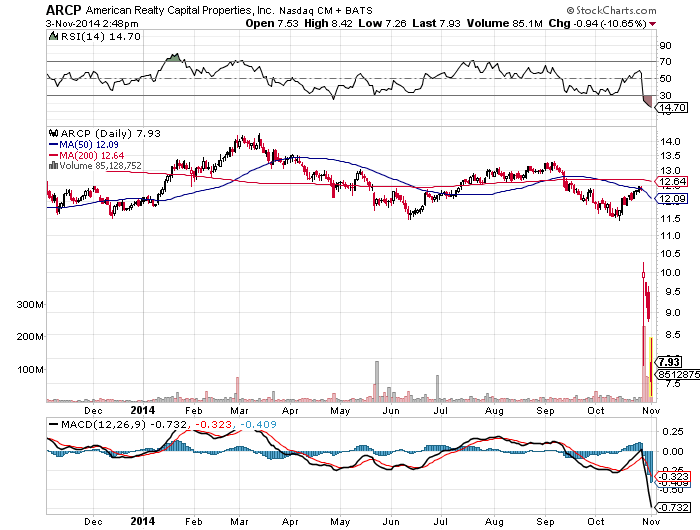


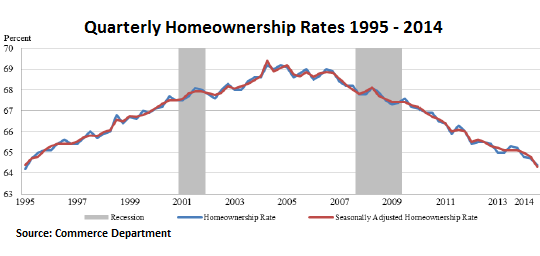


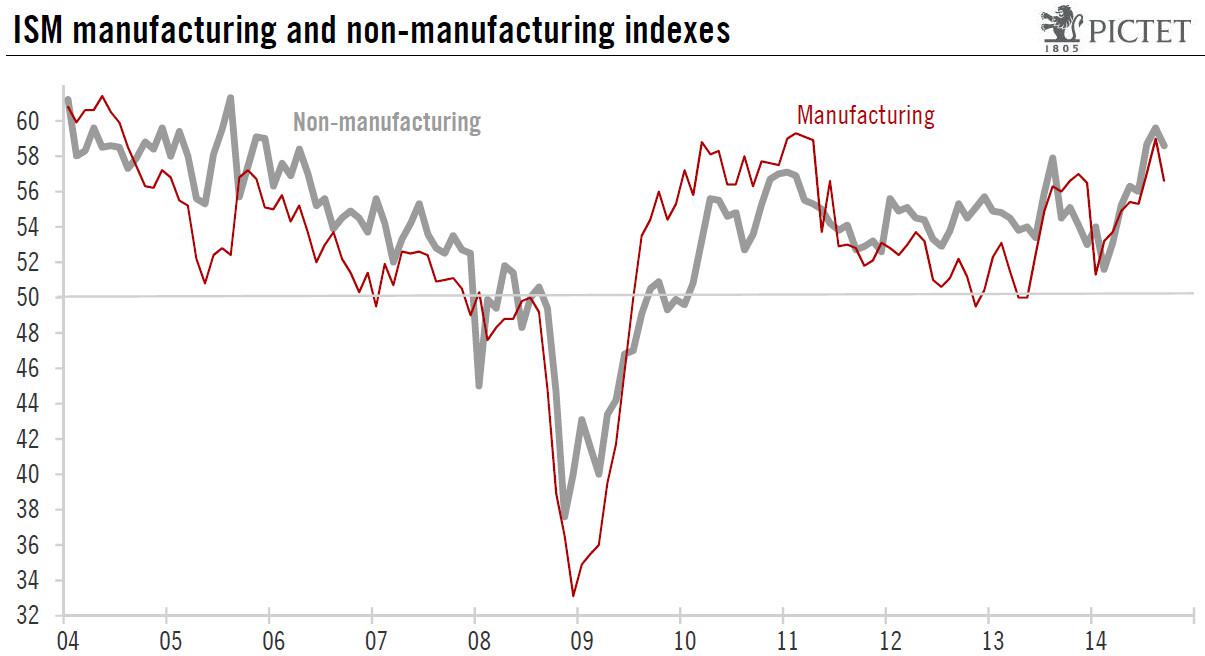
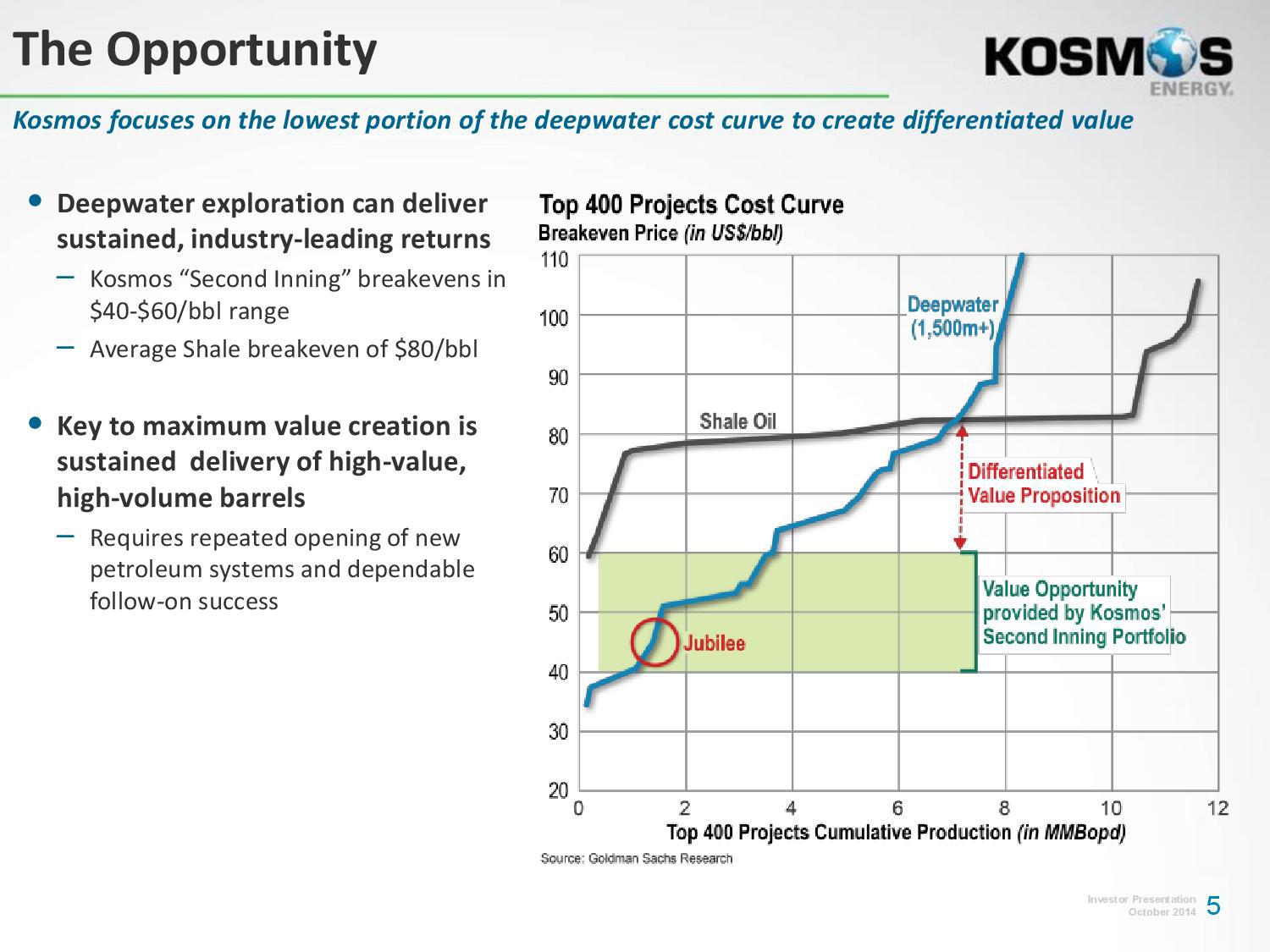





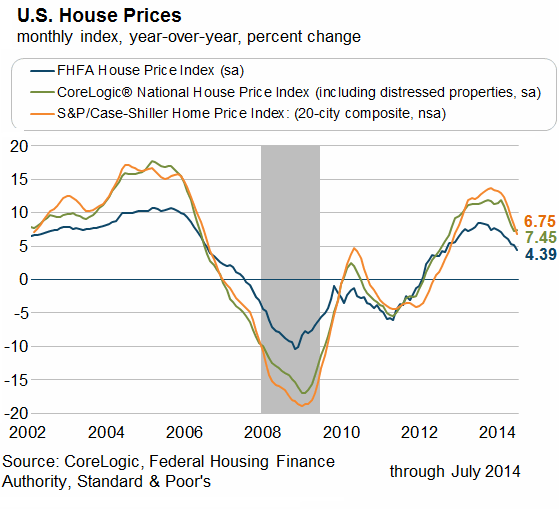

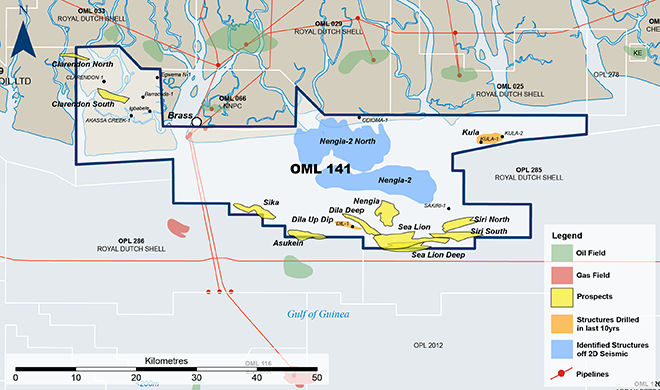









 by
by 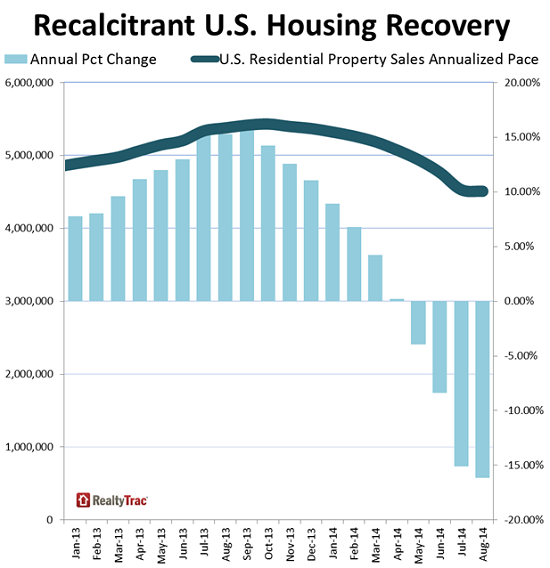
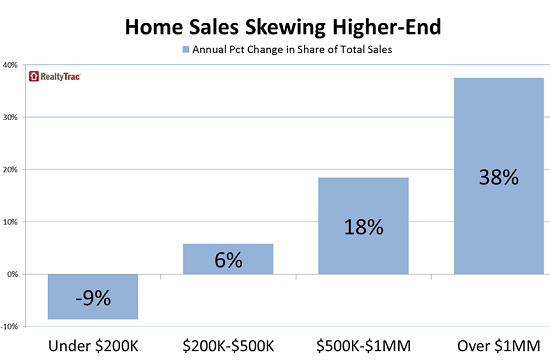


 By
By 


 By:
By:  Story by:
  By
By 

 The economic impact is felt in all industries that provide support, from drilling to housing and retail.

 For Texas-focused mortgage professionals, the Lone Star State’s dominance came as no surprise.
 As for the Colorado market, Erick Strobel, owner and operator of Johnstown, Colo.-based
  Source:





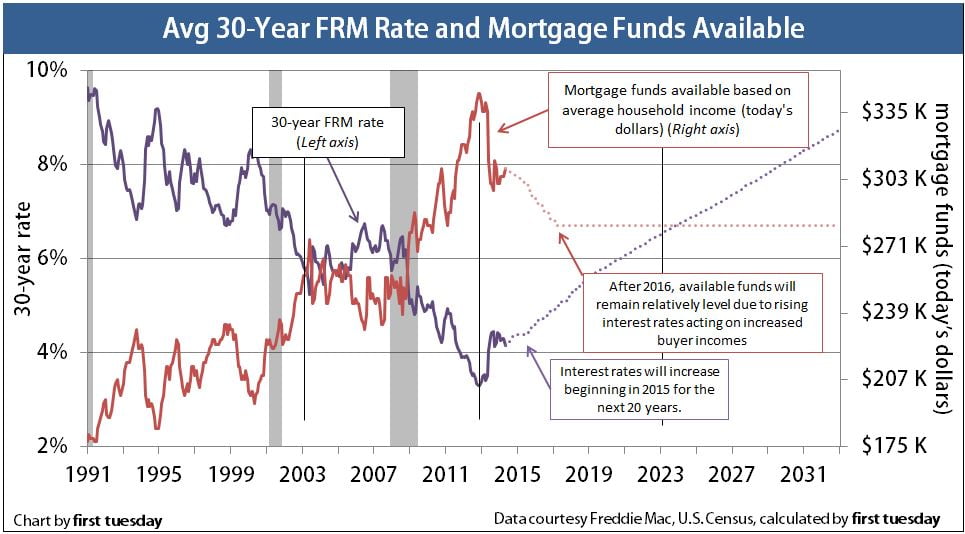


 By
By 
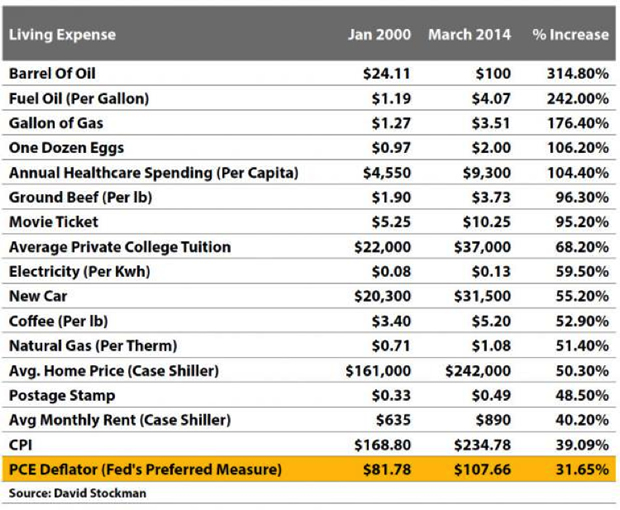
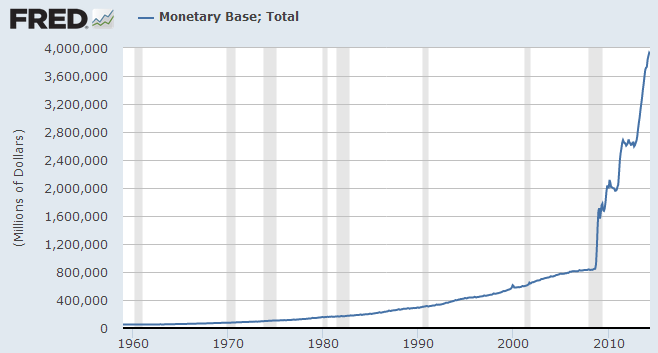
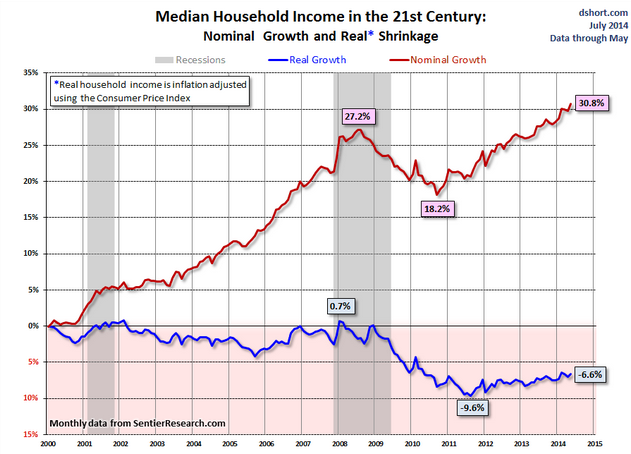







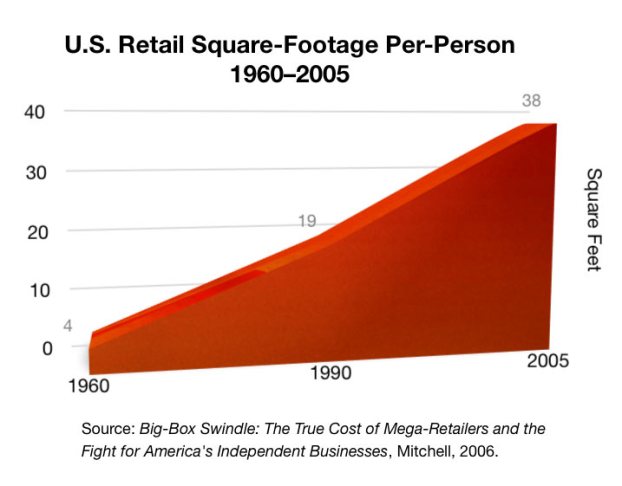


 Easy Money Martin
You must be logged in to post a comment.