As wereported in January, approximately 40 percent of student loans taken out in 2014 are projected to default by 2023 according to the Brookings Institute.
However, anew game show on TruTVoffers millennial contestants a chance to answer trivia questions – and if they win, the game show will pay off their student debt.
“Paid Off,” a new trivia game show that premiered this week tries to illuminate the student debt crisis that has entrapped countless millennials. To get the balance right, the show’s producers partnered with a nonprofit group called Student Debt Crisis.
Its executive director and founder, Natalia Abrams, gave this adviceto producers: “Every step of the way, from signing up for college to paying back their loans, it’s been a confusing process. So make sure that there’s some heart to this show.”
Video: Paid Off with Michael Torpey Season 1 Trailer
Michael Torpey, a New York-based actor (“Orange is the New Black”) who is the host of the show, acknowledges that student debt is a crisis and one of the most difficult financial issues plaguing millennials in the gig economy.
“We’re playing in a weird space of dark comedy,” said Torpey, who developed the show with TruTV producers and various nonprofit groups. “As a comedian, I think a common approach to a serious topic is to try to laugh at it first.”
Video: Paid Off with Michael Torpey – The Story Behind Paid Off with Michael
The rules of game show are simple: Three millennial contestants, all of whom have an exorbitant amount of student debt, go head-to-head in a few rounds of trivia questions, hoping that their useless liberal arts degree enables them to answer enough questions right. If they win, well, the show will cover 100 percent of their outstanding student loans.
“One of the mantras is ‘an absurd show to match an absurd crisis,’” Torpey told The Washington Post. “A game show feels really apt because this is the state of things right now.”
Earlier this year, the show had a casting call in Atlanta – this is what the casting flyer stated: “truTV’s new comedy games show PAID OFF is going to do something the government won’t – help people get out of student loan debt! If you’re smart, funny, live in the Atlanta area and have student loan debt, We Want You!”
Video: Paid Off with Michael Torpey – Finger The Masters
Torpey told NBC that “he strives to balance the light hearted trappings of a game show with an earnest, empathetic look at the student debt issue.”
“I want to be very respectful of the folks who come on our show, who opened their hearts and shared their struggles with us,” Torpey said. “I hope this show de-stigmatizes debt. I mean, there are 45 million borrowers out there. It is a huge number of people!”
Google searches for “paid off game show” have been rising since June.
Meanwhile, “student loans forgiveness” searches have been surging over the cycle.
The computer-generated image of Mr Kalt greets clients on screen and can talk customers through the bank’s latest research as well as answer queries ( UBS )
An investment bank has digitally “cloned” one of its top staff members, allowing clients to get financial advice without the need to speak to a real-life banker.
UBSis testing the use of a lifelike avatar of Daniel Kalt, its chief investment officer for customers inSwitzerland.
The computer-generated image of Mr Kalt greets clients on screen and can talk customers through the bank’s latest research as well as answer queries. Another digital assistant called Fin is also available to carry out transactions.
The new service, called UBS Companion is driven by artificial intelligence and voice-recognition technology developed by IBM. Another company, FaceMe, animated and visualised the avatars. UBS hopes the new tech will increase efficiency and allow it to advise more customers.
But are bankers set to be the latest group to fall victim to the much heralded about “rise of the robots”?
No, says UBS. The bank says it aims to find the “best possible combination of human and digital touch”.
The clone will give clients quicker answers to some questions but the option to speak to a human being will always be available.
UBS started trials in June at its branch in Zurich where it is testing the new system on 100 clients but it won’t say how they have reacted so far.
At present, there are no plans to unleash an army of cloned bankers on the world.
“It is a project to explore new technology and find out how humans and machines can complement heightened levels of client experience in future,” UBS said.
“The aim is to explore how to create a new frictionless access to UBS’s expertise for our clients and to test the acceptance of digital assistants in a wealth management context.”
There is a group of bankers for whom “better” means “worse” for everyone else: we are talking, of course, about restructuring bankers who advising companies with massive debt veering toward bankruptcy, or once in it, how to exit from the clutches of Chapter 11, and who – like the IMF, whose chief Christine Lagarde recently said “When The World Goes Downhill, We Thrive” – flourish during financial chaos and mass defaults.
Which is to say that the past decade has not been exactly friendly to the world’s restructuring bankers, who with the exception of two bursts of activity, the oil collapse-driven E&P bust in 2015 and the bursting of the retail “bricks and mortar” bubble in 2017, have been generally far less busy than usual, largely as a result of abnormally low rates which have allowed most companies to survive as “zombies”, thriving on the ultra low interest expense.
However, asMoody’s warned yesterday, and as the IMFcautioned a year ago, this period of artificial peace and stability is ending, as rates rise and as a avalanche of junk bond debt defaults. And judging by their recent public comments, restructuring bankers have rarely been more exited about the future.
Ken Moelis
Take Ken Moelis, who last month was pressed about his rosy outlook for his firm’s restructuring business, describing “meaningful activity” for the bank’s restructuring group.
“Your comments were surprisingly positive,” said JPMorgan’s Ken Worthington,quoted by Business Insider. “Is this sort of steady state for you in a lousy environment? Can things only get better from here?”
Moelis’ response: “Look, it could get worse. I guess nobody could default. But I think between 1% and 0% defaults and 1% and 5% defaults, I would bet we hit 5% before we hit 0%.”
He is right, because as we showed yesterday in this chart from Credit Suisse, after languishing around 1%-2% for years, default rates have jumped the most in 5 years, and are now “ticking higher”
Moelis wasn’t alone in his pessimism: in March, JPMorgan investment-banking headDaniel Pinto saidthat a 40% correction, triggered by inflation and rising interest rates, could be looming on the horizon.
These are not isolated cases where a gloomy Cassandra has escaped from the asylum: already the biggest money managers are positioning for a major economic downturn according to recent research from Bank of America. And while nobody can predict the timing of the next collapse, Wall Street’s top restructuring bankers have one message: it’s coming, and it’s not too far off.
However, the most dire warning to date came from Bill Derrough, the former head of restructuring at Jefferies and the current co-head of recap and restructuring at Moelis: “I do think we’re all feeling like where we were back in 2007,” hetold Business Insider:“There was sort of a smell in the air; there were some crazy deals getting done. You just knew it was a matter of time.”
What he is referring to is not just the overall level of exuberance, but the lunacy taking place in the bond market, where CLOs are being created at a record pace, where CCC-rated junk bonds can’t be sold fast enough, and where the a yield-starved generation of investors who have never seen a fair and efficient market without Fed backstops, means that the coming bond-driven crash will be spectacular.
“Even if there is not a recession or credit correction, with the sheer volume of issuance there are going to be defaults that take place,” said Neil Augustine, co-head of the restructuring practice at Greenhill & Co.
The dynamic is familiar: since 2009, the level of global non-financial junk-rated companies has soared by 58% representing $3.7 trillion in outstanding debt, the highest ever, with 40%, or $2 trillion, rated B1 or lower. Putting this in contest, since 2009, US corporate debt has increased by 49%, hitting a record total of $8.8 trillion, much of that debt used to fund stock repurchases. As a percentage of GDP, corporate debt is at a level which on ever prior occasion, a financial crisis has followed.
The recent glut of debt is almost entirely attributable to the artificially low interest-rate environment imposed by the Federal Reserve and its central bank peers following the crisis. Many companies took advantage and refinanced their debt before 2015 when a large swath was set to mature, kicking the can several years down the road.
But going forward “there’s going to be refinancing at significantly higher rates,” said Steve Zelin, head of the restructuring in the Americas at PJT Partners.
And as theIMF first warned last April, refinancing at higher rates will further shrink the margin of error for troubled companies, as they’ll have to dedicate additional cash flow to cover more expensive interest payments.
“When you have highly leveraged companies and even a modest rise in interest rates, that can result in an increase in restructuring activity,” said Irwin Gold, executive chairman at Houlihan Lokey and co-founder of the firm’s restructuring group.
So with a perfect debt storm coming our way, many restructuring firms have been quietly hiring new employees to be ready when, not if, the economy takes a turn for the worse.
“The restructuring business is a good business during normal times and an excellent business during a recessionary environment,” Augustine said. “Ultimately, when a recession or credit correction does happen, there will be a massive amount of work to do on the restructuring side.” Here are some additional details on recent banker moves from Business Insider:
Greenhill hired Augustine from Rothschild in March to co-head its restructuring practice. The firm also hired George Mack from Barclays last summer to cohead restructuring. The duo, along with Greenhill vet and fellow co-head Eric Mendelsohn, are building out the firm’s team from a six-person operation to 25 bankers.
Evercore Partners in May hired Gregory Berube, formerly the head of Americas restructuring at Goldman Sachs, as a senior managing director. The firm also poached Roopesh Shah, formerly the chief of Goldman Sachs’ restructuring business, to join its restructuring business in early 2017.
“It feels awfully toppy, so people are looking around and saying, ‘If I need to build a business, we need to go out and hire some talent,'” one headhunter with restructuring expertise told Business Insider.
“In our world, people are just anticipating that it’s coming. People are trying to position their teams to be ready for it,” Derrough said. “That was the lesson from last cycle: Better to invest early and have a cohesive team that can do the work right away and maybe be a little bit overstaffed early, so that you can execute for your clients when the music ultimately stops.”
Of course, if the IMF is right (for once), Derrough and his peers will soon see a windfall unlike anything before: last April, the International Monetary Fund predicted that some 20%, or $3.9 trillion, of the total global corporate debt is in danger of defaulting once rates rise.
Although if and when that day comes, perhaps a better question is whether companies will be doing debt-for-equity swaps, or fast forward straight to debt-for-lead-gold-and canned food…
July 6, 2016 marks the point when the US government’s condition became irretrievably terminal. On that date the US Treasury’s 10-year note yield hit its low, 1.34 percent, and has been trending irregularly higher ever since. Historically, debt has been the life support for regimes in extremis. No regime has ever been more in debt than the US government. Its annual deficit and debt service expense are growing, old-age pension and medical programs face a demographic crunch, and now interest rates are rising. One way or the other, the government walking away from some or all of its promises is as set in stone as anything in this life can be.
Dakota Access Pipeline protesters chant outside of the Wells Fargo Bank at Westlake Center in January 2017. The city of Seattle has renewed its contract with Wells Fargo, after it could get no other takers for its banking business. (Lindsey Wasson / The Seattle Times)
Seattle split with Wells Fargo a year ago in protest over the bank’s investments in the Dakota Access Pipeline and fraud scandals. But the two are together again after the city could find no other bank to take its business.
The city of Seattle will keep banking with Wells Fargo & Co. after it could get no other takers to handle the city’s business.
The City Council in February 2017 voted 9-0 to pull its account from Wells Fargo, saying the city needs a bank that reflects its values.
Council members cited the bank’s investments in the Dakota Access Pipeline, as well as a roiling customer fraud scandal, as their reasons to sever ties with the bank.
Some council members declared their vote as a move to strike a blow against not only Wells Fargo, but “the billionaire class.”
“Take our government back from the billionaires, back from [President] Trump and from the oil companies,” Council member Kshama Sawant said at the time.
The contract was set to expire Dec. 31, but as finance managers for the city searched for arrangements to handle the city’s banking,it got no takers, said Glen Lee, city finance director. That was even after splitting financial services into different contracts to try to attract a variety of bidders, including smaller banks.
In the end, there were none at all.
It became clear this was our best and only course of action,” Lee said of the city’s decision to stick with Wells Fargo after all.
The first sign that it would be hard to make the council’s wish a realitycame soon after the votewhen Wells Fargo too-hastily informed the city it could sever its ties immediately with no penalty for breaking the contract. The bank even promised to help the city find a new financial partner.
But it quickly became clear how hard that would be as the city reworked its procurement specifications and searched for months.
One month ago, when discussing the most recent trends in the US subprime auto loan space,ZH revealedhow despite a virtual halt in direct loans by depositor banks to subprime clients following the financial crisis, the US banking sector now has over a third of a trillion dollars in indirect subprime exposure, in the form of loans to non-banks financial firms which in the past decade have become the most aggressive lenders to America’s sub-620 FICO population.
As we further explained, the banks’ total indirect exposure to subprime loans – not just auto loans, but also subprime mortgages, and subprime consumer loans – could be pieced together through public filings, and according to FDIC reports, bank loans to non-banks subprime lenders soared this decade, with the following 5 names standing out:
Wells Fargo: $81 billion, up from $13.4 billion in 2010
Citigroup: $30 billion, up from $4.1 billion in 2010
Bank of America: $30 billion, up from $2.8 billion in 2010
JP Morgan: $28 billion, up from $10.4 billion in 2010
Goldman Sachs: $22 billion
Morgan Stanley: $16 billion
Visually:
But while the supply side of the subprime equation is clearly firing on all cylinders – as only the next crash/crisis will stop desperate yield chasers – things on the demand side are going from bad to worse, and according to thelatest Fitch Autoloan delinquency data, consumers are defaulting on subprime auto loans at a higher rate than during the 2008–2009 financial crisis.
The highly seasonal rate for subprime auto loans more than 60 days past due reached the highest in 22 years – since 1996 – at 5.8%, according to March data; this is well over 2% higher than the comparable March default rate in the low 3%s hit during the peak of the financial crisis a decade ago.
The more recent April data, showed a delinquency rate of 4.3%, higher than the 4.1% last year, and the second highest April on record. Keep in mind, April is the “best” month of the year from a seasonal perspective as that is when the bulk of tax refunds hit, which are then promptly used to repay outstanding bills – it’s all downhill from there… or rather uphill as the chart shows ever higher default rates.
And while delinquencies have been rising, the number of auto loans and leases to subprime borrowers has continued to shrink, falling 10% Y/Y according to Equifax. However, as we showed at the top, it’s not due to supply constraints at the non-bank subprime lenders, the slide in subprime loan volume is all on the demand side: auto-lease origination by subprime customers tumbled by 13.5%.
Meanwhile, asBloomberg reports, the volume of bond sales backed by these loans are likely to remain the same because banks and credit unions don’t turn most of their loans into securities: “ABS is a fraction of the total auto credit market, which is mainly funded on balance sheets,” Wells Fargo analyst John McElravey told Bloomberg in an interview. “If the pullback from subprime is more from the balance-sheet lenders, banks, then maybe securitization keeps moving along.”
Not maybe: definitely. As the following chart show, the percentage of subprime securitization of all auto ABS as a share of total loans has not only surpassed the pre-crisis peak, it is at a new all time high.
Call it the latest “new (ab)normal” paradox: the underlying auto subprime loan market is shrinking fast, and yet the market for subprime auto ABS securitizations has never been stronger.
Subprime-auto asset-backed security sales are on pace with last year at about $9.5 billion compared to $9.6 billion a year ago, according to data compiled by Bloomberg. With new transactions from Santander, GM Financial, Flagship, and Credit Acceptance expected to hit the market this week, volume may exceed 2017’s total of about $25 billion.
And while it is safe to say it will all end in tears – again – as it did a decade ago, with the next recession the catalyst, the shape of the next crash will be very different. As we explained last month, this subprime bond market is vastly different from what it was even a few years ago, let alone during the last crisis as an influx of generally riskier, smaller lenders flooded into it in the post-crisis years, bankrolled by private-equity moneyand funded by big bank loans, pursued the riskiest borrowers in order to stay competitive.
“Neither banks nor credit unions have done ‘deep subprime’ lending,” Gunnar Blix, deputy chief economist at Equifax told Bloomberg. “That’s mainly done by smaller dealer-finance and independent finance companies” who rely almost solely on ABS for funding. According to Bloomberg, only about 10% of $437 billion of outstanding subprime auto loans have been securitized into ABS, according to Wells Fargo, which means that underwriters are generally massively exposed to the subprime auto loan crunch that is already playing out before our eyes, and which will be magnified exponentially in the next recession.
* * *
The latest subprime delinquency data seemed confusing, almost a misprint to Hylton Heard, Senior Director at Fitch Ratings who said that “it’s interesting that [smaller deep subprime] issuers continue to drive delinquencies on the index in an unemployment environment of around 4%, low oil prices, low interest rates — even though they are rising — and a positive economic story overall.” In other words, there is no logical explanation why in a economy as strong as this one, subprime delinquencies should be soaring.
Unless, of course the real, unvarnished, and non-seasonally adjusted economy is nowhere near as strong as the government’s “data” suggests.
Making matters worse, rising interest rates have made interest payment increasingly unserviceable for those subprime borrowers who are currently contractually locked up – hence the surge in delinquency rates – or those consumers with a FICO score below 620 who are contemplating taking out a new loan to buy a car, and suddenly find they could no longer afford it, an ominous development we first described one month ago in “Subprime Auto Bubble Bursts As “Buyers Are Suddenly Missing From Showrooms.“
And even if the subprime bubble hasn’t burst just yet, every incremental 0.25% increase in rates assures it is only a matter of time. For once, St. Louis Fed president James Bullard was not wrong when he warned this morning that he sees Fed policy as the reason behind the flattening of the yield curve, saying that “it’s been the Fed, I think, that has flattened the curve more than worries by investors on the state of the global economy.“
“My personal opinion is the Fed does not need to be so aggressive that we invert the yield curve” he noted, adding that “I do think we’re at some risk of an inverted yield curve later this year or early in 2019,” and “if that happens I think it would be a negative signal for the U.S. economy.”
If he’s correct, it begs the question: why is the Fed seeking to crash the economy and, by implication, the market?
We’ll close with a quote from the last Comptroller of the Currency, Thomas Curry, who during an October 2015 speech said that “what is happening in [the subprime auto lending] space today reminds me of what happened in mortgage-backed securities in the run up to the crisis.” It’s only gotten worse since then.
Wayne Jett, author of “Fruits of Graft”, interviewed by Sarah Westall in an eight part (video) series to discuss in depth the amazing history of events and actions leading up to the Great Depression. They also discuss the activities and actions taken during the Great Depression that caused increased misery for millions of Americans. This is an epic historical view of the Great Depression you have not heard before; that also serves to explain what is really driving most current events we are living through today.
This settlement is on top of the recent $1 billion fine for mortgage lending and auto insurance abuses.
The bank announced Friday afternoon that it reached a new settlement over its sales practices and will pay $480 million to a group of shareholders who accused the bank of making “certain misstatements and omissions” in the company’s disclosures about its sales practices.
The settlement stems from actions originally taken in 2016 by the Consumer Financial Protection Bureau, the Office of the Comptroller of the Currency, and the city and county of Los Angeles to fine the bank$150 millionfor more than 5,000 of the bank’s former employees opening as many as 2 million fake accounts in order to get sales bonuses.
The action led to a class action lawsuit brought on behalf of the bank’s customers who had a fake account opened in their name.
That lawsuit led to a$142 million fake accounts class action settlementthat covers all people who claim that Wells Fargo opened a consumer or small business checking or savings account or an unsecured credit card or line of credit without their consent from May 1, 2002 to April 20, 2017.
But that wasn’t the only legal battle that Wells Fargo was facing.
According to the bank, a putative group of the bank’s shareholders also sued the bank in U.S. District Court for the Northern District of California, alleging the bank committed securities fraud by not being wholly honest in its statements about its sales practices.
Despite stating that it denies the claims and allegations in the lawsuit, Wells Fargo is choosing to settle the case and will pay out $480 million, assuming the settlement amount is approved by the court.
According to the bank, it reached the agreement in principle to “avoid the cost and disruption of further litigation.”
This settlement is also separate from the recent$1 billion finehanded down against the bank by the CFPB and the OCC for mortgage lending and auto insurance abuses.
The bank stated that the new settlement amount of $480 million has been fully accrued, as of March 31, 2018.
“We are pleased to reach this agreement in principle and believe that moving to put this case behind us is in the best interest of our team members, customers, investors and other stakeholders,” Wells Fargo CEO Tim Sloan said in a statement. “We are making strong progress in our work to rebuild trust, and this represents another step forward.”
Two weeks after Deutsche Bank wasted no time at all to lay off 400 US bankers, or roughly 10% of total, as the bank’s post-disastrous earnings purge began, today the purge is accelerating and according to Bloomberg, the biggest European bank is considering a sweeping restructuring, a less scary phrase than “mass termination” in the U.S. “that could result in cutting about 20% of staff in the region” although Bloomberg caveats that a formal decision has not yet been made, the total figure may end up lower.
Deutsche Bank isn’t targeting a specific level of cuts at the U.S. unit and the final figure will depend on each business line’s decisions, according to another person briefed on the matter. The company had about 10,300 employees in the U.S. at the end of 2017, or about a tenth of its global workforce.
The news follows an earlier report that Deutsche Bank’s Barry Bausano, a senior banker in charge of overseeing the company’s relations with hedge fund clients, was leaving as the firm shakes up its U.S. operations.
When Bloomberg asked the bank about its mass termination plans, bank spokesman Joerg Eigendorf said “There are no such plans,” although considering the billions Deutsche has spent on rigging and manipulation, they may be excused if they are not seen as exactly credible.
Separately, Bloomberg also reports that under its new CEO, Christian Sewing, Deutsche Bank is considering cuts to businesses including prime brokerage, rates and repo,according to a bank statement last month and people familiar with the matter. As reported previously, the firm is already planning to close an office in Houston and shrink its presence in New York City, moving from Wall Street to a midtown Manhattan space that’s 30 percent smaller.
The Turkish government has withdrawn its reserves of gold from the Federal Reserve. Erdogan clearly is positioning himself to be able to seek its own power that will be contrary to international policy. Erdogan is one of those politicians who still think in the old days of Empire. As a member of NATO, he has constantly been threatening Greece. So what happens if we see a war between two NATO members? Who does NATO then support? When in doubt, bring the gold home in preparation for in time of war, a currency will not suffice.
Anecdotal evidence suggests that corporate borrowers may be due for a reckoning.
A growing spider web of evidence suggests a credit reckoning may be near.
For years, the naysayers have been warning about the precariousness of the corporate credit market. In an environment where balance sheets have become more and more bloated from excess borrowing stoked by the Federal Reserve’s easy-money policies, shrinking bond yield premiums don’t make sense. At some point, they argue, there will have to be a reckoning.
Could we be nearing that point?
On the surface, it’s hard not to like corporate bonds, despite yields being at some of their lowest levels relative to U.S. Treasuries since before the financial crisis. After all,corporate earnings are booming, thanks to an expanding economy and tax cuts, and the default rate is miniscule at less than 3 percent. On top of that, the number of companies poised for an upgrade at S&P Global Ratings is the highest in a decade.
All that said, there’s mounting anecdotal evidence of possible cracks in the credit facade. One place you can see them is in the latest monthly survey put out by the National Association of Credit Management. This organization surveys 1,000 trade credit managers in the manufacturing and service industries across the U.S. Like most surveys of its kind lately, the main index number was down a bit from its recent highs. But some Wall Street strategists are focusing on a more alarming data point showing a collapse in a category called “dollar collections.” The index covering that part of the survey – which measures the ability of creditors to collect the money they are owed from their customers – tumbled to 46.7 in April from 59.6 in March, putting it at its lowest level since early 2009, the height of the financial crisis.
The folks at the NACM aren’t quite sure what to make of the big plunge, which could turn out to be an anomaly. What they do know, however, is that credit conditions are getting weaker. As they describe it, the strengthening economy has forced more companies to boost borrowings to keep pace with their competitors. Now, they may be struggling to keep on top of that debt.
“It looks like creditors are having more challenges as far as staying current, which may be contributing to the very weak dollar collection numbers,” NACM economist Chris Kuehl wrote in a report accompanying the monthly survey results.
There may be something to that. The Institute of International Finance noted in a report last month that U.S. non-financial corporate debt rose to $14.5 trillion in 2017, an increase of $810 billion from 2016 and a figure that equates to 72 percent of the country’s gross domestic product (a post-crisis high). About 60 percent of the rise in debt stemmed from new bank loan creation, which is worrisome since those borrowings roll over more frequently than bonds and are tied to short-term interest rates, which are rising at a much faster clip than long-term rates. As an example, the three-month London Interbank Offered Rate for dollars has jumped to 2.35 percent from 1 percent at the start of 2017. While that’s still low historically, any small increase gets magnified across such a big amount of borrowings.
“Rising interest rates will add pressure on corporates with large refinancing needs,” the Washington-based Institute of International Finance wrote in its report. It estimates about $3.8 trillion of loan repayments will be coming due annually.
Credit is the lifeblood of the economy and financial markets. As such, it has a reputation for being a sort of early-warning system for investors and leading indicator for riskier assets such as equities. The equity strategists at Bloomberg Intelligence say they are noticing that stock performance is starting to correlate strongly with corporate balance sheet health as well as profitability. In an April report, they wrote that over the prior year, stocks of Standard & Poor’s 500 Index members with higher cash ratios outperformed low-ratio counterparts. Also, stocks of companies with higher net-debt ratios relative to both cash flow and market capitalization under performed lower-debt counterparts, with average monthly return differentials of 1.1 percentage points.
A growing number of influential Wall Street firms, from Guggenheim Partners to Pacific Investment Management Co., and from BlackRock Inc. to Greg Lippmann – who helped design the “Big Short” trade against subprime mortgages – are raising the alarm about the dangers growing in credit markets. It may well be that the reckoning is closer than we think.
Argentina’s central bank has raised interest rates for the third time in eight days as the country’s currency, the peso, continues to fall sharply.
On Friday, the bank hiked rates to 40% from 33.25%, a day after they were raised from 30.25%. A week ago, they were raised from 27.25%. The rises are aimed at supporting the peso, which has lost a quarter of its value over the past year.
Analysts say the crisis is escalating and looks set to continue.
Argentina is in the middle of a pro-market economic reform programme under President Mauricio Macri, who is seeking to reverse years of protectionism and high government spending under his predecessor, Cristina Fernandez de Kirchner. Inflation, a perennial problem in Argentina, was at 25% in 2017, the highest rate in Latin America except for Venezuela. This year, the central bank has set an inflation target of 15% and has said it will continue to act to enforce it.
‘Aggressive steps’
Despite the twin rate rises, the peso, which was fixed by law at parity with the US dollar before Argentina’s economic meltdown in 2001-02, is now trading at about 22 to the dollar.
“This crisis looks set to continue unless the government steps in to reassure investors that it will take more aggressive steps to fix Argentina’s economic vulnerabilities,” said Edward Glossop, Latin America economist at Capital Economics. “Risks to the peso have been brewing for a while – large twin budget and current account deficits, a heavy dollar debt burden, entrenched high inflation and an overvalued currency.
“The real surprise is how quickly and suddenly things seem to be escalating.”
Mr Glossop said “a sizeable fiscal tightening” was planned for 2018, but it might now need to be larger and prompter. “Unless or until that happens, the peso is likely to remain under pressure, and there remains a real risk of a messy economic adjustment.” Argentina’s president Mauricio Macri is a controversial figure in a country that is still strongly divided ideologically. But among international investors he is unanimously praised. Since coming to office, he moved swiftly to end capital controls and re-establish trust in economic data coming from Argentina. However, he is not winning a crucial battle in the country – the one against inflation. Markets are taking notice and there has been a sell-off of the peso. The opposition wants to stop Macri from removing subsidies in controlled prices, such as energy and utility tariffs, which may bring more inflation in the short term but could help bring it down from above 20% now to about 5% by 2020.
Friday was a day for emergency measures – a massive hike to 40% in interest rates and another promise to bring down government spending.
Investors still believe Macri has a sound plan to recover Argentina, but they are not convinced he can see it through.
Argentina Raises Interest Rates To 40% To Support Their Currency
Argentina has just raised interest rates to40% trying to support the currency. I have explained many times that interest rates follow a BELL-CURVE and by no means are they linear. This is one of the huge problems behind attempts by central banks to manipulate the economy by impacting demand-side economics. Raising interest rates to stem inflation will work only up to a point and even that is debatable. The entire interrelationship between markets and interest rates has three main phase transitions and each depends upon the interaction with CONFIDENCE of the people in the survivability of the state.
PHASE TWO: Raising interest rates will flip the economy as Volcker did in 1981 ONLY when they exceed the expectation of profits in asset inflation provided there is CONFIDENCE that the government will survive as in the USA back in 1981 compared to Zimbabwe, Venezuela, Russia during 1917 or China back in 1949. In other words, if the nation is going into civil war, then tangible assets will collapse and the solution becomes assets flee the country.
In the case of the USA back in 1981, the high interest rates worked because we were only in Phase Two where there was no civil war or revolution so the survivability of the government did not come into question. Hence, Volcker created DELATION as capital then ran away from assets and into bonds to capture the higher interest rates. Then and only then did rates begin to decline between 1981 into 1986 reflecting the high demand for US government bonds, which in turn drove the US dollar to record highs and the British pound to $1.03 in 1985 resulting in the Plaza Accord and the creation of the G5 (now G20).
So many people want to take issue with me over how the stock market will rise with higher interest rates. It is a BELL-CURVE and you better begin to understand this. If not, just hand-over all your assets to the New York bankers now, go on welfare and just end your misery.
Here are charts of the Argentine share market the currency in terms of US dollars. You can see that the stock market offers TANGIBLE assets that rise in local currency terms because assets have an international value. Here we can see the dollar has soared against the currency and the stock market has risen in proportion the decline in the currency. I do not think there is any other way that is better to demonstrate the BELL-CURVE effect of interest rates than these two charts.
To those who doubt that the stock market can rise with rising interest rates, I really do not know what to say. Keep listening to the talking heads of TV and all the pundits who claim only gold will rise and everything else will fall to dust. Then we have the sublime blind idiots who never look outside the USA and proclaim the dollar will crash and burn not the rest of the world so buy gold and cryptocurrency you cannot spend and certainly with no power grid.
PHASE THREE
Is when no level of interest rate will save the day. Capital simply flees the political state for the risk of revolution or civil war means that tangible assets which are immovable will not hold their value such as companies and real estate. This is the period that Goldbugs envision. At that point, the value of everything will even move into the extreme PHASE FOUR where even gold will decline and the only thing to survive is food. There, the political state completely collapses and a new political government comes into being.
Meanwhile, the following is an analysis update on the pending 2021 LIBOR reset that will affect trillions in debt and derivative instruments across the globe…
When ZH reported Wells Fargo’s Q4 earningsback in January, they drew readers’ attention to one specific line of business, the one they dubbed the bank’s “bread and butter“, namely mortgage lending, and which as they then reported was “the biggest alarm” because “as a result of rising rates, Wells’ residential mortgage applications and pipelines both tumbled. Specifically in Q4 Wells’ mortgage applications plunged by $10bn from the prior quarter, or 16% Y/Y, to just $63bn, while the mortgage origination pipeline dropped to just $23 billion”, and just shy of the post-crisis lows recorded in late 2013.
Fast forward one quarter when what was already a grim situation for Warren Buffett’s favorite bank, has gotten as bad as it has been since the financial crisis for America’s largest mortgage lender, because buried deep in its presentation accompanyingotherwise unremarkable Q1 results(modest EPS and revenue beats), Wells just reported that its ‘bread and butter’ is virtually gone, and in Q1 2018 the amount in the all-important Wells Fargo Mortgage Application pipeline failed to rebound, and remained at $24 billion, the lowest level since the financial crisis.
Yet while the mortgage pipeline has not been worse since in a decade despite the so-called recovery, at least it has bottomed. What was more troubling is that it was Wells’ actual mortgage applications, a forward-looking indicator on the state of the broader housing market and how it is impacted by rising rates, that was even more dire, slumping from $63BN in Q4 to $58BN in Q1, down 2% Y/Y and the the lowest since the financial crisis (incidentally, a topic we covered just two days ago in “Mortgage Refis Tumble To Lowest Since The Financial Crisis, Leaving Banks Scrambling“).
Meanwhile, Wells’ mortgage originations number, which usually trails the pipeline by 3-4 quarters, was nearly as bad, plunging $10BN sequentially from $53 billion to just $43 billion, the second lowest number since the financial crisis. Since this number lags the mortgage applications, we expect it to continue posting fresh post-crisis lows in the coming quarter especially if rates continue to rise.
Adding insult to injury, as one would expect with the yield curve flattening to 10 year lows just this week, Wells’ Net Interest margin – the source of its interest income – failed to rebound from one year lows, and missed consensus expectations yet again. This is what Wells said about that: “NIM of 2.84% was a stable LQ as the impact of hedge ineffectiveness accounting and lower loan swap income was offset by the repricing benefit of higher interest rates.” But we’re not sure one would call this trend “stable” as shown visually below:
There was another problem facing Buffett’s favorite bank: while NIM fails to increase, deposits costs are rising fast, and in Q1, the bank was charged an average deposit cost of 0.34% on $938MM in interest-bearing deposits, exactly double what its deposit costs were a year ago.
And finally, there was the chart showing the bank’s consumer loan trends: these reveal that the troubling broad decline in credit demand continues, as consumer loans were down a total of $9.5BN sequentially across all product groups, far more than the $1.7BN decline last quarter.
What these numbers reveal, is that the average US consumer can not afford to take out mortgages at a time when rates rise by as little as 1% or so from all time lows. It also means that if the Fed is truly intent in engineering a parallel shift in the curve of 2-3%, the US can kiss its domestic housing market goodbye.
I am going to break from regular market commentary to step back and think about the big picture as it relates to debt and inflation. Let’s call it philosophical Friday. But don’t worry, there will be no bearded left-wing rants. This will definitely be a market-based exploration of the bigger forces that affect our economy.
One of the greatest debates within the financial community centers around debt and its effect on inflation and economic prosperity. The common narrative is that government deficits (and the ensuing debt) are bad. It steals from future generations and merely brings forward future consumption. In the long run, it creates distortions, and the quicker we return to balancing our books, the better off we will all be.
I will not bother arguing about this logic. Chances are you have your own views about how important it is to balance the books, and no matter my argument, you won’t change your opinion. I will say this though. I am no disciple of the Krugman “any stimulus is good stimulus” logic.
Thebroken window fallacyis real and digging ditches to fill them back in is a net drain on the economy. Full stop. You won’t hear any complaints from me there.
Yet, the obsession with balancing the government’s budget is equally damaging. In a balance sheet challenged economy the government is often the last resort for creating demand. Trying to balance a government deficit in this environment (like the Troika imposed on Greece during the recent Euro-crisis) is a disaster waiting to happen.
Have a look at these charts from the NY Times outlining the similarity of the Greece depression to the American Great Depression of the 1930s.
Now you might look at these charts and say, “Greece spent too much and suffered the consequences. Ultimately they will be better off taking the hit and reorganizing in a more productive economic fashion.” If so, you probably also still have this poster hanging in your room at your parent’s house where you grew up.
Personally, I don’t want to even bother discussing the possibility of this sort of Austrian-style-rebalancing coming to Western democracies. Yeah, it might be your dream, but it’s just a dream. I have Salma Hayek on myfreebie list, but what do I think of my chances? About as close to zero without actually ticking at the perfect zero level. It’s not a “can’t happen,” but it’s certainly a “it’s not going to happen in a million years.”
Governments were faced with a choice during the 2008 Great Financial Crisis. Credit was naturally contracting, and the economy wanted to go through a cleansing economic rebalancing where debt would be destroyed through a severe recession. Yet, governments had practically zero appetite to allow this sort of cathartic cleansing to happen. Instead, they stepped up and stopped the credit contraction through government spending and quantitative easing.
I believe that government spending is not all bad, and at times, it plays an important role in our economy. I am a huge fan ofRichard Koo’swork. When economies’ interest-rate policies become zero bound, governments are crucial in engaging in anti-cyclical spending. All debt is not bad. Take debt your company might issue for instance. Borrowing a million dollars to invest in capital equipment to make your firm more productive is a much different prospect than taking out a loan to engage in a Krugman-inspired-all-you-can-drink-party-headlined-by-the-Killers. Sure, the party sounds like fun, but it’s not going to benefit your firm past one night of excitement. Governments shouldn’t perpetuate unproductive pension grabs by workers, but instead actually spend money on infrastructure that will make the economy more productive. During the 1950s Eisenhower invested in the American highway system, helping America secure its place as the world’s most economically dominant country. Today that sort of infrastructure spending would be shouted down as irresponsible. Well, not continuing to invest in your country’s productive capacity is the irresponsible part.
The point is that not all spending is bad, but nor is all spending good. And even more importantly, government spending should be anti-cyclical. No sense spending more when your economy is rocking. Better to save the bullets to ebb the natural flow of the business cycle.
But I digress. Let’s get back to debt.
Creating debt is inflationary, while paying down debt is deflationary. That’s pretty basic.
The easiest way for me to demonstrate this fact is to look at an area where debt has been created for spending in a specific area. No better example than student loans.
Over the past fifteen years, inflation in college tuition has exploded. It’s been absolutely bonkers. Here is the chart of regular CPI versus tuition CPI.
But it should really be no surprise. If we add the student loan debt versus Federal debt series, it becomes clear that a tremendous amount of credit has been extended to students.
So let’s agree that credit creation is inflationary, and by definition, credit destruction should be deflationary.
Therefore when the market pundits that I like to affectionately call deflationistas argue that this next chart is ultimately deflationary, I understand where they are coming from.
If you assume that this debt needs to be paid back, then it’s easy to understand their argument. When debt starts to contract and this chart heads lower, this will be deflationary. And if you assume that governments start to balance their books, then there is every reason to expect that future deflation is the worry, not inflation. After all, the money has already been spent. The inflation from that spending is already in the system.
I can already hear the deflationistas argument – over 100% of GDP is unsustainable therefore credit growth will at worst go sideways, but most likely actually contract in coming years.
Really? How about Japan?
The same argument was made at the turn of the century when Japan was running a debt that was over 150% of GDP, yet they somehow managed to push that up another 80% to 230% without causing some sort of apocalyptic collapse.
Now before you send me an angry email about the moral irresponsibility of suggesting debt can go higher, save your clicks. I understand your argument. I am not interested in debating what should be done, but rather I am trying to determine what will be done. You might believe governments and Central Banks will gain religion and start conducting prudent and responsible policies. So be it. If you believe that, then by all means – load up on long-dated sovereign bonds as they will continue to be the trade of the century.
I, on the other hand, believe that Central Banks will continue printing until, as my favourite West Coast skeptic Bill Fleckenstein says, “the bond market takes away the keys.” And even when Central Banks are mildly responsible, politicians are sitting in the wings waiting to spend at any chance they get. Take Trump’s recent stimulus program. We are now more than eight years into an economic recovery, and he just pushed through one of the most stimulative fiscal policies of the past couple of decades. Regardless of where you stand politically regarding these tax cuts, there can be no denying they were much more needed in 2008 than today.
This is a long-winded way of saying that although I agree that the creation of debt is inflationary, and that the destruction of debt is deflationary, I don’t buy the argument that any sort of absolute amount of debt means the trend has to change. I don’t look at the 100% debt-to-GDP figure and worry that the US government will somehow institute deflationary policies to pay that back. Nope, I don’t see anything but a sea of growing deficits and debts. And in fact, the larger debts grow, the less likely they are to be paid back.
How will Japan pay back their debt that is 230% of GDP? The answer is that they can’t. It will be inflated away.
It’s foolish to believe that the end-game is anything but inflation. And even though increasing debt seems scary, if there is one thing that I am sure of, it’s that they will figure out a way to make even more of it.
Rant over. And no more big picture philosophy for a while – I promise.
The global economy has been living through a period of central bank insanity, thanks to a little-understood expansion strategy known as quantitative easing, which has destroyed main-street and benefited wall street.
Central Banks over the last decade simply created credit out of thin air. Snap a finger, and credit magically appears. Only central banks can perform this type of credit magic. It’s called printing money and they have gone on therecord saying they are magic people.
Increasing the money supply lowers interest rates, which makes it easier for banks to offer loans. Easy loans allow businesses to expand and provides consumers with more credit to buy goods and increase their debt. As a country’s debt increases, its currency eventually debases, and the world is currently athistoric global debt levels.
Simply put, the world’s central banks are playing a game of monopoly.
With securities being bought by a currency that is backed by debt rather than actual value,we have recently seen $9.7 trillionin bonds with a negative yield. At maturity, the bond holders will actually lose money, thanks to the global central banks’ strategies.The Federal Reserve has already hintedthat negative interest rates will be coming in the next recession.
These massive bond purchases have kept volatility relatively stable, but that can change quickly. High inflation is becoming a real possibility. China, which is planning to dethrone thedollar by backing the Yuan with gold, may survive the coming central banking bubble. Many other countries will be left scrambling. Some central banks are attempting to turn the current expansion policies around. Both the Federal Reserve, the Bank of Canada, and the Bank of England have plans to hike interest rates. The European Central Bank is planning to reduce its purchases of bonds. Is this too little, too late?
The recentglobal populist movementis likely to fuel government spending and higher taxes as protectionist policies increase. The call to end wealth inequality may send the value of overvalued bonds crashing in value. The question is, how can an artificially stimulated economic boom last in a debtors’ economy?
Central bankers began to embrace their quantitative easing strategies as a remedy to the 2007 economic slump. Instead of focusing on regulatory policies, central bankers became the rescuers of last resort as they snapped up government bonds, mortgage securities, and corporate bonds. For the first time, regulatory agencies became the worlds’ largest investment group. The strategy served as a temporary band-aid as countries slowly recovered from the global recession. The actual result, however, has been a tremendous distortion of asset valuationas interest rates remain low, allowing banks to continue a debt-backed lending spree.
It’s a monopoly game on steroids.
The results of the central banks’ intervention were mixed. While a small, elite wealthy segment was purchasing assets, the rest of the population felt the widening income gap as wage increases failed to meet expectations and the cost of consumer goods kept rising. The policies of the Federal Reserve were not having the desired effect. While the Federal Reserve Bank began to reverse its quantitative easing policy, other central banks, such as the European Central Bank, the Swiss National Bank, and the European National Bank have become even more aggressive in the quantitative easing strategies by continuing to print money with abandon. By 2017, the Bank of Japan was the owner of three-quarters of Japan’s exchange-traded funds, becoming the major shareholder trading in the Nikkei 225 Index.
The Swiss National Bank is expanding its quantitative easing policy by including international investments. It is now one of Apple’s major shareholders,with a $2.8 billion investment in the company.
Centrals banks have become the world’s largest investors, mostly with printed money. This is inflating global asset prices at an unprecedented rate. Negative bond yields are just one consequence of this financial distortion.
While the Federal Reserve is reducing its investment purchases, other global banks are keeping a watchful eye on the results. Distorted interest rates will hit investors hard, especially those who have sought out riskier and higher yields as a consequence of quantitative easing (malinvestment).
The policies of the central banks were unsustainable from the start. The stakes in their monopoly game are rising as they are attempting to rectify their negative-yield bond purchasing with purchases of stocks. This is keeping the game alive for the time being. However, these stocks cannot be sold without crashing the market. Who will end up losers and winners? Middle America certainly isn’t going to be happy when the game ends. If central banks continue in their role as stockholders funded by fiat currency, it will change the game completely.
For 8 years, we took every opportunity to point out that under Barack Obama’s administration, US debt was rising at a alarmingly rapid rate,having nearly doubled, surging by $9.3 trillion during Obama’s 8 years. It now appears that the trajectory of US debt under the Trump administration will be no different, and in fact based on Trump’s ambitious fiscal spending visions, may rise even faster than it did under Obama.
We note this because as of close of Friday, theUS Treasury reportedthat total US debt has risen above $21 trillion for the first time; or $21,031,067,004,766.25 to be precise.
Putting this in context, total US debt has now risen by over $1 trillion in Trump’s first year… and the real spending hasn’t even begun yet.
What is amusing is that Trump – who has a tweet for every occasion – and who no longer even pretends to care about the unsustainability of US spending was extremely proud as recently as a year ago by how little debt has increased during his term.
The media has not reported that the National Debt in my first month went down by $12 billion vs a $200 billion increase in Obama first mo.
We doubt today’s milestone will be celebrated on Trump’s twitter account.
And while some can argue – especially adherents of the socialist Magic Money Tree, or MMT, theory – that there is no reason why the exponential debt increase can’t continue indefinitely…
… one can counter with the followingchart from Goldman, which shows that if one assumes a blended interest rate of roughly 3.5% as the Fed does, and keeps America’s debt/GDP ratio constant, in a few years the US will be in what Goldman dubbed “uncharted territory” and warned that “the continued growth of public debt raises eventual sustainability questions if left unchecked.”
The bad news, however, is that debt/GDP will not be constant, as the CBO recently forecast in what was actually an overly optimistic prediction.
Yesterday ZeroHedge explainedthat one of the reasons why Deutsche Bank stock had tumbled to the lowest level since 2016, is because its top shareholder, China’s largest and most distressed conglomerate, HNA Group, had reportedly defaulted on a wealth management product sold on Phoenix Finance according to thelocal press reports. While HNA’s critical liquidity troubles havebeen duly noted here and have been widely known, the fact that the company was on the verge (or beyond) of default, and would be forced to liquidate its assets imminently, is what sparked the selling cascade in Deutsche Bank shares, as investors scrambled to frontrun the selling of the German lender which is one of HNA’s biggest investments.
Now, one day later, we find that while Deutsche Bank may be spared for now – if not for long – billions in US real estate will not be, and in a scene right out of the Wall Street movie Margin Call, HNA has decided to be if not smartest, nor cheat, it will be the first, and has begun its firesale of US properties.
According to Bloomberg, HNA is marketing commercial properties in New York, Chicago, San Francisco and Minneapolis valued at a total of $4 billion as the indebted Chinese conglomerate seeks to stave off a liquidity crunch. The marketing document lists six office properties that are 94.1% leased, and one New York hotel, the 165-room Cassa, with a total value of $4 billion.
One of the flagship properties on the block is the landmark office building at 245 Park Ave., according to a marketing document seen by Bloomberg.
245 Park Avenue, New York
HNA bought that skyscraper less than a year ago for $2.21 billion, one of the highest prices ever paid for a New York office building. The company also is looking to sell 850 Third Ave. in Manhattan and 123 Mission St. in San Francisco, according to the document. The properties are being marketed by an affiliate of brokerage HFF.
This is just the beginning as HNA’s massive debt load – which if recent Chinese reports are accurate the company has started defaulting on – is driving the company to sell assets worldwide.
According to Real Capital Analytics estimates, HNA owns more than $14 billion in real estate properties globally. The problem is that the company has a lot more more debt. As of the end of June, HNA had 185.2 billion yuan ($29.3 billion) of short-term debt — more than its cash and earnings can cover. The company’s total debt is nearly 600 billion yuan or just under US$100 billion. Which means that the HNA fire sale is just beginning, and once the company sells the liquid real estate, it will move on to everything else, including its stake in all these companies, whose shares it has already pledged as collateral.
So keep a close eye on Deutsche Bank stock: while HNA may have promised John Cryan it won’t sell any time soon but companies tend to quickly change their mind when bankruptcy court beckons.
Finally, the far bigger question is whether the launch of HNA’s firesale will present a tipping point in the US commercial (or residential) real estate market. After all, when what until recently was one of the biggest marginal buyers becomes a seller, it’s usually time to get out and wait for the bottom.
In the last major move of Chairwoman Janet Yellen’s reign at the central bank, the Fed said it won’t let Wells FargoWFC, -6.21%add assets beyond the level of the end of 2017 until it improves governance and controls. Wells Fargo ended 2017 with $1.95 trillion in assets.
Wells Fargo will be able to continue current activities including accepting customer deposits or making consumer loans, the Fed said.
“We cannot tolerate pervasive and persistent misconduct at any bank and the consumers harmed by Wells Fargo expect that robust and comprehensive reforms will be put in place to make certain that the abuses do not occur again,” Yellen said in a statement. “The enforcement action we are taking today will ensure that Wells Fargo will not expand until it is able to do so safely and with the protections needed to manage all of its risks and protect its customers.”
The asset cap is unprecedented, according to Federal Reserve officials.
Federal Reserve officials didn’t say it was specifically planned for Yellen’s last day — and they said the bank agreed to the terms on Friday afternoon.
The Fed cited not only the millions of customer accounts Wells Fargo opened without authorization but also more recent revelations that the bank charged hundreds of thousands of borrowers for unneeded guaranteed auto protection or collateral protection insurance for their automobiles.
Wells Fargo will replace three current board members by April and a fourth board member by the end of the year, the Fed said. Sen. Elizabeth Warren, the Massachusetts Democrat, had requested the Fed oust Wells Fargo board members. The Fed didn’t identify which board members will have to leave.
The Fed also singled out Stephen Sanger, the former lead independent director, and former CEO John Stumpf with letters excoriating them for the abuses.
The vote for the sanctions was 3-0, with the incoming chairman, Jerome Powell, joining Yellen and Gov. Lael Brainard. The new vice chairman for regulation, Randal Quarles, abstained.
Quarles previously said he would recuse himself from Wells Fargo matters because he and his family previously had a financial interest in the bank.
In after-hours trade late Friday, Wells Fargo shares dropped over 5%.
Hackers able to make ATMs spit cash like winning slot machines are now operating inside the United States, marking the arrival of “jackpotting” attacks after widespread heists in Europe and Asia, according to the world’s largest ATM makers and security news website, Krebs on Security.
Thieves have usedskimming deviceson ATM machines to steal debit card information, but “jackpotting” augurs more sophisticated technological challenges that American financial firms will face in coming years.
“This is the first instance of jackpotting in the United States,” said digital security reporter Brian Krebs, a former Washington Post reporter. “It’s safe to assume that these are here to stay at this point.”
On his website, KrebsreportedSaturday that the Secret Service has warned financial institutions about “jackpotting” attacks in the past few days, though specifics have not been revealed.
He cites an alert sent by ATM maker NCR Corp. to its customers:
“This represents the first confirmed cases of losses due to logical attacks in the U.S.,” the alert read. “This should be treated as a call to action to take appropriate steps to protect their ATMs against these forms of attack and mitigate any consequences.”
Krebsreportedthat criminal gangs are targeting Diebold Nixdorf ATM machines — the stand-alone kind you might see in a drive-through or pharmacy. He shared the ATM giant’ssecurity notice. It described similar attacks in Mexico, in which criminals used a modified medical endoscope to access a port inside the machines and install malware. Diebold is also one of the largest manufactures of eVoting machines, based upon the same software as their casino slot machines and ATM’s used throughout the Americas and Western Europe.
Both ATM makers confirmed toReutersthat they sent out alerts.
Diebold Nixdorf spokesman Mike Jacobsen declined to provide the number of banks targeted in Mexico and the United States or comment on losses, according toReuters.
Hackers have also been reported to remotely infect ATMs or completely swap out their hard drives. The Secret Service could not be immediately reached for comment about the nature of the reported U.S. attacks.
Whichever method is used, the results are about the same. At a hacker conference in 2010,Wired reported, a researcher brought two infected ATMs to the stage and gave a demonstration.
Over the span of 2000-2016, the amount of money spent on food by the average American household increased from $5,158 to $7,203, which is a 39.6% increase in spending.
Despite this,as Visual Capitalist’s Jeff Desjardins notes, for most of the U.S. population, food actually makes up a decreasing portion of their household spending mix because of rising incomes over time. Just 13.1% of income was spent on food by the average household in 2016, making it a less important cost than both housing and transportation.
That said, fluctuations in food prices can still make a major impact on the population. For lower income households, food makes up a much higher percentage of incomes at 32.6% – and how individual foods change in price can make a big difference at the dinner table.
FLUCTUATING GROCERY PRICES
Today’s infographic comes from TitleMax, and it uses data from the Bureau of Labor Statistics to show the prices for 30 common grocery staples over the last decade.
CBS Local — Many Wells Fargo customers got a terrifying shock after finding their checking accounts drained due to a series of errors by the embattled bank. The Jan. 17 glitch reportedly emptied several customers’ accounts after processing their online bill payments twice and doubling transaction fees.
According toCBS News, the banking error also triggered overdraft fees on many checking accounts as customers around the country were mistakenly informed they had a zero balance. The bank’s phone lines were reportedly jammed through the night as angry customers demanded answers for the embarrassing mistake. Wells Fargo later put out a brief statement on Twitter explaining the situation.
Some customers may be having an issue with their Bill Pay transactions. We are working to fix the issue and resolve this tonight. Thanks for your patience.
The social media outrage was immediate as customers replied to the statement, many who were left without a way to pay for any goods.
Utterly ridiculous, overdraft and in negative, four payments taken out twice…at gas station to be told that WF card has been rejected only then found out by logging into online wellsfargo account. SERIOUSLY!!! I wonder who will compensate the customers for the stress of this!!!
Wells Fargo gave an update on the situation on Jan. 18 as the issue is apparently still unresolved.
“We are aware of the online Bill Pay situation which was caused by an internal processing error. We are currently working to correct it, and there is no action required for impacted customers at this time. Any fees or charges that may have been incurred as a result of this error will be taken care of. We apologize for any inconvenience,” Wells Fargo’s Steve Carlson said, via KCCI.
The glitch is the latest black eye for the company, which was involved in a massive scandal in 2016 after it was discovered Wells Fargo employees opened millions offake accountsto meet sales goals. Several high-level executives at the banking giant have lost their jobs since the scandal broke.
In 1791, the first Secretary of the Treasury of the US, Alexander Hamilton, convinced then-new president George Washington to create a central bank for the country.
Secretary of State Thomas Jefferson opposed the idea, as he felt that it would lead to speculation, financial manipulation, and corruption. He was correct, and in 1811, its charter was not renewed by Congress.
Then, the US got itself into economic trouble over the War of 1812 and needed money. In 1816, a Second Bank of the United States was created. Andrew Jackson took the same view as Mister Jefferson before him and, in 1836, succeeded in getting the bank dissolved.
Then, in 1913, the leading bankers of the US succeeded in pushing through a third central bank, the Federal Reserve. At that time, critics echoed the sentiments of Messrs. Jefferson and Jackson, but their warnings were not heeded. For over 100 years, the US has been saddled by a central bank, which has been manifestly guilty of speculation, financial manipulation, and corruption, just as predicted by Mister Jefferson.
From its inception, one of the goals of the bank was to create inflation. And, here, it’s important to emphasize the term “goals.” Inflation was not an accidental by-product of the Fed – it was a goal.
Over the last century, the Fed has often stated that inflation is both normal and necessary. And yet, historically, it has often been the case that an individual could go through his entire lifetime without inflation, without detriment to his economic life.
Yet, whenever the American people suffer as a result of inflation, the Fed is quick to advise them that, without it, the country could not function correctly.
In order to illustrate this, the Fed has even come up with its own illustration “explaining” inflation. Here it is, for your edification:
If the reader is of an age that he can remember the inventions of Rube Goldberg, who designed absurdly complicated machinery that accomplished little or nothing, he might see the resemblance of a Rube Goldberg design in the above illustration.
And yet, the Fed’s illustration can be regarded as effective. After spending several minutes taking in the above complex relationships, an individual would be unlikely to ask, “What did they leave out of the illustration?”
Well, what’s missing is the Fed itself.
As stated above, back in 1913, one of the goals in the creation of the Fed was to have an entity that had the power to create currency, which would mean the power to create inflation.
It’s a given that all governments tax their people. Governments are, by their very nature, parasitical entities that produce nothing but live off the production of others. And, so, it can be expected that any government will increase taxes as much and as often as it can get away with it. The problem is that, at some point, those being taxed rebel, and the government is either overthrown or the tax must be diminished. This dynamic has existed for thousands of years.
However, inflation is a bit of a magic trick. Now, remember, a magician does no magic. What he does is create an illusion, often through the employment of a distraction, which fools the audience into failing to understand what he’s really doing.
And, for a central bank, inflation is the ideal magic trick. The public do not see inflation as a tax; the magician has presented it as a normal and even necessary condition of a healthy economy.
However, what inflation (which has traditionally been defined as the increase in the amount of currency in circulation) really accomplishes is to devalue the currency through oversupply. And, of course, anyone who keeps his wealth (however large or small) in currency units loses a portion of their wealth with each devaluation.
In the 100-plus years since the creation of the Federal Reserve, the Fed has steadily inflated the US dollar. Over time, this has resulted in the dollar being devalued by over 97%.
The dollar is now virtually played out in value and is due for disposal. In order to continue to “tax” the American people through inflation, a reset is needed, with a new currency, which can then also be steadily devalued through inflation.
Once the above process is understood, it’s understandable if the individual feels that his government, along with the Fed, has been robbing him all his life. He’s right—it has.
And it’s done so without ever needing to point a gun to his head.
The magic trick has been an eminently successful one, and there’s no reason to assume that the average person will ever unmask and denounce the magician. However, the individual who understands the trick can choose to mitigate his losses. He or she can take measures to remove their wealth from any state that steadily imposes inflation upon their subjects and store it in physically possessed gold, silver and private cryptocurrency keys.
One of the most notable events in Russia’s precious metals market calendar is the annual “Russian Bullion Market” conference. Formerly known as the Russian Bullion Awards, this conference, now in its 10th year, took place this year on Friday 24 November in Moscow. Among thespeakers lined up, the most notable inclusion was probably Sergey Shvetsov, First Deputy Chairman of Russia’s central bank, the Bank of Russia.
In his speech, Shvetsov provided an update on an important development involving the Russian central bank in the worldwide gold market, and gave further insight into the continued importance of physical gold to the long term economic and strategic interests of the Russian Federation.
Firstly, in his speechShvetsov confirmed that the BRICS group of countries are now in discussions to establish their own gold trading system. As a reminder, the5 BRICS countriescomprise the Russian Federation, China, India, South Africa and Brazil.
Four of these nations are among the world’s major gold producers, namely, China, Russia, South Africa and Brazil. Furthermore, two of these nations are the world’s two largest importers and consumers of physical gold, namely, China and Russia. So what these economies have in common is that they all major players in the global physical gold market.
Shvetsov envisages the new gold trading system evolving via bilateral connections between the BRICS member countries, and as a first step Shvetsov reaffirmed that the Bank of Russia has now signed a Memorandum of Understanding with China (see below) on developing a joint trading system for gold, and that the first implementation steps in this project will begin in 2018.
Interestingly, the Bank of Russia first deputy chairman also discounted the traditional dominance of London and Switzerland in the gold market, saying that London and the Swiss trading operations are becoming less relevant in today’s world. He also alluded to new gold pricing benchmarks arising out of this BRICS gold trading cooperation.
BRICS cooperation in the gold market, especially between Russia and China, is not exactly a surprise, because it was first announced in April 2016 by Shvetsov himself when he was on a visit to China.
“We (the Central Bank of the Russian Federation and the People’s Bank of China) discussed gold trading. The BRICS countries (Brazil, Russia, India, China and South Africa) are major economies with large reserves of gold and an impressive volume of production and consumption of the precious metal. In China, gold is traded in Shanghai, and in Russia in Moscow. Our idea is to create a link between these cities so as to intensify gold trading between our markets.”
Also as a reminder, earlier this year in March, theBank of Russia opened its first foreign representative office, choosing the location as Beijing in China. At the time, the Bank of Russia portrayed the move as a step towards greater cooperation between Russia and China on all manner of financial issues, as well as being a strategic partnership between the Bank of Russia and the People’s bank of China.
The Memorandum of Understanding on gold trading between the Bank of Russia and the People’s Bank of China that Shvetsov referred to was actuallysigned in Septemberof this year when deputy governors of the two central banks jointly chaired an inter-country meeting on financial cooperation in the Russian city of Sochi, location of the 2014 Winter Olympics.
Deputy Governors of the People’s Bank of China and Bank of Russia sign Memorandum on Gold Trading, Sochi, September 2017. Photo: Bank of Russia
National Security and Financial Terrorism
At the Moscow bullion market conference last week, Shvetsov also explained that the Russian State’s continued accumulation of official gold reserves fulfills the goal ofboosting the Russian Federation’s national security. Given this statement, there should really be no doubt that the Russian State views gold as both as an important monetary asset and as a strategic geopolitical asset which provides a source of wealth and monetary power to the Russian Federation independent of external financial markets and systems.
And in what could either be a complete coincidence, or a coordinated update from another branch of the Russian monetary authorities, Russian Finance Minister Anton Siluanov also appeared in public last weekend, this time on Sunday night on a discussion program on Russian TV channel “Russia 1”.
Siluanov’s discussion covered the Russian government budget and sanctions against the Russian Federation, but he also pronounced on what would happen in a situation where a foreign power attempted to seize Russian gold and foreign exchange reserves.According to Interfax, and translated here into English, Siluanov said that:
“If our gold and foreign currency reserves were ever seized, even if it was just an intention to do so, that would amount to financial terrorism. It would amount to a declaration of financial war between Russia and the party attempting to seize the assets.”
As to whether the Bank of Russia holds any of its gold abroad is debatable, becauseofficiallytwo-thirds of Russia’s gold is stored in a vault in Moscow, with the remaining one third stored in St Petersburg. But Silanov’s comment underlines the importance of the official gold reserves to the Russian State, and underscores why the Russian central bank is in the midst of one of the world’s largest gold accumulation exercises.
1800 Tonnes and Counting
From 2000 until the middle of 2007, the Bank of Russia held around 400 tonnes of gold in its official reserves and these holdings were relatively constant. But beginning in the third quarter 2007, the bank’s gold policy shifted to one of aggressive accumulation. By early 2011, Russian gold reserves had reached over 800 tonnes, by the end of 2014 the central bank held over 1200 tonnes, and by the end of 2016 the Russians claimed to have more than 1600 tonnes of gold.
Although the Russian Federation’s gold reserves aremanaged by the Bank of Russia, the central bank is under federal ownership, so the gold reserves can be viewed as belonging to the Russian Federation. It can therefore be viewed as strategic policy of the Russian Federation to have embarked on this gold accumulation strategy from late 2007, a period that coincides with the advent of the global financial market crisis.
According to latest figures, during October 2017 the Bank of Russia added 21.8 tonnes to its official gold reserves, bringing its current total gold holdings to 1801 tonnes. For the year to date, the Russian Federation, through the Bank of Russia, has now announced additions of 186 tonnes of gold to its official reserves, which is close to its target of adding 200 tonnes of gold to the reserves this year.
With the Chinese central bank still officially claiming to hold 1842 tonnes of gold in its national gold reserves, its looks like the Bank of Russia, as soon as the first quarter 2018,will have the distinction of holdings more gold than the Chinese. That is of course if the Chinese sit back and don’t announce any additions to their gold reserves themselves.
The Bank of Russia now has 1801 tonnes of gold in its official reserves
A threat to the London Gold Market
The new gold pricing benchmarks that the Bank of Russia’s Shvetsov signalled may evolve as part of a BRICS gold trading system are particularly interesting. Given that the BRICS members are all either large producers or consumers of gold, or both, it would seem likely that the gold trading system itself will be one of trading physical gold. Therefore the gold pricing benchmarks from such a system would be based on physical gold transactions, which is a departure from how the international gold price is currently discovered.
However, ‘gold’ trading in London and on COMEX is really trading of very large quantities of synthetic derivatives on gold, which are completely detached from the physical gold market. In London, the derivative is fractionally-backed unallocated gold positions which are predominantly cash-settled, in New York the derivative is exchange-traded gold future contracts which are predominantly cash-settles and again are backed by very little real gold.
While the London and New York gold markets together trade virtually 24 hours, they interplay with the current status quo gold reference rate in the form of the LBMA Gold Price benchmark. This benchmark is derived twice daily during auctions held in London at 10:30 am and 3:00 pm between a handful of London-based bullion banks. These auctions are also for unallocated gold positions which are only fractionally-backed by real physical gold. Therefore, the de facto world-wide gold price benchmark generated by the LBMA Gold Price auctions has very little to do with physical gold trading.
Conclusion
It seems that slowly and surely, the major gold producing nations of Russia, China and other BRICS nations are becoming tired of the dominance of an international gold price which is determined in a synthetic trading environment which has very little to do with the physical gold market.
The Shanghai Gold Exchange’sShanghai Gold Price Benchmark which was launched in April 2016 is already a move towards physical gold price discovery, and while it does not yet influence prices in the international market, it has the infrastructure in place to do so.
When the First Deputy Chairman of the Bank of Russia points to London and Switzerland as having less relevance, while spearheading a new BRICS cross-border gold trading system involving China and Russia and other “major economies with large reserves of gold and an impressive volume of production and consumption of the precious metal”, it becomes clear that moves are afoot by Russia, China and others to bring gold price discovery back to the realm of the physical gold markets. The icing on the cake in all this may be gold price benchmarks based on international physical gold trading.
We present some somber reading on this holiday season from Macquarie Capital’s Viktor Shvets, who in this exclusive to ZH readers excerpt from his year-ahead preview, explains why central banks can no longer exit the “doomsday highway” as a result of a “dilemma from hell” which no longer has a practical, real-world resolution, entirely as a result of previous actions by the same central bankers who are now left with no way out from a trap they themselves have created.
* * *
“It has been said that something as small as the flutter of a butterfly’s wing can ultimately cause a typhoon halfway around the world” – Chaos Theory.
There is a good chance that 2018 might fully deserve shrill voices and predictions of dislocations that have filled almost every annual preview since the Great Financial Crisis.
Whether it was fears of a deflationary bust, expectation of an inflationary break-outs, disinflationary waves, central bank policy errors, US$ surges or liquidity crunches, we pretty much had it all. However, for most investors, the last decade actually turned out to be one of the most profitable and the most placid on record. Why then have most investors underperformed and why are passive investment styles now at least one-third (or more likely closer to two-third) of the market and why have value investors been consistently crushed while traditional sector and style rotations failed to work? Our answer remains unchanged. There was nothing conventional or normal over the last decade, and we believe that neither would there be anything conventional over the next decade. We do not view current synchronized global recovery as indicative of a return to traditional business and capital market cycles that investors can ‘read’ and hence make rational judgements on asset allocations and sector rotations, based on conventional mean reversion strategies. It remains an article of faith for us that neither reintroduction of price discovery nor asset price volatility is any longer possible or even desirable.
However, would 2018, provide a break with the last decade? The answer to this question depends on one key variable. Are we witnessing a broad-based private sector recovery, with productivity and animal spirits coming back after a decade of hibernation, or is the latest reflationary wave due to similar reasons as in other recent episodes, namely (a) excess liquidity pumped by central banks (CBs); (b) improved co-ordination of global monetary policies, aimed at containing exchange rate volatility; and (c) China’s stimulus that reflated commodity complex and trade?
The answer to this question would determine how 2018 and 2019 are likely to play out. If the current reflation has strong private sector underpinnings, then not only would it be appropriate for CBs to withdraw liquidity and raise cost of capital, but indeed these would bolster confidence, and erode pricing anomalies without jeopardizing growth or causing excessive asset price displacements. Essentially, the strength of private sector would determine the extent to which incremental financialization and public sector supports would be required. If on the other hand, one were to conclude that most of the improvement has thus far been driven by CBs nailing cost of capital at zero (or below), liquidity injections and China’s debt-fuelled growth, then any meaningful withdrawal of liquidity and attempts to raise cost of capital would be met by potentially violent dislocations of asset prices and rising volatility, in turn, causing contraction of aggregate demand and resurfacing of disinflationary pressures. We remain very much in the latter camp. As the discussion below illustrates, we do not see evidence to support private sector-led recovery concept. Rather, we see support for excess liquidity, distorted rates and China spending driving most of the improvement.
We have in the past extensively written on the core drivers of current anomalies. In a ‘nutshell’, we maintain that over the last three decades, investors have gradually moved from a world of scarcity and scale limitations, to a world of relative abundance and an almost unlimited scalability. The revolution started in early 1970s, but accelerated since mid-1990s. If history is any guide, the crescendo would occur over the next decade. In the meantime, returns on conventional human inputs and conventional capital will continue eroding while return on social and digital capital will continue rising. This promises to further increase disinflationary pressures (as marginal cost of almost everything declines to zero), while keeping productivity rates constrained, and further raising inequalities.
The new world is one of disintegrating pricing signals and where economists would struggle even more than usual, in defining economic rules. As Paul Romer argued in his recent shot at his own profession, a significant chunk of macro-economic theories that were developed since 1930s need to be discarded. Included are concepts such as ‘macro economy as a system in equilibrium’, ‘efficient market hypothesis’, ‘great moderation’ ‘irrelevance of monetary policies’, ‘there are no secular or structural factors, it is all about aggregate demand’, ‘home ownership is good for the economy’, ‘individuals are profit-maximizing rational economic agents’, ‘compensation determines how hard people work’, ‘there are stable preferences for consumption vs saving’ etc. Indeed, the list of challenges is growing ever longer, as technology and Information Age alters importance of relative inputs, and includes questions how to measure ‘commons’ and proliferating non-monetary and non-pricing spheres, such as ‘gig or sharing’ economies and whether the Philips curve has not just flattened by disappeared completely. The same implies to several exogenous concepts beloved by economists (such as demographics).
The above deep secular drivers that were developing for more than three decades, but which have become pronounced in the last 10-15 years, are made worse by the activism of the public sector. It is ironic that CBs are working hard to erode the real value of global and national debt mountains by encouraging higher inflation, when it was the public sector and CBs themselves which since 1980s encouraged accelerated financialization. As we asked in our recent review, how can CBs exit this ‘doomsday highway’?
Investors and CBs are facing a convergence of two hurricane systems (technology and over-financialization), that are largely unstoppable. Unless there is a miracle of robust private sector productivity recovery or unless public sector policies were to undergo a drastic change (such as merger and fiscal and monetary arms, introduction of minimum income guarantees, massive Marshall Plan-style investments in the least developed regions etc), we can’t see how liquidity can be withdrawn; nor can we see how cost of capital can ever increase. This means that CBs remain slaves of the system that they have built (though it must be emphasized on our behalf and for our benefit).
If the above is the right answer, then investors and CBs have to be incredibly careful as we enter 2018. There is no doubt that having rescued the world from a potentially devastating deflationary bust, CBs would love to return to some form of normality, build up ammunition for next dislocations and play a far less visible role in the local and global economies. Although there are now a number of dissenting voices (such as Larry Summers or Adair Turner) who are questioning the need for CB independence, it remains an article of faith for an overwhelming majority of economists. However, the longer CBs stay in the game, the less likely it is that the independence would survive. Indeed, it would become far more likely that the world gravitates towards China and Japan, where CB independence is largely notional.
Hence, the dilemma from hell facing CBs: If they pull away and remove liquidity and try to raise cost of capital, neither demand for nor supply of capital would be able to endure lower liquidity and flattening yield curves.On the other hand, the longer CBs persist with current policies, the more disinflationary pressures are likely to strengthen and the less likely is private sector to regain its primacy.
We maintain that there are only two ‘tickets’ out of this jail. First (and the best) is a sudden and sustainable surge in private sector productivity and second, a significant shift in public sector policies. Given that neither answer is likely (at least not for a while), a coordinated, more hawkish CB stance is akin to mixing highly volatile and combustible chemicals, with unpredictable outcomes.
Most economists do not pay much attention to liquidity or cost of capital, focusing almost entirely on aggregate demand and inflation. Hence, the conventional arguments that the overall stock of accommodation is more important than the flow, and thus so long as CBs are very careful in managing liquidity withdrawals and cost of capital raised very slowly, then CBs could achieve the desired objective of reducing more extreme asset anomalies, while buying insurance against future dislocation and getting ahead of the curve. In our view, this is where chaos theory comes in. Given that the global economy is leveraged at least three times GDP and value of financial instruments equals 4x-5x GDP (and potentially as much as ten times), even the smallest withdrawal of liquidity or misalignment of monetary policies could become an equivalent of flapping butterfly wings. Indeed, in our view, this is what flattening of the yield curves tells us; investors correctly interpret any contraction of liquidity or rise in rates, as raising a possibility of more disinflationary outcomes further down the road.
Hence, we maintain that the key risks that investors are currently running are ones to do with policy errors. Given that we believe that recent reflation was mostly caused by central bank liquidity, compressed interest rates and China stimulus, clearly any policy errors by central banks and China could easily cause a similar dislocation to what occurred in 2013 or late 2015/early 2016. When investors argue that both CBs and public authorities have become far more experienced in managing liquidity and markets, and hence, chances of policy errors have declined, we believe that it is the most dangerous form of hubris. One could ask, what prompted China to attempt a proper de-leveraging from late 2014 to early 2016, which was the key contributor to both collapse of commodity prices and global volatility? Similarly, one could ask what prompted the Fed to tighten into China’s deleveraging drive in Dec ’15. There is a serious question over China’s priorities, following completion of the 19th Congress, and whether China fully understands how much of the global reflation was due to its policy reversal to end deleveraging.
What does it mean for investors? We believe that it implies a higher than average risk, as some of the key underpinnings of the investment landscape could shift significantly, and even if macroeconomic outcomes were to be less stressful than feared, it could cause significant relative and absolute price re-adjustments. As highlighted in discussion below, financial markets are completely unprepared for higher volatility. For example, value has for a number of years systematically under performed both quality and growth. If indeed, CBs managed to withdraw liquidity without dislocating economies and potentially strengthening perception of growth momentum, investors might witness a very strong rotation into value. Although we do not believe that it would be sustainable, expectations could run ahead of themselves. Similarly, any spike in inflation gauges could lift the entire curve up, with massive losses for bondholders, and flowing into some of the more expensive and marginal growth stories.
While it is hard to predict some of these shorter-term moves, if volatilities jump, CBs would need to reset the ‘background picture’. The challenge is that even with the best of intentions, the process is far from automatic, and hence there could be months of extended volatility (a la Dec’15-Feb’16). If one ignores shorter-term aberrations, we maintain that there is no alternative to policies that have been pursued since 1980s of deliberately suppressing and managing business and capital market cycles. As discussed in our recent note, this implies that a relatively pleasant ‘Kondratieff autumn’ (characterized by inability to raise cost of capital against a background of constrained but positive growth and inflation rates) is likely to endure. Indeed, two generations of investors grew up knowing nothing else. They have never experienced either scorching summers or freezing winters, as public sector refused to allow debt repudiation, deleveraging or clearance of excesses. Although this cannot last forever, there is no reason to believe that the end of the road would necessarily occur in 2018 or 2019. It is true that policy risks are more heightened but so is policy recognition of dangers.
We therefore remain constructive on financial assets (as we have been for quite some time), not because we believe in a sustainable and private sector-led recovery but rather because we do not believe in one, and thus we do not see any viable alternatives to an ongoing financialization, which needs to be facilitated through excess liquidity, and avoiding proper price and risk discovery, and thus avoiding asset price volatility.
In a moment of rare insight, two weeks ago in response to a question “Why is establishment media romanticizing communism? Authoritarianism, poverty, starvation, secret police, murder, mass incarceration? WTF?”, we said that this was simply a “prelude to central bank funded universal income”, or in other words, Fed-funded and guaranteed cash for everyone.
On Thursday afternoon, in a stark warning of what’s to come, San Francisco Fed President John Williams confirmed our suspicions when he said that to fight the next recession, global central bankers will be forced to come up with a whole new toolkit of “solutions”, as simply cutting interest rates won’t well, cut it anymore, and in addition to more QE and forward guidance – both of which were used widely in the last recession – the Fed may have to use negative interest rates, as well as untried tools including so-called price-level targeting or nominal-income targeting.
This is a bold, tactical admission that as a result of the aging workforce and the dramatic slack which still remains in the labor force that the US central bank will have to take drastic steps to preserve social order and cohesion.
According to Williams’,Reuters reports, central bankers should take this moment of “relative economic calm” to rethink their approach to monetary policy. Others have echoed Williams’ implicit admission that as a result of 9 years of Fed attempts to stimulate the economy – yet merely ending up with the biggest asset bubble in history – the US finds itself in a dead economic end, such as Chicago Fed Bank President Charles Evans, who recently urged a strategy review at the Fed, but Williams’ call for a worldwide review is considerably more ambitious.
Among Williams’ other suggestions include not only negative interest rates but also raising the inflation target – to 3%, 4% or more, in an attempt to crush debt by making life unbearable for the majority of the population – as it considers new monetary policy frameworks. Still, even the most dovish Fed lunatic has to admit that such strategies would have costs, including those that diverge greatly from the Fed’s current approach. Or maybe not: “price-level targeting, he said, is advantageous because it fits “relatively easily” into the current framework.”
Considering that for the better part of a decade the Fed prescribed lower rates and ZIRP as the cure to the moribund US economy, only to flip and then propose higher rates as the solution to all problems. It is not surprising that even the most insane proposals are currently being contemplated because they fit “relatively easily” into the current framework.
Additionally, confirming that the Fed has learned nothing at all, during a Q&A in San Francisco, Williams said that “negative interest rates need to be on the list” of potential tools the Fed could use in a severe recession. He also said that QE remains more effective in terms of cost-benefit, but “would not exclude that as an option if the circumstances warranted it.”
“If all of us get stuck at the lower bound” then “policy spillovers are far more negative,” Williams said of global economic interconnectedness. “I’m not pushing for” some “United Nations of policy.”
And, touching on our post from mid-September, in which we pointed out that the BOC was preparing to revising its mandate, Williams also said that “the Fed and all central banks should have Canada-like practice of revisiting inflation target every 5 years.”
Meanwhile, the idea of Fed targeting, or funding, “income” is hardly new: back in July,Deutsche Bank was the first institutionto admit that the Fed has created “universal basic income for the rich”:
The accommodation and QE have acted as a free insurance policy for the owners of risk, which, given the demographics of stock market participation, in effect has functioned as universal basic income for the rich. It is not difficult to see how disruptive unwind of stimulus could become. Clearly, in this context risk has become a binding constraint.
It is only “symmetric” that everyone else should also benefit from the Fed’s monetary generosity during the next recession.
* * *
Finally, for those curious what will really happen after the next “great liquidity crisis”, JPM’s Marko Kolanovic laid out a comprehensive checklist one month ago. It predicted not only price targeting (i.e., stocks), but also negative income taxes, progressive corporate taxes, new taxes on tech companies, and, of course, hyperinflation. Here is the excerpt.
What will governments and central banks do in the scenario of a great liquidity crisis? If the standard rate cutting and bond purchases don’t suffice, central banks may more explicitly target asset prices (e.g., equities). This may be controversial in light of the potential impact of central bank actions in driving inequality between asset owners and labor. Other ‘out of the box’ solutions could include a negative income tax (one can call this ‘QE for labor’), progressive corporate tax, universal income and others. To address growing pressure on labor from AI, new taxes or settlements may be levied on Technology companies (for instance, they may be required to pick up the social tab for labor destruction brought by artificial intelligence, in an analogy to industrial companies addressing environmental impacts). While we think unlikely, a tail risk could be a backlash against central banks that prompts significant changes in the monetary system. In many possible outcomes, inflation is likely to pick up.
The next crisis is also likely to result in social tensions similar to those witnessed 50 years ago in 1968. In 1968, TV and investigative journalism provided a generation of baby boomers access to unfiltered information on social developments such as Vietnam and other proxy wars, Civil rights movements, income inequality, etc. Similar to 1968, the internet today (social media, leaked documents, etc.) provides millennials with unrestricted access to information on a surprisingly similar range of issues. In addition to information, the internet provides a platform for various social groups to become more self-aware, united and organized. Groups span various social dimensions based on differences in income/wealth, race, generation, political party affiliations, and independent stripes ranging from alt-left to alt-right movements. In fact, many recent developments such as the US presidential election, Brexit, independence movements in Europe, etc., already illustrate social tensions that are likely to be amplified in the next financial crisis. How did markets evolve in the aftermath of 1968? Monetary systems were completely revamped (Bretton Woods), inflation rapidly increased, and equities produced zero returns for a decade. The decade ended with a famously wrong Businessweek article ‘the death of equities’ in 1979.
Kolanovic’s warning may have sounded whimsical one month ago. Now, in light of Williams’ words, it appears that it may serve as a blueprint for what comes next.
ZeroHedge has written frequently of late about the coming wave of off-lease vehicles that threatens to flood the used car market with excess supply, crush used car prices and simultaneously wreak havoc on the new car market as well.
As they’ve recently noted (see:“Flood Of Off-Lease Vehicles” Set To Wreak Havoc On New Car Sales), the percentage of new car ‘sales’ moving off dealer lots via leases has nearly tripled since late 2009 when they hit a low of just over 10%. Over the past 6 years, new leases, as a percent of overall car sales, has soared courtesy of, among other things, low interest rates, stable/rising used car prices and a nation of rental-crazed citizens for whom monthly payment is the only metric used to evaluate a “good deal”…even though leasing a new vehicle is pretty much the worst ‘deal’ you can possibly find for a rapidly depreciating brand new asset like a car…but we digress.
Of course, what goes up must eventually come down. And all those leases signed on millions of brand new cars over the past several years are about to come off lease and flood the market with cheap, low-mileage used inventory. By the end of 2019, an estimated 12 million low-mileage vehicles are coming off leases inked during a 2014-2016 spurt in new auto sales, according to estimates by Atlanta-based auto auction firm Manheim and Reuters.
So, what do you do when you’re industry is being threatened with a massive oversupply situation that could wipe out all pricing power for years to come? Well, since reducing production is simply not tenable, one group of used car dealers in Wisconsin has an alternative solution…delay the problem for as long as possible by starting up a new used car leasing program. PerWard’s Auto:
In a pioneering move, the 10-store Van Horn Group now leases used cars.
The 10-store dealership group in Plymouth, WI, began doing it to serve more customers and expand its pre-owned vehicle inventory, says Mark Watson, vice president-variable operations.
Used-car leasing is something of a rarity. But more and more dealers – such as George Glassman of the Southfield, MI-based Glassman Automotive Group – say it’s a good idea whose time has come and manufacturers should get behind it to help remarket waves of vehicles coming off-lease. That number is approaching 4 million a year.
“We are trying to create with used vehicles a unique position, one that allows us to put the client into more vehicle at a lower payment through a lease,” he says.
“Used car leases are an additional revenue opportunity and keep relationships strong with the bank,” says Tonya Stahl, Wisconsin Consumer Credit’s vice president-operations. “It helps us exceed customer expectations by providing flexible finance options for a successful and continual business relationship.”
Of course, while Van Horn’s used car leases provide a great opportunity for him to “double-dip” by effectively selling his used car inventory twice, it does very little to address the underlying problem of oversupply aside from marginally expanding the pool of potential buyers by lowering monthly payments.
Moreover, as Wards notes, used car leasing is not necessarily a new phenomenon as it has historically popped up during previous economic cycles when the auto industry faced similar problems. That said, in past cycles at least, the concept was quickly scrapped after banks realized it’s nearly impossible to accurately underwrite the risk on a used vehicle when you have absolutely no idea how badly the car may or may not have been abused by it’s first owner.
Used-car leasing is not a new idea, although in the past it has been promoted sporadically, at best. Could used-car leasing now become more mainstream, with a combination of the right new technology and, to put it bluntly, the renewed motivation to forestall a residual-value crisis?
Back when I was in auto retail, some banks did used-car leasing, as some captives do now, and some retailers did well with it, but it was not sustained by financial institutions.
Used-car lease retailers were hard to find, and not that well promoted. Worse, if trying to calculate a new-car lease back then was difficult (we are talking 1980s and 1990s), cyphering a used-car lease was pretty much impossible.
Unlike a new car, every used vehicle is unique, with a unique payment and residual (and forecasting wasn’t as sophisticated back then). Of course, we didn’t have automated vehicle-history reports (so some finance institutions were the victims of fraud on occasion, which no doubt led to the demise of used-vehicle leasing programs.
In the end, of course, this just moves most Americans one step closer to eternal financial hardship as profits are increasingly consolidated into the hands of monopolistic financial institutions who are all too happy to make you think that lower monthly payments are a “great deal” for you when in fact they only serve to insure that you never build any wealth and you never actually own any assets.
Wells Fargo has been in the news for allegedly doing all sorts of bad things to consumers. One thing Wells hasn’t done is collect payments on loans that were owned by someone else. Then, tell federal regulators that they are forgiving the loans they have sold to get federal credit under the huge federal mortgage settlement. Supposedly, Chase hired to company with ties to the Church of Scientology to prepare releases on thousands of loans Chase no longer owned to get the federal credit. A suit against Chase claims that is what the country’s largest bank did, allegedly with the CEO’s full knowledge. It sounds too bizarre to be real but 21 companies who bought defaulted mortgages from Chase say that is what happened. Consumers have been caught in the middle with Chase sending them notices that their loans were paid in full and the companies who say they bought the loans from Chase telling them they still owe the money.
Special Investigation: How America’s Biggest Bank Paid Its Fine for the 2008 Mortgage Crisis—With Phony Mortgages!
Alleged fraud put JPMorgan Chase hundreds of millions of dollars ahead; ordinary homeowners, not so much.
You know the old joke: How do you make a killing on Wall Street and never risk a loss? Easy—use other people’s money. Jamie Dimon and his underlings at JPMorgan Chase have perfected this dark art at America’s largest bank, which boasts a balance sheet one-eighth the size of the entire US economy.
After JPMorgan’s deceitful activities in the housing market helped trigger the 2008 financial crash that cost millions of Americans their jobs, homes, and life savings, punishment was in order. Among a vast array of misconduct, JPMorgan engaged in the routine use of “robo-signing,” which allowed bank employees to automatically sign hundreds, even thousands, of foreclosure documents per day without verifying their contents. But in the United States, white-collar criminals rarely go to prison; instead, they negotiate settlements. Thus, on February 9, 2012, US Attorney General Eric Holder announced the National Mortgage Settlement, whichfinedJPMorgan Chase and four other mega-banks a total of $25 billion.
JPMorgan’s share of the settlement was $5.3 billion, but only $1.1 billion had to be paid in cash; the other $4.2 billion was to come in the form of financial relief for homeowners in danger of losing their homes to foreclosure. The settlement called for JPMorgan to reduce the amounts owed, modify the loan terms, and take other steps to help distressed Americans keep their homes. A separate 2013settlementagainst the bank for deceiving mortgage investors included another $4 billion in consumer relief.
A Nation investigation can now reveal how JPMorgan met part of its $8.2 billion settlement burden: by using other people’s money.
Here’s how the alleged scam worked. JPMorgan moved to forgive the mortgages of tens of thousands of homeowners; the feds, in turn, credited these canceled loans against the penalties due under the 2012 and 2013 settlements. But here’s the rub: In many instances, JPMorgan was forgiving loans it no longer owned.
The alleged fraud is described in internal JPMorgan documents, public records, testimony from homeowners and investors burned in the scam, and other evidence presented in a blockbuster lawsuit against JPMorgan, now being heard in US District Court in New York City.
JPMorgan no longer owned the loans because it had sold the mortgages years earlier to 21 third-party investors, including three companies owned by Larry Schneider. Those companies are the plaintiffs in the lawsuit; Schneider is also aiding the federal government in a related case against the bank. In a bizarre twist, a company associated with the Church of Scientology facilitated the apparent scheme. Nationwide Title Clearing, a document-processing company with close ties to the church, produced and filed the documents that JPMorgan needed to claim ownership and cancel the loans.
“If the allegations are true, JPMorgan screwed everybody.” —former congressman Brad Miller
JPMorgan, it appears, was running an elaborate shell game. In the depths of the financial collapse, the bank had unloaded tens of thousands of toxic loans when they were worth next to nothing. Then, when it needed to provide customer relief under the settlements, the bank had paperwork created asserting that it still owned the loans. In the process, homeowners were exploited, investors were defrauded, and communities were left to battle the blight caused by abandoned properties. JPMorgan, however, came out hundreds of millions of dollars ahead, thanks to using other people’s money.
“If the allegations are true, JPMorgan screwed everybody,” says Brad Miller, a former Democratic congressman from North Carolina who was among the strongest advocates of financial reform on Capitol Hill until his retirement in 2013.
In an unusual departure from most allegations of financial bad behavior, there is strong evidence that Jamie Dimon, JPMorgan’s CEO and chairman, knew about and helped to implement the mass loan-forgiveness project. In two separate meetings in 2013 and 2014, JPMorgan employees working on the project were specifically instructed not to release mortgages in Detroit under orders from Dimon himself, according to internal bank communications. In an apparent public-relations ploy, JPMorgan was about to invest $100 million in Detroit’s revival. Dimon’s order to delay forgiving the mortgages in Detroit appears to have been motivated by a fear of reputational risk. An internal JPMorgan report warned that hard-hit cities might take issue with bulk loan forgiveness, which would deprive municipal governments of property taxes on abandoned properties while further destabilizing the housing market.
Did Dimon also know that JPMorgan, as part of its mass loan-forgiveness project, was forgiving loans it no longer owned? No internal bank documents confirming that knowledge have yet surfaced, but Dimon routinely takes legal responsibility for knowing about his bank’s actions. Like every financial CEO in the country, Dimon is obligated by law to sign a document every year attesting to his knowledge of and responsibility for his bank’s operations. The law establishes punishments of $1 million in fines and imprisonment of up to 10 years for knowingly making false certifications.
Dimon signed the required document for each of the years that the mass loan-forgiveness project was in operation, from 2012 through 2016. Whether or not he knew that his employees were forgiving loans the bank no longer owned, his signatures on those documents make him potentially legally responsible.
The JPMorgan press office declined to make Dimon available for an interview or to comment for this article. Nationwide Title Clearing declined to comment on the specifics of the case but said that it is “methodical in the validity and legality of the documents” it produces.
Federal appointees have been complicit in this as well. E-mails show that the Office of Mortgage Settlement Oversight, charged by the government with ensuring the banks’ compliance with the two federal settlements, gave JPMorgan the green light to mass-forgive its loans. This served two purposes for the bank: It could take settlement credit for forgiving the loans, and it could also hide these loans—which JPMorgan had allegedly been handling improperly—from the settlements’ testing regimes.
“No one in Washington seems to understand why Americans think that different rules apply to Wall Street, and why they’re so mad about that,” said former congressman Miller. “This is why.”
Lauren and Robert Warwick were two of the shell game’s many victims. The Warwicks live in Odenton, Maryland, a bedroom community halfway between Baltimore and Washington, DC, and had taken out a second mortgage on their home with JPMorgan’s Chase Home Finance division. In 2008, after the housing bubble burst and the Great Recession started, 3.6 million Americanslost their jobs; Lauren Warwick was one of them.
Before long, the Warwicks had virtually no income. While Lauren looked for work, Robert was in the early stages of starting a landscaping business. But the going was slow, and the Warwicks fell behind on their mortgage payments. They tried to set up a modified payment plan, to no avail: Chase demanded payment in full and warned that foreclosure loomed. “They were horrible,” Lauren Warwick told The Nation. “I had one [Chase representative] say, ‘Sell the damn house—that’s all you can do.’”
Then, one day, the hounding stopped. In October 2009, the Warwicks received a letter from 1st Fidelity Loan Services, welcoming them as new customers. The letter explained that 1st Fidelity had purchased the Warwicks’ mortgage from Chase, and that they should henceforth be making an adjusted mortgage payment to this new owner.
The alleged shell game put JPMorgan hundreds of millions of dollars ahead—with federal permission.
Lauren Warwick had never heard of 1st Fidelity, but the letter made her more relieved than suspicious. “I’m thinking, ‘They’re not taking my house, and they’re not hounding me,’” she said.
Larry Schneider, 49, is the founder and president of 1st Fidelity and two other mortgage companies. He has worked in Florida’s real-estate business for 25 years, getting his start in Miami. In 2003, Schneider hit upon a business model: If he bought distressed mortgages at a significant discount, he could afford to offer the borrowers reduced mortgage payments. It was a win-win-win: Borrowers remained in their homes, communities were stabilized, and Schneider still made money.
“I was in a position where I could do what banks didn’t want to,” Schneider says. In fact, his business model resembled what President Franklin Roosevelt did in the 1930s with the Home Owners’ Loan Corporation, whichpreventednearly 1 million foreclosures while turning a small profit. More to the point, Schneider’s model exemplified how the administrations of George W. Bush and Barack Obama could have handled the foreclosure crisis if they’d been more committed to helping Main Street rather than Wall Street.
The Warwicks’ loan was one of more than 1,000 that Schneider purchased without incident from JPMorgan’s Chase Home Finance division starting in 2003. In 2009, the bank offered Schneider a package deal: 3,529 primary mortgages (known as “first liens”) on which payments had been delinquent for over 180 days. Most of the properties were located in areas where the crisis hit hardest, such as Baltimore.
Selling distressed properties to companies like Schneider’s was part of JPMorgan’s strategy for limiting its losses after the housing bubble collapsed. The bank owned hundreds of thousands of mortgages that had little likelihood of being repaid. These mortgages likely carried ongoing costs: paying property taxes, addressing municipal-code violations, even mowing the lawn. Many also had legal defects and improper terms; if federal regulators ever scrutinized these loans, the bank would be in jeopardy.
In short, the troubled mortgages were the financial equivalent of toxic waste. To deal with them, Chase Home Finance created a financial toxic-waste dump: The mortgages were listed in an internal database called RCV1, where RCV stood for “Recovery.”
Unbeknownst to Schneider, the package deal that Chase offered him came entirely from this toxic-waste dump. Because he’d had a good relationship with Chase up to that point, Schneider took the deal. On February 25, 2009, he signed an agreement to buy the loans, valued at $156 million, for only $200,000—slightly more than one-tenth of a penny on the dollar. But the agreement turned sour fast, Schneider says.
Among a range of irregularities, perhaps the most egregious was that Chase never provided him with all the documentation proving ownership of the loans in question. The data that Schneider did receive lacked critical information, such as borrower names, addresses of the properties, even the payment histories or amounts due. This made it impossible for him to work with the borrowers to modify their terms and help them stay in their homes. Every time Schneider asked Chase about the full documentation, he was told it was coming. It never arrived.
As CEO, Jamie Dimon is potentially legally responsible for JPMorgan’s apparently phony mortgages.
Here’s the kicker: JPMorgan was still collecting payments on some of these loans and even admitted this fact to Schneider. In December 2009, a Chase Home Finance employee named Launi Solomon sent Schneider a list of at least $47,695.53 in payments on his loans that the borrowers had paid to Chase. But 10 days later, Solomon wrote that these payments would not be transferred to Schneider because of an internal accounting practice that was “not reversible.” On another loan sold to Schneider, Chase had taken out insurance against default; when the homeowner did in fact default, Chase pocketed the $250,000 payout rather than forward it to Schneider, according to internal documents.
Chase even had a third-party debt collector named Real Time Resolutions solicit Schneider’s homeowners, seeking payments on behalf of Chase. In one such letter from 2013, Real Time informed homeowner Maureen Preis, of Newtown Square, Pennsylvania, that “our records indicate Chase continues to hold a lien on the above referenced property,” even though Chase explicitly confirmed to Schneider that it had sold him the loan in 2010.
JPMorgan jumped in and out of claiming mortgage ownership, Schneider asserts, based on whatever was best for the bank. “If a payment comes in, it’s theirs,” he says; “if there’s a code-enforcement issue, it’s mine.”
The shell game entered a new, more far-reaching phase after JPMorgan agreed to its federal settlements. Now the bank was obligated to provide consumer relief worth $8.2 billion—serious money even for JPMorgan. The solution? Return to the toxic-waste dump.
Because JPMorgan had stalled Schneider on turning over the complete paperwork proving ownership, it took the chance that it could still claim credit for forgiving the loans that he now owned. Plus the settlements required JPMorgan to show the government that it was complying with all federal regulations for mortgages. The RCV1 loans didn’t seem to meet those standards, but forgiving them would enable the bank to hide this fact.
The Office of Mortgage Settlement Oversight gave Chase Home Finance explicit permission to implement this strategy. “Your business people can be relieved from pushing forward” on presenting RCV1 loans for review, lawyer Martha Svoboda wrote in an e-mail to Chase, as long as the loans were canceled.
Chase dubbed this the “pre DOJ Lien Release Project.” (To release a lien means to forgive the loan and relinquish any ownership right to the property in question.) The title page of an internal report on the project lists Lisa Shepherd, vice president of property preservation, and Steve Hemperly, head of mortgage originations, as the executives in charge. The bank hired Nationwide Title Clearing, the company associated with the Church of Scientology, to file the lien releases with county offices. Erika Lance, an employee of Nationwide, is listed as the preparer on 25 of these lien releases seen by The Nation. Ironically, Schneider alleges, the releases were in effect “robo-signed,” since the employees failed to verify that JPMorgan Chase owned the loans. If Schneider is right, it means that JPMorgan relied on the same fraudulent “robo-signing” process that had previously gotten the bank fined by the government to help it evade that penalty.
On September 13, 2012, Chase Home Finance mailed 33,456 forgiveness letters informing borrowers of the debt cancellation. Schneider immediately started hearing from people who said that they wouldn’t be making further payments to him because Chase had forgiven the loan. Some even sued Schneider for illegally charging them for mortgages that he (supposedly) didn’t own.
When Lauren and Robert Warwick got their forgiveness letter from Chase, Lauren almost passed out. “You will owe nothing more on the loan and your debt with be cancelled,” the letter stated, calling this “a result of a recent mortgage servicing settlement reached with the states and federal government.” But for the past three years, the Warwicks had been paying 1st Fidelity Loan Servicing—not Chase. Lauren said she called 1st Fidelity, only to be told: “Sorry, no, I don’t care what they said to you—you owe us the money.”
JPMorgan’s shell game unraveled because Lauren Warwick’s neighbor worked for Michael Busch, the speaker of the Maryland House of Delegates. After reviewing the Warwicks’ documents, Kristin Jones, Busch’s chief of staff, outlined her suspicions to the Maryland Department of Labor, Licensing and Regulation. “I’m afraid based on the notification of loan transfer that Chase sold [the Warwicks’] loan some years ago,” Jones wrote. “I question whether Chase is somehow getting credit for a write-off they never actually have to honor.”
After Schneider and various borrowers demanded answers, Chase checked a sample of over 500 forgiveness letters. It found that 108 of the 500 loans—more than one out of five—no longer belonged to the bank. Chase told the Warwicks that their forgiveness letter had been sent in error. Eventually, Chase bought back the Warwicks’ loan from Schneider, along with 12 others, and honored the promised loan forgiveness.
Not everyone was as lucky as the Warwicks. In letters signed by vice president Patrick Boyle, JPMorgan Chase forgave at least 49,355 mortgages in three separate increments. The bank also forgave additional mortgages, but the exact number is unknown because the bank stopped sending homeowners notification letters. Nor is it known how many of these forgiven mortgages didn’t actually belong to JPMorgan; the bank refused The Nation’s request for clarification. Through title searches and the discovery process, Schneider ascertained that the bank forgave 607 loans that belonged to one of his three companies. The lien-release project overall allowed JPMorgan to take hundreds of millions of dollars in settlement credit.
Most of the loans that JPMorgan released—and received settlement credit for—were all but worthless. Homeowners had abandoned the homes years earlier, expecting JPMorgan to foreclose, only to have the bank forgive the loan after the fact. That forgiveness transferred responsibility for paying back taxes and making repairs back to the homeowner. It was like a recurring horror story in which “zombie foreclosures” were resurrected from the dead to wreak havoc on people’s financial lives.
Federal officials knew about the problems and did nothing. In July 2014, the City of Milwaukee wrote to Joseph Smith, the federal oversight monitor, alerting him that “thousands of homeowners” were engulfed in legal nightmares because of the confusion that banks had sown about who really owned their mortgages. In a deposition for the lawsuit against JPMorgan Chase, Smith admitted that he did not recall responding to the City of Milwaukee’s letter.
If you pay taxes in a municipality where JPMorgan spun its trickery, you helped pick up the tab. The bank’s shell game prevented municipalities from knowing who actually owned distressed properties and could be held legally liable for maintaining them and paying property taxes. As a result, abandoned properties deteriorated further, spreading urban blight and impeding economic recovery. “Who’s going to pay for the demolition [of abandoned buildings] or [the necessary extra] police presence?” asks Brent Tantillo, Schneider’s lawyer. “As a taxpayer, it’s you.”
Such economic fallout may help explain why Jamie Dimon directed that JPMorgan’s mass forgiveness of loans exempt Detroit, a city where JPMorgan hasa long history. The bank’s predecessor, the National Bank of Detroit, has been a fixture in the city for over 80 years; its relationships with General Motors and Ford go back to the 1930s. And JPMorgan employees knew perfectly well that mass loan forgiveness might create difficulties. The 2012 internal report warned that cities might react negatively to the sheer number of forgiven loans, which would lower tax revenues while adding costs. Noting that some of the cities in question were clients of JPMorgan Chase, the report warned that the project posed a risk to the bank’s reputation.
Reputational risk was the exact opposite of what JPMorgan hoped to achieve in Detroit. So the bank decided to delay the mass forgiveness of loans in Detroit and surrounding Wayne County until after the $100 millioninvestmentwas announced. Dimon himself ordered the delay, according to the minutes of JPMorgan Chase meetings that cite the bank’s chairman and CEO by name. Dimon then went to Detroit to announce the investment on May 21, 2014, reaping positive coverage from The New York Times, USA Today, and other local and national news outlets. Since June 1, 2014, JPMorgan has released 10,229 liens in Wayne County, according to public records; the bank declined to state how many of these were part of the lien-release project.
Both of Larry Schneider’s lawsuits alleging fraud on JPMorgan Chase’s part remainactivein federal courts. The Justice Department could also still file charges against JPMorgan, Jamie Dimon, or both, because Schneider’s case was excluded from the federal settlement agreements.
Few would expect Jeff Sessions’s Justice Department to pursue such a case, but what this sorry episode most highlights is the pathetic disciplining of Wall Street during the Obama administration.
JPMorgan’s litany of acknowledged criminal abuses over the past decade readslike a rap sheet, extending well beyond mortgage fraud to encompass practically every part of the bank’s business. But instead of holding JPMorgan’s executives responsible for what looks like a criminal racket, Obama’s Justice Department negotiated weak settlement after weak settlement. Adding insult to injury, JPMorgan then wriggled out of paying its full penalties by using other people’s money.
The larger lessons here command special attention in the Trump era. Negotiating weak settlements that don’t force mega-banks to even pay their fines, much less put executives in prison, turns the concept of accountability into a mirthless farce. Telegraphing to executives that they will emerge unscathed after committing crimes not only invites further crimes; it makes another financial crisis more likely. The widespread belief that the United States has a two-tiered system of justice—that the game is rigged for the rich and the powerful—also enabled the rise of Trump. We cannot expect Americans to trust a system that lets Wall Street fraudsters roam free while millions of hard-working taxpayers get the shaft.
What is the Federal Reserve system? How did it come into existence? Is it part of the federal government? How does it create money? Why is the public kept in the dark about these important matters? In this feature-length documentary film, The Corbett Report explores these important question and pulls back the curtain on America’s central bank.
For what seems like decades, other countries have been tiptoeing away from their dependence on the US dollar.
China, Russia, and India have cut deals in which they agree to accept each others’ currencies for bi-lateral trade while Europe, obviously, designed the euro to be a reserve asset and international medium of exchange.
These were challenges to the dollar’s dominance, but they weren’t mortal threats.
What’s happening lately, however, is a lot more serious.
It even has an ominous-sounding name: de-dollarization. Here’s an excerpt from a much longer article by “strategic risk consultant” F. William Engdahl:
(Global Research) – China, increasingly backed by Russia—the two great Eurasian nations—are taking decisive steps to create a very viable alternative to the tyranny of the US dollar over world trade and finance. Wall Street and Washington are not amused, but they are powerless to stop it.
So long as Washington dirty tricks and Wall Street machinations were able to create a crisis such as they did in the Eurozone in 2010 through Greece, world trading surplus countries like China, Japan and then Russia, had no practical alternative but to buy more US Government debt—Treasury securities—with the bulk of their surplus trade dollars. Washington and Wall Street could print endless volumes of dollars backed by nothing more valuable than F-16s and Abrams tanks. China, Russia and other dollar bond holders in truth financed the US wars that were aimed at them, by buying US debt. Then they had few viable alternative options.
Viable Alternative Emerges
Now, ironically, two of the foreign economies that allowed the dollar an artificial life extension beyond 1989—Russia and China—are carefully unveiling that most feared alternative, a viable, gold-backed international currency and potentially, several similar currencies that can displace the unjust hegemonic role of the dollar today.
For several years both the Russian Federation and the Peoples’ Republic of China have been buying huge volumes of gold, largely to add to their central bank currency reserves which otherwise are typically in dollars or euro currencies. Until recently it was not clear quite why.
For several years it’s been known in gold markets that the largest buyers of physical gold were the central banks of China and of Russia. What was not so clear was how deep a strategy they had beyond simply creating trust in the currencies amid increasing economic sanctions and bellicose words of trade war out of Washington.
Now it’s clear why.
China and Russia, joined most likely by their major trading partner countries in the BRICS (Brazil, Russia, India, China, South Africa), as well as by their Eurasian partner countries of the Shanghai Cooperation Organization (SCO) are about to complete the working architecture of a new monetary alternative to a dollar world.
Currently, in addition to founding members China and Russia, the SCO full members include Kazakhstan, Kyrgyzstan, Tajikistan, Uzbekistan, and most recently India and Pakistan. This is a population of well over 3 billion people, some 42% of the entire world population, coming together in a coherent, planned, peaceful economic and political cooperation.
Gold-Backed Silk Road
It’s clear that the economic diplomacy of China, as of Russia and her Eurasian Economic Union group of countries, is very much about realization of advanced high-speed rail, ports, energy infrastructure weaving together a vast new market that, within less than a decade at present pace, will overshadow any economic potentials in the debt-bloated economically stagnant OECD countries of the EU and North America.
What until now was vitally needed, but not clear, was a strategy to get the nations of Eurasia free from the dollar and from their vulnerability to further US Treasury sanctions and financial warfare based on their dollar dependence. This is now about to happen.
At the September 5 annual BRICS Summit in Xiamen, China, Russian President Putin made a simple and very clear statement of the Russian view of the present economic world. He stated, “Russia shares the BRICS countries’ concerns over the unfairness of the global financial and economic architecture, which does not give due regard to the growing weight of the emerging economies. We are ready to work together with our partners to promote international financial regulation reforms and to overcome the excessive domination of the limited number of reserve currencies.”
To my knowledge he has never been so explicit about currencies. Put this in context of the latest financial architecture unveiled by Beijing, and it becomes clear the world is about to enjoy new degrees of economic freedom.
China Yuan Oil Futures
According to a report in the Japan Nikkei Asian Review, China is about to launch a crude oil futures contract denominated in Chinese yuan that will be convertible into gold. This, when coupled with other moves over the past two years by China to become a viable alternative to London and New York to Shanghai, becomes really interesting.
China is the world’s largest importer of oil, the vast majority of it still paid in US dollars. If the new Yuan oil futures contract gains wide acceptance, it could become the most important Asia-based crude oil benchmark, given that China is the world’s biggest oil importer. That would challenge the two Wall Street-dominated oil benchmark contracts in North Sea Brent and West Texas Intermediate oil futures that until now has given Wall Street huge hidden advantages.
That would be one more huge manipulation lever eliminated by China and its oil partners, including very specially Russia. Introduction of an oil futures contract traded in Shanghai in Yuan, which recently gained membership in the select IMF SDR group of currencies, oil futures especially when convertible into gold, could change the geopolitical balance of power dramatically away from the Atlantic world to Eurasia.
In April 2016 China made a major move to become the new center for gold exchange and the world center of gold trade, physical gold. China today is the world’s largest gold producer, far ahead of fellow BRICS member South Africa, with Russia number two.
Now to add the new oil futures contract traded in China in Yuan with the gold backing will lead to a dramatic shift by key OPEC members, even in the Middle East, to prefer gold-backed Yuan for their oil over inflated US dollars that carry a geopolitical risk as Qatar experienced following the Trump visit to Riyadh some months ago. Notably, Russian state oil giant, Rosneft just announced that Chinese state oil company, CEFC China Energy Company Ltd. Just bought a 14% share of Rosneft from Qatar. It’s all beginning to fit together into a very coherent strategy.
(Zero Hedge) – Did the doomsday clock on the petrodollar (and implicitly US hegemony) just tick one more minute closer to midnight?
Apparently confirming what President Maduro had warned following the recent US sanctions, The Wall Street Journal reports that Venezuela has officially stopped accepting US Dollars as payment for its crude oil exports.
As we previously noted, Venezuelan President Nicolas Maduro said last Thursday that Venezuela will be looking to “free” itself from the U.S. dollar next week. According to Reuters, “Venezuela is going to implement a new system of international payments and will create a basket of currencies to free us from the dollar,” Maduro said in a multi-hour address to a new legislative “superbody.” He reportedly did not provide details of this new proposal.
Maduro hinted further that the South American country would look to using the yuan instead, among other currencies.
“If they pursue us with the dollar, we’ll use the Russian ruble, the yuan, yen, the Indian rupee, the euro,” Maduro also said.
The state oil company Petróleos de Venezuela SA, known as PdVSA, has told its private joint venture partners to open accounts in euros and to convert existing cash holdings into Europe’s main currency, said one project partner.
This first step towards one or more gold-backed Eurasian currencies certainly looks like a viable and — for a lot of big players out there — welcome addition to the global money stock.
Venezuela, meanwhile illustrates the growing perception of US weakness. It used to be that a small country refusing to take dollars could expect regime change in short order. Now, maybe not so much.
Combine the above with the emergence of bitcoin and its kin as the preferred monetary asset of techies and libertarians, and the monetary world suddenly looks downright multi-polar.
In what is the latest move to undermine the imperial world order maintained by the United States, which is underpinned through use of the petrodollar as the world reserve currency, theWall Street Journal reportsthat Venezuelan President Maduro has officially followed through on histhreat to stop accepting US Dollars as payment for crude oil exports in the wake of recent US sanctions.
Last Thursday, President Nicolas Maduro said that if the US went ahead with the sanction, Venezuela would “free” itself from the US Dollar.
“Venezuela is going to implement a new system of international payments and will create a basket of currencies to free us from the dollar,” Maduro said in a multi-hour address to a new legislative “superbody.”
Unsurprisingly, Maduro noted that his country would look to the BRICS countries, and begin using the Chinese yuan and Russian ruble instead — along with other currencies — to bypass the US Dollar stranglehold.
Rather than work diplomatically with other nations, the United States often uses sanctions to force compliance. Due to the dollar being accepted as the world’s reserve currency, almost all financial transactions are denominated in dollars. This phenomenon gives the US a powerful weapon to wield against states that refuse to follow US directives, and underpins the unipolar model of global domination exercised by the US.
Interestingly, the decision by Venezuela – the nation with the world’s largest proven oil reserves – comes just days afterChina and Russia unveiled an Oil/Yuan/Gold plan at the recent annual BRICS conference. This plan would strongly undermine the hegemonic control the US enjoys over the global financial system.
During the BRICS conference,Putin unveiled a geopolitical/geoeconomic bombshell as he forwarded the notion of a “fair multipolar world.” He emphasized a stance “against protectionism and new barriers in global trade” — a reference to the manner in which US operates its empire to maintain primacy.
Russia shares the BRICS countries’ concerns over the unfairness of the global financial and economic architecture, which does not give due regard to the growing weight of the emerging economies. We are ready to work together with our partners to promote international financial regulation reforms and to overcome the excessive domination of the limited number of reserve currencies.
“To overcome the excessive domination of the limited number of reserve currencies” is simply a nice way of saying that the BRICS will create a system to bypass the US dollar, as well as the petrodollar, in an effort to undermine the unipolar paradigm embraced by the United States.
As wepreviously reported, China will soon launch a crude oil futures contract priced in yuan that is fully convertible into gold.
What this means is that countries who refuse to bend to the imperial will of the United States, i.e. Russia, Iran, etc., will now be able to bypass US sanctions by making energy trades in their own currencies, or in Chinese yuan – with the knowledge that they can convert the yuan into gold as added incentive/insurance/security.
The yuan will be fully convertible into gold on both the Shanghai and Hong Kong exchanges. Typically, crude oil is priced in relation to Brent or West Texas Intermediate futures, both denominated in U.S. dollars.
“The rules of the global oil game may begin to change enormously,” said Luke Gromen, founder of U.S.-based macroeconomic research company FFTT.
This new paradigm of oil, yuan, and gold is, without question, an international game changer. The key takeaway here is that the US dollar can now be bypassed without so much as a second thought.
Russia and China – via the Russian Central Bank and the People’s Bank of China – have been steadily working on ruble-yuan swaps as a means of hedging against US hegemony.
There is a strategic movement to take these actions beyond the BRICS, first allowing aspiring “BRICS Plus” members, then entire Global South to divest themselves from dependence on the US dollar.
Essentially, Russia and China are working together to usher in a new paradigm of Eurasian integration, something that goes directly against US strategic doctrine – which dictates that Russia and China, the United States’ two main geopolitical rivals, should never be allowed to dominate Eurasia.
“In 2014 Russia and China signed two mammoth 30-year contracts for Russian gas to China. The contracts specified that the exchange would be done in Renminbi [yuan] and Russian rubles, not in dollars. That was the beginning of an accelerating process of de-dollarization that is underway today,” according tostrategic risk consultant F. William Engdahl.
“A Russian-Chinese alternative to the dollar in the form of a gold-backed ruble and gold-backed Renminbi or yuan, could start a snowball exit from the US dollar, and with it, a severe decline in America’s ability to use the reserve dollar role to finance her wars with other peoples’ money,” Engdahl concludes.
Make no mistake that the BRICS are not only working to integrate Eurasia, but to geo-economically integrate the entire Global South under a new multipolar framework that treats states as equals, regardless of their power stature globally.
The Neolibcons in Washington – bent on eventual regime change in Russia and China – are in for an extremely rude awakening. Although the BRICS have their own structural economic problems, they have created a long-term plan that will change the face of geopolitics/geo-economics and degrade the imperialist will of those that wish to dictate and order the world as they see fit.
The DC War Party’s petrodollar imperialism, which funds the US war machine and allows for a constant war footing, is quickly running out of allies to maintain its global hegemony.
The first country to fully legalize the recreational use of marijuana, Uruguay, has suddenly found itself facing an unexpected obstacle: the international banking industry.
It all began a few weeks ago when one of the 15 pharmacies that had agreed to sell the two varieties of cannabis distributed by the Uruguayan State announced that it was withdrawing from the scheme after its bank, Santander, had threatened to close its account unless it stopped providing services for the state-controlled sales. Shortly afterwards it was revealed that other banks, including Brazil’s Itaú, had canceled the accounts of the private companies that had been granted a license to produce marijuana as well as some cannabis clubs.
To fill the funding void, the state-owned lender Banco República (BROU) stepped up to provide financing to the 15 pharmacies involved in the scheme as well as producers and clubs. But within days it, too, was given a stark ultimatum, this time from two of Wall Street’s biggest hitters, Bank of America and Citi: Either it stops providing financing for Uruguay’s licensed marijuana producers and vendors or it’s dollar operations could be at risk — a very serious threat in a country where US dollars are used so widely that they can even be withdrawn from ATMs.
Under the US Patriot Act, handling money from marijuana is illegal and violates measures to control money laundering and terrorist acts. However, US regulators have made it clear that banks will not be prosecuted for providing services to businesses that are lawfully selling cannabis in states where pot has been legalized for recreational use. Some cannabis businesses have been able to set up accounts at credit unions, but major banks have shied away from the expanding industry, deciding that the burdens and risks of doing business with marijuana sellers are not worth the bother.
But that may not be their only motive. There are also the huge profits that can be reaped from laundering the proceeds of the global narcotics trade.According toAntonio María Costa, the former Under-Secretary of the United Nations Office on Drugs and Crime, over $350 billion of funds from organized crime were processed by European and US banks in the wake of the global financial crisis.
“Inter-bank loans were funded by money that originated from the drugs trade and other illegal activities… There were signs that some banks were rescued that way,” Costa said. To date, no European government or bank has publicly denied Costa’s charges. Meanwhile, numerous big banks on both sides of the Atlantic have been caught and fined, some repeatedly, for laundering billions of dollars of illicit drugs money — in direct contravention of the US anti-drugs legislation.
Whatever the banks’ real motives in denying funds to the Uruguayan pharmacies, the perverse irony, as the NY Times points out, is that applying US regulations intended to crack down on banks laundering the proceeds from the illegal sale of drugs to the current context in Uruguay is likely to encourage, not prevent, illicit drug sales:
Fighting drug trafficking was one of the main reasons the Uruguayan government gave for legalizing recreational marijuana. Officials spent years developing a complex regulatory framework that permits people to grow a limited supply of cannabis themselves or buy it at pharmacies for less than the black market rate. Lawmakers hoped that these legal structures would undercut illicit marijuana cultivation and sales.
“There probably isn’t a trade in Uruguay today that is more controlled than cannabis sale,” said Pablo Durán (a legal expert at the Center of Pharmacies in Uruguay, a trade group).
Despite that fact, the pressure continues to be brought to bear on Uruguay’s legal cannabis businesses. Banco República has already announced that it will close the accounts of the pharmacies that sell cannabis in order to safeguard its much more valuable dollar operations.
In other words, a state-owned bank of a sovereign nation just decided to put draconian US legislation before a law adopted by the Uruguayan parliament authorizing the sale and production of marijuana. The law’s prime sponsor, Uruguay’s former president, José Mujica, is furious. During a session of the country’s Senate, he accused the banks of directly attacking democracy. His successor, President Tabaré Vázquez, is far less enthused about the plans to legalize pot.
The potential implications of this issue extend far beyond Uruguay’s borders. For years opposition to the US-backed war on drugs has been building across Latin America. At the 2013 UN General Assembly Latin American leaders of all political stripes rose to the podium to take a stand against the war. They included Bolivia’s Evo Morales, Costa Rica’s Laura Chinchilla, Guatemalan president Otto Perez Molina, Mexico’s then foreign minister (and now finance minister) José Antonio Meade.
Even Juan Manuel Santos, the president of Colombia, the United States’ staunchest ally in South America and third largest recipient of US military aid after Israel and Egypt, bemoaned that that his country, which received more than $3.5 billion in counter-narcotics aid between 2002 and 2011 and was frequently cited as a model by the Obama administration, “has suffered more deaths, more bloodshed, and more sacrifices in this war” than almost any other, with the obvious exception of Mexico.
By now it is painfully obvious, to all but those who financially benefit from it, that the US government’s heavily militarized War on Drugs has been a dismal failure. Despite the slaughter of over 150,000 people in Mexico in a war that no one is winning and just about everyone is losing, the drugs keep crossing the border, and in many cases in greater numbers than ever before.
Uruguay’s efforts to legalize marijuana could represent a sea change in drugs policy in a region that is being ripped asunder by the global narcotics trade. If successful, it could go viral as other countries, including Canada, set out to legalize marijuana. But if big global banks like Santander, Citi and Bank of America get their way, the scheme will be snuffed out before it even has a chance to make a difference.
The world’s top oil importer, China, is preparing to launch a crude oil futures contract denominated in Chinese yuan and convertible into gold, potentially creating the most important Asian oil benchmark and allowing oil exporters to bypass U.S.-dollar denominated benchmarks by trading in yuan, Nikkei Asian Reviewreports.
The crude oil futures will be the first commodity contract in China open to foreign investment funds, trading houses, and oil firms. The circumvention of U.S. dollar trade could allow oil exporters such as Russia and Iran, for example, to bypass U.S. sanctions by trading in yuan, according to Nikkei Asian Review.
To make the yuan-denominated contract more attractive, China plans the yuan to be fully convertible in gold on the Shanghai and Hong Kong exchanges.
Last month, the Shanghai Futures Exchange and its subsidiary Shanghai International Energy Exchange, INE,successfully completed four tests in production environment for the crude oil futures,and the exchange continues with preparatory works for the listing of crude oil futures, aiming for the launch by the end of this year.
Jacob Rothschild has released a report detailing a huge change in assets switching significantly from US dollar capital markets to pounds and euros.
In the report from Rothschild’s investment trustRITCAPhe stated “We do not believe this is an appropriate time to add to risk” and that we are in a time when “ economic growth is by no means assured”
This video gives a detailed outline of some of the ramifications of what this could have for the US and global economy.
Part 1:
Part 2:
Rothschild continued the shift away from US capital markets exposure announced one year ago, noting that “we have a particular interest in investments which will benefit from the impact of new technologies, and Far Eastern markets, influenced by the growing demand from Asian consumers.” What is surprising is how aggressively Rothschild has cut its allocation to US-denominated assets in just the past 6 months.
Not surprisingly, RIT’s investment portfolio continues do quite well, and has now returned over 2,200% since inception …
Below is a snapshot of where every hedge fund wants to end up: the Rothschild investment portfolio …
Finally, for all those wondering where the Rothschild family fortune is hiding, here is the answer …
Hussman Predicts Massive Losses As Cycle Completes After Fed Warns Markets “Vulnerable to Elevated Valuations”
Buried deep in today’s FOMC Minutes was a warning to the equity markets that few noticed…
This overall assessment incorporated the staff’s judgment that, since the April assessment, vulnerabilities associated with asset valuation pressures had edged up from notable to elevated, as asset prices remained high or climbed further, risk spreads narrowed, and expected and actual volatility remained muted in a range of financial markets…
According to another view, recent rises in equity prices might be part of a broad-based adjustment of asset prices to changes in longer-term financial conditions, importantly including a lower neutral real interest rate, and, therefore, the recent equity price increases might not provide much additional impetus to aggregate spending on goods and services.
According to one view, the easing of financial conditions meant that the economic effects of the Committee’s actions in gradually removing policy accommodation had been largely offset by other factors influencing financial markets, and that a tighter monetary policy than otherwise was warranted.
Roughly translated means – higher equity prices are driving financial conditions to extreme ‘easiness’ and The Fed needs to slow stock prices to regain any effective control over monetary conditions.
And with that ‘explicit bubble warning’, it appears the ‘other’ side of the cycle, thatHussman Funds’ John Hussmanhas been so vehemently explaining to investors, is about to begin…
Nothing in history leads me to expect that current extremes will end in something other than profound disappointment for investors. In my view, the S&P 500 will likely complete the current cycle at an index level that has only 3-digits. Indeed, a market decline of -63% would presently be required to take the most historically reliable valuation measures we identify to the same norms that they have revisited or breached during the completion of nearly every market cycle in history.
The notion that elevated valuations are “justified” by low interest rates requires the assumption that future cash flows and growth rates are held constant. But any investor familiar with discounted cash flow valuation should recognize that if interest rates are lower because expected growth is also lower, the prospective return on the investment falls without any need for a valuation premium.
At present, however, we observe not only the most obscene level of valuation in history aside from the single week of the March 24, 2000 market peak; not only the most extreme median valuations across individual S&P 500 component stocks in history; not only the most extreme overvalued, overbought, over bullish syndromes we define; but also interest rates that are off the zero-bound, and a key feature that has historically been the hinge between overvalued markets that continue higher and overvalued markets that collapse: widening divergences in internal market action across a broad range of stocks and security types, signaling growing risk-aversion among investors, at valuation levels that provide no cushion against severe losses.
We extract signals about the preferences of investors toward speculation or risk-aversion based on the joint and sometimes subtle behavior of numerous markets and securities, so our inferences don’t map to any short list of indicators. Still, internal dispersion is becoming apparent in measures that are increasingly obvious. For example, a growing proportion of individual stocks falling below their respective 200-day moving averages; widening divergences in leadership (as measured by the proportion of individual issues setting both new highs and new lows); widening dispersion across industry groups and sectors, for example, transportation versus industrial stocks, small-cap stocks versus large-cap stocks; and fresh divergences in the behavior of credit-sensitive junk debt versus debt securities of higher quality. All of this dispersion suggests that risk-aversion is rising, no longer subtly. Across history, this sort of shift in investor preferences, coupled with extreme overvalued, overbought, over bullish conditions, has been the hallmark of major peaks and subsequent market collapses.
The chart below shows the percentage of U.S. stocks above their respective 200-day moving averages, along with the S&P 500 Index. The deterioration and widening dispersion in market internals is no longer subtle.
Market internals suggest that risk-aversion is now accelerating. The most extreme variants of “overvalued, overbought, over bullish” conditions we identify are already in place.
A market loss of [1/2.70-1 =] -63% over the completion of this cycle would be a rather run-of-the-mill outcome from these valuations. All of our key measures of expected market return/risk prospects are unfavorable here. Market conditions will change, and as they do, the prospective market return/risk profile will change as well. Examine all of your investment exposures, and ensure that they are consistent with your actual investment horizon and tolerance for risk.
The report shows serious credit card delinquencies rose for the third consecutive quarter, a trend not seen since 2009.
Let’s take a look at a sampling of report highlights and charts.
Household Debt and Credit Developments in 2017 Q2
Aggregate household debt balances increased in the second quarter of 2017, for the 12th consecutive quarter, and are now $164 billion higher than the previous (2008 Q3) peak of $12.68 trillion.
As of June 30, 2017, total household indebtedness was $12.84 trillion, a $114 billion (0.9%) increase from the first quarter of 2017. Overall household debt is now 15.1% above the 2013 Q2 trough.
The distribution of the credit scores of newly originating mortgage and auto loan borrowers shifted downward somewhat, as the median score for originating borrowers for auto loans dropped 8 points to 698, and the median origination score for mortgages declined to 754.
Student loans, auto loans, and mortgages all saw modest increases in their early delinquency flows, while delinquency flows on credit card balances ticked up notably in the second quarter.
Outstanding student loan balances were flat, and stood at $1.34 trillion as of June 30, 2017. The second quarter typically witnesses slow or no growth in student loan balances due to the academic cycle.
11.2% of aggregate student loan debt was 90+ days delinquent or in default in 2017 Q2.
Total Debt and Composition:
Mortgage Origination by Credit Score:
Auto Origination by Credit Score:
30-Day Delinquency Transition:
90-Day Delinquency Transition:
Credit card and auto loan delinquencies are trending up. The trend in mortgage delinquencies at the 30-day level has bottomed. A rise in serious delinquencies my follow.
Did central banks just lose control of the world… again?
For the first time in four months, BofAML’s Global Financial Market Stress index has turned positive – signalling more market stress than normal.
As the spat between North Korea and the U.S. worsened, a measure of cross-asset risk, hedging demand and investor flows awakened from its torpor (after spending 78 straight days below zero – with stress below normal).
The problem the world faces is… did the world’s central bank money-printing safety net just lose its plunge protection power?
For context, this is the biggest spike in the Global Financial Stress Index since the US ratings downgrade in August 2011 – and a bigger shock than the August 2015 China devaluation…
… Michael Pento sits down with best selling author and National security expert Jim Rickards to talk about North Korea, debt the stock markets and when this all unravels.
Unofficially, Libor died some time in 2012 when what until then was a giant “conspiracy theory” – namely that the world’s most important reference index, setting the price for $350 trillion in loans, credit and derivative securities had been rigged for years – was confirmed.Officially, Libor died earlier today when the top U.K. regulator, the Financial Conduct Authority which regulates Libor, said the scandal-plagued index would be phased out and that work would begin for a transition to alternate, and still undetermined, benchmarks by the end of 2021.
As Andrew Bailey,chief executive of the FCA, explainedthe decision to eliminate Libor was made as the amount of interbank lending has hugely diminished and as a result “we do not think markets can rely on Libor continuing to be available indefinitely.”
He is right: whether as a result of central banks effectively subsuming unsecured funding needs, or simply due to trader fears of being caught “red-handed” for simply trading it, the number of transactions directly involving Libor have virtually ground to a halt.According to the WSJ, “in one case banks setting the Libor rate for one version of the benchmark executed just 15 transactions in that currency and duration for the whole of 2016.”
As the WSJ adds, the U.K. regulator has the power to compel banks to submit data to calculate the benchmark. “But we do not think it right to ask, or to require, that panel banks continue to submit expert judgments indefinitely,” he said, adding that many banks felt “discomfort” at the current set up. The FCA recently launched an exercise to gather data from 49 banks to see which institutions are most active in the interbank lending market.
Commeting on the decision, NatWest Markets’ Blake Gwinn told Bloomberg that the decision was largely inevitable: “There had never been an answer as to how you get market participants to adopt a new benchmark. It was clear at some point authorities were going to force them. The FCA can compel people to participate in Libor. What can ICE do if they’ve lost the ability to get banks to submit Libor rates?”
Gwinn then mused that “in the meantime, what’s today’s trade? The U.K. has Sonia, but the U.S. doesn’t have a market. There’s still so much uncertainty at this point” Yesterday, “a Libor swap meant something. Now you can’t rely on swaps for balance-sheet hedging.”
And so the inevitable decision which many had anticipated, was finally made: after 2021 Libor will be no more.
Below is a brief history of what to many was and still remains the most important rate:
1986: First Libor rates published.
2008: WSJ articles show concerns with Libor. Regulators begin probes.
2012: Barclays becomes first bank to settle Libor-rigging allegations. U.K. regulator pledges to reform the benchmark.
2014: Intercontinental Exchange takes control of administering Libor.
2015: Trader Tom Hayes gets 14-year prison sentence after Libor trial.
2017: U.K. regulator plans to phase in Libor alternatives over five years.
Yet while anticipated, the surprising announcement of Libor’s upcoming death has taken many traders by surprise, not least because so many egacy trades still exist. As BLoomberg’s Cameron Crise writes, “There is currently an open interest of 170,000 eurodollar futures contracts expiring in 2022 and beyond – contracts that settle into a benchmark that will no longer exist. What are existing contract holders and market makers supposed to do?“
Then there is the question of succession: with over $300 trillion in derivative trades, and countless billion in floating debt contracts, currently referening Libor, the pressing question is what will replace it, and how will the transition be implemented seamlessly?
The FCA’s CEO didn’t set out exactly what a potential replacement for Libor might look like but a group within the Bank of England is already working on potential replacements. “However, any shift will have to be phased in slowly.”
Bailey said it was up to the IBA and banks to decide how to move Libor-based contracts to new benchmarks. After 2021 IBA could choose to keep Libor running, but the U.K. regulator would no longer compel banks to submit data for the benchmark.
The Fed has already been gearing up for the replacement: last month the Alternative Reference Rates Committee, a group made up of the largest US banks, voted to use a benchmark based on short-term loans known as repurchase agreements or “repo” trades, backed by Treasury securities, to replace U.S. dollar Libor. The new rate is expected to be phased in starting next year,and the group will hold its inaugural meeting in just days, on August 1.
The problem with a repo-based replacement, however, is that it will take the placidity of the existing reference rate, and replace it with a far more volatile equivalent. As Crise points, out, “since 2010 the average daily standard deviation of three month dollar Libor is 0.7 basis points. The equivalent measure for GC repo is 4.25 bps. That’s a completely different kettle of fish.”
So as the countdown to 2021 begins, what replaces Libor is not the only question: a bigger problem, and perhaps the reason why Libor was so irrelevant since the financial crisis, is that short-term funding costs since the financial crisis were virtually non-existent due to ZIRP and NIRP. Now that rates are once again rising, the concern will be that not does a replacement index have to be launched that has all the functionality of Libor (ex rigging of course), but that short-term interest rates linked to the Libor replacement will be inevitably rising. And, for all those who follow funding costs and the upcoming reduction in liquidity in a world of hawkish central banks, this means that volatility is guaranteed. In other words, this forced transition is coming in the worst possible time.
Then again, as many have speculated, with the next recession virtually assured to hit well before 2021, it is much more likely that this particular plan, like so many others, will be indefinitely postponed long before the actual deadline.
Each new policy destroys another level of prudent fiscal/financial discipline.
The primary driver of our economy–financialization–is in a death spiral. Financialization substitutes expansion of interest, leverage and speculation for real-world expansion of goods, services and wages.
Financial “wealth” created by leveraging more debt on a base of real-world collateral that doesn’t actually produce more goods and services flows to the top of the wealth-power pyramid, driving the soaring wealth-income inequality we see everywhere in the global economy.
As this phantom wealth pours into assets such as stocks, bonds and real estate, it has pushed the value of these assets into the stratosphere, out of reach of the bottom 95% whose incomes have stagnated for the past 16 years.
The core problem with financialization is that it requires ever more extreme policies to keep it going. These policies are mutually reinforcing, meaning that the total impact becomes geometric rather than linear. Put another way, the fragility and instability generated by each new policy extreme reinforces the negative consequences of previous policies.
These extremes don’t just pile up like bricks–they fuel a parabolic rise in systemic leverage, debt, speculation, fragility, distortion and instability.
This accretive, mutually reinforcing, geometric rise in systemic fragility that is the unavoidable output of financialization is poorly understood, not just by laypeople but by the financial punditry and professional economists.
Gordon Long and I cover the policy extremes which have locked our financial system into a death spiral in a new 50-minute presentation, The Road to Financialization. Each “fix” that boosts leverage and debt fuels a speculative boom that then fizzles when the distortions introduced by financialization destabilize the real economy’s credit-business cycle.
Each new policy destroys another level of prudent fiscal/financial discipline.
The discipline of sound money? Gone.
The discipline of limited leverage? Gone.
The discipline of prudent lending? Gone.
The discipline of mark-to-market discovery of the price of collateral? Gone.
The discipline of separating investment and commercial banking, i.e. Glass-Steagall? Gone.
The discipline of open-market interest rates? Gone.
The discipline of losses being absorbed by those who generated the loans? Gone.
And so on: every structural source of discipline has been eradicated, weakened or hollowed out. Financialization has consumed the nation’s seed corn, and the harvest of instability is ripening in the fields of finance and the real economy alike.
(ZeroHedge) Sir Richard Branson once said that the quickest way to become a millionaire was to take a billion dollars and buy an airline. But, as EnerVest Ltd, a Houston-based private equity firm that focuses on energy investments, recently found out, there’s more than one way to go broke investing in extremely volatile sectors.
As theWall Street Journalpoints out today, EnerVest is a $2 billion private-equity fund that borrowed heavily at the height of the oil boom to scoop up oil and gas wells. Unfortunately, shortly after those purchases were made, energy prices plunged leaving the fund’s equity, supplied primarily by pensions, endowments and charitable foundations, worth essentially nothing.
The outcome will leave investors in the 2013 fund with, at most, pennies for every dollar they invested, the people said. At least one investor, the Orange County Employees Retirement System, already has marked its investment down to zero, according to a pension document.
Though private-equity investments regularly flop, industry consultants and fund investors say this situation could mark the first time that a fund larger than $1 billion has lost essentially all of its value.
EnerVest’s collapse shows how debt taken on during the drilling boom continues to haunt energy investors three years after a glut of fuel sent prices spiraling down.
But, at least John Walker, EnerVest’s co-founder and chief executive, expressed some remorse for investors by confirming to the WSJ that they “are not proud of the result.”
All of which leaves EnerVest with the rather unflattering honor of being perhaps the only private equity fund in history to ever raise over $1 billion in capital from investors and subsequently lose pretty much 100% of it.
Only seven private-equity funds larger than $1 billion have ever lost money for investors, according to investment firm Cambridge Associates LLC. Among those of any size to end in the red, losses greater than 25% or so are almost unheard of, though there are several energy-focused funds in danger of doing so, according to public pension records.
EnerVest has attempted to restructure the fund, as well as another raised in 2010 that has struggled with losses, to meet repayment demands from lenders who were themselves writing down the value of assets used as collateral, according to public pension documents and people familiar with the efforts.
So, who’s getting wiped out? Oh, the usual list of pension funds, charities and university endowments.
A number of prominent institutional investors are at risk of having their investments wiped out, including Caisse de dépôt et placement du Québec, Canada’s second-largest pension, which invested more than $100 million. Florida’s largest pension fund manager and the Western Conference of Teamsters Pension Plan, a manager of retirement savings for union members in nearly 30 states, each invested $100 million, according to public records.
The fund was popular among charitable organizations as well. The J. Paul Getty Trust, John D. and Catherine T. MacArthur and Fletcher Jones foundations each invested millions in the fund, according to their tax filings.
Michigan State University and a foundation that supports Arizona State University also have disclosed investments in the fund.
Luckily, we’re somewhat confident that at least the losses accrued by U.S.-based pension funds will be ultimately be backstopped by taxpayers…so no harm no foul.
A Swiss bank is now offering to buy bitcoins for its clients. As of Wednesday, investors can ask their asset manager atFalcon Private Bank, a boutique investment firm headquartered in Zurich, to purchase and storebitcoinon their behalf – a first for conventional banks. Despite the cryptocurrency’s infamous volatility, this is another indication that is here to stay.
“We have various clients that are interested in buying bitcoin for investment purposes, and we’re making it very convenient for them,” says Arthur Vayloyan, the global head of products and services at Falcon. Because Falcon will be doing the buying and storing of the digital coins, its customers won’t require any specialist knowledge to switchtheir cash into bitcoin. The Swiss financial authority, FINMA, granted Falcon regulatory approval on Tuesday.
But some worry that people may be underestimating the importance of decentralisation to thedigital currency. Traditional banks that hold large sums of bitcoin for their customers will be obvious targets for hackers. “It’s a lot easier to steal digital currency than a traditional currency,” sayAndreas Antonopoulos, host of the Let’s Talk Bitcoin podcast.
Spaced out
“This is why decentralisation is so important,” Antonopoulos says. Indeed, Bitcoin is built on decentralization. Instead of central banks and governments, Bitcoin relies on a network of computers that anyone can join to check the legitimacy of transactions. Every Bitcoin is accounted for on a digital ledger called the blockchain that records how many coins each digital wallet holds.
Whenever currency changes hands, everyone on the network updates their copy of the blockchain too. Underpinning the whole system is some complex mathematics that makes it incredibly difficult to deceive or control without infeasible amounts of computing power.
The wallets are decentralized too. Instead of bank accounts, anyone can create and store their own bitcoin wallet. Because there isno centralised collection of wallets, there is no central target for hackers to try to steal large amounts of digital currency. Or atleast that’s the idea (in practice centralised pockets can emerge).
Put lots of wallets in the same place, and the system may no longer hold. If a thousand people each hold a single bitcoin, a certain level of security will be sufficient protection. However, if one place holds a thousand bitcoin, you increase the appeal to hackers a thousand-fold too, which means you have to similarly up the security. “But there is no way to do this. By putting in more eggs you make the basket weaker,” says Antonopoulos.
Hack attack
We have seen this problem before in exchanges, where people trade different digital and traditional currencies. The biggest of these until 2014 was Mount Gox, which at the time was handling more than half of all bitcoin transactions. In February of that year, 850,000 bitcoins corresponding to $450 million at the time went missing, with most thought to have been stolen by hackers.
Only a few years ago, many conventional banks still thought that bitcoin was doomed to fail, but as the price has soared and it has continued to survive, it hasbecome too attractive for investors to resist. In 2012, you could buy a bitcoin for less than $10, last month they were selling for a record high of $3000. Illustrating the currency’s volatility, it’s currently trading at just under $2500, but overall has tripled in value in the last year alone.
Users of Falcon’s bitcoin service will have to sign a waiver to show that they understand the risks, as they would with other high risk investments. In future, the bank plans to expand to other digital currencies.
(MarketWatch) Bitcoin $55,000? Fundstrat’s Tom Lee, one of the biggest equity bears among the major Wall Street strategists, says it’s possible, but not necessarily for the reasons many bitcoin bulls have suggested.
“One of the drivers is crypto-currencies are cannibalizing demand for gold GCQ7, +0.12% ” Lee wrote in a report. “Based on our model, we estimate that bitcoin’s value per unit could be $20,000 to $55,000 by 2022 — hence, investors need to identify strategies to leverage this potential rise in crypto-currencies.”
That’s a major jump from the $2,530 level that bitcoin BTCUSD, -0.84% fetched recently. Of course, this would be on top of what’s already been an impressive stretch, with the price more than doubling since the start of the year.
Lee predicts investors will look to bitcoin as a gold substitute, and the fact that the amount of available bitcoin is reaching its limit makes this supply/demand story even more compelling for those looking to turn profits in the crypto market.
“Bitcoin supply will grow even slower than gold,” Lee said. “Hence, the scarcity of bitcoin is becoming increasingly attractive relative to gold.”
Another driver could come from central banks, which he expects will consider buying bitcoin if the total market cap hits $500 billion.
“This is a game changer, enhancing the legitimacy of the currency and likely accelerating the substitution for gold,” Lee wrote.
The trick is that there aren’t very many ways to play bitcoin, other than via direct investment or the bitcoin ETF GBTC, -1.75% he said, adding that “we will identify other opportunities in the future.”
How Bitcoin (and other cryptocurrencies) actually work
Two years ago, Bitcoin was considered a fringe technology for libertarians and computer geeks. Now, Bitcoin and other cryptocurrencies, such as Ethereum, are gaining mainstream adoption. However, mainstream adoption has been propelled by financial speculation instead of by demand for a privately minted and deflationary medium of exchange. After the Fed’s rate hike this week, Bitcoin and alternative cryptocurrencies, such as Ethereum and Dash dropped in value instantly. Bitcoin, for example, dropped by approximately 16% in value while other coins dropped by approximately 25%. However, Bitcoin’s price recovered to the previous high within 18 hours.
Contrary to popular belief that Bitcoin is deflationary, the currency currently has an annual inflation rate of approximately 4%. The reason that Bitcoin allows investors to hedge the expansionary monetary policies adhered to by central banks is because the demand for Bitcoin is growing at a pace that is higher than the increase in the supply of Bitcoin. As explained in aMises Daily article written by Frank Shostak in 2002, the term inflation was originally used to describe an increase in the money supply. Today, the term inflation refers to a general increase in prices.
If the original definition is applied, then Bitcoin is an inflationary currency. However, as I discussed in the 2017 edition ofIn Gold We Trust, the supply of newly minted Bitcoin follows a predictable inflation rate that diminishes over time. Satoshi modeled the flow of new Bitcoin as a Poisson process, which will result in a discernible inflation rate compared to the stock of existing Bitcoin by 2020. Every four years, the amount of Bitcoin minted annually is halved. The last programmed “halving” occurred in June of 2016. Therefore, the next halving will occur in 2020. The inverse of the inflation rate, the StFR, also indicates the decreasing flow of newly minted coins into the Bitcoin economy. The stock to flow ratio (StFR) of Bitcoin is currently 25 years; however, the StFR ratio will increase to approximately 56 years. This means that the StFR of Bitcoin should surpass gold’s during the next five years. Prior to January 3, 2009, no Bitcoin existed. Therefore, Bitcoin’s StFR was effectively zero. However, the rapid reduction in the amount of Bitcoin mining over time results in an increasing StFR over time. By 2024, only 3.125 Bitcoin will be mined every ten minutes resulting in a StFR of approximately 119 years.
If the new meaning of inflation is applied, then Bitcoin is deflationary because the purchasing power of each unit increases overtime.
When I began investing in Bitcoin in 2014, a Model S Tesla worth $70,000 cost 230 Bitcoin. Today, a Model S Tesla worth $70,000 costs 28 Bitcoin. On June 11 of this year, the price of Bitcoin reached a new all-time high above $3,000 after trading at approximately $2,300 two weeks ago. Furthermore, Bitcoin’s market capitalization of $40 billion is expected to rise further as the uncertainty surrounding this technology decreases. Bitcoin’s price data only covers the past six years, which means there is basically no data available for statistical analysis.
Risk Assessments
TheEllsberg paradoxshows that people prefer outcomes with known probability distributions compared to outcomes where the probabilities are unknown. The estimation error associated with forecasts of Bitcoin’s risks and returns may be negatively biasing the price downward. As time passes, people will become more “experienced” with Bitcoin, which may reduce uncertainty and the subsequent discount it wields on the price of Bitcoin.
An economic downturn occurs approximately once every ten years in the US, and it has been a decade since the 2007/2008 financial meltdown. If the economy cannot handle the increase in rates, and the Fed is forced to reverse their decision, the price of Bitcoin and other cryptocurrencies are likely to respond positively. Although the cryptocurrency market took a steep plunge after Janet Yellen’s second rate hike of 2017, prices fully recovered within a day. The quick rebound underscores the lack of assets that allow investors to accumulate wealth safely. Negative interest rates in Europe and fiat demonetization in developing countries are still driving demand for Bitcoin and alternative cryptocurrencies. Although Bitcoin was initially ridiculed as money for computer nerds and a conduit for illegal activity, investors are beginning to see the potential for this technology to be an integral part of wealth management from the perspective of portfolio diversification.
(The International Reporter, Editor’s Note): Let me remind Bundesbank and all the other banks, that after the 2008 crisis and the ‘too big to fail”criminality that since then has stolen tax payers money globally, that nobody is interested in the banking industry anymore. Along with their compounding interest rates they are seen as liars, cheats, thieves and outright criminals cashing in on the misfortune of others. Digital currencies are far safer…so far… and are the only outlet since these same criminals have been rigging the precious metals prices, currencies exchange rates and the markets in general to their own benefit and to the detriment of everyone else.
* * *
(ZeroHedge) When global financial markets crash, it won’t be just “Trump’s fault” (and perhaps the quants and HFTs who switch from BTFD to STFR ) to keep the heat away from the Fed and central banks for blowing the biggest asset bubble in history: according to the head of the German central bank, Jens Weidmann, another “pre-crash” culprit emerged after he warned that digital currencies such as bitcoin would worsen the next financial crisis.
As theFT reports, speaking in Frankfurt on Wednesday the Bundesbank’s president acknowledged the creation of an official digital currency by a central bank would assure the public that their money was safe. However, he warned that this could come at the expense of private banks’ ability to survive bank runs and financial panics.
As Citigroup’sHans Lorenzen showed yesterday, as a result of the global liquidity glut, which has pushed conventional assets to all time highs, a tangent has been a scramble for “alternatives” and resulted in the creation and dramatic rise of countless digital currencies such as Bitcoin and Ethereum. Citi effectively blamed the central banks for the cryptocoinphenomenon.
Weidmann had a different take, and instead he focused on the consequences of this shift towards digitalisation which the Bundesbank president predicted, would be the main challenge faced by central banks. In an ironic twist, in order to challenge the “unofficial” digital currencies that have propagated in recent years, central banks have also been called on to create distinct official digital currencies, and allow citizens to bypass private sector lenders. As Weidmann explained, this will only make the next crisis worse:
Allowing the public to hold claims on the central bank might make their liquid assets safer, because a central bank cannot become insolvent. This is an feature which will become relevant especially in times of crisis – when there will be a strong incentive for money holders to switch bank deposits into the official digital currency simply at the push of a button. But what might be a boon for savers in search of safety might be a bane for banks, as this makes a bank run potentially even easier.
Essentially, Weidmann warned that digital currencies – whose flow can not be blocked by conventional means – make an instant bank run far more likely, and in creating the conditions for a run on bank deposits lenders would be short of liquidity and struggle to make loans.
“My personal take on this is that central banks should strive to make existing payment systems more efficient and still faster than they already are – instant payment is the buzzword here,” the Bundesbank president said. “I am pretty confident that this will reduce most citizens’ interest in digital currencies.”
Which, considering the all time highs in both Bitcoin and Ethereum, would suggest that citizens faith and confidence in the existing “payment systems”, and thus central banks, are at all time lows.
The curious case of the inverted yield curve in China’s $1.7 trillion bond market is worsening asWSJ notesthat an odd combination of seasonally tight funding conditions and economic pessimism pushed long-dated yields well below returns on one-year bonds, the shortest-dated government debt.
10-Year China bond yields fell to 3.55% overnight as the 1-Year yield rose to 3.61% – the most inverted in history, more so than in June 2013, when an unprecedented cash crunch jolted Chinese markets and nearly brought the nation’s financial system to its knees.
This inversion is being exacerbated by seasonally tight funding conditions.
June is traditionally a tight time for banks because of regulatory checks, and, as Bloomberg reports, this year, lenders are grappling with an official campaign to reduce the level of borrowing as well.
Wholesale funding costs climbed to the most expensive in history, and the 30-day Shanghai Interbank Offered Rate has jumped 51 basis points this month to the highest level in more than two years.
And this demand for liquidity comes as Chinese banks’ excess reserve ratio, a gauge of liquidity in the financial system, fell to 1.65 percent at the end of March, according to data from the China Banking Regulatory Commission. The index measures the money that lenders park at the PBOC above and beyond the mandatory reserve requirement, usually to draw risk-free interest.
“Major banks don’t have much extra funds, as is shown by the excess reserve data,” analysts at China Minsheng Banking Corp.’s research institute wrote in a June 5 note. Lenders have become increasingly reliant on wholesale funding and central bank loans this year, they said.
AsThe Wall Street Journal reports,an inverted yield curve defies common understanding that bonds requiring a longer commitment should compensate investors with a higher return. It usually reflects investor pessimism about a country’s long-term growth and inflation prospects.
“But the curve inversion we are seeing right now is one with Chinese characteristics and it’s different from the previous one in the U.S.,” said Deng Haiqing, chief economist at JZ Securities.
The current anomaly in the Chinese bond market is partly the result of mild inflation and expectations of a slowing economy, Mr. Deng said. “At the same time, short-term interest rates will likely stay elevated because the authorities will keep borrowing costs high so as to facilitate the deleveraging campaign,” he said.
Notably, it appears officials are concerned at the potential for fallout from this crisis situation.
In an article published Saturday, the central bank’s flagship newspaper, Financial News, said that the severe credit crunch four years ago won’t repeat itself this month because the central bank will keep liquidity conditions “not too loose but also not too tight.”
Chinese financial markets tend to be particularly jittery come June due to a seasonal surge of cash demand arising from corporate-tax payments and banks’ need to meet regulatory requirements on capital.
On Sunday, the official Xinhua News Agency ran a similar commentary that sought to stabilize markets expectations. “Don’t panic,” it urged investors.
Sounds like exactly the time to ‘panic’ if your money is in this.
Dutch banking whistle blower Ronald Bernard is back and this time he’s exposing the entire international banking syndicate which controls not only the global monetary system, but the entire planet itself and all of its resources. The Bank For International Settlements sits atop the pyramid of power, followed by the IMF and World Bank. The power and directives flow downward through the big international banks, the multinational corporations, and finally to the governments. As Bernard explains, “All misery on earth is a business model.”
Bitcoin’s 150% surge since the beginning of the year has caught the attention of “Mrs. Watanabe,” the metaphorical Japanese housewife investor, and a legion of South Korean retirees who’re hoping to escape rock-bottom interest rates by investing in cryptocurrencies,according to Reuters.
Retail investors in Asia, many of whom are already regular investors in stock and futures markets, are turning to bitcoin in droves. Trading volume on Asia-based exchanges exploded following a Japanese law that officially designated bitcoin as legal currency. And now thatthe largest Chinese exchanges have reinstated customer withdrawals,the bitcoin market in China will likely stabilize, and the price will likely rise as a result.
Bitcoin was recently trading in South Korea ata $400 premium to its value on US-based exchanges,in part due to tough money-laundering rules that make it difficult to move bitcoin in and out of those markets, Reuters reports.
One of the retail traders interviewedby Reuterssaid she started with bitcoin because she’s worried she won’t be able to rely on her pension.
“After I first heard about the bitcoin scheme, I was so excited I couldn’t sleep. It’s like buying a dream,” said Mutsuko Higo, a 55-year-old Japanese social insurance and labor consultant who bought around 200,000 yen ($1800) worth of bitcoin in March to supplement her retirement savings.”
“Everyone says we can’t rely on Japanese pensions anymore,” she said. “This worries me, so I started bitcoins.”
Another trader noted that most South Korean buyers see bitcoin as an investment; few plan to use it for payments purposes.
The risks for these traders are high,Reuters says,alluding to the collapse of Mt. Gox, which led to hundreds of millions of dollars in losses for its customers.
The digital currency is largely unregulated in Asia. In Hong Kong, exchanges operate with a money-changer’s license, while in South Korea they are regulated like online shopping malls,Reuters says.
There’s also a burgeoning cottage industry of seminars, social media and blogs all designed to promote bitcoin or bitcoin-like schemes. The cryptocurrency world is rife with scams, and pyramid schemes are becoming increasingly common.
Police in South Korea last month uncovered a $55 million cryptocurrency pyramid scheme that sucked in thousands of homemakers, workers and self-employed businessmen seduced by slick marketing and promises of wealth, Reuters reported.
Seminars in Tokyo, Seoul and Hong Kong promote schemes that require investors to pay an upfront membership fee of as much as $9,000,according to Reuters.Investors in these scams are encouraged to promote the cryptocurrency and bring in new members in return for some bitcoins and other benefits.
One Tokyo scheme offered members-only shopping websites that accept bitcoin, 24-hour car assistance and computer problems, and bitcoin-based gifts when a member gets married, has a baby – or even dies, according to marketing materials seenby Reuters.
Leonhard Weese, president of the Bitcoin Association of Hong Kong and a bitcoin investor, warned amateur investors against speculating in the digital currency.
“Trading carries huge risk: there is no investor protection and plenty of market manipulation and insider trading. Some of the exchanges cannot be trusted in my opinion.”
Regulators in China have already cracked down on money laundering at local exchanges. South Korea’s Financial Services Commission has set up a task force to explore regulating cryptocurrencies, but it has not set a timeline for publishing its conclusions,Reuters reported.
And Japan’s Financial Services Agency (FSA) supervises bitcoin exchanges, but not traders or investors.
“The government is not guaranteeing the value of cryptocurrencies. We are asking for bitcoin exchanges to fully explain the risk of sharp price moves,” an FSA official told Reuters.
Bitcoin was trading $2,529 on Coinbase Sunday, while it traded at $2,593 on Bitflyer, one of the largest Japanese exchanges.
One Japanese finance blogger said his most popular article has been an explanation of bitcoin. Readership of the article doubled last month when bitcoin was on its record run.
Rachel Poole, a Hong Kong-based kindergarten teacher, said she read about bitcoin in the press, and bought five bitcoins in March for around HK$40,000 ($5,100) after studying blogs on the topic. She kept four as an investment and has made HK$12,000 tax-free trading the fifth after classes.
“I wish I’d done it earlier,” she said.
Clif High – Crypto Currencies Break Loose, then Gold & Silver (video)
Where does Internet data mining expert Clif High see Bitcoin going in the hyperinflation we are heading into? Clif High says, “I’ve got what you call a strike point, a numeric value our data sets are aiming at that shows Bitcoin should be about $13,800 sometime in early February of 2018. That will basically be a fivefold increase at what we are at now. . . . I always thought cryptos would have to break out first in order to upset . . . the structure of the central banks so silver and gold could break loose. I suspect silver will break loose. The rocket shot on that will be staggering, but bear in mind I am the Internet’s worst silver forecaster. I have had silver at $600 per ounce in our data since 2003. If that occurs, look at how shocking and rapid that rise is going to be.”
High goes on to say, “Gold and silver are the most undervalued assets on the planet.” . . . And he predicts “by early February, gold will be at $4,800 per ounce and silver will be around $600 per ounce.”
High also says, “The Fed can’t kill crypto currencies . . . The elites are fearful because they can’t control crypto currencies, and they can’t suppress them. There will be no more source of free printed money for bribing people. . . . When the dollar dies, the corruption and crime will be revealed.”
Join Greg Hunter as he goes One-on-One with Internet data mining expert Clif High of HalfPastHuman.com.
The wild card in cryptocurrencies is the role of Big Institutional Money.
Charles Huge Smith has taken the liberty of preparing a projection of bitcoin’s price action going forward:
You see the primary dynamic is continued skepticism from the mainstream, which owns essentially no cryptocurrency and conventionally views bitcoin and its peers as fads, scams and bubbles that will soon pop as price crashes back to near-zero.
Skepticism is always a wise default position to start one’s inquiry, but if no knowledge is being acquired, skepticism quickly morphs into stubborn ignorance.
Bitcoin et al. are not the equivalent of Beanie Babies. Cryptocurrencies have utility value. They facilitate international payments for goods and services.
The primary cryptocurrencies are not a scam. Advertising a flawless Beanie Baby and shipping a defective Beanie Baby is a scam. Advertising a mortgage-backed security as low-risk and delivering a guaranteed-to-default stew of toxic mortgages is a scam.
The primary cryptocurrencies (bitcoin, Ethereum and Dash) have transparent rules for emitting currency. The core characteristic of a scam is the asymmetry between what the seller knows (the product is garbage) and what the buyer knows (garsh, this mortgage-backed security is low-risk–look at the rating).
Both buyers and sellers of primary cryptocurrencies are in a WYSIWYG market: what you see is what you get. While a Beanie Baby scam might use cryptocurrencies as a means of exchange, this doesn’t make primary cryptocurrencies a scam, any more than using dollars to transact a scam makes the dollar itself a scam.
Bubbles occur when everyone and their sister is trading/buying into a “hot” market. Bubbles pop when the pool of greater fools willing and able to pay nose-bleed valuations runs dry. In other words, when everyone with the desire and means to buy in and has already bought in, there’s nobody left to buy in at a higher price (except for central banks, of course).
At that point, normal selling quickly pushes prices off the cliff as there is no longer a bid from buyers, only frantic sellers trying to cash in their winnings at the gambling hall.
While a few of my global correspondents own/use the primary cryptocurrencies, and a few speculate in the pool of hundreds of lesser cryptocurrencies, I know of only one friend/ relative /colleague / neighbor who owns cryptocurrency.
When only one of your circle of acquaintances, colleagues, friends, neighbors and extended family own an asset, there is no way that asset can be in a bubble, as the pool of potential buyers is thousands of times larger than the pool of present owners.
The Network Effect is expressed mathematically inMetcalfe’s Law:the value of a communications network is proportional to the square of the number of connected devices/users of the system.
The Network Effect cannot be fully captured by Metcalfe’s Law, as the value of the network rises with the number of users in communication with others and with the synergies created by networks of users within the larger network, for example, ecosystems of suppliers and customers.
In other words, the Network Effect is not simply the value created by connected users; more importantly, it is the value created by the information and knowledge shared by users in sub-networks and in the entire network.
This is The Smith Corollary to Metcalfe’s Law: the value of the network is created not just by the number of connected devices/users but by the value of the information and knowledge shared by users in sub-networks and in the entire network.
In the context of the primary cryptocurrencies, the network effect (and The Smith Corollary to Metcalfe’s Law) is one core driver of valuation: the more individuals and organizations that start using cryptocurrencies, the higher the utility value and financial value of those networks (cryptocurrencies).
In other words, cryptocurrencies are not just stores of value and means of exchange–they are networks.
The true potential value of cryptocurrencies will not become visible until the global economy experiences a catastrophic collapse of debt and/or a major fiat currency. These events are already baked into the future, in my view; nothing can possibly alter the eventual collapse of the current debt/credit bubble and the fiat currencies that are being issued to inflate those bubbles.
The skeptics will continue declaring bitcoin a bubble that’s bound to pop at $3,000, $5,000, $10,000 and beyond. When the skeptics fall silent, the potential for a bubble will be in place.
When all the former skeptics start buying in at any price, just to preserve what’s left of their fast-melting purchasing power in other currencies, then we might see the beginning stages of a real bubble.
The wild card in cryptocurrencies is the role of Big Institutional Money. When hedge funds, insurance companies, corporations, investment banks, sovereign wealth funds etc. start adding bitcoin et al. as core institutional holdings, the price may well surprise all but the most giddy prognosticators.
The Network Effect can become geometric/exponential very quickly. It’s something to ponder while researching the subject with a healthy skepticism.
Banks have sharply pulled back on lending and have been tightening lending standards.
Banks are saying they see less demand so why are people saying demand is strong?
Overview
We live in a credit driven economy. Most know this to be the case. Individuals and corporations borrow money from banks for homes, cars, real estate projects and other investments. The availability for credit is perhaps the most important driver of economic growth, aside from income growth. Without credit, the economy grinds to a halt. It is not a surprise that banks have a desire to lend money when times are good and pull back lending when times are tough. This seems logical but when times are tough for consumers is exactly when they need credit to push forward with new marginal consumption.
Much of my research lately has been outlining the peak in the economic cycle that occurred in 2015. Many people misconstrue this for an imminent recession call or a stock market crash prediction when that simply is not the case.
The economy follows a sine curve. It peaks and troughs and for the most part follows a nice cyclical wave. Recessions occur when growth is negative but the “peak” of the cycle occurs well before the recession. They are not simultaneous events.
The sine wave below may help illustrate my point:
The most important point to understand is the elapsed time between the peak and the recession, where we live today.
Many confuse the “peak” of the cycle with the end of the cycle when in fact, across all economic cycles, the peak occurred about ~2 years prior to the recession. After the peak of the cycle is in, growth does continue, albeit at a slower pace. It is a dangerous assumption to make when critics of this analysis say we are still growing when we are growing at an ever slowing pace. When growth goes from 3% to -2%, let’s say, it has to hit 2%, 1%, 0%, etc. in the middle. That deceleration is what occurs between the peak and the recession.
There is a large population of investors and analysts that simply look at the nominal growth rate and say 2% is still okay, without regarding that the growth has gone from 3% to 2.5% to 2% and now lower.
The time to prepare for the end of the economic cycle is after the peak in the cycle has been established. The good news, like I said before, is you typically have two years after the peak to prepare yourself.
Preparing yourself does not mean buying canned foods and building a bunker as many raging bulls like to straw-man even the smallest critics into a “doom and gloom” scenario.
Preparing yourself in my view involves reducing equity exposure, raising cash, and increasing defensive exposure.
The good news is that you can still ride the gains of the lasting bull market with an asset allocation that is slightly more defensive. You may slightly under perform the last year or two of the bull market but if offered a scenario in which you gained 3% instead of 10% in the last year of the bull market and then gained another 3% instead of -10% in the following year, I would hope you’d pick the pair of 3% because that in fact leaves you with more money.
In a raging bull market some cannot stomach “leaving” that 7% (these are clearly arbitrary numbers used to make a point) on the table.
For the rest of the piece, I will use the banking loan growth and the banking surveys to prove the peak of the credit cycle is in and we are in a period of decelerating growth, falling down the back of the sine wave as I pointed out above. The recession is in sight despite how hard many want to avoid it.
I will also at the end run through the portfolio I began to recommend on May 1st that will prepare you for slowing growth but also allows you to share in the upside should the market continue higher.
So far, that portfolio is actually outperforming the S&P 500 with a negative correlation and lower volatility. I will go through this at the end.
The Peak in Credit is Behind Us, The Fat Lady is Singing
For the analysis of the credit peak, I will use two main economic reports. First is the “Assets and Liabilities of Commercial Banks” published by the Board of Governors of the Federal Reserve and the second is the Senior Loan Officer Survey also published by the Board of Governors of the Federal Reserve.
Assets and Liabilities
The “Assets and Liabilities” report is a weekly aggregate balance sheet for all commercial banks in the United States. The release also breaks down several banking groups. The most interesting part of the report is the breakdown of loan group in which you can see auto loans, real estate loans, consumer loans and much more.
Most importantly, this is hard data and not subject to sentiment, feeling or bias. Banks are either growing their loan books at a faster pace or a slower pace. This is perhaps one of the biggest economic signals. Banks would experience lower demand or credit issues and tighten up their loan books before that lack of credit leaks into the economy in the form of lower growth.
The following data from the Assets and Liabilities report will indicate just how much banks have reeled in their lending and prove the peak in credit growth is long gone.
All Commercial & Industrial Loans:
This is exactly as it sounds; all loans banks make, the broadest measure of credit availability. This is an aggregation of all the loans made by all the commercial banks in the survey. Currently this report aggregates 875 domestically chartered banks and foreign related institutions.
Rarely do I look at any data series in nominal terms, not year over year that is, but this chart does show the peaks in total credit fairly clearly. Credit rises week after week without ever slowing down. The only times when there was a pause, drop, or large deceleration in credit creation was during times of economic distress. Banks are fairly smart and they won’t lend if risk is too high, uncertainty is too great or credit quality is too low.
Many will speculate on the reason for a drop off in bank lending but the reason truthfully isn’t that important.
The growth rate in total credit shows you exactly when the fat lady began to sing on loan growth.
The question is not whether credit growth has peaked, that is clear. Credit growth is also never negative without a recession and we are getting dangerously close to that. If the prevailing sentiment is that demand is high, why are banks pulling back lending at a record pace?
The rate of the drop in credit growth has been accelerating. Some may point to the current administration and the uncertainty surrounding policy changes but I would push back and say that growth peaked and was falling since 2015, far before this political scenario.
It is very critical to look at the above loan growth chart in the context of the sine curve at the beginning of this piece. If negative growth is a sign of recession, I think you’d be crazy not to shift defensive. Don’t sell all stocks, just know where you are in the cycle.
This is the broadest measure of all credit, so what is the specific sector that is causing the aggregate loan growth to plummet.
The context of the cycle is clear in the above chart so for all the specific loan sectors going forward I will focus on this cycle only from 2009 through today. The report is also on a weekly basis. If a data series does not start from 2009 or prior, that is because that is all the data available as some series began in 2014.
Real Estate Loans:
Credit growth in the real estate sector peaked later than overall credit but has certainly registered its highest growth of the cycle.
Real estate clearly does well in times of credit expansion and less so during times of credit growth contraction.
Mapping home price growth from the Case-Shiller Home Price Index over real estate loan growth should highlight the importance of credit growth for real estate and the dangers of disregarding its rollover.
Not surprisingly, there is a high correlation between real estate loan growth and home price growth. Just briefly skipping ahead (will return to this) the Senior Loan officer survey also shows that banks are claiming lower demand for real estate loans; mortgages and more specifically, commercial real estate.
(Federal Reserve)
(Federal Reserve)
It is hard to overstate the importance of this, specifically the commercial real estate demand. People claim “demand is booming” or something of the sort but banks, the ones who actually make the loans, are claiming demand for real estate loans is the weakest since just before the last housing crisis. Again, not making that call but this drop in loan growth and demand is telling a far different story than those who claim demand is through the roof.
Consumer Loans: Credit Cards:
Consumer loan growth in the credit card space are following trend with the rest of loan growth, still growing but decelerating and months past peak.
With credit card growth rolling over, in order to keep up with the same consumption, consumers need to spend their income. The problem is income growth is falling as well.
Total real aggregate income is near its lowest level of the cycle.
With loan growth slowing and income growth slowing, where is the marginal consumption going to come from? With this data in hand, it should not some as a surprise that GDP growth has gone from 2% to 1% and sub 1% as of the latest Q1 reading.
What are banks saying about consumer demand?
(Federal Reserve)
Across all categories banks are reporting weaker demand. Again, where is the strong demand that everyone keeps talking about? It is not showing up in loan growth data or in banking demand surveys.
I will reiterate this point continually; loans are still growing and income is still growing but at a slower pace and past peak pace. This should put into context where we are in the broader economic cycle.
Auto Loans:
Unfortunately, the auto loan data started in 2015 so there is no previous cycle to use for comparison. Nevertheless, the peak in auto loan growth occurred in the summer of 2016, and like other credit, has been declining to its lowest level of the cycle.
Not much more needs to be discussed on auto loans that is not widely covered in the media. Subprime auto loans and sky-high inventories are a massive issue. In fact, auto inventories are the highest they’ve been since the Great Recession.
(BEA, FRED)
The goal here is not to predict a subprime auto loan issue but rather to point out yet another area of growth that is slowing to its lowest level of the cycle.
Commercial Real Estate:
While the peak in commercial real estate loan growth is in as well, the peak occurred later than the aggregate index. CRE loan growth topped out in 2016 while the aggregate loan growth peaked closer to the beginning of 2015.
As I pointed out above, banks are sending a serious warning sign on the commercial real estate market.
The senior loan survey shows a triple threat of warning signs from the banks. They are claiming falling demand, tighter lending standards and uncertainty about future prices.
Weakening demand:
Tightening Standards:
The following is an excerpt from the senior loan survey on commercial real estate:
A warning from the banks.
The fat lady has been singing on credit growth…So what do you do?
How To Prepare
On May 1st, I put out a recommended portfolio that the average investor can follow. The portfolio is a take on Ray Dalio’s All Weather portfolio.
I strongly believe peak growth is behind us, and when that happens, growth decelerates until the eventual recession. I am not in the game of predicting the exact date of the next recession.
I do not want to be long the market or short the market per se.
The best way to phrase my positioning is I want to be long growth slowing.
The portfolio I recommended (and will continue to update and change asset allocation on a weekly basis. Follow my SA page for continued updates) was the following:
(All analysis on this portfolio is from the time of recommendation, May 1st, to the time of this writing on May 18).
I use SCHD in my analysis as I mentioned I would choose this over SPY for additional safety but either one is fine.
Since the recommendation, the portfolio is up an excess of 0.96% above the S&P 500 with under 2/3 the volatility and a negative correlation.
The weighted beta of this portfolio, given the asset allocations above, is 0.02. This portfolio is nearly exactly market neutral and has a yield of around 2.5%, above the S&P 500. This portfolio protects you in all scenarios. If the stock market continues to rise, your portfolio should rise just slightly and you should continue to clip a nice coupon.
Should the market fall, the bond allocation will provide safety and stability to the portfolio. A portfolio like this allows you to weather the bumpy ride, stay invested, and continue to clip a dividend yield.
Of course, this is not an exact science and past performance is no indication of future results. Also, those who chose to follow a defensive, yet still net long, portfolio such as the one above can replace SPY or SCHD with their favorite basket of stocks. The reason I chose the ETF was for simplicity.
The percentages above are what I feel are best for the current environment we are in. It will allow me to share partially in the upside while mitigating my downside. At the end of the day, the most important thing is to protect capital.
If you want more equity beta, reduce TLT exposure and raise SPY exposure (or your favorite stocks).
This portfolio is the best way in my opinion to not be long, not be short, but be neutral and long growth slowing.
I will continue to update this portfolio and rotate asset allocation as the economic data changes and my positioning becomes more bullish or bearish.
Disclosure:I/we have no positions in any stocks mentioned, but may initiate a long position in TLT, GLD, IEF over the next 72 hours.
I wrote this article myself, and it expresses my own opinions. I am not receiving compensation for it (other than from Seeking Alpha). I have no business relationship with any company whose stock is mentioned in this article.
JPMorgan Chase & Co. has some advice for regional banks: A deposit drain is coming, so merge while you can.
The company’s investment bankers are warning depository clients that they may begin feeling the crunch in December, thanks to a byproduct of how the U.S. Federal Reserve propped up the economy after the financial crisis, according to a copy of a confidential presentation obtained by Bloomberg News and confirmed by a JPMorgan spokesman.
JPMorgan argues that some midsize U.S. banks — those with $50 billion in assets or less — could face a funding problem in coming years as the Fed goes about shrinking its massive balance sheet, according to the 19-page report the New York-based bank has begun sharing with clients.
The Fed is currently holding about $4.5 trillion of securities. The way it will get rid of them is by letting them mature and not buying new ones.
Deposit ‘Destroyed’
JPMorgan’s presentation, titled “Core Deposits Strike Back” illustrates how this process will sap bank deposits using the example of a couple who pays off a mortgage that was bundled with other mortgages and sold to the Fed. Right now, when that couple takes that money out of their bank account for that payment, the Fed uses that cash to buy another mortgage bond, recycling it back into the banking system.
A “deposit is destroyed” if the “Fed does not reinvest,” the presentation states. JPMorgan estimates that a quantitative easing-related deposit-drain could result in loan growth lagging deposit growth by $200 billion to $300 billion a year.
Midsize banks will have an especially hard time growing retail deposits by ramping up advertising and investing in branches, according to JPMorgan’s presentation. That’s because they lack the marketing muscle of mega banks such as JPMorgan itself, as well as Wells Fargo & Co., Citigroup Inc., and Bank of America Corp. JPMorgan, like some other banks, offers depositors cash incentives for opening new checking and savings accounts with five-figure balances.
About 42 percent, or $1.6 trillion, of the new deposits that U.S. banks have amassed since late 2009 have gone to lenders with at least $1 trillion in assets, according to data JPMorgan compiled from regulatory filings and SNL Financial.
“Large banks are making sizable investments in brand, customer acquisition and technology leading to market share gains,” according to the report.
Self-Serving Advice?
Somehow this smacks of self-serving advice. Merge with JPMorgan while you can.
By the way, it seems the banks had the playbook before the report.
Nearly every major regional bank missed its lending estimate. As discussed on April 29, a Regional Lender Loan Crash is underway.
India’s crackdown on cash caused chaos as 86% of the money in circulation vanished overnight. Banks could not cope with the increase in demand. Consumers did not turn to credit cards or debit cards as expected. Instead, consumers turned to mobile apps.
The value of mobile money transactions has more than doubled since the nullification of 86% of India’s cash in circulation in November, while those made with credit and debit cards has fallen, and check purchases have barely budged. Mobile payments still make up only a small percentage of overall transactions, but their surging popularity is being noticed.
At this rate, cards and automated teller machines could be redundant in India by 2020, predicted Amitabh Kant, head of NITI Aayog, the government’s economic policy-making body. India’s government, along with removing paper money, has encouraged electronic payments by loosening regulations and adding infrastructure.
Abdul Aziz Ansari had never accepted anything but rupees at his fish stand in a Mumbai suburb. When notes dried up during the cash crunch last year, his sales plummeted. His business looked set to fail, until he signed up for Paytm.
Still, the value of mobile-wallet payments remains lower than checks and cards, but they are catching up to credit cards. In February, mobile payments totaled 69.11 billion rupees ($1.07 billion), significantly behind checks at 6.4 trillion rupees and debit cards at 2.3 trillion rupees but approaching credit cards at 286 billion rupees.
The Reserve Bank of India has been easing rules and building the infrastructure needed to simplify payments. Last year, it started allowing more types of companies to offer digital wallets and has created a new payment system that allows people to connect their identification numbers, phones and bank accounts, providing them with one number for transfers to merchants or other people.
“Your mobile is not just going to be your wallet, it will be transformed into a bank,” Prime Minister Narendra Modi said at an April event promoting mobile money. “This can be the base of financial revolution for the world.”
India’s mobile-wallet leaders said they are adding millions of new users every month.
The phone makers Samsung and Apple, which are leading the race to enable more seamless mobile payments in the West, could have trouble catching up in India, analysts say, because their systems still require card readers that can communicate with smartphones. Samsung Pay launched in India this year, and Apple Pay has yet to start.
Accepted Here
Not Accepted Here]
Would you tie your bank account to a phone?
Death of Cash Coming
Western central banks will be monitoring these events closely. The death of cash money is coming.
Although it will not come as a surprise to regular readers that, for various reasons, loan growth in the US hasnot only ground to a halt but, for the all important Commercial and Industrial Segment, has dropped at thefastest rate since the financial crisis, some (until recently) economic optimists, such as Bank of America’s Ethan Harris, are only now start to realize that the post-election “recovery” was a mirage.
A quick recap of where loan creation stood in the last week: according to the Fed’s H.8 statement, things continued to deteriorate, and C&I loans rose just 2.8% Y/Y, the worst reading since the start of the decade and on pace to print a negative number – traditionally associated with recessions – within the next four weeks, while total loans and leases rose by just 3.8% in the last week of March, less than half the stable 8% growth rate observed for much of 2014 and 2015.
Yet while ZeroHedge readers have been familiar with this chart for months, it appears to have been a surprise to BofA’s chief economist. However, in a report titled “Is soft the new hard data?”, Ethan Harris confirms that he has finally observed the sharp swoon lower and is not at all happy by it.
As he writes in his Friday weekly recap note, “this week saw some softness in hard data as auto sales and jobs growth declined sharply. While two observations do not make a trend, this occurrence nevertheless is noteworthy as on the one hand very positive sentiment indicators suggest activity should pick up…
… while on the other hand loan data suggests everybody is in wait-and-see mode pending details of fiscal stimulus (=tax reform) – which highlights the risk of softer hard economic data.”
A frustrated Harris then admits that such a sharp and protracted decline in loan creation has only happened twice before: the 2000 and 2008 recessions.
… the first period of no growth for at least six months since the 2008-2011 aftermath of the financial crisis, and prior to that after the early 2000s recession (Figure 3).
At the same time, consumer loan growth has slowed substantially – just up 1.4% since last November US elections compared with 3.1% the same period the prior year (figure 4).
Then again, with tax reform seemingly dead, not even a formerly uber bullish Harris find much room for optimism…
As tax reform by House Speaker Ryan’s own account is not going to happen anytime soon, and likely will be watered down as the Border Adjustment Tax (BAT) is replaced by a Value Added Tax (VAT) and the elimination of net interest deductibility for corporations, the biggest near term risk to our bullish outlook for credit spreads we maintain is a correction in equities – most likely prompted by weak hard data.
… and concludes by echoingHans Lorenzen’s recent warning, that “the biggest near term risk to our bullish outlook for credit spreads we maintain is a correction in equities – most likely prompted by weak hard data.”
Federal Reserve Shocker! What It Means For Housing
The Federal Reserve has announced it will be shrinking its balance sheet. During the last housing meltdown in 2008, it bought the underwater assets of big banks. It has more than two trillion dollars in mortgage-backed securities that are now worth something because of the latest housing boom. Gregory Mannarino of TradersChoice.net says the Fed is signaling a market top in housing. It pumped up the mortgage-backed securities it bought by inflating another housing bubble. Now, the Fed is going to dump the securities on the market. Mannarino predicts housing prices will fall and interest rates will rise.
The Russian central bank opened its first overseas office in Beijing on March 14, marking a step forward in forging a Beijing-Moscow alliance to bypass the US dollar in the global monetary system, and to phase-in a gold-backed standard of trade.
According to theSouth China Morning Postthe new office was part of agreements made between the two neighbours “to seek stronger economic ties” since the West brought in sanctions against Russia over the Ukraine crisis and the oil-price slump hit the Russian economy.
According to Dmitry Skobelkin, the deputy governor of the Central Bank of Russia, the opening of a Beijing representative office by the Central Bank of Russia was a “very timely” move to aid specific cooperation, including bond issuance, anti-money laundering and anti-terrorism measures between China and Russia.
The new central bank office was opened at a time when Russia is preparing to issue its first federal loan bonds denominated in Chinese yuan. Officials from China’s central bank and financial regulatory commissions attended the ceremony at the Russian embassy in Beijing, which was set up in October 1959 in the heyday of Sino-Soviet relations. Financial regulators from the two countries agreed last May to issue home currency-denominated bonds in each other’s markets, a move that was widely viewed as intended to eventually test the global reserve status of the US dollar.
Speaking on future ties with Russia, Chinese Premier Li Keqiang said in mid-March that Sino-Russian trade ties were affected by falling oil prices, but he added that he saw great potential in cooperation. Vladimir Shapovalov, a senior official at the Russian central bank, said the two central banks were drafting a memorandum of understanding to solve technical issues around China’s gold imports from Russia, and that details would be released soon.
If Russia – the world’s fourth largest gold producer after China, Japan and the US – is indeed set to become a major supplier of gold to China, the probability of a scenario hinted by many over the years, namely that Beijing is preparing to eventually unroll a gold-backed currency, increases by orders of magnitude.
* * *
Meanwhile, as the Russian central bank was getting closer to China, China was responding in kind with the establishment of a clearing bank in Moscow for handling transactions in Chinese yuan. The Industrial and Commercial Bank of China (ICBC) officially started operating as a Chinese renminbi clearing bank in Russia on Wednesday this past Wednesday.
“The financial regulatory authorities of China and Russia have signed a series of major agreements, which marks a new level of financial cooperation,” Dmitry Skobelkin, the abovementioned deputy head of the Russian Central Bank, said.
“The launching of renminbi clearing services in Russia will further expand local settlement business and promote financial cooperation between the two countries,” he added according to.
Irina Rogova, a Russian financial analysttold the Russian magazine Expertthat the clearing center could become a large financial hub for countries in the Eurasian Economic Union.
* * *
Bypassing the US dollar appears to be paying off: according to the Chinese State Administration of Taxation, trade turnover between China and Russia increased by 34% in January, in annual terms. Bilateral trade in January 2017 amounted to $6.55 billion. China’s exports to Russia grew 29.5% reaching $3.41 billion, while imports from Russia increased by 39.3%, to $3.14 billion. Just as many suspected, with Russian sanctions forcing Moscow to find other trading partners, chief among which China, this is precisely what has happened.
The creation of the clearing center enables the two countries to further increase bilateral trade and investment while decreasing their dependence on the US dollar. It will create a pool of yuan liquidity in Russia that enables transactions for trade and financial operations to run smoothly.
In expanding the use of national currencies for transactions, it could also potentially reduce the volatility of yuan and ruble exchange rates. The clearing center is one of a range of measures the People’s Bank of China and the Russian Central Bank have been looking at to deepen their co-operation,Sputnik reported.
One of the most significant measures under consideration is the previouslyreported push for joint organization of trade in gold. In recent years, China and Russia have been the world’s most active buyers of the precious metal. On a visit to China last year, the deputy head of the Russian Central Bank Sergey Shvetsov said that the two countries want to facilitate more transactions in gold between the two countries.
“We discussed the question of trade in gold. BRICS countries are large economies with large reserves of gold and an impressive volume of production and consumption of this precious metal. In China, the gold trade is conducted in Shanghai, in Russia it is in Moscow. Our idea is to create a link between the two cities in order to increase trade between the two markets,” First Deputy Governor of the Russian Central Bank Sergey Shvetsov toldRussia’s TASS news agency.
In other words, China and Russia are shifting away from dollar-based trade, to commerce which will eventually be backstopped by gold, or what is gradually emerging as an Eastern gold standard, one shared between Russia and China, and which may day backstop their respective currencies.
Meanwhile, the price of gold continues to reflect none of these potentially tectonic strategic shifts, just as China – which has been the biggest accumulator of gold in recent years – likes it.
A 56-year-old partner at Paulson & Co., who was best known for losing billions of his clients’ money to Bernie Madoff’s Ponzi scheme when he ran the Fairfield Greenwich fund of funds, leaped to his death from the luxury Sofitel hotel in midtown Manhattan. Charles W. Murphy was wearing a dark business suit when he plunged to his death from the 24th floor of the 45 W. 44th St. building at around 4:42pm on Monday.
Murphy was working at the Fairfield Greenwich Group when Madoff was arrested in December 2008; as a result of the fraud Fairfield Greenwich lost $7.5 billion of its customers’ cash. In December 2013, Fairfield Greenwich settled a class action suit for $80. 2million, according to a website for Madoff’s victims. They were sued for failing to protect investor assets. Almost 3,000 investors claimed a portion of the settlement. Murphy was a Partner and Member of the Executive Committee.
The group’s Fairfield Sentry Fund was the disgraced financier’s biggest feeder fund. Up until the scandal, the fund had been paid more than 11 percent interest each year following a 15-year relationship with Madoff.
At the time of his death, Murphy was working with Paulson & Company.
Founder John Paulson released a statement on Monday night saying ‘We are extremely saddened by this news. Charles was an extremely gifted and brilliant man, a great partner and a true friend.’
Charles Murphy, above with his second wife Annabella. Murphy was renting a room at the time, even though he owns a $36 million townhouse just 20 blocks away on the Upper East Side.
The father-of-two financier, who was married to his second wife, plummeted 20 floors before hitting a fourth floor terrace, according to the NYPD, and died at the sceneaccording to the Mail.
The Sofitel hotel where Murphy killed himself made headlines in 2011, when French politician and head of the IMF, Dominique Strauss-Kahn, was accused of raping a maid in one of the hotel’s suites. Three months later, all charges were dismissed. In 2012, he settled a lawsuit with the maid.
Murphy jumped from the 24th floor of the Sofitel hotel in midtown Manhattan. He landed on a terrace four stories above the street; medics had difficulty reaching him.
Murphy’s limestone townhouse on 67th street is still on the market for $36MM
On the day Madoff was taken into federal custody in 2008, Murphy was working with Fairfield to set up a new fund. The Koch brothers, Charles and David, moved $2 billion overseas that they managed to make from Madoff before his scheme collapsed. Most of that involved transfers from funds that were operated by Fairfield Greenwich Group.
Murphy is now the fourth person connected to Madoff to commit suicide in the years following the Ponzi scheme scandal. French aristocrat Rene Thierry Magon De La Villehuchet was found dead in 2008 just after the news broke. His AIA Group lost $1.5 billion. Ex-U.S. Army major William Foxton, 65, killed himself in 2009. A year later, Madoff’s son Mark was found dead after he hanged himself in his New York apartment.
Murphy was previously a research analyst at Morgan Stanley, and was cohead of the European financial institutions group at Credit Suisse. He graduated from Harvard Law School and MIT Sloan School of Management according to the Mail.
In 2007, before the Madoff collapse, Murphy bought the East 67th Street townhouse of Matthew Bronfman for $33 million. Murphy reportedly tried to off-load the limestone gem, built in 1899, during the Madoff crisis but found no takers. He listed it again in 2016 for $50million, according toThe Real Deal. The house is now for sale at an asking price of $36 million, listed withCorcoran
It appears that at least part of Murphy’s troubles have been financial: a parking attendant at a nearby garage told the New York Post that Murphy’s wife, Annabella , crashed their Honda Odyssey last summer but could not afford to fix it. ‘She didn’t even have enough money to pay for the damage,’ the attendant said.
Murphy’s first wife, former Heather Kerzner, got married to hotel billionaire Sol Kerzner after the pair split. They were married for 11 years before their marriage ended in divorce.
According to theDaily News, Murphy was being treated for depression before his suicide.
According to Wells Fargo’s Ike Boruchow, it’s “increasingly clear that retail is under significant pressure” adding that store traffic remains weak (likely to get softer this week due to Easter shift), while markdown rates are not only elevated on an annual basis, but also getting sequentially worse. He concludes that “retailers are running out of time” to reach elevated Q1 numbers as consumption is failing to rebound.
S&P Retail Stocks
Whether due to displacement (from online vendors), due to concerns about border tax, or simply because the US consumer’s plight – despite the recent surge in Trump induced animal spirits – has not changed one bit, the pain for US retailers continues, and as a result, the outlook for malls and other retail-associated secondary industries will remain bleak for the foreseeable future.
Used Vehicles:
Desutche Bank is gravely concerned: We’ve grown increasingly concerned about U.S. Used Vehicle Pricing down 7.7% yoy during February, per NADA. A decline in used prices has been widely anticipated given a significant increase in used vehicle supply (off-lease vehicles). But the magnitude of the recent drop was nonetheless surprising (February’s drop was largest recorded for any month since Nov. 2008). Used prices have a significant impact on New Vehicle demand/pricing through their effect on affordability (most new car purchases involve a trade-in).
Let us hope this is all because consumers are focused on buying houses instead.
It appears, the worse the economy was doing, the higher the odds of a rate hike.
Putting the Federal Reserve’s third rate hike in 11 years into context, if the Atlanta Fed’s forecast is accurate, 0.9% GDP would mark the weakest quarter since 1980 in which rates were raised (according to Bloomberg data).
We look forward to Ms. Yellen explaining her reasoning – Inflation no longer “transitory”? Asset prices in a bubble? Because we want to crush Trump’s economic policies? Because the banks told us to?
For now it appears what matters to The Fed is not ‘hard’ real economic data but ‘soft’ survey and confidence data…
It started with a whimper a couple of years ago and has turned into a roar: foreign governments are dumping US Treasuries. The signs are coming from all sides. The data from the US Treasury Department points at it. The People’s Bank of China points at it in its data releases on its foreign exchange reserves. Japan too has started selling Treasuries, as have other governments and central banks.
Some, like China and Saudi Arabia, are unloading their foreign exchange reserves to counteract capital flight, prop up their own currencies, or defend a currency peg.
Others might sell US Treasuries because QE is over and yields are rising as the Fed has embarked on ending its eight years of zero-interest-rate policy with what looks like years of wild flip-flopping, while some of the Fed heads are talking out loud about unwinding QE and shedding some of the Treasuries on its balance sheet.
Inflation has picked up too, and Treasury yields have begun to rise, and when yields rise, bond prices fall, and so unloading US Treasuries at what might be seen as the peak may just be an investment decision by some official institutions.
The chart below from Goldman Sachs, via Christine Hughes at Otterwood Capital, shows the net transactions of US Treasury bonds and notes in billions of dollars by foreign official institutions (central banks, government funds, and the like) on a 12-month moving average. Note how it started with a whimper, bounced back a little, before turning into wholesale dumping, hitting record after record (red marks added):
The People’s Bank of China reported two days ago that foreign exchange reserves fell by another $12.3 billion in January, to $2.998 trillion, the seventh month in a row of declines, and the lowest in six years. They’re down 25%, or almost exactly $1 trillion, from their peak in June 2014 of nearly $4 trillion (via Trading Economics, red line added):
China’s foreign exchange reserves are composed of assets that are denominated in different currencies, but China does not provide details. So of the $1 trillion in reserves that it shed since 2014, not all were denominated in dollars.
The US Treasury Department provides another partial view, based on data collected primarily from US-based custodians and broker-dealers that are holding these securities for China and other countries. But the US Treasury cannot determine which country owns the Treasuries held in custodial accounts overseas. Based on this limited data, China’s holdings of US Treasuries have plunged by $215.2 billion, or 17%, over the most recent 12 reporting months through November, to just above $1 trillion.
So who is buying all these Treasuries when the formerly largest buyers – the Fed, China, and Japan – have stepped away, and when in fact China, Japan, and other countries have become net sellers, and when the Fed is thinking out loud about shedding some of the Treasuries on its balance sheet, just as nearly $900 billion in net new supply (to fund the US government) flooded the market over the past 12 months?
Turns out, there are plenty of buyers among US investors who may be worried about what might happen to some of the other hyper-inflated asset classes.
And for long suffering NIRP refugees in Europe, there’s a special math behind buying Treasuries. They’re yielding substantially more than, for example, French government bonds, with the US Treasury 10-year yield at 2.4%, and the French 10-year yield at 1.0%, as the ECB under its QE program is currently the relentless bid, buying no matter what, especially if no one else wants this paper. So on the face of it, buying US Treasuries would be a no-brainer.
But the math got a lot more one-sided in recent days as French government bonds now face a new risk, even if faint, of being re-denominated from euros into new French francs, against the will of bondholders, an act of brazen default, and these francs would subsequently get watered down, as per the euro-exit election platform of Marine Le Pen. However distant that possibility, the mere prospect of it, or the prospect of what might happen in Italy, is sending plenty of investors to feed on the richer yields sprouting in less chaos, for the moment at least, across the Atlantic.
The Federal Reserve’s oft-forgotten policy of buying mortgage-backed securities helped keep mortgage rates low over the last several years.
The monthly housing market reports I publish each month became bullish in late 2011 due to the relative undervaluation of properties at the time. I was still cautious due to weak demand, excessive shadow inventory, the uncertainty of the duration of the interest rate stimulus, and an overall skepticism of the lending cartel’s ability to manage their liquidations.
In 2012, the lending cartel managed to completely shut off the flow of foreclosures on the market, and with ever-declining interest rates, a small uptick in demand coupled with a dramatic reduction in supply caused the housing market to bottom.
Even with the bottom in the rear-view mirror, I remained skeptical of the so-called housing recovery because the market headwinds remained, and the low-interest rate stimulus could change at any moment. Without the stimulus, the housing market would again turn down.
It wasn’t until Ben Bernanke, chairman of the federal reserve, took out his housing bazooka and fired it in September 2012 that I became convinced the bottom was really in for housing. Back in September, Bernanke pledged to buy $40 billion in mortgage-backed securities each month for as long as it takes for housing to fully recover. With an unlimited pledge to provide stimulus, any concerns about a decline in prices was washed away.
In addtion to buying new securities, the federal reserve also embarked on a policy of reinvesting principal payments from agency debt and mortgage-backed securities back into mortgages — a policy they continue to this day.
by Liz McCormick and Matt Scully, February 5, 2017
Almost a decade after it all began, the Federal Reserve is finally talking about unwinding its grand experiment in monetary policy.
And when it happens, the knock-on effects in the bond market could pose a threat to the U.S. housing recovery.
Just how big is hard to quantify. But over the past month, a number of Fed officials have openly discussed the need for the central bank to reduce its bond holdings, which it amassed as part of its unprecedented quantitative easing during and after the financial crisis. The talk has prompted some on Wall Street to suggest the Fed will start its drawdown as soon as this year, which has refocused attention on its $1.75 trillion stash of mortgage-backed securities.
While the Fed also owns Treasuries as part of its $4.45 trillion of assets, its MBS holdings have long been a contentious issue, with some lawmakers criticizing the investments as beyond what’s needed to achieve the central bank’s mandate. Yet because the Fed is now the biggest source of demand for U.S. government-backed mortgage debt and owns a third of the market, any move is likely to boost costs for home buyers. …
In the past year alone, the Fed bought $387 billion of mortgage bonds just to maintain its holdings. Getting out of the bond-buying business as the economy strengthens could help lift 30-year mortgage rates past 6 percent within three years, according to Moody’s Analytics Inc.
It’s difficult to imagine that losing a buyer of that magnitude wouldn’t cause prices to fall, thereby raising yields and mortgage interest rates.
The surge in mortgage rates is already putting a dent in housing demand. Sales of previously owned homes declined more than forecast in December, …, according to data from the National Association of Realtors.
People are starting to ask the question, “Gee, did I miss my opportunity here to get a low-rate mortgage?” …
While this may close the door on the opportunity to get a low rate, it opens the door on the opportunity to get a low price.
People can only afford what they can afford. If their payment stretches to finance huge sums like they do today, then prices get bid up to that equilibrium price level. If their payment finances a smaller sum, like they will if mortgage rates rise, then prices will need to “adjust” downward to this new equilibrium price level.
I wouldn’t count on a big drop. Prices are sticky on the way down, particularly without a flood of foreclosures to push them down. Today’s owners with low-rate mortgages won’t sell unless they really need to, and lenders would rather can-kick than cause another foreclosure crisis, so any downward movement would be slow.
As prices creep downward, rents and incomes will rise offsetting some of the pain, and those buyers that are active will substitute downward in quality to something they can afford. It’s a prescription for low sales volumes and unhappy buyers and sellers. The buyers pay too much, and the sellers get too little.
Nevertheless, the consequences for the U.S. housing market can’t be ignored.
The “Fed has already hiked twice and the market is expecting” more, said Munish Gupta, a manager at Nara Capital, a new hedge fund being started by star mortgage trader Charles Smart. “Tapering is the next logical step.”
As the federal reserve tapers its purchases of mortgage bonds, it opens up this market to private investment. Perhaps money will flow out of 10-year treasuries into mortgage-backed securities for a little more yield. It’s also possible that Congress will reform mortgage finance and remove the government guarantee from these securities, making them less desirable.
It’s entirely possible that the yield on the 10-year treasury will drop this year. Higher short term rates and a strengthening economy means the US dollar should appreciate relative to other currencies, attracting foreign capital. Once converted to US dollars, that capital must find someplace to invest, and US Treasuries are the safest investment providing some yield. If a great deal of foreign capital enters the country and buys treasuries, yields will drop, and mortgage rates may drop with them. Rising mortgage rates are not a certainty.
For now, the federal reserve will keep buying mortgage-backed securities, but the messy taper is on the horizon. Apparently, when it comes to boosting housing, Yellen plans to stay the course.
Ladies and gentlemen, I am a banker. That’s right, that evil, fat cat, wall street banker that became such a popular moniker during our last administration and I’m also a prepper. Rather than debate the topic of bugging in/out of an incredibly densely populated area which I contend with all the time, I wanted to write about a topic that I see a lot of op-eds about and that is the impending doom of economic collapse and it being the pretense for TEOTWAWKI.
As anyone who is skilled in their field of practice is, I have the ability (mostly because I’m intricately connected to it every day) to decipher the ongoing fear that we as a nation are teetering on the brink of economic collapse and that you must immediately liquidate all holdings and bank accounts and mattress those funds. I will try to impress upon you below how unlikely and improbable this really is.
As a student of Finance you’re taught words like inflation, bubbles and leverage. You pause and look at “The Market” throughout the day and wonder why Apple is up or why oil is down but you really don’t understand how tightly things are tied together and quite frankly how much reliance on everything a simple stock or sector has on everything else in the global economy. Now don’t get me wrong, any company can have a bad day, or week or year. I’s talked about all the time. But the system crashing down as a result of just the system and not some other calamity like plague or an EMP for that matter is just not going to happen.
Checks and Balances
For an economy like the U.S. to go belly up, that would essentially mean that every other country in the world just doesn’t care about receiving payments on their debt. When I spoke above about things being so tied together, did you know that practically every country in the world owns the United States? That’s right, the Chinese own the statue of liberty, the French own the grand canyon and our friends in the Congo own Mt Rushmore. It’s true, well maybe not exactly but that deficit everyone hears about is nothing more than conceptual money that we owe ourselves not to mention every other country out there. No one is coming to collect.
Every once in a while, corrections are needed.
Do you think there’s a vault out there with trillions of dollars in it? I promise you there’s not. Corporations, foreign governments and independent debt owners care about one thing and one thing only, the interest payment. The interest on the debt they have in the investment they make. That monthly stipend of interest is what’s real and more importantly how people balance the check book. No one ever assumes they’ll get their money back, in fact if they did, we’d be in a far better position. All we’d have to do is print the money but guess what, it wouldn’t be worth very much if there was an excess of it would it? Nobody wants to be paid back these ridiculous sums of money for one simple reason, their value will go down. 1 trillion dollars in owed money is worth 100 times what 1 trillion dollars in cash is. Checks and Balances is just that, what makes the world go round is certainty that you can collect on your debt, not by collecting on what’s owed. The country’s of the world can’t function with trillions of dollars sitting in a vault, they’d essentially be broke.
Value is just perception
If you have a house, and you want to sell it, what’s it worth? Whatever you think your house is worth based on improvements you might have made or what your county is assessing a tax figure on and holding you accountable to pay is really not the answer. Your home and anything for that matter is worth what we call fair market value. Fair market value is the price that some else (the market) is willing to pay (fair value). I bring this up because such is the case with everything when it comes to what things are worth. Now a house is much different from an investment vehicle like a bond for example. You live in your house, it provides you safety, security, memories all of which are equitable things. You might even be willing to put a price tag on that in your mind. A bond or a stock or balance sheet doesn’t really stack up to that house of yours does it? Yet this is what the world economy is made up of, fictional pieces of perceived value. They don’t even print shares of stock or bond anymore so you couldn’t burn it to keep you warm at night. That’s not me being a cynic it’s just the truth. Everything we have with regard to wealth is just in the perception of faith and tied to nothing really tangible. Take a minute to think about that.
Every once in a while, corrections are needed
But banker you ask, what about the next recession, my portfolio might evaporate if it’s not allocated appropriately. Well folks, I’m here to tell you, you losing money is all part of the master plan. Making money is too however. There’s an old adage, maybe you’ve heard it. “Markets can digest good news and bad news but they hate uncertainty”. Isn’t that true of mostly everything come to think of it? Fact is our entire system was built on bull runs (times in which there’s a surge in value) and bear runs (times in which there’s a decline in value). If no one ever lost money the system wouldn’t work. Value wouldn’t change because risk would be taken out of the equation. Everyone would be richer but no one would be richer. What makes the world economy function is that there’s no guarantee that stipend I mentioned that all governments are tied to will be insured and reliable. This is where jockeying comes in and the gambling mentality takes over. Since the dawn of modern finance prospectors and prognosticators have set the benchmark to try to out-earn (even by just the tiniest of margins) their competitors. People wager on perceived value and that’s the x-factor (greed that is) that sets the bulls or bears running and ushers in peaks and valleys. Corrections are there by design and you’ll have to stomach it unless you plan to completely go off grid. That’s not really prepping though, that’s fully prepared. For the rest of us that aspire to “get there”, you have to be prepared to get bounced around with the financial tide.
Conclusion
OK oh ye faithful that have stuck around and for those of you that did, thank you, here’s the synopsis. Unless greed is wiped from the earth OR unless the debt holders want to stop making money, the system will not collapse. Even in the greatest of calamity’s like The Great Depression and or The Great Recession people made money. They just chose the right time to bet against common thought. Point is the system always recovers. We as preppers, for lack of a better way to say it are prepared. We’re prepared beyond what’s in our refrigerator or a minor terrorist crisis in our general vicinity or at least we’re trying to get there. Know this, peaks and valleys within our financial system will always continue but with 100% certainty, the system is rigged.
If things ever got bad enough for the U.S. to the point of bread lines and soup kitchens, we’d just print the money we needed as a government to make our debt payment. If another country couldn’t make their payment, we’d just chisel away at their principal and then auction it off again to the highest bidder for, that’s right you guessed it, another payment plan. Take solace in the fact that there are 100 others ways all of them far more likely to disrupt the balance and cause us to make tough decisions for our family’s. For the ones convinced that the economic system will fail them, you might be caught short-handed in your preps. Invest instead in gas masks or wind turbines or lamp oil, hey, you might just make someone rich.
While one can argue that both JPM and Bank of America posted results that were ok, with some aspects doing better than expected offset by weakness elsewhere, even if moments ago JPM stock just hit an all time high, there was little to redeem the report from the scandal-ridden largest mortgage lender in America, Wells Fargo. Not only did the company miss revenues significantly, reported $21.6bn in Q4 top line, nearly $1 bn below the $22.4bn consensus, but it had to reach deep into its non-GAAP adjustment bag to convert the $0.96 EPS miss into a $1.03 EPS beat (net of “accounting effect”), but the details of its core business were, well, deplorable, which perhaps was to be expected following the recent drop in new credit card and bank account growth, following last year’s fake account scandal.
Incidentally, Wells Fargo reported its latest customer metrics alongside 4Q earnings, and in December the bank said that the retail public continued to shy away, as new checking accounts plunged 40%Y/Y while new credit card applications tumbled 43%. On the other hand, deposit balances debit card transactions continued growing which probably is not a good sign, if only for the Keynesians in the administration: it means that consumers are saving.
But back to Wells results, which revealed that in Q4, the bank’s ROE, one of Buffett’s favorite indicators, fell to 10.94%. which was the lowest quarterly level posted in years according to the WSJ. “While the return had been grinding lower for some time, largely due to the declining interest-rate environment, the fourth quarter also marked the first, full reporting period since the bank’s sales-tactics scandal erupted in September.”
More troubling however, was that in Q4, Wells overall profit fell to $5.27 billion, or 96 cents a share (excluding the various non-GAAP addbacks, down from $5.58 billion, or EPS of $1 in Q4 2015.
So back to Wells Fargo’s retail banking business. Here the bank reported that while credit cards outstanding rose 5% compared to $33.14 billion last quarter and jumped 8% from $34.04 billion in the year-earlier period, new accounts tumbled 52% to 319,000 from 667,000 last quarter and fell 47% from 597,355 in the year-earlier period, once again this is a reflection of the bank’s ongoing legal scandals.
But it was the bank’s bread and butter, mortgage lending, that was the biggest alarm because as a result of rising rates, Wells’ residential mortgage applications and pipelines both tumbled, and after hitting multi-year highs in the third quarter when mortgage rates were likewise hugging multi-year lows, in Q4 Wells’ mortgage applications plunged by $25bn from the prior quarter to $75bn, while the mortgage origination pipeline plunged by nearly half to just $30 billion, and just shy of all time lows recorded in late 2013 and 2014. Moynihan’s explanation was redundant: “the pipeline is weaker because of fewer refi loans.” This should not come as a surprise: just one month ago, Freddie Mac warned that as mortgage rates continue to surge, “expect mortgage activity to be significantly subdued in 2017.”
Wells Fargo did not even have to wait that long, and as shown in the chart below, the biggest US mortgage lender is already suffering.
Expect even greater declines in the coming quarters should rates continue to rise.
The Mortgage Bankers Association returned from its holiday hiatus today, issuing its first update on mortgage applications’ activity since that for the week ended December 16. The results thus include data for the last two weeks and an adjustment to account for the Christmas holiday.
The Market Composite Index, a measure of application volume, for the week ended December 30 was down 12 percent on a seasonally adjusted basis compared to the December 9 summary. Before the adjustment, the drop in application activity was 48 percent.
The Refinance Index decreased 22 percent from two weeks earlier and the seasonally adjusted Purchase Index declined by 2 percent. The unadjusted Purchase Index was 41 percent lower than the two-week old reading and lost 1 percent when compared to the same week in 2015.
Purchase Applications vs. 30-Year Rates:
Its difficult to say at what point consumers thrown in the towel on new home purchases as a number of factors are in play.
Refinance Window Closing Fast:
Refis show a clear pattern. Only those whose interest rate is above the red dotted line is likely to refi. Given closing costs, it’s only profitable to refi when rates are substantially above the red line.
Bear in mind this data is for a slow holiday period. Nonetheless, refi applications behave as expected.
Mortgage Application Activity Wraps Up 2016 on a Down Note
Residential loan application activity continued its post-election slump, declining for the sixth time in the eight weeks, according to the Mortgage Bankers Association’s survey for the week ending Dec. 30. The results included adjustments to account for the Christmas holiday.
The Market Composite Index, a measure of mortgage loan application volume, decreased 12% on a seasonally adjusted basis from two weeks earlier, the last time the MBA conducted its Weekly Application Survey. On an unadjusted basis, the index decreased 48% compared with two weeks ago. The refinance index decreased 22% from two weeks ago.
The seasonally adjusted purchase index decreased 2% from two weeks earlier, while the unadjusted purchase index decreased 41% compared with two weeks ago and was 1% lower than the same week one year ago.
The refinance share of mortgage activity increased to 52.2% of total applications from 51.8% over the previous seven-day period.
Interest rate comparisons are made with the period ended Dec. 23. The adjustable-rate mortgage share of activity decreased to 5.4%, while the Federal Housing Administration share increased to 11.6% from 10.7% the week prior.
The VA share decreased to 12.3% from 12.4% and the USDA share increased to 1.1% from 1% the week prior.
The average contract interest rate for 30-year fixed-rate mortgages with conforming loan balances ($417,000 or less) decreased to 4.39% from 4.45%. For 30-year fixed-rate mortgages with jumbo loan balances (greater than $417,000), the average contract rate decreased to 4.37% from 4.41%.
The average contract interest rate for 30-year fixed-rate mortgages backed by the FHA remained unchanged at 4.22%, while for 15-year fixed-rate mortgages backed by the FHA, the average decreased to 3.64% from 3.7%.
The average contract interest rate for 5/1 ARMs decreased to 3.28% from 3.41%.
Phone carriers and banks have gained confidence in using mobile data for lending after seeing startups show preliminary success with the method in the past few years.
Financial institutions, overcoming some initial trepidation about privacy, are increasingly gauging consumers’ creditworthiness by using phone-company data on mobile calling patterns and locations.
The practice is tantalizing for lenders because it could help them reach some of the 2 billion people who don’t have bank accounts. On the other hand, some of the phone data could open up the risk of being used to discriminate against potential borrowers.
Phone carriers and banks have gained confidence in using mobile data for lending after seeing startups show preliminary success with the method in the past few years. Selling such data could become a more than $1 billion-a-year business for U.S. phone companies over the next decade, according to Crone Consulting LLC.
Fair Isaac Corp., whose FICO scores are the world’s most-used credit ratings, partnered up last month with startups Lenddo and EFL Global Ltd. to use mobile-phone information to help facilitate loans for small businesses and individuals in India and Russia. Last week, startup Juvo announced it’s working with Liberty Global Plc’s Cable & Wireless Communications to help with credit scoring using cellphone data in 15 Caribbean markets.
And Equifax Inc., the credit-score company, has started using utility and telecommunications data in Latin America over the past two years. The number of calls and text messages a potential borrower in Latin America receives can help predict a consumer’s credit risk, said Robin Moriarty, chief marketing officer at Equifax Latin America.
“It turns out, the more economically active you are, the more people want to call you,” Moriarty said. “That level of activity, that level of usage is what’s really most predictive.”
The new credit-assessment methods could allow more people in areas without bank branches to open accounts online. They could also make credit cards and loans more accessible and prevalent in some parts of the world. In the past, lenders mainly relied on bank information, such as savings and past loan repayments, to judge whether to let someone borrow.
Some of the data financial institutions are using come directly from interactions with potential borrowers, while other information is collected in the background. FICO’s partner EFL sends psychological questionnaires of about 60 questions to potential borrowers’ mobile phones. With Lenddo’s technology, FICO can check if users’ phones were physically present at their stated home or work address, and if they are in touch with other good borrowers — or with people with long histories of fooling lenders.
“We see this as a good opportunity to explore that type of data for risk assessment, as a viable means of extending financial inclusion,” David Shellenberger, a senior director at FICO, said in an interview.
Juvo’s Flow Lend mobile app uses data science and games — like letting users earn points — to build real-time subscriber profiles, to let C&W personalize lending criteria and provide immediate credit extensions. Prepaid customers can request credit advances for airtime and data. Denise Williams, a spokeswoman for C&W, didn’t immediately return a request for comment.
Getting Permission
In most cases, consumers must grant permission for their telecommunications records to be accessed as part of their risk assessment. One reason it’s taken the credit-risk industry some time to work out agreements with phone carriers or their representatives is because of negotiations over how to best protect client privacy.
Companies are also concerned about making sure they don’t make themselves susceptible to claims of bias. By checking phone records to see if a credit applicant associates with people with a poor track record of repaying loans, for example, lenders risk practicing discrimination on people living in disadvantaged neighborhoods. In addition, to comply with the Fair Credit Reporting Act in the U.S., a data provider must have a process in place for investigating and resolving consumer disputes in a timely manner — something that telecommunications carriers abroad may not offer.
Several large phone companies contacted by Bloomberg declined to comment about whether they share data with financial institutions, and few of the startups or financial companies were willing to disclose their telecommunications partners.
Mirror of Life
Startup Cignifi, which helps customers like Equifax crunch data on who phone users are calling and how often, works with phone companies like Bharti Airtel Ltd.’s unit in Ghana. Cignifi scores some 100 million consumers in 10 countries each month, said Chief Executive Officer Jonathan Hakim. Banks typically use such assessments alongside other evaluations to decide whether to grant a loan. Airtel didn’t respond to requests for comment.
“The way you use the phone is a proxy for the way you live,” Hakim said. “We are capturing a mirror of the customer’s life.” His company collects phone data — such as whom the potential borrower is calling and how frequently — from partners like Airtel Ghana, and crunches it for customers like Equifax, as well as marketers. It scores some 100 million consumers in 10 countries each month, Hakim said. Banks typically use such assessments alongside other evaluations to decide whether to grant a loan. Cignifi always gets customers’ permission to use data, he said.
EFL’s questionnaire approach is already used by lenders in Spain, Latin America and Africa. More than 700,000 people have received more than $1 billion in loans thanks in part to its data, CEO Jared Miller said in an interview.
EFL’s default rate varies by country, from low single digits in India to low double digits in Brazil, Miller said. To account for the risk, lenders in Brazil charge much higher interest rates, he said.
Startups like Lenddo, Branch and Tala have collected several years’ worth of data to prove that their methods of using mobile-phone data work — and that customers flock to them for help. Started in 2011, Lenddo, for instance, spent 3 1/2 years giving out tens of thousands of loans, in the amount of $100 to $2,000, in the Philippines, Colombia and Mexico to prove out its algorithms. Its average default rate was in the single digits, CEO Richard Eldridge said in an interview.
The company stopped offering lending in 2014, and stepped into credit-related services to financial institutions and banks in early 2015. Embedded into banking mobile apps, it can collect data on users with their consent. The company’s revenue is up 150 percent from last year, Eldridge said.
“The market is changing,” Eldridge said. “More and more people are seeing examples around the world of how non-traditional data can be used to enter into new market segments that couldn’t be served before.”
Online lenders were supposed to revolutionize the consumer loan industry. Instead, they are rapidly becoming yet another “the next subprime.”
We first started writing about the P2P sector in early 2015 with cautionary pieces like and “Presenting The $77 Billion P2P Bubble” and “What Bubble? Wall Street To Turn P2P Loans Into CDOs.” Things accelerated in February of this year when we first noted that substantial cracks were starting to show in the world of P2P lending, and more specifically, with LendingClub’s inability to assess credit risk of its borrowers that were causing the company to experience higher write-off rates than forecast.
Below is a chart that was used in a LendingClub presentation showing just how far off the company was in predicting write-off rates – the bread and butter of its business. It was evident then that their algorithms weren’t “working very well.”
At the time we said that what the slide above shows is that LendingClub is terrible at assessing credit risk. A write-off rate of 7-8% may not sound that bad (well, actually it does, but because P2P is relatively new, we don’t really have a benchmark), it’s double the low-end internal estimate. That’s bad. In other words, we said, the algorithms LendingClub uses to assess credit risk aren’t working. Plain and simple.
Three months later, in May of 2016, our skepticism was proven right when the stock of LendingClub – at the time the largest online consumer lender – imploded when the CEO resigned following an internal loan review.
Since then, despite a foreboding sense of deterioration behind the scenes, there were few material development to suggest that the cracks in the surface of the online lending industry were getting bigger.
Until today, that is, when we learned that – as expected – there has been a spike in online loan defaults by US consumers, sending a shockwave through the online lending industry: a group of online loans that were packaged into bonds is going bad faster than lenders and bond underwriters had expected even after the recent volatility in the P2P market, in what Bloomberg dubbed was “the latest sign that some startups that aimed to revolutionize the banking industry underestimated the risk they were taking.”
In a page taken right out of the CDO book of 2007, delinquencies and defaults on at least four different sets of bonds have reached the “triggers” points. Breaching those levels would force lenders or underwriters to start paying down the bonds early, redirecting cash from other uses such as lending and organic growth. According to Bloomberg, one company, Avant Inc. and its underwriters, will have to begin to repay three of its asset-backed notes, which have all breached trigger levels.
Two of Avant’s securities breached triggers this month for the first time, the person said, asking for anonymity because the data is not public. Another bond, tied to the subprime lender CircleBack Lending Inc., may also soon breach those levels, according to Morgan Stanley analysts. When the four offerings were originally sold last year, they totaled more than $500 million in size. Around $2.8 billion of bonds backed by online consumer loans were sold in 2015, according to research firm PeerIQ.
The breach of trigger points is merely the latest (d)evolutionary event attained by the online lending industry, whose fall promises to be far more turbulent than its impressive rise. Prior to the latest news, LendingClub last month raised interest rates and tightened its standards for at least the second time this year after seeing higher delinquencies among its customers, especially those with the most debt.
However, that was a linear deterioration which had no impact on mandatory cash covenants, at least not yet. With the breach of trigger points, online lenders have officially entered the world of binary outcomes, where the accumulation of enough bad loans will have implications on the underlying business and its use of cash.
Breaching triggers typically forces a company to divert cash flow from assets to paying off bonds instead of making new loans, which often means it has to find new, more expensive funding or to scale down its business. Avant, based in Chicago, cut its monthly target for lending this summer by about 50 percent, and decided to shrink its workforce in line with that, while CircleBack Lending, based in Boca Raton, Florida, stopped making new loans earlier this year.
Setting bond triggers is often up to the security’s underwriters. Some lenders have been working more closely with Wall Street firms to make sure the banks know how loans will probably perform and set triggers at reasonable levels, said Ram Ahluwalia, whose data and analytics firm PeerIQ tracks their loan data.
Indicatively, in the “old days” John Paulson would sit down with Goldman Sachs and determine the “triggers” on CDOs, also known as attachment and detachment points, so he could then be the counter party on the trade, and short it while Goldman syndicated the long side to its clients, also known as muppets. It would be interesting if a similar transaction could take place with online loans as well.
Other industry participants aren’t doing better: “There was a rush to grow,” said Bryan Sullivan, chief financial officer of LoanDepot, a mortgage company that last year began making unsecured loans to consumers online. In the true definition of irony, while Sullivan was speaking about the industry in general, LoanDepot’s own loan losses on a bond in September broke through the ceilings that had been set by underwriters at Jefferies Group.
We are not the only ones to have warned early about the dangers of online lending: Recently Steve Eisman, a money manager who predicted the collapse of subprime mortgage securities, said some firms have been careless and that Silicon Valley is “clueless” about the work involved in making loans to consumers. Non-bank startups arranged more than $36 billion of loans in 2015, mainly for consumers, up from $11 billion the year before, according to a report from KPMG.
And while P2P may be the “next” subprime, there is always the “old” subprime to fall back on to get a sense of the true state of the US consumer :as Bloomberg adds, the percentage of subprime car loan borrowers that were past due reached a six-year high in August according to S&P Global Ratings’ analysis of debts bundled into bonds.
Lenders themselves are talking about the heavy competition for customers. Jay Levine, the chief executive officer of OneMain Holdings Inc., one of America’s largest subprime lenders, said last week that “the availability of unsecured credit is currently the greatest that has been in recent years,” although he said much of the most intense competition is coming from credit card lenders.
And in a surprising twist, OneMain, formerly part of Citigroup, is taking steps to curb potential losses by requiring the weakest borrowers to pledge collateral. In other words, what was until recently an unsecured online loan industry is quietly shifting to, well, secured. Alas, for most lenders it may be too late.
* * *
For those curious, the deals that have or are expected to breach triggers include:
MPLT 2015-AV1, a bond deal backed by Avant loans that Jefferies bought and securitized.
AVNT 2015-A, a bond deal issued by Avant and underwritten by Jefferies.
AMPLT 2015-A, a bond deal backed by Avant loans and underwritten by Morgan Stanley.
MPLT 2015-CB2, backed by subprime loans made by CircleBack Lending Inc. and underwritten by Jefferies.
✖ Janet Yellen is kicking around the idea of backing off of the Fed’s 2% inflation target.
✖ If the Fed lets the economy run hot, the yield curve will steepen.
✖ Equities should rally.
✖ Gold looks vulnerable with real yields still too low.
Janet Yellen, in a speech on Friday mentioned that the Fed could choose to allow the U.S. economy to “run hot” to allow for an increase in the labor participation rate. In typical Fed fashion, the goalposts are being moved once again, and the implication for the yield curve is important.
“Another scenario, one which Holbrook recognizes but does not represent our base forecast, is that the Federal Reserve will continue to drag its feet and not respond to accelerated wage gains. In this environment, longer-term yields will rise as inflationary expectations rebound. Larry Summers, among others, has recently advocated for such Fed policy, calling for them to increase their inflation targets. If this materializes, short-term rates will remain low, and the yield curve will steepen.” – July 1st, 2016
Janet Yellen’s comments on Friday indicate that this scenario is increasingly likely. It seems that the Federal Reserve, rather than taking a proactive stance against inflation as it has done in the past, it is going to be reactionary. If this is the case, investors can shift their attention from leading indicators like unemployment claims and wage growth, and instead focus on lagging indicators like PPI and CPI when assessing future Fed action.
The fixed income market is still pricing in a 65% likelihood of a rate hike in December, and given the abundance of dissenters at the September meeting, as well as recent remarks from Stanley Fischer, we expect the Fed to raise in December. After which, we presume the Federal Reserve will declare all meetings live and “data-dependent.” We expect that the Federal Reserve will NOT raise rates again until the core PCE deflator (their preferred measure) breaches 2%.
If they do choose to let the economy “run hot,” the market will need to figure out what level of inflation the Federal Reserve considers to be “hot.” Is it 2.5%? Is it 3%? At what level does the labor participation rate need to reach for further Fed normalization?
These questions will be answered in time as investors parse through the litany of Fed commentary over the next couple of months. In any case, a shift in the Fed mandate is gaining traction. Rather than fighting inflation, the Federal Reserve is now fighting the low labor participation rate. Holbrook expects such a policy to manifest itself in the following manner:
Steepening yield curve
Weakening dollar
Further commodity appreciation
In terms of the equity markets, we expect the broad market to rally into year-end after the election – whatever the outcome. Bearish sentiment is still pervasive, and Fed inaction in the face of higher inflation should be welcomed by equity investors, at least in the short run. Holbrook is also cautious regarding gold. Gold is often described as an inflation hedge. However, this is incorrect. It is a real rate hedge. As real rates move lower, gold moves higher, and vice versa. With real rates at historical lows, we think there could be further weakness in the yellow metal.
The fixed income market is in the early stages of pricing in a “run-hot” economy. The spread between the yield on the thirty-year bond (most sensitive to changes in inflation) and the two-year bill (sensitive to Fed action) is testing its five-year downtrend. A successful breach indicates that the market has changed. The Federal Reserve is willing to keep rates low, or inflation is on the horizon, or both.
Holbrook’s research shows that during the current bull market, a bear steepening trade (long yields rise more than short-term yields) has implied solid market returns. The S&P 500 advances an average of 2% monthly in this environment. This environment is second only to a bull steepening trade (where short-term rates fall faster than long-term rates) during which the S&P 500 rose more than 3.5% monthly.
Flattening yield curves were detrimental to equity returns. You can see the analysis in our prior perspective, “Trouble with the Curve.” In any case, a steepening yield curve should bode well for equity prices.
Meanwhile, there is ample evidence that inflation is starting to make a comeback. Global producer price indices generally lead the CPI and they have been spiking this year. CPI will likely follow, and not just in the United States.
And finally, although the dollar has rallied over the last couple of weeks in expectation of a late-year rate hike, much of the deflationary effect from a stronger dollar is behind us. The chart below tracks the year-over-year percentage change in the dollar (green line, inverted) versus the year-over-year change in goods inflation (yellow line). The dollar typically leads by four months and as such is lagged in the graph.
As you can see, the shock of a stronger dollar is behind us and it is likely that the price deflation we have experienced will wane. If, over the next four months, the price of goods is flat year over year, which we expect, the core PCE deflator should register above the Fed’s 2% target. The real question is: How will the Fed react when this happens? Will they initiate additional rate hikes? Or will they let the economy “run hot?”
Deutsche Bank is blood in the water… and the sharks smell it.
Yesterday, Bloomberg reported that major hedge funds were reducing their exposure to the German banking behemoth. The smart money is headed for the exits.
That caused the bank’s U.S.-listed shares to hit a new all-time low of $11.27 yesterday. The stock closed down nearly 7% for the day.
And that’s just the most recent bad news for Deutsche…
Earlier this week, Chancellor Angela Merkel said that Germany wasn’t going to bail it out.
That’s on top of $14 billion fine recently imposed by the U.S. Justice Department that the bank can’t afford to pay. Its current market capitalization is just $16.8 billion.
This torrent of negativity has the talking heads warning that Deutsche Bank is careening toward bankruptcy, bringing back memories of Lehman Bros. in 2008.
But it’s more than that…
Leveraged to the Hilt:
What investors are finally realizing is that Deutsche Bank is insolvent, something I told my Trend Following subscribers back in July.
Deutsche has astounding leverage of 40 times. Leverage is the proportion of debts that a bank has compared with its equity/capital. That means Deutsche has 40 times more debt than equity/ capital.
Remember, Lehman Bros. was only 31 times leveraged when it imploded in 2008.
The huge concern for investors right now is whether the bank can make enough profit to start overcoming its liabilities.
But it’s trapped in a low-growth economic environment. And it’s being choked to death by the European Central Bank’s negative interest rate policy (NIRP).
Because of NIRP, EU banks like Deutsche Bank effectively have to pay the central bank to hold cash on their balance sheets. At the same time, they can’t charge high rates on the loans they make. As a result, they’re getting squeezed on net interest margins, which decimates profits.
Plus, Deutsche has more than $72 trillion of risky derivatives exposure. Derivatives are the complex financial instruments that cratered the global economy in 2008.
Santelli exclaims “don’t help anymore!!” How has any of their ‘help’ helped in the last 7 years?
“Central banks buying in the [stock] market… you really think that’s a good idea?” Raging about picking winners, buying Deutsche Bank, and keeping stocks “steady” around elections, the veteran pit trader exploded, “is that the world we really want to live in?”
The Fed’s buying stocks “will completely and utterly and in every possible way destroy and value in the marketplace…”
3 minutes of brutal reality slapped into the face of a ridiculous rumor-driven day…
In the history of data from The Fed, this has never happened before…
Aggregate Auto Loan volume actually fell last week… And less loans means one simple thing… less sales (because prices have never been higher and no one is paying cash)…
Which is a major problem since motor vehicle production continues to rise as management is blindly belieiving the Hillbama narrative that everything is (and will be) awesome.
The problem is… inventories are already at near record highs relative to sales (which are anything but plateauing)…
In fact, the last time inventories were this high relative to sales, GM went bankrupt and was bailed out by Obama.
The big picture here is simple… US Automakers face a plunge in auto loans for the first time in this ‘recovery’, and with sales plunging and inventories near record highs, production (i.e. labor) will have to take a hit… and that plays right into Trump’s wheelhouse and crushes Hillbama’s narrative just weeks before the election.
The UK voters have been conned, the costs of Brexit are prohibitive.
They will either have to vote again (either in a new referendum or a general election) or there will be a ‘Brexit light’.
The latter option will make a mockery of the promises to Brexit voters, but it will limit the economic dangers.
Still, the saga has increased the risks in the world economy, especially in the EU.
We sold everything on the Friday after Brexit, as we saw little upside, and many festering risks in the world economy. Risks which Brexit would clearly increase, most notably the risks of an economic slowdown in the EU, causing further political turmoil.
But these are by no means the only pressure points in the world economy, as we described in the previous article.
But markets rallied back (we didn’t expect an immediate crash as a result of Brexit), and it slowly dawned upon us that the most logical explanation is that there will be no Brexit.
Why? In essence, it’s fairly simple. The price of the promises made by the Brexit camp, most notably to control immigration, to pay much less to Brussels and to ‘take back control’ cannot really be achieved at anywhere near acceptable cost.
Let’s start with immigration. The UK wasn’t part of Schengen (which abolished internal border controls), but it was bound by the four freedoms of the internal market, most notably the freedom for EU citizens to live anywhere in the EU.
In order to escape that (the UK is a popular destination for East Europeans, most notably Polish) the UK would really have to get out of the single market. But this opens up a Pandora’s box of problems.
First, since the EU is the UK’s most important market, it would have to negotiate access to the single market, and do that within the two years given by Article 50 (the EU has made it clear no negotiations will start before Article 50 is triggered).
Not only that, it would have to deal with negotiating multiple other trade deals, perhaps as many as 50, basically with much of the rest of the world.
The UK isn’t equipped to do that (trade has been an EU prerogative), let alone in any amount of acceptable time. The resulting uncertainty isn’t exactly good for business. This will affect inward investment, location decisions, job creation, etc.
That alone is already too high a price to pay. But there are other implications, like (Bloomberg):
Britain has voted to exit the EU and Xi’s being forced to reassess his strategy for the 28-member bloc, China’s second-biggest trading partner, according to data compiled by Bloomberg. The U.K. has been a key advocate for China in Europe, from building trade-and-financial links to supporting initiatives such as the Asian Infrastructure Investment Bank. Beijing’s leaders were counting on the U.K’s backing later this year when the bloc decides whether to grant China market-economy status. “One major reason why China attaches great importance to its relations with the U.K. is to leverage EU policy via the U.K.,” said Xie Tao, a professor of political science at Beijing Foreign Studies University. London’s value as a “bridgehead” to Europe has been lost with Brexit, Xie said, leaving China to turn its focus to Germany.
Perhaps even more important is London’s status as a financial center. From Business Insider:
First, international banks are likely to move staff out of London and do less business in the UK. Long before the vote, rival financial centers like Paris began campaigns to woo those bankers. JPMorgan chief Jamie Dimon told an audience of bank employees in Bournemouth, one of many regional financial centers in the UK, that as many as 4,000 jobs may be affected by a Brexit before the vote… It isn’t just a question of whether staff move from London to another financial center, either. New jobs are less likely to be created in London. M&G Investments, the fund arm of insurer Prudential, is looking at expanding its operations in Dublin, according to Reuters. The proposed merger between the London Stock Exchange and Deutsche Borse, which would have seen the combined group based in London, now looks to be on shaky ground. Germany’s financial regulator has also said that London will no longer be the center of euro-denominated trading.
There are myriad other costs and awkward consequences, but this suffices to highlight the fact that it’s not a good idea to actually leave.
Ergo, powers will awake to prevent this and keep the UK in the single market. We can’t see the UK’s economic, financial and political elite shoot themselves in the foot without regrouping and giving this a mighty fight.
It’s fortunate that there is a cooling off period, in which calmer heads can prevail. First the governing Conservative Party has to choose a new leader.
Then they will have to work out a plan and trigger (or not) Article 50, the formal request to leave the EU.
Two outcomes seem likely, either things stay as they are, or the UK opts for membership of the EEA, which guarantees access to the single market. Perhaps they manage some symbolic concessions.
Both of these options amount to betraying the Brexit voters, one could even say they have been conned. It’s obvious if the referendum is simply ignored by Parliament, after all there already is a Parliamentary majority of 350 for remaining in the EU.
But EEA membership, like Norway, would also betray the Brexit voters and we doubt it’s any more attractive than simply remain in the EU. The UK would continue to have access to the single market, but not be a part of setting its rules.
The UK would continue to be bound by the freedom for people to live and work anywhere within the EU, making a mockery of the promise to control immigration.
Even the budgetary consequences aren’t really that much better (Yahoo):
But the fees in Norway, the nearest analog to the UK, are almost as high as what the UK pays to the EU now, and Norway has no say at all in EU decisions.
So either there will be no Brexit (a new referendum or new elections, with the winning side clearly having a mandate for remaining in the EU will be necessary), or it will be a Brexit light (EEA membership), making a mockery of the promises to the Brexit voters.
The economic consequences of the latter are much less damaging, so did we sell in vain? Not necessarily. The whole Brexit saga is still increasing the risks in the world economy, of which there are many, especially in the eurozone.
Stocks are still expensive (especially on a GAAP basis), we see limited upside, and might very well go short when stocks start approaching their all-time highs again. It’s more of a trader’s market, in our opinion.
As we explained then “the bank with the single largest derivative exposure is not located in the US at all, but in the heart of Europe, and its name, as some may have guessed by now, is Deutsche Bank. The amount in question? €55,605,039,000,000. Which, converted into USD at the current EURUSD exchange rate amounts to $72,842,601,090,000…. Or roughly $2 trillion more than JPMorgan’s.”
So here we are three years later, when not only did Deutsche Bank just flunk the Fed’s stress test for the second year in a row, but moments ago in a far more damning analysis, none other than the IMF disclosed that Deutsche Bank poses the greatest systemic risk to the global financial system, explicitly stating that the German bank “appears to be the most important net contributor to systemic risks.”
Yes, the same bank whose stock price hit a record low just two days ago.
Here is the key section in the report:
Domestically, the largest German banks and insurance companies are highly interconnected. The highest degree of interconnectedness can be found between Allianz, Munich Re, Hannover Re, Deutsche Bank, Commerzbank and Aareal bank, with Allianz being the largest contributor to systemic risks among the publicly-traded German financials. Both Deutsche Bank and Commerzbank are the source of outward spillovers to most other publicly-listed banks and insurers. Given the likelihood of distress spillovers between banks and life insurers, close monitoring and continued systemic risk analysis by authorities is warranted.
Among the G-SIBs, Deutsche Bank appears to be the most important net contributor to systemic risks, followed by HSBC and Credit Suisse. In turn, Commerzbank, while an important player in Germany, does not appear to be a contributor to systemic risks globally. In general, Commerzbank tends to be the recipient of inward spillover from U.S. and European G-SIBs. The relative importance of Deutsche Bank underscores the importance of risk management, intense supervision of G-SIBs and the close monitoring of their cross-border exposures, as well as rapidly completing capacity to implement the new resolution regime.
The IMF also said the German banking system poses a higher degree of possible outward contagion compared with the risks it poses internally. This means that in the global interconnected game of counter party dominoes, if Deutsche Bank falls, everyone else will follow.
Notwithstanding moderate cross-border exposures on aggregate, the banking sector is a potential source of outward spillovers. Network analysis suggests a higher degree of outward spillovers from the German banking sector than inward spillovers. In particular, Germany, France, the U.K. and the U.S. have the highest degree of outward spillovers as measured by the average percentage of capital loss of other banking systems due to banking sector shock in the source country.
The IMF concluded that Germany needs to urgently examine whether its bank resolution, i.e., liquidation, plans are operable, including a timely valuation of assets to be transferred, continued access to financial market infrastructures, and whether authorities can ensure control over a bank if resolution actions take a few days, if needed, by imposing a moratorium:
Operationalization of resolution plans and ensuring funding of a bank in resolution is a high priority. The authorities have identified operational challenges (e.g., the timely valuation of assets to be transferred, continued access to financial market infrastructures) and are working to surmount them. In some cases, actions to effect resolution may require a number of days to implement, and the authorities should ensure they can maintain control over the bank during this period, including by using their powers to impose a more general moratorium for a specific bank.
Here is the IMF’s chart showing the key linkages of the world’s riskiest bank:
And while DB is number 1, here are the other banks whose collapse would likewise lead to global contagion.
Considering two of the three most “globally systemically important”, i.e., riskiest, banks just saw their stock price scrape all time lows earlier this week, we wonder just how nervous behind their calm facades are the executives at the ECB, the IMF, and the rest of the handful of people who realize just close to the edge of collapse this world’s most riskiest bank (whose market cap is less than the valuation of AirBnB) finds itself right now.
Bank CEOs took home millions in pay and compensation in 2015
The list of top-paid executives in the U.S. banking industry offers few surprises, with one notable exception. The king of the compensation mountain doesn’t work for the most famous nor the biggest bank, but for an institution that’s little known on the national stage.
Kevin Cummings, chief executive of Investors Bancorp Inc. ISBC, +1.12% beat bigwigs at more dominant players in the industry to be the top-earning bank CEO in 2015, according to an analysis by S&P Global Market Intelligence.
Cummings took home roughly $20 million in salary and bonus last year to edge out John Stumpf at Wells Fargo & Co. WFC, +2.42% who received $19.3 million. Cummings saw his compensation package skyrocket 620% year-over-year after the regional institution in 2015 converted from a mutually held bank to a fully public company with a market capitalization of $3.4 billion, helping its stock surge 11% last year.
Investors Bancorp
Kevin Cummings
James Dimon of J.P. Morgan Chase & Co. JPM, +3.32% was third with total $18.22 million in compensation while Richard Fairbank of Capital One Financial Corp. COF, +2.60% in fourth place earned $18.01 million. Citigroup Inc.’s C, +5.09% Michael Corbat came in fifth with $14.60 million while Brian Moynihan of Bank of America Corp. BAC, +0.08% made a few bucks less at $13.72 million.
CEOs at Bank of New York Mellon Corp. BK, +2.54% Flagstar Bancorp Inc. FBC, +6.55% Northern Trust Corp. NTRS, +3.08% and PNC Financial Services Group Inc. PNC, +1.40% rounded out the remaining spots in the list.
S&P Global’s data showed only three of the 10 chief executives on the list getting pay cuts in a year that witnessed the financial sector significantly under perform the broader market. Financial stocks fell 3.5% in 2015 and are down nearly 9% this year as banks struggle to boost profitability in a low interest rate environment. The S&P 500 slid 0.7% last year and fell 1.1% year to date.
The CEOs’ multimillion compensation packages also highlight the gap in pay between those in the C-suite and the lowly bank employee toiling away in the front office. The average branch manager earned $54,820 a year while personal bankers made $35,937, according to PayScale.
Dealing with a Financial Crisis under cover of Brexit Chaos
Remember TARP, the Troubled Asset Relief Program that the US Congress approved to bail out banks and other companies during the Financial Crisis? $700 billion were authorized, later reduced to $475 billion. The Treasury eventually dispersed $432 billion. I bring this up because the ECB bailed out the European banks with more than TARP, in just one day: on Brexit Black Friday.
The ECB saw what was happening to the shares of the largest banks on that propitious day. It saw a blooming financial crisis:
Top UK Banks:
HSBC, the apparent winner in this fiasco, perhaps because of its exposure to Asia, -1.4%
Barclays: -17.7%
Royal Bank of Scotland: -18.0%
Lloyds Banking Group: -21.0%
Top German Banks:
Deutsche Bank: -15.9% to €13.25, down 59% from April last year, possibly on the way to zero.
Commerzbank: -13.6%, to €6.20. The German government still owns nearly 16% of it as a result of the bailout during the Financial Crisis.
The third-largest German bank, KfW, is a state-owned institution, so taxpayers are automatically on the hook.
The fiasco that happened to the Spanish and Italian banks was so enormous that it sent stock markets into their largest one-day plunges on record, of over 12% [ Brexit Blowback Hits Italian and Spanish Banks].
The Stoxx 600 banking index, which covers the largest European banks, plunged 14.5% on Friday. It’s down 29.3% year-to-date, 42% from its 52-week high, and 76% from its all-time high in May 2007 before the Financial Crisis and the euro debt crisis knocked the hot air out of the banks.
But to keep panic at bay, Brexit and the resulting political crisis are used to cover up the blooming financial crisis.
And what a political crisis it is, not just for the UK, but for the EU. No one knows how this will end up. Businesses need certainty. They need to know what money they’re going to use next year, and what the trade and legal frameworks will be. They like to take those things for granted. But now, in the EU, no one can take anything for granted anymore.
Companies with cross-border operations – this includes all major banks and brokerages – have gigantic headaches, and the UK’s 2.2 million financial-sector employees are fidgeting on the edge of their chairs. It might take a couple of years for the UK to actually exit the EU, if it even happens at all, so there’s a little breathing room.
But where there’s apparently no longer any breathing room is with banks, and the ECB went into panic mode.
With bank stocks collapsing on Brexit Black Friday, the frazzled folks at the ECB decided it was high time to start bailing out the banks – and not dabble at the margins, but pull out the whatever-it-takes money-printing machine, and do so under the cover of Brexit chaos when no one was supposed to pay attention.
On Friday, the ECB pulled a huge magic trick, larger than TARP. Under one of its alphabet-soup programs – long-term refinancing operations (LTRO) – it handed teetering banks $399.3 billion, or $444 billion.
€399.3 billion – like a used car is advertised for €19,999.99 – because €400 billion might have been too much of a sticker shock. So let’s round it to €400 billion.
And as central banks do, it didn’t ask legislators for permission. It just did it. Here’s a screenshot of the ECB’s disclosure, with my annotations:
Settlement date is Wednesday. This money is going to go somewhere.
Part of it may be mopped up by the liquidity crisis the ECB sees unfolding at the banks.
And part of it might end up in other assets. This sort of thing is supposed to prop stock markets, particularly bank stocks. But since April last year, European stock markets have swooned, despite all the efforts by the ECB. Its flood of liquidity went into bonds, real estate, and into US assets.
This money might pump up prices, perhaps in the most unexpected places, if only briefly. It might even pump up bank stocks. Short sellers should take note.
And the day before Brexit Black Friday, with impeccable timing, the ECB pulled another big one: it leaked to Reuters that it was addressing the nonperforming-loan epidemic among Eurozone banks by sweeping it further under the rug.
The ECB, which regulates 129 Eurozone banks, has estimated that these banks are bogged down in €900 billion ($1 trillion) of bad loans, or 7.1% of all Eurozone bank loans. At some banks, NPLs have reached catastrophic levels: for example, 15% at Italy’s UniCredit.
So instead of forcing the banks to finally take the losses, raise a lot of new capital or topple, the ECB will merely give them “non-binding guidance” by the end of 2016 or early 2017, and some of this “guidance” won’t even be in writing, sources told Reuters with perfect timing the day before Brexit sank these banks.
The ECB doesn’t want to hurt fake earnings. And this leak to Reuters was supposed to have soothed the markets and helped prop up bank stocks.
The thing is, banks that need to raise equity capital must have inflated stock prices or else existing investors get crushed. If Deutsche Bank has to raise €30 billion in capital by issuing shares at €3 a share, existing shareholder will essentially be wiped out, and raising equity capital may no longer be possible. So the name of the game is to manipulate up bank stocks before issuing new shares. But it may be too late.
European Banks Get Crushed, Worst 2-Day Plunge Ever, Italian Banks to Get Taxpayer Bailout, Contagion Hits US Banks
European bank stocks just experienced their worst two-day plunge ever in the post-Brexit fallout that rained down on the already blooming European banking crisis.
Healthy big banks would get over Brexit and the political turmoil it is spawning, particularly non-UK banks. But there are no healthy big banks in Europe. And non-UK banks are crashing just as hard, and some harder. This is about a banking crisis morphing into a financial crisis, that has gotten so bad that on Friday, the ECB tried to bail out the banks in its bailiwick with €400 billion – more than the entirety of TARP – in just one day.
These bank stocks got crushed on Friday. And they got crushed again today. Italian banks have been reduced to penny stocks. Spanish banks are getting closer. Commerzbank, Germany’s second largest bank, and still partially owned by the German government as a consequence of the last bailout, is well on the way.
The two-day losses are just breathtaking. This table shows the largest banks by country with their percentage losses for today and for the two-day period:
Note that the European Stoxx 600 banking index fell 7.6% today for a 21.1% two-day plunge! It isn’t just a few banks whose stocks are collapsing!
Deutsche Bank’s infamous CoCo bonds deserve a special word. These hybrid bonds that are just above equity on the capital totem pole had spiraled down, with the 6% CoCos hitting 70 cents on the euro in February. At that point, they and all other Deutsche Bank bonds were propped up by government verbiage and bank money. The bank ingeniously announced it would buy back its own bonds! Like all these transparent market manipulations, the market ate it up, and even the CoCo bonds jumped to 87 cents on the euro. But that didn’t last long. They have since lost 11.5%, including today’s 3.7% plunge to 77 cents on the euro.
In Italy, the banking crisis that has been growing for years has reduced all major Italian banks to penny stocks. It has triggered bailouts of some banks, including the third largest publicly traded bank, Banca Monte dei Paschi di Siena. Now the taxpayer is going to get shanghaied into bailing them out to put a floor under the collapsing share prices and prevent them from going to zero.
Italian banks are bogged down in a sea of bad debt whose true dimensions are still unknown publicly, and that the ECB publicly estimates to be €360 billion, but every time someone looks at it, it gets larger.
According to “a banking source familiar with the government’s thinking,” as Reuters put it, the Italian government is now fretting about a hedge fund attack on these zombies, following the Brexit turmoil! To counter this attack, the government is trying to figure out how to “protect its banks from a destabilizing sell-off of their shares” that “could tip them into full-blown crisis.”
(I have some news for the Italian government: Your banks have been in full-blown crisis for years!)
The government is thinking about using some kind of taxpayer guarantee and taking a stake in these banks, funded by about €40 billion in new government debt, issued by the second-most indebted government in the Eurozone, after Greece.
According to media reports in Italy, cited by Reuters, the government is already in talks with the European Commission about this sort of bailout. European rules are supposed to end state aid to tottering companies, and collapsing banks are supposed to be wound down involving losses for stock holders and junior bondholders (the bail-ins).
But the government is invoking the exemption in these rules in case of “exceptional events,” which would be the crash of bank stocks, as a consequence of investors figuring out that these Italian banks are toast.
That doesn’t mean that bottom fishers and falling-knife catchers aren’t jostling for position to pick up “bargains” among these European banks, as they have done so many times before, only to see banks stocks, after a brief rally, fall once again to new lows.
Contagion is infecting US banking stocks. As I’m writing this, Goldman Sachs is down -1.1%, Wells Fargo -1.3%, JPMorgan -3.1%, Morgan Stanley -3.1%, Citibank -3.5%, and Bank of American -5.3%.
These wounds among US banks are just cosmetic compared to the bank massacre happening in Europe, where the ECB is now fully engaged in trying to deal with a Financial Crisis under the cover of Brexit Chaos.
The dollar extended its slide for a second day as traders ruled out the possibility that the Federal Reserve will raise interest rates at its meeting next
The currency fell against all of its major peers, depressed by tepid U.S. job growth and comments by Fed Chair Janet Yellen that didn’t signal timing for the central bank’s next move. Traders see a zero percent chance the Fed will raise rates at its June 15 meeting, down from 22 percent a week ago, futures contracts indicate. The greenback posted its largest losses against the South African rand, the Mexican peso and the Brazilian real.
“There’s a bias to trade on the weaker side in the weeks to come” for the dollar, which will probably stay in its recent range, said Andres Jaime, a foreign-exchange and rates strategist at Barclays Plc in New York. “June and July are off the table — the probability of the Fed deciding to do something in those meetings is extremely low.”
The greenback resumed its slide this month as a lackluster jobs report weakened the case for the Fed to boost borrowing costs and dimmed prospects for policy divergence with stimulus increases in Europe and a Asia. The losses follow a rally in May, when policy makers including Yellen said higher rates in the coming months looked appropriate.
The Bloomberg Dollar Spot Index declined 0.5 percent as of 9:31 a.m. New York time, reaching the lowest level since May 4. The U.S. currency slipped 0.4 percent against the euro to $1.1399 and lost 0.5 percent to 106.83 yen.
There’s a 59 percent probability the central bank will hike by year-end, futures data showed. The Federal Open Market Committee will end two-day meeting on June 15 with a policy statement, revised economic projections and a news conference.
“Until the U.S. economy can make the case for a rate rise, the dollar will be at risk of slipping further,” said Joe Manimbo, an analyst with Western Union Business Solutions, a unit of Western Union Co., in Washington. The Fed’s “economic projections are going to be key, as well as Ms. Yellen’s news conference — if they were to sketch an even shallower path of rate rises next week, that would add fuel to the dollar’s selloff.”
Blockchain technology will revolutionize far more than money: it will change your life. Here’s how it actually works,
The impact of record-keeping on the course of history cannot be overstated. For example, the act of preserving Judaism and Christianity in written form enabled both to outlive the plethora of other contemporary religions, which were preserved only orally. William the Conqueror’s Domesday Book, compiled in 1086, was still being used to settle land disputes as late as the 1960s. Today there is a new system of digital record-keeping. Its impact could be equally large. It is called the blockchain.
Imagine an enormous digital record. Anyone with internet access can look at the information within: it is open for all to see. Nobody is in charge of this record. It is not maintained by a person, a company or a government department, but by 8,000-9,000 computers at different locations around the world in a distributed network. Participation is quite voluntary. The computers’ owners choose to add their machines to the network because, in exchange for their computer’s services, they sometimes receive payment. You can add your computer to the network, if you so wish.
All the information in the record is permanent – it cannot be changed – and each of the computers keeps a copy of the record to ensure this. If you wanted to hack the system, you would have to hack every computer on the network – and this has so far proved impossible, despite many trying, including the US National Security Agency’s finest. The collective power of all these computers is greater than the world’s top 500 supercomputers combined.
New information is added to the record every few minutes, but it can be added only when all the computers signal their approval, which they do as soon as they have satisfactory proof that the information to be added is correct. Everybody knows how the system works, but nobody can change how it works. It is fully automated. Human decision-making or behavior doesn’t enter into it.
If a company or a government department were in charge of the record, it would be vulnerable – if the company went bust or the government department shut down, for example. But with a distributed record there is no single point of vulnerability. It is decentralized. At times, some computers might go awry, but that doesn’t matter. The copies on all the other computers and their unanimous approval for new information to be added will mean the record itself is safe.
This is possibly the most significant and detailed record in all history, an open-source structure of permanent memory, which grows organically. It is known as the block chain. It is the breakthrough tech behind the digital cash system, Bitcoin, but its impact will soon be far wider than just alternative money.
Many struggle to understand what is so special about Bitcoin. We all have accounts online with pounds, dollars, euros or some other national currency. That money is completely digital, it doesn’t exist in the real world – it is just numbers in a digital ledger somewhere. Only about 3 per cent of national currency actually exists in physical form; the rest is digital. I have supermarket rewards points and air miles as well. These don’t exist physically either, but they are still tokens to be exchanged for some kind of good or service, albeit with a limited scope; so they’re money too. Why has the world got so excited about Bitcoin?
To understand this, it is important to distinguish between money and cash.
If I’m standing in a shop and I give the shopkeeper 50 pence for a bar of chocolate, that is a cash transaction. The money passes straight from me to him and it involves nobody else: it is direct and frictionless. But if I buy that bar of chocolate with a credit card, the transaction involves a payment processor of some kind (often more than one). There is, in other words, a middle man.
The same goes for those pounds, dollars or euros I have in the accounts online. I have to go through a middle man if I want to spend them – perhaps a bank, PayPal or a credit-card company. If I want to spend those supermarket rewards points or those air miles, there is the supermarket or airline to go through.
Since the early 1980s, computer coders had been trying to find a way of digitally replicating the cash transaction – that direct, frictionless, A-to-B transaction – but nobody could find a way. The problem was known as the problem of ‘double-spending’. If I send you an email, a photo or a video – any form of computer code – you can, if you want, copy and paste that code and send it to one or a hundred or a million different people. But if you can do that with money, the money quickly becomes useless. Nobody could find a way around it without using a middle man of some kind to verify and process transactions, at which point it is no longer cash. By the mid 2000s, coders had all but given up on the idea. It was deemed unsolvable. Then, in late 2008, quietly announced on an out-of-the-way mailing list, along came Bitcoin.
On a dollar bill you will see the words: ‘In God we trust.’ Bitcoin aficionados are fond of saying: ‘In proof we trust’
By late 2009, coders were waking up to the fact that its inventor, Satoshi Nakamoto, had cracked the problem of double spending. The solution was the block chain, the automated record with nobody in charge. It replaces the middle man. Rather than a bank process a transaction, transactions are processed by those 8,000-9,000 computers distributed across the Bitcoin network in the collective tradition of open-source collaboration. When those computers have their cryptographic and mathematical proof (a process that takes very little time), they approve the transaction and it is then complete. The payment information – the time, the amount, the wallet addresses – is added to the database; or, to use correct terminology, another block of data is added to the chain of information – hence the name block chain. It is, simply, a chain of information blocks.
Money requires trust – trust in central banks, commercial banks, other large institutions, trust in the paper itself. On a dollar bill you will see the words: ‘In God we trust.’ Bitcoin aficionados are fond of saying: ‘In proof we trust.’ The block chain, which works transparently by automation and mathematical and cryptographic proof, has removed the need for that trust. It has enabled people to pay digital cash directly from one person to another, as easily as you might send a text or an email, with no need for a middle man.
So the best way to understand Bitcoin is, simply: cash for the internet. It is not going to replace the US dollar or anything like that, as some of the diehard advocates will tell you, but it does have many uses. And, on a practical level, it works.
Testament to this is the rise of the online black market. Perhaps £1 million-worth of illegal goods and services are traded through dark marketplaces every day and the means of payment is Bitcoin. Bitcoin has facilitated this rapid rise. (I should stress that even though every Bitcoin transaction, no matter how small, is recorded on the blockchain, the identity of the person making that transaction can be hidden if desired – hence its appeal). In the financial grand scheme of things, £1 million a day is not very much, but the fact that ordinary people on the black market are using Bitcoin on a practical, day-to-day basis as a way of paying for goods and services demonstrates that the tech works. I’m not endorsing black markets, but it’s worth noting that they are often the first to embrace a new tech. They were the first to turn the internet to profit, for example. Without deep pools of debt or venture capital to fall back on, black markets have to make new tech work quickly and practically.
But Bitcoin’s potential use goes far beyond dark markets. Consider why we might want to use cash in the physical world. You use it for small payments – a bar of chocolate or a newspaper from your corner shop, for example. There is the same need online. I might want to read an article in The Times. I don’t want to take out an annual subscription – but I do want to read that article. Wouldn’t it be nice to have a system where I could make a micropayment to read that article? It is not worth a payment processor’s time to process a payment that small, but with internet cash, you don’t need a processor. You can pay cash and it costs nothing to process – it is direct. This potential use could usher in a new era of paid content. No longer will online content-providers have to be so squeezed, and give out so much material for nothing in the hope of somehow recouping later, now that the tech is there to make and receive payment for small amounts in exchange for content.
We also use cash for quick payments, direct payments and tipping. You are walking past a busker, for example, and you throw him a coin. Soon you will able to tip an online content-provider for his or her YouTube video, song or blog entry, again as easily and quickly as you click ‘like’ on the screen. Even if I pay my restaurant bill with a card, I’ll often tip the waiter in cash. That way I know the waiter will receive the money rather than some unscrupulous employer. I like to pay cash in markets, where a lot of small businesses start out because a cash payment goes directly to the business owner without middle men shaving off their percentages. The same principle of quick, cheap, direct payment will apply online. Cheap processing costs are essential for low-margin businesses. Internet cash will have a use there, too. It also has potential use in the remittance business, which is currently dominated by the likes of Western Union. For those working oversees who want to send money home, remittance and foreign exchange charges can often amount to as much as 20 per cent of the amount transferred. With Bitcoin that cost can be removed.
Some of us also use cash for payments we want kept private. Private does not necessarily mean illegal. You might be buying a present for your wedding anniversary and don’t want your spouse to know. You might be making a donation to a cause or charity and want anonymity. You might be doing something naughty: many of those who had their Ashley Madison details leaked would have preferred to have been able to pay for their membership with cash – and thus have preserved their anonymity.
More significantly, cash is vital to the 3.5 billion people – half of the world’s population – who are ‘un-banked’, shut out of the financial system and so excluded from e-commerce. With Bitcoin, the only barrier to entry is internet access.
Bitcoin is currently experiencing some governance and scalability issues. Even so, the tech works, and coders are now developing ways to use block chain tech for purposes beyond an alternative money system. From 2017, you will start to see some of the early applications creeping into your electronic lives.
One application is in decentralized messaging. Just as you can send cash to somebody else with no intermediary using Bitcoin, so can you send messages – without Gmail, iMessage, WhatsApp, or whoever the provider is, having access to what’s being said. The same goes for social media. What you say will be between you and your friends or followers. Twitter or Facebook will have no access to it. The implications for privacy are enormous, raising a range of issues in the ongoing government surveillance discussion.
We’ll see decentralized storage and cloud computing as well, considerably reducing the risk of storing data with a single provider. A company called Trustonic is working on a new block chain-based mobile phone operating system to compete with Android and Mac OS.
Just as the block chain records where a bitcoin is at any given moment, and thus who owns it, so can block chain be used to record the ownership of any asset and then to trade ownership of that asset. This has huge implications for the way stocks, bonds and futures, indeed all financial assets, are registered and traded. Registrars, stock markets, investment banks – disruption lies ahead for all of them. Their monopolies are all under threat from block chain technology.
Land and property ownership can also be recorded and traded on a block chain. Honduras, where ownership disputes over beachfront property are commonplace, is already developing ways to record its land registries on a block chain. In the UK, as much as 50 per cent of land is still unregistered, according to the investigative reporter Kevin Cahill’s book Who Owns Britain? (2001). The ownership of vehicles, tickets, diamonds, gold – just about anything – can be recorded and traded using block chain technology – even the contents of your music and film libraries (though copyright law may inhibit that). Block chain tokens will be as good as any deed of ownership – and will be significantly cheaper to provide.
The Peruvian economist Hernando de Soto Polar has won many prizes for his work on ownership. His central thesis is that lack of clear property title is what has held back so many in the Third World for so long. Who owns what needs to be clear, recognized and protected – otherwise there will be no investment and development will be limited. But if ownership is clear, people can trade, exchange and prosper. The block chain will, its keenest advocates hope, go some way to addressing that.
Smart contracts could disrupt the legal profession and make it affordable to all, just as the internet has done with music and publishing
Once ownership is clear, then contract rights and property rights follow. This brings us to the next wave of development in block chain tech: automated contracts, or to use the jargon, ‘smart contracts’, a term coined by the US programmer Nick Szabo. We are moving beyond ownership into contracts that simultaneously represent ownership of a property and the conditions that come with that ownership. It is all very well knowing that a bond, say, is owned by a certain person, but that bond may come with certain conditions – it might generate interest, it might need to be repaid by a certain time, it might incur penalties, if certain criteria are not met. These conditions could be encoded in a block chain and all the corresponding actions automated.
Whether it is the initial agreement, the arbitration of a dispute or its execution, every stage of a contract has, historically, been evaluated and acted on by people. A smart contract automates the rules, checks the conditions and then acts on them, minimizing human involvement – and thus cost. Even complicated business arrangements can be coded and packaged as a smart contract for a fraction of the cost of drafting, disputing or executing a traditional contract.
One of the criticisms of the current legal system is that only the very rich or those on legal aid can afford it: everyone else is excluded. Smart contracts have the potential to disrupt the legal profession and make it affordable to all, just as the internet has done with both music and publishing.
This all has enormous implications for the way we do business. It is possible that block chain tech will do the work of bankers, lawyers, administrators and registrars to a much higher standard for a fraction of the price.
As well as ownership, block chain tech can prove authenticity. From notarization – the authentication of documents – to certification, the applications are multi fold. It is of particular use to manufacturers, particularly of designer goods and top-end electrical goods, where the value is the brand. We will know that this is a genuine Louis Vuitton bag, because it was recorded on the block chain at the time of its manufacture.
Block chain tech will also have a role to play in the authentication of you. At the moment, we use a system of usernames and passwords to prove identity online. It is clunky and vulnerable to fraud. We won’t be using that for much longer. One company is even looking at a block chain tech system to replace current car- and home-locking systems. Once inside your home, block chain tech will find use in the internet of things, linking your home network to the cloud and the electrical devices around your home.
From identity, it is a small step to reputation. Think of the importance of a TripAdvisor or eBay rating, or a positive Amazon review. Online reputation has become essential to a seller’s business model and has brought about a wholesale improvement in standards. Thanks to TripAdvisor, what was an ordinary hotel will now treat you like a king or queen in order to ensure you give it five stars. The service you get from an Uber driver is likely to be much better than that of an ordinary cabbie, because he or she wants a good rating.
There will be no suspect recounts in Florida! The block chain will also usher in the possibility of more direct democracy
The feedback system has been fundamental to the success of the online black market, too. Bad sellers get bad ratings. Good sellers get good ones. Buyers go to the sellers with good ratings. The black market is no longer the rip-off shop without recourse it once was. The feedback system has made the role of trading standards authorities, consumer protection groups and other business regulators redundant. They look clunky, slow and out of date.
Once your online reputation can be stored on the block chain (ie not held by one company such as TripAdvisor, but decentralized) everyone will want a good one. The need to preserve and protect reputation will mean, simply, that people behave better. Sony is looking at ways to harness this whereby your education reputation is put on the block chain – the grades you got at school, your university degree, your work experience, your qualifications, your resumé, the endorsements you receive from people you’ve done business with. LinkedIn is probably doing something similar. There is an obvious use for this in medical records too, but also in criminal records – not just for individuals, but for companies. If, say, a mining company has a bad reputation for polluting the environment, it might be less likely to win a commission for a project, or to get permission to build it.
We are also seeing the development of new voting apps. The implications of this are enormous. Elections and referenda are expensive undertakings – the campaigning, the staff, the counting of the ballot papers. But you will soon be able to vote from your mobile phone in a way that is 10 times more secure than the current US or UK systems, at a fraction of the cost and fraud-free. What’s more, you will be able to audit your vote to make sure it is counted, while preserving your anonymity. Not even a corrupt government will be able to manipulate such a system, once it is in place. There will be no suspect recounts in Florida! The block chain will also usher in the possibility of more direct democracy: once the cost and possibility of fraud are eliminated, there are fewer excuses for not going back to the electorate on key issues.
Few have seen this coming, but this new technology is about to change the way we interact online. The revolution will not be televised, it will be cryptographically time-stamped on the block chain. And the block chain, originally devised to solve the conundrum of digital cash, could prove to be something much more significant: a digital Domesday Book for the 21st century, and so much more.
In the wake of its recent $1.2 billion settlement with the government, whereby Wells Fargo admitted to deceiving the government into insuring thousands of risky mortgages (yet nobody went to jail), the bank has decided to break with the Federal Housing Administration and offer its own minimal down payment mortgage program.
The new program partners with Fannie Mae in order to allow borrowers with credit scores as low as 620 to make as little as a 3% down payment and use income from family members or renters to qualify. Naturally, the intent is to make more loans to low and middle-income borrowers – in the process pushing up home prices countrywide – without going through the FHA.
As a reminder, the FHA insures mortgages made to buyers who would otherwise have a hard time getting loans, but it has been shunned by banks following a wave of lawsuits by the Justice Department that alleged poor underwriting.
Wells Fargo made $6.3 billion in FHA-backed loans last year, and is a top 20 originator for the FHA according to the WSJ. It’s not just FHA however: as we have shown previously, Wells’ own mortgage origination pipeline has been slowing down in recent years, and as such the corner office of the country’s largest mortgage originator is desperate to find new and innovative ways to boost lending.
After being called out for its deceptive practices, the bank has scaled back on FHA backed mortgage lending in recent years. Wells Fargo accounted for just 2.5% of total FHA mortgages in 2015, down from 13% in 2010, and ultimately coming to this end game where the bank has a path forward without the FHA.
Self-Help Ventures Fund, based out of Durham, NC will now be taking the default risk on these low down payment mortgages originated by Wells Fargo.
Self-Help comprises a state and federally chartered credit union as well as the ventures loan fund, and has a total of $1.6 billion in assets. The “fund” has been partnering with Bank of America on insuring loans from their low down payment loan program since February, and has said it is on track to make between $300 million and $500 million in its BofA mortgage product within the first year.
As the WSJ explains, the new Wells Fargo product could save borrowers money
The new Wells Fargo product might save money for some borrowers who would have otherwise taken out an FHA-backed loan. For example, a borrower who buys a $200,000 home and has a credit score of 715 would pay about $1,040 a month with an FHA loan from Wells Fargo, assuming the borrower includes the FHA program’s upfront costs in the loan amount and makes a 3.5% down payment, the minimum the agency requires. The same borrower under the new program would pay about $994 a month with a 3% down payment.
By taking a housing-education course, the borrower could reduce the mortgage rate by an additional one-eighth of a percentage point, making the payment about $979 a month.
Fannie Mae Vice President of Product Development Jonathan Lawless expects other lenders to develop such programs as well, and that he expects the volume of low down-payment mortgages that Fannie backs to grow.
In summary, Wells Fargo didn’t like being taken to task on its deceptive actions and has decided to continue with risky mortgage origination, but shifting the risk to Self-Help instead of the FHA. This sounds like another New Century style lending blowup in the making, only this time one where there is a far more ambiguous relationship with the sponsor bank, in this case Wells Fargo.
Of course, the fact that the loans will be purchased by Fannie Mae means that the risk is still ultimately on the taxpayer if Self-Help is overwhelmed with defaults as happened during the last bubble, so one can probably say that the problem of taxpayers being once again exposed to risky subprime lending practices has just returned with a vengeance.
China, as current chair of the G-20 group of nations, called on France to organize a very special conference in Paris. The fact such a conference would even take place in an OECD country is a sign of how weakened the hegemony of the US-dominated Dollar System has become.
On March 31 in Paris a special meeting, named “Nanjing II,” was held. People’s Bank of China Governor, Zhou Xiaochuan, was there and made a major presentation on, among other points, broader use of the IMF special basket of five major world currencies, the Special Drawing Rights or SDR’s. The invited were a very select few. The list included German Finance Minister Wolfgang Schaeuble, UK Chancellor of the Exchequer George Osborne, IMF Managing Director Christine Lagarde discussed the world’s financial architecture together with China. Apparently and significantly, there was no senior US official present.
On the Paris talks, Bloomberg reported: “China wants a much more closely managed system, where private-sector decisions can be managed by governments,” said Edwin Truman, a former Federal Reserve and US Treasury official. “The French have always favored international monetary reform, so they’re natural allies to the Chinese on this issue.”
A China Youth Daily journalist present in Paris noted, “Zhou Xiaochuan pointed out that the international monetary and financial system is currently undergoing structural adjustment, the world economy is facing many challenges…” According to the journalist Zhou went on to declare that China’s aim as current President of the G20 talks is to “promote the wider use of the SDR.”
For most of us, that sounds about as exciting as watching Johnson grass grow in the Texas plains. However, behind that seemingly minor technical move, as is becoming clearer by the day, is a grand Chinese strategy, if it succeeds or not, a grand strategy to displace the dominating role of the US dollar as world central bank reserve currency. China and others want an end to the tyranny of a broken dollar system that finances endless wars on other peoples’ borrowed money with no need to ever pay it back. The strategy is to end the domination of the dollar as the currency for most world trade in goods and services. That’s no small beer.
Despite the wreck of the US economy and the astronomical $19 trillion public debt of Washington, the dollar still makes up 64% of all central bank reserves. The largest holder of US debt is the Peoples Republic of China, with Japan a close second. As long as the dollar is “king currency,” Washington can run endless budget deficits knowing well that countries like China have no serious alternative to invest its foreign currency trade profits but in US Government or government-guaranteed debt. In effect, as I have pointed out, that has meant that China has de facto financed the military actions of Washington that act to go against Chinese or Russian sovereign interests, to finance countless US State Department Color Revolutions from Tibet to Hong Kong, from Libya to Ukraine, to finance ISIS in the Middle East and on and on and on…
Multi-currency world
If we look more closely at all the steps of the Beijing government since the global financial crisis of 2008 and especially since their creation of the Asian Infrastructure Investment Bank, the BRICS New Development Bank, the bilateral national currency energy agreements with Russia bypassing the dollar, it becomes clear that Zhou and the Beijing leadership have a long-term strategy.
As British economist David Marsh pointed out in reference to the recent Paris Nanjing II remarks of Zhou, “China is embarking, pragmatically but steadily, towards enshrining a multi-currency reserve system at the heart of the world’s financial order.”
Since China’s admission into the IMF select group of SDR currencies last November, the multi-currency system, which China calls “4+1,” would consist of the euro, sterling, yen and renminbi (the 4), co-existing with the dollar. These are the five constituents of the SDR.
To strengthen the recognition of the SDR, Zhou’s Peoples’ Bank of China has begun to publish its foreign reserves total–the world’s biggest–in SDRs as well as dollars.
A golden future
Yet the Chinese alternative to the domination of the US dollar is about far more than paper SDR currency basket promotion. China is clearly aiming at the re-establishment of an international gold standard, presumably one not based on the bankrupt Bretton Woods Dollar-Gold exchange that President Richard Nixon unilaterally ended in August, 1971 when he told the world they would have to swallow paper dollars in the future and could no longer redeem them for gold. At that point global inflation, measured in dollar terms, began to soar in what future economic historians will no doubt dub The Greatest Inflation.
By one estimate, the dollars in worldwide circulation rose by some 2,500% between 1970 and 2000. Since then the rise has clearly brought it well over 3,000%. Without a legal requirement to back its dollar printing by a pre-determined fixed amount of gold, all restraints were off in a global dollar inflation. So long as the world is forced to get dollars to settle accounts for oil, grain, other commodities, Washington can write endless checks with little fear of them bouncing, stamped “insufficient funds.”
Combined with the fact that over that same time span since 1971 there has been a silent coup of the Wall Street banks to hijack any and all semblance of representative democracy and Constitution-based rules, we have the mad money machine, much like the German poet Goethe’s 18th Century fable, Sorcerers’ Apprentice, or in German, Der Zauberlehrling. Dollar creation is out of control.
Since 2015 China is moving very clearly to replace London and New York and the western gold futures price-setting exchanges. As I noted in a longer analysis in this space in August, 2015, China, together with Russia, is making major strides to back their currencies with gold, to make them “as good as gold,” while currencies like the debt-bloated Euro or the debt-bloated bankrupt dollar zone, struggle.
In May 2015, China announced it had set up a state-run Gold Investment Fund. The aim was to create a pool, initially of $16 billion making it the world’s largest physical gold fund, to support gold mining projects along the new high-speed railway lines of President Xi’s New Economic Silk Road or One Road, One Belt as it is called. As China expressed it, the aim is to enable the Eurasian countries along the Silk Road to increase the gold backing of their currencies. The countries along the Silk Road and within the BRICS happen to contain most of the world’s people and natural and human resources utterly independent of any the West has to offer.
In May 2015, China’s Shanghai Gold Exchange formally established the “Silk Road Gold Fund.” The two main investors in the new fund were China’s two largest gold mining companies–Shandong Gold Group who bought 35% of the shares and Shaanxi Gold Group with 25%. The fund will invest in gold mining projects along the route of the Eurasian Silk Road railways, including in the vast under-explored parts of the Russian Federation.
A little-known fact is that no longer is South Africa the world’s gold king. It is a mere number 7 in annual gold production. China is Number One and Russia Number Two.
On May 11, just before creation of China’s new gold fund, China National Gold Group Corporation signed an agreement with the Russian gold mining group, Polyus Gold, Russia’s largest gold mining group, and one of the top ten in the world. The two companies will explore the gold resources of what is to date Russia’as largest gold deposit at Natalka in the far eastern part of Magadan’s Kolyma District.
Recently, the Chinese government and its state enterprises have also shifted strategy. Today, as of March 2016 official data, China holds more than $3.2 trillion in foreign currency reserves at the Peoples’ bank of China, of which it is believed approximately 60% or almost $2 trillion are dollar assets such as US Treasury bonds or quasi-government bonds such as Fannie Mae or Freddie Mac mortgage bonds. Instead of investing all its dollar earnings from trade surpluses into increasingly inflated and worthless US government debt, China has launched a global asset buying strategy.
Now it happens that prime on the Beijing foreign asset “to buy” shopping list are gold mines around the world. Despite a recent slight rise in the gold price since January, gold is still at 5 year-lows and many quality proven mining companies are cash-starved and forced into bankruptcy. Gold is truly at the beginning of a renaissance.
The beauty of gold is not only what countless gold bugs maintain, a hedge against inflation. It is the most beautiful of all precious metals. The Greek philosopher Plato, in his work The Republic, identified five types of regimes possible–Aristocracy, Timocracy, Oligarchy, Democracy, and Tyranny, with Tyranny the lowest most vile. He then lists Aristocracy, or rule by Philosopher Kings with “golden souls” as the highest form of rule, benevolent and with the highest integrity. Gold has worth in its own right throughout mankind’s history. China and Russia and other nations of Eurasia today are reviving gold to its rightful place. That’s very cool.
With the second hack of Swift, the day of firewalls and permission systems are suddenly numbered.
This time it wasn’t hacked data — it was the banks’ money that was hacked.
Bank security is rapidly deteriorating.
It is time to adopt some kind of distributed ledger.
I see the bad moon arising. I see trouble on the way. I see earthquakes and lightnin’. I see bad times today.
— Creedence Clearwater Revival
The SWIFT payment system failed again this week. The tone of Swift’s announcement intimated the end of life on the planet earth as we know it. Swift’s description of the system’s attackers was apocalyptic, and did nothing to minimize the skills of the attackers, adding that the funds seized might be, of course, reinvested to give the hackers a kind of turboboost of evil. My sources tell me the culprit is Brainiac from the planet Zod.
Of course there is nothing funny about this situation, even if Swift’s “chicken little” corporate reaction was pretty funny. The real lesson of this event is deadly earnest and, I believe, fully anticipated by most specialists in the security of our financial system. This event, though, was the Fat Lady’s Song. The banks, exchanges, clearers like Swift, DDTC, and so on, are going to have to share something with the public that insiders already know.
The party is over for the old, permissioned, firewall based, electronic fortress, concept of trust-in-payments systems. And the alternative is very far from obvious.
The buzzwords, the sweethearts of the fintech movement, are systems known as distributed ledgers. Two words are about to become part of everyone’s vocabulary: Bitcoin and blockchain. There are multitudes of manifestations of these two intimately related electronic phenomena. If you are new to the subject of Bitcoin and blockchain, the learning curve is steep.
The significance of the second Swift failure is this. Trust-based systems, such as those upon which the current payments systems operate, are becoming more expensive to protect at a rapidly increasing rate. The horse race between hackers and firewall builders is being won by hackers in spite of the rapidly increasing spending on internet security.
And these most recent hacks took bank’s money, not customer money. That is a game changer.
Since God invented dirt, the banks have been soooo regretful about the lengthy delays and inefficiencies inherent in our transactions system. They’re so sorry, they tell us, about the three days you wait between transactions and payments. And they really regret all those fees that you pay and inconveniences you experience with foreign exchange transactions.
What bunk. The banks, as a whole, make hundreds of billions a year on these inefficiencies.
The point of the article is this. Now that the bank’s own money is being stolen, the financial world will be singing from one hymnal. The time of distributed ledgers is here. There is no longer a question that distributed ledgers will replace our current method of securing transactions. The firewall system no longer has a constituency after the Swift debacle.
What are the implications for investors? First, there is nothing yet you can invest in directly. It is possible to purchase a thing called a crypto-currency. The most prominent of these is called Bitcoin. However, unless you spend the necessary months of research to grasp the underlying determinants of the value of Bitcoin, I have an emphatic one-word recommendation. Don’t. This investment is incredibly risky, and those who provide confident forecasts of its future value are deluded or worse.
The future of transactions reminds me a little of the invasion of Europe by Genghis Khan. In the distributed ledger business, Genghis Khan is Bitcoin. There is no corporate presence sponsoring Bitcoin. It is open source. The key significance of Bitcoin/blockchain is that this particular distributed ledger is, at the moment, prohibitively expensive to hack. Its disadvantages include a lack of governance. Advocates will rightly argue that a lack of governance has its benefits – obvious to anyone who considers the problems with having a government – but there are also disputes in the Bitcoin community and no clear way to resolve them.
Genghis Kahn’s competition, the Pope and Kings of distributed ledgers, are the usual suspects – primarily the big banks. But also the big accounting firms and the major IT firms are involved. I wonder if the Pope and the Kings were afraid to speak the name of Genghis Kahn. One thing is for sure, the Big Business side of the distributed ledger debate is afraid to speak the name Bitcoin. Honest.
Almost universally, if the equity capital of a distributed ledger advocate exceeds one billion market value, the advocate will never use the word Bitcoin in a discussion of distributed ledgers. Blockchain is the magic term they use. I find this annoying since the developers of Bitcoin coined the term blockchain and would have copyrighted it if they had not been open-source kind of guys who don’t do that sort of thing.
It is much, much, too early to tell how this combat is going to sort itself out. There is a shortage of practical uses of the technology from any source. The number of practical uses at the moment is zero. But the word “inevitable” is no longer too strong.
Investment recommendations? I’ve got a few. My very long term bet is that the big banks (Bank of America (NYSE:BAC), Bank of New York Mellon (NYSE:BK), Bank of America , Citigroup (NYSE:C), Goldman Sachs (NYSE:GS), and JP Morgan Chase (NYSE:JPM), among others) will be the big losers. Likewise, the big accounting firms. All have invested billions. For them, pocket change, but pocket change invested pointlessly.
An exception: I find of particular interest Goldman’s entry into retail banking with a strong aversion to brick and mortar branches. These both are wise decisions. I have a buy on Goldman — and its awareness of, and willingness to place bets upon, the outcome of fintech is one reason I think Goldman’s long term strength is assured. In the distributed ledger future, branches disappear.
The distributed ledger contest will ultimately boil down to a contest between the major IT firms (IBM (NYSE:IBM), Microsoft (NASDAQ:MSFT), and Alphabet (NASDAQ:GOOGL)) (read: Pope and Kings) on one hand, and the loose governance of Bitcoin (The Great Kahn) on the other hand.
Do not, however, look here for a standard analysis of funds invested and rates of return. This is a game that will have one winner, and the game is winner-take-all. A thinking IT firm like IBM realizes that this is a contest it must enter. This is positive for the future of IBM’s stock, but I am a long way from knowing where IBM is going to jump, or whether I approve of their plan — which is, at the moment, very diffuse.
This is also not a time to look at the fintech component of IBM’s blockchain-oriented financials. It is far too early and the financials, nearly irrelevant. In this mega-contest for the future of distributed ledgers, it is not so much about dollars invested as intellectual resources expended and risks taken.
It is perhaps prudent at the moment for Big Blue to have a finger in every pie. But when a fully informed decision can be made, the winner of this contest will be the player with the most information and best instincts. And the earliest to make the right commitment. Then we can ask old fashioned questions like: What are the implications for IBM’s financials?
On the big firm side, IBM in particular has two things working for them. They are tight with the big banks and accounting firms on the one hand, yet comfortable in the world of open source on the other. I see them with a development role in devising the apps the banks and accountants will be ultimately reduced to offering in the transactions world. Those will be some monster apps, but Apps is Apps. They’re not where the big bucks are. The big distributed ledger itself is the real prize. IBM, or another big IT firm, will need to ramp up quickly to seize it.
IBM and its ilk will also be potentially better able to make decisions than the loosely structured management of Bitcoin/blockchain. But IBM should learn to say the word “Bitcoin.” The term was totally missing from their initial press release. It’s a clear sign of fear or hubris. And I don’t think IBM has a reason to fear, as its banking customers and the accounting firms do.
What of the Bitcoin community? For all of their pretensions of computer power/economics-based decision-making ala the internet, the Bitcoin community is not the free-wheeling fun-loving band it makes itself out to be. Bitcoin-land has a management problem of its own. There is indeed a hierarchy of Bitcoin/blockchain management, albeit informal. And this management has disputes. A very important current dispute is whether and how the blockchain will grow. This is no small matter. Because if Bitcoin will matter a year from now, it needs to grow like Topsy, and now.
Who will win the battle for the One Big Global Distributed Ledger? Too soon to call, but the stakes are enormous.
There has been an inexplicable divergence between the performance of the stock market and market fundamentals.
I believe that it is the growth in the monetary base, through excess bank reserves, that has created this divergence.
The correlation between the performance of the stock market and the ebb and flow of the monetary base continues to strengthen.
This correlation creates a conundrum for Fed policy.
It is the bubble that no one is talking about.
The Inexplicable Divergence
After the closing bell last Thursday, four heavyweights in the S&P 500 index (NYSEARCA:SPY) reported results that disappointed investors. The following morning, Alphabet (NASDAQ:GOOG) (NASDAQ:GOOGL), Microsoft (NASDAQ:MSFT), Starbucks (NASDAQ:SBUX) and Visa (NYSE:V) were all down 4% or more in pre-market trading, yet the headlines read “futures flat even as some big names tumble post-earnings.” This was stunning, as I can remember in the not too distant past when a horrible day for just one of these goliaths would have sent the broad market reeling due to the implications they had for their respective sector and the market as a whole. Today, this is no longer the case, as the vast majority of stocks were higher at the opening of trade on Friday, while the S&P 500 managed to close unchanged and the Russell 2000 (NYSEARCA:IWM) rallied nearly 1%.
This is but one example of the inexplicable divergence between the performance of the stock market and the fundamentals that it is ultimately supposed to reflect – a phenomenon that has happened with such frequency that it is becoming the norm. It is as though an indiscriminate buyer with very deep pockets has been supporting the share price of every stock, other than the handful in which the selling is overwhelming due to company-specific criteria. Then again, there have been rare occasions when this buyer seems to disappear.
Why did the stock market cascade during the first six weeks of the year? I initially thought that the market was finally discounting fundamentals that had been deteriorating for months, but the swift recovery we have seen to date, absent any improvement in the fundamentals, invalidates that theory. I then surmised, along with the consensus, that the drop in the broad market was a reaction to the increase in short-term interest rates, but this event had been telegraphed repeatedly well in advance. Lastly, I concluded that the steep slide in stocks was the result of the temporary suspension of corporate stock buybacks that occur during every earnings season, but this loss of demand has had only a negligible effect during the month of April.
The bottom line is that the fundamentals don’t seem to matter, and they haven’t mattered for a very long time. Instead, I think that there is a more powerful force at work, which is dictating the short- to intermediate-term moves in the broad market, and bringing new meaning to the phrase, “don’t fight the Fed.” I was under the impression that the central bank’s influence over the stock market had waned significantly when it concluded its bond-buying programs, otherwise known as quantitative easing, or QE. Now I realize that I was wrong.
The Monetary Base
In my view, the most influential force in our financial markets continues to be the ebb and flow of the monetary base, which is controlled by the Federal Reserve. In layman’s terms, the monetary base includes the total amount of currency in public circulation in addition to the currency held by banks, like Goldman Sachs (NYSE:GS) and JPMorgan (NYSE:JPM), as reserves.
Bank reserves are deposits that are not being lent out to a bank’s customers. Instead, they are either held with the central bank to meet minimum reserve requirements or held as excess reserves over and above these requirements. Excess reserves in the banking system have increased from what was a mere $1.9 billion in August 2008 to approximately $2.4 trillion today. This accounts for the majority of the unprecedented increase in the monetary base, which now totals a staggering $3.9 trillion, over the past seven years.
The Federal Reserve can increase or decrease the size of the monetary base by buying or selling government bonds through a select list of the largest banks that serve as primary dealers. When the Fed was conducting its QE programs, which ended in October 2014, it was purchasing US Treasuries and mortgage-backed securities, and then crediting the accounts of the primary dealers with the equivalent value in currency, which would show up as excess reserves in the banking system.
A Correlation Emerges
Prior to the financial crisis, the monetary base grew at a very steady rate consistent with the rate of growth in the US economy, as one might expect. There was no change in the growth rate during the booms and busts in the stock market that occurred in 2000 and 2008, as can be seen below. It wasn’t until the Federal Reserve’s unprecedented monetary policy intervention that began during the financial crisis that the monetary base soared, but something else also happened. A very close correlation emerged between the rising value of the overall stock market and the growth in the monetary base.
It is well understood that the Fed’s QE programs fueled demand for higher risk assets, including common stocks. The consensus view has been that the Fed spurred investor demand for stocks by lowering the interest rate on the more conservative investments it was buying, making them less attractive, which encouraged investors to take more risk.
Still, this does not explain the very strong correlation between the rising value of the stock market and the increase in the monetary base. This is where conspiracy theories arise, and the relevance of this data is lost. It would be a lot easier to measure the significance of this correlation if I had proof that the investment banks that serve as primary dealers had been piling excess reserves into the stock market month after month over the past seven years. I cannot. What is important for investors to recognize is that an undeniable correlation exists, and it strengthens as we shorten the timeline to approach present day.
The Correlation Cuts Both Ways Notice that the monetary base (red line) peaked in October 2014, when the Fed stopped buying bonds. From that point moving forward, the monetary base has oscillated up and down in what is a very modest downtrend, similar to that of the overall stock market, which peaked a few months later.
What I have come to realize is that these ebbs and flows continue to have a measurable impact on the value of the overall stock market, but in both directions! This is important for investors to understand if the Fed continues to tighten monetary policy later this year, which would require reducing the monetary base.
If we look at the fluctuations in the monetary base over just the past year, in relation to the performance of the stock market, a pattern emerges, as can be seen below. A decline in the monetary base leads a decline in the stock market, and an increase in the monetary base leads a rally in the stock market. The monetary base is serving as a leading indicator of sorts. The one exception, given the severity of the decline in the stock market, would be last August. At that time, investors were anticipating the first rate increase by the Federal Reserve, which didn’t happen, and the stock market recovered along with the rise in the monetary base.
If we replace the fluctuations in the monetary base with the fluctuations in excess bank reserves, the same correlation exists with stock prices, as can be seen below. The image that comes to mind is that of a bathtub filled with water, or liquidity, in the form of excess bank reserves. This liquidity is supporting the stock market. When the Fed pulls the drain plug, withdrawing liquidity, the water level falls and so does the stock market. The Fed then plugs the drain, turns on the faucet and allows the tub to fill back up with water, injecting liquidity back into the banking system, and the stock market recovers. Could this be the indiscriminate buyer that I mentioned previously at work in the market? I don’t know.
What I can’t do is draw a road map that shows exactly how an increase or decrease in excess reserves leads to the buying or selling of stocks, especially over the last 12 months. The deadline for banks to comply with the Volcker Rule, which bans proprietary trading, was only nine months ago. Who knows what the largest domestic banks that hold the vast majority of the $2.4 trillion in excess reserves were doing on the investment front in the years prior. As recently as January 2015, traders at JPMorgan made a whopping $300 million in one day trading Swiss francs on what was speculated to be a $1 billion bet. Was that a risky trade?
Despite the ban on proprietary trading imposed by the Volcker Rule, there are countless loopholes that weaken the statute. For example, banks can continue to trade physical commodities, just not commodity derivatives. Excluded from the ban are repos, reverse repos and securities lending, through which a lot of speculation takes place. There is also an exclusion for what is called “liquidity management,” which allows a bank to put all of its relatively safe holdings in an account and manage them with no restrictions on trading, so long as there is a written plan. The bank can hold anything it wants in the account so long as it is a liquid security.
My favorite loophole is the one that allows a bank to facilitate client transactions. This means that if a bank has clients that its traders think might want to own certain stocks or stock-related securities, it can trade in those securities, regardless of whether or not the clients buy them. Banks can also engage in high-frequency trading through dark pools, which mask their trading activity altogether.
As a friend of mine who is a trader for one of the largest US banks told me last week, he can buy whatever he wants within his area of expertise, with the intent to make a market and a profit, so long as he sells the security within six months. If he doesn’t sell it within six months, he is hit with a Volcker Rule violation. I asked him what the consequences of that would be, to which he replied, “a slap on the wrist.”
Regardless of the investment activities of the largest banks, it is clear that a change in the total amount of excess reserves in the banking system has a significant impact on the value of the overall stock market. The only conclusion that I can definitively come to is that as excess reserves increase, liquidity is created, leading to an increase in demand for financial assets, including stocks, and prices rise. When that liquidity is withdrawn, prices fall. The demand for higher risk financial assets that this liquidity is creating is overriding any supply, or selling, that results from a deterioration in market fundamentals.
There is one aspect of excess reserves that is important to understand. If a bank uses excess reserves to buy a security, that transaction does not reduce the total amount of reserves in the banking system. It simply transfers the reserves from the buyer to the seller, or to the bank account in which the seller deposits the proceeds from the sale, if that seller is not another bank. It does change the composition of the reserves, as 10% of the new deposit becomes required reserves and the remaining 90% remains as excess reserves. The Fed is the only institution that can change the total amount of excess reserves in the banking system, and as it has begun to do so over the past year, I think it is finally realizing that it must reap what it has sown.
The Conundrum
In order to tighten monetary policy, the Federal Reserve must drain the banking system of the excess reserves it has created, but it doesn’t want to sell any of the bonds that it has purchased. It continues to reinvest the proceeds of maturing securities. As can be seen below, it holds approximately $4.5 trillion in assets, a number which has remained constant over the past 18 months.
Therefore, in order to drain reserves, thereby reducing the size of the monetary base, the Fed has been lending out its bonds on a temporary basis in exchange for the reserves that the bond purchases created. These transactions are called reverse repurchase agreements. This is how the Fed has been reducing the monetary base, while still holding all of its assets, as can be seen below.
There has been a gradual increase in the volume of repurchase agreements outstanding over the past two years, which has resulted in a gradual decline in the monetary base and excess reserves, as can be seen below.
I am certain that the Fed recognizes the correlation between the rise and fall in excess reserves, and the rise and fall in the stock market. This is why it has been so reluctant to tighten monetary policy further. In lieu of being transparent, it continues to come up with excuses for why it must hold off on further tightening, which have very little to do with the domestic economy. The Fed rightfully fears that a significant market decline will thwart the progress it has made so far in meeting its mandate of full employment and a rate of inflation that approaches 2% (stable prices).
The conundrum the Fed faces is that if the rate of inflation rises above its target of 2%, forcing it to further drain excess bank reserves and increase short-term interest rates, it is likely to significantly deflate the value of financial assets, based on the correlation that I have shown. This will have dire consequences both for consumer spending and sentiment, and for what is already a stall-speed rate of economic growth. Slower rates of economic growth feed into a further deterioration in market fundamentals, which leads to even lower stock prices, and a negative-feedback loop develops. This reminds me of the deflationary spiral that took place during the financial crisis.
The Fed’s preferred measurement of inflation is the core Personal Consumption Expenditures, or PCE, price index, which excludes food and energy. The latest year-over-year increase of 1.7% is the highest since February 2013, and it is rapidly closing in on the Fed’s 2% target even though the rate of economic growth is moving in the opposite direction, as can be seen below.
The Bubble
If you have been wondering, as I have, why the stock market has been able to thumb its nose at an ongoing recession in corporate profits and revenues that started more than a year ago, I think you will find the answer in $2.4 trillion of excess reserves in the banking system. It is this abundance of liquidity, for which the real economy has no use, that is decoupling the stock market from economic fundamentals. The Fed has distorted the natural pricing mechanism of a free market, and at some point in the future, we will all learn that this distortion has a great cost.
Alan Greenspan once said, “how do we know when irrational exuberance has unduly escalated asset values?” Open your eyes.
What you see in the chart below is a bubble. It is much different than the asset bubbles we experienced in technology stocks and home prices, which is why it has gone largely unnoticed. It is similar from the standpoint that it has been built on exaggerated expectations of future growth. It is a bubble of the Fed’s own making, built on the expectation that an unprecedented increase in the monetary base and excess bank reserves would lead to faster rates of economic growth. It has clearly not. Instead, this mountain of money has either directly, or indirectly, flooded into financial assets, manipulating prices to levels well above what economic fundamentals would otherwise dictate.
The great irony of this bubble is that it is the achievement of the Fed’s objectives, for which the bubble was created, that will ultimately lead it to its bursting. It was an unprecedented amount of credit available at historically low interest rates that fueled the rise in home prices, and it has also been an unprecedented amount of credit at historically low interest rates that has fueled the rise in financial asset prices, including the stock market. How and when this bubble will be pricked remains a question mark, but what is certain is that the current level of excess reserves in the banking system that appear to be supporting financial markets cannot exist in perpetuity.
Among our favorite indicators to write about is the GDP output gap. Today we update it with the latest Q1 2016 GDP data. We’ve written about it many times in the past (some recent examples: 09/30/2015, 12/27/2014, and 06/06/2014). It is the standard for representing economic slack in most other developed countries but is usually overlooked in the United States in favor of the gap between the unemployment rate and full employment (also called NAIRU (link is external). This is partially because the US Federal Reserve’s FOMC has one half of its main goal to promote ‘full employment’ (along with price stability) but it is also partially because the unemployment rate makes the economy look better, which is always popular to promote. In past US business cycles, these two gaps had a close linear relationship (Okun’s law (link is external) and so normally they were interchangeable, yet, in this recovery, the unemployment rate suggests much more progression than the GDP output gap.
The unemployment gap now, looked at on its face, would imply that the US is at full employment; i.e., the unemployment rate is 5% and full employment is considered to be 5%. Thus, this implies that the US economy is right on the verge of generating inflation pressure. Yet, the unemployment rate almost certainly overstates the health of the economy because of a sharp increase over the last many years of unemployed surveys claiming they are not involved in the workforce (i.e. not looking for a job). From the beginning of the last recession, November 2007, the share of adults claiming to be in the workforce has fallen by 3.0% of the adult population, or 7.6 million people of today’s population! Those 7.6 million simply claiming to be looking for a job would send the unemployment rate up to 9.4%!. In other words, this metric’s strength is heavily reliant on whether people say they are looking for a job or not, and many could switch if the economy was better. Thinking about this in a very simplistic way; a diminishing share of the population working still has to support the entire population and without offsetting higher real wages, this pattern is regressive to the economy. The unemployment rate’s strength misses this.
Adding to the evidence that the unemployment rate is overstating the health of the economy is the mismatch between the Bureau of Labor Statistics’ (BLS) household survey (unemployment rate) and the establishment survey (non-farm payroll number). Analyzing the growth in non-farm payrolls over the period of recovery (and adjusting for aging demographics) suggests that the US economy still has a gap to full employment of about 1.5 million jobs; this is the Hamilton Project’s Jobs Gap (link is external).
But, the labor market is a subset of the economy, and while its indicators are much more accessible and frequent than measurements on the entire economy, the comprehensive GDP output gap merits being part of the discussion on the economy. Even with the Congressional Budget Office (CBO) revising potential GDP lower each year, the GDP output gap (chart) continues to suggest a dis-inflationary economy, let alone a far away date when the Federal Reserve needs to raise rates to restrict growth. This analysis suggests a completely different path for the Fed funds rate than the day-to-day hysterics over which and how many meetings the Fed will raise rates this year. This analysis is the one that has worked, not the “aspirational” economics that most practice.
In an asset management context, US Treasury interest rates tend to trend lower when there is an output gap and trend higher when there is an output surplus. This simple, yet overlooked rule has helped to guide us to stay correctly long US Treasuries over the last several years while the Wall Street community came up with any reason why they were a losing asset class. We continue to think that US Treasury interest rates have significant appreciation ahead of them. As we have stated before, we think the 10yr US Treasury yield will fall to 1.00% or below.
It seems the end really is nigh for the U.S. dollar.
And the mudfight for global dominance and currency war couldn’t be more ugly or dramatic.
The Saudis are now openly threatening to take down the U.S. economy in the ongoing fallout over collapsing oil prices and tense geopolitical events involving the 9/11 cover-up. The New York Times reports:
Saudi Arabia has told the Obama administration and members of Congress that it will sell off hundreds of billions of dollars’ worth of American assets held by the kingdom if Congress passes a bill that would allow the Saudi government to be held responsible in American courts for any role in the Sept. 11, 2001, attacks.
China’s shift to an official local-currency-based gold fixing is “the culmination of a two-year plan to move away from a US-centric monetary system,” according to Bocom strategist Hao Hong. In an insightfully honest Bloomberg TV interview, Hong admits that “by trading physical gold in renminbi, China is slowly chipping away at the dominance of US dollars.”
Putin also waits in the shadows, making similar moves and creating alliances to out-balance the United States with a growing Asian economy on the global stage.
Luke Rudkowski of WeAreChange asks “Is This The End of the U.S. Dollar?” in the video below.
He writes:
In this video Luke Rudkowski reports on the breaking news of both China and Saudi Arabia making geopolitical moves that could cause a U.S economic collapse and obliteration of the U.S hegemony petrodollar. We go over China’s new gold backed yuan that cannot be traded in U.S dollars and rising tension with Saudi Arabia threatening economic blackmail if their role in 911 is exposed.
Visit WeAreChange.org where this video report was first published.
The Federal Reserve, Henry Kissinger, the Rockefellers and their allies created the petrodollar and insisted upon the world using the U.S. dollar to buy oil, placing debt in American currency and entire countries under the yoke of the West.
But that paradigm has been crumbling as world order shifts away from U.S. hegemony.
It is a matter of when – not if – these events will change the U.S. financial landscape forever.
As SHTF has warned, major events are taking place, and no one can say if stability will be here tomorrow.
Stay vigilant, and prepare yourself and your family as best as you can.
QUESTION: Mr. Armstrong, I think I am starting to see the light you have been shining. Negative interest rates really are “completely insane”. I also now see that months after you wrote about central banks were trapped, others are now just starting to entertain the idea. Is this distinct difference in your views that eventually become adopted with time because you were a hedge fund manager?
ANSWER: I believe the answer is rather simple. How can anyone pretend to be analysts if they have never traded? It would be like a man writing a book explaining how it feels to give birth. You cannot analyze what you have never done. It is just impossible. Those who cannot teach and those who can just do. Negative interest rates are fueling deflation. People have less income to spend so how is this beneficial? The Fed always needed 2% inflation. The father of negative interest rates is Larry Summers. He teaches or has been in government. He is not a trader and is clueless about how markets function. I warned that this idea of negative interest rates was very dangerous.
Yes, I have warned that the central banks are trapped. Their QE policies have totally failed. There were numerous “analysts” without experience calling for hyperinflation, collapse of the dollar, yelling the Fed is increasing the money supply so buy gold. The inflation never appeared and gold declined. Their reasoning was so far off the mark exactly as people like Larry Summers. These people become trapped in their own logic it becomes irrational gibberish. They only see one side of the coin and ignore the rest.
Central banks have lost all ability to manage the economy even in theory thanks to this failed reasoning. They have bought-in the bonds and are unable to ever resell them again. If they reverse their policy of QE and negative interest rates, government debt explodes with insufficient buyers. If the central banks refuse to reverse this crazy policy of QE and negative interest rates they will see a massive capital flight from government to the private sector once the MAJORITY realize the central banks are incapable of any control.
The central banks have played a very dangerous game and lost. It appears we are facing the collapse of Social Security which began August 14th, 1935 (1935.619) because they stuffed with government debt and robbed the money for other things. Anyone else would go to prison for what politicians have done and prosecutors would never defend the people because they want to become famous politicians. We will probably see the end of this Social Security program by 2021.772 (October 9th, 2021), or about 89 weeks into the next business cycle. These people are completely incompetent to manage the economy and we are delusional to think people with no experience as a trader can run things. If you have never traded, you have no busy trying to “manipulate” society with you half-baked theories. So yes. The central banks are trapped. They have lost ALL power. It becomes just a matter of time as the clock ticks and everyone wakes up and say: OMG!
We have government addicted to borrowing and if rates rise, then everything will explode in their face. Western Civilization is finished as we know it just as Communism collapsed because we too subscribe to the theory of Marx that government is capable of managing the economy. Just listen to the candidates running for President. They are all preaching Marx. Vote for me and I will force the economy to do this. IMPOSSIBLE! We have debt which is unsustainable the further you move away from the United States which is the core economy such as emerging markets. Unfunded pensions destroyed the Roman Empire. We are collapsing in the very same manner and for the very same reason. We are finishing a very very very important report on the whole pension crisis issue worldwide.
This predatory exploitation is only possible if the central bank and state have partnered with financial Elites.
After decades of denial, the mainstream has finally conceded that rising income and wealth inequality is a problem–not just economically, but politically, for as we all know wealth buys political influence/favors, and as we’ll see below, the federal government enables and enforces most of the skims and scams that have made the rich richer and everyone else poorer.
Here’s the problem in graphic form: from 1947 to 1979, the family income of the top 1% actually expanded less that the bottom 99%. Since 1980, the income of the 1% rose 224% while the bottom 80% barely gained any income at all.
Globalization, i.e. offshoring of jobs, is often blamed for this disparity, but as I explained in “Free” Trade, Jobs and Income Inequality, the income of the top 10% broke away from the bottom 90% in the early 1980s, long before China’s emergence as an exporting power.
Indeed, by the time China entered the WTO, the top 10% in the U.S. had already left the bottom 90% in the dust.
The only possible explanation of this is the rise of financialization: financiers and financial corporations (broadly speaking, Wall Street, benefited enormously from neoliberal deregulation of the financial industry, and the conquest of once-low-risk sectors of the economy (such as mortgages) by the storm troopers of finance.
Financiers skim the profits and gains in wealth, and Main Street and the middle / working classes stagnate. Gordon Long and I discuss the ways financialization strip-mines the many to benefit the few in our latest conversation (with charts): Our “Lawnmower” Economy.
Many people confuse the wealth earned by people who actually create new products and services with the wealth skimmed by financiers. One is earned by creating new products, services and business models; financialized “lawnmowing” generates no new products/services, no new jobs and no improvements in productivity–the only engine that generates widespread wealth and prosperity.
Consider these favorite financier “lawnmowers”:
1. Buying a company, loading it with debt to cash out the buyers and then selling the divisions off: no new products/services, no new jobs and no improvements in productivity.
2. Borrowing billions of dollars in nearly free money via Federal Reserve easy credit and using the cash to buy back corporate shares, boosting the value of stock owned by insiders and management: no new products/services, no new jobs and no improvements in productivity.
3. Skimming money from the stock market with high-frequency trading (HFT): no new products/services, no new jobs and no improvements in productivity.
4. Borrowing billions for next to nothing and buying high-yielding bonds and investments in other countries (the carry trade): no new products/services, no new jobs and no improvements in productivity.
All of these are “lawnmower” operations, rentier skims enabled by the Federal Reserve, its too big to fail banker cronies, a complicit federal government and a toothless corporate media.
This is not classical capitalism; it is predatory exploitation being passed off as capitalism. This predatory exploitation is only possible if the central bank and state have partnered with financial Elites to strip-mine the many to benefit the few.
This has completely distorted the economy, markets, central bank policies, and the incentives presented to participants.
“A key empirical question in the inequality debate is to what extent rich people derive their wealth from “rents”, which is windfall income they did not produce, as opposed to activities creating true economic benefit.
Political scientists define “rent-seeking” as influencing government to get special privileges, such as subsidies or exclusive production licenses, to capture income and wealth produced by others.
However, Joseph Stiglitz counters that the very existence of extreme wealth is an indicator of rents.
Competition drives profit down, such that it might be impossible to become extremely rich without market failures. Every good business strategy seeks to exploit one market failure or the other in order to generate excess profit.
The bottom-line is that extreme wealth is not broad-based: it is disproportionately generated by a small portion of the economy.”
This small portion of the economy depends on the central bank and state for nearly free money, bail-outs, guarantees that profits are private but losses are shifted to the taxpaying public–all the skims and scams we’ve seen protected for seven long years by Democrats and Republicans alike.
Learn how our “Lawnmower Economy” works (with host Gordon Long; 26:21 minutes)
Several months ago, a chart produced by one of the Big Banks was presented to readers . It was supposed to be innocuous data on global wealth distribution, but instead portrayed a horrifying picture.
The focal point of the aforementioned article was that when it came to “the world’s poorest people,” the Corrupt West has now produced a greater percentage of severe poverty in its own populations than in India, and an equal percentage of such poverty as exists in Africa.
Stacked beside this, we see that when it comes to the richest-of-the-rich, the Corrupt West remains in a league of its own. Supposedly, we are living in “the New Normal,” where life is supposed to get increasingly harder and harder. So why does the New Normal never affect those on top?
Of course all of these extremely poor people being manufactured by our governments (as these regimes give away our jobs, destroy wages, and eviscerate our social programs) have to come from somewhere. Certainly they don’t come from the Wealthy Class.
Indeed, the chart above provides us with a crystal-clear view of where all these poor and very-poor people are coming from: the near-extinct Middle Class. In order to manufacture hundreds of millions of impoverished citizens in our nations, the Old World Order has had to engage in a campaign to end the Middle Class.
We are conditioned to consider economic “classes” within our own societies, but with the chart above, we’re given a global perspective. Where does the Middle Class exist today, globally? At the upper end, it exists in China, and to a lesser extent, in Latin America and other Asian nations. At the lower end of the Middle Class, we see such populations growing in India and even Africa.
Only in the West, and especially North America, is the Middle Class clearly an endangered species. Two incredibly important aspects of this subject are necessary to cover:
1) How and why has the One Bank chosen to perpetrate Middle Class genocide?
2) What are the consequences of the Death of the Middle Class?
Attempting to catalogue the nearly infinite number of ways in which the oligarchs of the One Bank have perpetrated their Middle Class genocide is impractical. Instead, discussion will be limited to the five most important programs responsible for the Death of the Middle Class: three of them relatively new, and two of them old.
a) Globalization
b) Union decimation/wage destruction
c) Small business decimation
d) Money-printing/inflation
e) Income taxation
Globalization was rammed down our throats in the name of “free trade,” the Holy Grail of charlatan economists . But, as previously explained, real free trade is a world of “comparative advantage” where all nations play by a fair-and-equal set of rules. Without those conditions, “free trade” can never exist.
The globalization that has been imposed upon us is, instead, a world of “competitive devaluation,” a corrupt, perpetual, suicidal race to the bottom. The oligarchs understood this, given that they are the perpetrators. The charlatan economists were too blinded by their own dogma to understand this. And, as always, the puppet politicians simply do what they are told.
Next on the list: union decimation and wage destruction are inseparable subjects, virtually the flip side of the same coin. “But wait,” shout the right-wing ideologues, “unions are corrupt, everyone knows that.”
Really? Corrupt compared to whom? Are they “corrupt” standing next to the bankers, who have stolen all our wealth ? Are they “corrupt” standing next to their Masters, the oligarchs who are hoarding all our stolen wealth ? Are they “corrupt” standing next to our politicians, who betrayed their own people to facilitate this economic pillaging? No, compared to any of those groups, unions (back when they still existed) were relative choir-boys.
When it comes to corruption, nobody plays the game as well as those on top. Compared to the Fat Cats, everyone else are rank amateurs. When unions were strong and plentiful, everyone had jobs. Almost everyone earned a livable wage (or better). Gee, weren’t those terrible times! Look how much better off we are now, without all those “corrupt unions.”
The other major new component in the deliberate, systemic slaughter of the Middle Class was and continues to be Small Business decimation. “Small business is the principal job-creator in every economy.” Any politician who ever got elected can tell you that.
If this is so, why do our corrupt governments funnel endless trillions of dollars of Corporate Welfare (our money) into the coffers of Big Business, while complaining there is nothing left to support Small Business? Why do our governments stack the deck in all of our regulations and bureaucracies, greasing the wheels for Big Business and strangling Small Business in their red tape?
Why do our governments refuse to enforce our anti-trust laws? One of the primary reasons for not allowing the corporations of Big Business to grow to an illegal size is because these monopolies and oligopolies make “competition” (meaning Small Business) impossible. One might as well try to start a small business on the Moon.
Then we have the oligarchs’ “old tricks” for stealing from the masses (and fattening themselves): banking and taxation. Of course, to the oligarchs, “banking” means stealing, and you steal by printing money. As many readers are already aware, “inflation” is money-printing – the increase (or inflation) of the supply of money.
“In the absence of the gold standard, there is no way to protect savings [i.e. wealth] from confiscation through inflation”
Remove the Golden Handcuffs , as central banker Paul Volcker bragged of doing in 1971, and then it’s just print-and-steal – until the whole fiat currency Ponzi scheme implodes.
Then of course we have income taxation: 100 years of systemic thievery. No matter what the form or structure, by its very nature every system of income taxation will:
i) Provide a free ride to those at the very, very top
ii) Be revenue-neutral to the remainder of the wealthy
iii) Relentlessly steal out of the pockets of everyone else (via over-taxation)
This is nothing more than a matter of applying simple arithmetic. However, many refuse to educate themselves on how they are being robbed in this manner, year after year, so no more will be said on the subject.
These were the primary prongs of the oligarchs’ campaign to exterminate the Middle Class. As always, skeptical readers will be asking “why?” The answer is most easily summarized via The Bankers’ Manifesto of 1892 . This document was presented to the U.S. Congress in 1907 by Republican congressman, and career prosecutor, Charles Lindbergh Sr.
It reads, in part:
The courts must be called to our aid, debts must be collected, bonds and mortgages foreclosed as rapidly as possible.
When through the process of law, the common people have lost their homes they will be more tractable and easily governed through the influence of the strong arm of government applied to a central power of imperial wealth under the control of the leading financiers [the oligarchs]. People without homes won’t quarrel with their leaders.
We have “the strong arm of government.” The oligarchs saw to that by bringing us their “War on Terror.” When it comes to throwing people out of their homes, and creating a population of serfs, that’s a two-part process.
Step 1 is to manufacture artificial housing bubbles across the Western world, and then crash those bubbles. However, this is only partially effective in turning Homeowners into Homeless. To truly succeed at this requires Step 2: exterminating the Middle Class. A Middle Class can survive a collapsing housing bubble, assuming they remained reasonably prudent. The Working Poor cannot.
Finally, after more than a century of scheming, the oligarchs have all of their pieces in place. In the U.S., they’ve even already built many gulags – to warehouse these former Middle Class homeowners – since a large percentage of those people are armed.
This brings us to one, final point: the consequences of the Death of the Middle Class. What happens when you destroy the foundation of a house? Just look.
As readers have been told on many previous occasions, the “velocity of money” is effectively the heartbeat of an economy. It is another way of representing the economics principle known as the Marginal Propensity to Consume, probably the most important principle of economics forgotten by charlatan economists.
The principle is a simple one, since it is half basic arithmetic and half common sense. Unfortunately, these are both skills beyond the grasp of charlatan economists. If you take all of the money out of the pockets of the People, and you stuff it all into the vaults of the wealthy (where it sits in idle hoards), then there is no “capital” for our capitalist economies – and these economiesstarve to death.
What is the response of the oligarchs to the relentless hollowing-out of our economies? They have ordered the puppet politicians to impose Austerity: taking even more money out of the pockets of the people. It is the equivalent to someone with anorexia going to a doctor, and the doctor imposing a severe diet on the patient (i.e. victim). The patient will not survive.
The Middle Class is dying. Unlike the oligarchs’ Big Banks, we are not “too big to fail.”Our jobs are gone. Our unions are gone. Our Middle Class wages are gone. Very soon, our homes will be gone. But don’t worry! It’s just the New Normal.
Yellen Says Caution in Raising Rates Is ‘Especially Warranted’ … Fed Chair makes case for go-slow changes with rate near zero … Janet Yellen said it is appropriate for U.S. central bankers to “proceed cautiously” in raising interest rates because the global economy presents heightened risks. The speech to the Economic Club of New York made a strong case for running the economy hot to push away from the zero boundary for the Federal Open Market Committee’s target rate. –Bloomberg
Janet Yellen was back at it yesterday, talking down the need for a rate hike.
She is comfortable with the economy running “hot.”
Say what?
After a year or more of explaining why rate hikes were necessary, up to four or more of them in 2016, Ms. Yellen has now begun speechifying about how rate hikes are not a good idea.
It’s enough to give you whiplash.
It sets the stage for increased stagflation in the US and increased price inflation in China. More in a moment.
Here’s the real story. At the last G20 meeting in February, secret agreements were made between the most powerful economies to lift both the US and Chinese economy.
The details of these deals have been leaked on the Internet over the past few weeks and supported by the actions of central bankers involved.
It is what The Daily Reckoning last week called “The most important financial development of 2016, with enormous implications for you and your portfolio.”
The Fed and other members of the G20, which met in February, intend to maintain the current Chinese system.
They want China to stay strong economically.
The antidote to China’s misery, according to the Keynsian-poisoned G20, is more yuan printing. More liquidity that will supposedly boost the Chinese economy.
As a further, formal yuan loosening would yield a negative impact felt round the world, other countries agreed to tighten instead.
This is why Mario Draghi suddenly announced that he was ceasing his much asserted loose-euro program. No one could figure out why but now it’s obvious.
Same thing in Japan, where central bank support for aggressive loosening has suddenly diminished.
The US situation is more complicated. The dollar’s strength is now seen as a negative by central bankers and thus efforts are underway to weaken the currency.
A weaker dollar and a weaker yen supposedly create the best scenario for a renewed economic resurgence worldwide.
The euro and the yen rose recently against the dollar after it became clear that their central banks had disavowed further loosening.
Now Janet Yellen is now coming up with numbers and statistics to justify backing away from further tightening.
None of these machinations are going to work in the long term. And even in the short term, such currency gamesmanship is questionable in the extreme, as the Daily Reckoning and other publications have pointed out when commenting on this latest development.
In China, a weaker yuan will create stronger price inflation. In the US, a weaker dollar will boost stagflation.
We’ve often made a further point: Everything central bankers do is counterproductive on purpose.
The real idea is to make people so miserable that they will accede to further plans for increased centralization of monetary and governmental authority.
Slow growth or no growth in Japan and Europe, supported by monetary tightening, are certainly misery-making.
Stagflation in the US and Canada is similarly misery-provoking, as is price-inflation in China.
Nothing is what it seems in the economic major leagues.
Central banks are actually mandated to act as a secret monopoly, supervised by the Bank for International Settlements and assisted by the International Monetary Fund.
Deceit is mandated. As with law enforcement, central bankers are instructed to lie and dissemble for the “greater good.”
It’s dangerous too.
The Fed along with other central banks have jammed tens of trillions into the global economy over the past seven years. Up to US$100 trillion or more.
They’ve been using Keynesian monetary theories to try to stimulate global growth.
It hasn’t worked of course because money is no substitute for human action. If people don’t want to invest, they won’t.
In the US, the combination of low growth and continual price inflation creates a combination called “stagflation.”
It appeared in its most serious form in the 1970s but it is a problem in the 2000s as well.
According to non-government sources like ShadowStats, Inflation is running between four and eight percent in the US while formal unemployment continues to affect an astonishing 90 million workers.
US consumers on average are said to be living from paycheck to paycheck (if they’ve even got one) with almost no savings.
Some 40 million or more are on foodstamps.
Many workers in the US are probably engaged in some kind of off-the-books work and are concealing revenue from taxation as well.
As US economic dysfunction continues and expands, people grow more alienated and angry. This is one big reason for the current political season with its surprising dislocation of the established political system.
But Yellen has made a deal with the rest of the G20 to goose the US economy, or at least to avoid the further shocks of another 25 basis point rate hike in the near future.
Take their decisions at face value, and these bankers are too smart for their own good.
Expanding US growth via monetary means has created asset bubbles in the US but not much real economic growth.
And piling more yuan on the fire in China is only going to make Chinese problems worse in the long term. More resources misdirected into empty cities and vacant skyscrapers – all to hold off the economic day of reckoning that will arrive nonetheless.
Conclusion: As we have suggested before, the reality for the US going forward is increased and significant stagflation. Low employment, high price inflation. On the bright side, this will push up the prices of precious metals and real estate. Consider appropriate action.
“The market wants to do it’s sole job which is to establish fair market value. I am talking currencies, housing, crude oil, derivatives and the stock market. This will correct to fair market value. It’s a mathematical certainty, and it’s already begun.”
Financial analyst and trader Gregory Mannarino thinks the coming market crash will be especially bad for people not awake or prepared. Mannarino says, “This is going to get a lot worse. On an individual level, we have to understand what we have to do for ourselves and our families to get through this. No matter what is happening on the political front, there is no stopping what is coming. . . . We’re going back to a two-tier society. We are seeing it happen. The middle class is being systematically destroyed. We are going to have a feudal system of the haves and the have nots. People walking around blindly thinking it’s going to be okay are going to suffer the worst.”
Mannarino’s advice is to “Bet against this debt, and that means hold hard assets; also, become your own central bank. Their system has already failed and it’s coming apart.”
Earlier today, Reuters reportedthat China is preparing for an unprecedented overhaul in how it treats it trillions in non-performing loans.
Recall that as we first wrote last summer, and as subsequently Kyle Bass made it the centerpiece of his “short Yuan” investment thesis, the “neutron bomb” in the heart of China’s impaired financial system is the trillions – officially at $614 billion but realistically anywhere between 8% and 20% of China’s total $35 trillion in bank assets – in non-performing loans. It is the unknown treatment of these NPLs that has been the greatest threat to China’s just as vast deposit base amounting to well over $20 trillion, which has been the fundamental catalyst behind China’s record capital flight as depositors have been eager to move their savings as far from China’s domestic banks as possible.
As a result, conventional thinking such as that proposed by Bass, Ray Dalio, KKR and many others, speculated that China will have to devalue its currency in order to inflate away what is fundamentally an excess debt problem as the alternative is unleashing a massive debt default tsunami and “admitting” to the world just how insolvent China’s state-owned banks truly are, not to mention leading to the layoffs of tens of millions of workers by these zombie companies.
However, China now appears to be taking a surprisingly different track, and according to a Reuters reportChina’s central bank is preparing regulations that would allow commercial banks to swap non-performing loans of companies for stakes in those firms. Reuters sources said the release of a new document explaining the regulatory change was imminent.
According to Reuters, the move would represent, “on paper, a way for indebted corporates to reduce their leverage, reducing the cost of servicing debt and making them more worthy of fresh credit.”
It gets better.
It would also reduce NPL ratios at commercial banks, reducing the cash they would need to set aside to cover losses incurred by bad loans. These funds could then be freed up for fresh lending for investment in the new wave of infrastructure products and factory upgrades the government hopes will rejuvenate the Chinese economy.
It is certainly possible that this is merely a trial balloon, one which as was the case repeatedly during Europe’s crisis uses Reuters as a sounding board to gauge the market’s reaction, however the reality is that China may truly be desperate enough to pursue this option.
Because what is lacking in the Reuters explanation is that this proposal entails nothing short of a nationalization on a grand scale, one which gives China’s impaired commercial banks – all of which are implicitly state controlled – the “equity keys” to the companies to which they have given secured loans, loans which are no longer performing because the underlying assets are clearly impaired, and where the cash flow generated can’t even cover the interest payments.
In effect, the PBOC is proposing the biggest debt-for-equity swap ever seen. What it also means is that since the secured lender, which is at the top of the capital structure will drop all the way down, it wipes out the existing equity and unsecured debt, and make the banks the new equity owners, and as such China’s commercial banks will no longer be entitled to interest payments or security collateral on their now-equity investment.
Finally, while this move does free up loss reserves, it essentially strips banks of their security and asset protection which they enjoyed as secured lenders.
So why is China doing this?
As Reuters correctly noted, by equitizing trillions in bad loans, it frees up the corporate balance sheets to layer on fresh trillions in bad debt, the same debt that pushed these zombie companies into insolvency to begin with.
What this grand equitization does not do, is make the underlying business any more profitable or viable: after all the loans are bad because the companies no longer can generate even the required cash interest payment – as a result of China’s unprecedented excess capacity and low commodity prices which prevent corporate viability. It has little to do with their current balance sheet.
That, however, is irrelevant to the PBOC which is hoping that by taking this step it can magically eliminate trillions in NPL from commercial bank balance sheets in what is not only the biggest equitization in history, but also the biggest diversion since David Copperfield made the statue of liberty disappear, as instead of keeping the bad loans on the asset side as NPLs, thus assuring at least some recoveries, the banks are crammed down and when the next NPL wave hits, their exposure will be fully wiped out as mere equity stakeholders.
So why are banks agreeing to this? Because they know that as quasi (and not so quasi) state-owned enterprises, China’s commercial banks are wards of the state and when the ultimate impairment wave hits and banks have to write down trillions in “equity investments”, Beijing will promptly bail them out.
Essentially, in one simple move, Beijing is about to “guarantee” trillions in insolvent Chinese debt.
In short, as pointed out earlier, what the PBOC has proposed is the biggest “shadow nationalization” in history, one which will convert trillions in bad loans in insolvent enterprises into trillions in equity investments in the same enterprises, however without any new money actually coming in! Which means it will be up to new credit investors to prop up these failing businesses for a few more quarters before the reorganized equity also has to be wiped out.
Going back to the Reuters, it reports, that “the new regulations would be promulgated with special approval from the State Council, China’s cabinet-equivalent body, thus skirting the need to revise the current commercial bank law, which prohibits banks from investing in non-financial institutions.”
Of course the reason why commercial bank law prohibited banks from investing in non-financial institutions is precisely because it is a form of nationalization; only this time it will be worse – China will be nationalizing its most insolvent, biggest zombie companies currently in existence.
Reuters also observes that in the past Chinese commercial banks usually dealt with NPLs by selling them off at a discount to state-designated asset management companies. “The AMCs would turn around and attempt to recover the debt or resell it at a profit to distressed debt investors.” That China has given up on this approach confirms that there is just too much NPL supply and not nearly enough potential demand to offload these trillions in bad loans, hence explaining what may be the biggest nationalization in history.
Finally, Reuters concludes that “the sources did not have further detail about how the banks would value the new stakes, which would represent assets on their balance sheets, or what ratio or amount of NPLs they would be able to convert using this method.” Which is to be expected: in this grand diversion the last thing China would want is to reveal the proper math which would show how both China’s commercial banks, and the government itself, are about to guarantee trillions in insolvent assets.
While this is surely good news for the very short run, as it allows the worst of the worst in China’s insolvent corporate sector to issue even more debt, in the longer run it means that China’s total debt to GDP, which is already at 350% is about to surpass Japan’s gargantuan 400% within a year if not sooner.
Last week, during the peak of the commodity short squeeze, we pointed out how this default cycle is shaping up to be vastly different from previous one: recovery rates for both secured and unsecured debts are at record low levels. More importantly, we noted how this notable variance is impacting lender behavior, explaining that banks – aware that the next leg lower in commodities is imminent – are not only forcing the squeeze in the most trashed stocks (by pulling borrow) but are doing everything in their power to “assist” energy companies to sell equity, and use the proceeds to take out as much of the banks’ balance sheet exposure as possible, so that when the default tsunami finally arrives, banks will be as far away as possible from the carnage. All of this was predicated on prior lender conversations with the Dallas Fed and the OCC, discussions which the Dallas Fed vocally denied accusing us of lying, yet which the WSJ confirmed, confirming the Dallas Fed was openly lying.
This was the punchline:
[Record low] recovery rate explain what we discussed earlier, namely the desire of banks to force an equity short squeeze in energy stocks, so these distressed names are able to issue equity with which to repay secured loans to banks who are scrambling to get out of the capital structure of distressed E&P names. Or as MatlinPatterson’s Michael Lipsky put it: “we always assume that secured lenders would roll into the bankruptcy become the DIP (debtor in possession) lenders, emerge from bankruptcy as the new secured debt of the company. But they don’t want to be there, so you are buying the debt behind them and you could find yourself in a situation where you could lose 100% of your money.“
And so, one by one the pieces of the puzzle fall into place: banks, well aware that they are facing paltry recoveries in bankruptcy on their secured exposure (and unsecured creditors looking at 10 cents on the dollar), have engineered an oil short squeeze via oil ETFs…
… to take advantage of panicked investors some of whom are desperate to cover their shorts, and others who are just as desperate to buy the new equity issued. Those proceeds, however, will not go to organic growth or even to shore liquidity but straight to the bank to refi loan facilities and let banks, currently on the hook, leave silently by the back door. Meanwhile, the new investors have no security claims and zero liens, are at the very bottom of the capital structure, and face near certain wipe outs.
In short, once the current short squeeze is over, expect everyone to start paying far more attention to recovery rates and the true value of “fundamentals.”
Going back to what Lipsky said, “the banks do not want to be there.” So where do they want to be? As far away as possible from the shale carnage when it does hit.
Today, courtesy of The New York Shock Exchange, we present just the case study demonstrating how this takes place in the real world. Here the story of troubled energy company “Lower oil prices for longer” Weatherford, its secured lender JPM, the incestuous relationship between the two, and how the latter can’t wait to get as far from the former as possible, in…
I am on record saying that Weatherford International is so highly-leveraged that it needs equity to stay afloat. With debt/EBITDA at 8x and $1 billion in principal payments coming due over the next year, the oilfield services giant is in dire straits. Weatherford has been in talks with JP Morgan Chase to re-negotiate its revolving credit facility — the only thing keeping the company afloat. However, in a move that shocked the financial markets, JP Morgan led an equity offering that raised $565 million for Weatherford. Based on liquidation value Weatherford is insolvent. The question remains, why would JP Morgan risk its reputation by selling shares in an insolvent company?
According to the prospectus, at Q4 2015 Weatherford had cash of $467 million debt of $7.5 billion. It debt was broken down as follows: [i] revolving credit facility ($967 million), [ii] other short-term loans ($214 million), [iii] current portion of long-term debt of $401 million and [iv] long-term debt of $5.9 billion. JP Morgan is head of a banking syndicate that has the revolving credit facility.
Even in an optimistic scenario I estimate Weatherford’s liquidation value is about $6.7 billion less than its stated book value. The lion’s share of the mark-downs are related to inventory ($1.1B), PP&E ($1.9B), intangibles and non-current assets ($3.5B). The write-offs would reduce Weatherford’s stated book value of $4.4 billion to – $2.2 billion. After the equity offering the liquidation value would rise to -$1.6 billion.
JP Morgan and Morgan Stanley also happen to be lead underwriters on the equity offering. The proceeds from the offering are expected to be used to repay the revolving credit facility.
In effect, JP Morgan is raising equity in a company with questionable prospects and using the funds to repay debt the company owes JP Morgan. The arrangement allows JP Morgan to get its money out prior to lenders subordinated to it get their $401 million payment. That’s smart in a way. What’s the point of having a priority position if you can’t use that leverage to get cashed out first before the ship sinks? The rub is that [i] it might represent a conflict of interest and [ii] would JP Morgan think it would be a good idea to hawk shares in an insolvent company if said insolvent company didn’t owe JP Morgan money?
The answer? JP Morgan doesn’t care how it looks; JP Morgan wants out and is happy to do it while algos and momentum chasing day traders are bidding up the stock because this time oil has finally bottomed… we promise.
So here’s the good news: as a result of this coordinated lender collusion to prop up the energy sector long enough for the affected companies to sell equity and repay secured debt, the squeeze may last a while; as for the bad news: the only reason the squeeze is taking place is because banks are looking to get as far from the shale patch and the companies on it, as possible.
We leave it up to readers to decide which “news” is more relevant to their investing strategy.
We grow up being taught a very specific set of principles.
One plus one equals two. I before E, except after C.
As we grow older, the principles become more complex.
Take economics for example.
The law of supply states that the quantity of a good supplied rises as the market price rises, and falls as the price falls. Conversely, the law of demand states that the quantity of a good demanded falls as the price rises, and vice versa.
These basic laws of supply and demand are the fundamental building blocks of how we arrive at a given price for a given product.
At least, that’s how it’s supposed to work.
But what if I told you that the principles you grew up learning is wrong?
With today’s “creative” financial instruments, much of what you learned no longer applies in the real world.
Especially when it comes to oil.
The Law of Oil
Long time readers of this Letter will have read many of my blogs regarding commodities manipulation.
With oil, price manipulation couldn’t be more obvious.
“…While agencies have found innovative ways to explain declining oil demand, the world has never consumed more oil.
In 2010, the world consumed a record 87.4 million barrels per day. This year (2014), the world is expected to consume a new record of 92.7 million barrels per day.
Global oil demand is still expected to climb to new highs.
If the price of oil is a true reflection of supply and demand, as the headlines tell us, it should reflect the discrepancy between supply and demand.
Since we know that demand is actually growing, that can’t be the reason for oil’s dramatic drop.
So does that mean it’s a supply issue? Did the world all of a sudden gain 40% more oil? Obviously not.
So no, the reason behind oil’s fall is not the causality of supply and demand.
The reason is manipulation. The question is why.
I go on to talk about the geopolitical reasons of why the price of oil is manipulated.
“On September 11, Saudi Arabia finally inked a deal with the U.S. to drop bombs on Syria.
But why?
Saudi Arabia possesses 18 per cent of the world’s proven petroleum reserves and ranks as the largest exporter of petroleum.
Syria is home to a pipeline route that can bring gas from the great Qatar natural gas fields into Europe, making billions of dollars for Saudi Arabia as the gas moves through while removing Russia’s energy stronghold on Europe.
Could the U.S. have persuaded Saudi Arabia, during their September 11 meeting, to lower the price of oil in order to hurt Russia, while stimulating the American economy?
… On October 1, 2014, shortly after the U.S. dropped bombs on Syria on September 26 as part of the September 11 agreement, Saudi Arabia announced it would be slashing prices to Asian nations in order to “compete” for crude market share. It also slashed prices to Europe and the United States.”
Following Saudi Arabia’s announcement, oil prices have plunged to a level not seen in more than five years.
Is it a “coincidence” that shortly after the Saudi Arabia-U.S. meeting on the coincidental date of 9-11, the two nations inked a deal to drop billions of dollars worth of bombs on Syria? Then just a few days later, Saudi Arabia announces a massive price cut to its oil.
Coincidence?
There are many other factors – and conspiracies – in oil price manipulation, such as geopolitical attacks on Russia and Iran, whose economies rely heavily on oil. Saudi Arabia is also flooding the market with oil – and I would suggest that it’s because they are rushing to trade their oil for weapons to lead an attack or beef up their defense against the next major power in the Middle East, Iran.
However, all of the reasons, strategies or theories of oil price manipulation could only make sense if they were allowed by these two major players: the regulators and the Big Banks.
How Oil is Priced
On any given day, if you were to look at the spot price of oil, you’d likely be looking at a quote from the NYMEX in New York or the ICE Futures in London. Together, these two institutions trade most of the oil that creates the global benchmark for oil prices via oil futures contracts on West Texas Intermediate (WTI) and North Sea Brent (Brent).
What you may not see, however, is who is trading this oil, and how it is being traded.
Up until 2006, the price of oil traded within reason. But all of a sudden, we saw these major price movements. Why?
“Until recently, U.S. energy futures were traded exclusively on regulated exchanges within the United States, like the NYMEX, which are subject to extensive oversight by the CFTC, including ongoing monitoring to detect and prevent price manipulation or fraud.
In recent years, however, there has been a tremendous growth in the trading of contracts that look and are structured just like futures contracts, but which are traded on unregulated OTC electronic markets. Because of their similarity to futures contracts they are often called ”futures look-a likes.”
The only practical difference between futures look-alike contracts and futures contracts is that the look-a likes are traded in unregulated markets whereas futures are traded on regulated exchanges.
The trading of energy commodities by large firms on OTC electronic exchanges was exempted from CFTC oversight by a provision inserted at the behest of Enron and other large energy traders into the Commodity Futures Modernization Act of 2000 in the waning hours of the 106th Congress.
The impact on market oversight has been substantial.
NYMEX traders, for example, are required to keep records of all trades and report large trades to the CFTC. These Large Trader Reports (LTR), together with daily trading data providing price and volume information, are the CFTC’s primary tools to gauge the extent of speculation in the markets and to detect, prevent, and prosecute price manipulation.
…In contrast to trades conducted on the NYMEX, traders on unregulated OTC electronic exchanges are not required to keep records or file Large Trader Reports with the CFTC, and these trades are exempt from routine CFTC oversight.
In contrast to trades conducted on regulated futures exchanges, there is no limit on the number of contracts a speculator may hold on an unregulated OTC electronic exchange, no monitoring of trading by the exchange itself, and no reporting of the amount of outstanding contracts (”open interest”) at the end of each day.
The CFTC’s ability to monitor the U.S. energy commodity markets was further eroded when, in January of this year (2006), the CFTC permitted the Intercontinental Exchange (ICE), the leading operator of electronic energy exchanges, to use its trading terminals in the United States for the trading of U.S. crude oil futures on the ICE futures exchange in London-called ”ICE Futures.”
Previously, the ICE Futures exchange in London had traded only in European energy commodities-Brent crude oil and United Kingdom natural gas. As a United Kingdom futures market, the ICE Futures exchange is regulated solely by the United Kingdom Financial Services rooority. In 1999, the London exchange obtained the CFTC’s permission to install computer terminals in the United States to permit traders here to trade European energy commodities through that exchange.
Then, in January of this year, ICE Futures in London began trading a futures contract for West Texas Intermediate (WTI) crude oil, a type of crude oil that is produced and delivered in the United States. ICE Futures also notified the CFTC that it would be permitting traders in the United States to use ICE terminals in the United States to trade its new WTI contract on the ICE Futures London exchange.
Beginning in April, ICE Futures similarly allowed traders in the United States to trade U.S. gasoline and heating oil futures on the ICE Futures exchange in London. Despite the use by U.S. traders of trading terminals within the United States to trade U.S. oil, gasoline, and heating oil futures contracts, the CFTC has not asserted any jurisdiction over the trading of these contracts.
Persons within the United States seeking to trade key U.S. energy commodities-U.S. crude oil, gasoline, and heating oil futures-now can avoid all U.S. market oversight or reporting requirements by routing their trades through the ICE Futures exchange in London instead of the NYMEX in New York.
As an increasing number of U.S. energy trades occurs on unregulated, OTC electronic exchanges or through foreign exchanges, the CFTC’s large trading reporting system becomes less and less accurate, the trading data becomes less and less useful, and its market oversight program becomes less comprehensive.
The absence of large trader information from the electronic exchanges makes it more difficult for the CFTC to monitor speculative activity and to detect and prevent price manipulation. The absence of this information not only obscures the CFTC’s view of that portion of the energy commodity markets, but it also degrades the quality of information that is reported.
A trader may take a position on an unregulated electronic exchange or on a foreign exchange that is either in addition to or opposite from the positions the trader has taken on the NYMEX, and thereby avoid and distort the large trader reporting system.
Not only can the CFTC be misled by these trading practices, but these trading practices could render the CFTC weekly publication of energy market trading data, intended to be used by the public, as incomplete and misleading.”
Simply put, any one can now speculate and avoid being tagged with illegal price. The more speculative trading that occurs, the less “real” price discovery via true supply and demand become.
With that in mind, you can now see how the big banks have gained control and cornered the oil market.
Continued from the Report:
“…Over the past few years, large financial institutions, hedge funds, pension funds, and other investment funds have been pouring billions of dollars into the energy commodities markets…to try to take advantage of price changes or to hedge against them.
Because much of this additional investment has come from financial institutions and investment funds that do not use the commodity as part of their business, it is defined as ”speculation” by the Commodity Futures Trading Commission (CFTC).
…Reports indicate that, in the past couple of years, some speculators have made tens and perhaps hundreds of millions of dollars in profits trading in energy commodities.
This speculative trading has occurred both on the regulated New York Mercantile Exchange (NYMEX) and on the over-the-counter (OTC) markets.
The large purchases of crude oil futures contracts by speculators have, in effect, created an additional demand for oil, driving up the price of oil to be delivered in the future in the same manner that additional demand for the immediate delivery of a physical barrel of oil drives up the price on the spot market.
As far as the market is concerned, the demand for a barrel of oil that results from the purchase of a futures contract by a speculator is just as real as the demand for a barrel that results from the purchase of a futures contract by a refiner or other user of petroleum.
Although it is difficult to quantify the effect of speculation on prices, there is substantial evidence that the large amount of speculation in the current market has significantly increased prices.
Several analysts have estimated that speculative purchases of oil futures have added as much as $20-$25 per barrel to the current price of crude oil, thereby pushing up the price of oil from $50 to approximately $70 per barrel.”
The biggest banks in the world, such as Goldman Sachs, Morgan Stanley, Citigroup, JP Morgan, are now also the biggest energy traders; together, they not only participate in oil trades, but also fund numerous hedge funds that trade in oil.
Knowing how easy it is to force the price of oil upwards, the same strategies can be done in reverse to force the price of oil down.
All it takes is for some media-conjured “report” to tell us that Saudi Arabia is flooding the market with oil, OPEC is lowering prices, or that China is slowing, for oil to collapse.
Traders would then go short oil, kicking algo-traders into high gear, and immediately sending oil down further. The fact that oil consumption is actually growing really doesn’t matter anymore.
In reality, oil price isn’t dictated by supply and demand – or OPEC, or Russia, or China – it is dictated by the Western financial institutions that trade it.
“For years, I have been talking about how the banks have taken control of our civilization.
…With oil prices are falling, economies around the world are beginning to feel the pain causing a huge wave of panic throughout the financial industry. That’s because the last time oil dropped like this – more than US$40 in less than six months – was during the financial crisis of 2008.
…Let’s look at the energy market to gain a better perspective.
The energy sector represents around 17-18 percent of the high-yield bond market valued at around $2 trillion.
Over the last few years, energy producers have raised more than a whopping half a trillion dollars in new bonds and loans with next to zero borrowing costs – courtesy of the Fed.
This low-borrowing cost environment, along with deregulation, has been the goose that laid the golden egg for every single energy producer. Because of this easy money, however, energy producers have become more leveraged than ever; leveraging themselves at much higher oil prices.
But with oil suddenly dropping so sharply, many of these energy producers are now at serious risk of going under.
In a recent report by Goldman Sachs, nearly $1 trillion of investments in future oil projects are at risk.
…It’s no wonder the costs of borrowing for energy producers have skyrocketed over the last six months.
…many of the companies are already on the brink of default, and unable to make even the interest payments on their loans.
…If oil continues in this low price environment, many producers will have a hard time meeting their debt obligations – meaning many of them could default on their loans. This alone will cause a wave of financial and corporate destruction. Not to mention the loss of hundreds of thousands of jobs across North America.”
You may be thinking, “if oil’s fall is causing a wave of financial disaster, why would the banks push the price of oil down? Wouldn’t they also suffer from the loss?”
Great question. But the banks never lose. Continued from my letter:
“If you control the world’s reserve currency, but slowly losing that status as a result of devaluation and competition from other nations (see When Nations Unite Against the West: The BRICS Development Bank), what would you do to protect yourself?
You buy assets. Because real hard assets protect you from monetary inflation.
With the banks now holding record amounts of highly leveraged paper from the Fed, why would they not use that paper to buy hard assets?
Bankers may be greedy, but they’re not stupid.
The price of hard physical assets is the true representation of inflation.
Therefore, if you control these hard assets in large quantities, you could also control their price.
This, in turn, means you can maintain control of your currency against monetary inflation.
And that is exactly what the banks have done.
The True World Power
Last month, the U.S. Senate’s Permanent Subcommittee on Investigations published a 403-page report on how Wall Street’s biggest banks, such as Goldman Sachs, Morgan Stanley, and JP Morgan, have gained ownership of a massive amount of commodities, food, and energy resources.
The report stated that “the current level of bank involvement with critical raw materials, power generation, and the food supply appears to be unprecedented in U.S. history.”
For example:
“…Until recently, Morgan Stanley controlled over 55 million barrels of oil storage capacity, 100 oil tankers, and 6,000 miles of pipeline. JPMorgan built a copper inventory that peaked at $2.7 billion, and, at one point, included at least 213,000 metric tons of copper, comprising nearly 60% of the available physical copper on the world’s premier copper trading exchange, the LME.
In 2012, Goldman owned 1.5 million metric tons of aluminum worth $3 billion, about 25% of the entire U.S. annual consumption. Goldman also owned warehouses which, in 2014, controlled 85% of the LME aluminum storage business in the United States.” – Wall Street Bank Involvement with Physical Commodities, United States Senate Permanent Subcommittee on Investigations
From pipelines to power plants, from agriculture to jet fuel, these too-big-to-fail banks have amassed – and may have manipulated the prices – of some of the world’s most important resources.
The above examples clearly show just how much influence the Big Banks have over our commodities through a “wide range of risky physical commodity activities which included, at times, producing, transporting, storing, processing, supplying, or trading energy, industrial metals, or agricultural commodities.”
With practically an unlimited supply of cheap capital from the Federal Reserve, the Big Banks have turned into much more than lenders and facilitators. They have become direct commerce competitors with an unfair monetary advantage: free money from the Fed.
Of course, that’s not their only advantage.
According to the report, the Big Banks are engaging in risky activities (such as ownership in power plants and coal mining), mixing banking and commerce, affecting prices, and gaining significant trading advantages.
Just think about how easily it would be for JP Morgan to manipulate the price of copper when they – at one point – controlled 60% of the available physical copper on the world’s premier copper trading exchange, the LME.
How easy would it be for Goldman to control the price of aluminum when they owned warehouses – at one point – that controlled 85% of the LME aluminum storage business in the United States?
And if they could so easily control such vast quantities of hard assets, how easy would it be for them to profit from going either short or long on these commodities?
Always a Winner
But if, for some reason, the bankers’ bets didn’t work out, they still wouldn’t lose.
That’s because these banks are holders of trillions of dollars in FDIC insured deposits.
In other words, if any of the banks’ pipelines rupture, power plants explode, oil tankers spill, or coal mines collapse, taxpayers may once again be on the hook for yet another too-big-to-fail bailout.
If you think that there’s no way that the government or the Fed would allow this to happen again after 2008, think again.
Via the Guardian:
“In a small provision in the budget bill, Congress agreed to allow banks to house their trading of swaps and derivatives alongside customer deposits, which are insured by the federal government against losses.
The budget move repeals a portion of the Dodd-Frank financial reform act and, some say, lays the groundwork for future bailouts of banks who make irresponsibly risky trades.”
Recall from my past letters where I said that the Fed wants to engulf you in their dollars. If yet another bailout is required, then the Fed would once again be the lender of last resort, and Americans will pile on the debt it owes to the Fed.
It’s no wonder that in the report, it actually notes that the Fed was the facilitator of this sprawl by the banks:
“Without the complementary orders and letters issued by the Federal Reserve, many of those physical commodity activities would not otherwise have been permissible ‘financial’ activities under federal banking law. By issuing those complementary orders, the Federal Reserve directly facilitated the expansion of financial holding companies into new physical commodity activities.”
The Big Banks have risked tons of cash lending and facilitating in oil business. But in reality they haven’t risked anything. They get free money from the Fed, and since they aren’t supposed to be directly involved in natural resources, they obtain control in other ways.
Remember, the big banks – and ultimately the Fed who controls them – are the ones who truly control the world. Their monetary actions are the cause of many of the world’s issues and have been used for many years to maintain control of other nations and the world’s resources.
But they can’t simply go into a country, put troops on the ground and take over. No, that would be inhumane.
“Currency manipulation allows developed countries to print and lend to other developing countries at will.
A rich nation might go into a developing nation and lend them millions of dollars to build bridges, schools, housing, and expand their military efforts. The rich nation convinces the developing nation that by borrowing money, their nation will grow and prosper.
However, these deals are often negotiated at a very specific and hefty cost; the lending nation might demand resources or military and political access. Of course, developing nations often take the loans, but never really have the chance to pay it back.
When the developing nations realize they can’t pay back the loans, they’re at the mercy of the lending nations.
The trick here is that the lending nations can print as much money as they want, and in turn, control the resources of developing nations. In other words, the loans come at a hefty cost to the borrower, but at no cost to the lender.”
This brings us back to oil.
We know that oil’s crash has put a heavy burden on many debt facilities that are associated with oil. We also know that the big banks are all heavily leveraged within the sector.
If that is the case, why are the big banks so calm?
The answer is simple.
Asset-Backed Lending
Most of the loans associated with oil are done through asset-backed loans, or reserve-based financing.
It means that the loans are backed by the underlying asset itself: the oil reserves.
So if the loans go south, guess who ends up with the oil?
According to Reuters, JP Morgan is the number one U.S. bank by assets. And despite its energy exposure assumed at only 1.6 percent of total loans, the bank could own reserves of up to $750 million!
“If oil reaches $30 a barrel – and here we are – and stayed there for, call it, 18 months, you could expect to see (JPMorgan’s) reserve builds of up to $750 million.”
No wonder the banks aren’t worried about a oil financial contagion – especially not Jamie Dimon, JP Morgan’s Chairman, CEO and President:
“…Remember, these are asset-backed loans, so a bankruptcy doesn’t necessarily mean your loan is bad.” – Jamie Dimon
As oil collapses and defaults arise, the banks have not only traded dollars for assets on the cheap, but gained massive oil reserves for pennies on the dollar to back the underlying contracts of the oil that they so heavily trade.
The argument to this would be that many emerging markets have laws in place that prevent their national resources from being turned over to foreign entities in the case of corporate defaults.
Which, of course, the U.S. and its banks have already prepared for.
“…If the Fed raises interest rates, many emerging market economies will suffer the consequence of debt defaults. Which, historically means that asset fire sales – often commodity-based assets such as oil and gas – are next.
Historically, if you wanted to seize the assets of another country, you would have to go to war and fight for territory. But today, there are other less bloody ways to do that.
Take, for example, Petrobras – a semi-public Brazilian multinational energy corporation.
…Brazil is in one of the worst debt positions in the world with much of its debt denominated in US dollars.
Earlier this year (2015), Petrobras announced that it is attempting to sell $58 billion of assets – an unprecedented number in the oil industry.
Guess who will likely be leading the sale of Petrobras assets? Yup, American banks.
“…JPMorgan would be tasked with wooing the largest number of bidders possible for the assets and then structure the sales.”
As history has shown, emerging market fire sales due to debt defaults are often won by the US or its allies. Thus far, it appears the Petrobras fire sale may be headed that way.
‘Brazilian state-run oil company Petróleo Brasileiro SA said Tuesday (September 22, 2015) it is closing a deal to sell natural-gas distribution assets to a local subsidiary of Japan’s Mitsui & Co.’
The combination of monetary policy and commodities manipulation allows Western banks and allies to accumulate hard assets at the expense of emerging markets. And this has been exactly the plan since day one.
As the Fed hints of raising rates, financial risks among emerging markets will continue to build. This will trigger a reappraisal of sovereign and corporate risks leading to big swings in capital flows.”
Not only are many of the big banks’ practices protected by government and Fed policies, but they’re also protected by the underlying asset itself. If things go south, the bank could end up owning a lot of oil reserves.
No wonder they’re not worried.
And since the banks ultimately control the price of oil anyway, it could easily bring the price back up when they’re ready.
Controlling the price of oil gives U.S. and its banks many advantages.
For example, the U.S. could tell the Iranians, the Saudis, or other OPEC nations, whose economies heavily rely on oil, “Hey, if you want higher oil prices, we can make that happen. But first, you have to do this…”
You see how much control the U.S., and its big banks, actually have?
At least, for now anyway.
Don’t think for one second that nations around the world don’t understand this.
Just ask Venezuela, and many of the other countries that have succumbed to the power of the U.S. Many of these countries are now turning to China because they feel they have been screwed.
The World Shift
The diversification away from the U.S. dollar is the first step in the uprising against the U.S. by other nations.
As the power of the U.S. dollar diminishes, through international currency swaps and loans, other trading platforms that control the price of commodities (such as the new Shanghai Oil Exchange) will become more prominent in global trade; thus, bringing some price equilibrium back to the market.
And this is happening much faster than you expect.
Chinese President Xi Jinping returned home Sunday after wrapping up a historic trip to Saudi Arabia, Egypt, and Iran with a broad consensus and 52 cooperation agreements set to deepen Beijing’s constructive engagement with the struggling yet promising region.
During Xi’s trip, China upgraded its relationship with both Saudi Arabia and Iran to a comprehensive strategic partnership and vowed to work together with Egypt to add more values to their comprehensive strategic partnership.
Regional organizations, including the Organization of Islamic Cooperation (OIC), the Cooperation Council for the Arab States of the Gulf (GCC) and the Arab League (AL), also applauded Xi’s visit and voiced their readiness to cement mutual trust and broaden win-win cooperation with China.
AL Secretary General Nabil al-Arabi said China has always stood with the developing world, adding that the Arab world is willing to work closely with China in political, economic as well as other sectors for mutual benefit.
The Belt and Road Initiative, an ambitious vision Xi put forward in 2013 to boost inter-connectivity and common development along the ancient land and maritime Silk Roads, has gained more support and popularity during Xi’s trip.
…Xi and leaders of the three nations agreed to align their countries’ development blueprints and pursue mutually beneficial cooperation under the framework of the Belt and Road Initiative, which comprises the Silk Road Economic Belt and the 21st Century Maritime Silk Road.
The initiative, reiterated the Chinese president, is by no means China’s solo, but a symphony of all countries along the routes, including half of the OIC members.
During Xi’s stay in Saudi Arabia, China, and the GCC resumed their free trade talks and “substantively concluded in principle the negotiations on trade in goods.” A comprehensive deal will be made within this year.”
In other words, the big power players in the Middle East – who produce the majority of the world’s oil – are now moving closer to cooperation with China, and away from the U.S.
As this progresses, it means the role of the U.S. dollar, and its value in world trade, will diminish.
And the big banks, which hold trillions of dollars in U.S. assets, aren’t concerned.
Iran enjoys trolling the United States. In fact, it’s something of hobby for the Ayatollah, who has maintained the country’s semi-official “death to America” slogan even as President Rouhani plays good cop with Obama and Kerry.
The ink was barely dry on the nuclear accord when Tehran test-fired a next-gen surface-to-surface ballistic missile with the range to hit archrival Israel, a move that most certainly violated the spirit of the deal if not the letter. Two months later, the IRGC conducted live rocket drills in close proximity to an American aircraft carrier and then, on the eve of President Obama’s final state-of-the-union address, Iran essentially kidnapped 10 American sailors in what amounted to a truly epic publicity stunt.
All of this raises serious questions about just how committed Tehran is to nurturing the newfound relationship with America, a state which for years sought to impoverish Iran as “punishment” for what the West swears was an illegitimate effort to build a nuclear weapon.
As regular readers are no doubt aware, Iran is now set to ramp up crude production by some 500,000 b/d in H1 and by 1 million b/d by the end of the year now that international sanctions have been lifted. In the latest humiliation for Washington, Tehran now says it wants to be paid for its oil in euros, not dollars.
“Iran wants to recover tens of billions of dollars it is owed by India and other buyers of its oil in euros and is billing new crude sales in euros, too, looking to reduce its dependence on the U.S. dollar following last month’s sanctions relief,” Reuters reports. “In our invoices we mention a clause that buyers of our oil will have to pay in euros, considering the exchange rate versus the dollar around the time of delivery,” an National Iranian Oil Co. said. Here’s more:
Iran has also told its trading partners who owe it billions of dollars that it wants to be paid in euros rather than U.S. dollars, said the person, who has direct knowledge of the matter.
Iran was allowed to recover some of the funds frozen under U.S.-led sanctions in currencies other than dollars, such as the Omani rial and UAE dhiram.
Switching oil sales to euros makes sense as Europe is now one of Iran’s biggest trading partners.
“Many European companies are rushing to Iran for business opportunities, so it makes sense to have revenue in euros,” said Robin Mills, chief executive of Dubai-based Qamar Energy.
Iran’s insistence on being paid in euros rather than dollars is also a sign of an uneasy truce between Tehran and Washington even after last month’s lifting of most sanctions.
U.S. officials estimate about $100 billion (69 billion pound) of Iranian assets were frozen abroad, around half of which Tehran could access as a result of sanctions relief.
It is not clear how much of those funds are oil dues that Iran would want back in euros.
India owes Tehran about $6 billion for oil delivered during the sanctions years.
Last month, NIOC’s director general for international affairs told Reuters that Iran “would prefer to receive (oil money owed) in some foreign currency, which for the time being is going to be euro.”
Indian government sources confirmed Iran is looking to be paid in euros.
Iran has pushed for years to have the euro replace the dollar as the currency for international oil trade. In 2007, Tehran failed to persuade OPEC members to switch away from the dollar, which its then President Mahmoud Ahmadinejad called a “worthless piece of paper“.
Of course all fiat money amounts to “worthless pieces of paper” and as things currently stand, the USD is the least “worthless” of the lot which means that Iran’s insistence on being paid in a currency that Mario Draghi is hell bent on devaluing might seem strange to anyone who knows nothing about geopolitics.
Put simply, this has very little to do with economics and a whole lot to do with sending a message. “Iran shifted to the euro and canceled trade in dollars because of political reasons,” the same NOIC source told Reuters.
Right. So basically, Iran is looking to punish the US for instituting years of economic tyranny by de-dollarizing the oil trade.
This comes at a time when the petrodollar is under tremendous pressure. Russia and China are already settling oil sales in yuan and “lower for longer” crude has broken the virtuous circle whereby producing countries were net exporters of capital, recycling their USD proceeds into USD assets thus underwriting decades of dollar dominance.
The question, we suppose, is whether other producers move away from the dollar just as Russia and Iran have. If there’s a wholesale shift away from settling oil sales in greenbacks, another instrument of US hegemony will be dismantled and Washington’s leverage over “unfriendly” producers will have been broken.
The irony is this: if Iran follows through on its promises to flood an already oversupplied market, crude might not fetch any “worthless pieces of paper” at all – dollars or euros.
No one has called long-duration treasury yields better than Lacy Hunt at Hoisington Management. He says they are going lower. If the US is in or headed for recession then I believe he is correct.
“Debt only works if it generates an income to repay principle and interest.”
Research indicates that when public and private debt rises above 250% of GDP it has very serious effects on economic growth. There is no bit of evidence that indicates an indebtedness problem can be solved by taking on further debt.
One of the objectives of QE was to boost the stock market, on theory that an improved stock market will increase wealth and ultimately consumer spending. The other mechanism was that somehow by buying Government securities the Fed was in a position to cause the stock market to rise. But when the Fed buys government securities the process ends there. They can buy government securities and cause the banks to surrender one type of government asset for another government asset. There was no mechanism to explain why QE should boost the stock market, yet we saw that it did. The Fed gave a signal to decision makers that they were going to protect financial assets, in other words they incentivized decision makers to view financial assets as more valuable than real assets. So effectively these decision makers transferred funds that would have gone into the real economy into the financial economy, as a result the rate of growth was considerably smaller than expected.
“In essence the way in which it worked was by signaling that real assets were inferior to financial assets. The Fed, by going into an untested program of QE effectively ended up making things worse off.”
Flattening of the Yield Curve
“Monetary policies currently are asymmetric. If the Fed tried to do another round of QE and/or negative interest rates, the evidence is overwhelming that will not make things better. However if the Fed wishes to constrain economic activity, to tighten monetary conditions as they did in December; those mechanisms are still in place.”
They are more effective because the domestic and global economy is more heavily indebted than normal. The fact we are carrying abnormally high debt levels is the reason why small increases in interest rate channels through the economy more quickly.
If the Fed wishes to tighten which they did in December then sticking to the old traditional and tested methods is best. They contracted the monetary base which ultimately puts downward pressure on money and credit growth. As the Fed was telegraphing that they were going to raise the federal funds rate it had the effect of raising the intermediate yield but not the long term yields which caused the yield curve to flatten. It is a signal from the market place that the market believes the outlook is lower growth and lower inflation. When the Fed tightens it has a quick impact and when the Fed eases it has a negative impact.
The critical factor for the long bond is the inflationary environment. Last year was a disappointing year for the economy, moreover the economy ended on a very low note. There are outward manifestations of the weakening in economy activity. One impartial measure is what happened to commodity prices, which are of course influenced by supply and demand factors. But when there are broad declines in all the major indices it is an indication of a lack of demand. The Fed tightened monetary conditions into a weakening domestic global economy, in other words they hit it when it was already receding, which tends to further weaken the almost non-existent inflationary forces and for an investor increases the value.
Failure of Quantitative Easing
“If you do not have pricing power, it is an indication of rough times which is exactly what we have.”
The fact that the Fed made an ill-conceived move in December should not be surprising to economists. A detailed study was done of the Fed’s 4 yearly forecasts which they have been making since 2007. They have missed every single year.
That was another in a series of excellent interviews by Gordon Long. There’s much more in the interview. Give it a play.
Finally, lest anyone scream to high heavens, Lacy is obviously referring to price inflation, not monetary inflation which has been rampent.
From my standpoint, consumer price deflation may be again at hand. Asset deflation in equities, and junk bonds is a near given.
The Fed did not save the world as Ben Bernanke proclaimed. Instead, the Fed fostered a series of asset bubble boom-bust cycles with increasing amplitude over time.
The bottom is a long, long ways down in terms of time, or price, or both.
Following an epic stock rout to start the year, one which has wiped out trillions in market capitalization, it has rapidly become a consensus view (even by staunch Fed supporters such as the Nikkei Times) that the Fed committed a gross policy mistake by hiking rates on December 16, so much so that this week none other than former Fed president Kocherlakota openly mocked the Fed’s credibilitywhen he pointed out the near record plunge in forward break evens suggesting the market has called the Fed’s bluff on rising inflation.
As we pointed out in early December, conveniently we have a great historical primer of what happened the last time the Fed hiked at a time when it misread the US economy, which was also at or below stall speed, and the Fed incorrectly assumed it was growing.
We are talking of course, about the infamous RRR-hike of 1936-1937, which took place smack in the middle of the Great Recession.
Here is what happened then, as we described previously in June.
[No episode is more comparable to what is about to happen] than what happened in the US in 1937, smack in the middle of the Great Depression. This is the only time in US history which is analogous to what the Fed will attempt to do, and not only because short rates collapsed to zero between 1929-36 but because the Fed’s balance sheet jumped from 5% to 20% of GDP to offset the Great Depression.
Just like now.
Follows a detailed narrative of precisely what happened from a recent Bridgewater note:
The first tightening in August 1936 did not hurt stock prices or the economy, as is typical.
The tightening of monetary policy was intensified by currency devaluations by France and Switzerland, which chose not to move in lock-step with the US tightening. The demand for dollars increased. By late 1936, the President and other policy makers became increasingly concerned by gold inflows (which allowed faster money and credit growth).
The economy remained strong going into early 1937. The stock market was still rising, industrial production remained strong, and inflation had ticked up to around 5%. The second tightening came in March of 1937 and the third one came in May. While neither the Fed nor the Treasury anticipated that the increase in required reserves combined with the sterilization program would push rates higher, the tighter money and reduced liquidity led to a sell-off in bonds, a rise in the short rate, and a sell-off in stocks. Following the second increase in reserves in March 1937, both the short-term rate and the bond yield spiked.
Stocks also fell that month nearly 10%. They bottomed a year later, in March of 1938, declining more than 50%!
Or, as Bank of America summarizes it: “The Fed exit strategy completely failed as the money supply immediately contracted; Fed tightening in H1’37 was followed in H2’37 by a severe recession and a 49% collapse in the Dow Jones.”
* * *
As it turns out, however, the Fed did not even have to read this blog, or Bank of America, or even Bridgewater, to know the result of its rate hike. All it had to do was to read… the Fed.
But first, as J Pierpont Morganreminds us, it was Charles Kindleberger’s “The World in Depression” which summarized succinctly just how 2015/2016 is a carbon copy of the 1936/1937 period. In explaining how and why both the markets and the economy imploded so spectacularly after the Fed’s decision to tighten in 1936, Kindleberger says:
“For a considerable time there was no understanding of what had happened. Then it became clear. The spurt in activity from October 1936 had been dominated by inventory accumulation. This was especially the case in automobiles, where, because of fears of strikes, supplies of new cars had been built up. It was the same in steel and textiles – two other industries with strong CIO unions.”
If all off this sounds oddly familiar, here’s the reason why: as we showed just last week, while inventories remain at record levels, wholesale sales are crashing, and the result is that the nominal spread between inventories and sales is all time high.
The inventory liquidation cycle was previewed all the way back in June in “The Coming US Recession Charted” long before it became “conventional wisdom.”
Kindleberger continues:
When it became evident after the spring of of 1937 that commodity prices were not going to continue upward, the basis for the inventory accumulation was undermined, and first in textiles, then in steel, the reverse process took place.
Oil anyone?
And then this: “The steepest economic descent in the history of the United States, which lost half the ground gained for many indexes since 1932, proved that the economic recovery in the United States had been built on an illusion.“
Which, of course, is what we have been saying since day 1, and which even such finance legends as Bill Gross now openly admitwhen they say that the zero-percent interest rates and quantitative easing created leverage that fueled a wealth effect and propped up markets in a way that now seems unsustainable, adding that “the wealth effect is created by leverage based on QE’s and 0% rates.“
The events of 1929 taught us that the absence of any rise in prices did not prove that no crisis was pending. 1937 has taught us that an abundant supply of gold and a cheap money policy do not prevent prices from falling.
If only the Fed had listened to, well, the Fed.
What happened next? The chart below shows the stock market reaction in 1937 to the Fed’s attempt to tighten smack in the middle pf the Great Depression.
If the Fed was right, the far more prophetic 1937 Fed that is not the current wealth effect-pandering iteration, then the market is about to see half its value wiped out.
The U.S. Supreme Court ruled on Monday that an underwater second mortgage cannot be extinguished, or “stripped off,” as unsecured debt for a debtor in bankruptcy, according to the Supreme Court‘s website.
In the cases of Bank of America v. Caulket and Bank of America v. Toledo-Cardona, Florida homeowners David Caulkett and Edelmiro Toldeo-Cardona had filed for Chapter 7 bankruptcy and had second mortgages with Bank of America extinguished by a bankruptcy judge following the housing crisis of 2008 based on the fact that they were completely underwater. On Monday, just more than two months after hearing arguments for the case, the Supreme Court ruled in favor of the bank.
When the Supreme Court heard arguments for two cases on March 24, attorneys representing Bank of America contended that the high court should uphold a 1992 decision in the case of Dewsnup v. Timm, which barred debtors in Chapter 7 bankruptcy from “stripping off” an underwater second mortgage down to its market value, thus voiding the junior lien holder’s claim against the debtor. Attorneys for the debtors argued that the Dewsnup decision was irrelevant for the two cases.
Bank of America appealed the bankruptcy judge’s ruling for the two cases, but the 11th Circuit U.S. Court of Appeals upheld the bankruptcy court’s decision in May 2014, going against the Dewsnup ruling by saying that decision did not apply when the collateral on a junior lien (second mortgage) did not have sufficient enough value. The bank subsequently appealed the 11th Circuit Court’s ruling.
The Supreme Court ruled on Monday that the second mortgages should not be treated as unsecured debt, hence upholding the Dewsnup decision. Justice Clarence Thomas, in delivering the opinion of the court, wrote that, “Section 506(d) of the Bankruptcy Code allows a debtor to void a lien on his property ‘[t]o the extent that [the] lien secures a claim against the debtor that is not an allowed secured claim.’ 11 U. S. C. §506(d). These consolidated cases present the question whether a debtor in a Chapter 7 bankruptcy proceeding may void a junior mortgage under §506(d) when the debt owed on a senior mortgage exceeds the present value of the property. We hold that a debtor may not, and we therefore reverse the judgments of the Court of Appeals.”
“The Court has spoken, and we respect its ruling,” said Stephanos Bibas, an attorney for defendant David Caulkett, in an email to DS News. “But we are disappointed that the Court extended its earlier precedent in Dewsnup v Timm, even though it acknowledged that the plain words of the statute favor giving relief to homeowners such as Messrs. Caulkett and Toledo-Cardona. We hope that in the near future, the Administration’s home-mortgage-modification programs will offer more relief to homeowners in this situation struggling to save their homes.”
A Bank of America spokesman declined to comment on Monday’s Supreme Court’s ruling.
Click here to read the complete text of the Court’s ruling.
If you have a bank account anywhere in Europe, you need to read this article. On January 1st, 2016, a new bail-in system will go into effect for all European banks. This new system is based on the Cyprus bank bail-ins that we witnessed a few years ago. If you will remember, money was grabbed from anyone that had more than 100,000 euros in their bank accounts in order to bail out the banks. Now the exact same principles that were used in Cyprus are going to apply to all of Europe. And with the entire global financial system teetering on the brink of chaos, that is not good news for those that have large amounts of money stashed in shaky European banks.
Below, I have shared part of an announcement about this new bail-in system that comes directly from the official website of the European Parliament. I want you to notice that they explicitly say that “unsecured depositors would be affected last”. What they really mean is that any time a bank in Europe fails, they are going to come after private bank accounts once the shareholders and bond holders have been wiped out. So if you have more than 100,000 euros in a European bank right now, you are potentially on the hook when that bank goes under…
The directive establishes a bail-in system which will ensure that taxpayers will be last in the line to the pay the bills of a struggling bank. In a bail-in, creditors, according to a pre-defined hierarchy, forfeit some or all of their holdings to keep the bank alive. The bail-in system will apply from 1 January 2016.
The bail-in tool set out in the directive would require shareholders and bond holders to take the first big hits. Unsecured depositors (over €100,000) would be affected last, in many cases even after the bank-financed resolution fund and the national deposit guarantee fund in the country where it is located have stepped in to help stabilize the bank. Smaller depositors would in any case be explicitly excluded from any bail-in.
And as we have seen in the past, these rules can change overnight in the midst of a major crisis.
So they may be promising that those with under 100,000 euros will be safe right now, but that doesn’t necessarily mean that it will be true.
It is also important to note that there has been a really big hurry to get all of this in place by January 1. In fact, at the end of October the European Commission actually sued six nations that had not yet passed legislation adopting the new bail-in rules…
The European Commission is taking legal action against member states including the Netherlands and Luxembourg, after they failed to implement rules protecting European taxpayers from funding billions in bank rescues.
Six countries will be referred to the European Court of Justice (ECJ) for their continued failure to transpose the EU’s “bail-in” laws into national legislation, the European Commission said on Thursday.
So why was the European Commission in such a rush?
Is there some particular reason why January 1 is so important?
This is something that I will be watching.
Meanwhile, there have been major changes in the U.S. as well. The Federal Reserve recently adopted a new rule that limits what it can do to bail out the “too big to fail” banks. The following comes from CNN…
The Federal Reserve is cutting its lifeline to big banks in financial trouble.
The Fed officially adopted a new rule Monday that limits its ability to lend emergency money to banks.
In theory, the new rule should quash the notion that Wall Street banks are “too big to fail.”
If this new rule had been in effect during the last financial crisis, the Federal Reserve would not have been able to bail out AIG or Bear Stearns. As a result, the final outcome of the last crisis may have been far different. Here is more from CNN…
Under the new rule, banks that are going bankrupt — or appear to be going bankrupt — can no longer receive emergency funds from the Fed under any circumstances.
If the rule had been in place during the financial crisis, it would have prevented the Fed from lending to insurance giant AIG (AIG) and Bear Stearns, Fed chair Janet Yellen points out.
So if the Federal Reserve does not bail out these big financial institutions during the next crisis, what is going to happen?
Will we see European-style “bail-ins” when large banks start failing?
And exactly what would such a “bail-in” look like?
Essentially, what happens is that wealth is transferred from the “stakeholders” in the bank to the bank itself in order to keep it solvent. That means that creditors and shareholders could potentially lose everything if a major bank in Europe fails. And if their “contributions” are not enough to save the bank, those holding private bank accounts will have to take “haircuts” just like we saw in Cyprus. In fact, the travesty that we witnessed in Cyprus is being used as a “template” for much of the new legislation that is being enacted all over Europe.
Many Americans assume that when they put money in the bank that they have a right to go back and get “their money” whenever they want. But if we all went to the bank at the same time, there wouldn’t be nearly enough money for all of us. The reason for this is that the banks only keep a small fraction of our money on hand to satisfy the demands of those that conduct withdrawals on a day to day basis. The banks take the rest of the money that we have deposited and use it however they think is best.
If you have money at a bank that goes under, that bank will still be obligated to pay you back, but it may not be able to do so. This is where the FDIC comes in. The FDIC supposedly guarantees the safety of deposits in member banks, but at any given time it only has a very, very small amount of money on hand.
If some major crisis comes along that causes banks all over the United States to start falling like dominoes, the FDIC will be in panic mode. During such a scenario, the FDIC would be forced to ask Congress for a massive amount of money, and since we already run a giant deficit every year the government would have to borrow whatever funds would be required.
Personally, I find it very interesting that we have seen major rule changes in Europe and at the Federal Reserve just as we are entering a new global financial crisis.
Do they know something that the rest of us do not?
Be very careful with your money, because I am convinced that “bank bail-ins” will soon be making front page headlines all over the world.
The Federal Reserve did it — raised the target federal funds rate a quarter point, its first boost in nearly a decade. That does not, however, mean that the average rate on the 30-year fixed mortgage will be a quarter point higher when we all wake up on Thursday. That’s not how mortgage rates work.
Mortgage rates follow the yields on mortgage-backed securities. These bonds track the yield on the U.S. 10-year Treasury. The bond market is still sorting itself out right now, and yields could end up higher or lower by the end of the week.
The bigger deal for mortgage rates is not the Fed’s headline move, but five paragraphs lower in its statement:
“The Committee is maintaining its existing policy of reinvesting principal payments from its holdings of agency debt and agency mortgage-backed securities in agency mortgage-backed securities and of rolling over maturing Treasury securities at auction, and it anticipates doing so until normalization of the level of the federal funds rate is well under way.”
When U.S. financial markets crashed in 2008, the Federal Reserve began buying billions of dollars worth of agency mortgage-backed securities (loans backed by Fannie Mae, Freddie Mac and Ginnie Mae). As part of the so-called “taper” in 2013, it gradually stopped using new money to buy MBS but continued to reinvest money it made from the bonds it had into more, newer bonds.
“In other words, all the income they receive from all that MBS they bought is going right back into buying more MBS,” wrote Matthew Graham, chief operating officer of Mortgage News Daily. “Over the past few cycles, that’s been $24-$26 billion a month — a staggering amount that accounts for nearly every newly originated MBS.”
At some point, the Fed will have to stop that and let the private market back into mortgage land, but so far that hasn’t happened. Mortgage finance reform is basically on the back-burner until we get a new president and a new Congress. As long as the Fed is the mortgage market’s sugar daddy, rates won’t move much higher.
“Also important is the continued popularity of US Treasury investments around the world, which puts downward pressure on Treasury rates, specifically the 10-year bond rate, which is the benchmark for MBS/mortgage pricing,” said Guy Cecala, CEO of Inside Mortgage Finance. “Both are much more significant than any small hike in the Fed rate.”
Still, consumers are likely going to be freaked out, especially young consumers, if mortgage rates inch up even slightly. That is because apparently they don’t understand just how low rates are. Sixty-seven percent of prospective home buyers surveyed by Berkshire Hathaway HomeServices, a network of real estate brokerages, categorized the level of today’s mortgage rates as “average” or “high.”
The current rate of 4 percent on the 30-year fixed is less than 1 percentage point higher than its record low. Fun fact, in the early 1980s, the rate was around 18 percent.
So a couple of weeks ago, we did a show about how the CFPB used a site to use names, to determine the race of a borrower. If you recall, 2 out of 3 of our test subjects came out with the wrong race. I, Brian Stevens, was the only correct conclusion.
We use our show, The National Real Estate Post, to point out the absurdity of the lending ecosystem. The problem is, because we use humor as our conduit, we’re not often taken seriously. However, when you consider the point that the CFPB uses a site, with an algorithm, to determine a consumer’s race; it’s not funny. Further, when you consider that the CFPB, a government agency, then uses that information to slander and sue lenders, it becomes less funny. Finally when you consider the fact that a government agency, who uses flawed racially bias information to slander and sue lenders, then tries to hide that information, we’ve got problems that make Donald Trump’s bullshit look like a playground prank. Yet here we are.
So the problem is, the CFPB operates as “judge, jury, and executioner” over those they regulate. For example; did you know the CFPB operates outside of congress, unaccountable to the judicial system, and off the books of taxpayers. Honestly, the CFPB is not part of the annual budget determined by congress. They are funded by the Federal Reserve, which means they can receive as little or as much money as they choose. That must be nice.
Did you know when the CFPB chooses to seemingly and ambiguously sue a lender, they use predetermined administrative law judges? In the past, they use judges from the SEC. So in the past, the CFPB gets to pick the judge on the cases they bring against lenders. How is a government agency allowed to operate under these rules? Short answer is “you’re not accountable to anyone.” This should infuriate you.
Good news is, the CFPB is no longer using SEC admin judges. The bad news is, they have white page job postings looking for their own judges. In an article by Ballard Spahr, who are probably the best CFPB law minds in the country, posted an article on July 20, that goes as follows:
The CFPB recently posted a job opening for an administrative law judge (ALJ). According to the government jobswebsite, the position is closed which suggests that it has been filled. A recent Politico article indicated that the CFPB posted the opening because it has ended its arrangement with the SEC to borrow ALJs.
OK so it’s time to insert outrage here. In case you missed it, the CFPB has a posting, on a government site, looking for judges to hire. To hire to work as the unbiased voice of reason to settle cases the CFPB has brought and will continue to bring against lenders. How can this happen?
Fast forward. It has now been proven that the CFPB has been using an algorithm to determine someone’s race based exclusively on their name. I proved this absurdity a month ago on my show “The National Real Estate Post,” and I’ll prove it again. I’m going to ask the first person I see their name, race, and identity. Here it goes.
That’s Andrew Strah, he’s a 20 something “tech support” at listing booster. After our short video clip he went back to his computer and “googled” his name. After all he was a little perplexed about the nature of my questions and wanted to find the answer to a question he never really considered. It turns out his name is Greek/Italian. His last name is Slavonian, which makes this Black/White kid Russian; according to him. How is it fair for the CFPB to use any system to determine anyone’s race when such issues are personal and complicated.
Yet this is the system the CFPB is using to pigeon hole guys like Andrew, and then bring lawsuits against lenders for being racist. If ever there was a system that made no sense this is it. Again, insert outrage here.
An agency with an unlimited budget, off the books, and unaccountable to the taxpayer. The very people they are protecting, while buying judges to bring lawsuits against people, with a protocol that makes no sense. Yet this is the system that allows the CFPB to force companies like Hudson City Savings and loan to pay 27 Million for Redlining for which they were not guilty. Insert outrage here.
Now the best part of the story. The CFPB knew that their information was bullshit. In an article from Right Side News.
Much like using a “ready-fire-aim” approach to shooting at targets, the Consumer Financial Protection Bureau (CFPB) appears to have conducted in racial discrimination witch hunt against auto lenders in this same manner. The CFPB investigated and sought racial discrimination charges against auto lenders, as it turns out, on the basis of guessing the race and ethnicity of borrowers based on their last names, and using this “evidence” to prove their allegations. Only 54 percent of those identified as African-American by this “proxy methodology,” theWall Street Journal reported, were actually African-Americans. The CFPB drafted rules to solve a problem they only believed existed, racial discrimination in auto lending.
Further.
The Republican staff of the House Financial Services Committee has released a trove of documents showing that bureau officials knew their information was flawed and even deliberated on ways to prevent people outside the bureau from learning how flawed it was.
The bureau has been guessing the race and ethnicity of car-loan borrowers based on their last names and addresses—and then suing banks whenever it looks like the people the government guesses are white seem to be getting a better deal than the people it guesses are minorities. This largely fact-free prosecutorial method is the reason a bipartisan House super majority recently voted to roll back the bureau’s auto-loan rules.
And we wonder why lenders don’t trust and will not approach the CFPB. They are crooked and untouchable and now we know that they know it.
Strangely, I think the solution is not as severe as my opinion in this article would suggest. I believe lending needs an agency. I think the CFPB is the answer. Further, I think every lender in the country agrees. The problem is that we have the wrong CFPB. It cannot be built on lies. It cannot view lenders as the problem. It cannot be unaccountable to congress. It cannot be off the books of the taxpayers.
The CFPB needs to view lenders as its partners. It needs to enforce rules and violations where they truly exist. It need to have more than one voice in rule making. It needs to make its direction clearly stated and understandable. Finally, it needs to work toward consumer protection.
• No empire has ever prospered or endured by weakening its currency.
• Those who argue the Fed can’t possibly raise rates in a weakening domestic economy have forgotten the one absolutely critical mission of the Fed in the Imperial Project is maintaining U.S. dollar hegemony.
• In essence, the Fed must raise rates to strengthen the U.S. dollar ((USD)) and keep commodities such as oil cheap for American consumers.
• Another critical element of U.S. hegemony is to be the dumping ground for exports of our trading partners.
• If stocks are the tail of the bond dog, the foreign exchange market is the dog’s owner.
• No empire has ever prospered or endured by weakening its currency.
Now that the Fed isn’t feeding the baby QE, it’s throwing a tantrum. A great many insightful commentators have made the case for why the Fed shouldn’t raise rates this month – or indeed, any other month. The basic idea is that the Fed blew it by waiting until the economy is weakening to raise rates. More specifically, former Fed Chair Ben Bernanke – self-hailed as a “hero that saved the global economy” – blew it by keeping rates at zero and overfeeding the stock market bubble baby with quantitative easing (QE).
On the other side of the ledger, is the argument that the Fed must raise rates to maintain its rapidly thinning credibility. I have made both of these arguments: that the Bernanke Fed blew it big time, and that the Fed has to raise rates lest its credibility as the caretaker not just of the stock market but of the real economy implodes.
But there is another even more persuasive reason why the Fed must raise rates. It may appear to fall into the devil’s advocate camp at first, but if we consider the Fed’s action through the lens of Triffin’s Paradox, which I have covered numerous times, then it makes sense.
The core of Triffin’s Paradox is that the issuer of a reserve currency must serve two quite different sets of users: the domestic economy, and the international economy.
Those who argue the Fed can’t possibly raise rates in a weakening domestic economy have forgotten the one absolutely critical mission of the Fed in the Imperial Project is maintaining U.S. dollar hegemony.
No nation ever achieved global hegemony by weakening its currency. Hegemony requires a strong currency, for the ultimate arbitrage is trading fiat currency that has been created out of thin air for real commodities and goods.
Generating currency out of thin air and trading it for tangible goods is the definition of hegemony. Is there any greater magic power than that?
In essence, the Fed must raise rates to strengthen the U.S. dollar (USD) and keep commodities such as oil cheap for American consumers. The most direct way to keep commodities cheap is to strengthen one’s currency, which makes commodities extracted in other nations cheaper by raising the purchasing power of the domestic economy on the global stage.
Another critical element of U.S. hegemony is to be the dumping ground for exports of our trading partners. By strengthening the dollar, the Fed increases the purchasing power of everyone who holds USD. This lowers the cost of goods imported from nations with weakening currencies, who are more than willing to trade their commodities and goods for fiat USD.
But in this case, perception and signaling are more important than the actual rates: By signaling a sea change in U.S. rates, the Fed will make the USD even more attractive as a reserve currency and U.S.-denominated assets more attractive to those holding weakening currencies.
What better way to keep bond yields low and stock valuations high than insuring a flow of capital into U.S.-denominated assets?
If stocks are the tail of the bond dog, the foreign exchange market is the dog’s owner. Despite its recent thumping (due to being the most over loved, crowded trade out there), the USD is trading in a range defined by multi-year highs.
The Fed’s balance sheet reveals its basic strategy going forward: maintain its holdings of Treasury bonds and mortgage-backed securities (MBS) while playing around in the repo market in an attempt to manipulate rates higher.
Whether or not the Fed actually manages to raise rates in the real world is less important than maintaining USD hegemony. No empire has ever prospered or endured by weakening its currency.
The Fed Funds Futures say a December 2015 rate raise is a near sure thing at 74%.
Many major currencies are down substantially against the USD in the last 1-2 years. This is hurting exports. It is costing jobs.
A raise of the Fed Funds rate will lead to a further appreciation of the USD. That hurt exports more; and it will cost the US more jobs.
A raise of the Fed Funds rate will also lead to an automatic cut to the GDP’s of Third World and Emerging Market nations, which are calculated in USD’s.
There will likely be a nasty downward economic spiral effect that no one wants in Third World countries, Emerging Market countries, and in the US.
The Fed Funds Futures, which are largely based on statements from the Fed Presidents/Governors, are at 74% for a December 2015 raise as of November 26, 2015. This is up from 50% at the end of October 2015. If the Fed does raise the Fed Funds rate, will the raise have a positive effect or a negative one? Let’s examine a few data points.
First raising the Fed Funds rate will cause the value of the USD to go up relative to other currencies. It is expected that a Fed Funds rate raise will cause a rise in US Treasury yields. This means US Treasury bond values will go down at least in the near term. In the near term, this will cost investors money. However, the new higher yield Treasury notes and bonds will be more attractive to investors. This will increase the demand for them. That is the one positive. The US is currently in danger that demand may flag if a lot of countries decide to sell US Treasuries instead of buying them. The Chinese say they are selling so that they can defend the yuan. Their US Treasury bond sales will put upward pressure on the yields. That will in turn put upward pressure on the value of the USD relative to other currencies.
So far the Chinese have sold US Treasuries (“to defend the yuan”); but they have largely bought back later. Chinese US Treasuries holdings were $1.2391T as of January 2015. They were $1.258T as of September 2015. However, if China decided to just sell, there would be significant upward pressure on the US Treasury yields and on the USD. That would make China’s and other countries products that much cheaper in the US. It would make US exports that much more expensive. It would mean more US jobs lost to competing foreign products.
To better assess what may or may not happen on a Fed Funds rate raise, it is appropriate to look at the values of the USD (no current QE) versus the yen and the euro which have major easing in progress. Further it is appropriate to look at the behavior of the yen against the euro, where both parties are currently easing.
The chart below shows the performance of the euro against the USD over the last two years.
(click to enlarge)
The chart below shows the performance of the Japanese yen against the USD over the last two years.
(click to enlarge)
As readers can see both charts are similar. In each case the BOJ or the ECB started talking seriously about a huge QE plan in the summer or early fall of 2014. Meanwhile the US was in the process of ending its QE program. It did this in October 2014. The results of this combination of events on the values of the two foreign currencies relative to the USD are evident. The value of the USD went substantially upward against both currencies.
The chart below shows the performance of the euro against the Japanese yen over the last two years.
(click to enlarge)
As readers can see the yen has depreciated versus the euro; but that depreciation has been less than the depreciation of the yen against the USD and the euro against the USD. Further the amount of Japanese QE relative to its GDP is a much higher at roughly 15%+ per year than the large ECB QE program that amounts to only about 3%+ per year of effectively “printed money”. The depreciation of the yen versus the euro is the result that one would expect based on the relative amounts of QE. Of course, some of the strength of the yen is due to the reasonable health of the Japanese economy. It is not just due to QE amount considerations. The actual picture is a complex one; and readers should not try to over simplify it. However, they can generally predict/assume trends based on the macro moves by the BOJ, the ECB, and the US Fed.
The chart below shows the relative growth rates of the various central banks’ assets.
(click to enlarge)
As readers can see, this chart makes it appear that Japan is in trouble relative to the other countries. When this situation will explode (implode) into a severe recession for Japan is open to question. That is not the theme of this article, so I will not speculate here. Still it is good to be aware of the relative situation. Japan is clearly monetizing its debts relative to the other major currencies. That likely means effective losses in terms of “real” assets for the other countries. It means Japan is practicing mercantilism against its major competitors to a huge degree. Do the US and other economies want to allow this to continue unabated? Theoretically that means they are allowing Japanese workers to take their jobs unfairly.
I will not try to include the Chinese yuan in the above description, since it has not been completely free floating. Therefore the data would be distorted. However, the yuan was allowed to fall against other major currencies by the PBOC in the summer of 2015. In essence China is participating in the major QE program that many of the world’s central banks seem to be employing. It has also been steadily “easing” its main borrowing rate for more than a year now from 6.0% before November 23, 2014 to 4.35% after its latest cut October 23, 2015. It has employed other easing measures too. I have omitted them for simplicity’s sake. Many think China will continue to cut rates in 2016 and beyond as the Chinese economy continues to slow.
All of these countries are helping their exports via mercantilism by effectively devaluing their currencies against the USD. The table below shows the trade data for US-China trade for 2015.
(click to enlarge)
As readers can see in the table above the US trade deficit popped up in the summer about the time China devalued the yuan. Some of this pop was probably seasonal; but a good part of it was almost certainly not seasonal. This means the US is and will be losing more jobs in the future to China (and perhaps other countries), if the US does not act to correct/reverse this situation.
The US Total Trade Deficit has also been going up. ⦁ For January-September 2013, the deficit was -$365.3B. ⦁ For January-September 2014, the deficit was -$380.0B. ⦁ For January-September 2015, the deficit was -$394.9B.
The US Total Trade Deficit has clearly been trending upward. The lack of QE by the US for the last year plus and the massive QE by the US’ major trade partners is making the situation worse. The consequently much higher USD has been making the situation worse. The roughly -$30B increase in the US Total Trade Deficit for the first nine months of the year from 2013 to 2015 means the US has been paying US workers -$30B less than it would have if the level of the deficit had remained the same. If the deficit had gone down, US workers would have benefited even more.
If you take Cisco Systems (NASDAQ:CSCO) as an example, it had trailing twelve month revenue of $49.6B as of its Q3 2015 earnings report. That supported about 72,000 jobs. CSCO tends to pay well, so those would be considered “good” jobs. Adjusting for three fourths of the year and three fifths of the amount of money (revenue), this amounts to roughly -57,000 well paying jobs that the US doesn’t have due to the extra deficit. If I then used the multiplier effect from the US Department of Commerce for Industrial Machinery and Equipment jobs of 9.87, that would translate into over -500,000 jobs lost. Using that logic the total trade deficit may account for more than -5 million jobs lost. Do US citizens really want to see their jobs go to foreign countries? Do US citizens want to slowly “sell off the US”? How many have seen the Chinese buying their houses in California?
The US Fed is planning to make that situation worse. A raise of the Fed Funds rate will lead directly to a raise in the yield on US Treasuries. It will lead directly to a stronger USD. That will translate into an even higher US trade deficit. That will mean more US jobs lost. Who thinks that will be good for the US economy? Who thinks the rate of growth of the US trade deficit is already too high? When you consider that oil prices are about half what they were a year and a half ago, you would think that the US Trade Deficit should not even be climbing. Yet it has, unabated. That bodes very ill for the US economy for when oil prices start to rise again. The extra level of non-oil imports will not disappear when oil prices come back. Instead the Total Trade Deficit will likely spike upward as oil prices double or more. Ouch! That may mean an instant recession, if we are not already there by then. Does the US Fed want to make the already bad situation worse?
Consider also that other countries use the USD as a secondary currency, especially South American and Latin American countries. Their GDP’s are computed in USD’s. Those currencies have already shown weakness in recent years. One of the worse is Argentina. It has lost almost -60% of its value versus the USD over the last five years (see chart below).
(click to enlarge)
The big drop in January 2014 was when the government devalued its currency from 6 pesos to the USD to 8 pesos to the USD. If the Fed causes the USD to go up in value, that will lead to an automatic decrease in the Argentine GDP in USD terms. Effectively that will lead to an automatic cut in pay for Argentine workers, who are usually paid in pesos. It will cause a more rapid devaluation of the Argentine peso due to the then increased scarcity of USD’s with which to buy imports, etc. Remember also that a lot of goods are bought with USDs in Argentina because no one has any faith in the long term value of the Argentine peso. Therefore a lot of Argentine retail and other trade is done with USD’s. The Fed will immediately make Argentinians poorer. Labor will be cheaper. The cost of Argentine exports will likely go down. The US goods will then have even more trouble competing with cheaper Argentine goods. That will in turn hurt the US economy. Will that then cause a further raise to the US Treasury yields in order to make them more attractive to buyers? There is that possibility of a nasty spiral in rates upward that will be hard to stop. Further the higher rates will increase the US Budget Deficit. Higher taxes to combat that would slow the US economy further. Ouch! The Argentine scenario will likely play out in every South American and Latin American country (and many other countries around the world). Is this what the Fed really wants to accomplish? Christine Lagarde (head of the IMF) has been begging them not to do this. Too many Third World and Emerging Market economies are already in serious trouble.
Of course, there is the argument that the US has to avoid inflation; but how can the US be in danger of that when commodities prices are so low? For October export prices ex-agriculture and import prices ex-oil were both down -0.3%. The Core PPI was down -0.3%. Industrial Production was down -0.2%. The Core CPI was only up + 0.2%. The Core PCE Prices for October were unchanged at 0.0%. Isn’t that supposed to be one of the Fed’s favorite inflation gauges? Personal Spending was only up +0.1%, although Personal Income was up +0.4%. I just don’t see the inflation the Fed seems to be talking about. Perhaps when oil prices start to rise again, it will be time to raise rates. However, when there are so many arguments against raising rates, why would the Fed want to do so early? It might send the US economy into a recession. It would only increase the rate of rise of the US Trade Deficit and the US Budget Deficit. It would only hurt Third World and Emerging Market economies.
Of course, there is the supposedly full employment argument. However, the article, “20+ Reasons The Fed Won’t RaiseEven After The Strong October Jobs Number” contains a section (near the end of the article) that explains that the US employment rate is actually 10.8% relatively to the level of employment in 2008 (before the Great Recession). The US has not come close to recovering from the Great Recession in terms of jobs; and for the US Fed or the US government to pretend that such a recovery has occurred is a deception of US citizens. I am not talking about the U6 number for people who are only partially employed. If I were, the unemployment number would be roughly 15%. I am merely adding in all of the people who had jobs in 2008, who are no longer “in the work force” because they have stopped “looking for jobs” (and therefore not in the unemployment number calculation). The unemployment number the government and the Fed are citing is a farce if you are talking about the 2008 employment level; and people should recognize this. The Fed should also be recognizing this when they are making decisions based on the unemployment level. Political posturing by Democrats (Obama et al) to improve the Democratic performance in the 2016 elections will only have a negative impact on the US economy. There is no “full employment” at the moment.
We all know that the jobs numbers are usually good due to the Christmas season. Some say those jobs don’t count because they are all part time. However, a lot of businesses hire full time temporarily. Think of all of those warehouse jobs for e-commerce. Do you think they want to train more people to work part time? Or do you think they want to train fewer people to work perhaps even more than full time? Confusion costs money. It slows things down. Fewer new people is often the most efficient way to go. A lot of the new jobs for the Christmas season are an illusion. They will disappear come late January 2016. Basing a Fed Funds rate raise on Christmas season hiring is again a mistake that will cost the US jobs in the longer term. If the Fed does this, it will be saying that the US economy exists in a US vacuum. It will be saying that the US economy is unaffected by the economies of the rest of the world. Remember the latest IMF calculation for the world economic outlook for FY2015 was cut in October 2015 to +3.1% GDP Growth. This is -0.2% below the IMF’s July 2015 estimate and -0.3% below FY2014. If the world economic growth outlook is falling, is it at all reasonable to think that US economic growth will be so high as to cause significant inflation? Is it instead more reasonable to think that a higher Fed Funds rate, higher Treasury yields, and a more highly valued USD will cause the US economy to slow further as would be the normal expectation? Does the Fed want to cause STAGFLATION?
If the Fed goes through with their plan to raise rates in December 2015, they will be committing the Sin Of Pride. That same sin is at least partially responsible for the US losing so many of its jobs to overseas competitors over the last 50 years. One could more logically argue that the Fed should be instituting its own QE program in order to combat the further lost of US jobs to the mercantilist behaviors of its trade partners. The only reason not to do this is that it believes growing its balance sheet will be unhealthy in the long run. However, the “Total Central Bank Assets (as a % of GDP)” chart above shows that the US is lagging both the ECB and the BOJ in the growth of its balance sheet. In other words our major competitors are monetizing their debts at a faster rate than we are. You could argue that someone finally has to stop this trend. However, the logical first step should be not adding to the central banks’ asset growth. Reversing the trend should not be attempted until the other major central banks have stopped easing measures. Otherwise the US Fed is simply committing the SIN OF PRIDE; and as the saying goes, “Pride goeth before a fall”. There are a lot of truisms in the Bible (Proverbs). It is filled with the wisdom of the ages; and even the Fed can benefit from its lessons. Let’s hope they do.
Four Federal Home Loan Banks have recruited 74 members to participate in their new Mortgage Partnership Finance jumbo loan program.
The program, under which jumbo loans are packaged together and sold to Redwood Trust, a mortgage real estate investment trust, recently launched at the Atlanta, Boston, Chicago and Des Moines banks, with another two FHLBs also approved to offer it to their members.
The four banks “began ramping up their marketing efforts to their members in the third quarter,” according to a Redwood Trust letter to shareholders.
Redwood will purchase jumbo loans with balances as high as $1.5 million.
As of Sept. 30, “the MPF Direct program has purchased loans from only Chicago participating financial institutions, but we have active loan locks from members in other districts,” a Chicago FHLB spokeswoman said in a written response to questions.
Under MPF Direct, members can sell their jumbo loans to the Chicago FHLB, which in turn sells them to Redwood Trust. The Mill Valley, Calif., mortgage REIT prefers to package jumbos into private-label securities for sale to investors.
But that is not the best execution in the current market, according to Redwood president Brett Nicholas.
As a result, Redwood has shifted to bulk and whole loan sales to maintain its margins on jumbo loans.
“In short, a strong portfolio bid for whole loans from banks currently results in a more favorable loan sale execution for us versus securitization,” Nicholas said during a Nov. 5 conference call to investors and equity analysts.
“As a leader in private-label securitization,” Nicholas said, Redwood remains committed to issuing PLS under its Sequoia brand “to the extent the economics make sense.”
‘They shut off the machine, took it away, printed out a ticket and gave me $80’
An Oregon woman landed on the $8 million jackpot while playing the slot machine at a Lucky Eagle Casino, but walked away empty-handed when the casino told her the machine malfunctioned.
Veronica Castillo, a mortgage loan officer from Beaverton, Oregon, took her mother to the casino in Rochester, Washington, last weekend. She was elated when she put $100 in one of the slot machines and hit the jackpot – or so she thought.
“I was very excited, happy,” she told a local CBS News affiliate. “Then I couldn’t believe it.”
The casino staff told Ms. Castillo that she hadn’t won the $8 million because the machine malfunctioned.
“They shut off the machine, took it away, printed out a ticket and gave me $80,” she said.
The casino machines all have a sticker on them informing players that a machine malfunction voids all pays and plays, CBS reported.
“To me, it’s cheating, may even be fraudulent,” Ms. Castillo said. “My first thought was, how many people has this happened to? They think they won, then going away empty-handed.”
She is working to get an attorney to claim her winnings.
Casino CEO John Setterstrom, who has been with the casino since before it opened in 1995, told CBS this has never happened there before. He said he is working to get answers from the manufacturer and wants to keep Ms. Castillo as a customer.
In a story not reported on at all by any Western mainstream media source, Iceland just sentenced another five high level bankers to prison for directly contributing to the collapse of the country’s economy in 2008.
This brings the total to 26 bankers now behind bars in Iceland, with most being CEOs of large financial institutions, rather than low level traders.
Most of those jailed will serve terms of two to five years, according to a report by Iceland Magazine, which notes that three executives at Landsbankinn and two at Kaupþing, along with one prominent investor, have been prosecuted.
Their crimes include market manipulation, embezzlement, and breach of fiduciary duties. Their market manipulation destroyed the country’s economy and to this day Iceland is still having to repay the global loan sharks at the IMF, as well as governments of other countries, which kept the nation operating.
The article explains that the prosecutions have been possible because rather than protect and reward the very institutions responsible for the collapse, and the gangsters that run them, the Icelandic government let them fail, and then created a financial supervisory authority to strictly oversee the banks.
“Why are the banks considered to be the holy churches of the modern economy? Why are private banks not like airlines and telecommunication companies and allowed to go bankrupt if they have been run in an irresponsible way? The theory that you have to bail out banks is a theory that you allow bankers enjoy for their own profit, their success, and then let ordinary people bear their failure through taxes and austerity. ?People in enlightened democracies are not going to accept that in the long run.”
The President added:
“We were wise enough not to follow the traditional prevailing orthodoxies of the Western financial world in the last 30 years. We introduced currency controls, we let the banks fail, we provided support for the poor, and we didn’t introduce austerity measures like you’re seeing in Europe.”
While the country’s economy is far from what it once was, it has stabilized and is in a position to recover.
Meanwhile, the governments of the US and Europe bailed out most of those responsible for playing a direct role in the financial crisis that crippled the global economy.
Not one banker in the US has even been charged with a crime relating to the financial collapse, there is still virtually no regulation of the banks, and they are pulling in a near record $160 billion in annual profits, all from “money” created out of thin air.
The banksters continue to be protected, at all levels, and the effects of their criminal actions continue to worsen every day. Another financial catastrophe is a certainty.
Banks, when reporting earnings, are saying a few choice things about their oil-and-gas loans, which boil down to this: it’s bloody out there in the oil patch, but we made our money and rolled off the risks to others who’re now eating most of the losses.
On Monday, it was Zions Bancorp. Its oil-and-gas loans deteriorated further, it reported. More were non-performing and were charged-off. There’d be even more credit downgrades. By the end of September, 15.7% of them were considered “classified loans,” with clear signs of stress, up from 11.3% in the prior quarter. These classified energy loans pushed the total classified loans to $1.32 billion.
But energy loans fell by $86 million in the quarter and “further attrition in this portfolio is likely over the next several quarters,” Zions reported. Since the oil bust got going, Zions, like other banks, has been trying to unload its oil-and-gas exposure.
Wells Fargo announced that it set aside more cash to absorb defaults from the “deterioration in the energy sector.” Bank of America figured it would have to set aside an additional 15% of its energy portfolio, which makes up only a small portion of its total loan book. JPMorgan added $160 million – a minuscule amount for a giant bank – to its loan-loss reserves last quarter, based on the now standard expectation that “oil prices will remain low for longer.”
Banks have been sloughing off the risk: They lent money to scrappy junk-rated companies that powered the shale revolution. These loans were backed by oil and gas reserves. Once a borrower reached the limit of the revolving line of credit, the bank pushed the company to issue bonds to pay off the line of credit. The company could then draw again on its line of credit. When it reached the limit, it would issue more bonds and pay off its line of credit….
Banks made money coming and going.
They made money from interest income and fees, including underwriting fees for the bond offerings. It performed miracles for years. It funded the permanently cash-flow negative shale revolution. It loaded up oil-and-gas companies with debt.
While bank loans were secured, many of the bonds were unsecured. Thus, banks elegantly rolled off the risks to bondholders, and made money doing so. And when it all blew up, the shrapnel slashed bondholders to the bone. Banks are only getting scratched.
Then late last year and early this year, the hottest energy trade of the century took off. Hedge funds and private equity firms raised new money and started buying junk-rated energy bonds for cents on the dollar and they lent new money at higher rates to desperate companies that were staring bankruptcy in the face. It became a multi-billion-dollar frenzy.
They hoped that the price of oil would recover by early summer and that these cheap bonds would make the “smart money” a fortune and confirm once and for all that it was truly the “smart money.” Then oil re-crashed.
And this trade has become blood-soaked.
The Wall Street Journal lined up some of the PE firms and hedge funds, based on “investor documents” or on what “people familiar with the matter said”:
Magnetar Capital, with $14 billion under management, sports an energy fund that is down 12% this year through September on “billions of dollars” it had invested in struggling oil-and-gas companies. But optimism reigns. It recovered a little in October and plans to plow more money into energy.
Stephen Schwarzman, CEO of Blackstone which bought a minority stake in Magnetar this year but otherwise seems to have stayed away from the energy junk-debt frenzy, offered these words last week (earnings call transcript via Seeking Alpha):
“And people have put money out in the first six months of this year…. Wow, I mean, people got crushed, they really got destroyed. And part of what you do with your businesses is you don’t do things where you think there is real risk.”
Brigade Capital Management, which sunk $16 billion into junk-rated energy companies, is “having its worst stretch since 2008.” It fell over 7% this summer and is in the hole for the year. But it remained gung-ho about energy investments. The Journal:
In an investor letter, the firm lamented that companies were falling “despite no credit-specific news” and said its traders were buying more of some hard-hit energy companies.
King Street Capital Management, with $21 billion under management, followed a similar strategy, losing money five months in a row, and is on track “for the first annual loss in its 20-year history.”
Phoenix Investment Adviser with $1.2 billion under managed has posted losses in 11 months of the past 12, as its largest fund plunged 24% through August, much of it from exposure to decomposing bonds of Goodrich Petroleum.
“The whole market was totally flooded,” Phoenix founder Jeffrey Peskind told the Journal. But he saw the oil-and-gas fiasco as an “‘unbelievable potential buying opportunity,’ given the overall strength of the US economy.”
“A lot of hot money chased into what we believe are insolvent companies at best,” Paul Twitchell, partner at hedge fund Whitebox Advisors, told the Journal. “Bonds getting really cheap doesn’t mean they are a good buy.”
After the bloodletting investors had to go through, they’re not very excited about buying oil-and-gas junk bonds at the moment. In the third quarter, energy junk bond issuance fell to the lowest level since 2011, according Dealogic. And so far in October, none were issued.
And banks are going through their twice-a-year process of redetermining the value of their collateral, namely oil-and-gas reserves. Based on the lower prices, and thus lower values of reserves, banks are expected to cut borrowing bases another notch or two this month.
Thus, funding is drying up, just when the companies need new money the most, not only to operate, but also to service outstanding debts. So the bloodletting – some of it in bankruptcy court – will get worse.
But fresh money is already lining up again.
They’re trying to profit from the blood in the street. Blackstone raised almost $5 billion for a new energy fund and is waiting to pounce. Carlyle is trying to raise $2.5 billion for its new energy fund. Someday someone will get the timing right and come out ahead.
Meanwhile, when push comes to shove, as it has many times this year, it comes down to collateral. Banks and others with loans or securities backed by good collateral will have losses that are easily digestible. But those with lesser or no protections, including the “smart money” that plowed a fortune into risks that the smart banks had sloughed off, will see more billions go up in smoke.
Next year is going to be brutal, explained the CEO of oil-field services giant Schlumberger. But then, there are dreams of “a potential spike in oil prices.” Read… The Dismal Thing Schlumberger Just Said about US Oil
As the housing boom of the 2000’s minted new millionaires every second Tuesday. So, too, the shale oil boom minted wealth faster than McDonald’s mints new diabetics.
Estimates by the UND Center for Innovation Foundation in Grand Forks, are that the North Dakota shale oil boom was creating 2,000 millionaires per year. For instance, the average income in Montrail County has more than doubled since the boom started.
Despite the Great Recession, the oil boom resulted in enough jobs to provide North Dakota with the lowest unemployment rate in the United States. The boom has given the state of North Dakota, a state with a 2013 population of about 725,000, a billion-dollar budget surplus. North Dakota, which ranked 38th in per capita gross domestic product (GDP) in 2001, rose steadily with the Bakken boom, and now has per capita GDP 29% above the national average.
I wonder how many North Dakotan’s have any idea the effect low oil prices are going exert on their living standards, freshly elevated house prices, employment stats, and government revenues.
We’re all about to find out. Here is the last piece in our 5-part series by Harris Kupperman exploring what this means for the fracking industry, oil in general, and the one topic nobody is paying much attention to: the petrodollar.
Enjoy!
——————————
Date: 27 September 2015
Subject: There Will Be Blood – Part V
Starting at the end of 2014, I wrote a number of pieces detailing how QE was facilitating the production of certain real assets like oil where the production decision was no longer being tied to profitability. For instance, shale producers could borrow cheaply, produce at a loss and debt investors would simply look the other way because of the attractive yields that were offered on the debt. The overriding theme of these pieces was that the eventual crack-up in the energy sector would precipitate a crisis that was much larger than the great subprime crisis of last decade as waves of shale defaults would serve as the catalyst for investors to stop reaching for yield and once again try to understand what exactly they owned.
Fast forward 9 months from the last piece and most of these shale producers are mere shells of themselves. If you got out of the way—good for you. Amazingly, these companies can still find creative ways to tap the debt markets, stay alive and flood the market with oil. Eventually, most won’t make it and I believe that the ultimate global debt write-off is in the hundreds of billions of dollars—maybe even a trillion depending on which larger players stumble. That doesn’t even include the service companies or the employees who have their own consumer and mortgage debt.
I believe that shale producers are the “sub-prime” of this decade. As they vaporize hundreds of billions in investor capital, thus far, there has been a collective shrug as everyone ignores the obvious – until suddenly it begins to matter. By way of timelines, I think we are now getting to the early summer of 2008 – suddenly the smart people are beginning to realize that something is wrong. Credit spreads are the life-line of the global financial world. They’re screaming danger. I think the equity markets are about to listen.
High-yield – 10-year spread is blowing out
Then again, a few hundred billion is a rounding error in our QE world. There is a much bigger animal and no one is talking about it yet – the petrodollar.
Roughly defined, petrodollars are the dollars earned by oil exporting countries that are either spent on goods or more often tucked away in central bank war chests or sovereign wealth funds to be invested. I’ve read dozens of research reports on the topic and depending on how its calculated, this flow of capital has averaged between $500 billion and $1 trillion per year for most of the past decade. This is money that has been going into financial assets around the world – mainly in the US. This flow of reinvested capital is now effectively shut off. Since many of these countries are now running huge budget deficits, it seems only natural that if oil stays at these prices, this flow of capital will go in reverse as countries are forced to sell foreign assets to cover these deficits.
Over the past year, the carnage in the emerging markets has been severe. Barring another dose of QE, I think this carnage is about to come to the more developed world as the petrodollar flow unwinds and two decades of central bank inspired lunacy erupts.
We agree with Harris, and not coincidentally the petrodollar unwind forms a part of the global USD carry trade unwind I’ve been harping on about recently.
Capitalist Exploits subscribers will receive a free report on 3 actionable trades in the oil and gas sector later this week. Leave us your email address here to get the report.
– Chris
“So, ladies and gentlemen… if I say I’m an oil man you will agree. You have a great chance here, but bear in mind, you can lose it all if you’re not careful.” – Daniel Day-Lewis, There Will Be Blood
If you’re a fan of dovish policymakers who are committed to Keynesian insanity, you can always count on Minneapolis Fed chief Narayana Kocherlakota who, as we’ve detailed extensively, is keen on the idea that if the US wants to help itself out, it will simply issue more monetizable debt, because that way, the Fed will have more room to ease in the event its current easing efforts continue to prove entirely ineffective (and yes, the irony inherent in that assessment is completely intentional).
On Thursday, Kocherlakota is out with some fresh nonsense he’d like you to blindly consider and what you’ll no doubt notice from the following Bloomberg bullet summary is that, as the latest dot plot made abundantly clear, NIRP is in now definitively in the playbook.
KOCHERLAKOTA SAYS FED SHOULD CONSIDER NEGATIVE RATES
KOCHERLAKOTA: TAPERING ASSET PURCHASES LED TO SLOWER JOB GAINS
KOCHERLAKOTA SAYS JOBS SLOWDOWN ‘NOT SURPRISING’ GIVEN POLICY
KOCHERLAKOTA: TAPERING ASSET PURCHASES LED TO SLOWER JOB GAINS
So not only should the Fed take rates into the Keynesian NIRP twilight zone, but in fact, the subpar September NFP print was the direct result of not printing enough money which is particularly amusing because Citi just got done telling the market that the Fed should hike (i.e. tighten policy) because jobs data at this time of the year is prone to being biased to the downside.
“Can’t Princeton turn out a half decent person these days instead of the constant stream of “pinky and the brain” economists they have created lately?!”
“Officially joining the 0% bond club, the U.S. Treasury sold a new government security on Monday containing a three-month maturity and a yield of zero for the first time on record. In essence, buyers gave a free short-term loan to the government in exchange for a highly liquid debt instrument for their portfolio. The result adds to the diminishing expectations – stoked by Friday’s disappointing jobs report – that the Fed will keep interest rates at basement levels throughout 2015.”
Record times. Should we break out the bubbly and celebrate, or get out the Valium? Now, after a lifetime of 40-hour weeks, you too can lend your hard-earned money to Uncle Sam and get a negative 2% return for your trouble. (Let’s not forget about that big elephant in the room called inflation.) Figure it into your return calculations and you lose 2% annualized on this “investment”.
The U.S. Treasury has finally joined a rarefied club, along with Germany, Japan and others.
If you are the patriotic type and feel like giving Uncle Sam an interest free loan, be my guest. Do you also pay more tax than required because you think Uncle Sam could use a break dealing with those big deficits? Do you have so much money with no place to go that you’d rather see it locked up, safe and sound for 3 months in Uncle Sam’s vaults than chance it being stolen from underneath your mattress?
Be my guest. I have better ideas for those dollars.
Here’s how the Wall Street Journal reported this astounding event.
By MIN ZENG
Updated Oct. 5, 2015 7:51 p.m.
The U.S. Treasury sold a new government security with a three-month maturity and a yield of zero for the first time on record, reflecting the highest demand since June.
In essence, buyers gave a free short-term loan to the U.S. government in exchange for a highly liquid debt instrument for their portfolio.
The result reflects diminishing expectations in financial markets that the Federal Reserve would raise short-term rates before year-end after Friday’s disappointing jobs report. Yields on these short-term Treasury-debt instruments are highly sensitive to changes in the Fed’s interest-rate policy outlook.
The move occurred on a day that stocks surged, with the Dow Jones Industrial Average adding 304.06 points, or 1.8%, to 16776.43.
The prospect of continued ultra loose monetary support bolstered demand on Monday for riskier assets, including stocks and commodities. That in turn diluted the appeal of relatively safer assets, boosting the yield on the benchmark 10-year Treasury note to 2.058% Monday, from a five-month low of 1.989% Friday. Bond yields rise as prices fall.
The Fed is off the table for 2015 no matter what they say,” said Andrew Brenner, head of international fixed income for broker dealer National Alliance Capital Markets. Investors “will claw their way back” in riskier assets between now and year-end, he said.
Monday’s $21 billion auction of three-month Treasury bills drew $4.14 in bids for each dollar offered, and the resulting bid-to-cover ratio was the highest since June 22. Bills are Treasury debt maturing in a year or less. The Treasury sells bills maturing in one month, three months and six months on a weekly basis.
In terms of demand, concern about Fed hikes in 2015 is evaporating, particularly following the disappointing jobs numbers,” said Andrew Hollenhorst, U.S. short-term interest-rate strategist at Citigroup Global Markets Inc. in New York.
Competition to obtain bills has been intensifying lately. Of the past six one-month bill auctions, five sales were offered at a zero yield.
In the secondary market, some bills have been yielding slightly below zero or around zero for weeks. On Monday, the yield on the one-month bill traded at negative-0.02% and the three-month yield was zero. An investor who holds the one-month bill through maturity will log a moderate capital loss, but that is the price the buyer has been willing to pay to obtain the bills.
It is a bizarre outcome, but that is the world we are living in right now,” said Thomas Simons, money-market economist in the Fixed Income Group at Jefferies LLC. “For many investors investing in short-term markets, bills are the only game in town.”
Bizarre outcome, indeed
Last week, I wrote an article about a bank offering a “high yield” of 1.05% to depositors. I disparaged the misnomer, calling such a product high yield, when clearly, even in ZIRP world, alternatives exist.
Little did I imagine that we’d now be referring to last week’s 3-month Treasury yield of .08% as high yield in comparison to today’s offering of 0%. What have we come to, where anything higher than 0% is now considered high yield?
If there was any doubt in anyone’s mind that we’re stuck at low rates for longer, I think this latest pricing has cleared things up. Which brings us to yet another crossroads:
A. Recognize that this is yet another gift and a tip of the hat to equity markets because cheap money is here to stay, a while longer at least, allowing the equities markets greater running room to extend the six-day rally and re-inflate investors’ wallets. Champagne? Yes, please.
B. Remain downtrodden because we have no place to store our hard-earned money safely and earn any return whatsoever. A little Valium to calm the nerves? Retirees used to being able to comfortably park their money in safe investments like Treasuries and CDs continue to feel the brunt of this zero interest rate policy and perceive that after being thrown under the bus for almost nine years of low rates, now at 0% it feels like that bus keeps crushing them over and over.
I choose alternative A. To accept this proposition from the Treasury is a most certain guarantee that when we are repaid in three months time, we will have lost 2% purchasing power on an annual basis. That strikes me as pure madness.
The Bush and Obama administrations have not convicted a single senior bank officer for leading the fraud epidemics that triggered the crisis.
The banksters have learned to optimize “accounting control fraud” schemes and learned that they can grow immensely wealthy by leading those fraud epidemics with complete impunity.
We have known for decades that repealing the rule of law for elite white-collar criminals and relying on corporate fines always produces abject failure and massive corporate fraud.
By issuing its new memorandum the Justice Department is tacitly admitting that its experiment in refusing to prosecute the senior bankers that led the fraud epidemics that caused our economic crisis failed. The result was the death of accountability, of justice, and of deterrence. The result was a wave of recidivism in which elite bankers continued to defraud the public after promising to cease their crimes. The new Justice Department policy, correctly, restores the Department’s publicly stated policy in Spring 2009. Attorney General Holder and then U.S. Attorney Loretta Lynch ignored that policy emphasizing the need to prosecute elite white-collar criminals and refused to prosecute the senior bankers who led the fraud epidemics.
It is now seven years after Lehman’s senior officers’ frauds destroyed it and triggered the financial crisis. The Bush and Obama administrations have not convicted a single senior bank officer for leading the fraud epidemics that triggered the crisis. The Department’s announced restoration of the rule of law for elite white-collar criminals, even if it becomes real, will come too late to prosecute the senior bankers for leading the fraud epidemics. The Justice Department has, effectively, let the statute of limitations run and allowed the most destructive white-collar criminal bankers in history to become wealthy through fraud with absolute impunity. This will go down as the Justice Department’s greatest strategic failure against elite white-collar crime.
The Obama administration and the Department have failed to take the most basic steps essential to prosecute elite bankers. They have not restored the “criminal referral coordinators” at the banking regulatory agencies and they have virtually ignored the whistle blowers who gave them cases against the top bankers on a platinum platter. The Department has not even trained its attorneys and the FBI to understand, detect, investigate, and prosecute the “accounting control frauds” that caused the financial crisis. The restoration of the rule of law that the new policy promises will not happen in more than a token number of cases against senior bankers until these basic steps are taken.
The Justice Department, through Chris Swecker, the FBI official in charge of the response to mortgage fraud, issued two public warnings in September 2004 — eleven years ago. First, there was an “epidemic” of mortgage fraud. Second it would cause a financial “crisis” if it were not stopped. The Department’s public position, for decades, was that the only way to stop serious white-collar crime was by prosecuting the elite officials who led those crimes. For eleven years, however, the Department failed to prosecute the senior bankers who led the fraud epidemic. The Department’s stated “new” position is its historic position that it has refused to implement. Words are cheap. The Department is 4,000 days late and $24.3 trillion short. Economists’ best estimate is that the financial crisis will cause that massive a loss in U.S. GDP — plus roughly 15 million jobs lost or not created.
Americans need to come together to demand that the Department act, not just talk, to restore the rule of law and prosecute the bankers that led the fraud epidemics that drove the financial crisis. There is very little time left to prosecute, so the effort must be vigorous and urgent and a top priority.
Here is an example, in the cartel context, of the Department’s long-standing position that deterrence of elite white-collar crimes requires the prosecution and incarceration of the businessmen that lead the crimes. It contains the classic quotation that the Department has long used to explain its position. Note that the public statement of this position was early in the Obama administration (April 3, 2009), but plainly was already long-standing. The Department’s official made these passages her first two paragraphs in order to emphasize the points – and the fact that deterrence through the criminal prosecution of elite white-collar criminals works.
“It is well known that the Antitrust Division has long ranked anti-cartel enforcement as its top priority. It is also well known that the Division has long advocated that the most effective deterrent for hard core cartel activity, such as price fixing, bid rigging, and allocation agreements, is stiff prison sentences. It is obvious why prison sentences are important in anti-cartel enforcement. Companies only commit cartel offenses through individual employees, and prison is a penalty that cannot be reimbursed by the corporate employer. As a corporate executive once told a former Assistant Attorney General of ours: “[A]s long as you are only talking about money, the company can at the end of the day take care of me . . . but once you begin talking about taking away my liberty, there is nothing that the company can do for me.”(1) Executives often offer to pay higher fines to get a break on their jail time, but they never offer to spend more time in prison in order to get a discount on their fine.
We know that prison sentences are a deterrent to executives who would otherwise extend their cartel activity to the United States. In many cases, the Division has discovered cartelists who were colluding on products sold in other parts of the world and who sold product in the United States, but who did not extend their cartel activity to U.S. sales. In some of these cases, although the U.S. market was the cartelists’ largest market and potentially the most profitable, the collusion stopped at the border because of the risk of going to prison in the United States.”
As prosecutors, (real) financial regulators, and criminologists, we have known for decades that the only effective means to deter elite white-collar crimes is to imprison the elite officers that grew wealthy by leading those crimes (which include the largest “hard core cartels” in history – by three orders of magnitude). In the words of a Deutsche Bank senior officer, the bank’s participation in the Libor cartel produced a “mountain of money” for the bank (and the officers). Holder’s bank fines were useless – and the Department’s real prosecutors told him why they were useless from the beginning. No one, of course, thinks Holder went rogue in refusing to prosecute fraudulent bank officers. President Obama would have requested his resignation six years ago if he were upset at Holder’s grant of de facto immunity to our most destructive elite white-collar criminals.
Our saying during the savings and loan debacle was that in our response we must not be the ones “chasing mice while lions roam the campsite.” Holder, and his predecessors under President Bush, chased mice – and fed them to the lions. They overwhelmingly prosecuted working class homeowners who had supposedly deceived the most fraudulent bankers in world history – acting like a collection agency for the worst bank frauds.
As a U.S. attorney, Loretta. Lynch failed to prosecute any of the officers of HSBC that laundered a billion dollars for Mexico’s Sinaloa drug cartel and violated international and U.S. anti-terrorism sanctions. The HSBC officers committed tens of thousands of felonies and were caught red-handed, but now Attorney General Lynch refused to prosecute any of them – even the low-level fraud “mice.” Dishonest corporate leaders are delighted to trade off larger fines – which are paid for by the shareholders – to prevent the prosecution of even low-level officers who might “flip” and blow the whistle on the senior banksters that led the fraud schemes. To its shame, the Department’s senior leadership, including Holder and Lynch, have pretended for at least 11 years that the useless bank fines were a brilliant success. Those bank fines are paid by the shareholders. The Department’s cynical sweetheart deals with the elite criminals allowed them to keep their jobs and massive bonuses that they received because of the frauds they led. The Department compounded its shame by bragging that it was working with Obama’s (non) regulators to create guilty plea “lite” in which banks that admitted they committed tens of thousands of felonies involving hundreds of trillions of dollars of fraud were relieved of the normal restrictions that a fraud “mouse” is invariably subjected to for committing a single act of fraud involving $100.
The Department’s top criminal prosecutor, Lanny Breuer, publicly stated his paramount concern about the fraud epidemics that devastated our nation – he was “losing sleep at night over worrying about what a lawsuit might result in at a large financial institution.” That’s right – he was petrified of even bringing a civil “lawsuit” – much less a criminal prosecution – against “too big to prosecute” banks and banksters. I lose sleep over what fraud epidemics the banksters will lead against our Nation. The banksters have learned to optimize “accounting control fraud” schemes and learned that they can grow immensely wealthy by leading those fraud epidemics with complete impunity. None of them has a criminal record and even those that lost their jobs are overwhelmingly back in financial leadership positions. In the aftermath of the savings and loan debacle, because of the prosecutions and criminal records of the elites that led those frauds, no senior S&L fraudster who was prosecuted was able to become a leader of the fraud epidemics that caused our most recent financial crisis.
We have known for decades that repealing the rule of law for elite white-collar criminals and relying on corporate fines always produces abject failure and massive corporate fraud. We have known for millennia that allowing elites to commit crimes with impunity leads to endemic fraud and corruption. If the Department wants to restore the rule of law I am happy to help it do so. We have known for over 30 years the steps we need to take to succeed against elite white-collar criminals through vigorous regulators and prosecutors. We must not simply prosecute the current banksters, but also prevent and limit future fraud epidemics through regulatory and supervisory changes. I renew my long-standing offers to the administration to, pro bono, (1) provide the anti-fraud training and regulatory policies, (2) help restore the agency criminal referral process, and (3) embrace the whistle blowers and the scores of superb criminal cases against elite bankers that they have handed the Department on a platinum platter. We can make the “new” Justice Department policy a reality within months if that is truly Obama and Lynch’s goal.
Take the Ultimate Vacation on Tropical Island Paradise Super yacht
In a securities-based loan, the customer pledges all or part of a portfolio of stocks, bonds, mutual funds and/or other securities as collateral. But unlike traditional margin loans, in which the client uses the credit to buy more securities, the borrowing is for other purchases such as real estate, a boat or education.
The result was “dangerously high margin balances,” said Jeff Sica, president at Morristown, N.J.-based Circle Squared Alternative Investments, which oversees $1.5 billion of mostly alternative investments. He said the products became “the vehicle of choice for investors looking to get cash for anything.” Mr. Sica and others say the products were aggressively marketed to investors by banks and brokerages.
Today’s article from the Wall Street Journal on investors taking out large loans backed by portfolios of stocks and bonds is one of the most concerning and troubling finance/economics related articles I have read all year.
Many of you will already be aware of this practice, but many of you will not. In a nutshell, brokers are permitting investors to take out loans of as much as 40% of the value from a portfolio of equities, and up to a terrifying 80% from a bond portfolio. The interest rates are often minuscule, as low as 2%, and since many of these clients are wealthy, the loans are often used to purchase boats and real estate.
At the height of last cycle’s credit insanity, we saw average Americans take out large home loans in order to do renovations, take vacations, etc. While we know how that turned out, there was at least some sense to it. These people obviously didn’t want liquidate their primary residence in order to do these things they couldn’t actually afford, so they borrowed against it.
In the case of these financial assets loans, the investors could easily liquidate parts of their portfolio in order to buy their boats or houses. This is what a normal, functioning sane financial system would look like. Rather, these clients are so starry eyed with financial markets, they can’t bring themselves to sell a single bond or share in order to purchase a luxury item, or second home. Of course, Wall Street is encouraging this behavior, since they can then earn the same amount of fees managing financial assets, while at the same time earning money from the loan taken out against them.
I don’t even want to contemplate the deflationary impact that this practice will have once the cycle turns in earnest. Devastating momentum liquidation is the only thing that comes to mind.
So when you hear about margin loans against stocks, it’s not just to buy more stocks. It’s also to buy “pretty much everything…”
Loans backed by investment portfolios have become a booming business for Wall Street brokerages. Now the bill is coming due—for both the banks and their clients.
Among the largest firms, Morgan Stanley had $25.3 billion in securities-based loans outstanding as of June 30, up 37% from a year earlier. Bank of America, which owns brokerage firm Merrill Lynch, had $38.6 billion in such loans outstanding as of the end of June, up 14.2% from the same period last year. And Wells Fargo & Co. said last month that its wealth unit saw average loans, including these loans and traditional margin loans, jump 16% to $59.3 billion from last year.
In a securities-based loan, the customer pledges all or part of a portfolio of stocks, bonds, mutual funds and/or other securities as collateral. But unlike traditional margin loans, in which the client uses the credit to buy more securities, the borrowing is for other purchases such as real estate, a boat or education.
Securities-based loans surged in the years after the financial crisis as banks retreated from home-equity and other consumer loans. Amid a years long bull market for stocks, the loans offered something for everyone in the equation: Clients kept their portfolios intact, financial advisers continued getting fees based on those assets and banks collected interest revenue from the loans.
This is the reason Wall Street loves these things. You earn on both sides, while making the financial system much more vulnerable. Ring a bell?
The result was “dangerously high margin balances,” said Jeff Sica, president at Morristown, N.J.-based Circle Squared Alternative Investments, which oversees $1.5 billion of mostly alternative investments. He said the products became “the vehicle of choice for investors looking to get cash for anything.” Mr. Sica and others say the products were aggressively marketed to investors by banks and brokerages.
Even before Wednesday’s rally, some banks said they were seeing few margin calls because most portfolios haven’t fallen below key thresholds in relation to loan values.
“When the markets decline, margin calls will rise,” said Shannon Stemm, an analyst at Edward Jones, adding that it is “difficult to quantify” at what point widespread margin calls would occur.
Bank of America’s clients through Merrill Lynch and U.S. Trust are experiencing margin calls, but the numbers vary day to day, according to spokesman for the bank. He added the bank allows Merrill Lynch and U.S. Trust clients to pledge investments in lieu of down payments for mortgages.
Clients may be able to borrow only 40% or less of the value of concentrated stock positions or as much as 80% of a bond portfolio. Interest rates for these loans are relatively low—from about 2% annually on large loans secured by multi million-dollar accounts to around 5% on loans less than $100,000.
80% against a bond portfolio. Yes you read that right. Think about how crazy this is with China now selling treasuries, and U.S. government bonds likely near the end of an almost four decades bull market.
About 18 months ago, he took out a $93,000 loan through Neuberger Berman, collateralized by about $260,000 worth of stocks and bonds, and used the proceeds to buy his share in a three-unit investment property in the Bushwick section of Brooklyn, N.Y. He says that his portfolio, up about 3% since he took out the loan, would need to fall 25% before he would worry about a margin call.
Regulators earlier this year had stepped up their scrutiny of these loans due to their growing popularity at brokerages. The Financial Industry Regulatory Authority put securities-based loans on its so-called watch list for 2015 to get clarity on how securities-based loans are marketed and the risk the loans may pose to clients.
“We’re paying careful attention to this area,” said Susan Axelrod,head of regulatory affairs for Finra.
I think the window for “paying close attention” closed several years ago.
At least two government pension funds have sued major banks, accusing them of manipulating the $12.7 trillion market for U.S. Treasury bonds to drive up profits, thereby costing the funds—and taxpayers—millions of dollars.
As with another case earlier this year, in which major banks were found to have manipulated the London Inter bank Offered Rate (LIBOR), traders are accused of using electronic chat rooms and instant messaging to drive up the price that secondary customers pay for Treasury bonds, then conspiring to drop the price banks pay the government for the bonds, increasing the spread, or profit, for the banks. This also ends up costing taxpayers more to borrow money.
“Defendants are expected to be ‘good citizens of the Treasury market’ and compete against each other in the U.S. Treasury Securities markets; however, instead of competing, they have been working together to conclusively manipulate the prices of U.S. Treasury Securities at auction and in the when-issued market, which in turn influences pricing in the secondary market for such securities as well as in markets for U.S. Treasury-Based Instruments,” the Oklahoma complaint states.
SBRS uncovered the scheme when it hired economists to analyze Treasury securities price behavior, which pointed to market manipulation by the banks.
“The scheme harmed private investors who paid too much for Treasuries, and it harmed municipalities and corporations because the rates they paid on their own debt were also inflated by the manipulation,” Michael Stocker, a partner at Labaton Sucharow, which represents State-Boston, said in an interview with Reuters. “Even a small manipulation in Treasury rates can result in enormous consequences.”
Both the suits are seeking treble unnamed damages from the financial institutions involved. The LIBOR action earlier this year involved a settlement of $5.5 billion.
The U.S. Justice Department has reportedly launched its own investigation into the alleged Treasury market conspiracy.
TIVOLI, New York — It’s hot here in the Hudson River Valley.
People are taking it easy, sitting on benches in the shade. We had to put in a window air conditioner to take some of the heat out. Still, we sweat … and we wait for the cool of the evening.
The markets are lackluster, too. A little up, a little down. Languid. Summertime slow.
Counterfeit information
We have been focusing on technology — sometimes directly, often obliquely.
It is the subject of our next monthly issue of The Bill Bonner Letter, requiring us to do some homework with the help of our resident tech expert, Jeff Brown.
But today, let’s look at how the stock market reacts to new technology.
Investors are supposed to look ahead. They are expected to dole out the future earnings of technology stocks and figure out their present value.
Not that they know immediately and to the penny what Twitter or Tesla should be worth, but markets are always discovering prices, based on public information flowing to investors.
The problem is the feds have distorted, twisted, and outright counterfeited this information. They falsified it for the benefit of the people it’s supposed to be protecting us against: the insiders.
The entire edifice of federal regulation and policing is a scam — at least when it comes to the stock market.
First the feds claimed to be creating a “level playing field” by prohibiting “insider trading.”
If you had privileged information — say, as the accountant for a Fortune 500 company, or the lawyer for an upcoming merger — you were supposed to play dead.
“Front-running” — buying or selling in advance of the public release of information — is against the law. And in 1934, Congress set up a special bureaucracy, the Securities Exchange Commission — to enforce it.
Tilting the playing field
But the SEC never leveled the playing field. Instead, it tilted it even more in the insiders’ favor.
Those who knew something were not supposed to take advantage of it, so this information became even more valuable.
That is why so many investors turned to “private equity.” Insiders at private companies — held close to the vest by the investment firms that owned them — could trade on all the inside information they wanted.
The law prohibits insiders from manipulating a publicly traded stock for their benefit.
But there’s an odd exemption for the people who control a public company. General Motors announces a share buyback plan, for example. It will spend $5 billion to buy back its shares in the open market and then cancel them. This raises the earnings per share of the outstanding shares, making them more valuable as a result.
Why would an automaker — recently back from the dead, thanks to a handout from the feds — take its precious capital and give it to management (in the form of more valuable stock options) and shareholders (in the form of higher stock prices)?
There you have your answer: GE execs and their insider shareholders (mostly hedge funds) joined forces to manipulate the stock upward and give themselves a big payday.
Reports the Harvard Business Review:
‘A little coup de whiskey’
Here at the Diary, we disagree …
The feds should not ban share buybacks. Instead, insider trading should be legal for everyone.
And the feds shouldn’t bail out the insiders, either. The government bailed out GM to the tune of $50 billion in return for a 61% equity stake in the company.
But at the end of 2013, Washington was able to sell off the last of its GM shares … for “just” an $11 billion loss.
How?
The Fed fiddled with stock market prices … by pushing down the so-called “risk-free” rate on bonds. A lower rate means less opportunity cost for stock market investors.
Just look at the valuations of today’s tech companies. They’re over the top, much like they were at the peak of the dot-com bubble in 2000. They are driven to extraordinary levels not by a prudent calculation of anticipated earnings but by the Fed’s EZ money regime.
It was so promising and so crowded with new entrants that you could barely walk down Shelby Street in Detroit without getting run over by an automobile you’d never heard of.
Most of those companies went broke within a few years. A few, however, prospered.
GM’s share price barely budged between 1915 and 1925 — when the company was one of the greatest success stories of the greatest new tech industry the world had ever seen.
But then, in 1927, the influential New York Fed President Benjamin Strong gave the market “a little coup de whiskey.”
The Fed not only bought $445 million of government bonds, resulting in the biggest increase in bank reserves the US had ever seen, but it also cut its key lending rate from 4% to 3.5%.
After that, it was off to the races! GM shares rose 2,200%.
In other words, the prices of “tech” stocks were manipulated then, as now, by the feds.
Cheap credit — not an honest calculation of anticipated earnings — is what sent GM soaring in the late 1920s.
And it is why our billion-dollar tech babies are flying so high today.
“On current trajectory, this downturn could become worse than 1986: An additional +1.5 mb/d [of OPEC supply] is roughly one year of oil demand growth. If sustained, this could delay the rebalancing of oil markets by a year as well. The forward curve has started to price this in: as the chart shows, the forward curve currently points towards a recovery in prices that is far worse than in 1986. This means the industrial downturn could also be worse. In that case, there would be little in analysable history that could be a guide to this cycle,” the bank wrote, presaging even tougher times ahead for the O&G space.
If Morgan Stanley is correct, we’re likely to see tremendous pressure on the sector’s highly indebted names, many of whom have been kept afloat thus far by easy access to capital markets courtesy of ZIRP.
With a rate hike cycle on the horizon, with hedges set to roll off, and with investors less willing to throw good money after bad on secondaries and new HY issuance, banks are likely to rein in credit lines in October when the next assessment is due. At that point, it will be game over in the absence of a sharp recovery in crude prices.
Against this challenging backdrop, we bring you the following commentary from Emanuel Grillo, partner at Baker Botts’s bankruptcy and restructuring practice who spoke to Bloomberg Brief last week.
How does the second half of this year look when it comes to energy bankruptcies?
A: People are coming to realize that the market is not likely to improve. At the end of September, companies will know about their bank loan redeterminations and you’ll see a bunch of restructurings. And, as the last of the hedges start to burn off and you can’t buy them for $80 a barrel any longer, then you’re in a tough place.
The bottom line is that if oil prices don’t increase, it could very well be that the next six months to nine months will be worse than the last six months. Some had an ability to borrow, and you saw other people go out and restructure. But the options are going to become fewer and smaller the longer you wait.
Are there good deals on the horizon for distressed investors?
A: The markets are awash in capital, but you still have a disconnect between buyers and sellers. Sellers, the guys who operate these companies, are hoping they can hang on. Buyers want to pay bargain-basement prices. There’s not enough pressure on the sellers yet. But I think that’s coming.
Banks will be redetermining their borrowing bases again in October. Will they be as lenient this time around as they were in April?
A: I don’t know if you’ll get the same slack in October as in April, absent a turnaround in the market price for oil. It’s going to be that ‘come-to-Jesus’ point in time where it’s about how much longer can they let it play. If the banks get too aggressive, they’re going to hurt the value for themselves and their ability to exit. So they’re playing a balancing act.
They know what pressure they’re facing from a regulatory perspective. At the same time, if they push too far in that direction, toward complying with the regulatory side and getting out, then they’re going to hurt themselves in terms of what their own recovery is going to be. All of the banks have these loans under very close scrutiny right now. They’d all get out tomorrow if they could. That’s the sense they’re giving off to the marketplace, because the numbers are just not supporting what they need to have from a regulatory perspective.
The City of London is the money-laundering center of the world’s drug trade, according to an internationally acclaimed crime expert.
UK banks and financial services have ignored so-called “know your customer” rules designed to curb criminals’ abilities to launder the proceeds of crime, Roberto Saviano warned. Mr Saviano, author of the international bestseller Gomorrah, which exposed the workings of the Neapolitan crime organization Camorra, said: “The British treat it as not their problem because there aren’t corpses on the street.”
His warning follows a National Crime Agency (NCA) threat assessment which stated: “We assess that hundreds of billions of US dollars of criminal money almost certainly continue to be laundered through UK banks, including their subsidiaries, each year.”
Last month, the NCA warned that despite the UK’s role in developing international standards to tackle money laundering, the continued extent of it amounts to a “strategic threat to the UK’s economy and reputation”. It added that the same money-laundering networks used by organized crime were being used by terrorists as well.
Roberto Saviano’s ‘Gomorrah’ has sold 10 million copies around the world (Teri Pengilley)
Interviewed by The Independent on Sunday, Mr Saviano said of the international drugs trade that “Mexico is its heart and London is its head”. He said the cheapness and the ease of laundering dirty money through UK-based banks gave London a key role in drugs trade. “Antonio Maria Costa of the UN Office on Drugs and Crime found that drug trafficking organizations were blatantly recycling dirty money through European and American banks, but no one takes any notice,” he said. “He found that banks were welcoming dirty money because they need cash, liquidity during the financial crisis. The figures are too big to be rejected …. Yet there was no reaction.”
Referring to HSBC’s record $1.9bn (£1.2bn) US fine for money laundering for the Mexican Sinaloa drugs cartel in 2012, Mr Saviano said: “The biggest UK bank! Yet it has scarcely been written about. The British treat it as not their problem, because there aren’t corpses on the streets.
“They think it’s all happening ‘over there somewhere’, so they needn’t worry about it. Sure, HSBC has been reported but there has been no debate. You need to fill the papers. The intellectuals have said nothing. [David] Cameron has said nothing. It’s his country. How can he say nothing on such a piece of news?”
US justice officials concluded HSBC was guilty of “stunning failures of oversight – and worse, that led the bank to permit narcotics traffickers and others to launder hundreds of millions of dollars through HSBC subsidiaries and facilitate hundreds of millions more in transactions with sanctioned countries”, including money banked for Middle East terror groups.
He accused the British Government, together with Austria, of consistently blocking anti-money-laundering moves by the European Union. “They will carry on like that until someone gets killed here by the Russians or the Italians. ” he said. Mr Saviano said he feared one reason was because banks are a key source of political funding.
“Every time there’s an election campaign, I wonder if someone will come forward and start a campaign on money laundering … but it never happens. The reason, I am convinced but I don’t have the proof, is that a good part of the money that comes from money laundering goes into the election campaign. Not illegally, legally, because it can come in because of a lack of regulation.”
Labour MP David Lammy is worried about London’s dirty money (Getty)
Twenty years ago, drug money was laundered offshore because the top international banks “were afraid of opening their doors to dirty money, they were afraid of losing control”, he said. “The more criminal capital comes in, the more criminals there are on the boards. The Mafia set up its own bank, Michele Sindona’s Banca Privata Finanziaria, and the other banks would have nothing to do with them,” he said. “Not any more. Now, because of the problem of cash, they can’t wait to get the Mafia organizations in.”
Labour MP David Lammy, who met Mr Saviano last week, said the UK needed to take “very seriously” his claims about its financial services’ role in the international drugs trade. Mr Lammy, who is seeking to become Mayor of London in 2016, said: “We are rightly proud of our financial services industry in this country, but we cannot afford to be complacent.
“I am particularly concerned that London’s inflated property prices are fuelled by dirty money and I will do everything in my power as mayor to ensure that money laundering and tax evasion are rooted out by the authorities.”
Wm. Mack Terry explained the basics of how rates impact bank stocks at Bank of America in 1974. Net income goes up, margins go up, and stock price goes down.
We value a bank by replication, assembling a series of Treasury securities with the same financial characteristics as a bank. All of Mr. Terry’s conclusions are correct.
A more technical analysis and references are provided. Correlations with 11 different Treasury yields are added in Appendix A. Finally, a worked example is given in Appendix B.
We want to thank our readers for the very strong response to our June 17, 2015, note “Bank Stock Prices and Higher Interest Rates: Lessons from History.” For those readers who asked “is the correlation between Treasury yields and bank stock prices negative at other maturities besides the 10 year maturity?” – we include Appendix A. Appendix A shows that for all nine bank holding companies studied, there is negative correlation between the bank’s stock price and Treasuries for all maturities but two. One exception is the 1-month Treasury bill yield, which is the shortest time series reported by the U.S. Department of the Treasury. The 1-month Treasury bill yield has only been reported since July 31, 2001. The correlation between the longer 3-month Treasury bill yield series and the stock prices of all nine bank holding companies is negative. The other series that occasionally has positive correlations is the 20 year U.S. Treasury yield, which is the second shortest yield series provided by the U.S. Department of the Treasury.
In this note, we use modern “no arbitrage” finance and a story from 1974 to explain why there is and there should be a negative correlation between bank stock prices and interest rates. We finish with recommendations for further reading for readers with a very strong math background.
Wm. Mack Terry and Lessons from the Bank of America, 1974
In the summer of 1974 I began the first of two internships with the Financial Analysis and Planning group at Bank of America (NYSE:BAC) in San Francisco. My boss was Wm. Mack Terry, an eccentric genius from MIT and one of the smartest people ever to work at the Bank of America. One day he came to me and made a prediction. This is roughly what he said:
“Interest rates are going to go up, and two things are going to happen. Our net income and our net interest margins are going to go up, and our senior management is going to claim credit for this. But they’ll be wrong when they do so. Our income will only go up because we don’t pay interest on our capital. Shareholders are smart and recognize this. When they discount our free cash flow at higher interest rates, even with the increase on capital, our stock price is going to go down.”
Put another way, higher rates never increase the value of investments of capital funds, and the hedged interest rate spread is a long term fixed rate security that drops in value when rates rise. That is unless the leading researchers are completely wrong in their finding that credit spreads narrow when rates rise.
Everything Mack predicted came true. The 1-year U.S. Treasury yield was in the 8 percent range in the summer of 1974. It ultimately peaked at 17.31% on September 3, 1981. The short run impact of the rate rise was positive at Bank of America, but the long run impact was devastating. By the mid-1980s, the bank was in such distress that my then employer First Interstate Bancorp launched a hostile tender to buy Bank of America.
Their biggest problem was an interest rate mismatch, funding 30 year fixed rate mortgages with newly deregulated consumer deposits when rates went up.
The point of the story is not the anecdote about Bank of America per se. Why was Mack’s prediction correct? We give the formal academic references below, but we can use modern “no arbitrage” financial logic to understand what happened. We model a bank that’s assumed to have no credit risk by replication, assembling the bank piece by piece from traded securities. This was the approach taken by Black and Scholes in their famous options model, and it’s a common one in modern “no arbitrage” finance. We take a more complex approach in the “Technical Notes” section. For now, let’s make these assumptions to get at the heart of the issue:
We assume the bank has no assets that are at risk of default.
All of its profits come from investing at rates higher than U.S. Treasuries and by taking money from depositors at rates lower than U.S. Treasury yields
We assume that the bank borrows money in such a way that all assets financed with borrowed money have no interest rate risk: the credit spread is locked in. We assume the net interest margin is locked in at a constant dollar amount that works out to $3 per share per quarter.
We assume this constant dollar amount lasts for 30 years.
With the bank’s capital, we assume the bank either buys 3-month Treasury bills or 30-year fixed rate Treasury bonds. We analyze both cases.
We assume taxes are zero and that 100% of the credit spread cash flow is paid out as dividends to keep things simple.
We assume the earnings on capital are retained and grow like the proceeds of a money market fund.
We use the U.S. Treasury curve of June 18 to analyze our simple bank. The present value of a dollar received in 3 months, 6 months, 9 months, etc. out to 30 years can be calculated using U.S. Treasury strips (zero coupon bonds) whose yields are shown here:
(click to enlarge)
We write the present value of a dollar received at time tj as P(tj). The first quarter is when j is 1. The last quarter is when j is 120. The cash flow thrown off to shareholders from the hedged borrowing and lending is the sum of $3 per quarter times the correct discount factors out to 30 years.
The sum of the discount factors is 81.02. When we say “the sum of the discount factors,” note that means that the entire 30 year Treasury yield curve is used in valuing the bank’s franchise, even if the bank makes that $3 per quarter rolling over short term assets and liabilities. When we multiply the sum of the discount factors by $3 per quarter, the value of the hedged lending business contributes $3 x 81.02 = $243.06 to the share price. This calculation is given in Appendix B.
How about the value of earnings on capital? And how much capital is there? The short answer is that it doesn’t matter – we’re just trying to illustrate valuation principals here. But let’s assume the $3 in quarterly “spread” income, $12 a year, is 1% of assets. That makes assets $1200 (per share). With 5% capital, we’ll use $60 as the bank’s capital. We analyze two investment strategies for capital: Strategy A is to invest in 3-month Treasury bills. They are yielding 0.01% on June 18. Strategy B is to invest in the current 30 year Treasury bond, yielding 3.14% on June 18. Let’s evaluate the stock price right now under both strategies. If rates don’t move, the current outlook is this if the bank invests its capital in Treasury bills using Strategy A:
Net income will be $12.006 per year. The value of capital at time zero is $60 because we’ve invested $60 in T-bills worth $60. The value of the hedged “spread lending” franchise, discounted over its 30-year life, is $243.060. That means the stock price must be the sum of these two pieces or there’s a chance for risk-less arbitrage. The stock price must be $303.060.
What happens to the stock price if, one second after we buy the stock, zero coupon bond yields across the full yield curve rise by 1%, 2%, or 3%? This is a mini-version of the Federal Reserve’s Comprehensive Capital Analysis and Review stress tests. The stock price changes like this:
Higher rates are “good for the bank” in the sense that net income will rise because earnings on the 3-month Treasury bills will be 1%, 2% or 3% higher. This is exactly what Mack Terry explained to me in 1974. This has no impact on stock price, however, because the investment in T-bills is like an investment in a money market fund. Since the discount factor rises when the income rises, the value is stable. So the value of the invested capital is steady at $60. See the “Technical Notes” references for background on this. What happens to the value of the spread lending franchise? It gets valued just like a constant payment mortgage that won’t default or prepay. The value drops from $243.06 to either $215.04, $191.55 or $171.72. The calculations also are given in Appendix B. The result is a stock price that’s lower in every scenario, dropping 9.25%, 17.00% or 23.54%.
But wait, one might ask. Won’t the amount of lending increase and credit spreads widen at higher rates? Before we answer that question, we can calculate our breakeven expansion requirements. For the value of the lending franchise to just remain stable, we need to restore the value from 215.04, 191.55 or 171.72 to 243.06. This requires that the cash flow expand by 243.06/215.04-1 in the “up 1%” scenario. That means our cash flow has to expand by 13.03% from $12 a year to $13.56 per year. For the up 2% and up 3% scenarios, the increases have to be by 26.89% or 41.54%.
Just from a common sense point of view, this expansion of lending volume seems highly unlikely at best. A horde of academic studies discussed in Chapter 17 of van Deventer, Imai and Mesler also have found that when rates rise, credit spreads shrink rather than expand. Selected references are given in the “Technical Notes.”
Is Strategy B a better alternative? Sadly, no, because the income on invested capital stays the same (3.14% times $60) and the present value of the 30-year bond investment falls. Here are the results:
Good News and Conclusions
There is some good news in this analysis. Given the assumptions we have made, this bank will never go bankrupt. Because the assets funded with borrowed money are perfectly hedged from a rate risk point of view, the bank is in the “safety zone” that Dr. Dennis Uyemura and I described in our 1992 introduction to interest rate management, Financial Risk Management in Banking. The other good news is that Mack Terry’s example shows that the entire spectrum of Treasury yields is used to value bank stocks because the cash flow stream from the banking franchise spans a 30-year time horizon.
This example shows that, under simple but relatively realistic assumptions, the value of a bank can be replicated as a portfolio of Treasury-related securities. This portfolio falls in value when rates rise. The negative correlation between Treasury yields that 30 years of history shows is not spurious correlation – it’s consistent with the fundamental economics of banking when interest rate risk is hedged.
Wm. Mack Terry knew this in 1974, and legions of interest rate risk managers of banks have replicated this simple example in their regular interest rate risk simulations that are required by bank regulators around the world. What surprises me is that people are surprised to learn that higher interest rates lower bank stock prices.
Technical Notes
When writing for a general audience, some readers become concerned that the author only knows the level of analysis reflected in that article. We want to correct that impression in this section. We start with some general observations and close with references for technically oriented readers:
For more than 50 years, beginning with the capital asset pricing model of Sharp, Mossin and Lintner, securities returns have been analyzed on an excess return basis relative to the risk free rate as a function of one or more factors. It is well known that the capital asset pricing model itself is not a very accurate description of security returns as a function of the risk factors.
Arbitrage pricing theory expanded explanatory power by adding factors. Merton’s inter-temporal capital asset pricing model (1974) added interest rates driven by one factor with constant volatility.
Best practice in modeling traded asset returns is defined by Amin and Jarrow (1992), who build on the multi-factor Heath, Jarrow and Morton interest rate model which allows for time varying and rate varying interest rate volatility. Amin and Jarrow also allow for time varying volatility as a function of interest rate and other risk factors.
This is the procedure my colleagues and I use to decompose security returns. An important part of that process is an analysis of credit risk, as explained by Campbell, Hilscher and Szilagyi (2008, 2011). Jarrow (2013) explains how credit risk is incorporated in the Amin and Jarrow framework. This is the procedure we would explain in a more technical forum, like our discussion with clients.
References for random interest rate modeling are given here:
Heath, David, Robert A. Jarrow and Andrew Morton, “Bond Pricing and the Term Structure of Interest Rates: A Discrete Time Approach,” Journal of Financial and Quantitative Analysis, 1990, pp. 419-440.
Heath, David, Robert A. Jarrow and Andrew Morton, “Contingent Claims Valuation with a Random Evolution of Interest Rates,” The Review of Futures Markets, 9 (1), 1990, pp.54 -76.
Heath, David, Robert A. Jarrow and Andrew Morton,”Bond Pricing and the Term Structure of Interest Rates: A New Methodology for Contingent Claim Valuation,” Econometrica, 60(1), 1992, pp. 77-105.
Heath, David, Robert A. Jarrow and Andrew Morton, “Easier Done than Said”, RISK Magazine, October, 1992.
References for modeling traded securities (like bank stocks) in a random interest rate framework are given here:
Amin, Kaushik and Robert A. Jarrow, “Pricing American Options on Risky Assets in a Stochastic Interest Rate Economy,” Mathematical Finance, October 1992, pp. 217-237.
Jarrow, Robert A. “Amin and Jarrow with Defaults,” Kamakura Corporation and Cornell University Working Paper, March 18, 2013.
The impact of credit risk on securities returns is discussed in these papers:
Campbell, John Y., Jens Hilscher and Jan Szilagyi, “In Search of Distress Risk,” Journal of Finance, December 2008, pp. 2899-2939.
Campbell, John Y., Jens Hilscher and Jan Szilagyi, “Predicting Financial Distress and the Performance of Distressed Stocks,” Journal of Investment Management, 2011, pp. 1-21.
The behavior of credit spreads when interest rates vary is discussed in these papers:
Campbell, John Y. & Glen B. Taksler, “Equity Volatility and Corporate Bond Yields,” Journal of Finance, vol. 58(6), December 2003, pages 2321-2350.
Elton, Edwin J., Martin J. Gruber, Deepak Agrawal, and Christopher Mann, “Explaining the Rate Spread on Corporate Bonds,” Journal of Finance, February 2001, pp. 247-277.
The valuation of bank deposits is explained in these papers:
Jarrow, Robert, Tibor Janosi and Ferdinando Zullo. “An Empirical Analysis of the Jarrow-van Deventer Model for Valuing Non-Maturity Deposits,” The Journal of Derivatives, Fall 1999, pp. 8-31.
Jarrow, Robert and Donald R. van Deventer, “Power Swaps: Disease or Cure?” RISK magazine, February 1996.
Jarrow, Robert and Donald R. van Deventer, “The Arbitrage-Free Valuation and Hedging of Demand Deposits and Credit Card Loans,” Journal of Banking and Finance, March 1998, pp. 249-272.
The use of the balance of the money market fund for risk neutral valuation of fixed income securities and other risky assets is discussed in technical terms by Heath, Jarrow and Morton and in a less technical way:
Jarrow, Robert A. Modeling Fixed Income Securities and Interest Rate Options, second edition, Stanford Economics and Finance, Stanford, 2002.
Jarrow, Robert A. and Stuart Turnbull, Derivative Securities, second edition, South-Western College Publishing, 2000.
Appendix A: Expanded Correlations
The expanded correlations in this appendix use data from the U.S. Department of the Treasury as distributed by the Board of Governors of the Federal Reserve in its H15 statistical release.
It is important to note that the 1-month Treasury bill rate has only been reported since July 31, 2001, and that is the reason that the correlations between bank stock prices and that maturity are so different from all of the other maturities. The history of reported data series is taken from van Deventer, Imai and Mesler, Advanced Financial Risk Management, 2nd edition, 2013, chapter 3.
(click to enlarge)
Bank of America Corporation Correlations
(click to enlarge)
(click to enlarge)
Bank of New York Mellon Correlations
(click to enlarge)
(click to enlarge)
BB&T Correlations
(click to enlarge)
(click to enlarge)
Citigroup Inc. Correlations
(click to enlarge)
(click to enlarge)
JP Morgan Chase & Co. Correlations
(click to enlarge)
(click to enlarge)
State Street Correlations
(click to enlarge)
(click to enlarge)
Sun Trust Correlations
(click to enlarge)
(click to enlarge)
U.S. Bancorp Correlations
(click to enlarge)
(click to enlarge)
Wells Fargo & Company Correlations
(click to enlarge)
(click to enlarge)
Appendix B
Valuing the Banking Franchise: Worked Example
The background calculations for today’s analysis are given here. The extraction of zero coupon bond prices from the Treasury yield curve is discussed in van Deventer, Imai and Mesler (2013), chapters 5 and 17.
These loans are growing quickly beyond wire houses, but some are concerned about the risks and conflicts of interest
Traditionally a major focus at bank-owned brokerage firms, securities-backed loans — where a wealthy investor puts up their portfolio as collateral for a big-money purchase &mash; are increasingly being marketed through independent registered investment advisers.
In the past two years, use of the products has soared as custodians beef up their lending capabilities. Pershing Advisor Solutions, a subsidiary of The Bank of New York Mellon Corp., began offering the loans to RIAs last year and has already issued 254 of them worth $1 billion through more than 20% of its 570 RIA clients. Fidelity Investments, which serves about 3,000 RIAs, has seen balances for securities-backed loans increase 63% in its RIA segment over the past two years.
“Non purpose loans have gotten more attention over the last year-plus with the custodians,” said John Sullivan, a former lending specialist at Smith Barney who is now a relationship manager at Dynasty Financial Partners. “Every effort is being made by firms like Dynasty and the various custodians that are out there to be able to replicate or in some cases exceed the existing platform” at the wirehouses.
For years, the loans have been a popular product at the wirehouses, including Bank of America Merrill Lynch and Morgan Stanley Wealth Management. They are billed as a way for wealthy investors to make large purchases, such as a yacht or vacation home, without having to sell a portion of their portfolio or incur capital gains taxes in the short term. Bank of America Merrill Lynch had $11.7 billion in margin loans outstanding, according to its most recent SEC filings from March.
There is no upfront cost to set up a securities-based line of credit, and firms offer competitive rates, which are sometimes lower than a traditional bank loan and are particularly attractive now with low interest rates. The loans can be made in a relatively shorter period of time than traditional bank loans as well. They take as few as eight business days at Pershing.
But there are other reasons firms, including the wirehouses like securities-backed lending. The loans provide another income source from clients in fee-based accounts and can be more profitable for the firm than other investment products because they don’t have to share as much of the revenue with their advisers who sells the clients on the loan.
“Lending growth will enhance the stability of revenue and earnings for the firm as a whole and make our client relationships deeper and stickier,” Morgan Stanley & Co.‘s former chief financial officer, Ruth Porat, said in an earnings call in July.
RIAs specifically don’t receive any additional compensation from a bank or custodian for selling securities-backed loans, but there are other benefits. For example, the loans allow wealthy clients to make multimillion dollar purchases without cutting into the assets under management. Bob LaRue, a managing director at BNY Mellon, said new business from clients often results as well — and, of course, the dollars left in the portfolio have the potential for gains, which raise AUM.
Herein lies the rub, according to Tim Welsh, president and consultant of Nexus Strategy, a wealth management consulting firm. “They don’t sell, so the assets under management stay the same — so it inherently has a conflict of interest,” he said.
That can be a problem, Mr. Welsh said, particularly because client demand typically is highest for these kinds of loans at the wrong time.
“In every bull market I’ve seen, this is always a predictor of the top,” Mr. Welsh said. “When people start borrowing money against their assets, they’re really confident that they’re going up. And investors are always one step behind in terms of tops and bottoms.”
The risk is that if the value of a client’s portfolio drops, the firm can sell the securities or ask that the client put down more money to back that up. Using securities as collateral can be subject to greater volatility than other types, such as a home equity loan.
“When the markets rationalize, bills come due, and if you don’t have liquidity, all of a sudden you have to sell,” Mr. Welsh said. “It definitely raises the risk profile up immediately.”
“Once again, super-cheap financing based on an asset whose value can fluctuate wildly (a stock and bond portfolio, in this case) is being used for the purchase of assets that can be significantly less liquid, like real estate, fine art or business expansion,” Mr. Brown wrote in a story last year on the growth of the loans in the wirehouse space. “Don’t say I didn’t warn you.”
Regulators have taken notice as well. The Financial Industry Regulatory Authority Inc., which oversees broker-dealers, warned in January that it was looking into the marketing of securities-backed loans as part of this year’s regulatory agenda.
“Finra has observed that the number of firms offering [securities-backed loans] is increasing, and is concerned about how they are marketed,” the regulator said.
That said, Mr. Sullivan and others who defend securities-backed lending said it works well if that risk is taken into account.
“It’s really about staying invested for the long-term and meeting short-term cash flow needs with some borrowing that’s not going to exceed a certain percentage on the assets,” Mr. Sullivan said.
Mr. LaRue said advisers have to consider whether it makes sense to trade leverage for the tax benefits.
“The appropriateness of leverage depends on each individual client’s needs,” he said. “If you are borrowing [to avoid the capital gains] taxes and keep a favorable investment strategy in place, then perhaps leveraging those assets at a low interest rate makes sense.”
Consumers taking out a second mortgage will now have to consider the fact that if they encounter financial difficulties and file for bankruptcy, they won’t be able to strip off the additional loan obligation.
The Wall Street Journal reports that the Supreme Court ruled in favor of banks when it came to determining that struggling homeowners can’t get rid of a second mortgage using Chapter 7 bankruptcy protection, even if the home’s value is less than the amount owed on the first mortgage.
Monday’s unanimous ruling involved two cases in which Florida homeowners sought to cancel their second mortgages – issued by Bank of America – under the argument that when both primary and subsequent loans are underwater, the second is worthless.
The homeowners in the cases were previously allowed by lower courts to nullify the second mortgages. Back in 2013, those rulings were affirmed by the Atlanta-based 11th U.S. Circuit Court, the Associated Press reports.
However, Bank of America maintained that the rulings conflicted with Supreme Court precedent, arguing that even if the primary mortgage is underwater, it shouldn’t affect the lien securing the second loan.
According to the bank, there remains a possibility that the second loan would be repaid if the property’s value rose in the future.
The company also claimed that after the Circuit Court ruling, hundreds – if not thousands – of struggling homeowners had moved to nullify their second loans, the AP reports.
Justice Clarence Thomas said on Monday that the SCOTUS decision took into consideration the shifting nature of property, the WSJ reports.
“Sometimes a dollar’s difference will have a significant impact on bankruptcy proceedings,” he wrote in the decision.
“Come down to Houston,” William Snyder, leader of the Deloitte Corporate Restructuring Group, told Reuters. “You’ll see there is just a stream of consultants and bankruptcy attorneys running around this town.”
But it’s not just in Houston or in the oil patch. It’s in retail, healthcare, mining, finance…. Bankruptcies are suddenly booming, after years of drought.
In the first quarter, 26 publicly traded corporations filed for bankruptcy, up from 11 at the same time last year, Reuters reported. Six of these companies listed assets of over $1 billion, the most since Financial-Crisis year 2009. In total, they listed $34 billion in assets, the second highest for a first quarter since before the financial crisis, behind only the record $102 billion in 2009.
The largest bankruptcy was the casino operating company of Caesars Entertainment that has been unprofitable for five years. It’s among the zombies of Corporate America, kept moving with new money from investors that had been driven to near insanity by the Fed’s six-plus years of interest rate repression.
Next in line were Doral Financial, security services outfit Altegrity, RadioShack, and Allied Nevada Gold. The first oil-and-gas company showed up in sixth place, Quicksilver Resources [Investors Crushed as US Natural Gas Drillers Blow Up].
Among the largest 15 sinners on the list, based on Bankruptcydata.com, are six oil-and-gas related companies. But mostly in the lower half. So far, larger energy companies are still hanging on by their teeth.
This isn’t the list of a single troubled sector that ran out of luck. This isn’t a single issue, such as the oil-price collapse. This is the list of a broader phenomenon: too much debt across a struggling economy. And now the reckoning has started.
So maybe the first-quarter surge of bankruptcies was a statistical hiccup; and for the rest of the year, bankruptcies will once again become a rarity.
Wishful thinking? The list only contains publicly traded companies that have already filed. But the energy sector, for example, is full of companies that are owned by PE firms, such as money-losing natural gas driller Samson Resources. It warned in March that it might have to use bankruptcy to restructure its crushing debt.
Similar troubles are building up in other sectors with companies owned by PE firms. As a business model, PE firms strip equity out of the companies they buy, load them up with debt, and often pay special dividends out the back door to themselves. These companies are prime candidates for bankruptcy.
Restructuring specialists are licking their chops. Reality is setting in after years of drought when the Fed’s flood of money kept every company afloat no matter how badly it was leaking. These folks are paid to renegotiate debt covenants, obtain forbearance agreements from lenders, renegotiate loans, etc. At some point, they’ll try to “restructure” the debts.
“There is a ton of activity under the water,” explained Jon Garcia, founder of McKinsey Recovery & Transformation Services.
Just on Wednesday, gun maker Colt Defense, which is invoking a prepackaged Chapter 11 filing, proposed to exchange its $250 million of 8.75% unsecured notes due 2017 for new 10% junior-lien notes due in 2023, according to S&P Capital IQ/LCD. But at a pro rata of 35 cents on the dollar!
Equity holders are out of luck. The haircut would “address key issues relating to Colt’s viability as a going concern,” the filing said. It would allow the company “to attract new financing in the years to come.” Always fresh money!
Also on Wednesday, Walter Energy announced that it would skip the interest payment due on its first-lien notes. In early March, when news emerged that it had hired legal counsel to explore restructuring options, these first-lien notes plunged to 64.5 cents on the dollar and its shares became a penny stock.
None of them has shown up in bankruptcy statistics yet. They’re part of the “activity under water,” as Garcia put it.
But these Colt Defense and Walter Energy notes are part of the “distressed bonds” whose values have collapsed and whose yields have spiked in a sign that investors consider them likely to default. These distressed bonds, according to Bank of America Merrill Lynch index data, have more than doubled year over year to $121 billion.
The actual default rate, which lags behind the rise in distressed debt levels, is beginning to tick up. Yet it’s still relatively low thanks to the Fed’s ongoing easy-money policies where new money constantly comes forward to bail out old money.
But once push comes to shove, equity owners get wiped out. Creditors at the lower end of the hierarchy lose much or all of their capital. Senior creditors end up with much of the assets. And the company emerges with a much smaller debt burden.
It’s a cleansing process, and for many existing investors a total wipeout. But the Fed, in its infinite wisdom, wanted to create paper wealth and take credit for the subsequent “wealth effect.” Hence, with its policies, it has deactivated that process for years.
Instead, these companies were able to pile even more debt on their zombie balance sheets, and just kept going. It temporarily protected the illusory paper wealth of shareholders and creditors. It allowed PE firms to systematically strip cash out of their portfolio companies before the very eyes of their willing lenders. And it prevented, or rather delayed, essential creative destruction for years.
But now reality is re-inserting itself edgewise into the game. QE has ended in the US. Commodity prices have plunged. Consumers are strung out and have trouble splurging. China is slowing. Miracles aren’t happening. Lenders are getting a teeny-weeny bit antsy. And risk, which everyone thought the Fed had eradicated, is gradually rearing its ugly head again. We’re shocked and appalled.
Fed’s Dudley Warns about Wave of Municipal Bankruptcies
The Fed is doing workshops on municipal bankruptcies now.
It has been a persistent ugly list of municipal bankruptcies: Detroit, MI; Vallejo, San Bernardino, Stockton, and Mammoth Lakes, CA; Jefferson County, AL. Harrisburg, PA; Central Falls, RI; Boise County, ID.
There are many more aspirants for that list, including cities bigger than Detroit. Detroit was the test case for shedding debt. If bankruptcy worked in Detroit, it might work in Chicago. Illinois Gov. Bruce Rauner wants to make Chapter 9 bankruptcies legal for cities in his state, which is facing its own mega-problems.
“Bankruptcy law exists for a reason; it’s allowed in business so that businesses can get back on their feet and prosper again by restructuring their debts,” Rauner said. “It’s very important for governments to be able to do that, too.”
His plan for sparing Illinois that fate is to cut state assistance to municipalities, which doesn’t sit well with officials at these municipalities. Chicago Mayor Rahm Emanuel’s office countered that balancing the state budget on the backs of the local governments is itself a “bankrupt” idea.
Puerto Rico doesn’t even have access to a legal framework like bankruptcy to reduce its debts, but it won’t be able to service them. It owes $73 billion to bondholders, about $20,000 per-capita – more than any of the 50 states. If you own a muni bond fund, you’re probably a creditor. Bond-fund managers use its higher-yielding debt to goose their performance. But now some sort of default and debt relieve is in the works. The US Treasury Department is involved too.
“People before debt,” the people in Puerto Rico demand. It’s going to be expensive for bondholders.
That’s the ugly drumbeat in the background of New York Fed President William Dudley’s speech today at the New York Fed’s evocatively named workshop, “Chapter 9 and Alternatives for Distressed Municipalities and States.”
So they’re doing workshops on municipal bankruptcies now….
“We at the New York Fed are committed to playing a role in ensuring the stability of this important sector,” he said, referring to the sordid finances of state and local governments. But he wasn’t talking about future bailouts by the Fed. He was issuing a warning to municipalities and their creditors about “the emerging fiscal stresses in the sector.”
It’s a big sector. State and local governments employ about 20 million people – “nearly one in seven American workers.” The sector accounts for about $2 trillion, or 11%, of US GDP. And its services like public safety, education, health, water, sewer, and transportation, are “absolutely fundamental to support private sector economic activity.”
The problem is how all this and other budget items have gotten funded. There are about $3.5 trillion in municipal bonds outstanding. So Dudley makes a crucial distinction:
When governments invest in long-lived capital goods like water and sewer systems, as well as roads and bridges, it makes sense to finance these assets with debt. Debt financing ensures that future residents, who benefit from the services these investments produce, are also required to help pay for them. This principle supports the efficient provision of these long-lived assets.
“Unfortunately,” he said, governments borrow to “cover operating deficits. This kind of debt has a very different character than debt issued to finance infrastructure.” It’s “equivalent to asking future taxpayers to help finance today’s public services.”
In theory, 49 states require a balanced budget every year, but it’s easy enough to “find ways to ‘get around’ balanced budget requirements” and cover operating expenses with borrowed money, he said, including the widespread practice of “pushing the cost of current employment services into the future” by underfunding pensions and retiree healthcare benefits for current public employees.
The total mountain of unfunded liabilities remains murky, but estimates for unfunded pension liabilities alone “range up to several trillion dollars.” With these unfunded liabilities, employees are the creditors. That would be on top of the $3.5 trillion in official debt, where bondholders are the creditors.
And eventually, high debt levels and the provision of services clash as in Detroit and Stockton, he said, and render public sector finances “unsustainable.”
But cutting services to the bone to be able to service the ballooning debt entails a problem: citizens can vote with their feet and move elsewhere, thus reducing the tax base and economic activity further. To forestall that, municipalities may alter their priorities and favor the provision of services over debt payments. “This may occur well before the point that debt service capacity appears to be fully exhausted,” he said.
In other words, the prioritization of cash flows to debt service may not be sustainable beyond a certain point. While these particular bankruptcy filings [by Detroit and Stockton] have captured a considerable amount of attention, and rightly so, they may foreshadow more widespread problems than what might be implied by current bond ratings.
That was easy to miss: foreshadow more widespread problems than what might be implied by current bond ratings. Dudley in essence said that current bond ratings – and therefore current bond prices and yields – don’t reflect the ugly reality of state and municipal financial conditions.
It was a warning for states and municipalities to get their financial house in order “before any problems grow to the point where bankruptcy becomes the only viable option.”
It was a warning for public employees and retirees – in their role as creditors – to not rely on promises made by their governments concerning pensions and retiree healthcare benefits.
And it was a warning for municipal bondholders that their portfolios were packed with risky, but low-yielding securities that might end up being renegotiated in bankruptcy court, along with claims by public employees and what’s left of their pension funds. And it was a blunt warning not to trust the ratings that our infamous ratings agencies stamp on these municipal bonds.
Some states are worse than others. Even with capital gains taxes from the booming stock market and startup scene raining down on my beloved and crazy state of California, it ranks as America’s 7th worst “Sinkhole State,” where taxpayers shoulder the largest burden of state debt.
Back in early 2007, just as the first cracks of the bursting housing and credit bubble were becoming visible, one of the primary harbingers of impending doom was banks slowly but surely yanking availability (aka “dry powder”) under secured revolving credit facilities to companies across America. This also was the first snowflake in what would ultimately become the lack of liquidity avalanche that swept away Lehman and AIG and unleashed the biggest bailout of capitalism in history. Back then, analysts had a pet name for banks calling CFOs and telling them “so sorry, but your secured credit availability has been cut by 50%, 75% or worse” – revolver raids.Well, the infamous revolver raids are back. And unlike 7 years ago when they initially focused on retail companies as a result of the collapse in consumption burdened by trillions in debt, it should come as no surprise this time the sector hit first and foremost is energy, whose “borrowing availability” just went poof as a result of the very much collapse in oil prices.
As Bloomberg reports, “lenders are preparing to cut the credit lines to a group of junk-rated shale oil companies by as much as 30 percent in the coming days, dealing another blow as they struggle with a slump in crude prices, according to people familiar with the matter.
Sabine Oil & Gas Corp. became one of the first companies to warn investors that it faces a cash shortage from a reduced credit line, saying Tuesday that it raises “substantial doubt” about the company’s ability to continue as a going concern.
It’s going to get worse: “About 10 firms are having trouble finding backup financing, said the people familiar with the matter, who asked not to be named because the information hasn’t been announced.”
Why now? Bloomberg explains that “April is a crucial month for the industry because it’s when lenders are due to recalculate the value of properties that energy companies staked as loan collateral. With those assets in decline along with oil prices, banks are preparing to cut the amount they’re willing to lend. And that will only squeeze companies’ ability to produce more oil.
Those loans are typically reset in April and October based on the average price of oil over the previous 12 months. That measure has dropped to about $80, down from $99 when credit lines were last reset.
That represents billions of dollars in reduced funding for dozens of companies that relied on debt to fund drilling operations in U.S. shale basins, according to data compiled by Bloomberg.
“If they can’t drill, they can’t make money,” said Kristen Campana, a New York-based partner in Bracewell & Giuliani LLP’s finance and financial restructuring groups. “It’s a downward spiral.”
As warned here months ago, now that shale companies having exhausted their ZIRP reserves which are largely unsecured funding, it means that once the secured capital crunch arrives – as it now has – it is truly game over, and it is just a matter of months if not weeks before the current stakeholders hand over the keys to the building, or oil well as the case may be, over to either the secured lenders or bondholders.
The good news is that unlike almost a decade ago, this time the news of impending corporate doom will come nearly in real time: “Publicly traded firms are required to disclose such news to investors within four business days, under U.S. Securities and Exchange Commission rules. Some of the companies facing liquidity shortfalls will also disclose that they have fully drawn down their revolving credit lines like Sabine, according to one of the people.”
Speaking of Sabine, its day of reckoning has arrived
Sabine, the Houston-based exploration and production company that merged with Forest Oil Corp. last year, told investors Tuesday that it’s at risk of defaulting on $2 billion of loans and other debt if its banks don’t grant a waiver.
Another company is Samson Resource, which said in a filing on Tuesday that it might have to file for a Chapter 11 bankruptcy protection if the company is unable to refinance its debt obligations. And unless oil soars in the coming days, it won’t.
Its borrowing base may be reduced due to weak oil and gas prices, requiring the company to repay a portion of its credit line, according to a regulatory filing on Tuesday. That could “result in an event of default,” Tulsa, Oklahoma-based Samson said in the filing.
Indicatively, Samson Resources, which was acquired in a $7.2-billion deal in 2011 by a team of investors led by KKR & Co, had a total debt of $3.9 billion as of Dec. 31. It is unlikely that its sponsors will agree to throw in more good money after bad in hopes of delaying the inevitable.
The revolver raids explain the surge in equity and bond issuance seen in recent weeks:
Many producers have been raising money in recent weeks in anticipation of the credit squeeze, selling shares or raising longer-term debt in the form of junk bonds or loans.
Energy companies issued more than $11 billion in stock in the first quarter, more than 10 times the amount from the first three months of last year, Bloomberg data show. That’s the fastest pace in more than a decade.
Breitburn Energy Partners LP announced a $1 billion deal with EIG Global Energy Partners earlier this week to help repay borrowings on its credit line. EIG, an energy-focused private equity investor in Washington, agreed to buy $350 million of Breitburn’s convertible preferred equity and $650 million of notes, Breitburn said in a March 29 statement.
Unfortunately, absent an increase in the all important price of oil, at this point any incremental dollar thrown at US shale companies is a dollar that will never be repaid.
“People need to kinda settle in for a while.” That’s what Exxon Mobil CEO Rex Tillerson said about the low price of oil at the company’s investor conference. “I see a lot of supply out there.”
So Exxon is going to do its darnedest to add to this supply: 16 new production projects will start pumping oil and gas through 2017. Production will rise from 4 million barrels per day to 4.3 million. But it will spend less money to get there, largely because suppliers have had to cut their prices.
That’s the global oil story. In the US, a similar scenario is playing out. Drillers are laying some people off, not massive numbers yet. Like Exxon, they’re shoving big price cuts down the throats of their suppliers. They’re cutting back on drilling by idling the least efficient rigs in the least productive plays – and they’re not kidding about that.
In the latest week, they idled a 64 rigs drilling for oil, according to Baker Hughes, which publishes the data every Friday. Only 922 rigs were still active, down 42.7% from October, when they’d peaked. Within 21 weeks, they’ve taken out 687 rigs, the most terrific, vertigo-inducing oil-rig nose dive in the data series, and possibly in history:
As Exxon and other drillers are overeager to explain: just because we’re cutting capex, and just because the rig count plunges, doesn’t mean our production is going down. And it may not for a long time. Drillers, loaded up with debt, must have the cash flow from production to survive.
But with demand languishing, US crude oil inventories are building up further. Excluding the Strategic Petroleum Reserve, crude oil stocks rose by another 10.3 million barrels to 444.4 million barrels as of March 4, the highest level in the data series going back to 1982, according to the Energy Information Administration. Crude oil stocks were 22% (80.6 million barrels) higher than at the same time last year.
“When you have that much storage out there, it takes a long time to work that off,” said BP CEO Bob Dudley, possibly with one eye on this chart:
So now there is a lot of discussion when exactly storage facilities will be full, or nearly full, or full in some regions. In theory, once overproduction hits used-up storage capacity, the price of oil will plummet to whatever level short sellers envision in their wildest dreams. Because: what are you going to do with all this oil coming out of the ground with no place to go?
A couple of days ago, the EIA estimated that crude oil stock levels nationwide on February 20 (when they were a lot lower than today) used up 60% of the “working storage capacity,” up from 48% last year at that time. It varied by region:
Capacity is about 67% full in Cushing, Oklahoma (the delivery point for West Texas Intermediate futures contracts), compared with 50% at this point last year. Working capacity in Cushing alone is about 71 million barrels, or … about 14% of the national total.
As of September 2014, storage capacity in the US was 521 million barrels. So if weekly increases amount to an average of 6 million barrels, it would take about 13 weeks to fill the 77 million barrels of remaining capacity. Then all kinds of operational issues would arise. Along with a dizzying plunge in price.
In early 2012, when natural gas hit a decade low of $1.92 per million Btu, they predicted the same: storage would be full, and excess production would have to be flared, that is burned, because there would be no takers, and what else are you going to do with it? So its price would drop to zero.
They actually proffered that, and the media picked it up, and regular folks began shorting natural gas like crazy and got burned themselves, because it didn’t take long for the price to jump 50% and then 100%.
Oil is a different animal. The driving season will start soon. American SUVs and pickups are designed to burn fuel in prodigious quantities. People will be eager to drive them a little more, now that gas is cheaper, and they’ll get busy shortly and fix that inventory problem, at least for this year. But if production continues to rise at this rate, all bets are off for next year.
Natural gas, though it refused to go to zero, nevertheless got re-crushed, and the price remains below the cost of production at most wells. Drilling activity has dwindled. Drillers idled 12 gas rigs in the latest week. Now only 268 rigs are drilling for gas, the lowest since April 1993, and down 83.4% from its peak in 2008! This is what the natural gas fracking boom-and-bust cycle looks like:
Yet production has continued to rise. Over the last 12 months, it soared about 9%, which is why the price got re-crushed.
Producing gas at a loss year after year has consequences. For the longest time, drillers were able to paper over their losses on natural gas wells with a variety of means and go back to the big trough and feed on more money that investors were throwing at them, because money is what fracking drills into the ground.
But that trough is no longer being refilled for some companies. And they’re running out. “Restructuring” and “bankruptcy” are suddenly the operative terms.
Debt funded the fracking boom. Now oil and gas prices have collapsed, and so has the ability to service that debt. The oil bust of the 1980s took down 700 banks, including 9 of the 10 largest in Texas. But this time, it’s different. This time, bondholders are on the hook.
And these bonds – they’re called “junk bonds” for a reason – are already cracking. Busts start with small companies and proceed to larger ones. “Bankruptcy” and “restructuring” are the terms that wipe out stockholders and leave bondholders and other creditors to tussle over the scraps.
Early January, WBH Energy, a fracking outfit in Texas, kicked off the series by filing for bankruptcy protection. It listed assets and liabilities of $10 million to $50 million. Small fry.
A week later, GASFRAC filed for bankruptcy in Alberta, where it’s based, and in Texas – under Chapter 15 for cross-border bankruptcies. Not long ago, it was a highly touted IPO, whose “waterless fracking” technology would change a parched world. Instead of water, the system pumps liquid propane gel (similar to Napalm) into the ground; much of it can be recaptured, in theory.
Ironically, it went bankrupt for other reasons: operating losses, “reduced industry activity,” the inability to find a buyer that would have paid enough to bail out its creditors, and “limited access to capital markets.” The endless source of money without which fracking doesn’t work had dried up.
On February 17, Quicksilver Resources announced that it would not make a $13.6 million interest payment on its senior notes due in 2019. It invoked the possibility of filing for Chapter 11 bankruptcy to “restructure its capital structure.” Stockholders don’t have much to lose; the stock is already worthless. The question is what the creditors will get.
It has hired Houlihan Lokey Capital, Deloitte Transactions and Business Analytics, “and other advisors.” During its 30-day grace period before this turns into an outright default, it will haggle with its creditors over the “company’s options.”
On February 27, Hercules Offshore had its share-price target slashed to zero, from $4 a share, at Deutsche Bank, which finally downgraded the stock to “sell.” If you wait till Deutsche Bank tells you to sell, you’re ruined!
When I wrote about Hercules on October 15, HERO was trading at $1.47 a share, down 81% since July. Those who followed the hype to “buy the most hated stocks” that day lost another 44% by the time I wrote about it on January 16, when HERO was at $0.82 a share. Wednesday, shares closed at $0.60.
Deutsche Bank was right, if late. HERO is headed for zero (what a trip to have a stock symbol that rhymes with zero). It’s going to restructure its junk debt. Stockholders will end up holding the bag.
On Monday, due to “chronically low natural gas prices exacerbated by suddenly weaker crude oil prices,” Moody’s downgraded gas-driller Samson Resources, to Caa3, invoking “a high risk of default.”
It was the second time in three months that Moody’s downgraded the company. The tempo is picking up. Moody’s:
The company’s stressed liquidity position, delays in reaching agreements on potential asset sales and its retention of restructuring advisors increases the possibility that the company may pursue a debt restructuring that Moody’s would view as a default.
Moody’s was late to the party. On February 26, it was leaked that Samson had hired restructuring advisers Kirkland & Ellis and Blackstone’s restructuring group to figure out how to deal with its $3.75 billion in debt. A group of private equity firms, led by KKR, had acquired Samson in 2011 for $7.2 billion. Since then, Samson has lost $3 billion. KKR has written down its equity investment to 5 cents on the dollar.
This is no longer small fry.
Also on Monday, oil-and-gas exploration and production company BPZ Resources announced that it would not pay $62 million in principal and interest on convertible notes that were due on March 1. It will use its grace period of 10 days on the principal and of 30 days on the interest to figure out how to approach the rest of its existence. It invoked Chapter 11 bankruptcy as one of the options.
If it fails to make the payments within the grace period, it would also automatically be in default of its 2017 convertible bonds, which would push the default to $229 million.
BPZ tried to refinance the 2015 convertible notes in October and get some extra cash. Fracking devours prodigious amounts of cash. But there’d been no takers for the $150 million offering. Even bond fund managers, driven to sheer madness by the Fed’s policies, had lost their appetite. And its stock is worthless.
Also on Monday – it was “default Monday” or something – American Eagle Energy announced that it would not make a $9.8 million interest payment on $175 million in bonds due that day. It will use its 30-day grace period to hash out its future with its creditors. And it hired two additional advisory firms.
One thing we know already: after years in the desert, restructuring advisers are licking their chops.
The company has $13.6 million in negative working capital, only $25.9 million in cash, and its $60 million revolving credit line has been maxed out.
But here is the thing: the company sold these bonds last August! And this was supposed to be its first interest payment.
That’s what a real credit bubble looks like. In the Fed’s environment of near-zero yield on reasonable investments, bond fund managers are roving the land chasing whatever yield they can discern. And they’re holding their nose while they pick up this stuff to jam it into bond funds that other folks have in their retirement portfolio.
Not even a single interest payment!
Borrowed money fueled the fracking boom. The old money has been drilled into the ground. The new money is starting to dry up. Fracked wells, due to their horrendous decline rates, produce most of their oil and gas over the first two years. And if prices are low during that time, producers will never recuperate their investment in those wells, even if prices shoot up afterwards. And they’ll never be able to pay off the debt from the cash flow of those wells. A chilling scenario that creditors were blind to before, but are now increasingly forced to contemplate.
According to the payroll jobs report today (March 6) the economy created 295,000 new jobs in February, dropping the rate of unemployment to 5.5%. However, the BLS also reported that the labor force participation rate fell and the number of people not in the labor force rose by 354,000.
In other words, the unemployment rate dropped because the labor force shrunk.
If the economy was in recovery, the labor force would be growing and the labor force participation rate would be rising.
The 295,000 claimed new jobs are highly suspect. For example, the report claims 32,000 new retail jobs, but the Census Bureau reports that retail sales declined in December and January. Why would retailers experiencing declining sales hire more employees?
Construction spending declined 1.1% in January, but the payroll jobs report says 29,000 construction jobs were added in February.
There is no sign in the payroll jobs report of the large lay-offs by IBM and Hewlett Packard.
These and other inconsistencies do not inspire confidence.
By ignoring the inconsistencies the financial press does not inspire confidence.
Let’s now look at where the BLS says the payroll jobs are.
All of the goods producing jobs are accounted for by the 29,000 claimed construction jobs. The remaining 259,000 new jobs–90%–of the total–are service sector jobs. Three categories account for 70% of these jobs. Wholesale and retail trade, transportation and utilities account. for 62,000 of the jobs. Education and health services account for 54,000 of which ambulatory health care services accounts for 19,900. Leisure and hospitality account for 66,000 jobs of which waitresses and bartenders account for 58,700 jobs.
These are the domestic service jobs of a turd world country.
John Williams (shadowstats.com) reports: “As of February, the level of full-time employment still was 1.0 million shy of its pre-recession peak.”
Paul Craig Roberts was Assistant Secretary of the Treasury for Economic Policy and associate editor of the Wall Street Journal. He was columnist for Business Week, Scripps Howard News Service, and Creators Syndicate. He has had many university appointments. His internet columns have attracted a worldwide following. His latest book, The Failure of Laissez Faire Capitalism and Economic Dissolution of the West is now available.
The chart below showing the annual increase, or rather, decrease in US factory orders which have now declined for 6 months in a row (so no one can’t blame either the west coast port strike or the weather) pretty much speaks for itself, and also which way the US “recovery” (whose GDP is about to crash to the 1.2% where the Atlanta Fed is modeling it, or even lower is headed.
As the St Louis Fed so kindly reminds us, the two previous times US manufacturing orders declined at this rate on an unadjusted (or adjusted) basis, the US economy was already in a recession.
And now, time for consensus to be shocked once again when the Fed yanks the rug from under the feet of the rite-hike-istas.
Stephen Schwarzman, CEO and co-founder of Blackstone Group, the world’s largest private-equity firm with $290 billion in assets under management, made $690 million for 2014 via a mix of dividends, compensation, and fund payouts, according to a regulatory filing. A 50% raise from last year.
The PE firm’s subsidiary Invitation Homes, doped with nearly free money the Fed’s policies have made available to Wall Street, has become America’s number one mega-landlord in the span of three years by buying up 46,000 vacant single-family homes in 14 metro areas, initially at a rate of $100 million per week, now reduced to $35 million per week.
As of September 30, Invitation Homes had $8.7 billion worth of homes on its balance sheet, followed by American Homes 4 Rent ($5.5 billion), Colony Financial ($3.4 billion), and Waypoint ($2.6 billion). Those are the top four. Countless smaller investors also jumped into the fray. Together they scooped up several hundred thousand single-family houses.
A “bet on America,” is what Schwarzman called the splurge two years ago.
The bet was to buy vacant homes out of foreclosure, outbidding potential homeowners who’d actually live in them, but who were hobbled by their need for mortgages in cash-only auctions. The PE firms were initially focused only on a handful of cities. Each wave of these concentrated purchases ratcheted up the prices of all other homes through the multiplier effect.
Homeowners at the time loved it as the price of their home re-soared. The effect rippled across the country and added about $7 trillion to homeowners’ wealth since 2011, doubling equity to $14 trillion.
But it pulled the rug out from under first-time buyers. Now, only the ludicrously low Fed-engineered interest rates allow regular people – the lucky ones – to buy a home at all. The rest are renting, in a world where rents are ballooning and wages are stagnating.
Thanks to the ratchet effect, whereby each PE firm helped drive up prices for the others, the top four landlords booked a 23% gain on equity so far, with Invitation Homes alone showing $523 million in gains, according to RealtyTrac. The “bet on America” has been an awesome ride.
But now what? PE firms need to exit their investments. It’s their business model. With home prices in certain markets exceeding the crazy bubble prices of 2006, it’s a great time to cash out. RealtyTrac VP Daren Blomquist told American Banker that small batches of investor-owned properties have already started to show up in the listings, and some investors might be preparing for larger liquidations.
“It is a very big concern for real estate professionals,” he said. “They are asking what the impact will be if investors liquidate directly onto the market.”
But larger firms might not dump these houses on the market unless they have to. American Banker reported that Blackstone will likely cash out of Invitation Homes by spinning it off to the public, according to “bankers close to the Industry.”
After less than two years in this business, Ellington Management Group exited by selling its portfolio of 900 houses to American Homes 4 Rent for a 26% premium over cost, after giving up on its earlier idea of an IPO. In July, Beazer Pre-Owned Rental Homes had exited the business by selling its 1,300 houses to American Homes 4 Rent, at the time still flush with cash from its IPO a year earlier.
Such portfolio sales maintain the homes as rentals. But smaller firms are more likely to cash out by putting their houses on the market, Blomquist said. And they have already started the process.
Now the industry is fretting that liquidations by investors could unravel the easy Fed-engineered gains of the last few years. Sure, it would help first-time buyers and perhaps put a halt to the plunging home ownership rates in the US [The American Dream Dissipates at Record Pace].
But the industry wants prices to rise. Period.
When large landlords start putting thousands of homes up for sale, it could get messy. It would leave tenants scrambling to find alternatives, and some might get stranded. A forest of for-sale signs would re-pop up in the very neighborhoods that these landlords had targeted during the buying binge. Each wave of selling would have the reverse ratchet effect. And the industry’s dream of forever rising prices would be threatened.
“What kind of impact will these large investors have on our communities?” wondered Rep. Mark Takano, D-California, in an email to American Banker. He represents Riverside in the Inland Empire, east of Los Angeles. During the housing bust, home prices in the area plunged. But recently, they have re-soared to where Fitch now considers Riverside the third-most overvalued metropolitan area in the US. So Takano fretted that “large sell-offs by investors will weaken our housing recovery in the very same communities, like mine, that were decimated by the sub prime mortgage crisis.”
PE firms have tried to exit via IPOs – which kept these houses in the rental market.
Silver Bay Realty Trust went public in December 2012 at $18.50 a share. On Friday, shares closed at $16.16, down 12.6% from their IPO price.
American Residential Properties went public in May 2013 at $21 a share, a price not seen since. “Although people look at this as a new industry, there’s really nothing new about renting single-family homes,” CEO Stephen Schmitz told Bloomberg at the time. “What’s new is that it’s being aggregated, we’re introducing professional management and we’re raising institutional capital.” Shares closed at $17.34 on Friday, down 17.4% from their IPO price.
American Homes 4 Rent went public in August 2013 at $16 a share. On Friday, shares closed at $16.69, barely above their IPO price. These performances occurred during a euphoric stock market!
So exiting this “bet on America,” as Schwarzman had put it so eloquently, by selling overpriced shares to the public is getting complicated. No doubt, Blackstone, as omnipotent as it is, will be able to pull off the IPO of Invitation Homes, regardless of what kind of bath investors end up taking on it.
Lesser firms might not be so lucky. If they can’t find a buyer like American Homes 4 Rent that is publicly traded and doesn’t mind overpaying, they’ll have to exit by selling their houses into the market.
But there’s a difference between homeowners who live in their homes and investors: when homeowners sell, they usually buy another home to live in. Investors cash out of the market. This is what the industry dreads. Investors were quick to jump in and inflated prices. But if they liquidate their holdings at these high prices, regular folks might not materialize in large enough numbers to buy tens of thousands of perhaps run-down single-family homes. And then, getting out of the “bet on America” would turn into a real mess.
The Fed should reject its inclination to raise rates, according to Jeffrey Gundlach. It’s rare that he agrees with Larry Summers, but in this case the two believe that the fundamentals in the U.S. economy do not justify higher interest rates.
Gundlach, the founder and chief investment officer of Los Angeles-based Doubleline Capital, spoke to investors in a conference call on February 17. The call was focused on the release of the new DoubleLine Long Duration Fund, but Gundlach also discussed a number of developments in the economy and the bond market.
Signals of an impending rate increase have come from comments by Fed governors that the word “patient” should be dropped from the Fed meeting notes, according to Gundlach. That word has taken on special significance, he explained, since Janet Yellen attached a two-month time horizon to it.
“If they drop that word,” Gundlach said, “it would be a strong signal that rates would rise in the following two months.”
The Fed seems “philosophically” inclined to raise rates, Gundlach said, even though the fundamentals do not justify such a move. Strong disinflationary pressure coming from the collapse in oil prices should caution the Fed against raising rates, he said.
Gundlach was asked about comments by Gary Shilling that oil prices might go as low at $10/barrel. “We better all hope we don’t get $10,” he said, “because something very deflationary would be happening in this world.” If that is the case, Gundlach said investors should flock to long-term Treasury bonds.
“I’d like to think that the world is not in that kind of deflationary precipice,” he said.
Oil will break below its previous $44 low, Gundlach said. But he did not put a price target on oil.
Gundlach warned that by mid-year, if the Fed does raise rates, “the sinister side of low oil may raise its head.” At that time, lack of hiring or layoffs in the fracking industry could cripple the economy, according to Gundlach.
In the short term, Gundlach said that the recent rise in interest rates is a signal that the “huge deflationary scare” –which was partly because of Greece – has dissipated. Investors should monitor Spanish and Italian yields, he said. If they remain low, it is a signal that Greece is not leaving the Eurozone or that, if it does, “it is not a big deal.”
Recent court decisions against Fannie Mae and Freddie Mac shareholders have put to rest the notion that the two mortgage giants exist as anything but instrumentalities of the U.S. government, according to a report released Thursday by Kroll Bond Rating Agency.
Private equity investor groups recently have raised lawsuits against the Federal Housing Finance Agency, in an effort to regain control of the two entities. The failure of these legal actions points to the de facto nature of the two entities as sovereign credits, given their complete backing by the U.S. government.
The KBRA report also suggests that Fannie Mae and Freddie Mac have morphed into insurance agents rather than insurance companies, since they cannot produce the capital to bear the risk of their guarantees that the FHFA prices to begin with.
Still, the two bodies’ investors take issue with the 3rd Preferred Stock Purchase Agreement that directs all of Fannie Mae and Freddie Mac’s profits to the government, the KBRA report said.
But these investors’ suits have been unsuccessful because, in judges’ eyes, the legislation passed by Congress that saved Fannie Mae and Freddie Mac from the brink gives the U.S. Treasury and FHFA the right to manage the two companies as they see fit. But KBRA finds instead that “the 3rd PSPA simply compensates the Treasury for the capital injection made in 2008 and, more important, the open-ended support of the U.S. taxpayer.”
The report goes on to argue that these investors misinterpret the support the U.S. government lent to the two mortgage entities. Prior to the capital injection, Fannie Mae and Freddie Mac had negative net worth, meaning that Treasury’s aid only brought them to zero.
But, as the report reads, all of the profits the two make now represent therefore the return on the government’s investment, so to recapitalize Fannie Mae and Freddie Mac would essentially involve taxpayer money, which the report found “galling.”
“They are not talking about injecting any of their own cash into the companies,” KBRA writes. “If you accept the idea that the taxpayers are due a return on both the implicit and explicit capital advanced to keep the mortgage market operating, there are no earnings to be retained in the GSEs.”
The report did contend that while this may not spell out good news for the two mortgage agencies’ equity investors, it should end some of the uncertainty bond investors have faced by confirming their standing in the eyes of government.
Fannie Mae hit more than a few financial potholes during 2014, closing the year with significantly lower net income and comprehensive income and a stated concern that things may not get better during 2015.
The government-sponsored enterprise reported annual net income of $14.2 billion and annual comprehensive income of $14.7 billion in 2014, far below 2013’s levels of $84 billion in net income and $84.8 billion in comprehensive income.
The fourth quarter of 2014 was especially acute: Fannie Mae’s net income of $1.3 billion and comprehensive income of $1.3 billion for this period, a steep drop from the net income of $3.9 billion and comprehensive income of $4.0 billion for the third quarter. Fourth quarter net revenues were $5.5 billion, down from $6 billion for the third quarter, while fee and other income was $323 million for the fourth quarter, compared with $826 million for the third quarter. Net fair value losses were $2.5 billion in the fourth quarter, up substantially from $207 million in the third quarter.
Fannie Mae explained that its fourth quarter results were “driven by net interest income, partially offset by fair value losses on risk management derivatives due to declines in longer-term interest rates in the quarter.” Nonetheless, Fannie Mae reported a positive net worth of $3.7 billion as of Dec. 31, 2014, which resulted in a dividend obligation to the U.S. Department of the Treasury of $1.9 billion that will be paid next month.
In announcing its 2014 results, Fannie Mae offered a blunt prediction that this year will see continued disappointments.
“[Fannie Mae] expects its earnings in future years will be substantially lower than its earnings for 2014, due primarily to the company’s expectation of substantially lower income from resolution agreements, continued declines in net interest income from its retained mortgage portfolio assets, and lower credit related income,” said Fannie Mae in a press statement. “In addition, certain factors, such as changes in interest rates or home prices, could result in significant volatility in the company’s financial results from quarter to quarter or year to year. Fannie Mae’s future financial results also will be affected by a number of other factors, including: the company’s guaranty fee rates; the volume of single-family mortgage originations in the future; the size, composition, and quality of its retained mortgage portfolio and guaranty book of business; and economic and housing market conditions.”
Default Risk Index For Agency Purchase Loans Hits Series High
The default risk for mortgage loan originations rose in January, marking the fifth straight month-over-month increase, according to the composite National Mortgage Risk Index (NMRI) released by AEI’s International Center on Housing Risk.
In January, the NMRI for Agency purchase loans increased to a series high of 11.94 percent. That number represented an increase of 0.4 percentage points from the October through December average and a jump of 0.8 percentage points from January 2014.
“With the NMRI once again hitting a series high, the risks posed by the government’s 85 percent share of the home purchase market continue to rise,” said Stephen Oliner, co-director of AEI’s International Center on Housing Risk.
Default risk indices for Fannie Mae, FHA, and VA loans hit series highs within the composite, according to AEI. The firm attributes to the consistent monthly increases in risk indices to a substantial shift in market share from large banks to non-bank accounts, since the default risk tends to be greater on loans originated by non-bank lenders.
AEI’s study for January revealed that the volume of high debt-to-income (DTI) loans has not been reduced by the QM regulation. About 24 percent of loans over the past three months had a total DTI above 43 percent, compared to 22 percent for the same period a year earlier. The study also found that Fannie Mae and Freddie Mac were compensating to a limited extent for the riskiness of their high DTI loans.
Further, the NMRI for FHA loans in January experienced a year-over-year increase of 1.5 percentage points up to 24.41 percent – meaning that nearly one quarter of all recently guaranteed home purchase loans backed by FHA would be projected to default if they were to experience an economic shock similar to 2007-08. AEI estimates that if FHA were to adopt VA’s risk management practices, the composite index would fall to about 9 percent.
“Policy makers need to be mindful of the upward risk trends that are occurring with respect to both first-time and repeat buyers,” said Edward Pinto, co-director of AEI’s International Center on Housing Risk. “Recent policy moves by the FHA and FHFA will likely exacerbate this trend.”
AEI said the cause of the softness in mortgage lending is not tight lending standards, but rather reduced affordability, loan put back risk, and slow income growth among households.
More than 180,o00 home purchase loans were evaluated for the January results, bringing the total number of loans rated in the NMRI since December 2012 to nearly 5.5 million, according to AEI.
#SwissLeaks what the media has termed it is a trove of secret documents from HSBC’s Swiss private banking arm that reveals names of account holders and their balances for the year 2006-07. They come from over 200 countries, the total balance over $100 billion. But nowhere has the HSBC Swiss list touched off a more raging political debate than in India.
That’s why to obtain and investigate the Indian names, The Indian Express partnered in a three-month-long global project with the Washington-based International Consortium of Investigative Journalists (ICIJ) and the Paris-based Le Monde newspaper. The investigation revealed 1,195 Indian HSBC clients, roughly double the 628 names that French authorities gave to the Government in 2011. The new revelation— published as part of a global agreement — is expected to significantly widen the scale and scope of the ongoing probe by the Special Investigation Team (SIT) appointed by the Supreme Court.
For years, when banks have been caught laundering drug money, they have claimed that they did not know, that they were but victims of sneaky drug dealers and a few corrupt employees. Nothing could be further from the truth. The truth is that a considerable portion of the global banking system is explicitly dedicated to handling the enormous volume of cash produced daily by dope traffickers.
Contrary to popular opinion, it is not “demand” from the world’s population which creates the mind destroying drug trade. Rather, it is the world financial oligarchy, looking for massive profits and the destruction of the minds of the population it is determined to dominate, which organized the drug trade. The case of HSBC underscores that point. Serving as the central bank of this global apparatus, is HSBC.
East India Company Origins
The opium trade began in the early 1700s as an official monopoly of the British East India Company, which conquered India, and ran it on behalf of the British Crown and the financiers operating through the City of London. Indian-grown opium became a key component in the trade for tea and silk in China. The East India Company had a thriving business selling British textiles and other manufactured products in India, and selling Chinese silk and tea in Britain. But the Company ran into problems with the opium end of the trade. The influx of opium caused major problems for China, and led the Emperor to issue an edict in 1729 prohibiting opium consumption. Then, in 1757, the Emperor restricted all foreigners and foreign vessels to a trading area in the port city of Canton. A stronger edict in 1799 prohibited the importation and use of opium under penalty of death.
None of this stopped the British from continuing to flood China with opium, creating millions of addicts, but it did cause the East India Company to protect its tea and silk trade by shifting its Chinese opium operations to nominally independent drug runners who bought opium legally from the East India Company in Calcutta, and smuggled it into China. The most prominent of these drug-running firms was Jardine Matheson & Co. It was founded in 1832 by two Scotsmen, William Jardine and James Matheson. Jardine had been a ship’s surgeon with the East India Company, while Matheson was the son of a Scottish baronet. The firm today is controlled by the Keswick family. In 1839, the Chinese Emperor launched an anti-opium offensive, which included the confiscation of all opium stocks in the hands of Chinese and foreign merchants. The merchants put up a fight, but were ultimately forced to concede, turning in their opium stocks after being indemnified against losses by British officials.
In response, however, the British launched a propaganda campaign against China, accusing it of violating Britain’s right to “free trade.” Britain sent its fleet to China, to force the Chinese to capitulate to the opium trade. The action, known as the First Opium War, resulted in the Treaty of Nanking in 1842, under which China not only capitulated to the opium trade, but also agreed to pay reparations to the opium runners and gave the British control of the island of Hong Kong. However, the treaty did not specifically legalize opium, so the British launched a second Opium War, which resulted in the 1856 Treaty of Tientsin, which legitimized the opium trade and opened China up to foreigners even more.
As the opium and other trade with China expanded, Britain’s new territory of Hong Kong became a major imperial commercial center. The opium dealers gathered together to form a bank, the Hongkong and Shanghai Bank, as the financial flagship of the British opium trade. Over time, the bank—now known as HSBC—would extend its reach into the drug fields of the Middle East and Ibero-America, as befitting its role as the financial kingpin of Dope, Inc.
Role of Secret Societies
In 1783 Lord Shelbourne launched the Chinese opium trade with Scottish merchants from the East India Company and members of the House of Windsor-allied Knights of St. John Jerusalem.
Shelbourne’s chief propagandist was Adam Smith who worked for East India Company, which emerged from the slave-trading Levant Company and later became known as Chatham House, home to the powerful Royal Institute for International Affairs (RIIA). In 1776 the high seas pirate Adam Smith wrote Wealth of Nations, which became the bible of international capitalism.
In the Far East the British organized the Chinese Triad Society, also known as the Society of Heaven and Earth, to smuggle their opium. Beginning in 1788 the Freemason Grand Lodge of England established lodges in China, one of which was the Triad Society. Another was known as the Order of the Swastika.
In 1839 William Jardine- a Canton-based opium trafficker- steered Britain into the first Opium War after Chinese officials confiscated his stash. The second Opium War lasted from 1858-1860. Lord Palmerston commanded both expeditions for the Brits. He was also the High Priest of Scottish Rite Freemasonry in the British Empire.
Throughout the 19th century the British families of Matheson, Keswick, Swire, Dent, Inchcape, Baring and Rothschild controlled the Chinese heroin traffic. The Inchcape’s and Baring’s Peninsular & Orient Steam Navigation Company (PONC) transported the dope around the world.
To the US West Coast, the families brought Chinese coolies to build JP Morgan’s railroads, slave laborers who were kidnapped (shanghaied) by the Triads. The Triads came along too, setting up opium dens in San Francisco and Vancouver and using a network of Chinatowns as a channel for heroin. This network exists today. To the US East Coast the families brought African slaves and cotton. These same families built plantations and became kings of southern cotton on the backs of shanghaied Africans.
The American families Perkins, Astor and Forbes made millions off the opium trade. The Perkins’ founded Bank of Boston, which is today known as Credit Suisse First Boston. The Perkins and Morgan families endowed Harvard University. William Hathaway Forbes was a director at Hong Kong Shanghai Bank shortly after it was founded in 1866. John Murray Forbes was the US agent for the Barings banking family, which financed most of the early drug trade. The Forbes family heirs later launched Forbes magazine. Steve Forbes ran for President in 1996. John Jacob Astor invested his opium proceeds in Manhattan real estate and worked for British intelligence. The Astor family home in London sits opposite Chatham House.
These families launched the Hong Kong Shanghai Bank Corporation (HSBC) after the second Opium War as a repository for their opium proceeds. HSBC, a subsidiary of the London-based HSBC Holdings, today prints 75% of Hong Kong’s currency, while the British Cecil Rhodes-founded Standard Chartered Bank prints the rest. HSBC’s Hong Kong headquarters sits next to a massive Masonic Temple.
Freemasonry is a highly secretive society, making it an ideal vehicle for global drugs and arms trafficking. According to 33rd Degree Mason Manly Hall, “Freemasonry is a fraternity within a fraternity – an outer organization concealing an inner brotherhood of the elect…the one visible and the other invisible. The visible society is a splendid camaraderie of ‘free and accepted’ men enjoined to devote themselves to ethical, educational, fraternal, patriotic and humanitarian concerns. The invisible society is a secret and most august fraternity whose members are dedicated to the service of an arcanum arcandrum (sacred secret).”
Wealth derived from selling this Chinese opium during British colonial rule, helped build many landmarks on India’s west coast. The Mahim Causeway, The Sir JJ School of Art, David Sassoon Library and Flora Fountain, landmarks in modern Mumbai, were built by prominent Parsi and Jewish traders from profits made by a flourishing opium and later cotton trade with China.
Prominent families from Mumbai’s past, names that adorn today’s famous institutions such as the Wadia’s, Tata’s, Jejeebhoy’s, Readymoney’s, Cama’s and Sassoon’s sold opium to China through the British. By the end of the nineteenth century, when the opium trade went bust, cotton from India’s western state of Gujarat, which had already developed strong trade links with Canton profited. The Paris’s ploughed profits from the trade with the Chinese back into India, setting up several schools, hospitals and banks. Historical records prove that some of India’s prominent Parsi traders at the time, were founders of the Hong Kong and Shanghai Banking Corporation (HSBC) founded in 1865. For a detailed report read Rothschild colonization of India.
It is this deadly opium empire that Gandhiji was very much conscious about and spoke out against for which he was jailed in 1921 by India’s British rulers for “undermining the revenue”. Having seen generations of Chinese youths rendered docile and passive Gandhijis was concerned over opium and its deadly effects on India which is clear from his letters. These opium production activities ran until 1924 in India and were stopped with the heroic efforts of Mahatma Gandhi who first agitated to remove opium production from India and destruction of China using Indian soil. Finally the British transferred the entire production to Afghanistan in 1924 handing the production to southern Afghani tribals which after 90 years became the golden crescent of opium production. Though the production is in the hands of Afghan tribals the distribution finance market control is still exercised by the same old British business houses or their proxies.
Afghan Opium for Bankers and Terrorists
There is a general impression that Afghanistan has always been the center of opium production. In fact, it has not. Prior to the Soviet invasion in 1979, opium production in Afghanistan was less than 1,000 tons; that grew to 8,200 tons (based on conservative UN Office on Drugs and Crime/UNODC figures) in 2008. Throughout this period, Afghanistan was in a state of war. Following the Soviet invasion, the anti-Soviet powers, particularly, the US, UK, and Saudi Arabia, began generating larger amounts of drug money to finance much of the war to defeat the Soviets. Since 1989, after the Soviet withdrawal, there has been an all-out civil war in Afghanistan, as the US-UK-Saudi-created mujahideen dipped further into the opium/heroin money.
What was happening in Afghanistan during this period that caused opium production to soar to those levels? History shows that the US invasion in 2001 came close to wiping out the Taliban forces; the Afghan people, at least at that point in time, because of the Pakistani-Saudi links to the Taliban and the oppressive nature of the Wahhabi-indoctrinated regime, supported the invading American and NATO forces. That began to change in 2005.
The year 2005 is important in this context, since one of the most damning parts of the US Senate report details HSBC’s relationship with the Saudi-based Al Rajhi Bank, a member of Osama bin Laden’s “Golden Chain” of important al-Qaeda financiers. The HSBC-Al Rajhi relationship has spanned decades; perhaps that is why, even when HSBC’s own internal compliance offices asked that it be terminated in 2005, and even when the US government discovered hard evidence of Al Rajhi’s relationship with terrorism, HSBC continued to do business with the bank until 2010.
In fact, the report said, Al Rajhi’s links to terrorism were confirmed in 2002, when US agents searched the offices of a Saudi non-profit US-designated terrorist organization, Benevolence International Foundation. In that raid, agents uncovered a CD-ROM listing the names of financiers in bin Laden’s Golden Chain. One of those names was Sulaiman bin Abdul Aziz Al Rajhi, a founder of Al Rajhi bank.
Recently an operation by German Customs official revealed that the British Queen financed Osama Bin Laden. German officials in an operation raided two containers passing through Hamburg Port and seized 14,000 documents establishing that Osama bin Laden was funded by UK Queen’s bank Coutts, which is part of the Royal Bank of Scotland.
HSBC & 26/11 Mumbai Attacks
Why did HSBC not terminate its links with the Al Rajhi in 2005? The answer lies in what was then put in place in Afghanistan to generate large amounts of cash. When it comes to opium/ heroin and offshore banks, Britain rules supreme. In 2005, poppy fields in southern Afghanistan began to bloom, and it became evident to the bankers and the geo-politicians of Britain and the US that cash to support the financial centers and the terrorists could be made right there.
It was announced on Jan. 27, 2006 in the British Parliament that a NATO International Security Assistance Force (ISAF) would be replacing the US troops in Helmand province as part of Operation Herrick. The British 16 Air Assault Brigade would make up the core of the force. British bases were then located in the districts of Sangin, Lashkar Gah, and Gereshk.
As of Summer 2006, Helmand was one of the provinces involved in Operation Mountain Thrust, a combined NATO/Afghan mission targeted at Taliban fighters in the south of the country. In July 2006, the offensive essentially stalled in Helmand, as NATO (primarily British) and Afghan troops were forced to take increasingly defensive positions under heavy insurgent pressure. In response, British troop levels in the province were increased, and new encampments were established in Sangin and Gereshk. In Autumn 2006, some 8,000 British troops began to reach “cessation of hostilities” agreements with local Taliban forces around the district centers where they had been stationed earlier in the Summer, and it is then that drug-money laundering began in earnest.
This drug money, at least a good part of it, is generated in this area with the help of Dawood Ibrahim, who also played a role in helping the Mumbai attackers by giving them the use of his existing network in Mumbai. At the time, Ibrahim worked on behalf of the British, and ran his operation through the British-controlled emirate of Dubai. Drugs came into Dubai through Dawood’s “mules,” protected by the Pakistani ISI and British MI6; the dope was shipped in containers which carried equipment sent there for “repair” from Kandahar and elsewhere in southern Afghanistan. British troops controlled Helmand province, where 53% of Afghanistan’s gargantuan 8,200 tons of opium was produced in 2007.
The drugs were converted, and still are today, to cash in Dubai, where Dawood maintains a palatial mansion, similar to the one he maintains in Karachi. Dubai is a tax-free island-city, and a major offshore banking center. The most common reason for opening an offshore bank account is the flexibility that comes with it.
With the development of the Dubai International Financial Centre (DIFC), which is the latest free-trade zone to be set up there, flexible and unrestricted offshore banking has become big business. Many of the world’s largest banks already have significant presence in Dubai – big names such as Abbey National Offshore, HSBC Offshore, ABN Amro, ANZ Grindlays, Banque Paribas, Banque de Caire, Barclays, Dresdner, and Merrill Lynch, all have offices in the Emirate already.
In addition to Dubai, most of the offshore banks are located in former British colonies, and all of them are involved in money laundering. In other words, the legitimization of cash generated from drug sales and other smuggled illegitimate goods into the “respectable banks” is the modus operandi of these offshore banks. The drugs that Dawood’s mules carry are providing a necessary service for the global financial system, as well as for the terrorists who are killing innocents all over the world.
In December of 2007, this Britain-run drug-money-laundering and terrorist-networking operation was about to be exposed when Afghan President Hamid Karzai learned that two British MI6 agents were working under the cover of the United Nations and the European Union behind his back, to finance and negotiate with the Taliban. He expelled them from Afghanistan. One of them, a Briton, Michael Semple, was the acting head of the EU mission in Afghanistan and is widely known as a close confidant of Britain’s Ambassador, Sir Sherard Cowper-Coles. Semple now masquerades as an academic analyst of Afghanistan, and was associated with the Harvard Kennedy School’s Carr Center. The second man, an Irishman, Mervin Patterson, was the third-ranking UN official in Afghanistan at the time that he was summarily expelled.
These MI6 agents were entrusted by London with the task of using Britain’s 7,700 troops in the opium-infested, Pushtun-dominated, southern province of Helmand to train 2,000 Afghan militants, ostensibly to “infiltrate” the enemy and “seek intelligence” about the lethal arms of the real Taliban. Karzai rightly saw it as Britain’s efforts to develop a lethal group within Afghanistan, a new crop of terrorists.
The drug money thus generated to fund the financial centers and terrorists through HSBC was also responsible for ongoing terrorist attacks that have destabilized most of South Asia. The most important of these was the massive attack on Mumbai.
The mode used to launder such drug money is through diamonds. A 2003 Report assessed various alternative financing mechanisms that could be used to facilitate money laundering and or terrorist financing. Trading in commodities, remittance systems, and currency were assessed on each of their abilities to earn, be moved, and store value. Diamonds were the only alternative financial device that fit into all of these assessment criteria.
Diamonds can be vulnerable for misuse for money laundering and terrorist financing purposes because they can transfer value and ownership quickly, often, with a minimal audit trail. They provide flexibility and an easy transportation of value.
Top diamond traders of the country, several of whom are now settled abroad, figure on what the media calls as the #SwissList, with mostly Mumbai addresses given. Many persons on the list are Gujarati diamond merchants with offices all over world having roots in Palanpur.
However their involvement in not just limited to money laundering. Almost 6 months before 26/11 2008 Mumbai Attacks the Financial Intelligence Unit of India (FIU-IND) (the central national agency responsible for receiving, processing, analyzing and disseminating information relating to suspect financial transactions) was already tracking the diamond industry for suspicious activities by terrorists.
“A year ago, some people from Mumbai began purchasing diamonds worth crores of rupees. When the industry tried to trace the traders, they turned out to be non-existent,” said Vanani.
The FIU traced all foreign transactions of Surat’s diamond industry, especially those emanating from Belgium. It found that a great deal of money was being invested by terrorist groups.
However in May 2014 eight of these Belgium based diamond dealers were given a clean chit by the Income Tax department in the black money case. The I-T department said a probe was initiated against the eight individuals, but there was no proof of tax evasion by them. Why is the Government reluctant in disclosing Black Money related data; be it NDA and even UPA before it ? For a detailed report on the issue read 26/11 – The Black Money Trail.
From the Far East to the Middle East to Ibero-America to India, everywhere the drug trade is flourishing, you will find HSBC. It may not handle the dope, but it does handle the money, making sure that the “citizens above suspicion” who run the empire get their cut of the proceeds. Now HSBC has been caught red-handed laundering money in the U.S., India, China, Argentina almost everywhere the sun shined through the colonies. This is a bank which has abused us, assaulted our people, and violated the law with abandon. Isn’t it time we set an example and revoke its charter to do business here in India ?
HSBC Whistle Blower Spills Lynch Evidence To Senate
NEW YORK – The Senate Judiciary Committee on Wednesday conducted a two-hour session with HSBC whistle blower John Cruz in its investigation of attorney general nominee Loretta Lynch’s role in the Obama administration’s decision not to prosecute the banking giant for laundering funds for Mexican drug cartels and Middle Eastern terrorists, WND sources have confirmed.
The staff of the Senate Judiciary Committee focused Wednesday on Cruz’s allegations, first reported by WND Feb. 6, that Lynch, acting then in her capacity as the U.S. attorney for the Eastern District of New York, engaged in a Department of Justice cover-up. Obama’s attorney general nominee allowed HSBC to enter into a “deferred prosecution” settlement in which the bank agreed to pay a $1.9 billion fine and admit “willful criminal conduct” in exchange for dropping criminal investigations and prosecutions of HSBC directors or employees.
On Feb. 12, the Senate Judiciary Committee announced Chairman Sen. Chuck Grassley, R-Iowa, had decided to postpone the Senate vote on Lynch’s confirmation until the last week of February, when Congress returns from the Presidents Day recess. The decision is widely attributed to allowing Vitter and the Senate Judiciary Committee staff time to pursue the allegations concerning Lynch’s role in the HSBC scandal.
Cruz called the $1.9 billion HSBC fine “a joke,” explaining to WND that HSBC bank auditors had told him in 2009 that senior managers and compliance officers in New York were fully aware the London-headquartered bank was engaged in a criminal scheme to launder money internationally for Mexican drug cartels and Middle Eastern terrorists.
“The auditors warned me investigating the money laundering could cost me my job,” Cruz said. “The auditors told me in 2009 that nobody in the bank was going to go to jail and that HSBC had already put aside $2 billion in reserves to pay the fine they somehow had reason to suspect back then that the Department of Justice would demand to settle the case.”
Cruz argued that a $1.9 billion fine of an international bank the size of Hong Kong Shanghai Bank, the official name of HSBC, amounted to no more than “a few days operating profit.” He described it as “a cost of doing business” once HSBC had decided to launder money for international criminals.
Foster is considered on Capitol Hill to be one of the Senate’s best, most experienced investigators. A graduate of Georgetown University Law Center, he had more than 15 years experience directing fact-finding inquiries for the Senate Committee on Finance, Senate Homeland Security Committee and the House Committee on Government Reform, before becoming chief investigative counsel for the Senate Judiciary Committee in January 2011.
The Senate Judiciary Committee’s staff questioning of Cruz and his attorney focused on approximately 1,000 pages of HSBC customer account records that Cruz turned over to WND early in 2012. The records were pulled from the HSBC computer system before he was fired by HSBC senior management who didn’t want to investigate his claim to have discovered illegal money-laundering activity at the bank.
As WND reported in a series of articles beginning Feb. 1, 2012, Cruz was able to document a complex criminal scheme that involved wiring billions of dollars of money for Mexican drug cartels and Middle Eastern terrorists thorough thousands of bogus accounts created through identity theft. The scheme used the names and Social Security numbers of hundreds of unsuspecting current and former customers. It allegedly had the active participation of regional bank managers, branch managers and employees, as well as bank compliance officials at hundreds of HSBC locations throughout the nation. The money ultimately was wired by the bank to undisclosed bank accounts internationally.
Foster, on behalf of the Senate Judiciary Committee, has requested that Cruz to submit some 70 hours of conversations Cruz secretly recorded of bank management and compliance officers in New York. He also recorded his conversations with law-enforcement authorities, including the Suffolk County District Attorney’s office, the Department of Homeland Security and the IRS.
Cruz played for WND an audio recording he made of a phone call he placed to Jeremy Scileppi, the bureau chief at the office of the Suffolk County district attorney June 25, 2012. Scileppi told Cruz Suffolk County did not want to duplicate other investigations of HSBC money-laundering allegations.
Scileppi explained the Suffolk district attorney had turned over Cruz’s documentation to HSBC security personnel, “so the bank could conduct their own internal investigation,” as well as to the Brooklyn district attorney’s office and to the FBI, a division of the Department of Justice, as is the U.S. attorney’s office for the Eastern District of New York.
“We generally back off the investigation if the FBI or another federal agency is involved,” Scileppi explained. The way it works is that we don’t want two different agencies to chase the same squirrel up the same tree from two different sides, because, then, nobody gets the squirrel. The FBI told us to back off because they were working the HSBC money-laundering investigation.”
Cruz: ‘DHS stonewalled’
One day after WND’s first article on the HSBC money-laundering scandal was published in February 2012, WND received an email from Sgt. Frank J. DiGregorio, a DHS employee in New York.
“I have read your article in WND pertaining to the allegations by John Cruz against HSBC Bank. As a supervisor for Homeland Securities Investigators, I would very much like the opportunity to meet with Mr. Cruz and speak with him,” DiGregario said.
On Feb. 7, 2012, WND attended a meeting with DiGregorio and Graham R. Klein, special agent for the Department of Homeland Security, in an office building on Manhattan’s lower east side that bore no DHS designation, with Cruz attending by telephone.
With Cruz’s approval, WND handed over to DHS all the written documentation and audio recordings Cruz had provided, offering with Cruz’s permission to assist in the investigation in any way possible.
In a meeting lasting over an hour that Cruz audio-recorded without WND’s knowledge, DiGregorio and Klein promised to investigate the evidence and allegations Cruz had presented.
“This is an ongoing investigation,” DiGregorio told WND at the conclusion of the meeting. “Cruz made very serious allegations, and it takes time for us to do our work. But we have not forgotten about Cruz, and we will get back to him just as soon as we can.”
DiGregorio explained that as a detective sergeant in the office of the Queens County district attorney, he is currently assigned to Homeland Security Investigations, where he supervises Special Agent Klein.
Subsequent to the meeting, Cruz told WND he was shocked DHS claimed it was their first contact with him.
“Back in 2010, my attorney turned over information regarding HSBC to DiGregorio,” Cruz said, as reported by WND in an article published May 13, 2012. “Then, on Feb 7, 2012, Homeland Security said my attorneys never spoke to them, that they didn’t know who I am.”
Cruz was shocked.
“DiGregorio called me; he was belittling me,” Cruz recounted. “DiGregorio said I was a disgruntled employee, that I was just here for the money. They said, ‘Why did it take you two years to come forward?’”
IRS continues to stonewall Cruz
WND reported May 13, 2012, Cruz explained he had also presented his allegations and evidence to Internal Revenue Service Special Agent David Wagner and Supervisory Special Agent Kevin B. Sophia. Both were of the U.S. Department of Treasury, IRS, Criminal Investigation Division.
“I met with them in Denver, Colorado, on April 12, 2012, at the IRS office,” Cruz said. “I gave them a computer disc with all the HSBC documents on it. Agent Sophia asked, ‘What would make us believe HSBC employees would acknowledge illegal activity?’ I told them I recorded everything.”
Cruz also handed over to the IRS two discs with approximately 19 to 20 hours he had recorded of his discussions with HSBC employees concerning his allegations.
Cruz told WND the IRS agents were overwhelmed with the volume and detail of the information he handed over.
“The IRS agents said, ‘This is mind-boggling,’” Cruz recounted. “They told me that if the information on the computer disk and in the audio files was as I represented, the IRS agents were talking about arresting HSBC bank employees.”
Cruz noted the IRS was stunned at the dollar magnitude of the suspicious bank transactions he had documented, noting that billions of dollars in tax revenue was being lost, with bank employees transferring money into and out of bogus accounts set up for illegal gain.
The IRS explained to Cruz that the individuals whose identities may have been stolen to set up the apparently fraudulent accounts would also have to be investigated, to see if they were part of the suspicious activity or merely victims.
Either way, the Social Security numbers associated with the suspicious HSBC accounts turned out to be authentic numbers identified in many cases with present or former customers of the bank. And the billions of dollars traveling through the accounts had never been reported for income tax purposes.
“The IRS denied my request to be a whistle blower in the HSBC case,” Cruz told WND. “The IRS said the information I provided did not result in the collection of any fines, so I was not owed any fee by the federal government.”
Cruz: ‘I no longer trust DHS or the IRS’
As WND also reported May 13, 2012, Cruz handed over to WND audio recordings he made of his meetings with DHS and IRS officials – recordings he made without disclosing to the DHS and IRS.
Cruz explained that he no longer trusts even federal law enforcement to do their job investigating and prosecuting HSBC employees who may be involved in illegal bank transactions, as he alleges.
“It’s a circle,” Cruz explained. “I turn over the information to law enforcement, and law enforcement turns around and gives the information right back to the bank for the bank to conduct their own internal investigation.”
Cruz says he was fired by HSBC for bringing forth his charges.
“This is how the bank and employees in the bank make money,” he argued, explaining why he was fired instead of being given awards for meritorious service disclosing the suspicious activities. “It’s a lot easier to make money off fraudulent transactions than it is to make money off legal transactions.”
He indicated he was not concerned HSBC and/or its employees might sue him for libel or defamation.
“Sue me,” he said defiantly, “sue me all you want. Then bring out the proof. I will ask for every document. I will ask for a lot of documents. I will show that I am right, and I will give every tape recording to the public on air, so they can listen to these individuals talking.”
Cruz explained he taped the conversations with federal law enforcement authorities “to cover myself.”
“You never know what’s going to happen,” he explained. “Somebody could say, ‘Oh, you’re involved.’ I need to explain that I’m not involved, but that I reported it. Then, if they deny I reported it, I have the tapes to prove I reported it.”
Cruz affirmed to WND he was accusing by name federal officials in DHS and IRS, as well as officials in the district attorneys offices in Suffolk County and Queens County, New York, of not taking steps to stop immediately what he alleges is money laundering billions of dollars in the United States around the world.
He noted his contact with the IRS was relatively recent, and he has reason to believe the IRS has opened an investigation.
IRS agents Wagner and Sophia did not return WND calls for comment.
HSBC ‘a criminal organization’
Cruz began working at HSBC Jan. 14, 2008, as a commercial bank accounts relationship manager and was terminated for “poor job performance” on Feb. 17, 2010, after he refused to stop investigating the HSBC criminal money-laundering scheme from within the bank.
In his position as a vice president and a senior account relationship manager, Cruz worked in the HSBC southern New York region, a which accounts for approximately 50 percent of HSBC’s North American revenue. He was assigned to work with several branch managers to identify accounts to which HSBC might introduce additional banking services.
Cruz told WND he recorded hundreds of hours of meetings he conducted with HSBC management and bank security personnel in which he charged that various bank managers were engaging in criminal acts.
“I have hours of hours of recordings, ranging from bank tellers, to business representatives, to branch managers, to executives,” he said. “The whole system is designed to be a culture of fraud to make it look like it’s a legal system. But it’s not.”
Cruz explained that after many repeated efforts, he gave up on the idea that HSBC senior management or bank security would pursue his allegations to investigate and stop the wrongdoing.
“My conclusion was that HSBC wasn’t going to do anything about this account, because HSBC management from the branch level, to senior bank security, to executive senior management was involved in the illegal activity I found,” he said.
After repeated attempts to bring the information to the attention of law enforcement officers, Cruz hit a brick wall until WND examined his documentation and determined his shocking allegations were sufficiently substantiated.
“HSBC is a criminal organization,” he stressed. “It is a culture of crime.”








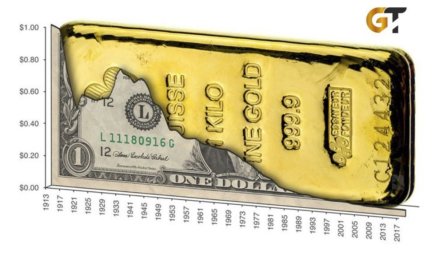
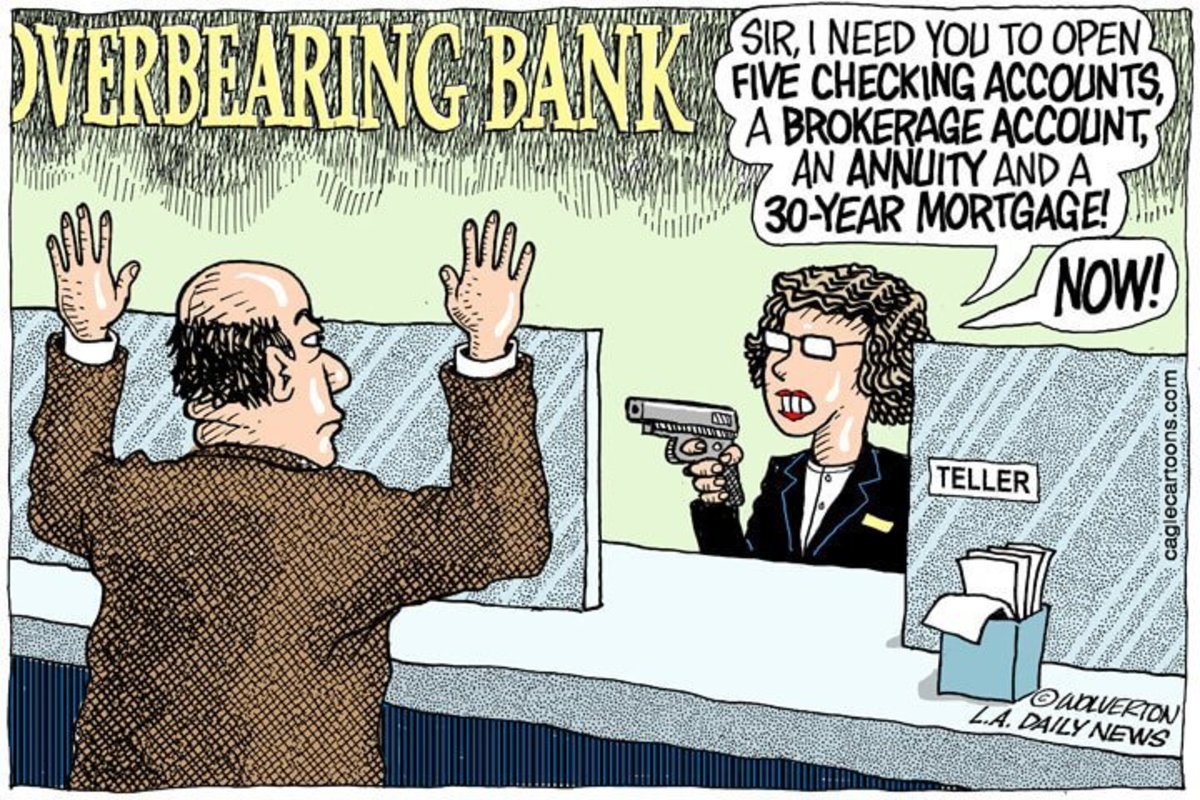



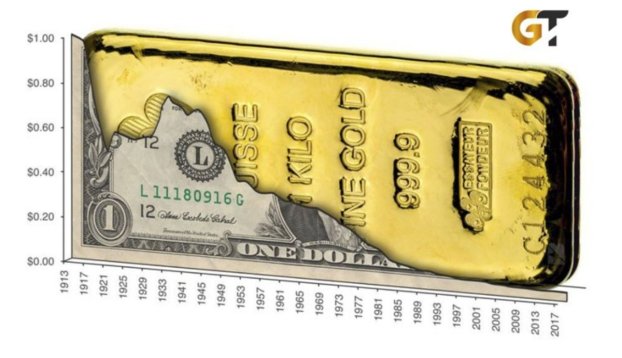



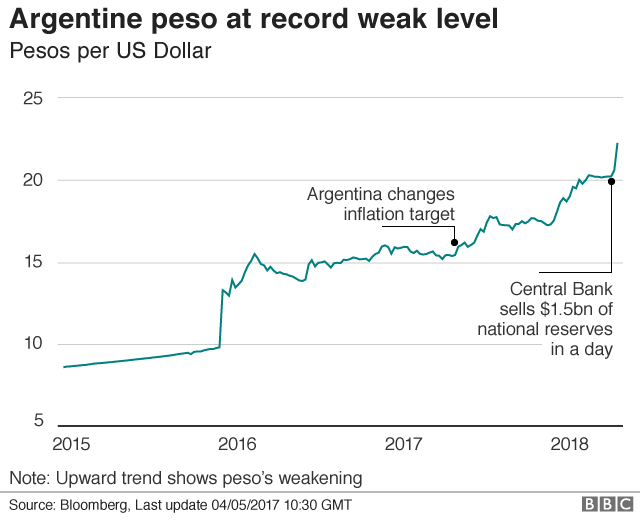
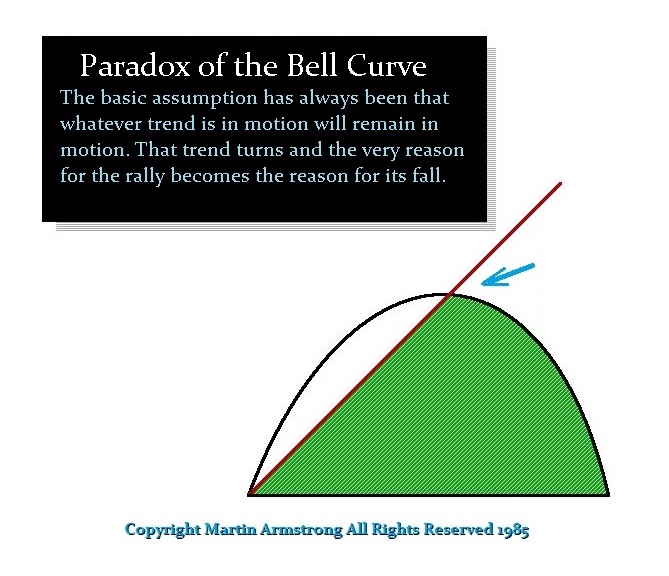
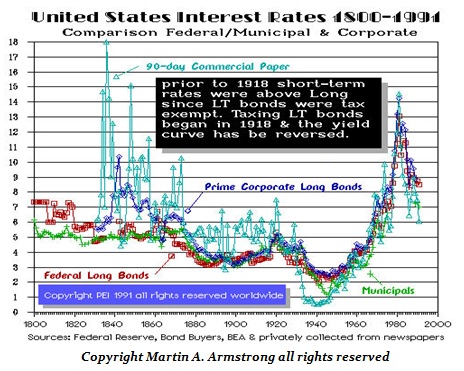
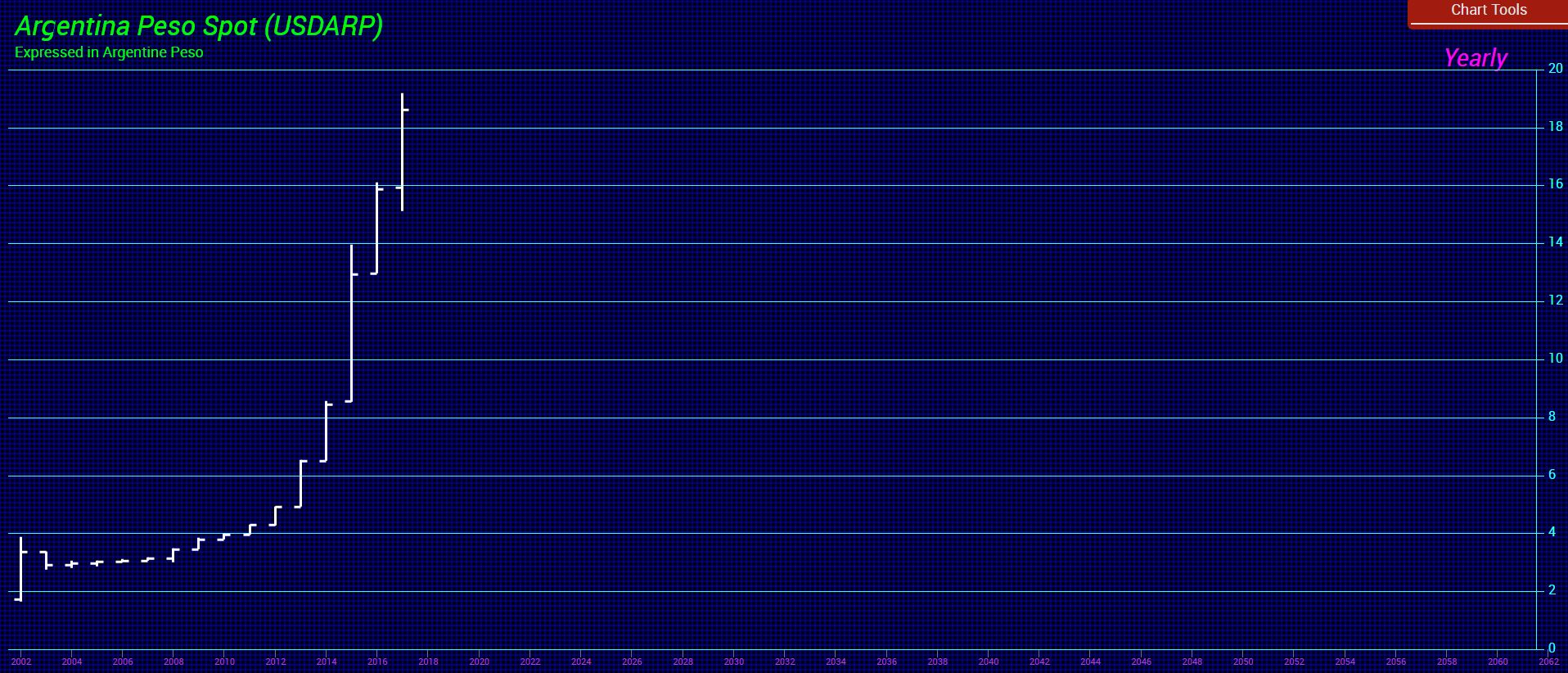
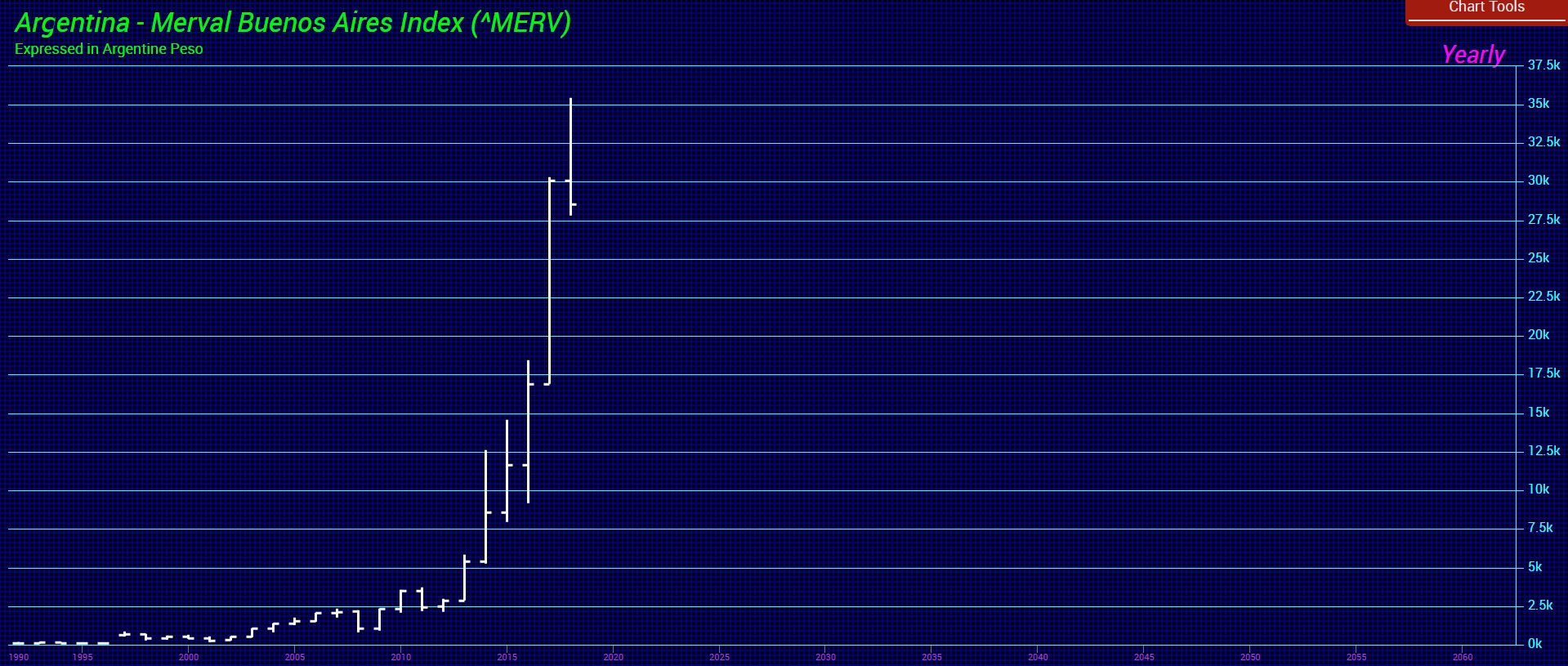




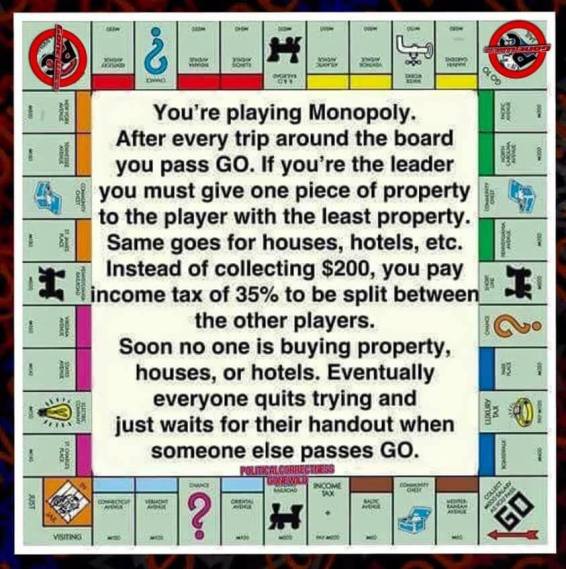


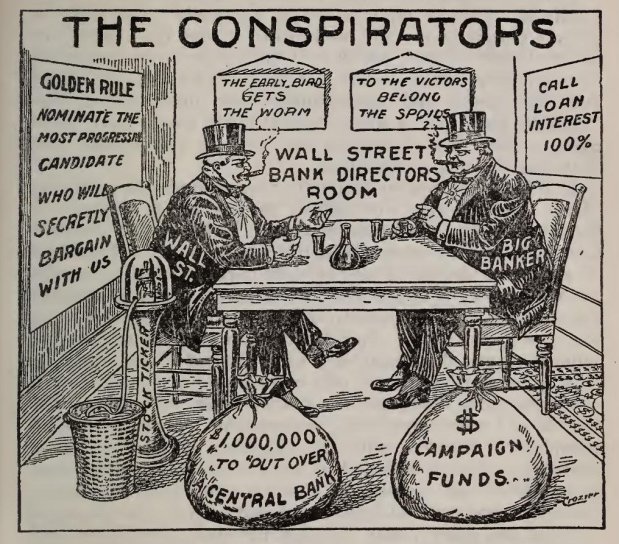











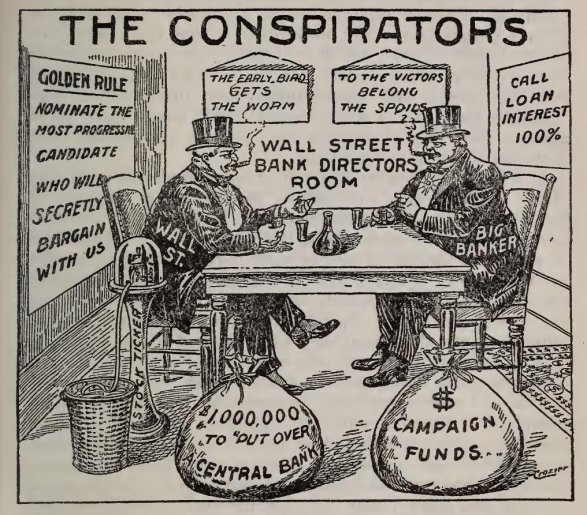



















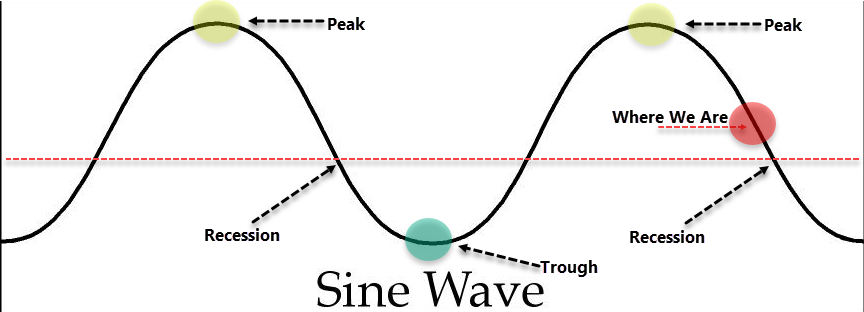


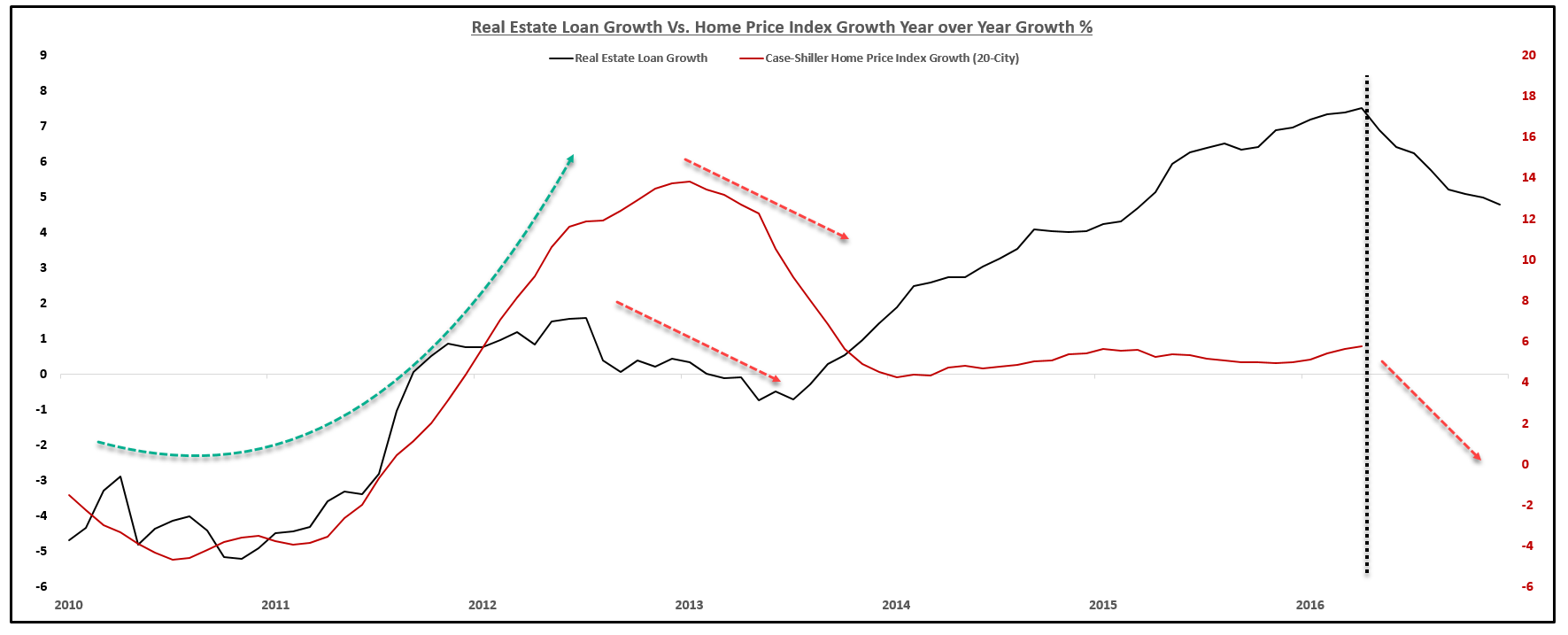
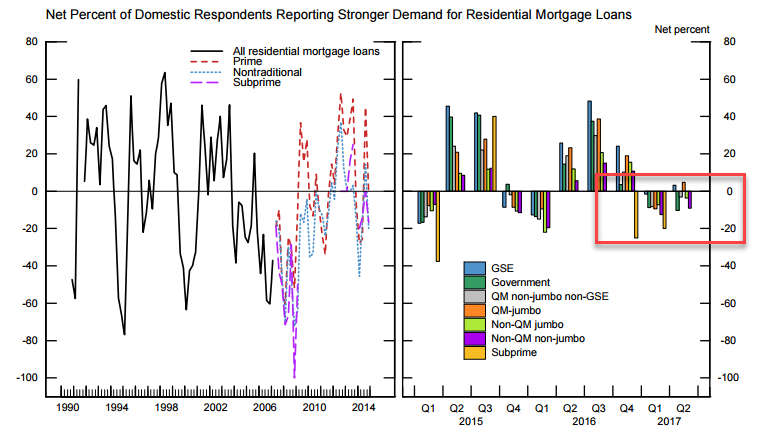
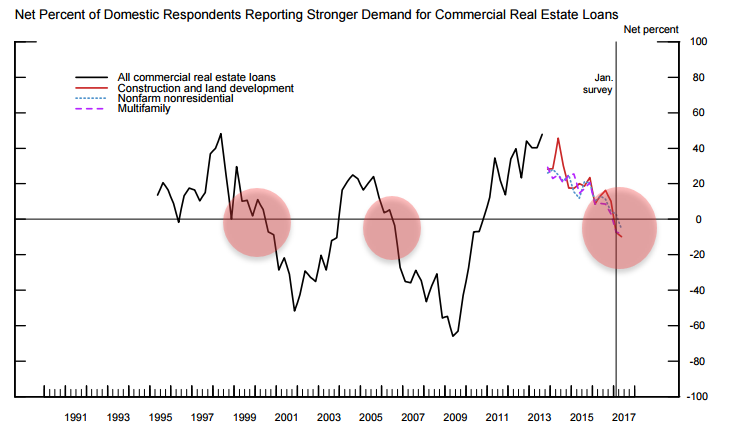
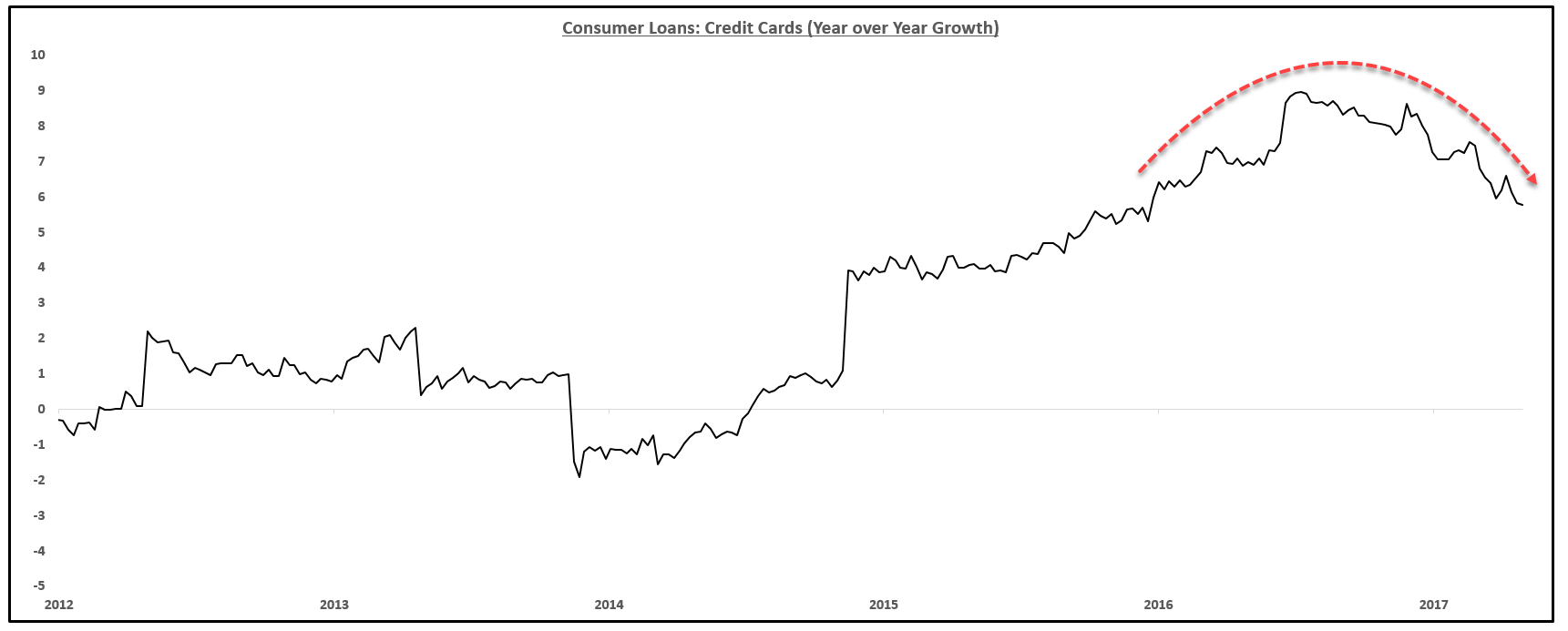
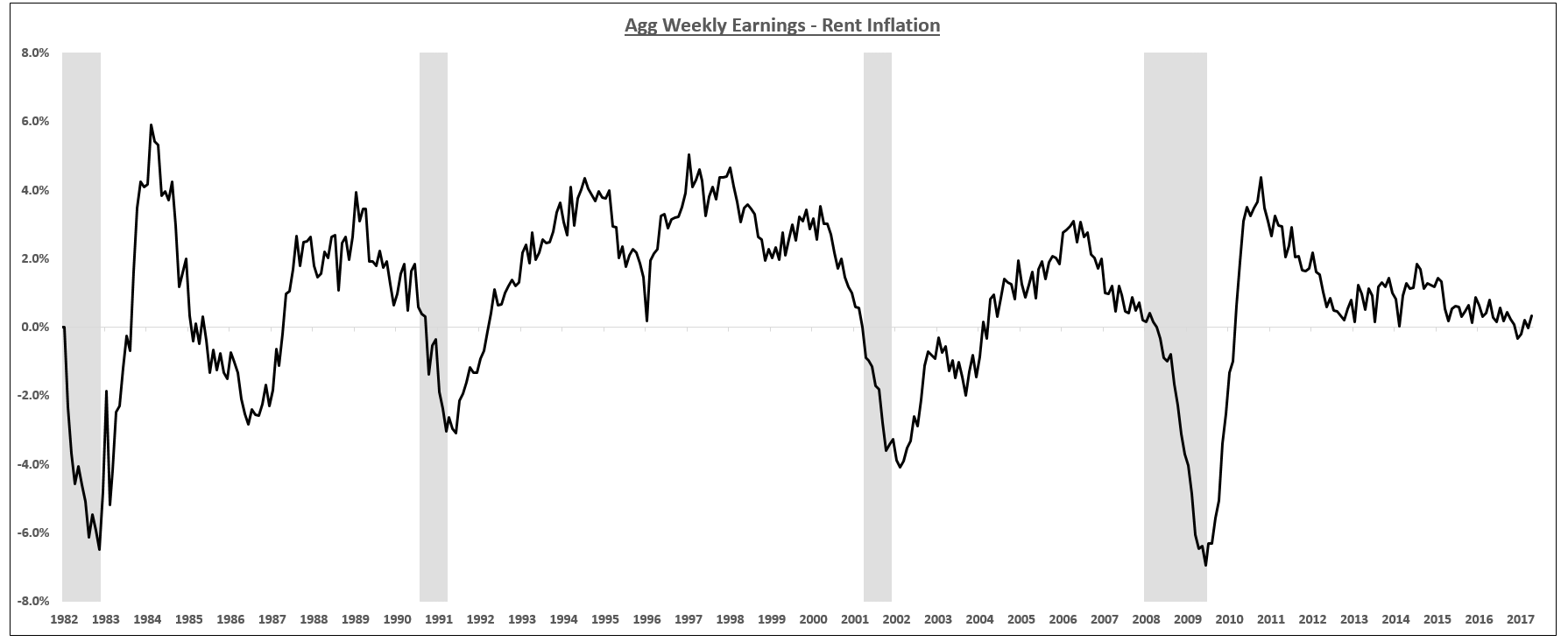
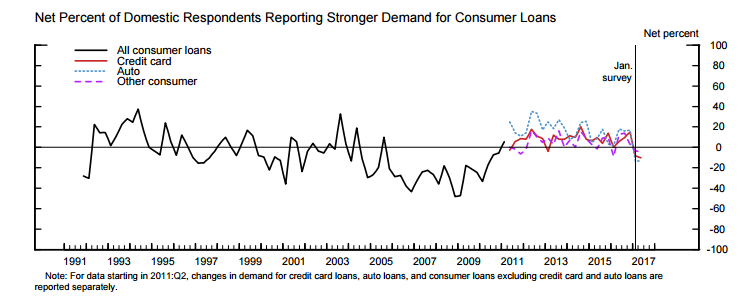
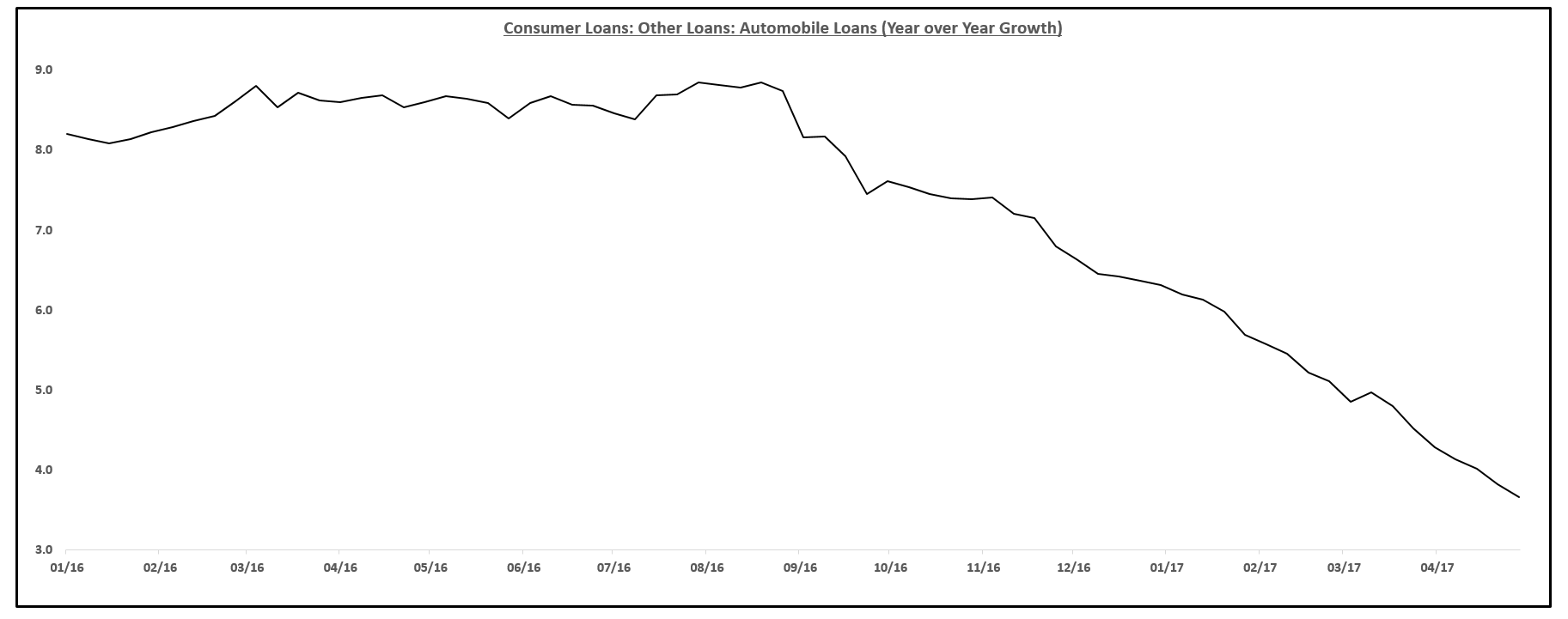
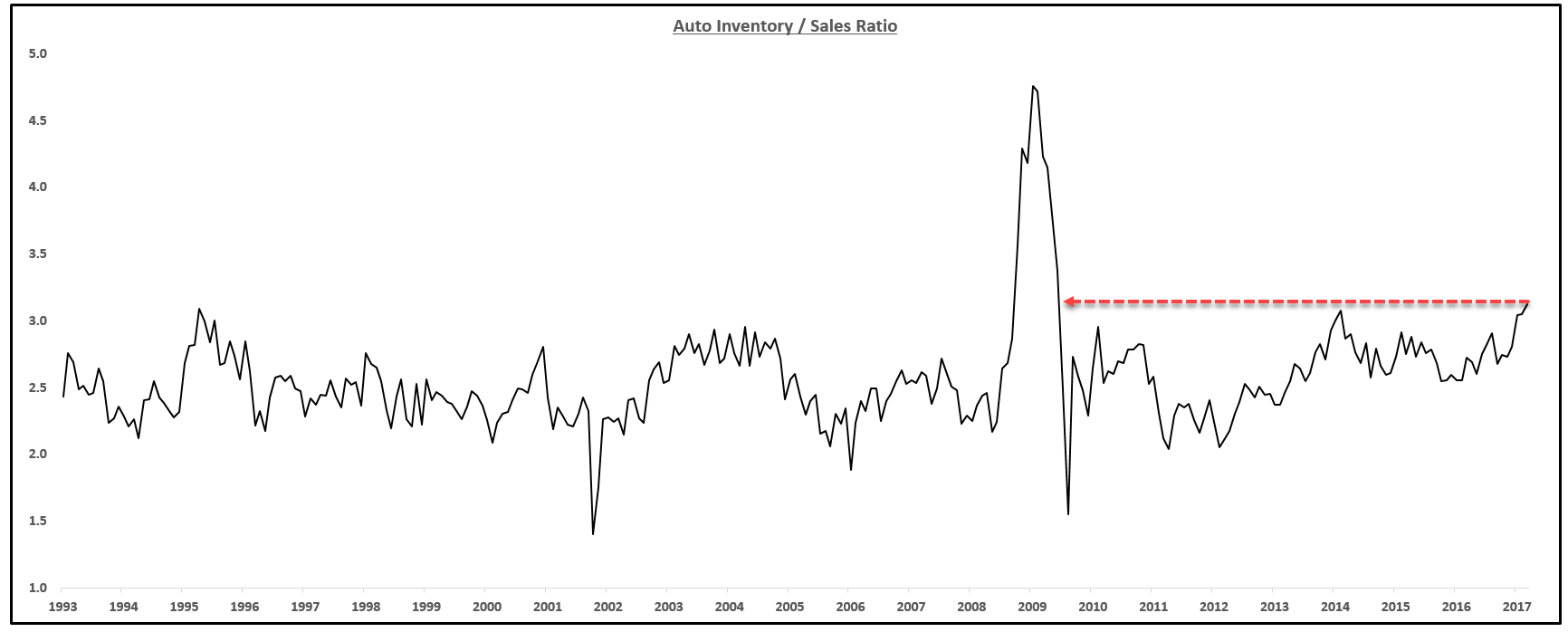
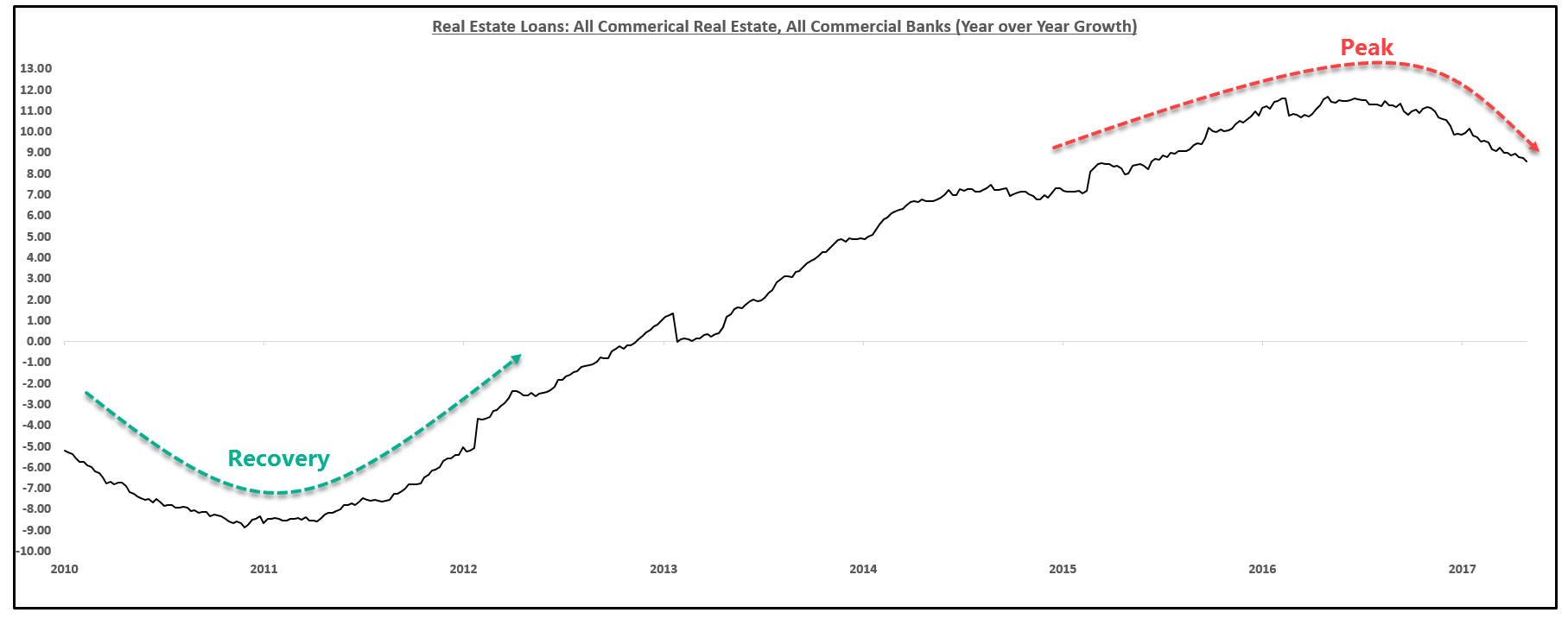
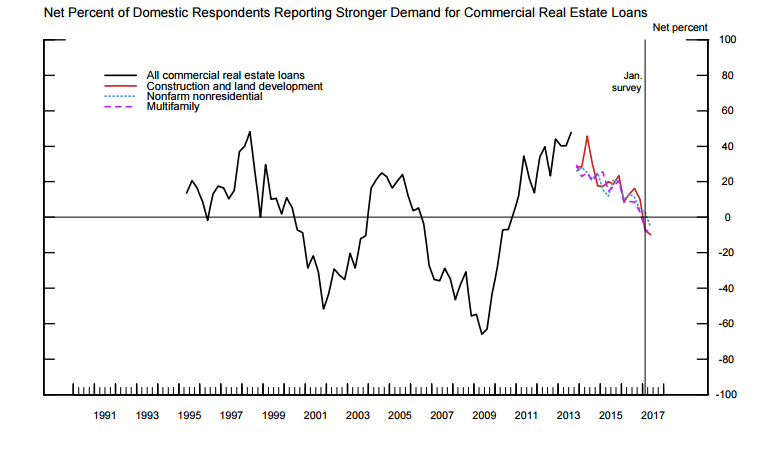
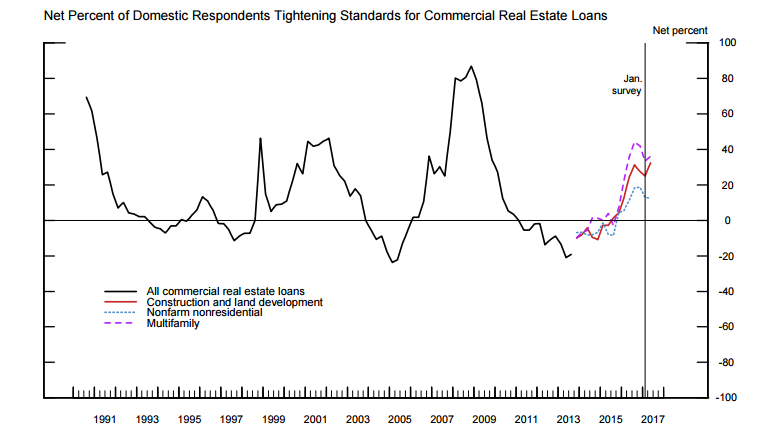




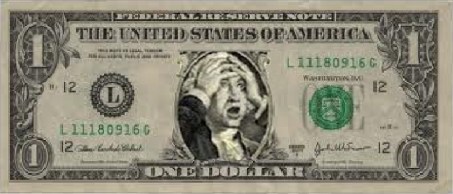





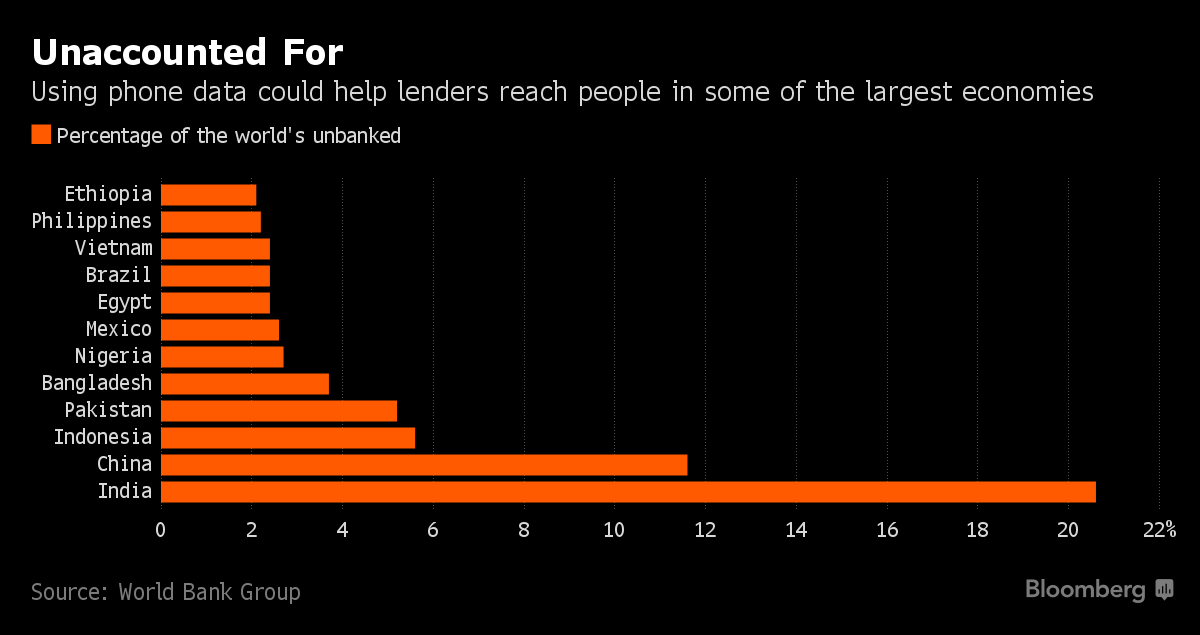



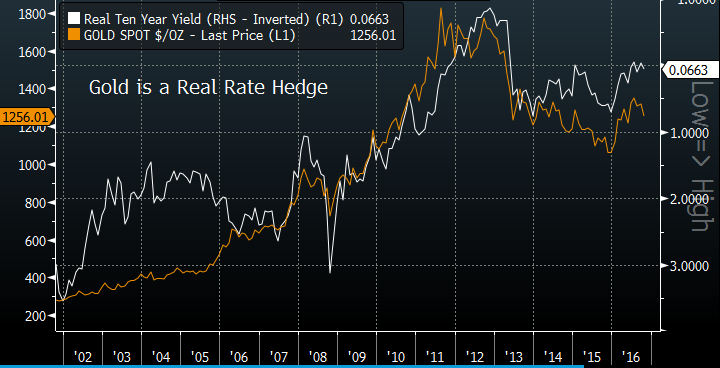
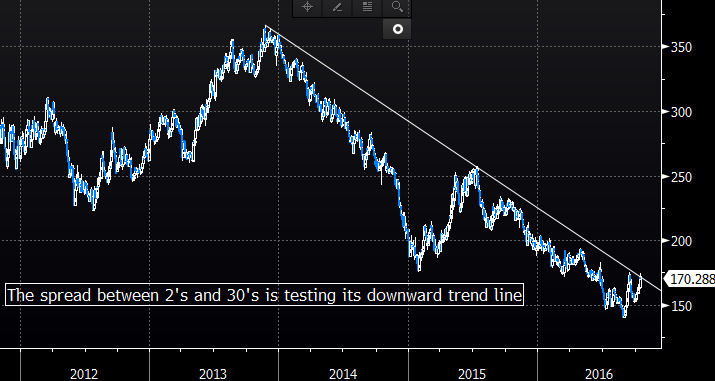
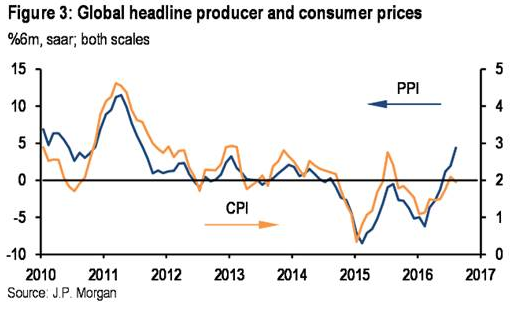
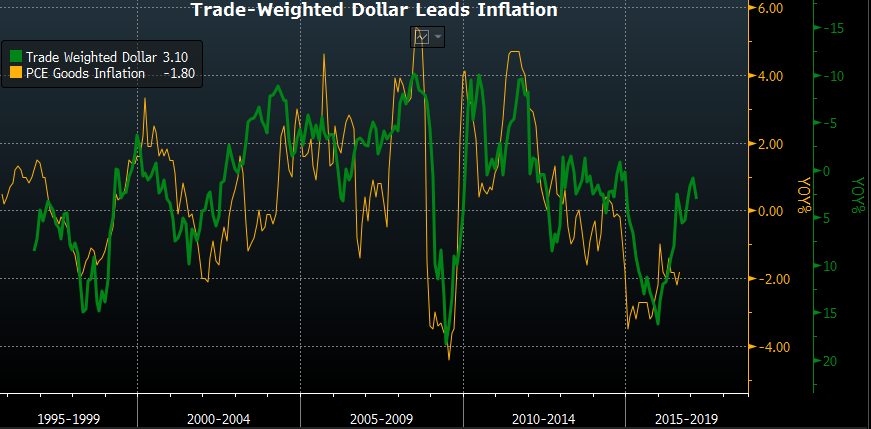


 Investors Bancorp


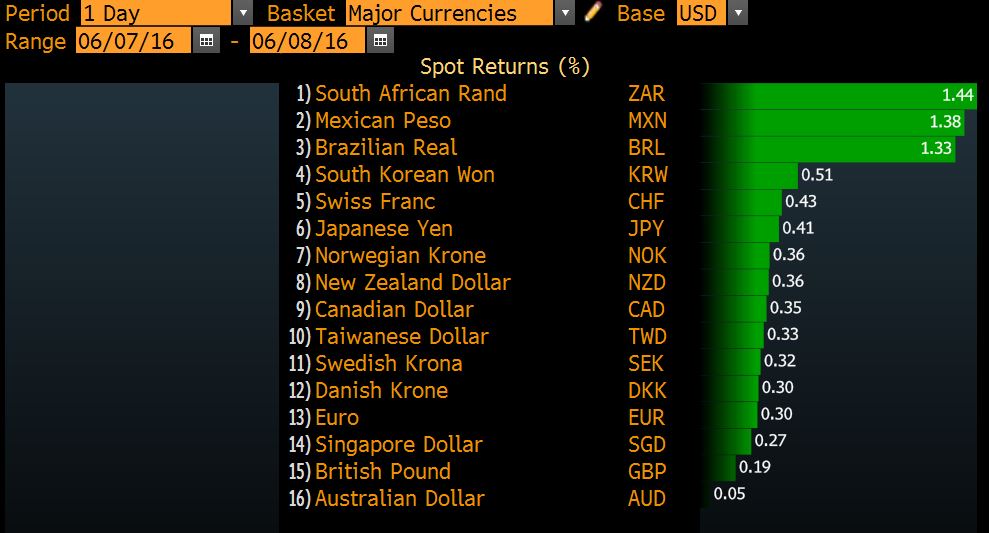

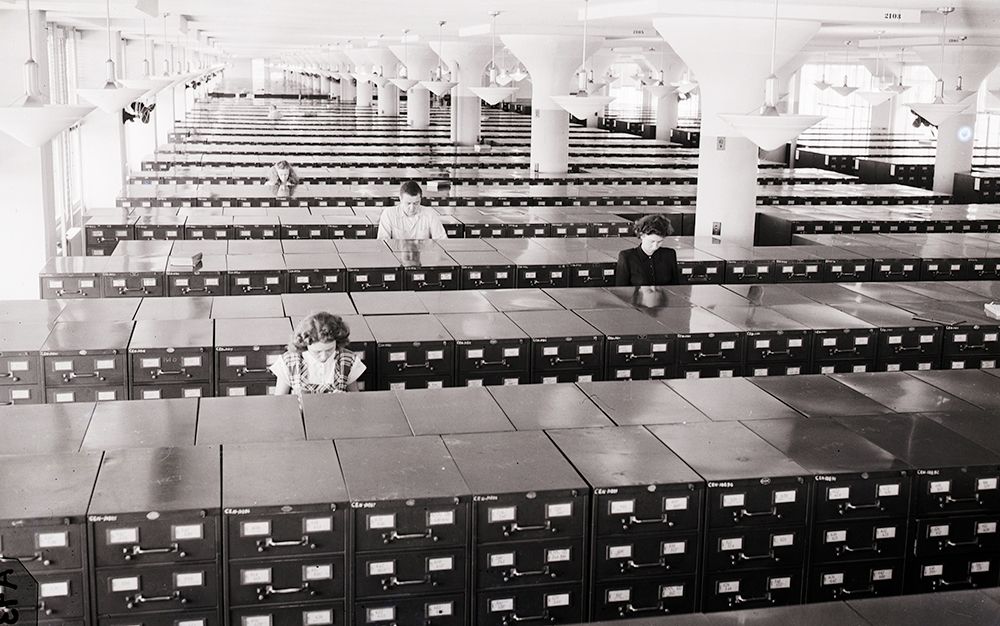




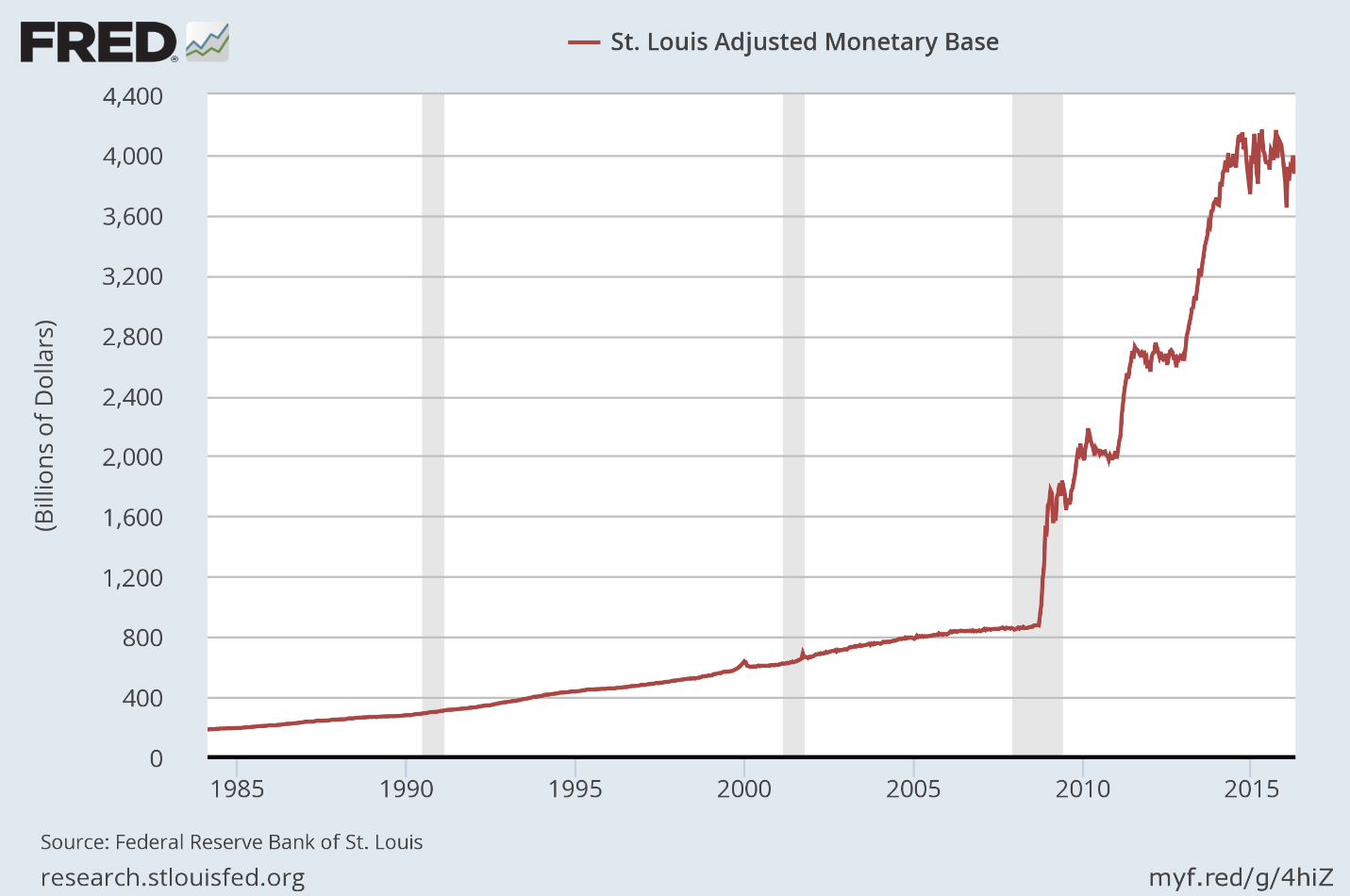
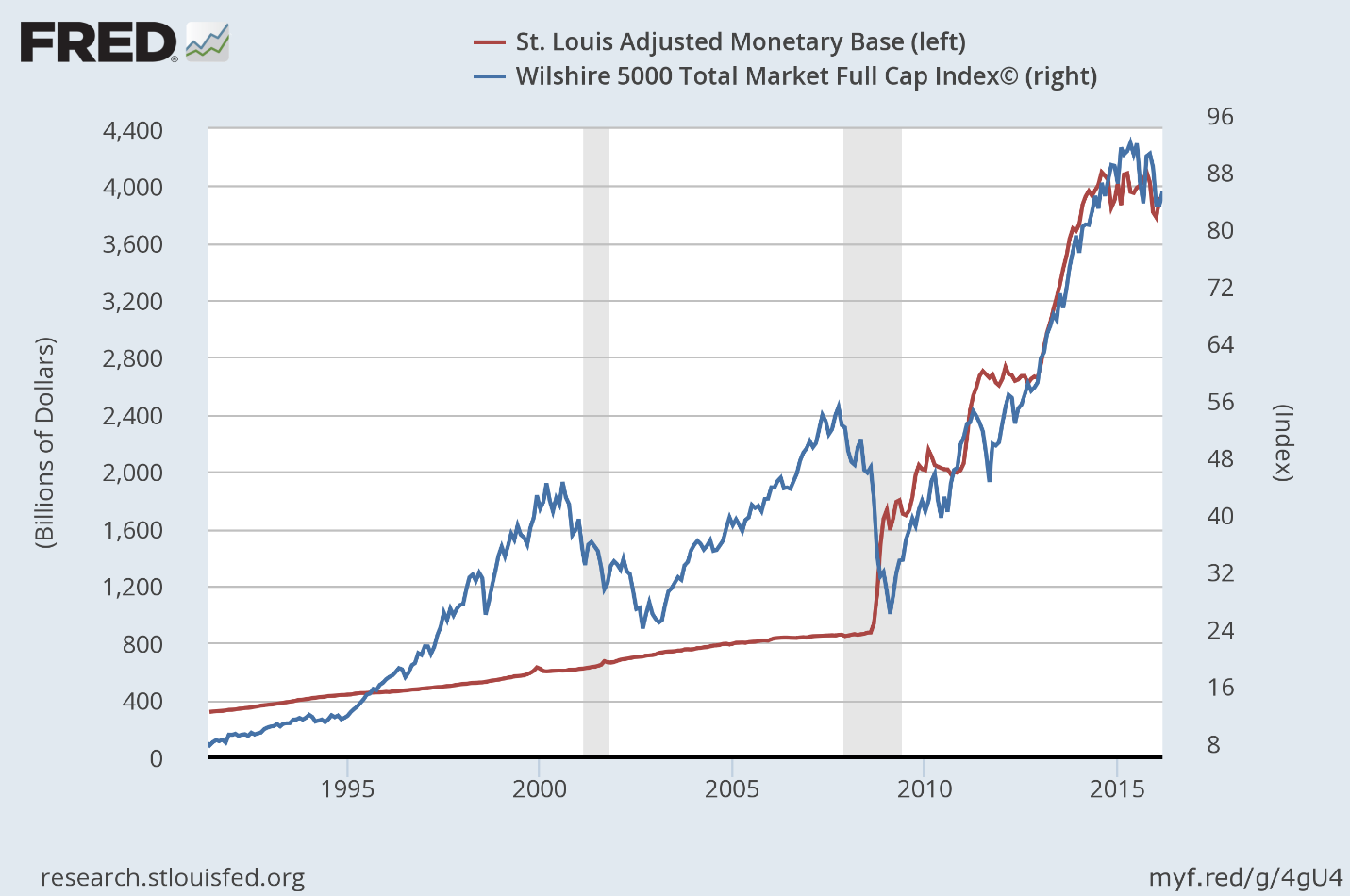
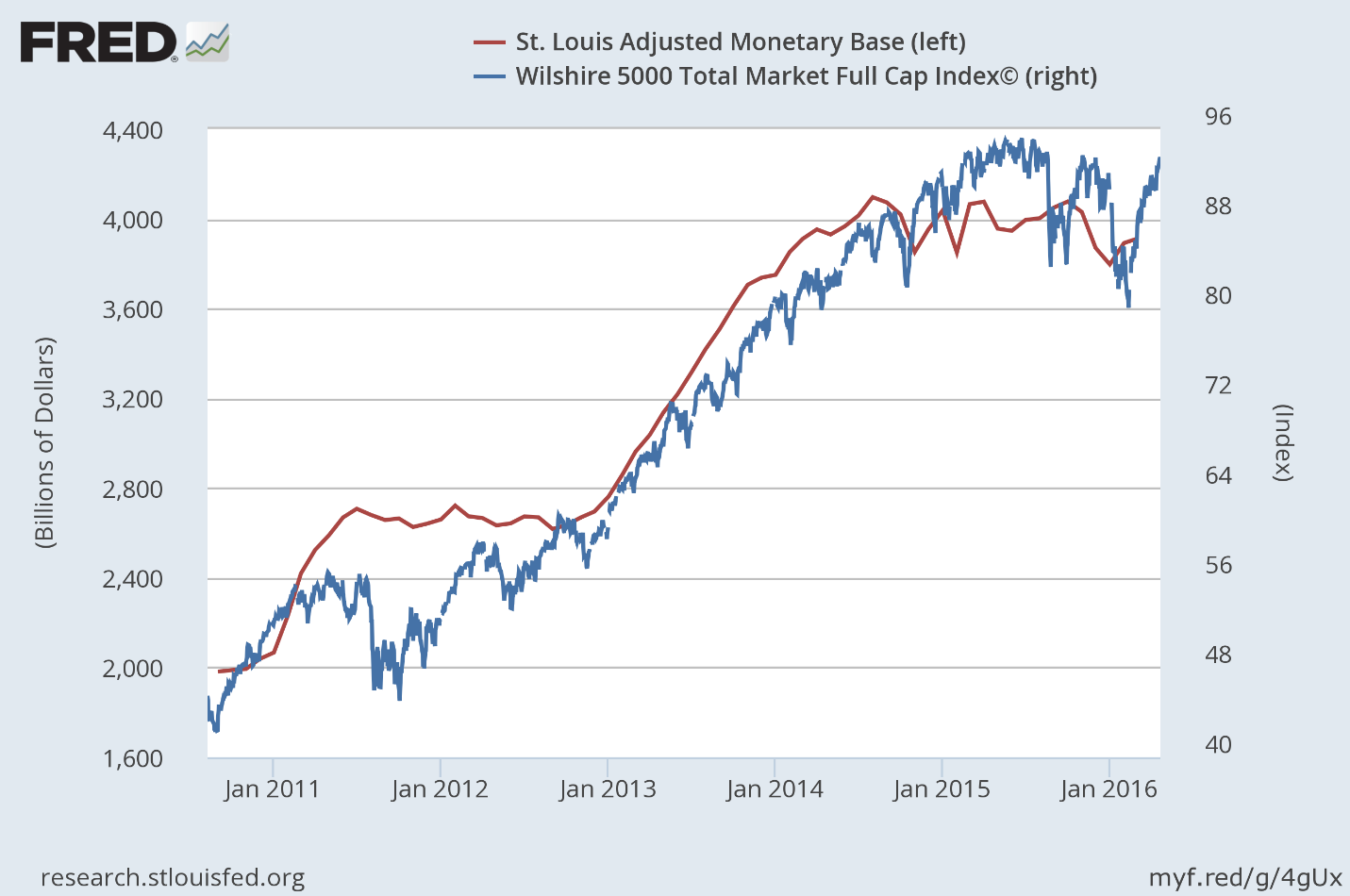
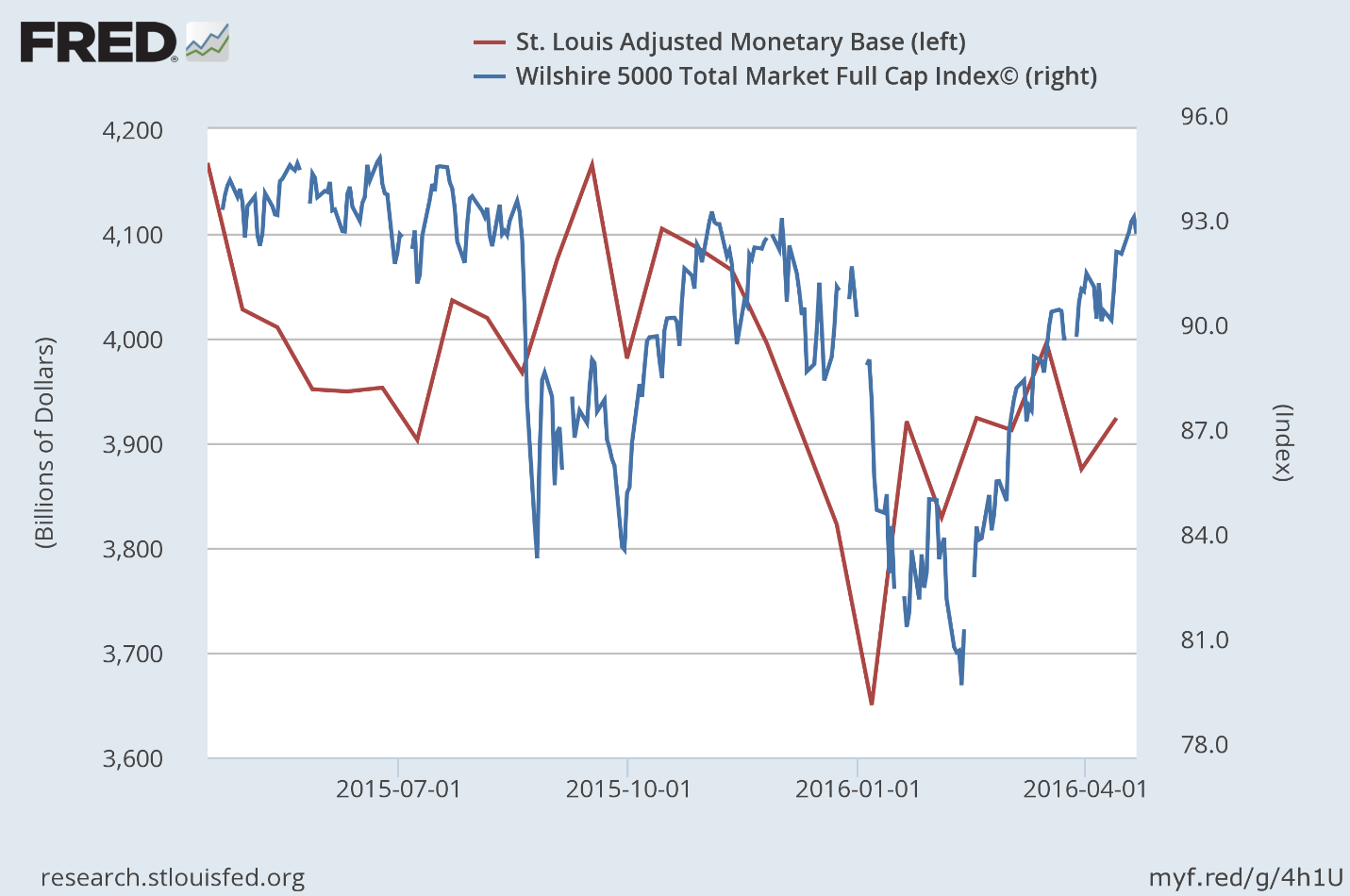
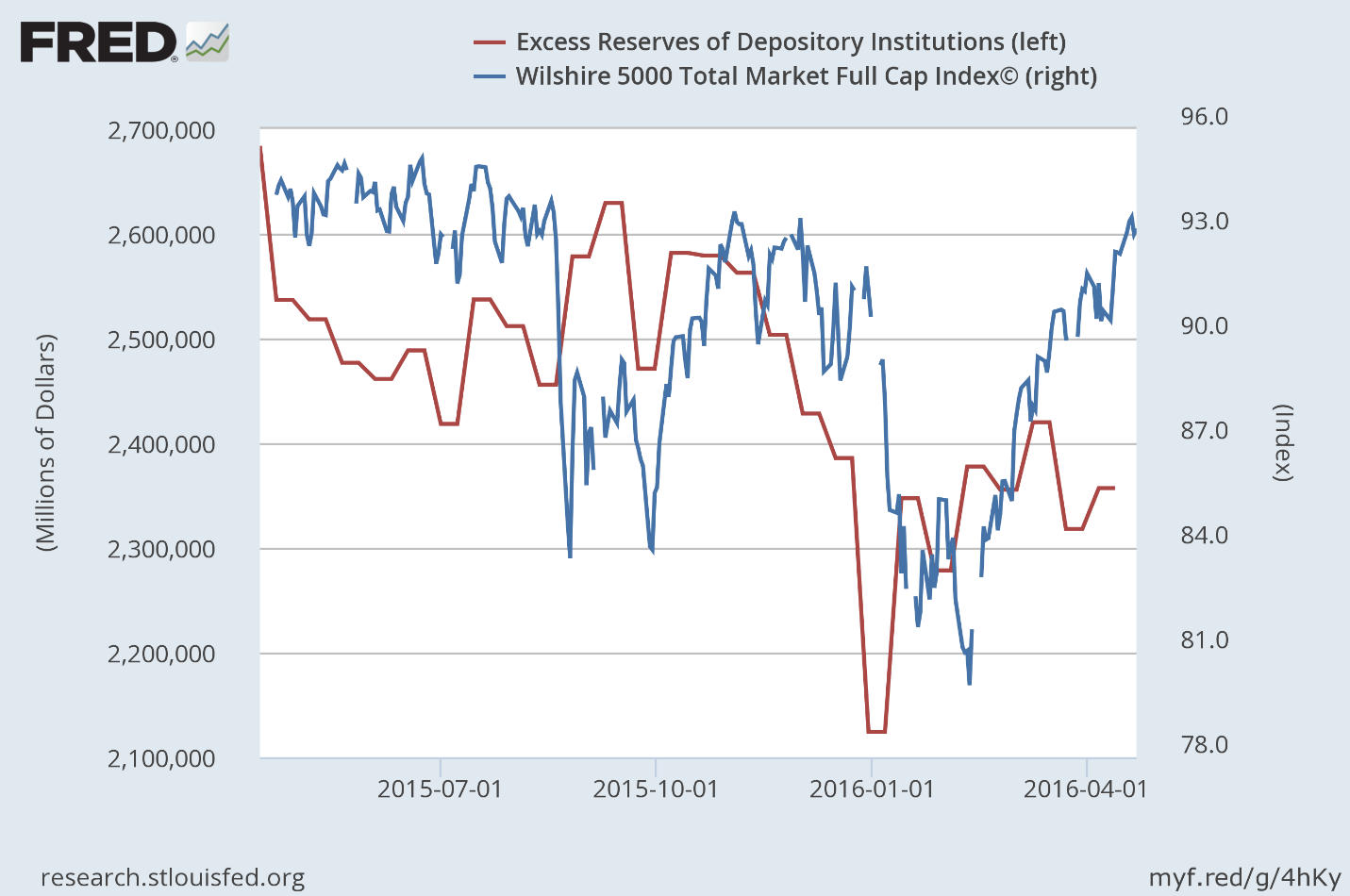
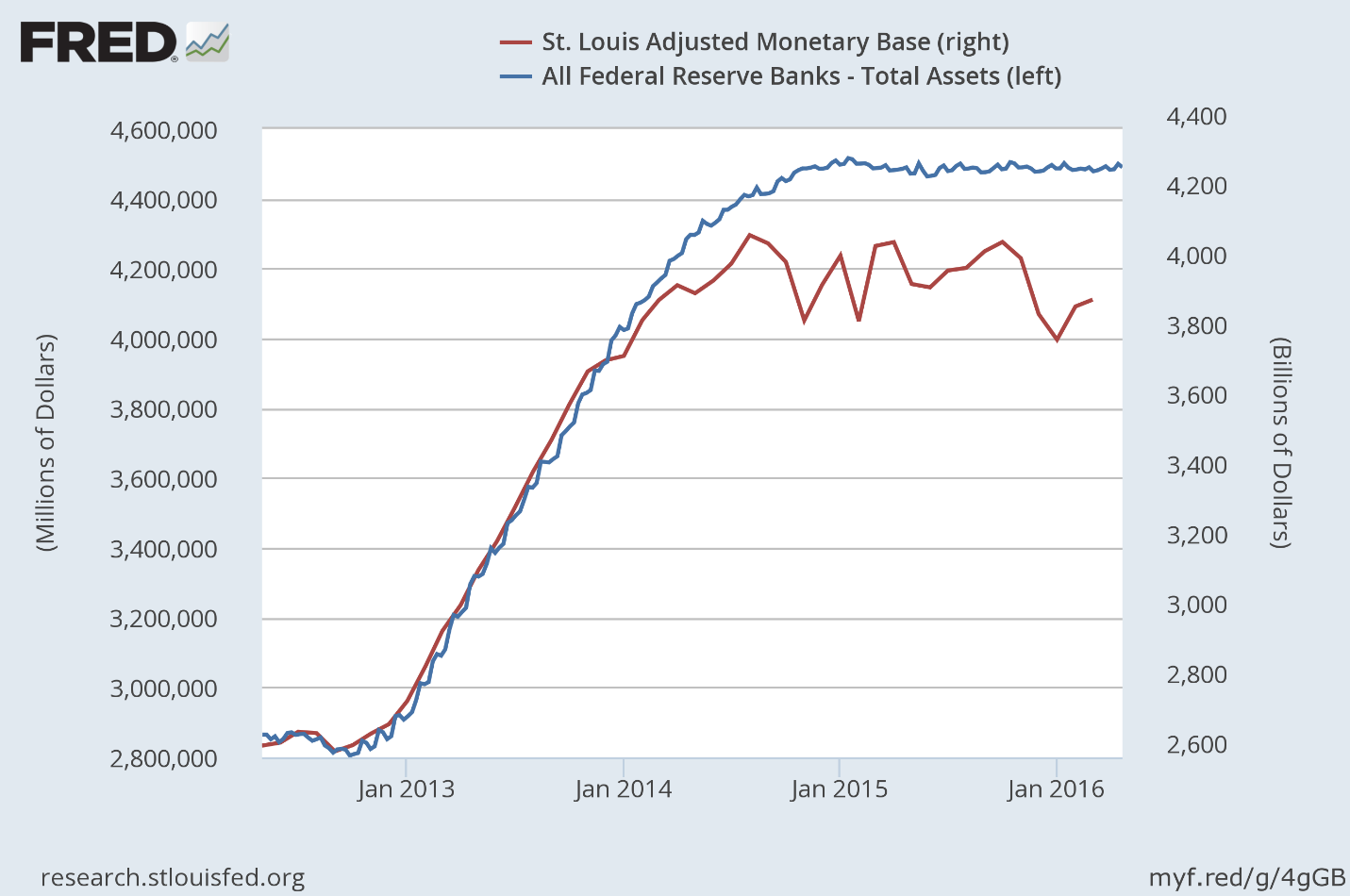
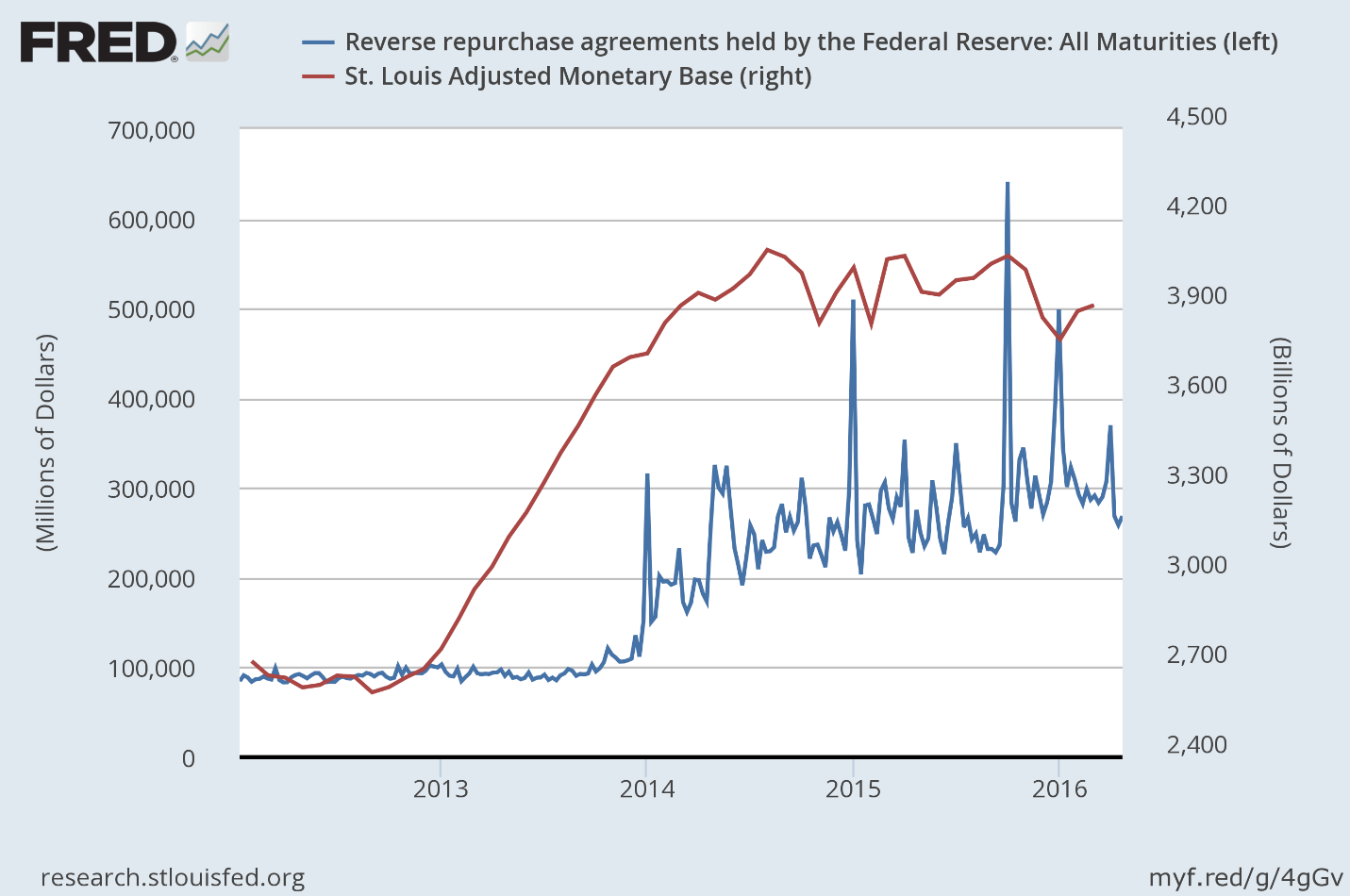
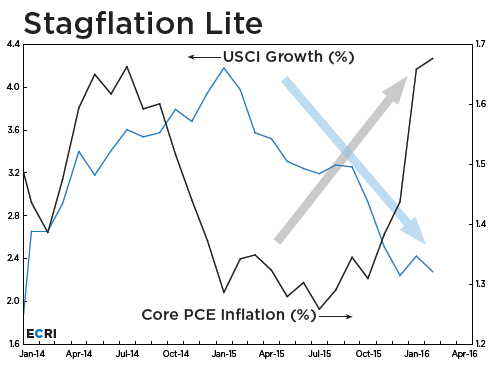


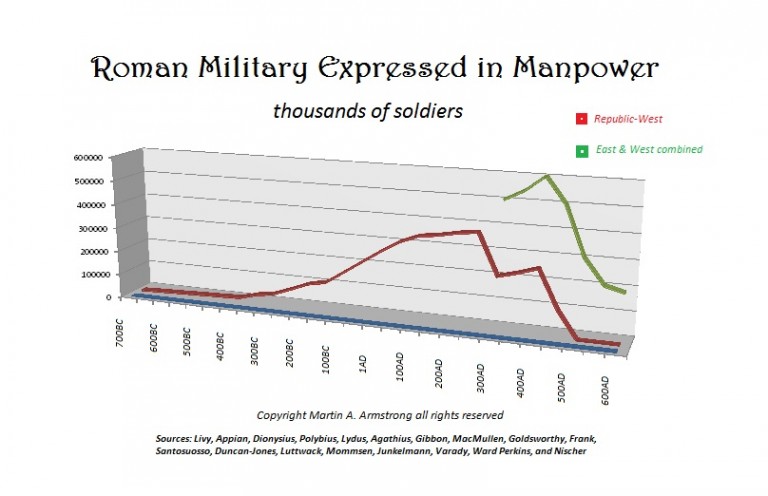






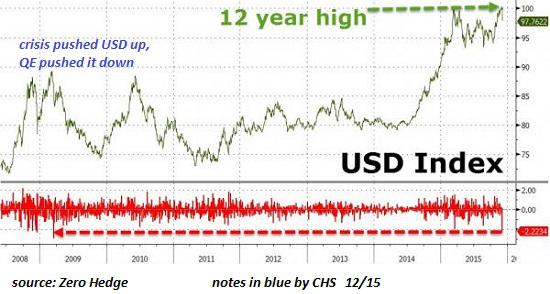
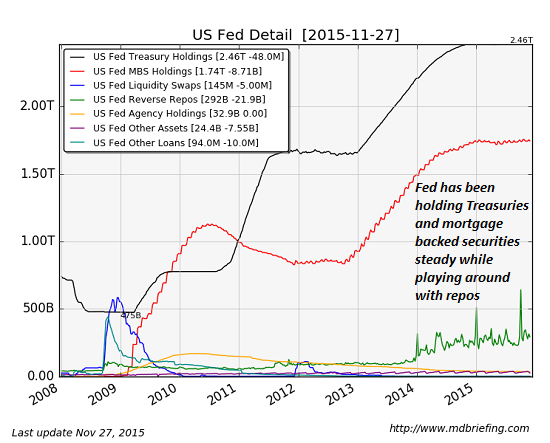
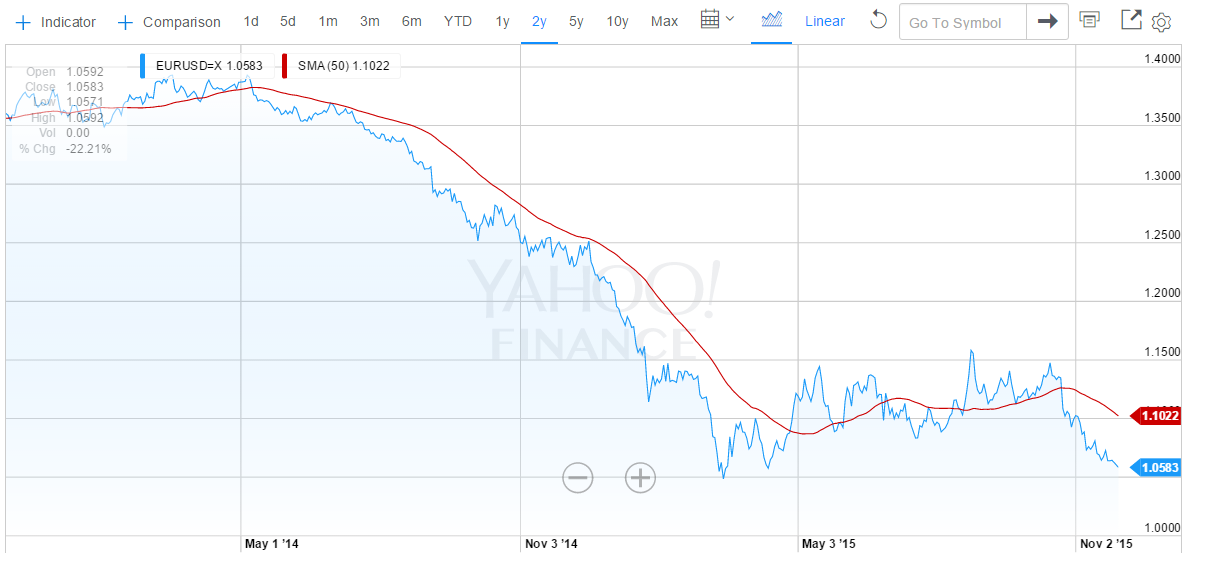
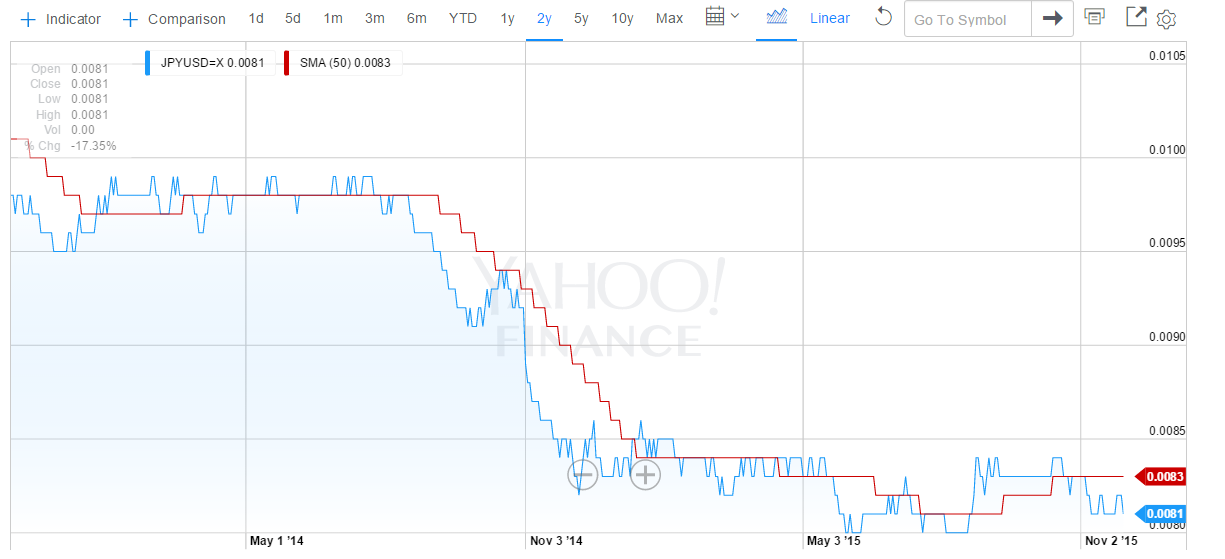
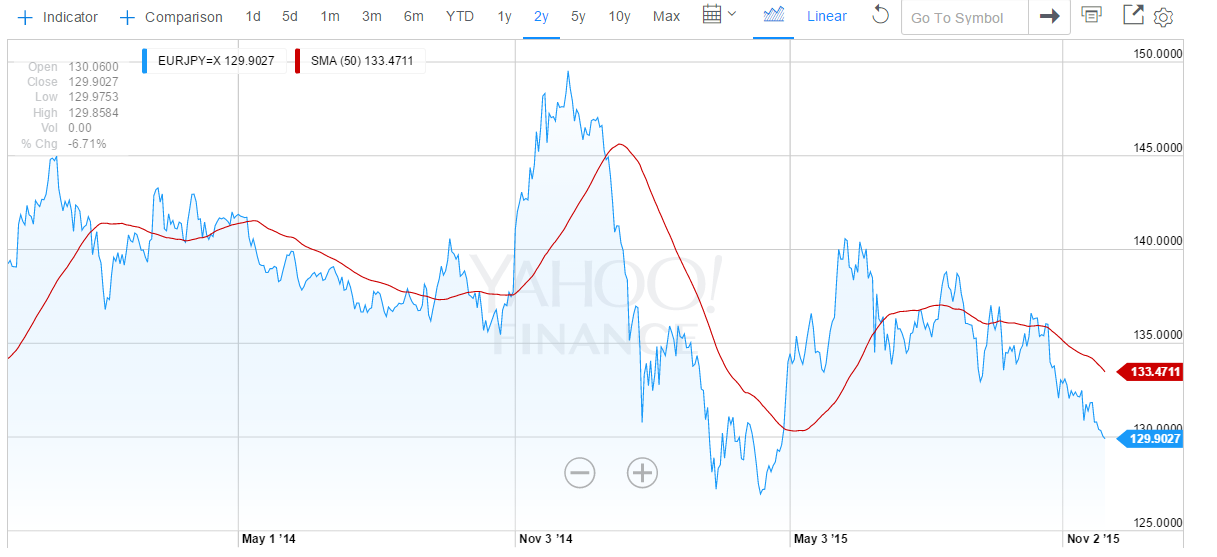
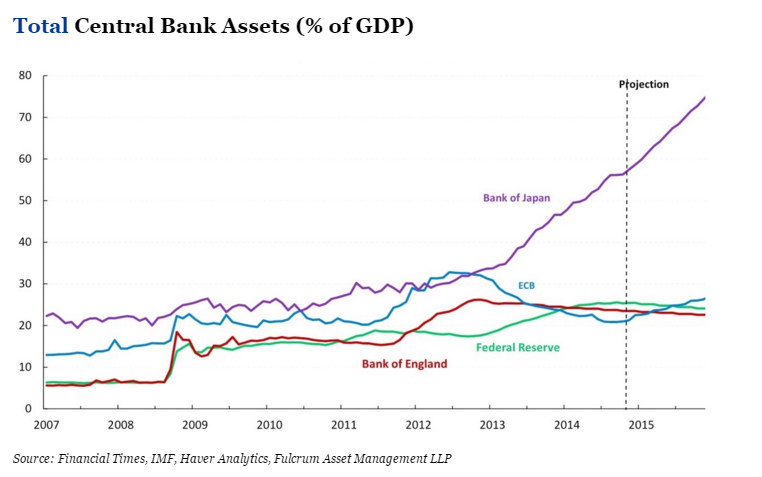

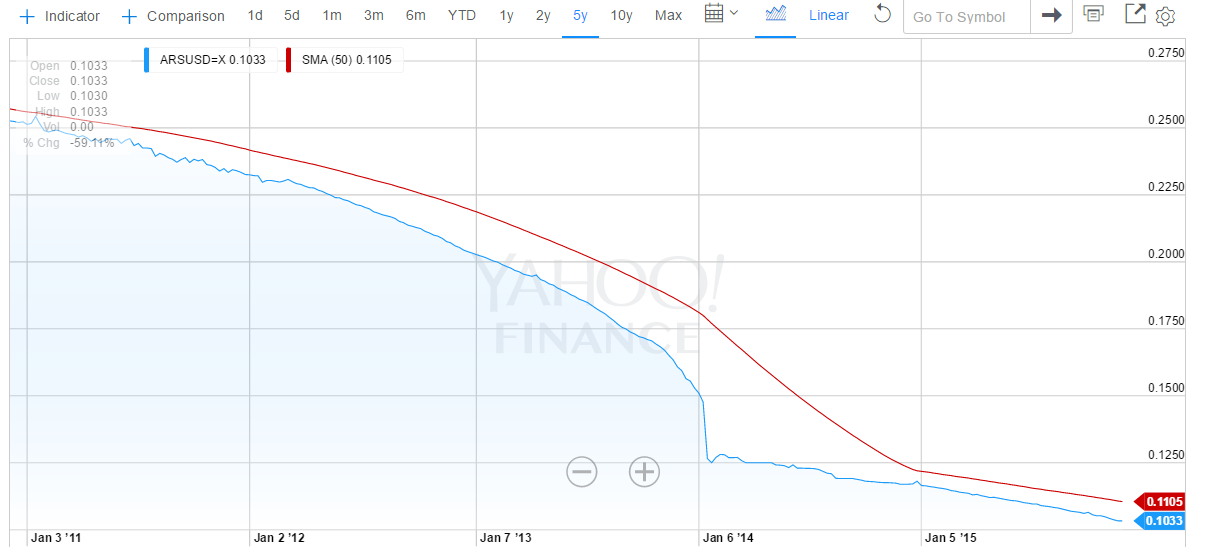


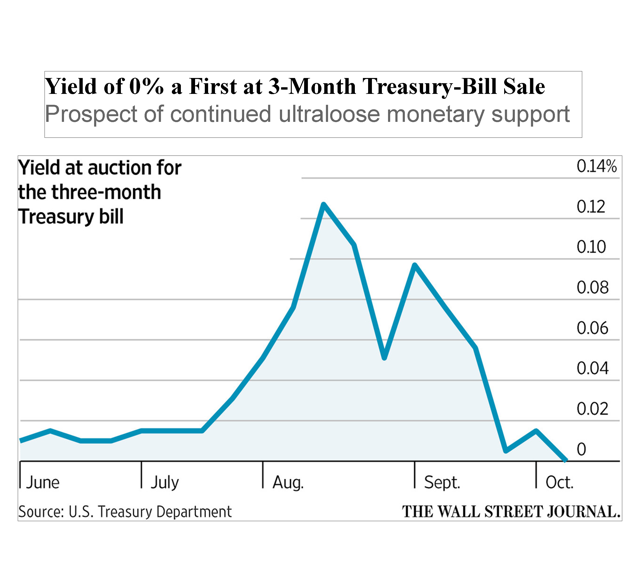





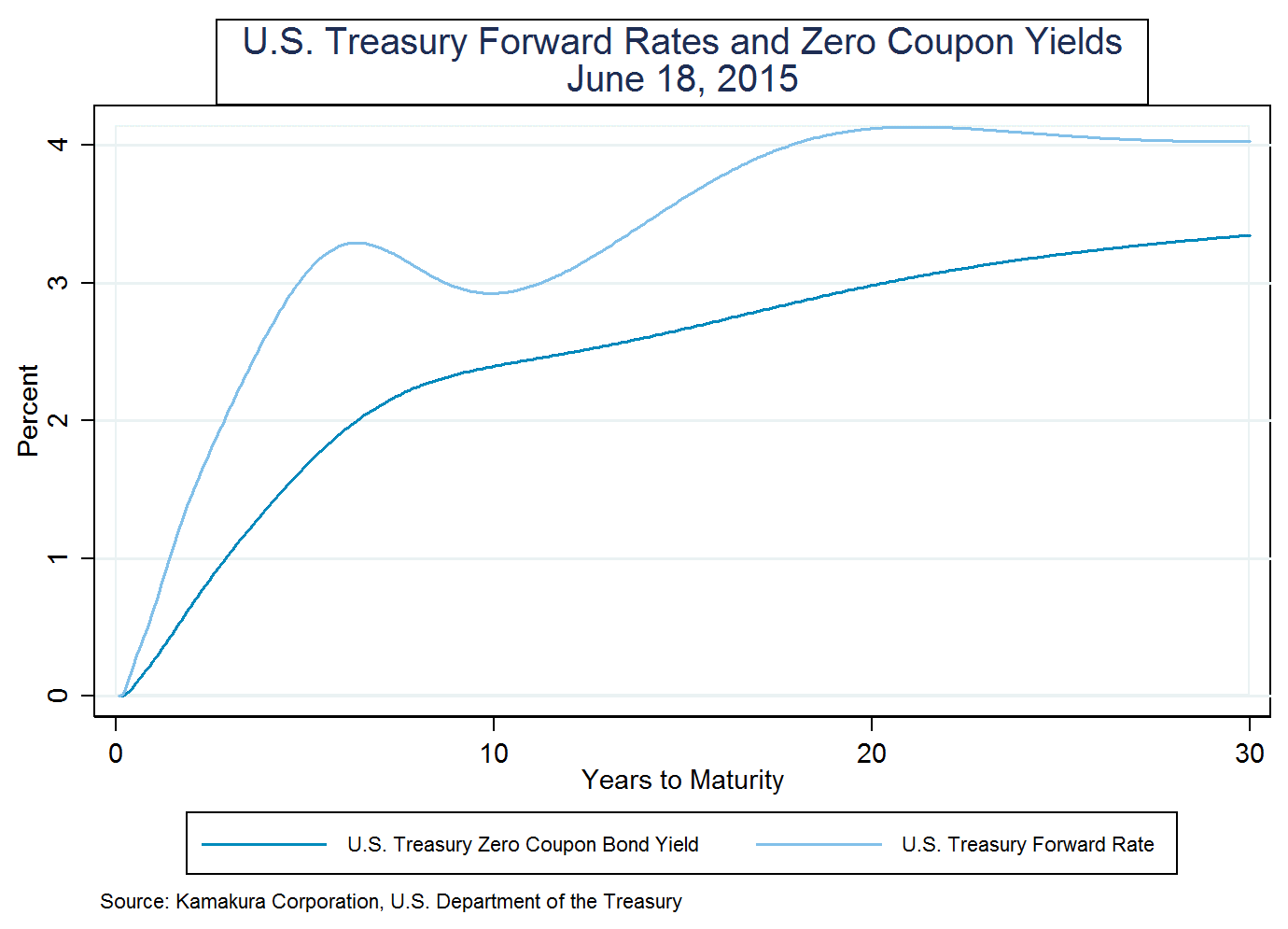


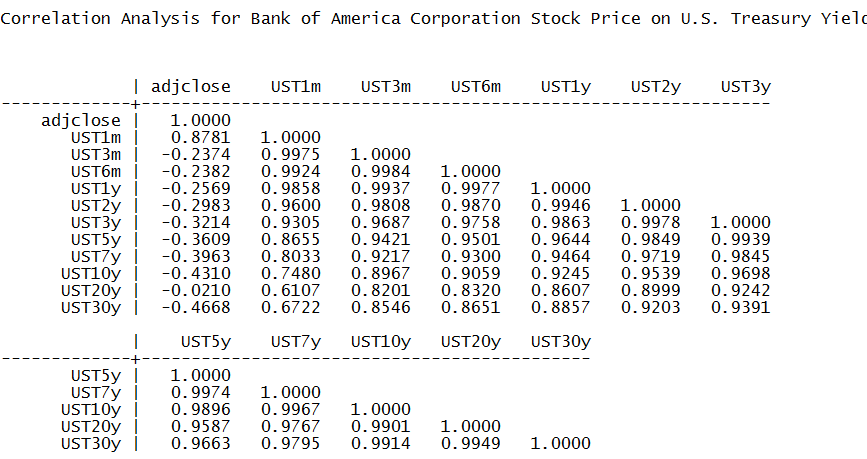
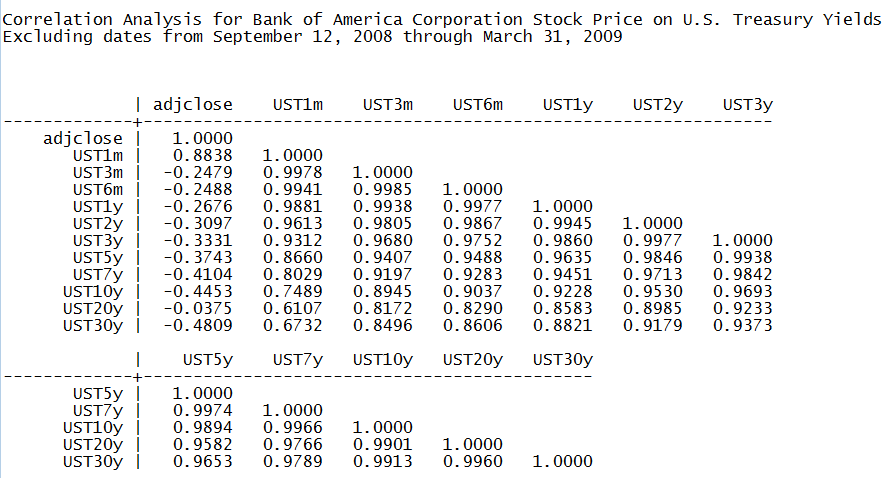
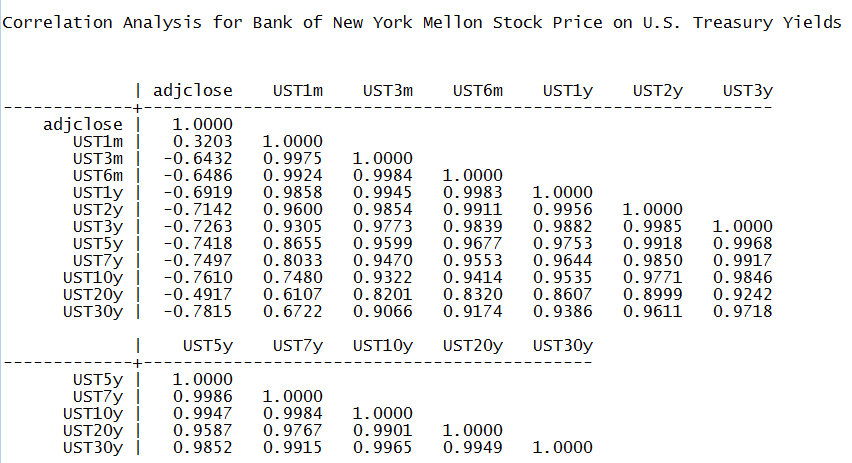
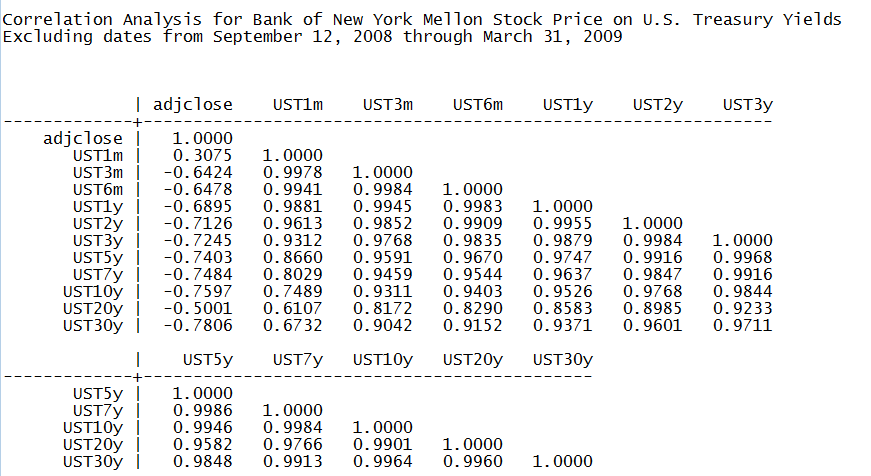

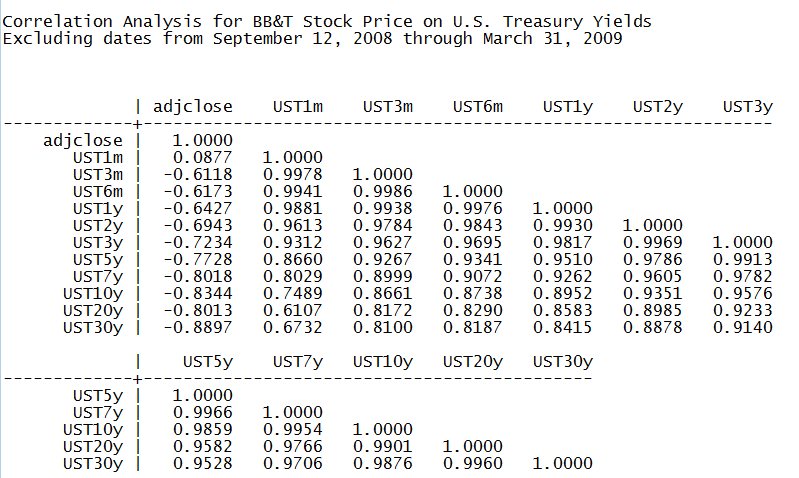
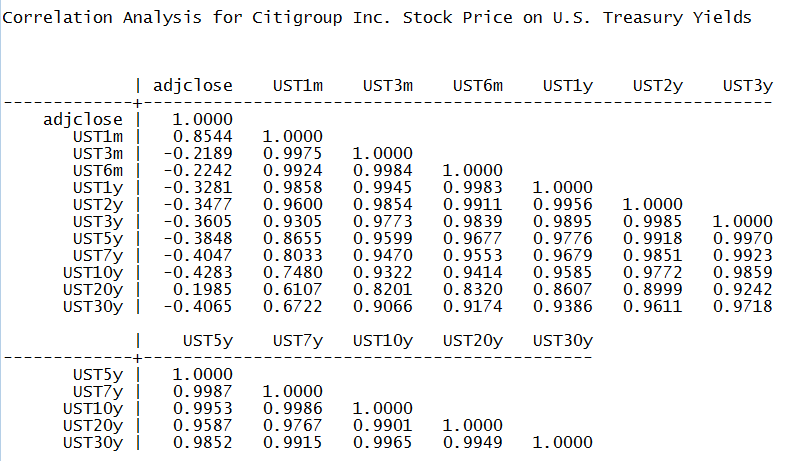
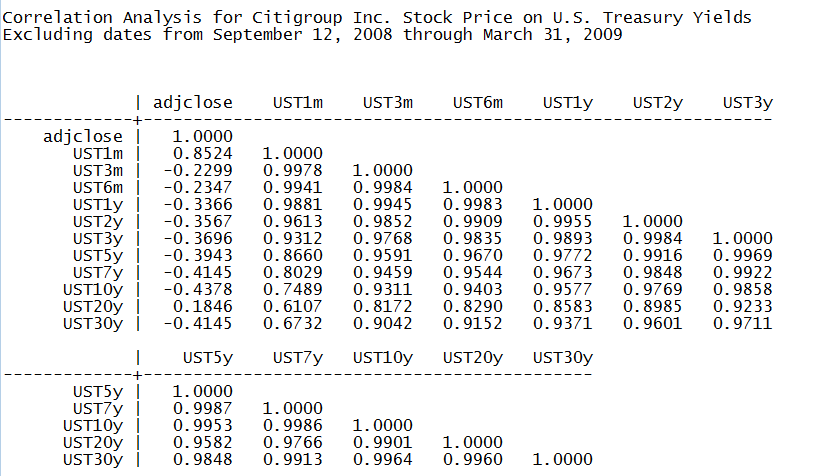
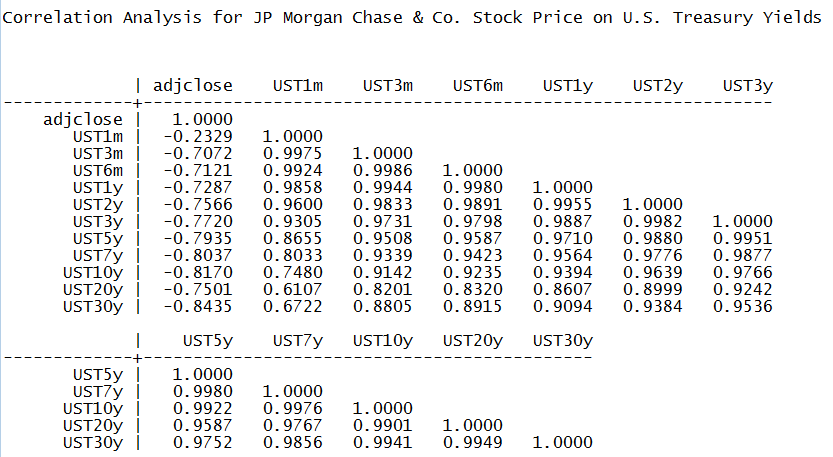


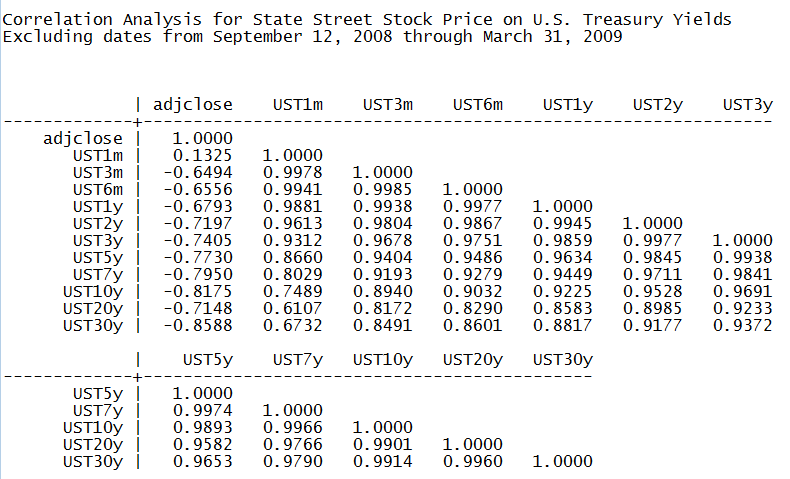
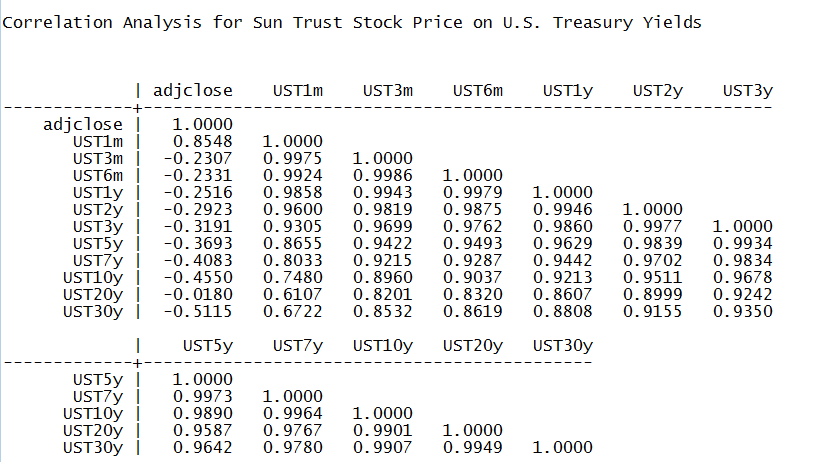

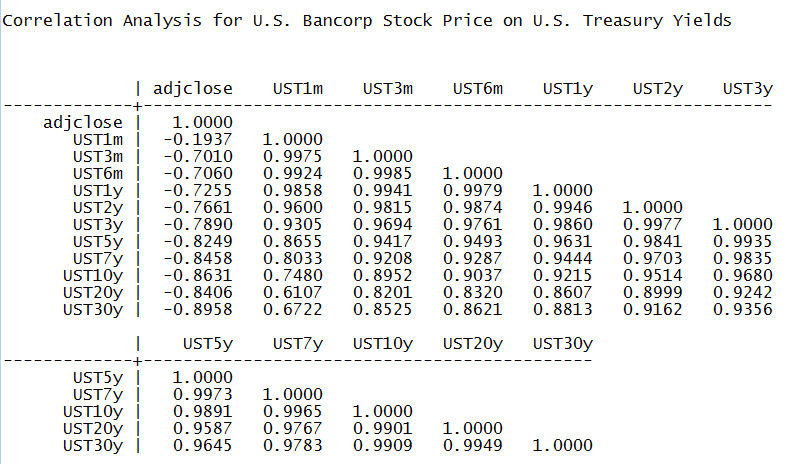
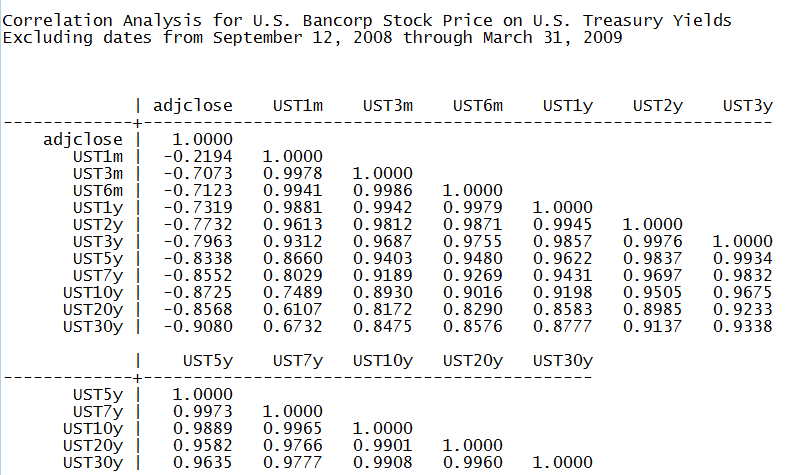
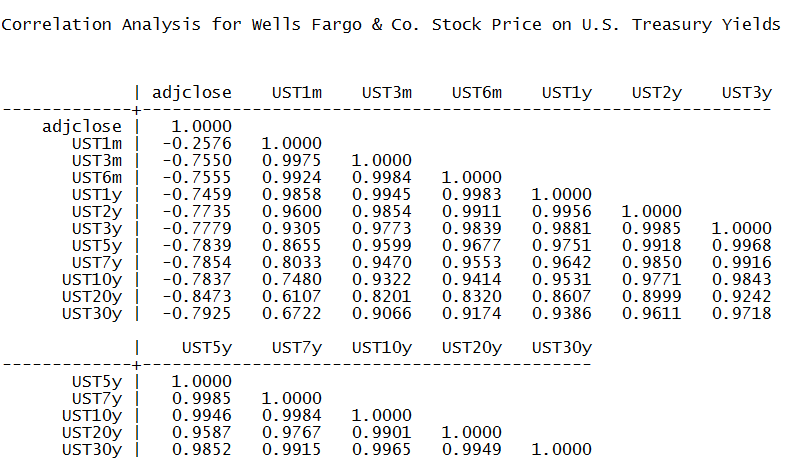
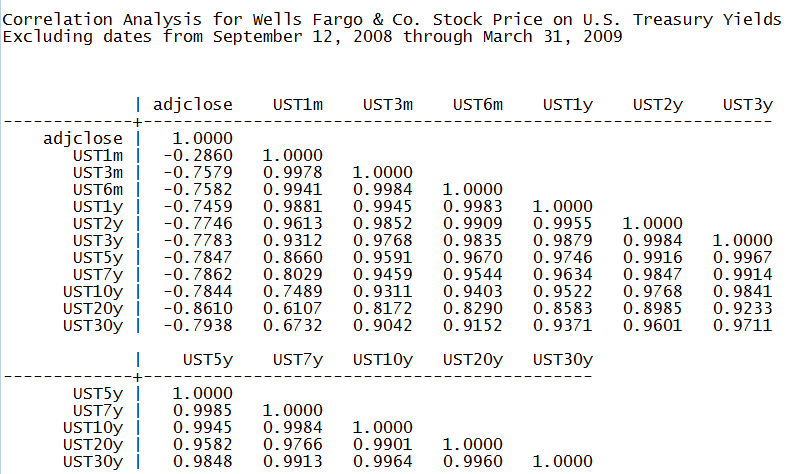

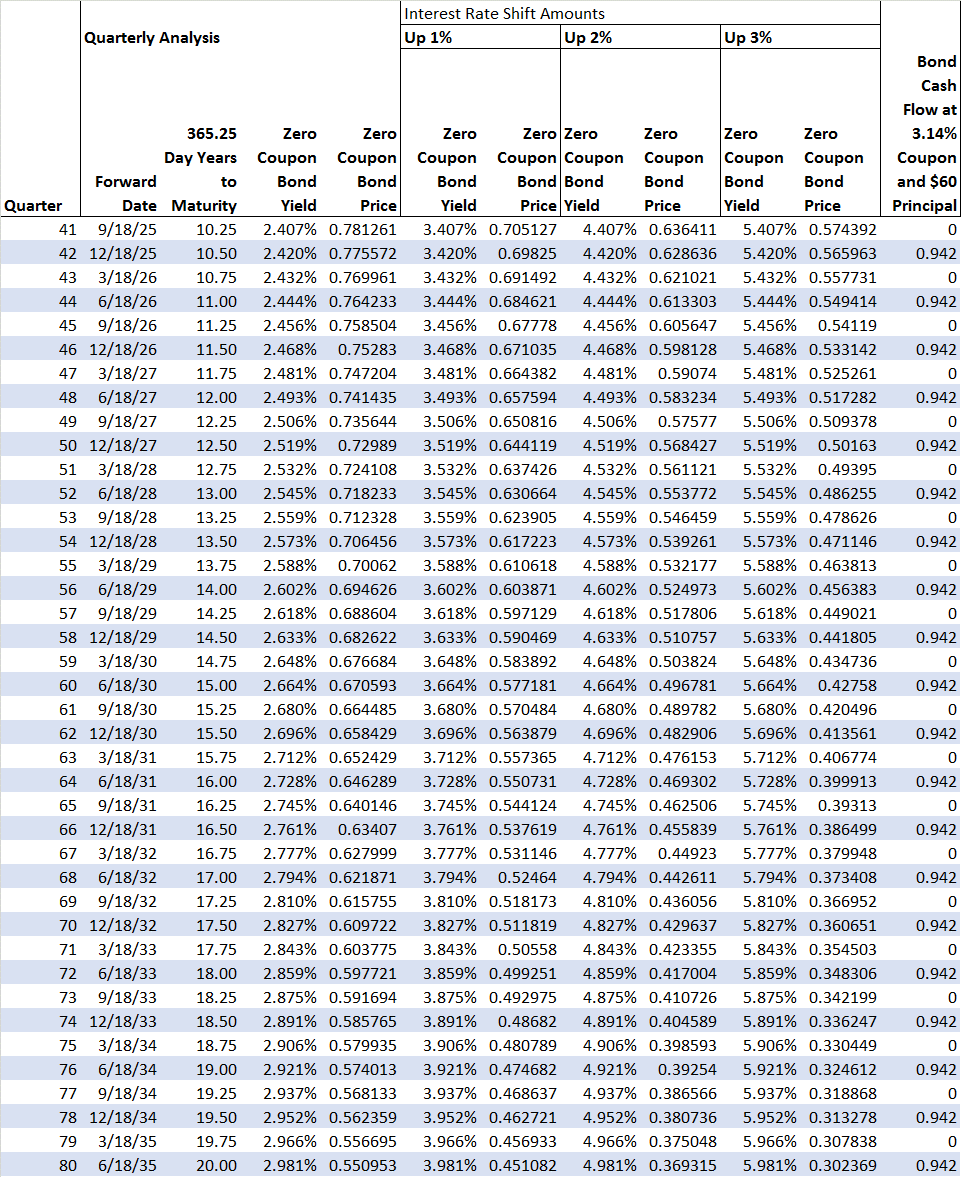
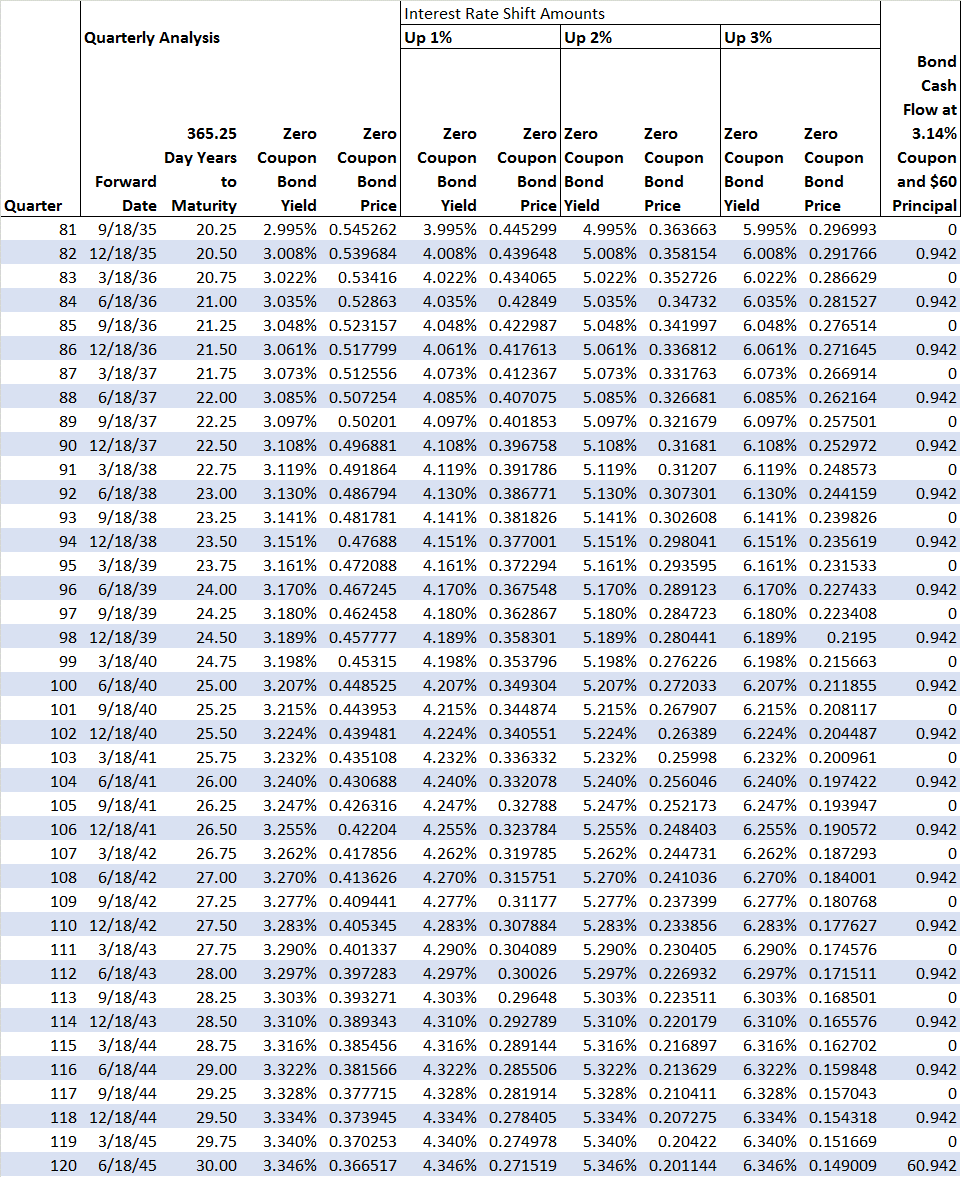

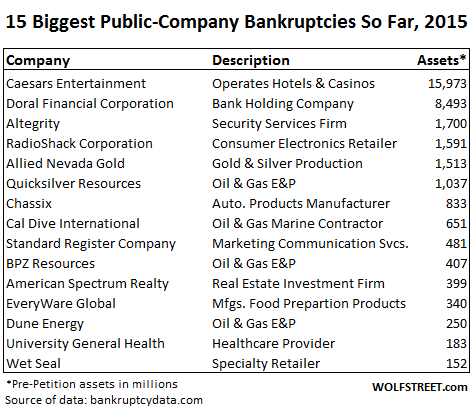

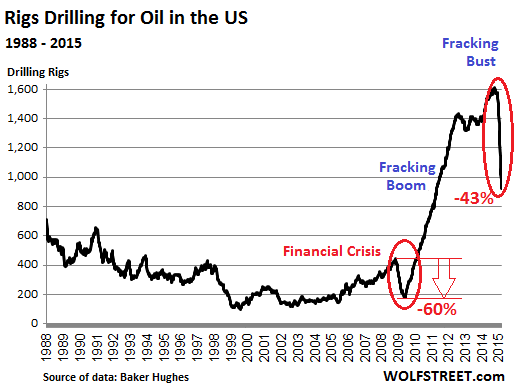
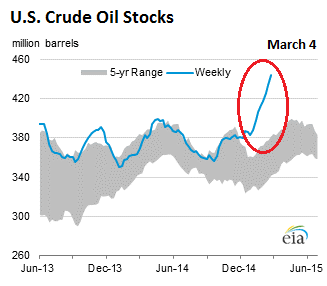
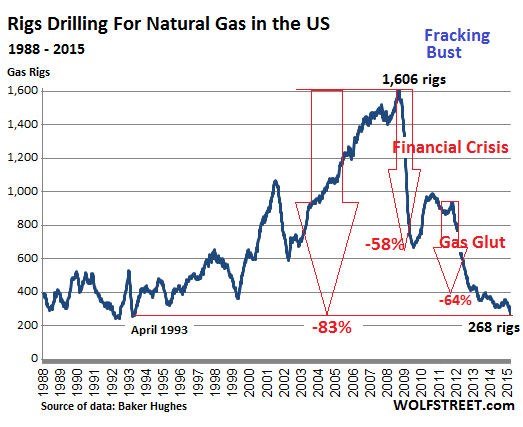







 Easy Money Martin
You must be logged in to post a comment.